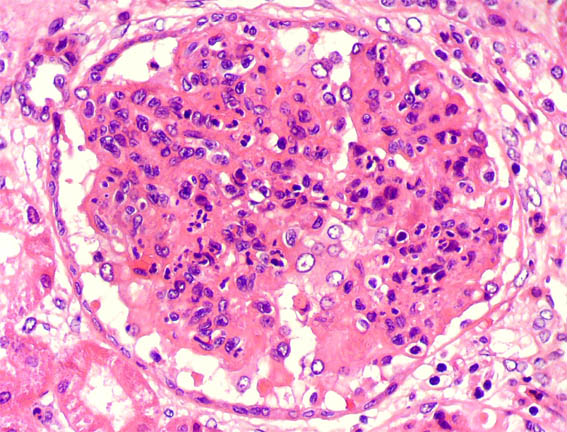
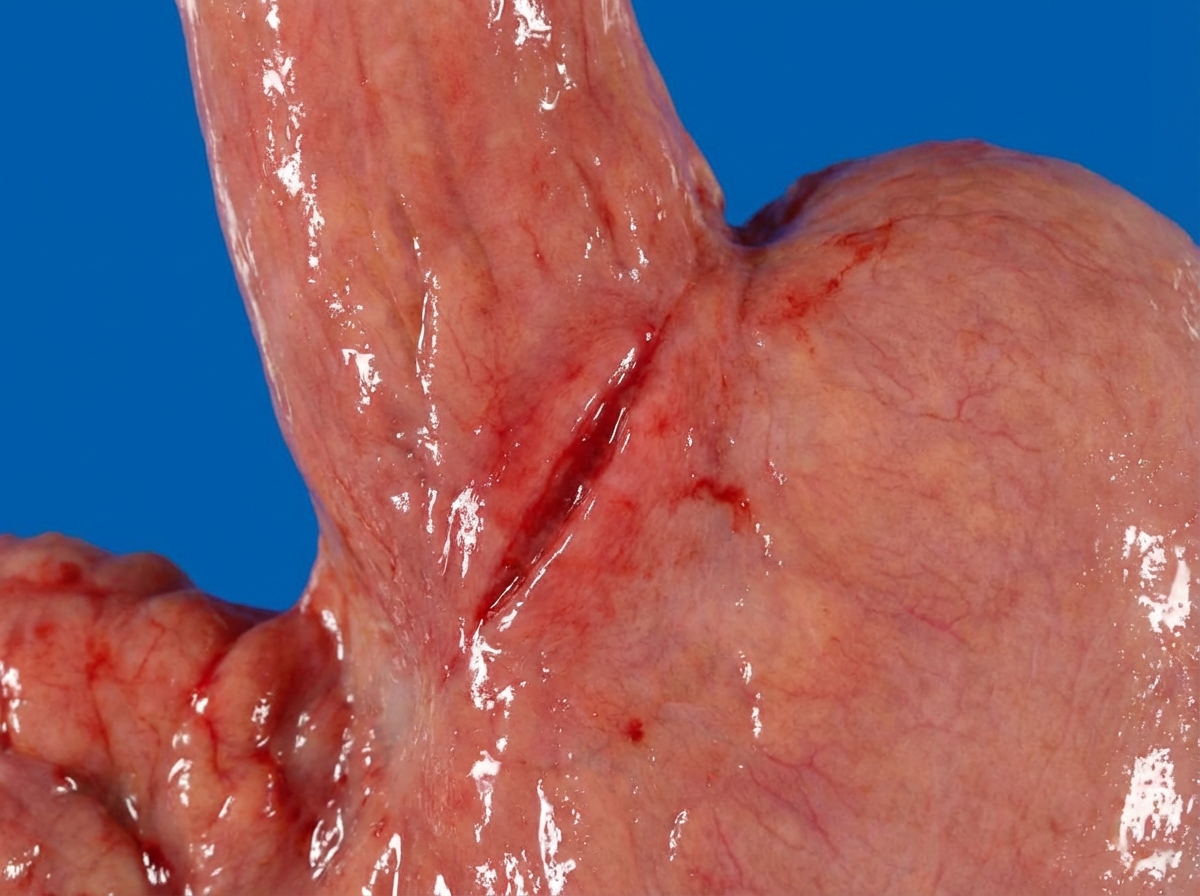
Kidney lesions are common in which of the following conditions?
IgA deposition in mesangial cells is seen in which condition?
An important factor for chronic pyelonephritis is?
Kimmelstiel-Wilson lesions are characteristically seen in?
Mutations in the COL4A5 gene manifest as which of the following conditions?
Which type of renal cell carcinoma is associated with the worst prognosis?
All of the following statements regarding membranous nephropathy are true except?
Focal glomerulonephritis can be seen in all of the following conditions EXCEPT-
Increased renin activity is seen in which of the following conditions?
All of the following statements are true about post-streptococcal glomerulonephritis except?
Explanation: The kidney is a highly vascular organ, making it a primary target for systemic inflammatory, metabolic, and autoimmune diseases. All three conditions listed are classic causes of significant renal pathology. 1. **Polyarteritis Nodosa (PAN):** This is a systemic necrotizing vasculitis of medium and small-sized arteries. While it characteristically **spares the capillaries (and thus does not cause glomerulonephritis)**, it frequently involves the renal arteries. This leads to microaneurysms, renal ischemia, and infarction, making renal involvement a leading cause of morbidity in PAN. 2. **Type II Diabetes Mellitus (DM):** Diabetic Nephropathy is the most common cause of End-Stage Renal Disease (ESRD) worldwide [4]. It manifests through non-enzymatic glycosylation of the basement membrane, leading to **Kimmelstiel-Wilson (KW) nodules** (nodular glomerulosclerosis), hyaline arteriolosclerosis, and diffuse mesangial expansion [3]. 3. **Systemic Lupus Erythematosus (SLE):** Lupus Nephritis occurs in approximately 50% of SLE patients due to the deposition of immune complexes in the glomeruli [1]. It is classified into six stages (ISN/RPS classification), ranging from minimal mesangial to advanced sclerosing lupus nephritis [2]. **High-Yield Clinical Pearls for NEET-PG:** * **PAN:** Associated with **Hepatitis B** surface antigen (HBsAg) in 30% of cases. Look for "string of pearls" appearance on angiography. * **Diabetes:** The earliest clinical sign of renal damage is **microalbuminuria** (30-300 mg/day). * **SLE:** **Class IV (Diffuse Proliferative)** is the most common and most severe form of Lupus Nephritis, characterized by "wire-loop" lesions on light microscopy. * **Rule of Thumb:** If a systemic disease involves blood vessels or immune complexes, the kidney is almost always affected. **References:** [1] Cross SS. Underwood's Pathology: A Clinical Approach. 6th ed. Common Clinical Problems From Diseases Of The Urinary And Male Genital Tracts, pp. 532-533. [2] Kumar V, Abbas AK, et al.. Robbins and Cotran Pathologic Basis of Disease. 9th ed. Diseases of the Immune System, pp. 230-232. [3] Kumar V, Abbas AK, et al.. Robbins and Cotran Pathologic Basis of Disease. 9th ed. The Endocrine System, pp. 1121-1122. [4] Kumar V, Abbas AK, et al.. Robbins and Cotran Pathologic Basis of Disease. 9th ed. The Endocrine System, p. 1121.
Explanation: **Explanation:** **Berger Disease (IgA Nephropathy):** The correct answer is **Berger disease**, which is the most common cause of primary glomerulonephritis worldwide. The hallmark of this condition is the **deposition of IgA immune complexes in the mesangium** of the glomeruli [1]. This occurs due to the production of galactose-deficient IgA1, which the body treats as an antigen, leading to the formation of immune complexes that trap in the mesangial regions, triggering inflammation and mesangial hypercellularity [1], [2]. **Analysis of Incorrect Options:** * **Goodpasture Syndrome:** Characterized by **linear IgG deposition** along the glomerular basement membrane (GBM) due to anti-GBM antibodies against the α3 chain of Type IV collagen [3]. * **Crescentic Glomerulonephritis (RPGN):** This is a clinical-pathological syndrome defined by the presence of crescents in Bowman’s space. While IgA nephropathy can progress to this [2], RPGN itself is a manifestation of various diseases (Type I: Anti-GBM, Type II: Immune complex, Type III: Pauci-immune). * **Alport Syndrome:** A genetic disorder caused by mutations in **Type IV collagen**. It presents with thinning and splitting of the GBM ("basket-weave appearance") but does not involve IgA deposits. **High-Yield Clinical Pearls for NEET-PG:** * **Presentation:** Typically presents as **synpharyngitic hematuria** (gross hematuria occurring concurrently with or within 1-2 days of an upper respiratory tract infection) [2]. * **Immunofluorescence:** Shows granular IgA and C3 deposits in the mesangium. * **Association:** Often associated with **Henoch-Schönlein Purpura (HSP)**, which is considered the systemic version of IgA nephropathy. * **Light Microscopy:** Shows mesangial widening and endocapillary proliferation [2]. **References:** [1] Cross SS. Underwood's Pathology: A Clinical Approach. 6th ed. Common Clinical Problems From Diseases Of The Urinary And Male Genital Tracts, pp. 535-536. [2] Kumar V, Abbas AK, et al.. Robbins and Cotran Pathologic Basis of Disease. 9th ed. The Kidney, pp. 928-929. [3] Cross SS. Underwood's Pathology: A Clinical Approach. 6th ed. Common Clinical Problems From Diseases Of The Urinary And Male Genital Tracts, pp. 526-527.
Explanation: **Explanation:** Chronic Pyelonephritis (CPN) is a chronic tubulointerstitial renal disease characterized by renal inflammation and progressive scarring of the renal parenchyma. The pathogenesis is primarily divided into two types: **Reflux Nephropathy** and **Chronic Obstructive Pyelonephritis.** [1] **Why Vesico-ureteral Reflux (VUR) is the correct answer:** While both obstruction and reflux lead to CPN, **Vesico-ureteral reflux** is considered the most common and important factor, especially in children. [1] VUR allows infected urine from the bladder to ascend into the ureters and renal pelvis. More importantly, **intrarenal reflux** (where urine is forced into the renal parenchyma at the poles) triggers the inflammatory cascade that leads to the hallmark "U-shaped" cortical scars overlying blunted calyces. [2] **Analysis of Incorrect Options:** * **A. Obstruction:** While chronic obstruction (e.g., stones, BPH) predisposes the kidney to recurrent infections and can lead to CPN, it is generally considered the second most common cause after reflux. [1] * **C. Pelvi-ureteric junction (PUJ) obstruction:** This is a specific site of anatomical obstruction. While it can cause hydronephrosis and secondary infection, it is a subset of obstructive causes and less frequent than VUR in the overall etiology of CPN. * **D. Catheter-induced:** Indwelling catheters are a major risk factor for **Acute Pyelonephritis** and UTIs, but they do not directly cause the chronic, scarred pathology of CPN unless associated with long-term reflux or obstruction. **High-Yield Clinical Pearls for NEET-PG:** * **Pathognomonic Feature:** The presence of **"Thyroidization"** of tubules (tubules filled with eosinophilic casts resembling thyroid follicles) is a classic histological finding in CPN. [1] * **Gross Appearance:** Asymmetric contraction of kidneys with coarse, discrete **U-shaped scars** and blunted/deformed calyces. [1] * **Xanthogranulomatous Pyelonephritis:** A rare variant of CPN associated with *Proteus* infections and "Staghorn" calculi, characterized by foamy macrophages (lipid-laden). [1] **References:** [1] Kumar V, Abbas AK, et al.. Robbins and Cotran Pathologic Basis of Disease. 9th ed. The Kidney, pp. 939-940. [2] Kumar V, Abbas AK, et al.. Robbins and Cotran Pathologic Basis of Disease. 9th ed. The Kidney, pp. 937-939.
Explanation: **Explanation:** **Kimmelstiel-Wilson (KW) lesions**, also known as **Nodular Glomerulosclerosis**, are the hallmark and most specific histological finding of **Diabetic Nephropathy** [1]. 1. **Why Option D is Correct:** In long-standing Diabetes Mellitus, chronic hyperglycemia leads to the formation of Advanced Glycation End-products (AGEs). This results in the expansion of the mesangial matrix, eventually forming characteristic **PAS-positive, ovoid or spherical hyaline nodules** situated in the periphery of the glomerulus [1]. These nodules compress the surrounding glomerular capillaries, leading to focal global sclerosis and eventual renal failure. 2. **Why Other Options are Incorrect:** * **Systemic Lupus Erythematosus (SLE):** Characterized by "Wire-loop" lesions (subendothelial deposits) and a "Full-house" pattern on immunofluorescence, particularly in Class IV Lupus Nephritis. * **Amyloidosis:** Shows extracellular deposition of amyloid fibrils that appear as apple-green birefringence under polarized light with Congo Red stain. * **Malignant Hypertension:** Characterized by "Fibrinoid necrosis" of arterioles and "Onion-skinning" (hyperplastic arteriolosclerosis) [2]. **High-Yield Clinical Pearls for NEET-PG:** * **Specificity:** While Diffuse Glomerulosclerosis is the *most common* lesion in diabetes, KW lesions are the *most specific* [1]. * **Armanni-Ebstein Lesions:** These are deposits of glycogen in the tubular epithelial cells (pars recta of proximal tubule), also seen in diabetes. * **Fibrin Caps and Capsular Drops:** Other classic histological features of diabetic nephropathy. * **Clinical Presentation:** KW lesions are strongly associated with the onset of significant proteinuria and nephrotic syndrome in diabetic patients. **References:** [1] Kumar V, Abbas AK, et al.. Robbins and Cotran Pathologic Basis of Disease. 9th ed. The Endocrine System, pp. 1121-1122. [2] Kumar V, Abbas AK, et al.. Robbins and Cotran Pathologic Basis of Disease. 9th ed. Diseases of Infancy and Childhood, pp. 498-499.
Explanation: **Explanation:** **Alport Syndrome (Correct Answer):** Alport syndrome is a hereditary nephritis caused by mutations in the genes encoding the **Type IV collagen** chains, which are essential components of the glomerular basement membrane (GBM). The **COL4A5** gene (located on the X chromosome) encodes the **α5 chain** of Type IV collagen [1]. Mutations in this gene account for approximately 80% of cases, following an **X-linked dominant** inheritance pattern [1]. This leads to a defective GBM that thins and splits over time, classically described as a **"basket-weave appearance"** on electron microscopy. **Incorrect Options:** * **Focal Segmental Glomerulosclerosis (FSGS):** This is primarily associated with mutations in genes encoding podocyte proteins, such as **NPHS1 (Nephrin)**, **NPHS2 (Podocin)**, or **ACTN4 (α-actinin-4)**, rather than collagen genes. As the disease in Alport syndrome progresses, secondary focal segmental and global glomerulosclerosis may develop [1]. * **Goodpasture Syndrome:** While this also involves Type IV collagen, it is an **autoimmune** condition, not a genetic mutation. It is caused by antibodies against the non-collagenous (NC1) domain of the **α3 chain** of Type IV collagen. * **Vitiligo:** This is an acquired skin depigmentation disorder caused by the autoimmune destruction of melanocytes, unrelated to collagen mutations. **High-Yield Clinical Pearls for NEET-PG:** * **Clinical Triad:** Alport syndrome presents with **Hereditary Nephritis** (hematuria/ESRD), **Sensorineural Hearing Loss**, and **Ocular defects** (e.g., Anterior Lenticonus) [1]. * **Electron Microscopy (EM):** The hallmark is irregular thickening and thinning of the GBM with splitting of the lamina densa (**Basket-weave appearance**). * **Thin Basement Membrane Lesion (Benign Familial Hematuria):** Often involves mutations in **COL4A3 or COL4A4**; unlike Alport, it typically lacks systemic features and progression to renal failure [1]. **References:** [1] Kumar V, Abbas AK, et al.. Robbins and Cotran Pathologic Basis of Disease. 9th ed. The Kidney, pp. 929-930.
Explanation: **Explanation:** Renal Cell Carcinoma (RCC) is a heterogeneous group of tumors with varying clinical behaviors. The prognosis is primarily determined by the histological subtype and the stage at presentation. **1. Why Collecting Duct RCC is the Correct Answer:** Collecting duct carcinoma (Bellini duct carcinoma) is a rare subtype (accounting for <1% of RCCs) that originates from the epithelium of the medullary collecting ducts. It is characterized by an extremely aggressive clinical course. Most patients present with advanced-stage disease, including gross hematuria and distant metastases. Unlike other RCCs, it often shows a nested or tubular growth pattern with significant desmoplasia and carries a very poor prognosis, with most patients surviving less than two years after diagnosis. **2. Why the Other Options are Incorrect:** * **Clear Cell RCC (Option A):** This is the most common subtype (70-80%). While it has a worse prognosis than chromophobe or papillary types, it is significantly less aggressive than collecting duct RCC [1]. * **Chromophobe RCC (Option B):** This subtype has the **best prognosis** among the major types of RCC [1]. it is associated with multiple chromosomal losses and usually presents at a low stage [1]. * **Papillary RCC (Option D):** This is the second most common subtype [2]. Type 1 papillary RCC generally has a better prognosis than clear cell RCC, though Type 2 can be more aggressive [2]. **High-Yield Clinical Pearls for NEET-PG:** * **Best Prognosis:** Chromophobe RCC [1]. * **Worst Prognosis:** Collecting Duct RCC (followed by Medullary RCC, which is associated with Sickle Cell Trait). * **Most Common Subtype:** Clear Cell RCC (associated with VHL gene deletion on Chromosome 3p) [1]. * **Cytogenetics:** Papillary RCC is associated with Trisomy 7 and 17 [2]. * **Staining:** Chromophobe RCC shows characteristic **Hale’s Colloidal Iron staining**. **References:** [1] Kumar V, Abbas AK, et al.. Robbins and Cotran Pathologic Basis of Disease. 9th ed. The Kidney, p. 959. [2] Kumar V, Abbas AK, et al.. Robbins and Cotran Pathologic Basis of Disease. 9th ed. The Kidney, pp. 958-959.
Explanation: ### Explanation **Membranous Nephropathy (MN)** is a leading cause of nephrotic syndrome in adults, characterized by the subepithelial accumulation of immune complexes [1]. **Why Option C is the Correct Answer (The False Statement):** Rupture of the glomerular basement membrane (GBM) is **not** a feature of Membranous Nephropathy. Instead, the GBM undergoes **diffuse thickening** due to the deposition of immune complexes [1]. GBM rupture or "gaps" are characteristic of **Rapidly Progressive Glomerulonephritis (RPGN)** or Crescentic GN, where severe inflammation leads to physical breaks in the capillary wall. **Analysis of Other Options:** * **Option A:** MN remains the most common cause of primary nephrotic syndrome in elderly adults (though Minimal Change Disease is more common in children and Focal Segmental Glomerulosclerosis is increasing in incidence among young adults) [1]. * **Option B:** In approximately 70-80% of primary (idiopathic) cases, autoantibodies against the **Phospholipase A2 Receptor (PLA2R)**, located on podocytes, are present. This is a highly specific diagnostic marker. * **Option C:** On Electron Microscopy (EM), subepithelial deposits are seen. The GBM grows between these deposits to surround them, creating the classic **"Spike and Dome"** appearance (visualized best with Silver stains like Jones Methenamine Silver) [1]. **High-Yield Clinical Pearls for NEET-PG:** * **Immunofluorescence (IF):** Shows a characteristic **granular** (linear is seen in Goodpasture) pattern of IgG and C3 [1]. * **Secondary Causes:** Rule out "HBV, Gold/Penicillamine, SLE (Class V), and Malignancy" (Lung/Colon). * **Rule of Thirds:** 1/3rd remit spontaneously, 1/3rd persist with proteinuria, and 1/3rd progress to ESRD. * **Thrombotic Risk:** MN has the highest association with **Renal Vein Thrombosis** among all nephrotic syndromes. **References:** [1] Kumar V, Abbas AK, et al.. Robbins and Cotran Pathologic Basis of Disease. 9th ed. The Kidney, pp. 919-921.
Explanation: **Explanation:** **Focal Glomerulonephritis (FGN)** is defined by inflammatory lesions involving less than 50% of the total glomeruli [2]. The correct answer is **Hypertension** because it typically causes **diffuse** and **global** changes rather than focal inflammatory ones [3]. 1. **Why Hypertension is the correct answer:** Chronic hypertension leads to **Benign Nephrosclerosis**, characterized by hyaline arteriolosclerosis and diffuse ischemic changes. Malignant hypertension causes fibrinoid necrosis and "onion-skin" thickening. These processes affect the entire renal vasculature and all glomeruli globally, not in a focal inflammatory pattern [3]. 2. **Analysis of Incorrect Options:** * **Wegener’s Granulomatosis (GPA):** This is a classic cause of focal necrotizing glomerulonephritis (often pauci-immune) [1]. It frequently presents as a "crescentic" GN. * **Infective Endocarditis (IE):** IE can cause renal lesions via two mechanisms: embolic (focal infarcts) or immune-complex mediated. The latter typically presents as **Focal Segmental Necrotizing Glomerulonephritis** (Lohlein-Baehr lesion). * **IgA Nephropathy (Berger’s Disease):** This is the most common cause of primary GN worldwide. While it primarily involves mesangial expansion, it frequently presents with a focal and segmental distribution of proliferative changes. **High-Yield Clinical Pearls for NEET-PG:** * **Mnemonic for Focal GN:** "I-WISH" (Infective endocarditis, Wegener’s, IgA nephropathy, Systemic lupus erythematosus (Class III), Henoch-Schönlein purpura). * **Lohlein-Baehr Lesion:** A specific term for focal embolic nephritis seen in Subacute Bacterial Endocarditis (SBE). * **Distinction:** Focal = <50% of glomeruli [2]; Segmental = <50% of a single glomerular tuft. **References:** [1] Kumar V, Abbas AK, et al.. Robbins and Cotran Pathologic Basis of Disease. 9th ed. The Kidney, pp. 931-933. [2] Kumar V, Abbas AK, et al.. Robbins and Cotran Pathologic Basis of Disease. 9th ed. Diseases of the Immune System, pp. 230-232. [3] Kumar V, Abbas AK, et al.. Robbins and Cotran Pathologic Basis of Disease. 9th ed. The Kidney, pp. 927-928.
Explanation: **Malignant nephrosclerosis** is the renal manifestation of malignant hypertension. The pathophysiology is driven by a vicious cycle of vascular injury. Severe hypertension causes **fibrinoid necrosis** of arterioles [2] and **hyperplastic arteriolitis** (onion-skinning) [1]. These changes lead to luminal narrowing and profound renal ischemia. The kidneys perceive this ischemia as low blood pressure, triggering the **Renin-Angiotensin-Aldosterone System (RAAS)** [3]. This results in markedly increased renin levels, which further elevates blood pressure, creating a self-perpetuating cycle of damage. **Analysis of Options:** * **Benign Nephrosclerosis (Option A):** Associated with long-standing mild-to-moderate hypertension. It is characterized by hyaline arteriolosclerosis [1]. While there is some ischemia, the RAAS activation is not as profound or characteristic as in the malignant form. * **Hemolytic Uremic Syndrome (Option C):** Primarily a thrombotic microangiopathy (TMA) characterized by microangiopathic hemolytic anemia, thrombocytopenia, and acute kidney injury [4]. While it involves vascular damage, it is not primarily defined by hyper-reninemia. * **Malignant Hypertension (Option D):** While Malignant Nephrosclerosis is the *result* of Malignant Hypertension, in the context of renal pathology questions, the specific morphological entity associated with the "vicious cycle of renin" is Malignant Nephrosclerosis. (Note: In some clinical contexts, B and D are used interchangeably, but "Nephrosclerosis" specifically refers to the renal structural changes). **High-Yield Pearls for NEET-PG:** * **Morphology:** Look for "Flea-bitten kidney" (pinpoint petechial hemorrhages on the cortical surface) and "Onion-skin appearance" of arterioles [1]. * **Key Histology:** Fibrinoid necrosis of vessel walls [1]. * **Clinical:** Characterized by BP >200/120 mmHg, papilledema, and encephalopathy. * **RAAS:** Malignant nephrosclerosis is one of the classic causes of **secondary hyperaldosteronism** [3]. **References:** [1] Kumar V, Abbas AK, et al.. Robbins and Cotran Pathologic Basis of Disease. 9th ed. The Kidney, p. 945. [2] Cross SS. Underwood's Pathology: A Clinical Approach. 6th ed. Common Clinical Problems From Cardiovascular Disease, pp. 276-277. [3] Kumar V, Abbas AK, et al.. Robbins and Cotran Pathologic Basis of Disease. 9th ed. The Kidney, pp. 945-946. [4] Cross SS. Underwood's Pathology: A Clinical Approach. 6th ed. Common Clinical Problems From Diseases Of The Urinary And Male Genital Tracts, pp. 541-542.
Explanation: ### Explanation **Post-Streptococcal Glomerulonephritis (PSGN)** is a classic example of an immune-complex-mediated (Type III hypersensitivity) renal disease [1]. **Why Option B is the Correct Answer (The False Statement):** Not all streptococcal infections lead to PSGN. It is specifically caused by **nephritogenic strains** of Group A Beta-Hemolytic Streptococci (GABHS), such as M-protein types 12, 4, and 1. Furthermore, even with a nephritogenic strain, only a small percentage of patients (approx. 10-15%) actually develop clinical nephritis. **Analysis of Other Options:** * **Option A:** Early antibiotic treatment of streptococcal pharyngitis **does prevent** the development of Acute Rheumatic Fever, but its role in preventing PSGN is more controversial. However, in the context of standard medical teaching and exams, prompt treatment is considered a preventive measure for the sequelae of GABHS. * **Option C:** The "Hump sign" is a hallmark finding on **Electron Microscopy**, characterized by large, subepithelial electron-dense deposits (resembling camel humps) [1]. * **Option D:** PSGN is an immune-complex disease. On **Immunofluorescence (IF)**, it shows a characteristic "starry sky" or "lumpy-bumpy" appearance due to granular deposits of IgG and C3 along the basement membrane [1]. --- ### High-Yield Clinical Pearls for NEET-PG: * **Latent Period:** Typically 1–3 weeks after pharyngitis and 3–6 weeks after skin infections (impetigo) [1]. * **Serology:** Low serum **C3 levels** are characteristic (levels usually normalize within 6–8 weeks). ASO titers are elevated in pharyngitis-associated PSGN, while Anti-DNAse B is more sensitive for skin-associated PSGN. * **Light Microscopy:** Shows **diffuse proliferative glomerulonephritis** with hypercellularity due to leukocyte infiltration (neutrophils and monocytes) and endothelial/mesangial cell proliferation [1]. * **Prognosis:** Excellent in children (>95% recover completely); more likely to progress to chronic renal failure in adults [1]. **References:** [1] Kumar V, Abbas AK, et al.. Robbins and Cotran Pathologic Basis of Disease. 9th ed. The Kidney, pp. 914-917.
Congenital Anomalies of the Kidney
Practice Questions
Glomerular Diseases
Practice Questions
Tubular and Interstitial Diseases
Practice Questions
Vascular Diseases of the Kidney
Practice Questions
Cystic Diseases of the Kidney
Practice Questions
Urinary Tract Obstruction and Stones
Practice Questions
Renal Tumors
Practice Questions
Kidney in Systemic Diseases
Practice Questions
Renal Transplantation Pathology
Practice Questions
Urinary Tract Infections
Practice Questions
Get full access to all questions, explanations, and performance tracking.
Start For Free