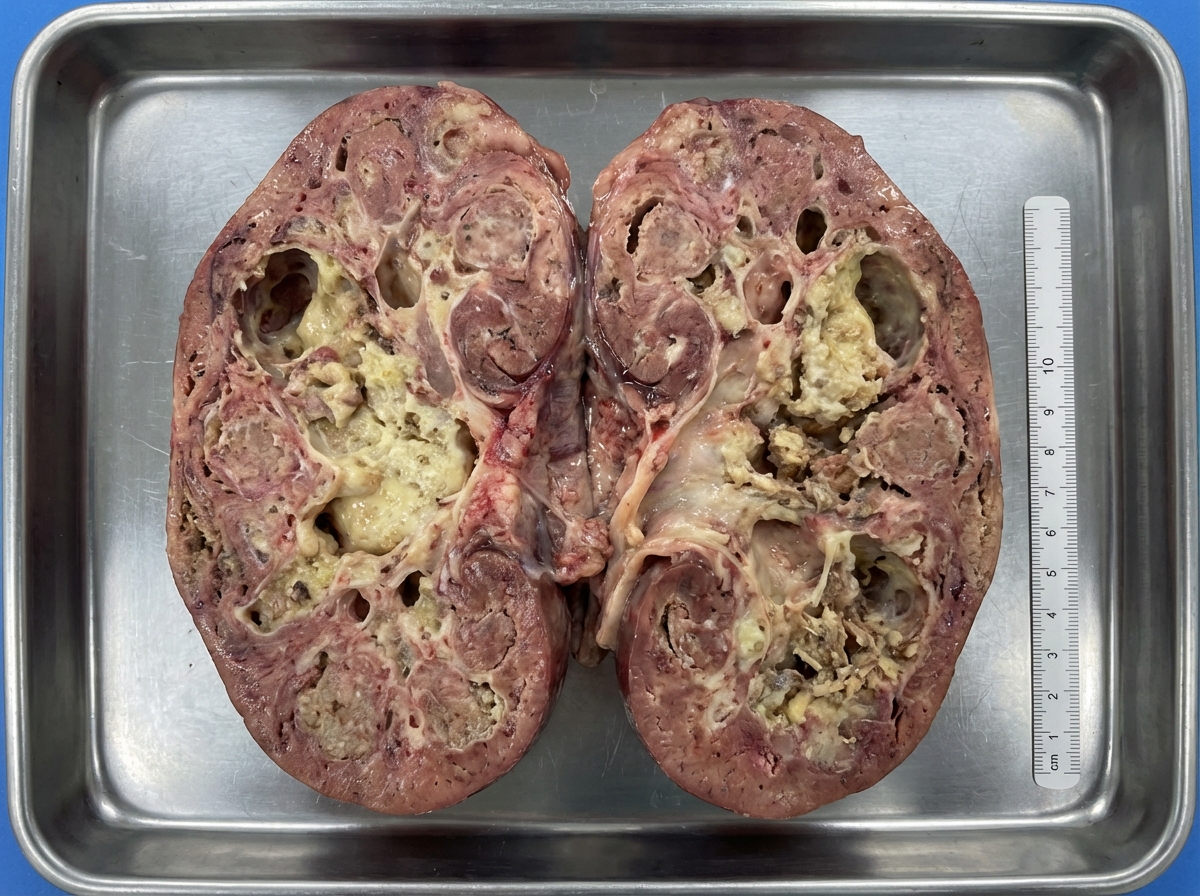
Persistent low C3 complement level is not found in which of the following conditions?
Clear cell renal cell carcinoma is most commonly associated with which genetic alteration?
Sickle cell anemia is associated with which type of renal cell carcinoma?
The intracytoplasmic vacuoles seen in the Armanni-Ebstein cell are rich in what substance?
What is the most common histological variant of renal cell carcinoma (RCC)?
Sub-epithelial humps are characteristic of which of the following conditions?
Bilaterally symmetrical contracted scarred kidneys are seen in which condition?
A 55-year-old diabetic patient with a history of renal failure awaiting transplant and undergoing hemodialysis develops amyloid deposits around the joints. What substance are these deposits likely composed of?
In renal disease, why does albumin appear first in the urine?
What are the characteristic features of glomerular hematuria?
Explanation: The key to answering this question lies in the **duration** of complement depletion. While all four conditions involve the activation of the alternative or classical complement pathways, the temporal profile of C3 levels differs significantly. [1] ### 1. Why Post-streptococcal Glomerulonephritis (PSGN) is the Correct Answer In PSGN, there is a transient activation of the alternative pathway. C3 levels drop acutely but **characteristically return to normal within 6 to 8 weeks** after the onset of symptoms [1]. If C3 remains low beyond 8 weeks, the diagnosis must be reconsidered (usually towards MPGN). Therefore, it is not a "persistent" low C3 condition. ### 2. Analysis of Incorrect Options (Conditions with Persistent Low C3) * **Mesangiocapillary (Membranoproliferative) Glomerulonephritis (MPGN):** Specifically Type II (Dense Deposit Disease), where **C3 Nephritic Factor** (an autoantibody) stabilizes C3 convertase, leading to continuous, permanent consumption of C3. * **Systemic Lupus Erythematosus (SLE):** In active Lupus Nephritis, there is ongoing classical pathway activation [1]. C3 and C4 levels remain low as long as the disease is immunologically active. * **Cryoglobulinemia:** This condition causes chronic systemic vasculitis and immune complex deposition, leading to persistent consumption of early complement components (especially C4 and C3). ### 3. NEET-PG High-Yield Pearls * **The "8-Week Rule":** In any pediatric case of hematuria, if C3 is low, think PSGN. If it stays low after 8 weeks, think MPGN. * **C3 vs. C4:** * **Low C3 + Normal C4:** Suggests Alternative Pathway (PSGN, MPGN Type II). * **Low C3 + Low C4:** Suggests Classical Pathway (SLE, Cryoglobulinemia, MPGN Type I). * **Lumpy-Bumpy Pattern:** PSGN is characterized by subepithelial "humps" on electron microscopy and a granular "starry sky" appearance on immunofluorescence [1]. **References:** [1] Kumar V, Abbas AK, et al.. Robbins and Cotran Pathologic Basis of Disease. 9th ed. The Kidney, pp. 910-917.
Explanation: **Clear Cell Renal Cell Carcinoma (ccRCC)** is the most common histological subtype of renal cell carcinoma (70-80%). The hallmark genetic alteration in ccRCC is the **loss of genetic material on the short arm of chromosome 3 (3p deletion)** [1]. 1. **Why 3p deletion is correct:** The **VHL (Von Hippel-Lindau) gene** is a critical tumor suppressor gene located at **3p25-26** [3]. In both sporadic (95%) and familial (VHL syndrome) cases of ccRCC, the loss of this region leads to the inactivation of the VHL protein [3]. This results in the stabilization of **HIF-1α (Hypoxia-Inducible Factor)**, which triggers the overexpression of growth factors like VEGF and PDGF, driving the characteristic high vascularity of these tumors. 2. **Why the other options are incorrect:** * **3q deletion:** While chromosome 3 is involved, the specific locus for the VHL gene is on the short arm (p), not the long arm (q). * **6p deletion:** This is not a primary driver for ccRCC. Alterations in chromosome 6 are more commonly associated with other systemic malignancies or late-stage tumor progression. * **9p deletion:** Loss of 9p (containing the CDKN2A gene) is often a **secondary genetic hit** in ccRCC and is associated with a poorer prognosis and sarcomatoid transformation, but it is not the primary initiating event. **NEET-PG High-Yield Pearls:** * **Origin:** ccRCC arises from the **Proximal Convoluted Tubule (PCT)**. * **Morphology:** Cells have "clear" cytoplasm due to high **glycogen and lipid** content (dissolved during processing) [2]. * **Staining:** Typically positive for **Vimentin** and **EMA**. * **Paraneoplastic Syndromes:** Most commonly associated with Polycythemia (EPO production) and Hypercalcemia (PTHrP). * **Classic Triad:** Hematuria, flank pain, and palpable mass (seen in only 10% of cases). **References:** [1] Kumar V, Abbas AK, et al.. Robbins and Cotran Pathologic Basis of Disease. 9th ed. The Kidney, pp. 957-958. [2] Kumar V, Abbas AK, et al.. Robbins and Cotran Pathologic Basis of Disease. 9th ed. The Kidney, pp. 959-961. [3] Kumar V, Abbas AK, et al.. Robbins and Cotran Pathologic Basis of Disease. 9th ed. Neoplasia, pp. 325-326.
Explanation: **Explanation:** **Renal Medullary Carcinoma (RMC)** is a rare but highly aggressive malignancy that occurs almost exclusively in young patients with **Sickle Cell Trait (HbAS)** or, less commonly, **Sickle Cell Disease (HbSS)**. [1] 1. **Why Medullary is Correct:** The pathophysiology is linked to the hypoxic and hypertonic environment of the renal medulla. These conditions promote the "sickling" of red blood cells within the vasa recta, leading to chronic ischemia, microinfarctions, and subsequent DNA damage. [1] A hallmark genetic feature of RMC is the **loss of SMARCB1 (INI1) tumor suppressor protein** expression, which is a high-yield diagnostic marker. 2. **Why Other Options are Incorrect:** * **Papillary RCC:** Associated with trisomy 7 and 17 [3] or c-MET mutations. [4] It is the second most common RCC but has no specific association with hemoglobinopathies. * **Chromophobe RCC:** Originates from intercalated cells of the collecting ducts. [2] It is associated with Birt-Hogg-Dubé syndrome and characterized by "halos" around nuclei. [2] * **Colloid (Mucinous) Adenocarcinoma:** Extremely rare in the kidney; usually arises from the renal pelvis or is associated with chronic irritation/calculi, not sickle cell disease. **High-Yield Clinical Pearls for NEET-PG:** * **Demographics:** Typically affects young males (mean age ~20s) of African descent. * **Location:** Almost always involves the **right kidney**. * **Prognosis:** Extremely poor; most patients present with metastatic disease at the time of diagnosis. * **IHC Marker:** Loss of **INI1 (SMARCB1)** staining is the definitive immunohistochemical finding. * **Triad:** Sickle cell trait + Young age + Aggressive renal mass = Renal Medullary Carcinoma. **References:** [1] Kumar V, Abbas AK, et al.. Robbins and Cotran Pathologic Basis of Disease. 9th ed. The Kidney, pp. 948-949. [2] Kumar V, Abbas AK, et al.. Robbins and Cotran Pathologic Basis of Disease. 9th ed. The Kidney, p. 959. [3] Kumar V, Abbas AK, et al.. Robbins and Cotran Pathologic Basis of Disease. 9th ed. The Kidney, pp. 957-958. [4] Kumar V, Abbas AK, et al.. Robbins and Cotran Pathologic Basis of Disease. 9th ed. The Kidney, pp. 958-959.
Explanation: **Explanation:** **Armanni-Ebstein cells** are a classic histopathological finding in the kidneys of patients with severe, uncontrolled diabetes mellitus. These cells are characterized by the presence of large, clear **intracytoplasmic vacuoles** located specifically in the epithelial cells of the **pars recta of the proximal convoluted tubule** and the descending limb of the loop of Henle. 1. **Why Glycogen is Correct:** In states of severe hyperglycemia (and subsequent glycosuria), the filtered glucose load exceeds the resorptive capacity of the proximal tubules. The tubular epithelial cells attempt to compensate by reabsorbing excessive glucose, which is then polymerized and stored as **glycogen** within the cytoplasm. This results in the characteristic "vacuolated" appearance under light microscopy. 2. **Why Other Options are Incorrect:** * **Sodium and Potassium:** While electrolyte transport occurs in the tubules, they do not form visible intracytoplasmic vacuoles or define this specific pathological entity. * **Lipids:** Lipid accumulation in the renal tubules (lipoid nephrosis) is associated with Nephrotic Syndrome (e.g., Minimal Change Disease), where "fatty casts" or "oval fat bodies" are seen, but these are not termed Armanni-Ebstein cells. **High-Yield Clinical Pearls for NEET-PG:** * **Location:** Pars recta (straight portion) of the Proximal Convoluted Tubule (PCT). * **Clinical Context:** Historically associated with **Diabetic Ketoacidosis (DKA)**; however, with modern glycemic control, this finding is now more commonly seen in forensic autopsies rather than routine clinical biopsies. * **Staining:** Since the vacuoles contain glycogen, they will stain positive with **PAS (Periodic Acid-Schiff)** and will be digested by diastase. * **Differential:** Do not confuse these with "clear cell" changes seen in Renal Cell Carcinoma (RCC), which also contain glycogen and lipids but involve different architectural patterns. Note: While the provided references discuss general mechanisms of intracellular accumulation and glycogen storage diseases [1], the specific mention of Armanni-Ebstein cells is a specialized topic in renal pathology found in expanded editions of medical texts. **References:** [1] Kumar V, Abbas AK, et al.. Robbins and Cotran Pathologic Basis of Disease. 9th ed. Genetic Disorders, pp. 164-165.
Explanation: **Explanation:** Renal Cell Carcinoma (RCC) is the most common primary malignancy of the kidney, arising from the renal tubular epithelium. **1. Why Clear Cell is Correct:** **Clear cell RCC** is the most common histological subtype, accounting for approximately **70-80%** of all cases. It typically arises from the **proximal convoluted tubule**. Microscopically, it is characterized by cells with clear cytoplasm (due to high glycogen and lipid content) and a prominent delicate vascular pattern (chicken-wire vessels) [1]. Most sporadic cases are associated with deletions or mutations of the **VHL gene on chromosome 3p**. **2. Why the other options are incorrect:** * **Papillary RCC (10-15%):** The second most common variant [1]. It often presents as multifocal or bilateral tumors and is associated with trisomy 7 and 17. * **Chromophobe RCC (5%):** Arises from intercalated cells of the collecting ducts [1]. It has a better prognosis and is characterized by "pale" cells with prominent cell membranes (vegetable-like) and perinuclear halos [1]. * **Collecting Duct (Bellini) Carcinoma (<1%):** An extremely rare and highly aggressive variant arising from the medulla. **High-Yield Clinical Pearls for NEET-PG:** * **Classic Triad:** Hematuria, palpable mass, and flank pain (seen in only 10% of patients). * **Paraneoplastic Syndromes:** RCC is the "great mimicker," often causing polycythemia (EPO), hypercalcemia (PTHrP), or Cushing’s (ACTH). * **Staging:** The most important prognostic factor is the **TNM stage** (specifically capsular invasion and venous involvement). * **Metastasis:** RCC has a propensity for hematogenous spread, most commonly to the **lungs** ("cannonball metastases"). **References:** [1] Kumar V, Abbas AK, et al.. Robbins and Cotran Pathologic Basis of Disease. 9th ed. The Kidney, pp. 958-961.
Explanation: ### Explanation **Correct Answer: D. Post-streptococcal glomerulonephritis (PSGN)** **Why it is correct:** Post-streptococcal glomerulonephritis is a classic example of an immune-complex-mediated disease (Type III Hypersensitivity) [1]. On **Electron Microscopy (EM)**, the hallmark finding is the presence of large, "dome-shaped" **sub-epithelial humps** [1]. These represent the deposition of antigen-antibody complexes (specifically involving antigens like SpeB) between the glomerular basement membrane (GBM) and the podocytes [1]. These humps are transient and disappear as the inflammation resolves. **Why the other options are incorrect:** * **A. Minimal Change Disease:** Characterized by the **effacement (flattening) of podocyte foot processes** on EM. There are no immune deposits, hence the "minimal" change seen on light microscopy. * **B. Membranous Glomerulonephritis:** Features **sub-epithelial deposits**, but they are uniform and diffuse, leading to the characteristic **"Spike and Dome"** appearance on Silver stain [1]. They do not form the large, discrete "humps" seen in PSGN. * **C. Membranoproliferative Glomerulonephritis (MPGN):** Type I MPGN shows **sub-endothelial deposits**, while Type II (Dense Deposit Disease) shows ribbon-like deposits within the GBM [1]. Both lead to GBM splitting, known as **"Tram-track"** appearance. **NEET-PG High-Yield Pearls:** * **Light Microscopy (PSGN):** "Starry sky" or "Garland" appearance on Immunofluorescence (IgG and C3) [1]. * **Clinical Presentation:** Nephritic syndrome (hematuria, hypertension, periorbital edema) occurring 1–3 weeks after a sore throat or skin infection (impetigo) [1]. * **Serology:** Low C3 levels (diagnostic) and elevated ASO or Anti-DNase B titers. * **Lumpy-Bumpy Pattern:** The granular appearance on IF corresponds to the sub-epithelial humps seen on EM [1]. **References:** [1] Kumar V, Abbas AK, et al.. Robbins and Cotran Pathologic Basis of Disease. 9th ed. The Kidney, pp. 911-916.
Explanation: ### Explanation The hallmark of **Chronic Glomerulonephritis (CGN)** is the presence of **bilaterally symmetrical, small, contracted kidneys** with a diffusely granular cortical surface. This occurs because the underlying glomerular injury is a systemic, immunologic process that affects both kidneys equally. Over time, the replacement of glomeruli by hyaline tissue (obsolescence) and subsequent interstitial fibrosis leads to uniform parenchymal shrinkage. #### Analysis of Options: * **Chronic Glomerulonephritis (Correct):** Characterized by symmetrical contraction and a fine, "sandpaper" granularity on the surface. * **Chronic Pyelonephritis:** Typically presents with **asymmetrical** contraction [2]. The kidneys have irregular, U-shaped coarse scars overlying blunted or deformed calyces [2]. * **Nephrosclerosis:** Benign nephrosclerosis (associated with hypertension) also shows symmetrical contraction and fine granularity (grain-leather appearance) [1] [3]. However, in the context of "scarred" kidneys, CGN is the more classic pathological description for end-stage glomerular destruction. * **End-stage Renal Disease (ESRD):** While ESRD is the clinical outcome of these conditions, it is a functional diagnosis rather than a specific pathological entity. CGN is the most common pathological cause of symmetrically contracted kidneys. #### High-Yield Pearls for NEET-PG: * **Asymmetrical contraction:** Think Chronic Pyelonephritis or Renovascular disease [2]. * **Symmetrical contraction:** Think Chronic Glomerulonephritis or Benign Nephrosclerosis [1]. * **Large, pale kidneys:** Seen in Amyloidosis, Diabetic Nephropathy (early stages), and Rapidly Progressive Glomerulonephritis (RPGN). * **Fleabite Kidney:** Seen in Malignant Hypertension and Bacterial Endocarditis. * **Microscopy of CGN:** Shows "thyroidization" of tubules (colloid-filled casts) and obliterated glomeruli. **References:** [1] Kumar V, Abbas AK, et al.. Robbins and Cotran Pathologic Basis of Disease. 9th ed. The Kidney, pp. 943-945. [2] Kumar V, Abbas AK, et al.. Robbins and Cotran Pathologic Basis of Disease. 9th ed. The Kidney, p. 939. [3] Cross SS. Underwood's Pathology: A Clinical Approach. 6th ed. Common Clinical Problems From Diseases Of The Urinary And Male Genital Tracts, pp. 541-542.
Explanation: **Explanation:** The correct answer is **Beta2 microglobulin (A̢̢̢̢̢̢̢̢̢̢̢̢̢̢̢̢̢̢̢̢̢̢̢̢̢̢̢̢̢̢̢̢̢̢̢̢̢̢̢̢̢̢̢̢̢̢̢̢̢̢̢̢̢̢̢̢̢̢̢̢̢̢̢̢̢̢̢̢̢̢̢̢̢̢̢̢̢̢̢̢̢̢̢̢̢̢̢̢̢̢̢̢̢̢̢̢̢̢̢̢̢̢̢̢̢̢̢̢̢̢̢̢̢̢̢̢̢̢̢̢̢̢̢̢̢̢̢̢̢̢̢̢̢̢̢̢̢̢̢̢̢̢̢̢̢̢̢̢̢̢̢̢̢̢̢̢̢̢̢̢̢̢̢̢̢̢̢̢̢̢̢̢̢̢̢̢̢̢̢̢̢̢̢̢̢̢̢̢̢̢̢̢̢̢̢̢̢̢̢̢̢̢̢̢̢̢̢̢̢̢̢̢̢̢̢̢̢̢̢̢̢̢̢̢̢̢̢̢̢̢̢̢̢̢̢̢̢̢̢̢̢̢̢̢̢̢̢̢̢̢̢̢̢̢̢̢̢̢̢̢̢̢̢̢̢̢̢̢̢̢̢̢̢̢̢̢̢̢̢̢̢̢̢̢̢̢̢̢̢̢̢̢̢̢̢̢̢̢̢̢̢̢̢̢̢̢̢̢̢̢̢̢̢̢̢̢̢̢̢̢̢̢̢̢̢̢̢̢̢̢̢̢̢̢̢̢̢̢̢̢̢̢̢̢̢̢̢̢̢̢̢̢̢̢̢̢̢̢̢̢̢̢̢̢̢̢̢̢̢̢̢̢̢̢̢̢̢̢̢̢̢̢̢̢̢̢̢̢̢̢̢̢̢̢̢̢̢̢̢̢̢̢̢̢̢̢̢̢̢̢̢̢̢̢̢̢̢̢̢̢̢̢̢̢̢̢̢̢̢̢̢̢̢̢̢̢̢̢̢̢̢̢̢̢̢̢̢̢̢̢̢̢̢̢̢̢̢̢̢̢̢̢̢̢̢̢̢̢̢̢̢̢̢̢̢̢̢̢̢̢̢̢̢̢̢̢̢̢̢̢̢̢̢̢̢̢̢̢̢̢̢̢̢̢̢̢̢̢̢̢̢̢̢̢̢̢̢̢̢̢̢̢̢̢̢̢̢̢̢̢̢̢̢̢̢̢̢̢̢̢̢̢̢̢̢̢̢̢̢̢̢̢̢̢̢̢̢̢̢̢̢̢̢̢̢̢̢̢̢̢̢̢̢̢̢̢̢̢̢̢̢̢̢̢̢̢̢̢̢̢̢̢̢̢̢̢̢̢̢̢̢̢̢̢̢̢̢̢̢̢̢̢̢̢̢̢̢̢̢̢̢̢̢̢̢̢̢̢̢̢̢̢̢̢̢̢̢̢̢̢̢̢̢̢̢̢̢̢̢̢̢̢̢̢̢̢̢̢̢̢̢̢̢̢̢̢̢̢̢̢̢̢̢̢̢̢̢̢̢̢̢̢̢̢̢̢̢̢̢̢̢̢̢̢̢̢̢̢̢̢̢̢̢̢̢̢̢̢̢̢̢̢̢̢̢̢̢̢̢̢̢̢̢̢̢̢̢̢̢̢̢̢̢̢̢̢̢̢̢̢̢̢̢̢̢̢̢̢̢̢̢̢̢̢̢̢̢̢̢̢̢̢̢̢̢̢̢̢̢̢̢̢̢̢̢̢̢̢̢̢̢̢̢̢̢̢̢̢̢̢̢̢̢̢̢̢̢̢̢̢̢̢̢̢̢̢̢̢̢̢̢̢̢̢̢̢̢̢̢̢̢̢̢̢̢̢̢̢̢̢̢̢̢̢̢̢̢̢̢̢̢̢̢̢̢̢̢̢̢̢̢̢̢̢̢̢̢̢̢̢̢̢̢̢̢̢̢̢̢̢̢̢̢̢̢̢̢̢̢̢̢̢̢̢̢̢̢̢̢̢̢̢̢̢̢̢̢̢̢̢̢̢̢̢̢̢̢̢̢̢̢̢̢̢̢̢̢̢̢̢̢̢̢̢̢̢̢̢̢̢̢̢̢̢̢̢̢̢̢̢̢̢̢̢̢̢̢̢̢̢̢̢̢̢̢̢̢̢̢̢̢̢̢̢̢̢̢̢̢̢̢̢̢̢̢̢̢̢̢̢̢̢̢̢̢̢̢̢̢̢̢̢̢̢̢̢̢̢̢̢̢̢̢̢̢̢̢̢̢̢̢̢̢̢̢̢̢̢̢̢̢̢̢̢̢̢̢̢̢̢̢̢̢̢̢̢̢̢̢̢̢̢̢̢̢̢̢̢̢̢̢̢̢̢̢̢̢̢̢̢̢̢̢̢̢̢̢̢̢̢̢̢̢̢̢̢̢̢̢̢̢̢̢̢̢̢̢̢̢̢̢̢̢̢̢̢̢̢̢̢̢̢̢̢̢̢̢̢̢̢̢̢̢̢̢̢̢̢̢̢̢̢̢̢̢̢̢̢̢̢̢̢̢̢̢̢̢̢̢̢̢̢̢̢̢̢̢̢̢̢̢̢̢̢̢̢̢̢̢̢̢̢̢̢̢̢̢̢̢̢̢̢̢̢̢̢̢̢̢̢̢̢̢̢̢̢̢̢̢̢̢̢̢̢̢̢̢̢̢̢̢̢̢̢̢̢̢̢̢̢̢̢̢̢̢̢̢̢̢̢̢̢̢̢̢̢̢̢̢̢̢̢̢̢̢̢̢̢̢̢̢̢̢̢̢̢̢̢̢̢̢̢̢̢̢̢̢̢̢̢̢̢̢̢̢̢̢̢̢̢̢̢̢̢̢̢̢̢̢̢̢̢̢̢̢̢̢̢̢̢̢̢̢̢̢̢̢̢̢̢̢̢̢̢̢̢̢̢̢̢̢̢̢̢̢̢̢̢̢̢̢̢̢̢̢̢̢̢̢̢̢̢̢̢̢̢̢̢̢̢̢̢̢̢̢̢̢̢̢̢̢̢̢̢̢̢̢̢̢̢̢̢̢̢̢̢̢̢̢̢̢̢̢̢̢̢̢̢̢̢̢̢̢̢̢̢̢̢̢̢̢̢̢̢̢̢̢̢̢̢̢̢̢̢̢̢̢̢̢̢̢̢̢̢̢̢̢̢̢̢̢̢̢̢̢̢̢̢̢̢̢̢̢̢̢̢̢̢̢̢̢̢̢̢̢̢̢̢̢̢̢̢̢̢̢̢̢̢̢̢̢̢̢̢̢̢̢̢̢̢̢̢̢̢̢̢̢̢̢̢̢̢̢̢̢̢̢̢̢̢̢̢̢̢̢̢̢̢̢̢̢̢̢̢̢̢̢̢̢̢̢̢̢̢̢̢̢̢̢̢̢̢̢̢̢̢̢̢̢̢̢̢̢̢̢̢̢̢̢̢̢̢̢̢̢̢̢̢̢̢̢̢̢̢̢̢̢̢̢̢̢̢̢̢̢̢̢̢̢̢̢̢̢̢̢̢̢̢̢̢̢̢̢̢̢̢̢̢̢̢̢̢̢̢̢̢̢̢̢̢̢̢̢̢̢̢̢̢̢̢̢̢̢̢̢̢̢̢̢̢̢̢̢̢̢̢̢̢̢̢̢̢̢̢̢̢̢̢̢̢̢̢̢̢̢̢̢̢̢̢̢̢̢̢̢̢̢̢̢̢̢̢̢̢̢̢̢̢̢̢̢̢̢̢̢̢̢̢̢̢̢̢̢̢̢̢̢̢̢̢̢̢̢̢̢̢̢̢̢̢̢̢̢̢̢̢̢̢̢̢̢̢̢̢̢̢̢̢̢̢̢̢̢̢̢̢̢̢̢̢̢̢̢̢̢̢̢̢̢̢̢̢̢̢̢̢̢̢̢̢̢̢̢̢̢̢̢̢̢̢̢̢̢̢̢̢̢̢̢̢̢̢̢̢̢̢̢̢̢̢̢̢̢̢̢̢̢̢̢̢̢̢̢̢̢̢̢̢̢̢̢̢̢̢̢̢̢̢̢̢̢̢̢̢̢̢̢̢̢̢̢̢̢̢̢̢̢̢̢̢̢̢̢̢̢̢̢̢̢̢̢̢̢̢̢̢̢̢̢̢̢̢̢̢̢̢̢̢̢̢̢̢̢̢̢̢̢̢̢̢̢̢̢̢̢̢̢̢̢̢̢̢̢̢̢̢̢̢̢̢̢̢̢̢̢̢̢̢̢̢̢̢̢̢̢̢̢̢̢̢̢̢̢̢̢̢̢̢̢̢̢̢̢̢̢̢̢̢̢̢̢̢̢̢̢̢̢̢̢̢̢̢̢̢̢̢̢̢̢̢̢̢̢̢̢̢̢̢̢̢̢̢̢̢̢̢̢̢̢̢̢̢̢̢̢̢̢̢̢̢̢̢̢̢̢̢̢̢̢̢̢̢̢̢̢̢̢̢̢̢̢̢̢̢̢̢̢̢̢̢̢̢̢̢̢̢̢̢̢̢̢̢̢̢̢̢̢̢̢̢̢̢̢̢̢̢̢̢̢̢̢̢̢̢̢̢̢̢̢̢̢̢̢̢̢̢̢̢̢̢̢̢̢̢̢̢̢̢̢̢̢̢̢̢̢̢̢̢̢̢̢̢̢̢̢̢̢̢̢̢̢̢̢̢̢̢̢̢̢̢̢̢̢̢̢̢̢̢̢̢̢̢̢̢̢̢̢̢̢̢̢̢̢̢̢̢̢̢̢̢̢̢̢̢̢̢̢̢̢̢̢̢̢̢̢̢̢̢̢̢̢̢̢̢̢̢̢̢̢̢̢̢̢̢̢̢̢̢̢̢̢̢̢̢̢̢̢̢̢̢̢̢̢̢̢̢̢̢̢̢̢̢̢̢̢̢̢̢̢̢̢̢̢̢̢̢̢̢̢̢̢̢̢̢̢̢̢̢̢̢̢̢̢̢̢̢̢̢̢̢̢̢̢̢̢̢̢̢̢̢̢̢̢̢̢̢̢̢̢̢̢̢̢̢̢̢̢̢̢̢̢̢̢̢̢̢̢̢̢̢̢̢̢̢̢̢̢̢̢̢̢̢̢̢̢̢̢̢̢̢̢̢̢̢̢̢̢̢̢̢̢̢̢̢̢̢̢̢̢̢̢̢̢̢̢̢̢̢̢̢̢̢̢̢̢̢̢̢̢̢̢̢̢̢̢̢̢̢̢̢̢̢̢̢̢̢̢̢̢̢̢̢̢̢̢̢̢̢̢̢̢̢̢̢̢̢̢̢̢̢̢̢̢̢̢̢̢̢̢̢̢̢̢̢̢̢̢̢̢̢̢̢̢̢̢̢̢̢̢̢̢̢̢̢̢̢̢̢̢̢̢̢̢̢̢̢̢̢̢̢̢̢̢̢̢̢̢̢̢̢̢̢̢̢̢̢̢̢̢̢̢̢̢̢̢̢̢̢̢̢̢̢̢̢̢̢̢̢̢̢̢̢̢̢̢̢̢̢̢̢̢̢̢̢̢̢̢̢̢̢̢̢̢̢̢̢̢̢̢̢̢̢̢̢̢̢̢̢̢̢̢̢̢̢̢̢̢̢̢̢̢̢̢̢̢̢̢̢̢̢̢̢̢̢̢̢̢̢̢̢̢̢̢̢̢̢̢̢̢̢̢̢̢̢̢̢̢̢̢̢̢̢̢̢̢̢̢̢̢̢̢̢̢̢̢̢̢̢̢̢̢̢̢̢̢̢̢̢̢̢̢̢̢̢̢̢̢̢̢̢̢̢̢̢̢̢̢̢̢̢̢̢̢̢̢̢̢̢̢̢̢̢̢̢̢̢̢̢̢̢̢̢̢̢̢̢̢̢̢̢̢̢̢̢̢̢̢̢̢̢̢̢̢̢̢̢̢̢̢̢̢̢̢̢̢̢̢̢̢̢̢̢̢̢̢̢̢̢̢̢̢̢̢̢̢̢̢̢̢̢̢̢̢̢̢̢̢̢̢̢̢̢̢̢̢̢̢̢̢̢̢̢̢̢̢̢̢̢̢̢̢̢̢̢̢̢̢̢̢̢̢̢̢̢̢̢̢̢̢̢̢̢̢̢̢̢̢̢̢̢̢̢̢̢̢̢̢̢̢̢̢̢̢̢̢̢̢̢̢̢̢̢̢̢̢̢̢̢̢̢̢̢̢̢̢̢̢̢̢̢̢̢̢̢̢̢̢̢̢̢̢̢̢̢̢̢̢̢̢̢̢̢̢̢̢̢̢̢̢̢̢̢̢̢̢̢̢̢̢̢̢̢̢̢̢̢̢̢̢̢̢̢̢̢̢̢̢̢̢̢̢̢̢̢̢̢̢̢̢̢̢̢̢̢̢̢̢̢̢̢̢̢̢̢̢̢̢̢̢̢̢̢̢̢̢̢̢̢̢̢̢̢̢̢̢̢̢̢̢̢̢̢̢̢̢̢̢̢̢̢̢̢̢̢̢̢̢̢̢̢̢̢̢̢̢̢̢̢̢̢̢̢̢̢̢̢̢̢̢̢̢̢̢̢̢̢̢̢̢̢̢̢̢̢̢̢̢̢̢̢̢̢̢̢̢̢̢̢̢̢̢̢̢̢̢̢̢̢̢̢̢̢̢̢̢̢̢̢̢̢̢̢̢̢̢̢̢̢̢̢̢̢̢̢̢̢̢̢̢̢̢̢̢̢̢̢̢̢̢̢̢̢̢̢̢̢̢̢̢̢̢̢̢̢̢̢̢̢̢̢̢̢̢̢̢̢̢̢̢̢̢̢̢̢̢̢̢̢̢̢̢̢̢̢̢̢̢̢̢̢̢̢̢̢̢̢̢̢̢̢̢̢̢̢̢̢̢̢̢̢̢̢̢̢̢̢̢̢̢̢̢̢̢̢̢̢̢̢̢̢̢̢̢̢̢̢̢̢̢̢̢̢̢̢̢̢̢̢̢̢̢̢̢̢̢̢̢̢̢̢̢̢̢̢̢̢̢̢̢̢̢̢̢̢̢̢̢̢̢̢̢̢̢̢̢̢̢̢̢̢̢̢̢̢̢̢̢̢̢̢̢̢̢̢̢̢̢̢̢̢̢̢̢̢̢̢̢̢̢̢̢̢̢̢̢̢̢̢̢̢̢̢̢̢̢̢̢̢̢̢̢̢̢̢̢̢̢̢̢̢̢̢̢̢̢̢̢̢̢̢̢̢̢̢̢̢̢̢̢̢̢̢̢̢̢̢̢̢̢̢̢̢̢̢̢̢̢̢̢̢̢̢̢̢̢̢̢̢̢̢̢̢̢̢̢̢̢̢̢̢̢̢̢̢̢̢̢̢̢̢̢̢̢̢̢̢̢̢̢̢̢̢̢̢̢̢̢̢̢̢̢̢̢̢̢̢̢̢̢̢̢̢̢̢̢̢̢̢̢̢̢̢̢̢̢̢̢̢̢̢̢̢̢̢̢̢̢̢̢̢̢̢̢̢̢̢̢̢̢̢̢̢̢̢̢̢̢̢̢̢̢̢̢̢̢̢̢̢̢̢̢̢̢̢̢̢̢̢̢̢̢̢̢̢̢̢̢̢̢̢̢̢̢̢̢̢̢̢̢̢̢̢̢̢̢̢̢̢̢̢̢̢̢̢̢̢̢̢̢̢̢̢̢̢̢̢̢̢̢̢̢̢̢̢̢̢̢̢̢̢̢̢̢̢̢̢̢̢̢̢̢̢̢̢̢̢̢̢̢̢̢̢̢̢̢̢̢̢̢̢̢̢̢̢̢̢̢̢̢̢̢̢̢̢̢̢̢̢̢̢̢̢̢̢̢̢̢̢̢̢̢̢̢̢̢̢̢̢̢̢̢̢̢̢̢̢̢̢̢̢̢̢̢̢̢̢̢̢̢̢̢̢̢̢̢̢̢̢̢̢̢̢̢̢̢̢̢̢̢̢̢̢̢̢̢̢̢̢̢̢̢̢̢̢̢̢̢̢̢̢̢̢̢̢̢̢̢̢̢̢̢̢̢̢̢̢̢̢̢̢̢̢̢̢̢̢̢̢̢̢̢̢̢̢̢̢̢̢̢̢̢̢̢̢̢̢̢̢̢̢̢̢̢̢̢̢̢̢̢̢̢̢̢̢̢̢̢̢̢̢̢̢̢̢̢̢̢̢̢̢̢̢̢̢̢̢̢̢̢̢̢̢̢̢̢̢̢̢̢̢̢̢̢̢̢̢̢̢̢̢̢̢̢̢̢̢̢̢̢̢̢̢̢̢̢̢̢̢̢̢̢̢̢̢̢̢̢̢̢̢̢̢̢̢̢̢̢̢̢̢̢̢̢̢̢̢̢̢̢̢̢̢̢̢̢̢̢̢̢̢̢̢̢̢̢̢̢̢̢̢̢̢̢̢̢̢̢̢̢̢̢̢̢̢̢̢̢̢̢̢̢̢̢̢̢̢̢̢̢̢̢̢̢̢̢̢̢̢̢̢̢̢̢̢̢̢̢̢̢̢̢̢̢̢̢̢̢̢̢̢̢̢̢̢̢̢̢̢̢̢̢̢̢̢̢̢̢̢̢̢̢̢̢̢̢̢̢̢̢̢̢̢̢̢̢̢̢̢̢̢̢̢̢̢̢̢̢̢̢̢̢̢̢̢̢̢̢̢̢̢̢̢̢̢̢̢̢̢̢̢̢̢̢̢̢̢̢̢̢̢̢̢̢̢̢̢̢̢̢̢̢̢̢̢̢̢̢̢̢̢̢̢̢̢̢̢̢̢̢̢̢̢̢̢̢̢̢̢̢̢̢̢̢̢̢̢̢̢̢̢̢̢̢̢̢̢̢̢̢̢̢̢̢̢̢̢̢̢̢̢̢̢̢̢̢̢̢̢̢̢̢̢̢̢̢̢̢̢̢̢̢̢̢̢̢̢̢̢̢̢̢̢̢̢̢̢̢̢̢̢̢̢̢̢̢̢̢̢̢̢̢̢̢̢̢̢̢̢̢̢̢̢̢̢̢̢̢̢̢̢̢̢̢̢̢̢̢̢̢̢̢̢̢̢̢̢̢̢̢̢̢̢̢̢̢̢̢̢̢̢̢̢̢̢̢̢̢̢̢̢̢̢̢̢̢̢̢̢̢̢̢̢̢̢̢̢̢̢̢̢̢̢̢̢̢̢̢̢̢̢̢̢̢̢̢̢̢̢̢̢̢̢̢̢̢̢̢̢̢̢̢̢̢̢̢̢̢̢̢̢̢̢̢̢̢̢̢̢̢̢̢̢̢̢̢̢̢̢̢̢̢̢̢̢̢̢̢̢̢̢̢̢̢̢̢̢̢̢̢̢̢̢̢̢̢̢̢̢̢̢̢̢̢̢̢̢̢̢̢̢̢̢̢̢̢̢̢̢̢̢̢̢̢̢̢̢̢̢̢̢̢̢̢̢̢̢̢̢̢̢̢̢̢̢̢̢̢̢̢̢̢̢̢̢̢̢̢̢̢̢̢̢̢̢̢̢̢̢̢̢̢̢̢̢̢̢̢̢̢̢̢̢̢̢̢̢̢̢̢̢̢̢̢̢̢̢̢̢̢̢̢̢̢̢̢̢̢̢̢̢̢̢̢̢̢̢̢̢̢̢̢̢̢̢̢̢̢̢̢̢̢̢̢̢̢̢̢̢̢̢̢̢̢̢̢̢̢̢̢̢̢̢̢̢̢̢̢̢̢̢̢̢̢̢̢̢̢̢̢̢̢̢̢̢̢̢̢̢̢̢̢̢̢̢̢̢̢̢̢̢̢̢̢̢̢̢̢̢̢̢̢̢̢̢̢̢̢̢̢̢̢̢̢̢̢̢̢̢̢̢̢̢̢̢̢̢̢̢̢̢̢̢̢̢̢̢̢̢̢̢̢̢̢̢̢̢̢̢̢̢̢̢̢̢̢̢̢̢̢̢̢̢̢̢̢̢̢̢̢̢̢̢̢̢̢̢̢̢̢̢̢̢̢̢̢̢̢̢̢̢̢̢̢̢̢̢̢̢̢̢̢̢̢̢̢̢̢̢̢̢̢̢̢̢̢̢̢̢̢̢̢̢̢̢̢̢̢̢̢̢̢̢̢̢̢̢̢̢̢̢̢̢̢̢̢̢̢̢̢̢̢̢̢̢̢̢̢̢̢̢̢̢̢̢̢̢̢̢̢̢̢̢̢̢̢̢̢̢̢̢̢̢̢̢̢̢̢̢̢̢̢̢̢̢̢̢̢̢̢̢̢̢̢̢̢̢̢̢̢̢̢̢̢̢̢̢̢̢̢̢̢̢̢̢̢̢̢̢̢̢̢̢̢̢̢̢̢̢̢̢̢̢̢̢̢̢̢̢̢̢̢̢̢̢̢̢̢̢̢̢̢̢̢̢̢̢̢̢̢̢̢̢̢̢̢̢̢̢̢̢̢̢̢̢̢̢̢̢̢̢̢̢̢̢̢̢̢̢̢̢̢̢̢̢̢̢̢̢̢̢̢̢̢̢̢̢̢̢̢̢̢̢̢̢̢̢̢̢̢̢̢̢̢̢̢̢̢̢̢̢̢̢̢̢̢̢̢̢̢̢̢̢̢̢̢̢̢̢̢̢̢̢̢̢̢̢̢̢̢̢̢̢̢̢̢̢̢̢̢̢̢̢̢̢̢̢̢̢̢̢̢̢̢̢̢̢̢̢̢̢̢̢̢̢̢̢̢̢̢̢̢̢̢̢̢̢̢̢̢̢̢̢̢̢̢̢̢̢̢̢̢̢̢̢̢̢̢̢̢̢̢̢̢̢̢̢̢̢̢̢̢̢̢̢̢̢̢̢̢̢̢̢̢̢̢̢̢̢̢̢̢̢̢̢̢̢̢̢̢̢̢̢̢̢̢̢̢̢̢̢̢̢̢̢̢̢̢̢̢̢̢̢̢̢̢̢̢̢̢̢̢̢̢̢̢̢̢̢̢̢̢̢̢̢̢̢̢̢̢̢̢̢̢̢̢̢̢̢̢̢̢̢̢̢̢̢̢̢̢̢̢̢̢̢̢̢̢̢̢̢̢̢̢̢̢̢̢̢̢̢̢̢̢̢̢̢̢̢̢̢̢̢̢̢̢̢̢̢̢̢̢̢̢̢̢̢̢̢̢̢̢̢̢̢̢̢̢̢̢̢̢̢̢̢̢̢̢̢̢̢̢̢̢̢̢̢̢̢̢̢̢̢̢̢̢̢̢̢̢̢̢̢̢̢̢̢̢̢̢̢̢̢̢̢̢̢̢̢̢̢̢̢̢̢̢̢̢̢̢̢̢̢̢̢̢̢̢̢̢̢̢̢̢̢̢̢̢̢̢̢̢̢̢̢̢̢̢̢̢̢̢̢̢̢̢̢̢̢̢̢̢̢̢̢̢̢̢̢̢̢̢̢̢̢̢̢̢̢̢̢̢̢̢̢̢̢̢̢̢̢̢̢̢̢̢̢̢̢̢̢̢̢̢̢̢̢̢̢̢̢̢̢̢̢̢̢̢̢̢̢̢̢̢̢̢̢̢̢̢̢̢̢̢̢̢̢̢̢̢̢̢̢̢̢̢̢̢̢̢̢̢̢̢̢̢̢̢̢̢̢̢̢̢̢̢̢̢̢̢̢̢̢̢̢̢̢̢̢̢̢̢̢̢̢̢̢̢̢̢̢̢̢̢̢̢̢̢̢̢̢̢̢̢̢̢̢̢̢̢̢̢̢̢̢̢̢̢̢̢̢̢̢̢̢̢̢̢̢̢̢̢̢̢̢̢̢̢̢̢̢̢̢̢̢̢̢̢̢̢̢̢̢̢̢̢̢̢̢̢̢̢̢̢̢̢̢̢̢̢̢̢̢̢̢̢̢̢̢̢̢̢̢̢̢̢̢̢̢̢̢̢̢̢̢̢̢̢̢̢̢̢̢̢̢̢̢̢̢̢̢̢̢̢̢̢̢̢̢̢̢̢̢̢̢̢̢̢̢̢̢̢̢̢̢̢̢̢̢̢̢̢̢̢̢̢̢̢̢̢̢̢̢̢̢̢̢̢̢̢̢̢̢̢̢̢̢̢̢̢̢̢̢̢̢̢̢̢̢̢̢̢̢̢̢̢̢̢̢̢̢̢̢̢̢̢̢̢̢̢̢̢̢̢̢̢̢̢̢̢̢̢̢̢̢̢̢̢̢̢̢̢̢̢̢̢̢̢̢̢̢̢̢̢̢̢̢̢̢̢̢̢̢̢̢̢̢̢̢̢̢̢̢̢̢̢̢̢̢̢̢̢̢̢̢̢̢̢̢̢̢̢̢̢̢̢̢̢̢̢̢̢̢̢̢̢̢̢̢̢̢̢̢̢̢̢̢̢̢̢̢̢̢̢̢̢̢̢̢̢̢̢̢̢̢̢̢̢̢̢̢̢̢̢̢̢̢̢̢̢̢̢̢̢̢̢̢̢̢̢̢̢̢̢̢̢̢̢̢̢̢̢̢̢̢̢̢̢̢̢̢̢̢̢̢̢̢̢̢̢̢̢̢̢̢̢̢̢̢̢̢̢̢̢̢̢̢̢̢̢̢̢̢̢̢̢̢̢̢̢̢̢̢̢̢̢̢̢̢̢̢̢̢̢̢̢̢̢̢̢̢̢̢̢̢̢̢̢̢̢̢̢̢̢̢̢̢̢̢̢̢̢̢̢̢̢̢̢̢̢̢̢̢̢̢̢̢̢̢̢̢̢̢̢̢̢̢̢̢̢̢̢̢̢̢̢̢̢̢̢̢̢̢̢̢̢̢̢̢̢̢̢̢̢̢̢̢̢̢̢̢̢̢̢̢̢̢̢̢̢̢̢̢̢̢̢̢̢̢̢̢̢̢̢̢̢̢̢̢̢̢̢̢̢̢̢̢̢̢̢̢̢̢̢̢̢̢̢̢̢̢̢̢̢̢̢̢̢̢̢̢̢̢̢̢̢̢̢̢̢̢̢̢̢̢̢̢̢̢̢̢̢̢̢̢̢̢̢̢̢̢̢̢̢̢̢̢̢̢̢̢̢̢̢̢̢̢̢̢̢̢̢̢̢̢̢̢̢̢̢̢̢̢̢̢̢̢̢̢̢̢̢̢̢̢̢̢̢̢̢̢̢̢̢̢̢̢̢̢̢̢̢̢̢̢̢̢̢̢̢̢̢̢̢̢̢̢̢̢̢̢̢̢̢̢̢̢̢̢̢̢̢̢̢̢̢̢̢̢̢̢̢̢̢̢̢̢̢̢̢̢̢̢̢̢̢̢̢̢̢̢̢̢̢̢̢̢̢̢̢̢̢̢̢̢̢̢̢̢̢̢̢̢̢̢̢̢̢̢̢̢̢̢̢̢̢̢̢̢̢̢̢̢̢̢̢̢̢̢̢̢̢̢̢̢̢̢̢̢̢̢̢̢̢̢̢̢̢̢̢̢̢̢̢̢̢̢̢̢̢̢̢̢̢̢̢̢̢̢̢̢̢̢̢̢̢̢̢̢̢̢̢̢̢̢̢̢̢̢̢̢̢̢̢̢̢̢̢̢̢̢̢̢̢̢̢̢̢̢̢̢̢̢̢̢̢̢̢̢̢̢̢̢̢̢̢̢̢̢̢̢̢̢̢̢̢̢̢̢̢̢̢̢̢̢̢̢̢̢̢̢̢̢̢̢̢̢̢̢̢̢̢̢̢̢̢̢̢̢̢̢̢̢̢̢̢̢̢̢̢̢̢̢̢̢̢̢̢̢̢̢̢̢̢̢̢̢̢̢̢̢̢̢̢̢̢̢̢̢̢̢̢̢̢̢̢̢̢̢̢̢̢̢̢̢̢̢̢̢̢̢̢̢̢̢̢̢̢̢̢̢̢̢̢̢̢̢̢̢̢̢̢̢̢̢̢̢̢̢̢̢̢̢̢̢̢̢̢̢̢̢̢̢̢̢̢̢̢̢̢̢̢̢̢̢̢̢̢̢̢̢̢̢̢̢̢̢̢̢̢̢̢̢̢̢̢̢̢̢̢̢̢̢̢̢̢̢̢̢̢̢̢̢̢̢̢̢̢̢̢̢̢̢̢̢̢̢̢̢̢̢̢̢̢̢̢̢̢̢̢̢̢̢̢̢̢̢̢̢̢̢̢̢̢̢̢̢̢̢̢̢̢̢̢̢̢̢̢̢̢̢̢̢̢̢̢̢̢̢̢̢̢̢̢̢̢̢̢̢̢̢̢̢̢̢̢̢̢̢̢̢̢̢̢̢̢̢̢̢̢̢̢̢̢̢̢̢̢̢̢̢̢̢̢̢̢̢̢̢̢̢̢̢̢̢̢̢̢̢̢̢̢̢̢̢̢̢̢̢̢̢̢̢̢̢̢̢̢̢̢̢̢̢̢̢̢̢̢̢̢̢̢̢̢̢̢̢̢̢̢̢̢̢̢̢̢̢̢̢̢̢̢̢̢̢̢̢̢̢̢̢̢̢̢̢̢̢̢̢̢̢̢̢̢̢̢̢̢̢̢̢̢̢̢̢̢̢̢̢̢̢̢̢̢̢̢̢̢̢̢̢̢̢̢̢̢̢̢̢̢̢̢̢̢̢̢̢̢̢̢̢̢̢̢̢̢̢̢̢̢̢̢̢̢̢̢̢̢̢̢̢̢̢̢̢̢̢̢̢̢̢̢̢̢̢̢̢̢̢̢̢̢̢̢̢̢̢̢̢̢̢̢̢̢̢̢̢̢̢̢̢̢̢̢̢̢̢̢̢̢̢̢̢̢̢̢̢̢̢̢̢̢̢̢̢̢̢̢̢̢̢̢̢̢̢̢̢̢̢̢̢̢̢̢̢̢̢̢̢̢̢̢̢̢̢̢̢̢̢̢̢̢̢̢̢̢̢̢̢̢̢̢̢̢̢̢̢̢̢̢̢̢̢̢̢̢̢̢̢̢̢̢̢̢̢̢̢̢̢̢̢̢̢̢̢̢̢̢̢̢̢̢̢̢̢̢̢̢̢̢̢̢̢̢̢̢̢̢̢̢̢̢̢̢̢̢̢̢̢̢̢̢̢̢̢̢̢̢̢̢̢̢̢̢̢̢̢̢̢̢̢̢̢̢̢̢̢̢̢̢̢̢̢̢̢̢̢̢̢̢̢̢̢̢̢̢̢̢̢̢̢̢̢̢̢̢̢̢̢̢̢̢̢̢̢̢̢̢̢̢̢̢̢̢̢̢̢̢̢̢̢̢̢̢̢̢̢̢̢̢̢̢̢̢̢̢̢̢̢̢̢̢̢̢̢̢̢̢̢̢̢̢̢̢̢̢̢̢̢̢̢̢̢̢̢̢̢̢̢̢̢̢̢̢̢̢̢̢̢̢̢̢̢̢̢̢̢̢̢̢̢̢̢̢̢̢̢̢̢̢̢̢̢̢̢̢̢̢̢̢̢̢̢̢̢̢̢̢̢̢̢̢̢̢̢̢̢̢̢̢̢̢̢̢̢̢̢̢̢̢̢̢̢̢̢̢̢̢̢̢̢̢̢̢̢̢̢̢̢̢̢̢̢̢̢̢̢̢̢̢̢̢̢̢̢̢̢̢̢̢̢̢̢̢̢̢̢̢̢̢̢̢̢̢̢̢̢̢̢̢̢̢̢̢̢̢̢̢̢̢̢̢̢̢̢̢̢̢̢̢̢̢̢̢̢̢̢̢̢̢̢̢̢̢̢̢̢̢̢̢̢̢̢̢̢̢̢̢̢̢̢̢̢̢̢̢̢̢̢̢̢̢̢̢̢̢̢̢̢̢̢̢̢̢̢̢̢̢̢̢̢̢̢̢̢̢̢̢̢̢̢̢̢̢̢̢̢̢̢̢̢̢̢̢̢̢̢̢̢̢̢̢̢̢̢̢̢̢̢̢̢̢̢̢̢̢̢̢̢̢̢̢̢̢̢̢̢̢̢̢̢̢̢̢̢̢̢̢̢̢̢̢̢̢̢̢̢̢̢̢̢̢̢̢̢̢̢̢̢̢̢̢̢̢̢̢̢̢̢̢̢̢̢̢̢̢̢̢̢̢̢̢̢̢̢̢̢̢̢̢̢̢̢̢̢̢̢̢̢̢̢̢̢̢̢̢̢̢̢̢̢̢̢̢̢̢̢̢̢̢̢̢̢̢̢̢̢̢̢̢̢̢̢̢̢̢̢̢̢̢̢̢̢̢̢̢̢̢̢̢̢̢̢̢̢̢̢̢̢̢̢̢̢̢̢̢̢̢̢̢̢̢̢̢̢̢̢̢̢̢̢̢̢̢̢̢̢̢̢̢̢̢̢̢̢̢̢̢̢̢̢̢̢̢̢̢̢̢̢̢̢̢̢̢̢̢̢̢̢̢̢̢̢̢̢̢̢̢̢̢̢̢̢̢̢̢̢̢̢̢̢̢̢̢̢̢̢̢̢̢̢̢̢̢̢̢̢̢̢̢̢̢̢̢̢̢̢̢̢̢̢̢̢̢̢̢̢̢̢̢̢̢̢̢̢̢̢̢̢̢̢̢̢̢̢̢̢̢̢̢̢̢̢̢̢̢̢̢̢̢̢̢̢̢̢̢̢̢̢̢̢̢̢̢̢̢̢̢̢̢̢̢̢̢̢̢̢̢̢̢̢̢̢̢̢̢̢̢̢̢̢̢̢̢̢̢̢̢̢̢̢̢̢̢̢̢̢̢̢̢̢̢̢̢̢̢̢̢̢̢̢̢̢̢̢̢̢̢̢̢̢̢̢̢̢̢̢̢̢̢̢̢̢̢̢̢̢̢̢̢̢̢̢̢̢̢̢̢̢̢̢̢̢̢̢̢̢̢̢̢̢̢̢̢̢̢̢̢̢̢̢̢̢̢̢̢̢̢̢̢̢̢̢̢̢̢̢̢̢̢̢̢̢̢̢̢̢̢̢̢̢̢̢̢̢̢̢̢̢̢̢̢̢̢̢̢̢̢̢̢̢̢̢̢̢̢̢̢̢̢̢̢̢̢̢̢̢̢̢̢̢̢̢̢̢̢̢̢̢̢̢̢̢̢̢̢̢̢̢̢̢̢̢̢̢̢̢̢̢̢̢̢̢̢̢̢̢̢̢̢̢̢̢̢̢̢̢̢̢̢̢̢̢̢̢̢̢̢̢̢̢̢̢̢̢̢̢̢ℓ)**. This patient presents with **Dialysis-Related Amyloidosis (DRA)**, a well-recognized complication in patients undergoing long-term hemodialysis [1]. **Why Beta2 microglobulin is correct:** Beta2 microglobulin is a component of the MHC Class I molecule found on all nucleated cells [1]. In healthy individuals, it is filtered by the renal glomeruli and catabolized in the tubules. In patients with end-stage renal disease (ESRD), the kidneys cannot clear it, and standard hemodialysis membranes are inefficient at removing this medium-sized protein. Consequently, serum levels rise significantly, leading to the formation of amyloid fibrils that have a high affinity for osteoarticular structures (joints, tendon sheaths, and bone) [1]. **Why other options are incorrect:** * **Amyloid-associated protein (AA):** Derived from Serum Amyloid A (SAA), an acute-phase reactant. This is seen in **Secondary Amyloidosis** associated with chronic inflammatory conditions (e.g., Rheumatoid Arthritis, Tuberculosis). * **Amyloid light chains (AL):** Composed of immunoglobulin light chains (usually lambda) [3]. This is seen in **Primary Amyloidosis**, typically associated with Plasma Cell Dyscrasias like Multiple Myeloma [3]. * **Calcitonin precursors (A-Cal):** These deposits are found locally in the stroma of **Medullary Carcinoma of the Thyroid**. **NEET-PG High-Yield Pearls:** * **Clinical Presentation:** DRA often manifests as **Carpal Tunnel Syndrome**, joint pain, and "shoulder pad sign" (bilateral shoulder swelling). * **Staining:** Like all amyloid, these deposits show **apple-green birefringence** under polarized light with Congo Red stain [2]. * **Key Association:** Long-term hemodialysis (>5 years) is the primary risk factor. Newer high-flux dialysis membranes have reduced the incidence of this condition. **References:** [1] Kumar V, Abbas AK, et al.. Robbins and Cotran Pathologic Basis of Disease. 9th ed. Diseases of the Immune System, p. 266. [2] Kumar V, Abbas AK, et al.. Robbins and Cotran Pathologic Basis of Disease. 9th ed. Diseases of the Immune System, pp. 268-269. [3] Kumar V, Abbas AK, et al.. Robbins and Cotran Pathologic Basis of Disease. 9th ed. Diseases of the Immune System, pp. 266-267.
Explanation: **Explanation** The question asks for the characteristic urinary finding in advanced chronic renal disease. **Broad casts** (also known as "Renal Failure Casts") are the hallmark of end-stage renal disease (ESRD) or severe chronic kidney disease (CKD). **1. Why Broad Casts are Correct:** Broad casts are significantly wider than ordinary casts because they form in the **collecting ducts** or in **dilated, atrophic tubules** of a failing kidney. As nephrons are lost, the remaining viable nephrons undergo compensatory hypertrophy and dilation. When urinary flow is severely sluggish (stasis) in these dilated segments, Tamm-Horsfall proteins and cellular debris precipitate to form these wide casts. Their presence indicates a significant reduction in functional nephrons. **2. Analysis of Incorrect Options:** * **Hyaline Casts (A):** These are composed purely of Tamm-Horsfall protein [1]. They are non-specific and can be seen in normal concentrated urine, after strenuous exercise, or in dehydrated states. * **Coarse Granular Casts (B):** These represent the degeneration of cellular casts (usually from tubular epithelial cells) [1]. While common in Acute Tubular Necrosis (ATN), they are not specific to the "end-stage" dilation represented by broad casts. * **Epithelial Casts (D):** These contain shed renal tubular epithelial cells. They are typically seen in conditions causing acute tubular injury, such as ATN, ethylene glycol poisoning, or heavy metal ingestion. **Clinical Pearls for NEET-PG:** * **Waxy Casts:** These are the final stage of cast degeneration. They are rigid, have "squared-off" ends and notches, and are also highly suggestive of chronic renal failure. * **RBC Casts:** Pathognomonic for Glomerulonephritis (e.g., PSGN) [1]. * **WBC Casts:** Characteristic of Acute Pyelonephritis or Tubulointerstitial Nephritis. * **Fatty Casts ("Maltese Cross"):** Seen in Nephrotic Syndrome. **References:** [1] Cross SS. Underwood's Pathology: A Clinical Approach. 6th ed. Common Clinical Problems From Diseases Of The Urinary And Male Genital Tracts, pp. 520-521.
Explanation: **Explanation:** The presence of **dysmorphic red blood cells (RBCs)** in urine is the hallmark of glomerular hematuria [1]. When RBCs pass through the damaged glomerular basement membrane (GBM) and travel through the varying osmotic gradients of the renal tubules, they undergo mechanical and chemical stress [1]. This results in distorted shapes, such as blebs, protrusions, and size variations. A specific type of dysmorphic RBC, the **acanthocyte** (G1 cell), is highly predictive of glomerular disease. **Analysis of Options:** * **A. Dysmorphic RBCs (Correct):** These indicate that the source of bleeding is the glomerulus (e.g., Glomerulonephritis) [1]. * **B. Fragmented RBCs:** Also known as schistocytes, these are typically seen in the peripheral blood film in microangiopathic hemolytic anemias (MAHA) like HUS or TTP, rather than as a primary finding in urine microscopy for glomerular localization. * **C. RBCs in high-power field:** This simply defines hematuria (usually >3 RBCs/HPF) but does not differentiate between glomerular (renal) and non-glomerular (urological) sources. * **D. Gross hematuria:** This refers to visible blood in the urine. While it can occur in glomerular diseases (e.g., IgA Nephropathy), it is more commonly associated with post-renal/urological causes like stones, trauma, or malignancy [1]. **High-Yield Clinical Pearls for NEET-PG:** * **RBC Casts:** The most specific indicator of glomerular hematuria. If present, they confirm a renal parenchymal source. * **Proteinuria:** Glomerular hematuria is often associated with significant proteinuria (>500 mg/day), whereas urological hematuria is not [1]. * **Acanthocytes:** If >5% of urinary RBCs are acanthocytes, it is highly suggestive of glomerular origin. **References:** [1] Cross SS. Underwood's Pathology: A Clinical Approach. 6th ed. Common Clinical Problems From Diseases Of The Urinary And Male Genital Tracts, pp. 527-529.
Congenital Anomalies of the Kidney
Practice Questions
Glomerular Diseases
Practice Questions
Tubular and Interstitial Diseases
Practice Questions
Vascular Diseases of the Kidney
Practice Questions
Cystic Diseases of the Kidney
Practice Questions
Urinary Tract Obstruction and Stones
Practice Questions
Renal Tumors
Practice Questions
Kidney in Systemic Diseases
Practice Questions
Renal Transplantation Pathology
Practice Questions
Urinary Tract Infections
Practice Questions
Get full access to all questions, explanations, and performance tracking.
Start For Free