Proliferative glomerular deposits are found in which of the following conditions?
Which renal pathology has the highest risk of recurrence following renal transplantation?
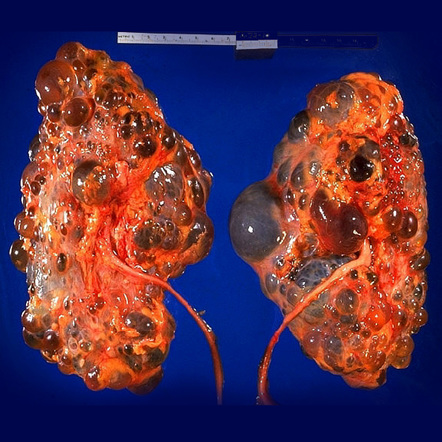
A 2 kg baby, born at 30 weeks gestation to an 18-year-old primigravida, died after 48 hours. Apgar scores were 5 and 8 at 1 and 5 minutes, respectively. Autopsy revealed bilateral enlarged kidneys with multiple radially arranged cysts. Which of the following findings is expected to be associated?
What is the most important cause of interstitial nephritis?
Which of the following is the least likely cause of necrotizing papillitis of the kidney?
Which of the following findings is pathognomonic of renal disease?
Hypocomplementemia is seen in which of the following conditions?
What is the characteristic histopathological finding of a "tram track appearance" in the kidney?
Which of the following can cause Rapidly Progressive Glomerulonephritis (RPGN), except?
Renal papillary necrosis is seen in which of the following conditions?
Explanation: **Explanation:** The term **"proliferative"** in glomerular pathology refers to an increase in the number of cells within the glomerulus (mesangial, endothelial, or epithelial cells). **Why IgA Nephropathy is correct:** IgA nephropathy (Berger’s disease) is characterized by the deposition of IgA immune complexes in the **mesangium**. This triggers **mesangial hypercellularity** (proliferation) and matrix expansion [1]. On light microscopy, it typically presents as a focal or diffuse mesangioproliferative pattern, making it a classic example of a proliferative glomerular disease [2]. **Analysis of Incorrect Options:** * **Amyloidosis:** This is a **non-proliferative** condition characterized by the extracellular deposition of fibrillar proteins (amyloid). It shows an acellular, eosinophilic "smudgy" appearance on H&E stain and Apple-green birefringence under polarized light with Congo red. * **Diabetes Mellitus:** Diabetic nephropathy is characterized by **basement membrane thickening** and **mesangial matrix expansion** (Kimmelstiel-Wilson nodules), but it is primarily a sclerotic process rather than a proliferative one [3]. * **Membranous Glomerulonephritis (MGN):** As the name suggests, this is a **non-proliferative** disease. It is characterized by diffuse thickening of the glomerular capillary wall due to subepithelial deposits ("spikes and domes") without an increase in cellularity [5]. **NEET-PG High-Yield Pearls:** * **IgA Nephropathy:** The most common cause of primary glomerulonephritis worldwide. It typically presents as **synpharyngitic hematuria** (blood in urine occurring concurrently with an upper respiratory infection) [2]. * **Proliferative Patterns:** Other examples include Post-Streptococcal Glomerulonephritis (Exudative/Proliferative) and Membranoproliferative Glomerulonephritis (MPGN) [4]. * **Non-Proliferative Patterns:** Minimal Change Disease, Focal Segmental Glomerulosclerosis (FSGS), and Membranous Nephropathy [5]. **References:** [1] Cross SS. Underwood's Pathology: A Clinical Approach. 6th ed. Common Clinical Problems From Diseases Of The Urinary And Male Genital Tracts, pp. 535-536. [2] Kumar V, Abbas AK, et al.. Robbins and Cotran Pathologic Basis of Disease. 9th ed. The Kidney, pp. 928-929. [3] Kumar V, Abbas AK, et al.. Robbins and Cotran Pathologic Basis of Disease. 9th ed. The Kidney, pp. 907-908. [4] Kumar V, Abbas AK, et al.. Robbins and Cotran Pathologic Basis of Disease. 9th ed. The Kidney, pp. 925-926. [5] Kumar V, Abbas AK, et al.. Robbins and Cotran Pathologic Basis of Disease. 9th ed. The Kidney, pp. 927-928.
Explanation: **Explanation:** The correct answer is **MPGN (Membranoproliferative Glomerulonephritis)**. **Why MPGN is the correct answer:** MPGN, particularly **Type II (Dense Deposit Disease)**, has the highest recurrence rate among all primary glomerular diseases following renal transplantation, approaching **80–100%**. The underlying pathophysiology involves the **alternative complement pathway** (often due to C3 nephritic factor), which remains active in the patient's circulation post-transplant, leading to rapid destruction of the graft [2]. MPGN Type I also recurs frequently (approx. 30–50%). **Analysis of Incorrect Options:** * **Goodpasture’s Syndrome:** Recurrence is rare if the transplant is delayed until anti-GBM antibodies are undetectable in the serum for at least 6–12 months [1]. * **Alport’s Syndrome:** This is a genetic defect in Type IV collagen. Since the donor kidney has normal collagen, the disease itself cannot "recur." However, these patients may develop *de novo* anti-GBM disease (Post-transplant Alport’s) because their immune system sees the normal collagen as foreign. * **Amyloidosis:** While systemic amyloidosis can involve the graft, the rate of recurrence and graft loss is significantly lower than that of MPGN. **NEET-PG High-Yield Pearls:** * **Highest Recurrence Risk:** MPGN Type II (Dense Deposit Disease) [2]. * **Most Common Cause of Graft Failure (Recurrence):** FSGS (recurs in ~30% of cases but is a leading cause of early graft loss). * **IgA Nephropathy:** Very common histological recurrence (~50%), but rarely leads to actual graft failure. * **Least likely to recur:** Post-streptococcal glomerulonephritis (PSGN). **References:** [1] Kumar V, Abbas AK, et al.. Robbins and Cotran Pathologic Basis of Disease. 9th ed. The Kidney, pp. 931-933. [2] Kumar V, Abbas AK, et al.. Robbins and Cotran Pathologic Basis of Disease. 9th ed. The Kidney, pp. 926-927.
Explanation: **Explanation:** The clinical presentation of bilateral enlarged kidneys with **radially arranged cysts** in a neonate is pathognomonic for **Autosomal Recessive Polycystic Kidney Disease (ARPKD)** [1]. **1. Why Option B is Correct:** ARPKD is caused by mutations in the **PKHD1 gene**, which encodes **fibrocystin** [1]. This protein is found in the primary cilia of epithelial cells in both the renal collecting ducts and the bile ducts [1]. Consequently, ARPKD is almost invariably associated with liver involvement, specifically **ductal plate malformations** [2]. This manifests as **congenital hepatic fibrosis** and biliary cysts (Caroli syndrome in some cases). In older children who survive the neonatal period, portal hypertension and splenomegaly are common clinical features [2]. **2. Why Incorrect Options are Wrong:** * **Option A (Imperforate anus):** This is typically part of the VACTERL association, not ARPKD. * **Option C (Absence of ureter):** This is seen in Renal Agenesis or certain forms of Multicystic Dysplastic Kidney (MCDK), but not in ARPKD, where the collecting system is anatomically present but dilated. * **Option D (Holoprosencephaly):** This midline brain defect is associated with Trisomy 13 (Patau Syndrome), which can feature microcystic kidneys, but not the classic radial "sunray" cysts of ARPKD. **Clinical Pearls for NEET-PG:** * **Gross Appearance:** Kidneys are enlarged and maintain a fetal lobulated shape; the cut surface shows elongated, cylindrical cysts perpendicular to the capsule (**radial arrangement**) [1]. * **Potter Sequence:** Severe ARPKD leads to oligohydramnios, resulting in pulmonary hypoplasia, flattened facies, and clubfeet. * **Genetics:** Mapped to **Chromosome 6p** [1]. * **Differential:** Unlike ARPKD, **ADPKD** (Adult type) presents with stochastic, spherical cysts and is associated with berry aneurysms and mitral valve prolapse [2]. **References:** [1] Kumar V, Abbas AK, et al.. Robbins and Cotran Pathologic Basis of Disease. 9th ed. The Kidney, pp. 952-953. [2] Cross SS. Underwood's Pathology: A Clinical Approach. 6th ed. Common Clinical Problems From Diseases Of The Urinary And Male Genital Tracts, pp. 544-545.
Explanation: **Explanation:** **Interstitial Nephritis (IN)**, specifically Acute Interstitial Nephritis (AIN), is a common cause of acute kidney injury characterized by inflammation and edema of the renal interstitium. **Why Drugs are the most important cause:** Drug-induced hypersensitivity is the leading cause of AIN, accounting for approximately **70-75% of cases**. It is a Type IV (delayed) hypersensitivity reaction [1]. The drugs act as haptens that bind to the cytoplasmic or extracellular components of tubular cells, becoming immunogenic [1]. The most common culprits include [2]: * **NSAIDs** (e.g., Ibuprofen, Naproxen) * **Antibiotics** (e.g., Penicillins, Cephalosporins, Sulfonamides, Rifampin) * **Proton Pump Inhibitors (PPIs)** (e.g., Omeprazole) * **Diuretics** (e.g., Furosemide, Thiazides) **Analysis of Incorrect Options:** * **Infection:** While infections (e.g., Pyelonephritis, Legionella, Leptospirosis, CMV) can cause interstitial nephritis, they are significantly less frequent than drug-induced causes in modern clinical practice [3]. * **Malignancy:** Certain hematological malignancies like Lymphoma or Leukemia can infiltrate the renal interstitium, but this is a rare etiology compared to drug reactions [3]. * **Dehydration:** Dehydration leads to **Pre-renal Azotemia** or Acute Tubular Necrosis (ATN) due to hypoperfusion, but it does not primarily cause an inflammatory interstitial infiltrate. **High-Yield NEET-PG Pearls:** 1. **Classic Triad:** Fever, Rash, and Eosinophilia (present in only ~10-15% of patients) [2]. 2. **Urinary Findings:** Sterile pyuria (white blood cells in urine without bacteria) and **Eosinophiluria** (Hansel’s or Wright’s stain). 3. **Pathology:** Light microscopy shows interstitial edema with an infiltrate of lymphocytes and **eosinophils** [1]. 4. **Key Distinction:** Unlike many drug reactions, drug-induced AIN is **not dose-dependent**; it can occur even with a single dose [2]. **References:** [1] Kumar V, Abbas AK, et al.. Robbins and Cotran Pathologic Basis of Disease. 9th ed. The Kidney, pp. 940-941. [2] Cross SS. Underwood's Pathology: A Clinical Approach. 6th ed. Common Clinical Problems From Diseases Of The Urinary And Male Genital Tracts, pp. 538-539. [3] Kumar V, Abbas AK, et al.. Robbins and Cotran Pathologic Basis of Disease. 9th ed. The Kidney, pp. 934-935.
Explanation: **Explanation:** **Necrotizing Papillitis (Renal Papillary Necrosis)** is characterized by ischemic and/or inflammatory necrosis of the renal papillae [3]. To remember the common causes, use the mnemonic **POSTCARDS** (Pyelonephritis, Obstruction, Sickle cell, Tuberculosis, Cirrhosis, Analgesics, Renal vein thrombosis, Diabetes, Systemic vasculitis). **Why Tuberculous Pyelonephritis is the least likely cause:** While Tuberculosis (TB) is listed in the broad differential, it typically causes **caseous necrosis** and extensive destruction of the entire renal parenchyma (putty kidney), rather than isolated papillary necrosis. In the context of standard NEET-PG questions, TB is considered a rare or "least likely" cause compared to the classic "Big Four" triggers. **Analysis of Incorrect Options:** * **Diabetes Mellitus (Option C):** The most common cause. It involves a combination of ischemia (due to microangiopathy) and increased susceptibility to infection [1], [3]. * **Analgesic Nephropathy (Option D):** Chronic use of NSAIDs/Phenacetin inhibits vasodilatory prostaglandins, leading to chronic medullary ischemia and direct toxic injury to the papillae. * **Sickle Cell Disease/Trait (Option A):** The hypertonic and hypoxic environment of the renal medulla causes sickling in the vasa recta, leading to micro-infarctions and papillary necrosis [2]. **High-Yield Clinical Pearls for NEET-PG:** * **Classic Mnemonic (SAD):** **S**ickle cell, **A**nalgesics, **D**iabetes (The most frequent causes) [3]. * **Clinical Presentation:** Gross hematuria, flank pain (due to sloughed papillae obstructing the ureter), and "ring shadows" on intravenous pyelography (IVP) [1]. * **Pathology:** Macroscopically, the papillae appear grey-white to yellow; microscopically, there is coagulative necrosis with preserved tubule outlines [3]. **References:** [1] Cross SS. Underwood's Pathology: A Clinical Approach. 6th ed. Common Clinical Problems From Diseases Of The Urinary And Male Genital Tracts, pp. 543-544. [2] Kumar V, Abbas AK, et al.. Robbins and Cotran Pathologic Basis of Disease. 9th ed. The Kidney, pp. 948-949. [3] Kumar V, Abbas AK, et al.. Robbins and Cotran Pathologic Basis of Disease. 9th ed. The Kidney, p. 937.
Explanation: **Explanation:** In renal pathology, **casts** are cylindrical structures formed in the lumen of the distal convoluted tubule and collecting ducts [2]. Their presence (cylindruria) is a highly specific indicator of renal parenchymal disease because they are molded within the nephron itself [1]. **Why Coarse Granular Casts are the Correct Answer:** Granular casts (both coarse and fine) are formed from the breakdown of cellular elements (like tubular epithelial cells) [1] or the aggregation of plasma proteins with Tamm-Horsfall protein. **Coarse granular casts** are considered a hallmark of significant renal parenchymal injury [1]. They are classically associated with **Acute Tubular Necrosis (ATN)** [2], but can also be seen in advanced stages of glomerulonephritis and chronic kidney disease. Their presence always signifies a pathological state within the kidney. **Analysis of Incorrect Options:** * **A. Hyaline Casts:** These are composed primarily of Tamm-Horsfall protein. While seen in renal disease, they are **not pathognomonic** because they can be found in normal individuals following strenuous exercise, dehydration, or concentrated urine [1]. * **C. Cystine Crystals:** While these are abnormal and indicate cystinuria (a genetic metabolic disorder), they represent a metabolic defect rather than primary "renal disease" or parenchymal damage in the same diagnostic context as casts. * **D. Epithelial Cells:** Squamous epithelial cells are common contaminants from the lower genitourinary tract. While renal tubular epithelial cells indicate damage [2], "epithelial cells" as a general term is too non-specific to be pathognomonic. **NEET-PG High-Yield Pearls:** * **RBC Casts:** Pathognomonic for **Glomerulonephritis** (e.g., PSGN) [1]. * **WBC Casts:** Suggestive of **Pyelonephritis** or Tubulointerstitial nephritis. * **Fatty Casts ("Maltese Cross"):** Pathognomonic for **Nephrotic Syndrome**. * **Broad/Waxy Casts:** Indicative of **Chronic Renal Failure** (due to dilated, sluggish tubules). * **Tamm-Horsfall Protein:** The mucoprotein matrix essential for all cast formation [3], secreted by the Thick Ascending Limb of Henle. **References:** [1] Cross SS. Underwood's Pathology: A Clinical Approach. 6th ed. Common Clinical Problems From Diseases Of The Urinary And Male Genital Tracts, pp. 520-521. [2] Kumar V, Abbas AK, et al.. Robbins and Cotran Pathologic Basis of Disease. 9th ed. The Kidney, pp. 933-934. [3] Kumar V, Abbas AK, et al.. Robbins and Cotran Pathologic Basis of Disease. 9th ed. The Kidney, pp. 942-943.
Explanation: ### Explanation **1. Correct Answer: A. Post-streptococcal glomerulonephritis (PSGN)** Hypocomplementemia (low serum complement levels) occurs when the complement system is excessively activated and consumed during an inflammatory process. In **PSGN**, the alternative pathway is triggered by immune complex deposition [1]. Specifically, **C3 levels are significantly decreased**, while C4 levels usually remain normal. A key diagnostic feature for NEET-PG is that C3 levels typically return to normal within 6–8 weeks; failure to do so suggests a different diagnosis like MPGN. **2. Analysis of Incorrect Options:** * **B. Membranous Glomerulonephritis (MGN):** This is an immune-complex-mediated disease, but it typically presents with **normal complement levels** [1]. It is characterized by subepithelial deposits and "spike and dome" appearance on basement membrane staining. * **C. Focal Segmental Glomerulosclerosis (FSGS):** FSGS is generally considered a non-immune mediated podocytopathy. It is characterized by sclerosis of some (focal) segments of some (segmental) glomeruli. Complement levels are **consistently normal**. * *Note:* The option mentions "Dense Deposit Disease" (DDD). While DDD (MPGN Type II) *does* cause hypocomplementemia [2], it is a distinct entity from FSGS. Since FSGS itself does not cause low complement, this option is incorrect. **3. High-Yield Clinical Pearls for NEET-PG:** To master questions on hypocomplementemia, remember the **"Low Complement Glomerulonephritides"** using the mnemonic **"PMS"**: 1. **P**SGN (Post-streptococcal) 2. **M**PGN (Membranoproliferative GN - both Type I and Type II/Dense Deposit Disease) [2] 3. **S**LE (Systemic Lupus Erythematosus - specifically Class III and IV) * **PSGN:** Low C3, Normal C4 (Alternative pathway). * **SLE:** Low C3 and Low C4 (Classical pathway). * **MPGN Type II:** Low C3 due to "C3 Nephritic Factor" (an autoantibody that stabilizes C3 convertase) [2]. **References:** [1] Kumar V, Abbas AK, et al.. Robbins and Cotran Pathologic Basis of Disease. 9th ed. The Kidney, pp. 910-915. [2] Cross SS. Underwood's Pathology: A Clinical Approach. 6th ed. Common Clinical Problems From Diseases Of The Urinary And Male Genital Tracts, pp. 534-535.
Explanation: **Membranoproliferative Glomerulonephritis (MPGN)** is characterized by the **"tram track" or "double contour" appearance** of the glomerular basement membrane (GBM) [1]. This occurs due to the interposition of mesangial cell processes into the peripheral capillary loops, which leads to the synthesis of a new layer of basement membrane material [1]. On Silver stain (PAM) or PAS stain, this appears as two parallel lines (splitting) of the GBM. **Analysis of Options:** * **Membranous Nephropathy (Option A):** Characterized by subepithelial deposits resulting in **"spike and dome"** appearance on silver stain [2]. There is diffuse thickening of the GBM without cellular proliferation or splitting. * **IgA Nephropathy (Option B):** The hallmark is **mesangial expansion** with IgA-dominant immune complex deposits. It does not typically show GBM splitting. * **Crescentic Glomerulonephritis (Option D):** Defined by the presence of **crescents** (proliferation of parietal epithelial cells and monocytes) in Bowman’s space, usually associated with Rapidly Progressive Glomerulonephritis (RPGN) [1]. **High-Yield NEET-PG Pearls:** * **MPGN Type I:** Associated with subendothelial deposits and HBV/HCV infections [1]. * **MPGN Type II (Dense Deposit Disease):** Associated with intramembranous deposits and **C3 Nephritic Factor** (stabilizes C3 convertase) [3]. * **Lobular Appearance:** MPGN often shows an exaggerated lobular profile of the glomerular tuft due to mesangial hypercellularity. * **Stain of Choice:** Periodic Acid-Schiff (PAS) or Methenamine Silver stain best demonstrates the tram-track appearance. **References:** [1] Kumar V, Abbas AK, et al.. Robbins and Cotran Pathologic Basis of Disease. 9th ed. The Kidney, pp. 925-927. [2] Kumar V, Abbas AK, et al.. Robbins and Cotran Pathologic Basis of Disease. 9th ed. The Kidney, p. 921. [3] Cross SS. Underwood's Pathology: A Clinical Approach. 6th ed. Common Clinical Problems From Diseases Of The Urinary And Male Genital Tracts, pp. 534-535.
Explanation: ### Explanation **Rapidly Progressive Glomerulonephritis (RPGN)**, also known as **Crescentic Glomerulonephritis**, is a clinical syndrome characterized by a rapid decline in renal function (usually a 50% decline in GFR within weeks to months) and the histological presence of glomerular crescents in more than 50% of glomeruli [1]. #### Why Minimal Change Disease (MCD) is the Correct Answer: **Minimal Change Disease** is the most common cause of Nephrotic Syndrome in children [2]. Pathologically, it shows normal glomeruli under light microscopy and only **effacement of podocyte foot processes** under electron microscopy [1]. It does **not** involve severe glomerular inflammation, necrosis, or crescent formation, and thus does not progress to RPGN. #### Analysis of Incorrect Options: * **Poststreptococcal Glomerulonephritis (PSGN):** While most cases resolve, approximately 1–3% of patients (especially adults) can develop a severe inflammatory response leading to **Type II (Immune-complex mediated) RPGN** [1]. * **Wegener Granulomatosis (Granulomatosis with Polyangiitis):** This is a classic cause of **Type III (Pauci-immune) RPGN** [1]. It is characterized by the absence of immune deposits and a positive **c-ANCA (PR3-ANCA)**. * **Systemic Lupus Erythematosus (SLE):** Specifically, **Class IV Lupus Nephritis** (Diffuse Proliferative GN) is a common cause of **Type II RPGN** due to massive subendothelial immune complex deposition. #### NEET-PG High-Yield Pearls: * **The Hallmark:** The "Crescent" is composed of proliferating **parietal epithelial cells** and migrating **monocytes/macrophages** in Bowman’s space. * **Classification of RPGN:** * **Type I (Anti-GBM):** Goodpasture Syndrome (Linear IF) [1]. * **Type II (Immune Complex):** SLE, PSGN, IgA Nephropathy (Granular IF) [1]. * **Type III (Pauci-immune):** Wegener’s, Microscopic Polyangiitis (Negative IF) [1]. * **Fibrin** is a key component found within the crescents, acting as a stimulus for their formation [1]. **References:** [1] Kumar V, Abbas AK, et al.. Robbins and Cotran Pathologic Basis of Disease. 9th ed. The Kidney, pp. 915-919. [2] Kumar V, Abbas AK, et al.. Robbins and Cotran Pathologic Basis of Disease. 9th ed. The Kidney, pp. 927-928.
Explanation: **Explanation:** **Renal Papillary Necrosis (RPN)** is characterized by ischemic coagulative necrosis of the renal medullary pyramids and papillae. The renal papillae are particularly vulnerable to ischemia because they are located at the distal end of the vasa recta, where oxygen tension is naturally low [3]. **1. Why Sickle Cell Disease (SCD) is correct:** In SCD (and Sickle Cell Trait), the hypertonic and hypoxic environment of the renal medulla promotes the sickling of red blood cells within the vasa recta [1]. This leads to microvascular occlusion (vaso-occlusive crisis), resulting in ischemia and subsequent infarction of the papillae [1], [3]. **2. Why the other options are incorrect:** * **Gouty Nephropathy:** Typically presents with urate crystal deposition in the medullary interstitium (tophi) or acute uric acid crystals in the tubules, leading to chronic interstitial nephritis rather than acute papillary necrosis [4]. * **Chronic Glomerulonephritis:** This leads to global scarring, glomerular loss, and secondary tubular atrophy (end-stage renal disease), but it does not specifically target the papillae for necrotic infarction. * **Tumor Lysis Syndrome:** This causes **Acute Urate Nephropathy** due to the precipitation of uric acid crystals in the collecting ducts, leading to acute kidney injury (AKI), not papillary necrosis [4]. **3. High-Yield Clinical Pearls for NEET-PG:** To remember the causes of Renal Papillary Necrosis, use the mnemonic **POSTCARDS**: * **P** – Pyelonephritis (Acute) [2], [3] * **O** – Obstruction of the urinary tract [2], [3] * **S** – **Sickle Cell Disease/Trait** [1], [3] * **T** – Tuberculosis * **C** – Cirrhosis * **A** – **Analgesic Abuse** (Phenacetin, NSAIDs – the most common cause historically) * **R** – Renal vein thrombosis * **D** – **Diabetes Mellitus** (Most common cause overall) [2], [3] * **S** – Systemic Vasculitis **Key Fact:** On imaging (IVP), RPN may show the **"Ring Sign"** (shadow of the sloughed papilla surrounded by contrast). **References:** [1] Kumar V, Abbas AK, et al.. Robbins and Cotran Pathologic Basis of Disease. 9th ed. The Kidney, pp. 948-949. [2] Cross SS. Underwood's Pathology: A Clinical Approach. 6th ed. Common Clinical Problems From Diseases Of The Urinary And Male Genital Tracts, pp. 543-544. [3] Kumar V, Abbas AK, et al.. Robbins and Cotran Pathologic Basis of Disease. 9th ed. The Kidney, p. 937. [4] Kumar V, Abbas AK, et al.. Robbins and Cotran Pathologic Basis of Disease. 9th ed. The Kidney, pp. 941-942.
Congenital Anomalies of the Kidney
Practice Questions
Glomerular Diseases
Practice Questions
Tubular and Interstitial Diseases
Practice Questions
Vascular Diseases of the Kidney
Practice Questions
Cystic Diseases of the Kidney
Practice Questions
Urinary Tract Obstruction and Stones
Practice Questions
Renal Tumors
Practice Questions
Kidney in Systemic Diseases
Practice Questions
Renal Transplantation Pathology
Practice Questions
Urinary Tract Infections
Practice Questions
Get full access to all questions, explanations, and performance tracking.
Start For Free