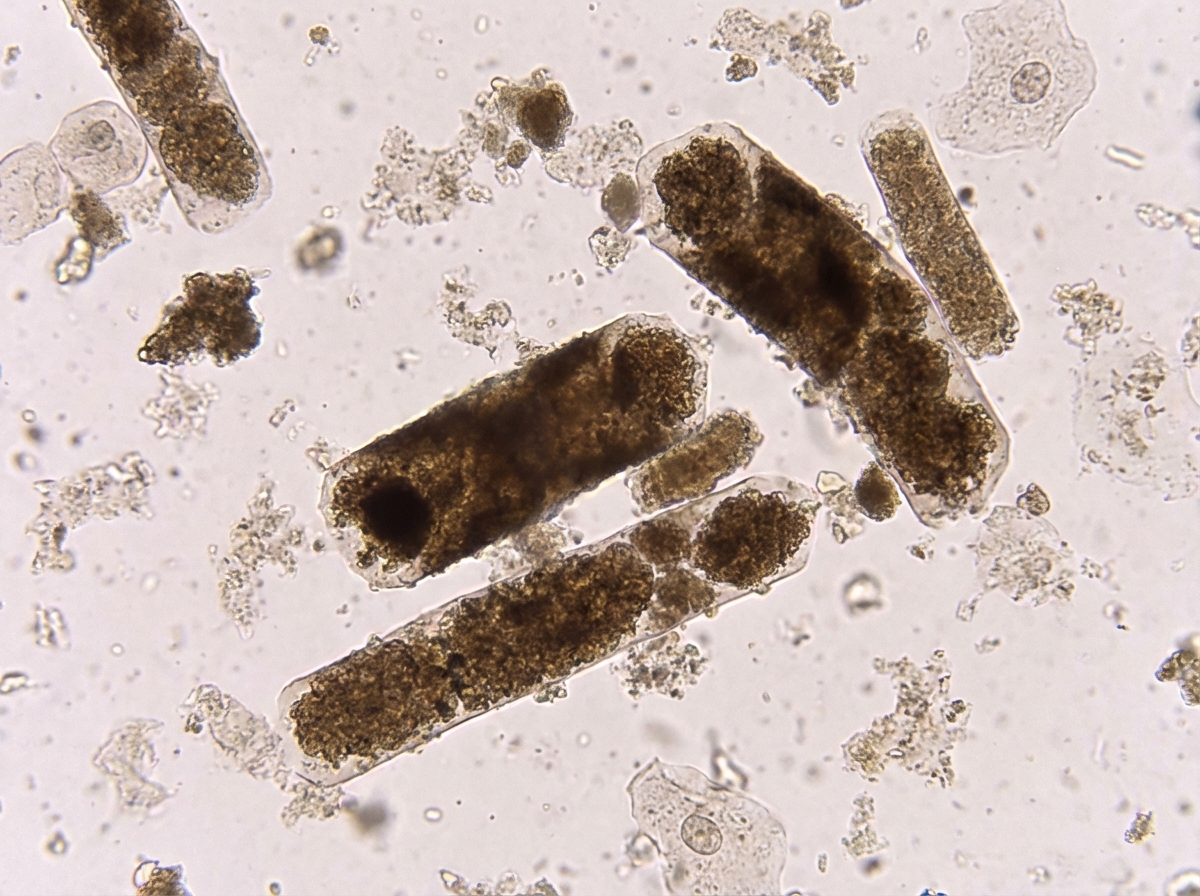
Which of the following proteins is associated with cystic disease in the kidney?
What is the most important prognostic indicator for Renal cell carcinoma?
Alport syndrome is characterized by which of the following features, except?
A patient presents with multiple cysts in both kidneys leading to renal failure and subsequently died of cerebrovascular bleeding. Postmortem findings revealed intraventricular aneurysmal rupture. What condition is associated with intracranial aneurysms?
Which condition is known to cause proteinuria in the nephrotic range?
Wire loop thickening of the glomerular basement membrane is seen in which condition?
Which of the following conditions are associated with low complement levels?
Nodular glomerulosclerosis is pathognomic for:
Which of the following is NOT a cause for edema in nephritic syndrome?
Electron microscopy is visually diagnostic in the renal biopsy study of which condition?
Explanation: **Explanation:** The correct answer is **D. All of the above**. Cystic kidney diseases are a group of hereditary disorders characterized by fluid-filled cysts, primarily caused by mutations in proteins localized to the **primary cilia-centrosome complex** of renal tubular epithelial cells [1]. * **Polycystin-1 & Polycystin-2 (Options B and C):** These proteins are encoded by the *PKD1* (85% of cases) and *PKD2* (15% of cases) genes, respectively [4]. Mutations in these genes lead to **Autosomal Dominant Polycystic Kidney Disease (ADPKD)** [3]. Polycystin-1 is a large adhesion molecule, while Polycystin-2 functions as a calcium-permeable cation channel [4]. Together, they regulate intracellular calcium signaling and tubular mechanotransduction [2]. * **Fibrocystin (Option A):** This protein is encoded by the *PKHD1* gene. Mutations in this gene result in **Autosomal Recessive Polycystic Kidney Disease (ARPKD)**. Fibrocystin is found in the primary cilia and is thought to be involved in the maintenance of tubular architecture [1]. **Clinical Pearls for NEET-PG:** 1. **ADPKD (Adult type):** Characterized by massive bilateral kidney enlargement; associated with **berry aneurysms** (Circle of Willis) and hepatic cysts [3]. 2. **ARPKD (Infantile type):** Characterized by "sponge-like" kidneys and is invariably associated with **congenital hepatic fibrosis** [1]. 3. **Ciliopathy:** All these conditions are classified as "ciliopathies" because the defective proteins reside in the primary cilia, which act as sensors for urine flow [5]. 4. **PKD1 vs. PKD2:** Mutations in *PKD1* typically result in earlier onset of end-stage renal disease (ESRD) compared to *PKD2*. **References:** [1] Kumar V, Abbas AK, et al.. Robbins and Cotran Pathologic Basis of Disease. 9th ed. The Kidney, pp. 950-955. [2] Kumar V, Abbas AK, et al.. Robbins and Cotran Pathologic Basis of Disease. 9th ed. The Kidney, pp. 951-952. [3] Cross SS. Underwood's Pathology: A Clinical Approach. 6th ed. Common Clinical Problems From Diseases Of The Urinary And Male Genital Tracts, pp. 544-545. [4] Kumar V, Abbas AK, et al.. Robbins and Cotran Pathologic Basis of Disease. 9th ed. The Kidney, pp. 950-951. [5] Kumar V, Abbas AK, et al.. Robbins and Cotran Pathologic Basis of Disease. 9th ed. The Kidney, pp. 954-955.
Explanation: **Explanation:** The most important prognostic indicator for **Renal Cell Carcinoma (RCC)** is the **Pathological Staging (TNM staging)** [1]. This is because the extent of anatomical spread—specifically whether the tumor has breached the renal capsule, involved the renal vein, or spread to lymph nodes and distant organs—is the primary determinant of overall survival and surgical resectability [2]. **Why the other options are incorrect:** * **Nuclear Grade (Fuhrman or ISUP/WHO Grade):** While grading (based on nuclear size, contour, and nucleoli) is a significant predictor of biological aggressiveness, it is considered secondary to staging [2]. It is most useful for predicting the behavior of clear cell and papillary RCCs but does not override the stage. * **Histological Type:** Different types have different prognoses (e.g., Chromophobe has a better prognosis than Clear Cell), but stage-for-stage, the anatomical extent remains the dominant factor [2]. * **Size:** While tumor size is a component of the 'T' in TNM staging (e.g., T1a vs. T1b), size alone is less critical than whether the tumor has invaded local structures like the adrenal gland or Gerota’s fascia. **High-Yield Clinical Pearls for NEET-PG:** * **Most common histological type:** Clear cell RCC (associated with VHL gene deletion on Chromosome 3p) [2]. * **Robson’s Staging:** An older staging system for RCC, now largely replaced by TNM. * **Classic Triad:** Hematuria, flank pain, and palpable mass (seen in only 10% of cases; usually signifies advanced stage). * **Paraneoplastic Syndromes:** RCC is the "Internist's tumor" because it frequently secretes EPO (polycythemia), PTHrP (hypercalcemia), and Renin (hypertension). **References:** [1] Cross SS. Underwood's Pathology: A Clinical Approach. 6th ed. (Basic Pathology) introduces the student to key general principles of pathology, both as a medical science and as a clinical activity with a vital role in patient care. Part 2 (Disease Mechanisms) provides fundamental knowledge about the cellular and molecular processes involved in diseases, providing the rationale for their treatment. Part 3 (Systematic Pathology) deals in detail with specific diseases, with emphasis on the clinically important aspects., pp. 236-237. [2] Kumar V, Abbas AK, et al.. Robbins and Cotran Pathologic Basis of Disease. 9th ed. The Kidney, pp. 957-961.
Explanation: **Explanation:** Alport Syndrome is a hereditary nephritis caused by mutations in the genes encoding the **Type IV collagen** alpha chains ($\alpha$3, $\alpha$4, or $\alpha$5), which are essential structural components of the basement membranes in the kidney, cochlea, and eye. **Why Cardiac Hypertrophy is the correct answer:** Cardiac hypertrophy is **not** a feature of Alport syndrome. The pathology is localized to tissues where Type IV collagen is a primary structural element. While chronic kidney disease (CKD) resulting from Alport syndrome can eventually lead to secondary hypertension and subsequent left ventricular hypertrophy, it is not a primary or diagnostic characteristic of the syndrome itself. **Analysis of other options:** * **X-linked inheritance:** This is the most common pattern (approx. 85% of cases), involving the *COL4A5* gene [1]. Autosomal recessive and dominant forms also exist but are less frequent. * **Nerve deafness:** Sensorineural hearing loss is a classic extra-renal manifestation, typically affecting high-frequency sounds during late childhood or adolescence [1]. * **Glomerulonephritis:** The hallmark of the disease is progressive hematuria and proteinuria leading to end-stage renal disease (ESRD) [1]. Histology shows a characteristic "basket-weave" appearance on electron microscopy due to irregular thickening and thinning of the Glomerular Basement Membrane (GBM). **NEET-PG High-Yield Pearls:** * **Mnemonic:** "Can't see, can't pee, can't hear high-C." * **Ocular findings:** Anterior lenticonus (pathognomonic) and maculopathy. * **Electron Microscopy:** Alternating areas of thinning and thickening with splitting of the lamina densa (**Basket-weave appearance**). * **Goodpasture connection:** Patients with Alport syndrome who receive a kidney transplant may develop anti-GBM antibodies against the "new" Type IV collagen, leading to post-transplant glomerulonephritis. **References:** [1] Kumar V, Abbas AK, et al.. Robbins and Cotran Pathologic Basis of Disease. 9th ed. The Kidney, pp. 929-930.
Explanation: ### Explanation **Correct Answer: B. Polycystic Kidney Disease (ADPKD)** The clinical presentation of bilateral renal cysts, progressive renal failure, and sudden death due to cerebrovascular bleeding (subarachnoid hemorrhage) is a classic description of **Autosomal Dominant Polycystic Kidney Disease (ADPKD)** [1]. The underlying medical concept is the association between ADPKD and **berry aneurysms** in the Circle of Willis. Approximately 5–10% of patients with ADPKD develop intracranial berry aneurysms. Rupture of these aneurysms leads to subarachnoid or intraventricular hemorrhage, which is a major extra-renal cause of mortality in these patients. ADPKD is caused by mutations in the *PKD1* (85%) or *PKD2* (15%) genes, which encode polycystin proteins found in primary cilia [1]. **Why other options are incorrect:** * **A. Congenital renal cysts:** This is a generic term. While ADPKD is congenital, "congenital cysts" can also refer to simple cysts or multicystic dysplastic kidney, which do not typically present with bilateral renal failure and intracranial aneurysms. * **C. Medullary sponge kidney:** This condition involves cystic dilatations of the collecting ducts in the medulla. It is usually asymptomatic or presents with kidney stones and hematuria; it does not progress to chronic renal failure or associate with intracranial aneurysms. **High-Yield Clinical Pearls for NEET-PG:** * **Extra-renal manifestations of ADPKD:** Liver cysts (most common), Berry aneurysms, Mitral Valve Prolapse (MVP), and Diverticulosis. * **Genetics:** *PKD1* (Chromosome 16) is more common and severe; *PKD2* (Chromosome 4) has a slower progression [1]. * **Diagnosis:** Ultrasound is the primary screening tool. * **Cause of Death:** Most common cause is Cardiac (Uremia/Hypertension); second most common is infection; a significant specific cause is Aneurysmal rupture. **References:** [1] Kumar V, Abbas AK, et al.. Robbins and Cotran Pathologic Basis of Disease. 9th ed. The Kidney, pp. 950-955.
Explanation: **Explanation:** **Focal Segmental Glomerulosclerosis (FSGS)** is a leading cause of **Nephrotic Syndrome** in adults [1], [2]. The hallmark of nephrotic syndrome is heavy proteinuria (>3.5 g/day), which occurs due to the effacement of podocyte foot processes and the disruption of the glomerular filtration barrier [3]. In FSGS, the sclerosis affects some (focal) but not all glomeruli, and only a portion (segmental) of the capillary tuft [2]. **Analysis of Options:** * **A. Membranous Glomerulonephritis (MGN):** While MGN is a classic cause of nephrotic-range proteinuria, **FSGS** is currently the most common primary cause of nephrotic syndrome in adults in many populations and is frequently the "expected" answer in competitive exams when both are listed, depending on the clinical context provided [1]. * **C. Nodular Glomerulosclerosis (Kimmelstiel-Wilson lesions):** This is pathognomonic for **Diabetic Nephropathy**. While it causes significant proteinuria, it is a secondary manifestation of a systemic metabolic disease rather than a primary glomerulopathy [1]. * **D. Crescentic Glomerulonephritis (RPGN):** This condition typically presents as **Nephritic Syndrome**, characterized by rapid decline in GFR, hematuria, and hypertension [4]. Proteinuria is usually sub-nephrotic. **High-Yield Clinical Pearls for NEET-PG:** * **Most common cause of Nephrotic Syndrome:** In children, it is **Minimal Change Disease (MCD)**; in adults, it is **FSGS** [1], [3]. * **Morphology:** FSGS shows IgM and C3 deposition in sclerotic areas on Immunofluorescence [5]. * **HIV-Associated Nephropathy (HIVAN):** Presents as a "collapsing variant" of FSGS, which carries a poor prognosis [5]. * **Heroin use:** Strongly associated with the development of FSGS. **References:** [1] Kumar V, Abbas AK, et al.. Robbins and Cotran Pathologic Basis of Disease. 9th ed. The Kidney, pp. 919-921. [2] Cross SS. Underwood's Pathology: A Clinical Approach. 6th ed. Common Clinical Problems From Diseases Of The Urinary And Male Genital Tracts, pp. 530-531. [3] Kumar V, Abbas AK, et al.. Robbins and Cotran Pathologic Basis of Disease. 9th ed. The Kidney, pp. 927-928. [4] Cross SS. Underwood's Pathology: A Clinical Approach. 6th ed. Common Clinical Problems From Diseases Of The Urinary And Male Genital Tracts, pp. 527-528. [5] Cross SS. Underwood's Pathology: A Clinical Approach. 6th ed. Common Clinical Problems From Diseases Of The Urinary And Male Genital Tracts, pp. 531-532.
Explanation: **Explanation:** **1. Why SLE is the Correct Answer:** "Wire loop" lesions are a classic histopathological hallmark of **Lupus Nephritis (Class IV - Diffuse Proliferative Glomerulonephritis)** [2]. This appearance is caused by the subendothelial deposition of large immune complexes along the glomerular basement membrane (GBM). On light microscopy, these deposits create a rigid, thickened, and refractive appearance of the capillary loops, resembling a bent wire [2]. Immunofluorescence typically shows a "full house" pattern (IgG, IgA, IgM, C3, and C1q) [1]. **2. Why Other Options are Incorrect:** * **Non-insulin dependent diabetes mellitus:** Characterized by diffuse thickening of the GBM and **Kimmelstiel-Wilson (KW) nodules** (nodular glomerulosclerosis), not wire loop lesions. * **Rapidly progressive glomerulonephritis (RPGN):** The hallmark is **crescent formation** in Bowman’s space due to the proliferation of parietal epithelial cells and fibrin deposition [3]. * **Malignant hypertension:** Associated with **fibrinoid necrosis** of arterioles and "onion-skin" thickening of the vessel walls (hyperplastic arteriolosclerosis), rather than specific GBM wire looping. **3. High-Yield Clinical Pearls for NEET-PG:** * **Most common and most severe form of Lupus Nephritis:** Class IV (Diffuse Proliferative) [2]. * **Electron Microscopy (EM) finding in SLE:** Subendothelial deposits (wire loops) and characteristic **tubuloreticular inclusions** within endothelial cells (induced by Interferon-alpha). * **Most common cause of death in SLE:** Renal failure [1]. * **Memory Aid:** "Wire loops = Lupus." Both contain the letter 'L'. **References:** [1] Cross SS. Underwood's Pathology: A Clinical Approach. 6th ed. Common Clinical Problems From Diseases Of The Urinary And Male Genital Tracts, pp. 532-533. [2] Kumar V, Abbas AK, et al.. Robbins and Cotran Pathologic Basis of Disease. 9th ed. Diseases of the Immune System, pp. 230-232. [3] Cross SS. Underwood's Pathology: A Clinical Approach. 6th ed. Common Clinical Problems From Diseases Of The Urinary And Male Genital Tracts, pp. 528-529.
Explanation: ### Explanation The classification of glomerular diseases based on serum complement levels is a high-yield topic for NEET-PG. Low complement levels (Hypocomplementemia) occur when the complement system is excessively consumed during the formation or deposition of immune complexes. **1. Why Option B is Correct:** * **Post-streptococcal Glomerulonephritis (PSGN):** Characterized by the activation of the **Alternative Pathway**, leading specifically to low **C3** levels (C4 is usually normal) [1]. * **Membranoproliferative Glomerulonephritis (MPGN):** * **Type I:** Activates the Classical Pathway (Low C3 and C4) [2]. * **Type II (Dense Deposit Disease):** Associated with **C3 Nephritic Factor**, which stabilizes C3 convertase, leading to massive consumption of C3 [3]. * **Infective Endocarditis (IE):** Chronic antigenemia leads to circulating immune complexes that consume complement (Classical Pathway). **2. Why Other Options are Incorrect:** * **Wegener’s Granulomatosis (GPA):** This is a **Pauci-immune** vasculitis. By definition, there is little to no immune complex deposition; therefore, complement levels remain **normal**. * **Goodpasture’s Syndrome:** This is caused by anti-GBM antibodies (Type II Hypersensitivity). While antibodies bind to the basement membrane, they do not typically cause significant systemic complement depletion; serum complement levels are **normal** [1]. **3. NEET-PG High-Yield Pearls:** * **The "Low Complement" Rule:** Remember the mnemonic **"S-M-I-L-E"** for low complement: **S**LE (Lupus Nephritis), **M**PGN, **I**nfective Endocarditis, **L**ymphoma (rarely), and **E**xtra-streptococcal (PSGN). * **Timeframe:** In PSGN, C3 levels typically return to normal within **6–8 weeks**. If they remain low beyond this, suspect MPGN. * **C3 vs. C4:** PSGN and MPGN Type II primarily show low C3. SLE and MPGN Type I show low C3 and low C4 [3]. **References:** [1] Kumar V, Abbas AK, et al.. Robbins and Cotran Pathologic Basis of Disease. 9th ed. The Kidney, pp. 914-915. [2] Cross SS. Underwood's Pathology: A Clinical Approach. 6th ed. Common Clinical Problems From Diseases Of The Urinary And Male Genital Tracts, pp. 534-535. [3] Kumar V, Abbas AK, et al.. Robbins and Cotran Pathologic Basis of Disease. 9th ed. The Kidney, pp. 926-927.
Explanation: ### Explanation **Correct Option: D. Diabetic nephropathy** Nodular glomerulosclerosis, also known as **Kimmelstiel-Wilson (KW) lesions**, is the most specific (pathognomonic) histological feature of diabetic nephropathy [1]. These are ovoid or spherical, laminated, eosinophilic hyaline masses located in the periphery of the glomerulus within the mesangial matrix [1]. They result from increased mesangial matrix synthesis and non-enzymatic glycosylation of proteins due to chronic hyperglycemia [3]. **Analysis of Incorrect Options:** * **A. Antiphospholipid syndrome:** Characterized by **thrombotic microangiopathy (TMA)**, leading to fibrin thrombi in glomerular capillaries and small arteries, rather than nodular sclerosis. * **B. Goodpasture's syndrome:** This is a Type II hypersensitivity reaction (anti-GBM antibodies) presenting histologically as **crescentic glomerulonephritis** (RPGN) with linear IgG deposits on immunofluorescence. * **C. Renal amyloidosis:** While amyloidosis can show nodular deposits (Congo Red positive with apple-green birefringence), they are not the classic KW nodules. Nodular glomerulosclerosis is a specific vascular complication of Diabetes Mellitus. **High-Yield Clinical Pearls for NEET-PG:** * **Earliest Change:** The earliest structural change in diabetic nephropathy is **GBM thickening**, while the earliest clinical sign is **microalbuminuria** (30–300 mg/day) [2]. * **Most Common Change:** The most common histological finding is **diffuse mesangial sclerosis** [1]. * **Pathognomonic Change:** **Kimmelstiel-Wilson nodules** (Nodular glomerulosclerosis) [1]. * **Fibrin Caps and Capsular Drops:** Other characteristic (but not pathognomonic) features of diabetes. * **Armanni-Ebstein Lesions:** Glycosylated deposits in the epithelial cells of the proximal convoluted tubules, also seen in diabetes. **References:** [1] Kumar V, Abbas AK, et al.. Robbins and Cotran Pathologic Basis of Disease. 9th ed. The Endocrine System, pp. 1121-1122. [2] Kumar V, Abbas AK, et al.. Robbins and Cotran Pathologic Basis of Disease. 9th ed. The Endocrine System, p. 1121. [3] Kumar V, Abbas AK, et al.. Robbins and Cotran Pathologic Basis of Disease. 9th ed. The Endocrine System, pp. 1119-1121.
Explanation: **Explanation:** In **Nephritic Syndrome**, the primary pathology is glomerular inflammation leading to a decreased Glomerular Filtration Rate (GFR). This triggers a cascade of physiological changes that result in edema, but **lymphatic obstruction** is not one of them [1]. Lymphatic obstruction (lymphedema) is typically seen in conditions like filariasis, post-surgical scarring, or malignancy, rather than primary renal disease [2]. **Why the other options are causes of edema in Nephritic Syndrome:** * **High hydrostatic pressure of plasma (A):** Decreased GFR leads to salt and water retention [2]. This increases the intravascular volume, raising the capillary hydrostatic pressure, which forces fluid into the interstitium [3]. * **Increased vascular permeability (B):** The systemic inflammatory response associated with the underlying glomerulonephritis can lead to increased capillary permeability, allowing fluid to leak more easily into the tissues. * **Decreased oncotic pressure of plasma (D):** While more characteristic of Nephrotic Syndrome, Nephritic Syndrome also involves proteinuria (though usually <3.5g/day). This loss of albumin, combined with hemodilution from fluid retention, lowers the plasma oncotic pressure, facilitating edema [3]. **NEET-PG High-Yield Pearls:** * **Nephritic vs. Nephrotic:** Nephritic syndrome is characterized by the "PHAR" mnemonic: **P**roteinuria (mild), **H**ematuria (Cola-colored urine/RBC casts), **A**zotemia, and **R**aised BP (Hypertension). * **Mechanism of Edema:** In Nephritic syndrome, edema is primarily **"Overfill"** (due to salt/water retention), whereas in Nephrotic syndrome, it is **"Underfill"** (due to massive hypoalbuminemia). * **Commonest Cause:** Post-Streptococcal Glomerulonephritis (PSGN) is the classic prototype for nephritic syndrome in exams. **References:** [1] Cross SS. Underwood's Pathology: A Clinical Approach. 6th ed. (Basic Pathology) introduces the student to key general principles of pathology, both as a medical science and as a clinical activity with a vital role in patient care. Part 2 (Disease Mechanisms) provides fundamental knowledge about the cellular and molecular processes involved in diseases, providing the rationale for their treatment. Part 3 (Systematic Pathology) deals in detail with specific diseases, with emphasis on the clinically important aspects., pp. 125-126. [2] Kumar V, Abbas AK, et al.. Robbins and Cotran Pathologic Basis of Disease. 9th ed. Hemodynamic Disorders, Thromboembolic Disease, and Shock, pp. 124-126. [3] Kumar V, Abbas AK, et al.. Robbins and Cotran Pathologic Basis of Disease. 9th ed. Hemodynamic Disorders, Thromboembolic Disease, and Shock, p. 124.
Explanation: **Explanation:** In renal pathology, while light microscopy and immunofluorescence (IF) are vital, **Alport syndrome** is the classic example where **Electron Microscopy (EM)** is the gold standard and visually diagnostic [2]. **Why Alport Syndrome is Correct:** Alport syndrome is a genetic disorder caused by mutations in the genes encoding the **α-chains of Type IV collagen** (COL4A3, COL4A4, or COL4A5) [1]. Since Type IV collagen is a structural component of the Glomerular Basement Membrane (GBM), the diagnosis relies on visualizing structural defects. EM characteristically shows a **"basket-weave appearance"** due to irregular thickening, thinning, and longitudinal splitting (lamellation) of the lamina densa. **Why Other Options are Incorrect:** * **Goodpasture’s Syndrome:** Diagnosis is primarily based on **Immunofluorescence**, which shows pathognomonic **linear IgG deposits** along the GBM [2]. * **Churg-Strauss (EGPA) & Wegener’s (GPA):** These are Small Vessel Vasculitides. They are characterized as **Pauci-immune** glomerulonephritis, meaning IF and EM show little to no immune deposits. Diagnosis relies on clinical features, ANCA serology, and light microscopy showing necrotizing crescentic glomerulonephritis. **High-Yield Clinical Pearls for NEET-PG:** * **Alport Triad:** Hereditary nephritis (hematuria/ESRD), Sensorineural deafness, and Ocular defects (Anterior Lenticonus) [1]. * **Thin Basement Membrane Disease:** Often confused with Alport on EM, but shows *uniform* thinning of the GBM without splitting/lamellation. * **Type IV Collagen:** Also deficient in Goodpasture’s (autoantibodies against the non-collagenous domain), but the *structural* diagnosis via EM is specific to Alport. **References:** [1] Kumar V, Abbas AK, et al.. Robbins and Cotran Pathologic Basis of Disease. 9th ed. The Kidney, pp. 929-930. [2] Cross SS. Underwood's Pathology: A Clinical Approach. 6th ed. Common Clinical Problems From Diseases Of The Urinary And Male Genital Tracts, pp. 526-527.
Congenital Anomalies of the Kidney
Practice Questions
Glomerular Diseases
Practice Questions
Tubular and Interstitial Diseases
Practice Questions
Vascular Diseases of the Kidney
Practice Questions
Cystic Diseases of the Kidney
Practice Questions
Urinary Tract Obstruction and Stones
Practice Questions
Renal Tumors
Practice Questions
Kidney in Systemic Diseases
Practice Questions
Renal Transplantation Pathology
Practice Questions
Urinary Tract Infections
Practice Questions
Get full access to all questions, explanations, and performance tracking.
Start For Free