What is the pathological feature observed on renal biopsy in Wegener's granulomatosis?
What is the characteristic feature seen in Wegener's granulomatosis?
Which of the following is NOT a cause of granular contracted kidney?
What is the pathological feature observed on renal biopsy in Wegener's granulomatosis?
What is the commonest cause of renal papillary necrosis?
What is the most common cause of glomerulonephritis?
Adult polycystic kidney disease is characterized by which mode of inheritance?
Following circulatory shock, which of the following occurs?
Michael Guttmann bodies are seen in which of the following conditions?
Which of the following statements regarding Wilms tumor is true?
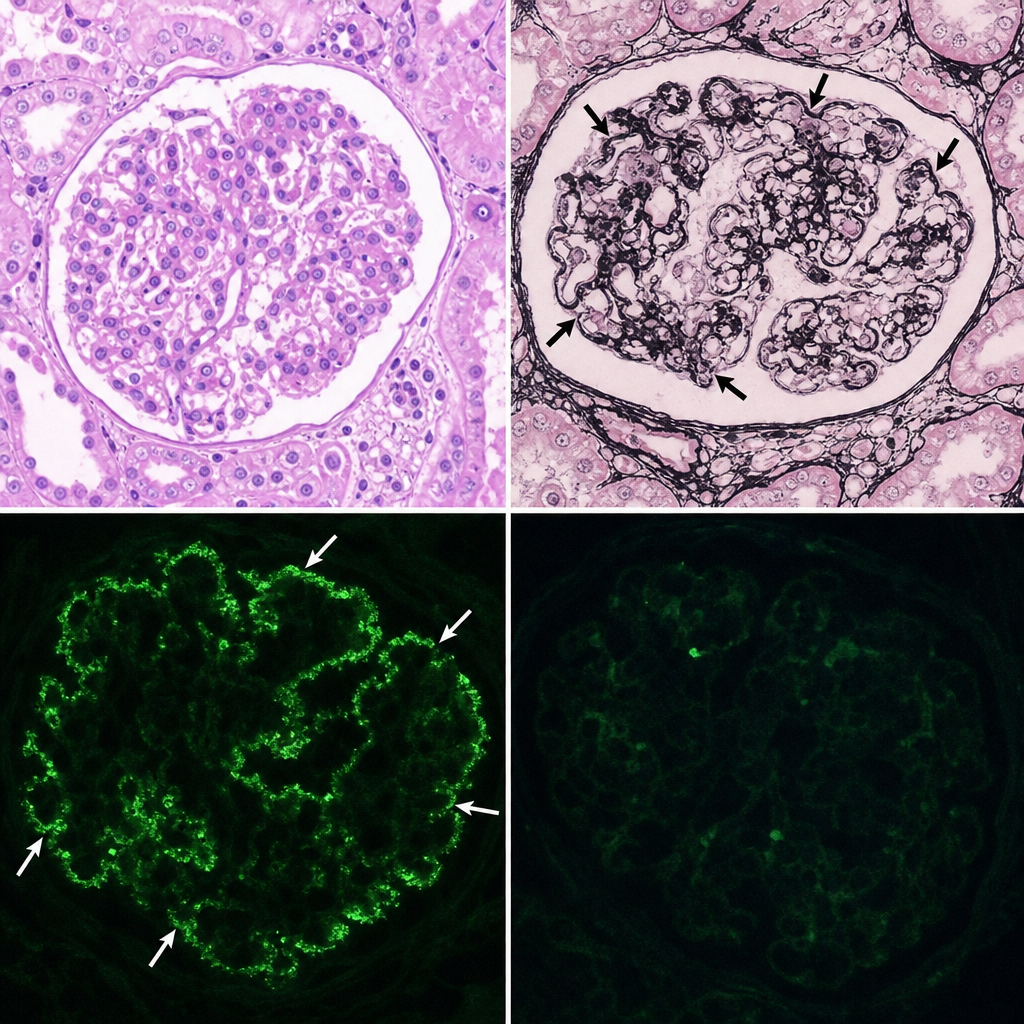
Explanation: **Explanation:** **Wegener’s Granulomatosis** (now known as Granulomatosis with Polyangiitis or GPA) is a systemic small-vessel vasculitis characterized by the triad of upper respiratory tract involvement, lower respiratory tract involvement, and renal disease [1]. **Why Option B is Correct:** The classic renal finding in GPA is **Pauci-immune Focal Necrotizing Glomerulonephritis** [1]. On light microscopy, this manifests as segmental necrosis of the glomerular tuft with fibrinoid necrosis [4]. If severe, it progresses to **crescentic glomerulonephritis** (RPGN Type III) [2]. The term "pauci-immune" refers to the characteristic absence or scarcity of immunoglobulin and complement deposits on immunofluorescence [2]. **Why Other Options are Incorrect:** * **Option A:** Nodular glomerulosclerosis (Kimmelstiel-Wilson lesions) is pathognomonic for **Diabetic Nephropathy**, not vasculitis. * **Options C & D:** While GPA is characterized by necrotizing granulomas in the **respiratory tract**, granulomas are **rarely seen on renal biopsy** [1]. The renal involvement is typically a non-granulomatous glomerulonephritis [3]. Finding a granuloma in the kidney parenchyma or vessel wall is an exceptional finding and not the standard pathological feature. **High-Yield Clinical Pearls for NEET-PG:** * **Serology:** Highly associated with **c-ANCA** (anti-PR3 antibodies) [1]. * **Triad:** Sinusitis (saddle nose deformity), Lung cavitary lesions (hemoptysis), and Renal failure. * **Immunofluorescence:** Negative/Pauci-immune (distinguishes it from Goodpasture syndrome and SLE) [4]. * **Treatment:** Cyclophosphamide and Corticosteroids are the mainstays of therapy. **References:** [1] Kumar V, Abbas AK, et al.. Robbins and Cotran Pathologic Basis of Disease. 9th ed. Diseases of Infancy and Childhood, pp. 519-520. [2] Kumar V, Abbas AK, et al.. Robbins and Cotran Pathologic Basis of Disease. 9th ed. The Kidney, pp. 917-918. [3] Cross SS. Underwood's Pathology: A Clinical Approach. 6th ed. Common Clinical Problems From Diseases Of The Urinary And Male Genital Tracts, pp. 536-537. [4] Kumar V, Abbas AK, et al.. Robbins and Cotran Pathologic Basis of Disease. 9th ed. The Kidney, pp. 931-933.
Explanation: **Explanation:** **Wegener’s Granulomatosis** (now known as Granulomatosis with Polyangiitis or GPA) is a systemic necrotizing vasculitis that primarily affects small to medium-sized vessels [1]. In the kidneys, the classic pathological hallmark is **Focal Necrotizing Glomerulonephritis** [1], [3]. 1. **Why Option B is correct:** In GPA, the renal involvement typically manifests as a "pauci-immune" focal necrotizing glomerulonephritis [3]. "Focal" means only some glomeruli are involved, and "necrotizing" refers to the segmental fibrinoid necrosis of the glomerular tuft. If severe, this progresses to **crescentic glomerulonephritis** (RPGN Type III), characterized by the proliferation of parietal epithelial cells in Bowman’s space [1], [2]. 2. **Why other options are incorrect:** * **Option A:** While GPA involves granulomatous inflammation of the respiratory tract, granulomas are **rarely** seen within the vessel walls themselves; the vasculitis is typically necrotizing [1]. * **Option C:** Nodular glomerulosclerosis (Kimmelstiel-Wilson lesions) is pathognomonic for **Diabetic Nephropathy**, not vasculitis. * **Option D:** Interstitial granulomas are not a standard diagnostic feature of renal GPA; the primary pathology is glomerular. **High-Yield Clinical Pearls for NEET-PG:** * **Triad of GPA:** 1. Necrotizing granulomas of the upper/lower respiratory tract, 2. Necrotizing vasculitis, 3. Renal disease (Focal necrotizing GN) [1]. * **Serology:** Highly associated with **c-ANCA** (anti-PR3 antibodies) [1]. * **Pauci-immune status:** Immunofluorescence shows little to no deposition of Ig or complement (distinguishes it from Goodpasture syndrome or SLE). * **Treatment:** Cyclophosphamide and Corticosteroids are the mainstays. **References:** [1] Kumar V, Abbas AK, et al.. Robbins and Cotran Pathologic Basis of Disease. 9th ed. Diseases of Infancy and Childhood, pp. 519-520. [2] Cross SS. Underwood's Pathology: A Clinical Approach. 6th ed. Common Clinical Problems From Diseases Of The Urinary And Male Genital Tracts, pp. 536-537. [3] Kumar V, Abbas AK, et al.. Robbins and Cotran Pathologic Basis of Disease. 9th ed. The Kidney, pp. 931-933.
Explanation: In renal pathology, the term **"granular contracted kidney"** refers to kidneys that have become small, shrunken, and possess a rough, pitted, or granular cortical surface due to chronic scarring and nephron loss [2, 3, 5]. ### Why Diabetes Mellitus is the Correct Answer In **Diabetes Mellitus**, the kidneys are typically **enlarged or normal-sized**, even in the presence of advanced diabetic nephropathy [2]. This is due to compensatory hypertrophy of the remaining nephrons and the accumulation of basement membrane material and matrix (Kimmelstiel-Wilson nodules) [1]. While the surface may show some scarring in very late stages, "contracted kidney" is not a characteristic feature of diabetes; rather, **renal enlargement** is a high-yield diagnostic clue. ### Explanation of Incorrect Options * **Chronic Pyelonephritis:** Characteristically produces **asymmetrically contracted kidneys** with coarse, U-shaped scars overlying blunted calyces [4]. * **Benign Nephrosclerosis:** Caused by long-standing hypertension, it results in **symmetrically contracted kidneys** with a fine, "grainy" leather-like appearance due to hyaline arteriolosclerosis [3]. * **Chronic Glomerulonephritis:** Represents the end-stage of various glomerular diseases, leading to **symmetrically shrunken kidneys** with a diffuse, fine granular surface [5]. ### NEET-PG High-Yield Pearls * **Large Kidneys in Renal Failure:** Think of Diabetes Mellitus, Amyloidosis, Polycystic Kidney Disease (ADPKD), and Myeloma kidney [2]. * **Small Kidneys in Renal Failure:** Think of Chronic Glomerulonephritis, Chronic Pyelonephritis, and Benign Nephrosclerosis [4, 5]. * **Fleabitten Kidney:** Seen in Malignant Hypertension and Subacute Bacterial Endocarditis (SBE). * **V-shaped scars:** Suggestive of healed renal infarcts. **References:** [1] Kumar V, Abbas AK, et al.. Robbins and Cotran Pathologic Basis of Disease. 9th ed. The Endocrine System, pp. 1121-1122. [2] Kumar V, Abbas AK, et al.. Robbins and Cotran Pathologic Basis of Disease. 9th ed. The Endocrine System, p. 1121. [3] Cross SS. Underwood's Pathology: A Clinical Approach. 6th ed. Common Clinical Problems From Diseases Of The Urinary And Male Genital Tracts, pp. 541-542. [4] Kumar V, Abbas AK, et al.. Robbins and Cotran Pathologic Basis of Disease. 9th ed. The Kidney, p. 939. [5] Kumar V, Abbas AK, et al.. Robbins and Cotran Pathologic Basis of Disease. 9th ed. The Kidney, pp. 953-954.
Explanation: **Wegener’s Granulomatosis** (now known as Granulomatosis with Polyangiitis - GPA) is a systemic small-vessel vasculitis characterized by the triad of upper respiratory tract involvement, lower respiratory tract involvement, and renal disease [1]. **Why Option B is Correct:** The hallmark renal lesion in GPA is **Focal Necrotizing Glomerulonephritis** [2]. In its early stages, it involves only some glomeruli (focal) and only portions of the individual glomerulus (segmental) [2]. If left untreated, it typically progresses to **Crescentic Glomerulonephritis** (Rapidly Progressive GN) [3]. Immunofluorescence typically shows a **"Pauci-immune"** pattern (minimal to no immunoglobulin or complement deposition), which is a high-yield diagnostic feature [4]. **Why Other Options are Incorrect:** * **Option A:** Nodular glomerulosclerosis (Kimmelstiel-Wilson lesions) is pathognomonic for **Diabetic Nephropathy**, not vasculitis. * **Options C & D:** While GPA is characterized by granulomas in the **respiratory tract**, they are **extremely rare in the kidney** [1]. Renal involvement in GPA manifests as vasculitis and glomerulonephritis, but true parenchymal or vascular wall granulomas are almost never seen on a renal biopsy. **High-Yield Clinical Pearls for NEET-PG:** * **Serology:** Strongly associated with **c-ANCA** (anti-PR3 antibodies) [1]. * **Triad:** Sinusitis (saddle nose deformity), Lung nodules/cavitation, and Hematuria (GN) [1]. * **Histology:** Look for "fibrinoid necrosis" and "crescents" in the glomeruli [3]. * **Treatment:** Cyclophosphamide and Corticosteroids are the traditional mainstays. **References:** [1] Kumar V, Abbas AK, et al.. Robbins and Cotran Pathologic Basis of Disease. 9th ed. Diseases of Infancy and Childhood, pp. 519-520. [2] Kumar V, Abbas AK, et al.. Robbins and Cotran Pathologic Basis of Disease. 9th ed. The Kidney, pp. 931-933. [3] Cross SS. Underwood's Pathology: A Clinical Approach. 6th ed. Common Clinical Problems From Diseases Of The Urinary And Male Genital Tracts, pp. 536-537. [4] Kumar V, Abbas AK, et al.. Robbins and Cotran Pathologic Basis of Disease. 9th ed. The Kidney, pp. 917-918.
Explanation: **Explanation:** Renal Papillary Necrosis (RPN) is an ischemic coagulative necrosis of the renal papillae. While all the listed options are recognized causes of RPN, **Diabetes Mellitus** is statistically the **most common cause** overall [1]. **1. Why Diabetes Mellitus is Correct:** In diabetics, RPN occurs due to a combination of factors: **ischemia** (caused by diabetic microangiopathy/hyaline arteriolosclerosis) [3] and a predisposition to **recurrent infections** (acute pyelonephritis) [4]. The compromised blood supply to the vasa recta makes the renal papillae—which already exist in a relatively hypoxic environment—highly susceptible to infarction [1]. **2. Analysis of Other Options:** * **Analgesic Nephropathy:** Historically a major cause (due to phenacetin), it is now less common due to regulation. It typically requires chronic, high-dose ingestion of NSAIDs which inhibit vasodilatory prostaglandins, leading to medullary ischemia. * **Pyelonephritis:** While it can trigger RPN, it usually does so in the presence of an underlying factor like urinary tract obstruction or diabetes [4]. * **Sickle Cell Anemia:** This is a classic cause in younger patients [4]. Sickling of RBCs in the hypertonic, hypoxic medulla leads to micro-infarctions of the papillae [2]. **3. High-Yield Clinical Pearls for NEET-PG:** * **Mnemonic for Causes (POSTCARDS):** **P**yelonephritis, **O**bstruction, **S**ickle cell, **T**uberculosis, **C**irrhosis, **A**nalgesics, **R**enal vein thrombosis, **D**iabetes, **S**ystemic vasculitis. * **Clinical Presentation:** Often presents with gross hematuria, flank pain (due to sloughed papillae causing ureteric colic), and "ring shadows" on intravenous pyelography (IVP). * **Key Association:** RPN is most commonly **bilateral** in Diabetes and Analgesic abuse, but can be **unilateral** in cases of infection or obstruction [4]. **References:** [1] Cross SS. Underwood's Pathology: A Clinical Approach. 6th ed. Common Clinical Problems From Diseases Of The Urinary And Male Genital Tracts, pp. 543-544. [2] Kumar V, Abbas AK, et al.. Robbins and Cotran Pathologic Basis of Disease. 9th ed. The Kidney, pp. 948-949. [3] Kumar V, Abbas AK, et al.. Robbins and Cotran Pathologic Basis of Disease. 9th ed. The Endocrine System, p. 1121. [4] Kumar V, Abbas AK, et al.. Robbins and Cotran Pathologic Basis of Disease. 9th ed. The Kidney, p. 937.
Explanation: **Explanation:** **Berger Disease (IgA Nephropathy)** is the correct answer because it is globally recognized as the most common primary glomerular disease [1]. It is characterized by the deposition of IgA immune complexes in the mesangium of the glomeruli [2]. Clinically, it typically presents as recurrent episodes of gross or microscopic hematuria, often following an upper respiratory tract infection (synpharyngitic hematuria) [1]. **Analysis of Incorrect Options:** * **Acute Glomerulonephritis (AGN):** While common in children (specifically Post-Streptococcal GN), it is not the most frequent cause of GN worldwide across all age groups [3]. It usually presents 1–3 weeks after a skin or throat infection [3]. * **Chronic Glomerulonephritis:** This is the end-stage of various types of glomerulonephritis rather than a specific initial cause [4]. It represents the final common pathway of progressive glomerular injury. * **Focal Segmental Glomerulosclerosis (FSGS):** This is the most common cause of **Nephrotic Syndrome** in adults (especially in African Americans), but it is not the most common cause of glomerulonephritis overall [5]. **High-Yield Clinical Pearls for NEET-PG:** * **Hallmark:** Mesangial IgA deposits on Immunofluorescence (IF) and mesangial hypercellularity on Light Microscopy [1], [2]. * **Association:** Often associated with Celiac disease and Henoch-Schönlein Purpura (HSP), which is considered the systemic version of IgA nephropathy [1]. * **Prognosis:** The most reliable predictor of poor prognosis is the degree of proteinuria and the presence of hypertension [2]. * **Oxford Classification (MEST-C score):** Used to grade the severity of IgA Nephropathy. **References:** [1] Kumar V, Abbas AK, et al.. Robbins and Cotran Pathologic Basis of Disease. 9th ed. The Kidney, pp. 928-929. [2] Cross SS. Underwood's Pathology: A Clinical Approach. 6th ed. Common Clinical Problems From Diseases Of The Urinary And Male Genital Tracts, pp. 535-536. [3] Kumar V, Abbas AK, et al.. Robbins and Cotran Pathologic Basis of Disease. 9th ed. The Kidney, pp. 914-915. [4] Kumar V, Abbas AK, et al.. Robbins and Cotran Pathologic Basis of Disease. 9th ed. The Kidney, p. 915. [5] Kumar V, Abbas AK, et al.. Robbins and Cotran Pathologic Basis of Disease. 9th ed. The Kidney, pp. 927-928.
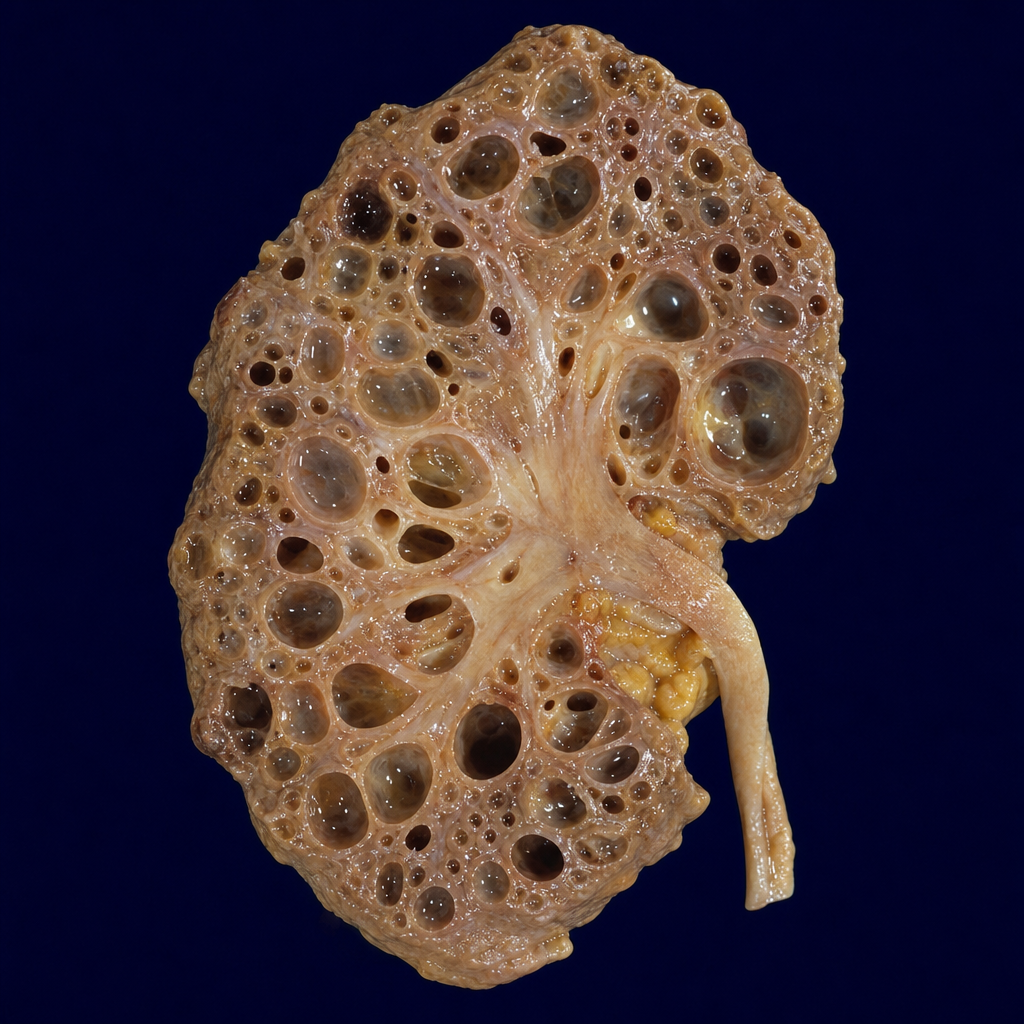
Explanation: **Explanation:** **Autosomal Dominant Polycystic Kidney Disease (ADPKD)** is the most common hereditary renal disorder. As the name implies, it follows an **Autosomal Dominant** inheritance pattern (Option A). It typically manifests in adulthood (3rd to 4th decade) because, while the genetic defect is present at birth, the cysts require time to enlarge and replace functional parenchyma [1]. * **Pathogenesis:** It is primarily caused by mutations in the **PKD1 gene** (85% of cases, Chromosome 16, encoding Polycystin-1) or the **PKD2 gene** (15% of cases, Chromosome 4, encoding Polycystin-2) [1]. PKD1 mutations usually lead to an earlier onset of end-stage renal disease (ESRD). **Why other options are incorrect:** * **Autosomal Recessive (Option B):** This characterizes **ARPKD**, the "infantile" form. It is caused by mutations in the **PKHD1 gene** (Chromosome 6) and presents with bilateral renal enlargement and congenital hepatic fibrosis in neonates or children. * **X-linked (Option C):** While Alport Syndrome can be X-linked, polycystic kidney disease is not. * **Mitochondrial (Option D):** This inheritance involves maternal transmission affecting high-energy organs; it is not associated with ADPKD. **High-Yield Clinical Pearls for NEET-PG:** 1. **Extra-renal manifestations:** The most common is **Liver cysts**. The most life-threatening is **Berry Aneurysms** (Circle of Willis), which can lead to Subarachnoid Hemorrhage. 2. **Other associations:** Mitral Valve Prolapse (MVP), diverticulosis, and pancreatic cysts. 3. **Gross Appearance:** Kidneys are massively enlarged (up to 4kg) with a "multicystic" appearance and no intervening normal parenchyma. 4. **Screening:** Family members are screened using **Ultrasonography**. **References:** [1] Kumar V, Abbas AK, et al.. Robbins and Cotran Pathologic Basis of Disease. 9th ed. The Kidney, pp. 950-951.
Explanation: **Explanation:** **1. Why Acute Tubular Necrosis (ATN) is correct:** Circulatory shock leads to a state of systemic hypotension and reduced cardiac output, resulting in **renal hypoperfusion**. The renal tubular epithelial cells, particularly those in the proximal convoluted tubule (PCT) and the thick ascending limb of the loop of Henle, have high metabolic demands and are exquisitely sensitive to hypoxia [1]. Ischemic ATN is the most common cause of acute kidney injury (AKI) in the setting of shock [2]. Pathologically, this is characterized by focal tubular epithelial necrosis and the presence of "muddy brown" granular casts in the urine. **2. Why the other options are incorrect:** * **Acute Papillary Necrosis:** While this involves ischemic necrosis of the renal papillae, it is typically associated with specific conditions such as **Diabetes Mellitus**, **Analgesic nephropathy**, **Sickle cell disease**, and **Severe Pyelonephritis** (Mnemonic: POSTCARD). It is not a standard primary consequence of systemic circulatory shock. * **Both/None:** Since ATN is the direct and most common pathological consequence of the ischemic insult provided by shock, Option A is the specific answer. **3. Clinical Pearls for NEET-PG:** * **Ischemic vs. Toxic ATN:** Ischemic ATN (caused by shock) shows **patchy** involvement of the tubules and rupture of the basement membrane (tubulorrhexis) [1]. Toxic ATN (caused by drugs/heavy metals) typically shows **diffuse** involvement, especially of the PCT. * **Vulnerability:** The S3 segment of the PCT and the Medullary Thick Ascending Limb (mTAL) are the most susceptible areas to ischemia. * **Urinalysis:** Look for **Muddy Brown Casts**, which are pathognomonic for ATN in the context of AKI. * **FENa:** In ATN, the Fractional Excretion of Sodium (FENa) is typically **>2%**, distinguishing it from pre-renal azotemia (<1%). **References:** [1] Kumar V, Abbas AK, et al.. Robbins and Cotran Pathologic Basis of Disease. 9th ed. The Kidney, pp. 933-934. [2] Cross SS. Underwood's Pathology: A Clinical Approach. 6th ed. (Basic Pathology) introduces the student to key general principles of pathology, both as a medical science and as a clinical activity with a vital role in patient care. Part 2 (Disease Mechanisms) provides fundamental knowledge about the cellular and molecular processes involved in diseases, providing the rationale for their treatment. Part 3 (Systematic Pathology) deals in detail with specific diseases, with emphasis on the clinically important aspects., pp. 149-150.
Explanation: **Explanation:** **Michaelis-Gutmann (MG) bodies** are the pathognomonic histological hallmark of **Malakoplakia**, a chronic inflammatory condition most commonly affecting the urinary bladder. 1. **Why Malakoplakia is correct:** Malakoplakia results from the defective phagocytic function of macrophages (Von Hansemann cells). While macrophages ingest bacteria (most commonly *E. coli*), they are unable to fully digest them due to lysosomal dysfunction. This leads to the intralysosomal deposition of calcium and iron salts on the undigested bacterial remnants, forming laminated, mineralized concretions known as Michaelis-Gutmann bodies. These bodies are **PAS-positive** and **Von Kossa-positive** (due to calcium). 2. **Why other options are incorrect:** * **Nail-Patella Syndrome:** This is a genetic disorder characterized by "Lester iris" and skeletal abnormalities. On electron microscopy of the kidney, it shows pathognomonic **"moth-eaten" appearance** of the glomerular basement membrane due to collagen fibrils. * **Leukoplakia:** This is a clinical term for a white patch on mucosal surfaces (often pre-malignant). Histologically, it shows hyperkeratosis and acanthosis, not mineralized inclusions. * **Pyelonephritis:** While Malakoplakia is often associated with recurrent urinary tract infections, standard acute pyelonephritis [1] is characterized by neutrophilic infiltration and abscess formation, not MG bodies. **High-Yield Pearls for NEET-PG:** * **Stains for MG Bodies:** Perls’ Prussian Blue (for Iron) and Von Kossa (for Calcium). * **Morphology:** They appear as "owl-eye" or targetoid laminated inclusions within the cytoplasm of large foamy macrophages (**Von Hansemann cells**). * **Common Organism:** *Escherichia coli* is implicated in approximately 90% of cases. * **Common Site:** Urinary bladder (presents as soft, yellowish mucosal plaques). **References:** [1] Kumar V, Abbas AK, et al.. Robbins and Cotran Pathologic Basis of Disease. 9th ed. The Kidney, pp. 939-940.
Explanation: **Explanation:** **Wilms Tumor (Nephroblastoma)** is the most common primary renal tumor of childhood. **1. Why Option B is correct:** Wilms tumor is strongly linked to genetic alterations on **chromosome 11**. Specifically, the **WT1 gene** is located at **11p13** [1]. Deletions or mutations in this region are associated with sporadic Wilms tumor and syndromic forms like **WAGR syndrome** (Wilms tumor, Aniridia, Genitourinary anomalies, and mental Retardation) [1]. Another locus, **WT2**, is located at **11p15.5** (associated with Beckwith-Wiedemann syndrome). **2. Why the other options are incorrect:** * **Option A:** Wilms tumor is a pediatric neoplasm, typically occurring between ages **2 and 5 years**. It is extremely rare in adults. * **Option C:** The **MIC 2 gene** (CD99) is a diagnostic marker for **Ewing Sarcoma** and PNET, not Wilms tumor. * **Option D:** The most common presentation is a **large, palpable, asymptomatic abdominal mass** (often discovered by a parent while bathing the child) [1]. While hematuria can occur, it is present in only about 25% of cases. **High-Yield Clinical Pearls for NEET-PG:** * **Triphasic Histology:** Characterized by three components: **Blastema** (sheets of small blue cells), **Stroma** (fibrocytic or myxoid), and **Epithelium** (abortive tubules/glomeruli) [1]. * **Prognosis:** The most important prognostic factor is **histology** (presence of anaplasia indicates poor prognosis). * **Associated Syndromes:** 1. **WAGR:** 11p13 deletion (WT1) [1]. 2. **Denys-Drash Syndrome:** WT1 mutation (presents with gonadal dysgenesis and early-onset nephropathy). 3. **Beckwith-Wiedemann Syndrome:** 11p15.5 (WT2), characterized by macroglossia, organomegaly, and hemihypertrophy. **References:** [1] Kumar V, Abbas AK, et al.. Robbins and Cotran Pathologic Basis of Disease. 9th ed. Diseases of Infancy and Childhood, pp. 487-490.
Congenital Anomalies of the Kidney
Practice Questions
Glomerular Diseases
Practice Questions
Tubular and Interstitial Diseases
Practice Questions
Vascular Diseases of the Kidney
Practice Questions
Cystic Diseases of the Kidney
Practice Questions
Urinary Tract Obstruction and Stones
Practice Questions
Renal Tumors
Practice Questions
Kidney in Systemic Diseases
Practice Questions
Renal Transplantation Pathology
Practice Questions
Urinary Tract Infections
Practice Questions
Get full access to all questions, explanations, and performance tracking.
Start For Free