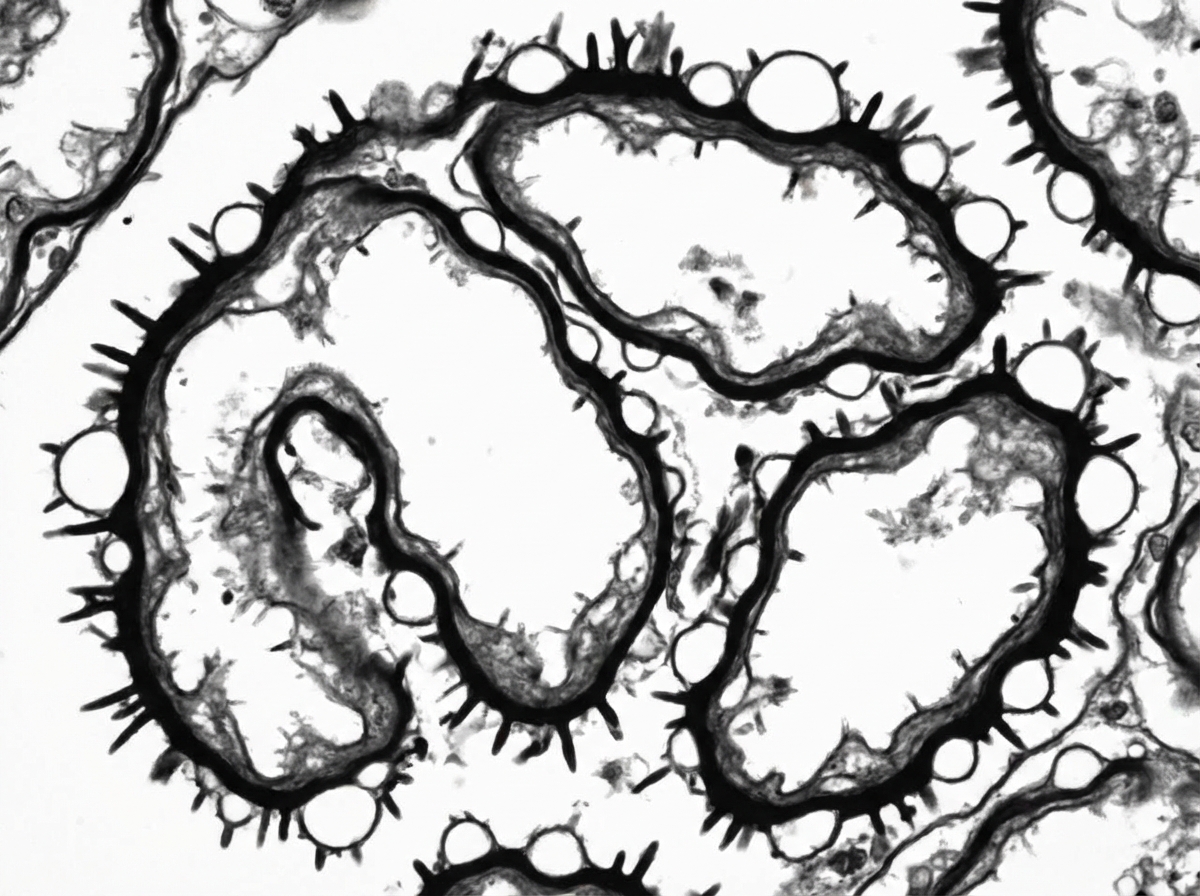
Autosomal recessive kidney disease is caused due to mutation in which of the following genes?
What is the main cause of edema in nephrotic syndrome?
Rapidly progressive glomerulonephritis is histologically characterised by the presence of numerous?
Electron dense deposits in the region of hyalinosis and sclerosis with diffuse loss of foot processes seen in electron microscopy are features of which condition?
A renal biopsy from a 56-year-old woman with progressive renal failure for the past 3 years shows glomerular and vascular deposition of pink amorphous material. It exhibits apple-green birefringence under polarized light after Congo red staining. These deposits are positive for lambda light chains. What is the most likely underlying condition?
Which characteristic feature is seen in the kidney in malignant hypertension?
Visceral leishmaniasis is known to cause which type of glomerulonephritis?
Which disease is caused by anti-phospholipase A2 receptor antibody?
Which of the following are characteristic features of nephrotic syndrome?
Which histological finding in a resected kidney indicates Bilateral Wilm's tumor?
Explanation: ### Explanation **Correct Answer: A. Fibrocystin** **Understanding the Concept:** Autosomal Recessive Polycystic Kidney Disease (ARPKD) is a childhood-onset cystic kidney disease. It is caused by mutations in the **PKHD1 gene** (located on chromosome 6p), which encodes a large receptor-like protein called **Fibrocystin** [1]. Fibrocystin is localized to the primary cilia of epithelial cells in the renal collecting ducts and bile ducts [1]. It plays a crucial role in maintaining the structural integrity and tubular morphology of these organs. A defect in Fibrocystin leads to the characteristic fusiform (sponge-like) dilation of collecting ducts and congenital hepatic fibrosis. **Analysis of Incorrect Options:** * **B. Polycystin-1:** This protein is encoded by the **PKD1 gene** (Chromosome 16). Mutations in PKD1 are responsible for approximately 85% of cases of **Autosomal Dominant Polycystic Kidney Disease (ADPKD)**, the adult-onset form [1]. * **C. Polycystin-2:** This protein is encoded by the **PKD2 gene** (Chromosome 4). Mutations here cause the remaining 15% of **ADPKD** cases. ADPKD caused by PKD2 mutations generally has a later onset and slower progression compared to PKD1. **High-Yield Clinical Pearls for NEET-PG:** * **ARPKD Presentation:** Often presents in the perinatal period with enlarged kidneys and **Potter sequence** (oligohydramnios leading to pulmonary hypoplasia, flattened facies, and clubfoot). * **Liver Involvement:** ARPKD is universally associated with **Congenital Hepatic Fibrosis** and biliary hamartomas (Von Meyenburg complexes) [1]. In older children, this may manifest as portal hypertension and splenomegaly. * **Morphology:** Unlike the large, discrete cysts in ADPKD, ARPKD kidneys show small, elongated, **cylindrical cysts** radiating from the medulla to the cortex, giving the kidney a "sponge-like" appearance [1]. * **Genetics Summary:** * ARPKD = PKHD1 = Fibrocystin (Chr 6) * ADPKD = PKD1/PKD2 = Polycystin 1/2 (Chr 16/4) **References:** [1] Kumar V, Abbas AK, et al.. Robbins and Cotran Pathologic Basis of Disease. 9th ed. The Kidney, pp. 952-953.
Explanation: **Explanation:** The primary mechanism of edema in nephrotic syndrome is **Hypoproteinemia**, specifically **hypoalbuminemia** [1]. 1. **Mechanism (The Starling Forces Concept):** Nephrotic syndrome is characterized by massive proteinuria (>3.5 g/day) due to increased glomerular permeability. The resulting loss of albumin leads to a significant drop in **plasma oncotic pressure** [1]. According to Starling’s Law, when oncotic pressure falls, it can no longer counteract the hydrostatic pressure, leading to the movement of fluid from the intravascular compartment into the interstitial space, causing edema [1]. This "Underfill" mechanism is further exacerbated by the activation of the Renin-Angiotensin-Aldosterone System (RAAS) due to perceived low blood volume, leading to secondary salt and water retention. 2. **Analysis of Incorrect Options:** * **Loss of potassium:** While electrolyte imbalances can occur, potassium loss does not dictate fluid shifts between compartments in the context of nephrotic syndrome. * **Loss of solute:** This is a vague term. While protein is a solute, the specific loss of oncotic-active proteins (albumin) is the driver, not general solute loss. * **Derangement of fatty acids:** Although hyperlipidemia and lipiduria are hallmarks of nephrotic syndrome (due to compensatory hepatic synthesis), they do not cause edema [2]. **NEET-PG High-Yield Pearls:** * **Definition of Nephrotic Syndrome:** Massive proteinuria (>3.5g/24hr), Hypoalbuminemia (<3g/dL), Generalized Edema (Anasarca), and Hyperlipidemia [2]. * **Most common cause in children:** Minimal Change Disease (MCD) [2]. * **Most common cause in adults:** Focal Segmental Glomerulosclerosis (FSGS) or Membranous Nephropathy (depending on the population) [2]. * **Hypercoagulability:** Patients are at risk for Renal Vein Thrombosis due to the loss of Antithrombin III in urine. **References:** [1] Cross SS. Underwood's Pathology: A Clinical Approach. 6th ed. (Basic Pathology) introduces the student to key general principles of pathology, both as a medical science and as a clinical activity with a vital role in patient care. Part 2 (Disease Mechanisms) provides fundamental knowledge about the cellular and molecular processes involved in diseases, providing the rationale for their treatment. Part 3 (Systematic Pathology) deals in detail with specific diseases, with emphasis on the clinically important aspects., pp. 126-127. [2] Kumar V, Abbas AK, et al.. Robbins and Cotran Pathologic Basis of Disease. 9th ed. The Kidney, pp. 919-923.
Explanation: **Explanation:** **Rapidly Progressive Glomerulonephritis (RPGN)**, also known as Crescentic Glomerulonephritis, is a clinical syndrome characterized by a rapid decline in renal function. The hallmark histological feature is the presence of **epithelial cell crescents** in the majority of glomeruli [1]. **Why Option D is Correct:** Crescents are formed by the **proliferation of parietal epithelial cells** and the migration of monocytes/macrophages into Bowman’s space [1]. This process is triggered by severe glomerular capillary wall damage, which allows plasma proteins (specifically **Fibrin**) to leak into Bowman’s space [1]. Fibrin acts as a potent stimulus for the formation of these cellular masses, which eventually undergo fibrosis, compressing the glomerular tuft and leading to renal failure. **Why Other Options are Incorrect:** * **A. Intramembranous dense deposits:** This is the characteristic feature of **Type II Membranoproliferative Glomerulonephritis (MPGN)** [2], also known as Dense Deposit Disease. * **B. Atrophic proximal convoluted tubules:** This is a non-specific finding seen in chronic stages of various renal diseases (Chronic Kidney Disease) rather than a diagnostic feature of RPGN. * **C. Hyalinized small arterioles:** This is a feature of **Hyaline Arteriolosclerosis**, typically associated with benign hypertension and diabetes mellitus. **High-Yield Clinical Pearls for NEET-PG:** * **Definition:** RPGN is defined by the presence of crescents in >50% of glomeruli. * **Key Component:** **Fibrin** is the most essential component found within the crescents [1]. * **Classification:** [3] * **Type I:** Anti-GBM disease (e.g., Goodpasture Syndrome) – Linear Immunofluorescence (IF). * **Type II:** Immune-complex mediated (e.g., PSGN, SLE) – Granular IF. * **Type III:** Pauci-immune (e.g., Wegener’s/GPA) – Negative IF, associated with ANCA [3]. **References:** [1] Cross SS. Underwood's Pathology: A Clinical Approach. 6th ed. Common Clinical Problems From Diseases Of The Urinary And Male Genital Tracts, pp. 528-529. [2] Kumar v, Abbas AK, et al.. Robbins and Cotran Pathologic Basis of Disease. 9th ed. The Kidney, pp. 925-926. [3] Kumar v, Abbas AK, et al.. Robbins and Cotran Pathologic Basis of Disease. 9th ed. The Kidney, pp. 917-918.
Explanation: ### Explanation **Correct Answer: D. Focal segmental glomerulosclerosis (FSGS)** **Why it is correct:** FSGS is characterized by the involvement of some, but not all, glomeruli (focal) and only a portion of the capillary tuft (segmental) [2]. Under **Electron Microscopy (EM)**, the hallmark is the **diffuse effacement (loss) of podocyte foot processes**, similar to Minimal Change Disease (MCD) [3]. However, FSGS is distinguished by the presence of **electron-dense deposits** in the areas of hyalinosis and sclerosis [1]. These deposits represent entrapped plasma proteins and lipids (hyaline) within the collapsed capillary loops. **Why other options are incorrect:** * **A. Minimal Change Disease:** While it shows diffuse foot process effacement [3], it is characterized by the **absence** of electron-dense deposits and the absence of sclerosis/hyalinosis on light microscopy. * **B. Membranous Glomerulonephritis:** Characterized by subepithelial "spike and dome" deposits [2]. It does not typically present with segmental sclerosis as the primary lesion. * **C. Membranoproliferative GN:** Features "tram-track" appearance due to basement membrane splitting and subendothelial (Type I) or intramembranous (Type II/Dense Deposit Disease) deposits, rather than focal segmental sclerosis [1]. **High-Yield Clinical Pearls for NEET-PG:** * **Most common cause** of Nephrotic Syndrome in adults in India and the USA [4]. * **Light Microscopy:** Segmental collapse of the glomerular tuft with **hyalinosis** (PAS-positive material) [2]. * **Immunofluorescence:** Often shows non-specific **IgM and C3** trapping in the sclerotic areas [2]. * **Collapsing Variant:** A severe form of FSGS associated with **HIV infection** and IV drug use, showing global tuft collapse and podocyte hyperplasia [2]. * **Genetic Mutation:** Mutations in the **NPHS2 gene** (encoding podocin) are associated with autosomal recessive steroid-resistant FSGS. **References:** [1] Kumar V, Abbas AK, et al.. Robbins and Cotran Pathologic Basis of Disease. 9th ed. The Kidney, pp. 907-908. [2] Cross SS. Underwood's Pathology: A Clinical Approach. 6th ed. Common Clinical Problems From Diseases Of The Urinary And Male Genital Tracts, pp. 531-532. [3] Kumar V, Abbas AK, et al.. Robbins and Cotran Pathologic Basis of Disease. 9th ed. The Kidney, pp. 927-928. [4] Kumar V, Abbas AK, et al.. Robbins and Cotran Pathologic Basis of Disease. 9th ed. The Kidney, pp. 919-921.
Explanation: ### Explanation **Correct Answer: D. Multiple Myeloma** The clinical presentation and biopsy findings are diagnostic of **AL (Amyloid Light-chain) Amyloidosis**. [1] * **The "Pink Amorphous Material":** On H&E stain, amyloid appears as extracellular, eosinophilic, hyaline material. [2] * **Congo Red Stain:** This is the gold standard for diagnosis. Under polarized light, the characteristic **apple-green birefringence** confirms the presence of cross-beta-pleated sheet structures. [2] * **Lambda Light Chains:** The positivity for light chains (more commonly lambda than kappa) identifies this as AL amyloidosis. [1] This occurs due to a plasma cell dyscrasia, most commonly **Multiple Myeloma**, where monoclonal light chains are overproduced and deposited in tissues. [1], [3] **Analysis of Incorrect Options:** * **A & B (Rheumatoid Arthritis & Tuberculosis):** These chronic inflammatory conditions lead to **AA (Amyloid Associated) Amyloidosis**. While they show apple-green birefringence, the deposits consist of Serum Amyloid A (SAA) protein, not immunoglobulin light chains. * **C (Systemic Lupus Erythematosus):** SLE typically presents with various patterns of glomerulonephritis (e.g., Diffuse Proliferative GN) characterized by immune complex deposits (DNA-anti-DNA), not amyloid fibrils. **NEET-PG High-Yield Pearls:** 1. **Stains for Amyloid:** Congo red (Apple-green), Thioflavin T (Fluorescence), and Crystal Violet (Metachromasia). 2. **Most Common Type:** AL amyloidosis is the most common systemic amyloidosis in developed countries. 3. **Renal Involvement:** The kidney is the most common organ involved in systemic amyloidosis, typically presenting as nephrotic syndrome or progressive renal failure. [1], [3] 4. **Cardiac Involvement:** Amyloidosis is a classic cause of **Restrictive Cardiomyopathy**. **References:** [1] Kumar V, Abbas AK, et al.. Robbins and Cotran Pathologic Basis of Disease. 9th ed. The Kidney, pp. 942-943. [2] Kumar V, Abbas AK, et al.. Robbins and Cotran Pathologic Basis of Disease. 9th ed. Diseases of the Immune System, pp. 268-269. [3] Cross SS. Underwood's Pathology: A Clinical Approach. 6th ed. Common Clinical Problems From Blood And Bone Marrow Disease, pp. 618-619.
Explanation: In **Malignant Hypertension** (defined by a sudden, severe rise in BP, usually >200/120 mmHg), the rapid increase in pressure causes acute vascular injury. The hallmark pathological finding is **Fibrinoid Necrosis** of the arterioles (Necrotizing arteriolitis) [1]. This occurs because the sudden pressure spike damages endothelial cells, allowing plasma proteins (including fibrin) to leak into the vessel wall. On H&E stain, this appears as intense eosinophilic (pink), smudgy material within the vessel wall, often accompanied by inflammation [1], [2]. **Analysis of Options:** * **A. Hyaline Necrosis (Hyaline Arteriolosclerosis):** This is characteristic of **Benign Hypertension** or Diabetes Mellitus [3]. It involves the leakage of plasma components into vessel walls over a long period, appearing as homogenous pink thickening, not acute necrosis. * **C. Medial Wall Hyperplasia:** While malignant hypertension also shows "Hyperplastic Arteriolosclerosis" (the classic **"Onion-skinning"** appearance due to smooth muscle cell proliferation) [1], the specific term for the necrotic change is Fibrinoid Necrosis [2]. * **D. Micro-aneurysm:** Classically associated with Polyarteritis Nodosa (PAN) or Diabetic Retinopathy (Kimmelstiel-Wilson lesions), but not a primary diagnostic feature of malignant hypertensive nephrosclerosis. **NEET-PG High-Yield Pearls:** * **Gross Appearance:** The kidney in malignant hypertension shows pinpoint hemorrhages on the cortical surface, known as a **"Flea-bitten Kidney."** * **Microscopic Hallmark:** Two key features—**Fibrinoid Necrosis** and **Onion-skinning** (Hyperplastic arteriolosclerosis) [1]. * **Clinical Presentation:** Often presents with papilledema, encephalopathy, and acute renal failure. **References:** [1] Kumar V, Abbas AK, et al.. Robbins and Cotran Pathologic Basis of Disease. 9th ed. The Kidney, p. 945. [2] Kumar V, Abbas AK, et al.. Robbins and Cotran Pathologic Basis of Disease. 9th ed. Diseases of Infancy and Childhood, pp. 498-499. [3] Cross SS. Underwood's Pathology: A Clinical Approach. 6th ed. Common Clinical Problems From Diseases Of The Urinary And Male Genital Tracts, pp. 541-542.
Explanation: **Explanation:** Visceral Leishmaniasis (Kala-azar) is a systemic protozoal infection that frequently involves the kidneys due to the deposition of circulating immune complexes. The most common histopathological pattern observed in these patients is **Mesangioproliferative Glomerulonephritis (MesPGN)**. **Why Mesangioproliferative GN is correct:** In chronic infections like Leishmaniasis, there is a persistent state of hypergammaglobulinemia. This leads to the formation of immune complexes (containing Leishmania antigens) that deposit primarily in the **mesangium** [1]. This triggers mesangial cell proliferation and increased matrix production. On immunofluorescence, deposits of IgG, IgM, and C3 are typically seen in the mesangial regions. **Analysis of Incorrect Options:** * **Membranous GN (A):** Characterized by subepithelial deposits and basement membrane thickening. While it can be secondary to infections (like Hepatitis B or Malaria), it is not the classic presentation for Leishmaniasis [1]. * **Focal Segmental Glomerulosclerosis (C):** This involves sclerosis of portions of some glomeruli. It is more commonly associated with HIV, heroin use, or obesity, rather than the immune-complex mediated mechanism of Leishmaniasis. * **Rapidly Progressive GN (D):** This is a clinical syndrome characterized by crescents on biopsy and rapid loss of renal function [2]. It is typically seen in ANCA-associated vasculitis or Goodpasture syndrome, not parasitic infections. **High-Yield Clinical Pearls for NEET-PG:** * **Renal Involvement in Kala-azar:** Apart from MesPGN, patients may also develop **Interstitial Nephritis**, which often presents with tubular dysfunction and urinary concentrating defects. * **Amyloidosis:** Chronic, untreated Visceral Leishmaniasis is a known cause of **Secondary (AA) Amyloidosis**. * **Classic Triad:** Fever, massive splenomegaly, and pancytopenia. * **Diagnosis:** Gold standard is bone marrow or splenic aspirate showing **LD bodies** (Amastigotes) within macrophages. **References:** [1] Kumar V, Abbas AK, et al.. Robbins and Cotran Pathologic Basis of Disease. 9th ed. The Kidney, pp. 910-911. [2] Kumar V, Abbas AK, et al.. Robbins and Cotran Pathologic Basis of Disease. 9th ed. The Kidney, p. 915.
Explanation: **Explanation:** **Membranous Glomerulonephritis (MGN)** is the correct answer because the **M-type phospholipase A2 receptor (PLA2R)**, a transmembrane protein on the surface of podocytes, has been identified as the major autoantigen in approximately 70–80% of cases of **Primary (Idiopathic) MGN** [1]. The binding of circulating IgG4 antibodies to these receptors leads to *in situ* immune complex formation, activation of the complement system (C5b-9), and subsequent podocyte injury, resulting in the characteristic "spike and dome" appearance on basement membrane staining [1]. **Why the other options are incorrect:** * **MPGN:** This is primarily a disease of the glomerular basement membrane and mesangium, often associated with immune complex deposition (Type I) or alternative complement pathway dysregulation (Type II/Dense Deposit Disease), not anti-PLA2R antibodies [1]. * **FSGS:** This is characterized by podocyte effacement and segmental sclerosis. While it involves podocyte injury, the pathogenesis is usually related to circulating permeability factors (like suPAR) or genetic mutations in podocyte proteins (like podocin or nephrin) [1]. * **MCD:** This is the most common cause of nephrotic syndrome in children, characterized by the loss of foot processes on electron microscopy. It is thought to be T-cell mediated rather than caused by specific autoantibodies like anti-PLA2R [1]. **High-Yield Clinical Pearls for NEET-PG:** * **Serology:** Anti-PLA2R antibody levels correlate with disease activity and can be used to monitor treatment response and predict relapse. * **Secondary MGN:** Always rule out secondary causes such as **HBV, SLE, gold/penicillamine use, and occult malignancies** (carcinomas of the lung/colon) [1]. * **Morphology:** Look for **diffuse thickening of the capillary wall** (Light Microscopy), **Subepithelial deposits** (Electron Microscopy), and **Granular IgG/C3** (Immunofluorescence) [1]. **References:** [1] Kumar V, Abbas AK, et al.. Robbins and Cotran Pathologic Basis of Disease. 9th ed. The Kidney, pp. 911-913.
Explanation: **Explanation:** Nephrotic syndrome is a clinical complex resulting from a severe increase in glomerular permeability to plasma proteins [2]. The classic tetrad of nephrotic syndrome includes **Massive Proteinuria** (>3.5 g/day), **Hypoalbuminemia** (<3 g/dL), **Generalized Oedema**, and **Hyperlipidemia/Lipiduria** [3]. **Why Option B is the Correct Answer:** While "Haematuria" is traditionally the hallmark of Nephritic Syndrome, it is important to note that for NEET-PG purposes, many glomerular diseases (like Membranoproliferative Glomerulonephritis or FSGS) present with a **"Mixed Nephrotic-Nephritic Picture."** [1] In these cases, the patient exhibits the full nephrotic range of symptoms (Proteinuria, Hyperlipidemia, Oedema) along with microscopic haematuria [1]. Among the given options, Option B represents the most comprehensive clinical presentation often tested in competitive exams to differentiate complex glomerular injuries. **Analysis of Incorrect Options:** * **Options A, C, and D:** These options omit one of the core components required to define the syndrome or focus solely on lipiduria. While lipiduria is a feature, the presence of haematuria in a nephrotic patient often signifies a more proliferative or aggressive underlying pathology, which is a high-yield clinical distinction. **High-Yield Clinical Pearls for NEET-PG:** * **Mnemonic (PHOEL):** **P**roteinuria, **H**ypoalbuminemia, **O**edema, **E**levated lipids, **L**ipiduria. * **Hyperlipidemia Mechanism:** Low oncotic pressure (due to hypoalbuminemia) triggers the liver to increase synthesis of lipoproteins (VLDL, LDL). * **Hypercoagulability:** Nephrotic patients are at high risk for Renal Vein Thrombosis due to the loss of **Antithrombin III** in urine. * **Most Common Cause:** Minimal Change Disease (Children); Membranous Nephropathy or FSGS (Adults) [3]. **References:** [1] Kumar V, Abbas AK, et al.. Robbins and Cotran Pathologic Basis of Disease. 9th ed. The Kidney, pp. 926-927. [2] Cross SS. Underwood's Pathology: A Clinical Approach. 6th ed. Common Clinical Problems From Diseases Of The Urinary And Male Genital Tracts, pp. 527-528. [3] Kumar V, Abbas AK, et al.. Robbins and Cotran Pathologic Basis of Disease. 9th ed. The Kidney, pp. 919-921.
Explanation: **Explanation:** **Nephrogenic rests** are the correct answer because they are the recognized precursor lesions of Wilms tumor (Nephroblastoma) [1]. These are foci of persistent embryonal tissue (blastemal, stromal, or epithelial) that fail to mature into adult renal tissue. * **Significance:** While found in only 1% of the general newborn population, they are present in approximately **100% of bilateral Wilms tumor** cases and 35% of unilateral cases. Their presence in a resection specimen is a strong marker for a genetic predisposition and a high risk of synchronous or metachronous contralateral tumors [1]. **Analysis of Incorrect Options:** * **A. Blastemal component:** This is one of the three classic components of the "triphasic" histology of Wilms tumor (along with stroma and epithelium) [1]. While diagnostic of the tumor itself, it does not specifically indicate bilaterality. * **C. Skeletal muscle differentiation:** This is a form of heterologous stromal differentiation common in Wilms tumor [1]. It is a histological variant but has no specific association with bilateral disease. * **D. Abnormal mitotic figures:** These are features of **Anaplasia** (TP53 mutation). Anaplasia is a critical prognostic marker indicating resistance to chemotherapy, but it does not correlate with the presence of bilateral tumors. **High-Yield Clinical Pearls for NEET-PG:** * **Triphasic Pattern:** Blastema (small blue cells), Stroma, and Epithelium (tubules/glomeruli) [1]. * **Genetic Associations:** WAGR syndrome (WT1), Denys-Drash syndrome (WT1), and Beckwith-Wiedemann syndrome (WT2). * **Most Common Site of Metastasis:** Lungs ("Cannonball" appearance on X-ray). * **Prognosis:** The presence of **diffuse anaplasia** is the most important adverse prognostic factor. **References:** [1] Kumar V, Abbas AK, et al.. Robbins and Cotran Pathologic Basis of Disease. 9th ed. Diseases of Infancy and Childhood, pp. 488-490.
Congenital Anomalies of the Kidney
Practice Questions
Glomerular Diseases
Practice Questions
Tubular and Interstitial Diseases
Practice Questions
Vascular Diseases of the Kidney
Practice Questions
Cystic Diseases of the Kidney
Practice Questions
Urinary Tract Obstruction and Stones
Practice Questions
Renal Tumors
Practice Questions
Kidney in Systemic Diseases
Practice Questions
Renal Transplantation Pathology
Practice Questions
Urinary Tract Infections
Practice Questions
Get full access to all questions, explanations, and performance tracking.
Start For Free