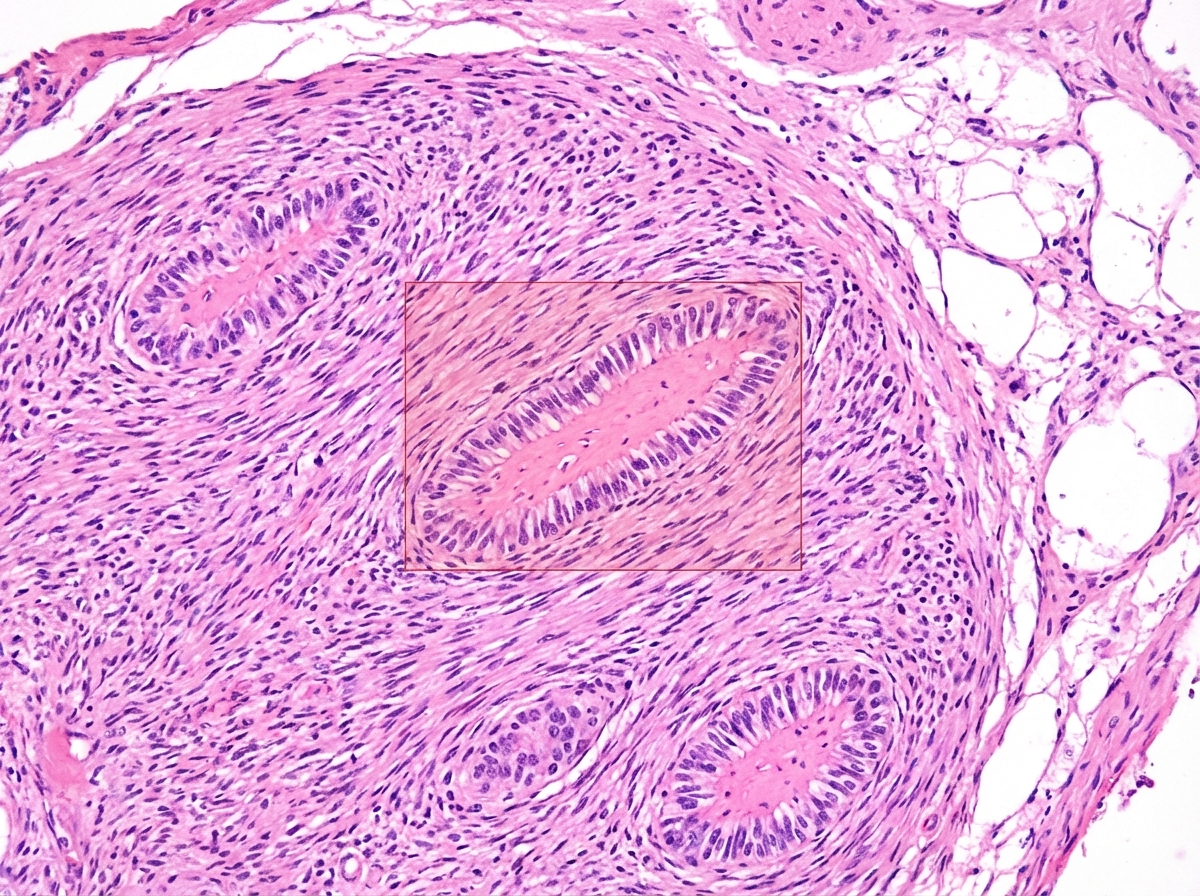
Which of the following brain tumors does not spread via cerebrospinal fluid?
In Alzheimer's disease, which neurotransmitter is deficient in the cortex?
What protein is deposited in familial amyloid neuropathy?
All of the following are true about medulloblastoma except:
Which of the following cell types does not participate in repair after brain infarction?
Which tumor is associated with extracranial spread?
Neurofibrillary tangles are characteristic pathological findings in which of the following conditions?
Which of the following is NOT true about pilocytic astrocytoma?
Medulloblastoma exclusively occurs in which location?
Hemangioblastomas associated with Von Hippel-Lindau (VHL) disease are most commonly found in which location?
Explanation: The spread of brain tumors via cerebrospinal fluid (CSF) is known as **leptomeningeal carcinomatosis** or "drop metastasis." [1] This occurs when malignant cells detach from the primary tumor and circulate within the subarachnoid space. **Why Craniopharyngioma is the correct answer:** Craniopharyngiomas are **benign (WHO Grade 1)**, slow-growing tumors derived from remnants of **Rathke’s pouch**. They are typically suprasellar and cystic. Because they are histologically benign and well-circumscribed, they do not exhibit the invasive behavior required to shed cells into the CSF pathways. Their clinical morbidity arises from local compression of the optic chiasm and pituitary gland, rather than distant neural spread. **Analysis of Incorrect Options:** * **Medulloblastoma:** This is the classic "drop metastasis" tumor. [1] It is a highly malignant embryonal tumor of the cerebellum that frequently seeds the spinal subarachnoid space. [2] * **Germ Cell Tumors (e.g., Germinoma):** These tumors, often found in the pineal or suprasellar regions, have a high propensity for CSF dissemination. [4] * **CNS Lymphoma:** Primary CNS lymphomas are aggressive malignancies (typically Diffuse Large B-Cell type) that frequently involve the leptomeninges and require CSF analysis for staging. [3] **High-Yield Pearls for NEET-PG:** * **Common tumors that spread via CSF:** Medulloblastoma [1], Ependymoma [5] (especially in children), Germinoma [4], Pineoblastoma, and CNS Lymphoma [3]. * **Craniopharyngioma Triad:** Visual field defects (Bitemporal hemianopia), endocrine dysfunction (GH deficiency/Diabetes Insipidus), and calcification on imaging. * **Bimodal Age Distribution:** Craniopharyngiomas show peaks in children (5–14 years) and adults (50–75 years). * **Histology:** Look for "Motor oil" fluid in cysts and **Adamantinomatous** type (palisading epithelium and wet keratin) in children. **References:** [1] Kumar V, Abbas AK, et al.. Robbins and Cotran Pathologic Basis of Disease. 9th ed. The Central Nervous System, pp. 1314-1315. [2] Cross SS. Underwood's Pathology: A Clinical Approach. 6th ed. Common Clinical Manifestations Of Central And Peripheral Nervous System Disease, pp. 725-726. [3] Kumar V, Abbas AK, et al.. Robbins and Cotran Pathologic Basis of Disease. 9th ed. The Central Nervous System, pp. 1315-1316. [4] Kumar V, Abbas AK, et al.. Robbins and Cotran Pathologic Basis of Disease. 9th ed. The Central Nervous System, pp. 1319-1320. [5] Kumar V, Abbas AK, et al.. Robbins and Cotran Pathologic Basis of Disease. 9th ed. The Central Nervous System, pp. 1312-1313.
Explanation: **Explanation:** **Correct Answer: A. Acetylcholine** The primary biochemical hallmark of Alzheimer’s disease (AD) is a significant deficiency of **Acetylcholine (ACh)** in the cerebral cortex and hippocampus [1]. This deficit results from the selective degeneration of **cholinergic neurons** in the **Nucleus Basalis of Meynert**. Acetylcholine is critical for memory processing and cognitive function; therefore, its depletion correlates directly with the severity of dementia [3]. Current pharmacological management (e.g., Donepezil, Rivastigmine) focuses on inhibiting acetylcholinesterase to increase synaptic ACh levels [1]. **Why other options are incorrect:** * **B. Serotonin:** While serotonergic changes can occur in AD (contributing to mood disturbances), it is not the primary or defining neurotransmitter deficiency of the disease. * **C. Dopamine:** Dopamine deficiency is the hallmark of **Parkinson’s Disease**, caused by the loss of dopaminergic neurons in the Substantia Nigra pars compacta [2]. * **D. Noradrenaline:** Although there is some loss of noradrenergic neurons in the Locus Coeruleus in AD, it is secondary to the profound cholinergic loss. **High-Yield Clinical Pearls for NEET-PG:** * **Microscopic Hallmarks:** Extracellular **Amyloid-beta (Aβ) plaques** (derived from APP) and intracellular **Neurofibrillary Tangles (NFTs)** composed of hyperphosphorylated **Tau protein** [1], [3]. * **Genetics:** Early-onset AD is associated with mutations in **APP, Presenilin-1 (PSEN1), and Presenilin-2 (PSEN2)**. Late-onset AD is associated with the **ApoE-ε4** allele. * **Brain Atrophy:** Characterized by "hydrocephalus ex vacuo" due to narrowing of gyri and widening of sulci. **References:** [1] Cross SS. Underwood's Pathology: A Clinical Approach. 6th ed. Common Clinical Manifestations Of Central And Peripheral Nervous System Disease, pp. 721-722. [2] Cross SS. Underwood's Pathology: A Clinical Approach. 6th ed. Common Clinical Manifestations Of Central And Peripheral Nervous System Disease, pp. 723-724. [3] Kumar V, Abbas AK, et al.. Robbins and Cotran Pathologic Basis of Disease. 9th ed. The Central Nervous System, p. 1292.
Explanation: **Explanation:** **Familial Amyloid Polyneuropathy (FAP)** is an autosomal dominant condition characterized by the systemic deposition of amyloid fibrils, primarily affecting the peripheral and autonomic nerves [1]. 1. **Why Option A is Correct:** The precursor protein in FAP is **Transthyretin (TTR)**, a transport protein for thyroxine and retinol produced in the liver [1]. In FAP, a genetic mutation (most commonly **Val30Met**) causes the TTR protein to misfold and aggregate into insoluble amyloid fibrils (ATTRm) [1]. These deposits have a high affinity for endoneurial connective tissue, leading to progressive axonal degeneration. 2. **Why the other options are incorrect:** * **Normal Transthyretin (Option B):** Deposition of wild-type (normal) TTR causes **Senile Systemic Amyloidosis**, which primarily affects the hearts of elderly patients (restrictive cardiomyopathy) rather than the nerves [1]. * **Beta-2 Microglobulin (Options C & D):** This protein is associated with **Dialysis-related Amyloidosis (Aβ2m)** [1]. It occurs in patients on long-term hemodialysis because the protein cannot be filtered through dialysis membranes [1]. It typically presents as Carpal Tunnel Syndrome or joint involvement, not a generalized familial neuropathy [1]. **High-Yield Clinical Pearls for NEET-PG:** * **Staining:** Like all amyloids, ATTR shows **apple-green birefringence** under polarized light after Congo Red staining. * **Clinical Presentation:** Patients typically present with lower limb sensory loss, autonomic dysfunction (orthostatic hypotension), and eventually motor weakness. * **Treatment Note:** Liver transplantation was historically the treatment of choice (to remove the source of mutant TTR), though TTR stabilizers (e.g., Tafamidis) are now used. * **Cardiac Involvement:** While FAP is neuro-centric, some mutations (like Val122Ile) cause significant cardiac amyloidosis. **References:** [1] Kumar V, Abbas AK, et al.. Robbins and Cotran Pathologic Basis of Disease. 9th ed. Diseases of the Immune System, p. 266.
Explanation: Medulloblastoma is a highly malignant, Grade 4 embryonal tumor of the cerebellum [1]. The primary treatment strategy is **maximal safe surgical resection**, followed by craniospinal irradiation and chemotherapy (depending on the child's age and risk stratification) [1]. Therefore, **Option D is the correct answer** because surgery, not radiotherapy, is the cornerstone and initial "main" treatment modality. **Analysis of Options:** * **Option A:** Medulloblastoma is the most common malignant brain tumor in children, with a peak incidence between 3–7 years of age [2]. * **Option B:** In children, the tumor typically arises in the **midline (vermis)** of the cerebellum, often projecting into the fourth ventricle. (In adults, it more commonly occurs in the cerebellar hemispheres). * **Option C:** To avoid the devastating neurocognitive side effects of craniospinal radiation on the developing brain, radiotherapy is generally avoided in children **under 3 years of age**. In these cases, intensive chemotherapy (including agents like Vincristine, Cisplatin, or Lomustine/Carmustine) is used to delay or replace radiation. **High-Yield Clinical Pearls for NEET-PG:** * **Histology:** Characterized by small round blue cells and **Homer-Wright rosettes** (pseudorosettes). * **Spread:** Known for "drop metastasis" via CSF to the spinal cord [1]. * **Molecular Subtypes:** WNT (best prognosis), SHH, Group 3 (worst prognosis), and Group 4 [1]. * **Genetics:** Often associated with **Isochromosome 17q**. * **Imaging:** Appears as a hyperdense mass on CT and shows restricted diffusion on MRI due to high cellularity. **References:** [1] Kumar V, Abbas AK, et al.. Robbins and Cotran Pathologic Basis of Disease. 9th ed. The Central Nervous System, pp. 1314-1315. [2] Cross SS. Underwood's Pathology: A Clinical Approach. 6th ed. Common Clinical Manifestations Of Central And Peripheral Nervous System Disease, pp. 725-726.
Explanation: In the Central Nervous System (CNS), the process of repair differs significantly from the rest of the body. While most tissues undergo **fibrosis** (scarring via collagen deposition by fibroblasts), the brain undergoes **gliosis** [4]. ### **Why Fibroblasts are the Correct Answer** The brain lacks a significant interstitial connective tissue framework. Therefore, **fibroblasts** are generally absent within the brain parenchyma. They do not participate in the repair of internal brain infarcts. Fibroblasts are only involved in CNS repair when there is damage to the meninges or penetrating trauma that introduces external connective tissue elements. ### **Role of Other Cells (Incorrect Options)** * **Astrocytes (Option B):** These are the primary cells responsible for repair. In a process called **reactive gliosis**, astrocytes proliferate and extend cytoplasmic processes to form a "glial scar," which walls off the necrotic area [1]. * **Microglia (Option A):** These are the resident macrophages of the CNS [2]. Following an infarct, they transform into **Gitter cells** (foamy macrophages) to phagocytose myelin breakdown products and cellular debris [1]. * **Endothelium (Option D):** Repair involves **angiogenesis**. Endothelial cells proliferate to form new capillaries, ensuring blood supply to the surviving tissue at the periphery of the lesion. ### **High-Yield NEET-PG Pearls** * **Liquefactive Necrosis:** Brain infarction is the classic example of liquefactive necrosis (unlike the coagulative necrosis seen in most other organs) [3]. * **Gemistocytic Astrocytes:** These are reactive astrocytes with abundant, eosinophilic cytoplasm seen during the early stages of repair. * **Glial Scar:** Composed primarily of **GFAP** (Glial Fibrillary Acidic Protein) filaments; it is the CNS equivalent of a collagen scar. * **Sequence of events:** Microglial response (days 3–5) → Gemistocytic astrocytes (weeks 1–2) → Cystic cavity formation with a glial wall (months) [3]. **References:** [1] Cross SS. Underwood's Pathology: A Clinical Approach. 6th ed. Common Clinical Manifestations Of Central And Peripheral Nervous System Disease, pp. 697-698. [2] Kumar V, Abbas AK, et al.. Robbins and Cotran Pathologic Basis of Disease. 9th ed. Peripheral Nerves and Skeletal Muscles, pp. 1255-1256. [3] Kumar V, Abbas AK, et al.. Robbins and Cotran Pathologic Basis of Disease. 9th ed. The Central Nervous System, pp. 1268-1269. [4] Kumar V, Abbas AK, et al.. Robbins and Cotran Pathologic Basis of Disease. 9th ed. Inflammation and Repair, pp. 113-115.
Explanation: **Explanation:** **Medulloblastoma** is the correct answer because it is one of the few primary central nervous system (CNS) tumors known for its potential to metastasize outside the neuraxis. While CNS tumors rarely spread beyond the brain and spinal cord due to the blood-brain barrier and the absence of traditional lymphatic drainage, Medulloblastoma can spread extracranially, most commonly to the **bone (osteoblastic lesions)** and **bone marrow**. This usually occurs via ventriculoperitoneal (VP) shunts or following surgical intervention. **Analysis of Options:** * **Ependymoma:** These typically spread via the cerebrospinal fluid (CSF) "drop metastasis" to the spinal cord but rarely ever leave the CNS. * **Glioblastoma Multiforme (GBM):** Although highly aggressive and locally invasive, GBM almost never spreads outside the cranium. On the rare occasions it does, it usually involves the lungs or cervical lymph nodes, but this is significantly less common than in Medulloblastoma. * **Choroid Plexus Papilloma:** These are generally benign (WHO Grade I) tumors. While they can seed within the ventricular system via CSF, extracranial spread is virtually non-existent. **High-Yield Clinical Pearls for NEET-PG:** * **Homer-Wright Rosettes:** A classic histological finding in Medulloblastoma (also seen in Neuroblastoma). * **Drop Metastasis:** Medulloblastoma frequently spreads through the CSF to the cauda equina; hence, "craniospinal axis radiation" is often required [1]. * **Molecular Subtypes:** WNT (best prognosis), SHH, Group 3 (worst prognosis), and Group 4 [1]. * **Location:** Always arises in the **cerebellum** (vermis in children, hemispheres in adults) [1]. **References:** [1] Kumar V, Abbas AK, et al.. Robbins and Cotran Pathologic Basis of Disease. 9th ed. The Central Nervous System, pp. 1314-1315.
Explanation: **Explanation:** **Dementia of Alzheimer’s Type (DAT)** is the correct answer because neurofibrillary tangles (NFTs) are one of its two hallmark pathological features (the other being extracellular Amyloid-beta plaques) [1]. NFTs are intracellular inclusions composed of **hyperphosphorylated tau protein**, a microtubule-associated protein [2]. In Alzheimer’s, tau becomes abnormally phosphorylated, causing microtubules to collapse and tau proteins to aggregate into insoluble helical filaments [2]. **Analysis of Incorrect Options:** * **Neurosyphilis:** Characterized by chronic meningitis, "paretic neurosyphilis" (loss of cortical neurons), and Tabes Dorsalis. It does not typically feature tau-related tangles. * **Shy-Drager Syndrome (Multiple System Atrophy - P):** This is a Parkinson-plus syndrome characterized by **alpha-synuclein** inclusions, specifically found within the cytoplasm of oligodendrocytes (Glial Cytoplasmic Inclusions), not tau tangles. * **Lewy Body Disease:** The hallmark finding here is the **Lewy Body**, which is an eosinophilic, round, cytoplasmic inclusion made of **alpha-synuclein** [2]. While Lewy body dementia can coexist with Alzheimer’s, NFTs are not its primary diagnostic feature. **NEET-PG High-Yield Pearls:** * **NFT Composition:** Hyperphosphorylated Tau protein (Intracellular) [2]. * **Amyloid Plaques:** Extracellular Aβ42 peptide (derived from Amyloid Precursor Protein/APP) [1]. * **Hirano Bodies:** Eosinophilic, actin-rich paracrystalline inclusions found in the hippocampus of Alzheimer’s patients. * **Staining:** Silver stains (Bielschowsky or Bodian) and Congo Red (for plaques) are used to visualize these pathologies [1]. * **Progression:** The density of NFTs correlates better with the severity of cognitive decline than the density of amyloid plaques [1]. **References:** [1] Kumar V, Abbas AK, et al.. Robbins and Cotran Pathologic Basis of Disease. 9th ed. The Central Nervous System, pp. 1292-1294. [2] Cross SS. Underwood's Pathology: A Clinical Approach. 6th ed. Common Clinical Manifestations Of Central And Peripheral Nervous System Disease, pp. 721-722.
Explanation: **Explanation:** Pilocytic Astrocytoma (PA) is the most common primary brain tumor in children [3]. The correct answer is **Option A** because PA is characteristically a **Grade I (benign)** tumor according to the WHO classification, not highly malignant [3]. It is slow-growing and carries an excellent prognosis with surgical resection. **Analysis of Options:** * **Option A (Correct):** PA is a low-grade, benign tumor [3]. High-grade (malignant) astrocytomas include Anaplastic Astrocytoma (Grade III) and Glioblastoma (Grade IV) [2]. * **Option B (Incorrect):** This is a true statement. The **cerebellum** is the most common site [2], though it can also occur in the optic pathway (optic glioma) and third ventricle. * **Option C (Incorrect):** This is a true statement. Radiologically, PA typically presents as a **"cystic lesion with a mural nodule,"** a classic finding on MRI. **High-Yield NEET-PG Pearls:** 1. **Microscopy:** Look for a "biphasic" pattern consisting of dense fibrillary areas and loose microcystic areas. 2. **Pathognomonic Markers:** * **Rosenthal Fibers:** Thick, eosinophilic, corkscrew-shaped inclusions (found in the fibrillary areas). * **Eosinophilic Granular Bodies (EGBs):** Small proteinaceous droplets. 3. **Genetics:** Strongly associated with **BRAF gene** alterations (KIAA1549-BRAF fusion) and **Neurofibromatosis Type 1 (NF1)** [1]. 4. **IHC:** It is strongly **GFAP positive**, confirming its astrocytic origin. **References:** [1] Cross SS. Underwood's Pathology: A Clinical Approach. 6th ed. Common Clinical Manifestations Of Central And Peripheral Nervous System Disease, pp. 724-725. [2] Cross SS. Underwood's Pathology: A Clinical Approach. 6th ed. Common Clinical Manifestations Of Central And Peripheral Nervous System Disease, pp. 725-726. [3] Kumar V, Abbas AK, et al.. Robbins and Cotran Pathologic Basis of Disease. 9th ed. The Central Nervous System, pp. 1319-1320.
Explanation: **Explanation:** **Medulloblastoma** is a highly malignant, Grade 4 embryonal tumor that arises from the primitive neuroectodermal cells. By definition, it is **exclusive to the cerebellum**. [1] 1. **Why Cerebellum is Correct:** Medulloblastomas originate from the **external granular layer** of the cerebellum or the **germinal matrix of the fourth ventricle**. In children, they typically arise in the **cerebellar midline (vermis)**, often projecting into the fourth ventricle and causing obstructive hydrocephalus. In young adults, they are more frequently found in the **cerebellar hemispheres**. 2. **Why Other Options are Incorrect:** * **Medulla:** Despite the name "Medullo-," it does not arise from the medulla oblongata. The name refers to its origin from "medulloblasts," which are hypothetical primitive undifferentiated cells. * **Cerebral Hemisphere:** Primitive neuroectodermal tumors (PNETs) occurring in the cerebrum are now classified as distinct entities (e.g., CNS embryonal tumors, NOS) and are no longer called medulloblastomas. * **Spinal Cord:** While medulloblastoma can spread to the spinal cord via CSF (drop metastasis), it does not originate there. [1], [2] **High-Yield Clinical Pearls for NEET-PG:** * **Histology:** Characterized by small round blue cells and the presence of **Homer-Wright rosettes** (pseudorosettes). * **Spread:** It is notorious for **"drop metastasis"**—seeding through the cerebrospinal fluid to the spinal cord. [1] * **Genetics:** Associated with mutations in the **WNT** and **SHH (Sonic Hedgehog)** pathways. WNT-subtype has the best prognosis. [1] * **Clinical Sign:** Patients often present with truncal ataxia (due to vermis involvement) and signs of increased intracranial pressure (headache, vomiting). **References:** [1] Kumar V, Abbas AK, et al.. Robbins and Cotran Pathologic Basis of Disease. 9th ed. The Central Nervous System, pp. 1314-1315. [2] Cross SS. Underwood's Pathology: A Clinical Approach. 6th ed. Common Clinical Manifestations Of Central And Peripheral Nervous System Disease, pp. 725-726.
Explanation: **Hemangioblastomas** are highly vascular, benign (WHO Grade 1) neoplasms. While they can occur sporadically, they are the hallmark lesion of **Von Hippel-Lindau (VHL) disease**, an autosomal dominant syndrome caused by a mutation in the *VHL* gene on chromosome 3p25 [1]. 1. **Why Cerebellum is Correct:** The **cerebellum** is the most common site for hemangioblastomas, accounting for approximately 80% of cases [1]. In VHL patients, these tumors typically present as a cystic lesion with a highly vascularized mural nodule. Other common CNS sites include the spinal cord and brainstem. 2. **Why Other Options are Incorrect:** * **Kidneys:** While VHL is strongly associated with the kidneys, the characteristic lesion is **Renal Cell Carcinoma (Clear Cell type)** or renal cysts, not hemangioblastomas. * **Pancreas:** VHL patients often develop pancreatic cysts or **Pancreatic Neuroendocrine Tumors (PanNETs)**, but hemangioblastomas do not primary occur here. * **Liver:** Liver cysts may occur in VHL, but it is not a primary site for hemangioblastomas. **High-Yield Clinical Pearls for NEET-PG:** * **Histology:** Characterized by "Stromal cells" (the neoplastic component) with vacuolated, lipid-rich cytoplasm and a dense network of thin-walled capillaries [1]. * **VHL Syndrome Components:** Remember the mnemonic **HIPPEL**: **H**emangioblastomas (CNS/Retina), **I**slet cell tumors (Pancreas), **P**heochromocytoma, **P**ancreatic cysts, **E**ye (Retinal angiomas), and **L**eukocytes (Polycythemia due to ectopic Erythropoietin production by the tumor). * **Genetics:** VHL protein normally degrades **HIF-1α** (Hypoxia-Inducible Factor). Loss of VHL leads to increased VEGF, causing the characteristic hypervascularity [2]. **References:** [1] Cross SS. Underwood's Pathology: A Clinical Approach. 6th ed. Common Clinical Manifestations Of Central And Peripheral Nervous System Disease, pp. 724-727. [2] Kumar V, Abbas AK, et al.. Robbins and Cotran Pathologic Basis of Disease. 9th ed. Neoplasia, pp. 306-307.
Cellular Pathology of the Nervous System
Practice Questions
Cerebrovascular Diseases
Practice Questions
Trauma to the Central Nervous System
Practice Questions
Infections of the Nervous System
Practice Questions
Demyelinating Diseases
Practice Questions
Neurodegenerative Diseases
Practice Questions
CNS Tumors
Practice Questions
Peripheral Nerve Disorders
Practice Questions
Neuromuscular Junction Diseases
Practice Questions
Congenital and Developmental Disorders
Practice Questions
Get full access to all questions, explanations, and performance tracking.
Start For Free