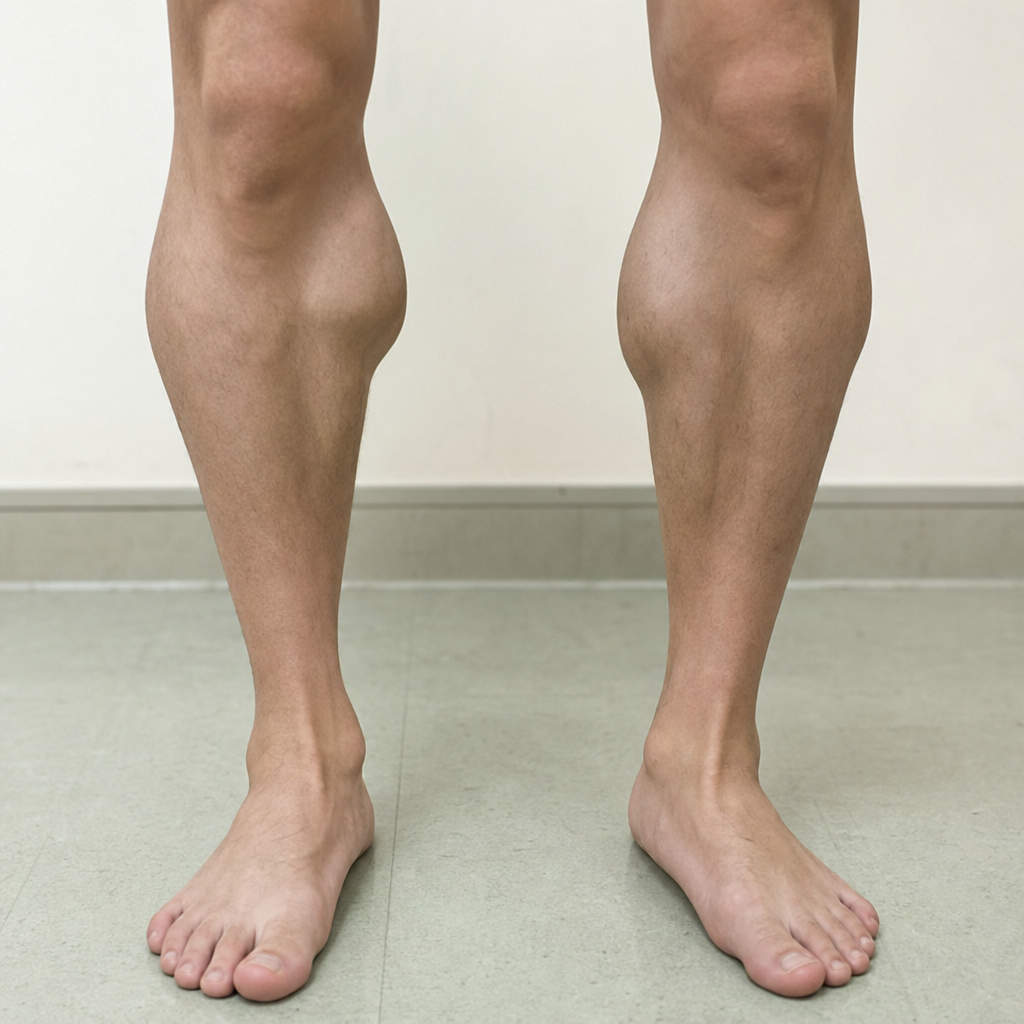
Peripheral nerve sheath tumors include all of the following except:
An 85-year-old man falls in the bathtub and strikes the back of his head. Over the next 24 hours, he becomes increasingly somnolent. A head CT scan shows an accumulation of fluid beneath the dura, compressing the left cerebral hemisphere. Which of the following terms best describes this collection of fluid?
All of the following statements are true regarding craniopharyngioma, except:
Spongiform changes in astrocytic tumor with neuronal loss is seen in?
Porencephaly is seen in which of the following conditions?
A 10-year-old boy presents with multiple tan-colored patches on his skin and freckle-like changes in his axillary area. The remainder of his clinical examination is normal. Which of the following conditions is also found in patients with this disorder as they age?
A neuropathologist is performing an autopsy on a 65-year-old man who had resting tremor, rigidity, and akinesia. Histologic sections of the substantia nigra reveal neurons containing round eosinophilic inclusions. Such inclusions most likely represent?
Genetic alteration in which of the following chromosomes can lead to oligodendroglioma?
Rupture of a berry aneurysm of the Circle of Willis would likely produce hemorrhage into which of the following spaces or structures?
A 50-year-old woman presents with a 5-year history of headaches, generalized tonic-clonic seizures, and bilateral leg weakness. Skull films reveal hyperostosis of the calvarium. Biopsy of the responsible lesion shows a whorling pattern of the cells. Which of the following is the most likely diagnosis?
Explanation: The correct answer is **Synovial sarcoma (Option D)**. Peripheral nerve sheath tumors (PNSTs) are a group of neoplasms that arise from the cells that form the insulating cover of peripheral nerves, primarily Schwann cells, fibroblasts, and perineurial cells [2]. **Why Synovial Sarcoma is the correct answer:** Synovial sarcoma is a **misnomer**; it does not arise from synovial cells nor from the nerve sheath [1]. It is a mesenchymal soft tissue sarcoma of uncertain histogenesis, typically occurring near large joints in young adults [1]. It is characterized by a specific chromosomal translocation **t(X;18)(p11;q11)** involving the *SS18* gene [1]. **Analysis of incorrect options:** * **Schwannoma (Option A):** A benign, encapsulated tumor arising purely from Schwann cells [2]. It typically shows a dimorphic pattern of dense **Antoni A** (with Verocay bodies) and loose **Antoni B** areas [5]. It is S100 positive. * **Neurofibroma (Option B):** A benign, non-encapsulated tumor containing a mixture of Schwann cells, fibroblasts, and mast cells [4]. It is strongly associated with **Neurofibromatosis Type 1 (NF1)** [2]. * **Malignant Peripheral Nerve Sheath Tumor (MPNST) (Option C):** A highly aggressive sarcoma that can arise *de novo* or from the malignant transformation of a pre-existing plexiform neurofibroma (often in NF1 patients) [3]. **High-Yield Clinical Pearls for NEET-PG:** * **Schwannoma vs. Neurofibroma:** Schwannomas compress the nerve of origin (can be surgically removed without sacrificing the nerve), whereas neurofibromas infiltrate the nerve (nerve must be sacrificed). * **Bilateral Acoustic Neuromas:** Pathognomonic for **Neurofibromatosis Type 2 (NF2)**. * **Triton Tumor:** A variant of MPNST that shows rhabdomyoblastic differentiation. * **S100 Protein:** The most common immunohistochemical marker for nerve sheath tumors. **References:** [1] Kumar V, Abbas AK, et al.. Robbins and Cotran Pathologic Basis of Disease. 9th ed. Bones, Joints, and Soft Tissue Tumors, pp. 1225-1226. [2] Kumar V, Abbas AK, et al.. Robbins and Cotran Pathologic Basis of Disease. 9th ed. Peripheral Nerves and Skeletal Muscles, pp. 1248-1249. [3] Kumar V, Abbas AK, et al.. Robbins and Cotran Pathologic Basis of Disease. 9th ed. Peripheral Nerves and Skeletal Muscles, pp. 1250-1251. [4] Kumar V, Abbas AK, et al.. Robbins and Cotran Pathologic Basis of Disease. 9th ed. Peripheral Nerves and Skeletal Muscles, pp. 1249-1250. [5] Kumar V, Abbas AK, et al.. Robbins and Cotran Pathologic Basis of Disease. 9th ed. Peripheral Nerves and Skeletal Muscles, p. 1250.
Explanation: ### Explanation **Correct Option: C. Hematoma** The clinical presentation describes a **Subdural Hematoma (SDH)**. In elderly patients, brain atrophy stretches the fragile **bridging veins** that traverse the subdural space [1]. A minor trauma (like a fall) can rupture these veins, leading to a localized collection of blood. By definition, a **hematoma** is a localized collection of blood outside of blood vessels, usually in a solid form within an organ, space, or tissue [2]. In this case, the blood is accumulating in the potential space between the dura and the arachnoid mater, causing mass effect and somnolence [1], [2]. **Why other options are incorrect:** * **A. Congestion:** This refers to a passive process resulting from impaired venous outflow (e.g., in cardiac failure). The tissue appears blue-red (cyanosis) due to the accumulation of deoxygenated hemoglobin, but it is not a discrete collection of blood. * **B. Ecchymosis:** These are subcutaneous purpura (bruises) larger than 1–2 cm. While they represent extravasation of blood into the skin or mucous membranes, the term is specific to soft tissue/skin discoloration, not intracranial collections. * **D. Petechiae:** These are minute (1–2 mm) hemorrhages into skin, mucous membranes, or serosal surfaces. They are typically associated with low platelet counts or defective platelet function, not traumatic intracranial bleeds. **NEET-PG High-Yield Pearls:** * **Subdural Hematoma (SDH):** Rupture of **bridging veins**; appears **crescent-shaped** on CT; can be chronic in the elderly due to brain atrophy [1]. * **Epidural Hematoma (EDH):** Rupture of the **middle meningeal artery**; appears **biconvex/lens-shaped** on CT; often associated with a "lucid interval." * **Size Spectrum of Hemorrhage:** Petechiae (1-2 mm) → Purpura (3-5 mm) → Ecchymoses (>1-2 cm) → Hematoma (large, space-occupying collection). **References:** [1] Kumar V, Abbas AK, et al.. Robbins and Cotran Pathologic Basis of Disease. 9th ed. The Central Nervous System, p. 1264. [2] Kumar V, Abbas AK, et al.. Robbins and Cotran Pathologic Basis of Disease. 9th ed. The Central Nervous System, pp. 1264-1265.
Explanation: **Explanation:** Craniopharyngiomas are **WHO Grade 1 (benign)**, slow-growing epithelial tumors. While they can be locally invasive and have a high recurrence rate due to their proximity to vital structures (optic chiasm, hypothalamus), they are **not aggressive malignant tumors**. This makes Option B the correct "except" choice. **Analysis of Options:** * **Option A:** These tumors originate from the remnants of **Rathke’s pouch** (an ectodermal outpocketing of the oropharynx). * **Option C:** The **Papillary variant** is seen primarily in adults. It is characterized by solid sheets of squamous epithelium and is strongly associated with the **BRAF V600E mutation**. * **Option D:** The **Adamantinomatous variant** is more common in children. It is characterized by "wet keratin" (stellate reticulum) and calcification. It is driven by mutations in the **CTNNB1 gene**, leading to the activation of the **WNT/beta-catenin pathway**. **High-Yield Clinical Pearls for NEET-PG:** * **Bimodal Age Distribution:** Peaks at 5–15 years and >45 years. * **Imaging:** Classic "machinery oil" appearance (dark, cholesterol-rich fluid) within cysts, especially in the adamantinomatous type. * **Clinical Presentation:** Visual field defects (Bitemporal hemianopia) and endocrine dysfunction (Diabetes Insipidus, growth retardation) [1]. * **Calcification:** A hallmark feature on CT scans (present in >90% of pediatric cases). **References:** [1] Kumar V, Abbas AK, et al.. Robbins and Cotran Pathologic Basis of Disease. 9th ed. The Endocrine System, pp. 1084-1085.
Explanation: The hallmark of **Prion diseases** (such as Creutzfeldt-Jakob Disease) is the presence of **spongiform encephalopathy** [1]. This refers to the microscopic appearance of small, clear, round-to-oval vacuoles within the neuropil (the network of axonal, dendritic, and glial processes). These vacuoles develop within the cytoplasm of neurons and astrocytes. As the disease progresses, it leads to significant **neuronal loss** and reactive **gliosis** (astrocytic proliferation), giving the brain a "sponge-like" appearance [1]. This is caused by the accumulation of misfolded PrPSc proteins, which are resistant to proteases [2]. **Analysis of Incorrect Options:** * **B. Alzheimer’s Disease:** Characterized by extracellular **Amyloid-beta plaques** and intracellular **Tau-protein neurofibrillary tangles**. While neuronal loss occurs, spongiform change is not a primary feature. * **C. Parkinson’s Disease:** Defined by the loss of dopaminergic neurons in the substantia nigra and the presence of **Lewy bodies** (alpha-synuclein inclusions). * **D. Amyloidosis:** While systemic amyloidosis involves extracellular protein deposition, it does not typically present with the specific spongiform changes and neuronal loss pattern seen in primary neurodegenerative prion conditions. **NEET-PG High-Yield Pearls:** * **Prion Protein (PrP):** Encoded by the *PRNP* gene on chromosome 20 [2]. * **Pathogenesis:** Conversion of alpha-helical **PrPc** (normal) to beta-pleated **PrPSc** (infectious/pathogenic) [2]. * **CJD Triad:** Rapidly progressive dementia, myoclonus, and periodic sharp waves on EEG [3]. * **Diagnosis:** 14-3-3 protein in CSF is a sensitive marker for CJD. **References:** [1] Kumar V, Abbas AK, et al.. Robbins and Cotran Pathologic Basis of Disease. 9th ed. The Central Nervous System, pp. 1284-1286. [2] Kumar V, Abbas AK, et al.. Robbins and Cotran Pathologic Basis of Disease. 9th ed. The Central Nervous System, p. 1284. [3] Cross SS. Underwood's Pathology: A Clinical Approach. 6th ed. Common Clinical Manifestations Of Central And Peripheral Nervous System Disease, pp. 712-713.
Explanation: ### Explanation **Porencephaly** refers to the presence of cystic cavities within the cerebral hemispheres that usually communicate with the ventricular system or the subarachnoid space. These cysts typically result from localized destructive events (ischemic, infectious, or traumatic) occurring during fetal life or early infancy. **Why Dandy-Walker Syndrome (DWS) is the correct answer:** Dandy-Walker Syndrome is a congenital brain malformation involving the cerebellum and the fluid-filled spaces around it [1]. It is characterized by a triad of: 1. Agenesis or hypoplasia of the cerebellar vermis. 2. Cystic dilation of the fourth ventricle [1]. 3. Enlargement of the posterior fossa. In clinical pathology, DWS is frequently associated with other CNS anomalies, including **porencephaly**, agenesis of the corpus callosum, and hydrocephalus. **Analysis of Incorrect Options:** * **Trisomy 13 (Patau Syndrome):** Characteristically associated with **holoprosencephaly** (failure of the forebrain to divide), microcephaly, and scalp defects (aplasia cutis congenita), rather than porencephaly. * **Fetal Alcohol Syndrome (FAS):** Primarily leads to microcephaly, neuronal migration defects, and cognitive impairment. While it causes structural brain damage, porencephaly is not a hallmark feature. * **Down Syndrome (Trisomy 21):** Associated with a smaller brain weight and simplified gyral patterns (brachycephaly). It is not typically associated with cystic destructive lesions like porencephaly. **NEET-PG High-Yield Pearls:** * **Schizencephaly vs. Porencephaly:** Schizencephaly involves clefts lined by **gray matter** (developmental), whereas porencephaly involves cavities lined by **white matter** (destructive/encephaloclastic). * **Hydranencephaly:** An extreme form of porencephaly where the cerebral hemispheres are almost entirely replaced by a thin-walled sac of CSF, usually due to bilateral internal carotid artery occlusion. * **Dandy-Walker Triad:** Remember the "Cystic 4th ventricle + Vermis hypoplasia + Large posterior fossa." **References:** [1] Cross SS. Underwood's Pathology: A Clinical Approach. 6th ed. Common Clinical Manifestations Of Central And Peripheral Nervous System Disease, pp. 718-719.
Explanation: ### Explanation **Diagnosis: Neurofibromatosis Type 1 (NF1 / von Recklinghausen Disease)** The clinical presentation of **café-au-lait spots** (tan-colored patches) and **axillary freckling (Crowe sign)** in a young patient is pathognomonic for Neurofibromatosis Type 1. NF1 is an autosomal dominant disorder caused by a mutation in the *NF1* gene on **chromosome 17**, which encodes the protein **neurofibromin** (a negative regulator of the RAS pathway). **1. Why the Correct Answer is Right:** As patients with NF1 age, they characteristically develop **multiple cutaneous and subcutaneous neurofibromas** [1]. These are benign nerve sheath tumors composed of a mixture of Schwann cells, fibroblasts, and perineural cells. They typically appear during puberty and increase in number throughout adulthood. **2. Analysis of Incorrect Options:** * **Option A (Bilateral eighth nerve tumors):** This refers to bilateral vestibular schwannomas, which are the hallmark of **Neurofibromatosis Type 2 (NF2)**, caused by a mutation on chromosome 22 (*merlin* gene) [1]. NF2 lacks the prominent skin manifestations seen in NF1. * **Option B (Irregular small pupils):** This describes Argyll Robertson pupils (seen in neurosyphilis). In NF1, the characteristic ocular finding is **Lisch nodules** (pigmented iris hamartomas), which do not affect pupil shape or light reflex. * **Option D (Cataracts):** Specifically, posterior subcapsular lenticular opacities are associated with **NF2**, not NF1. **3. NEET-PG High-Yield Pearls:** * **Inheritance:** Autosomal Dominant; 100% penetrance but variable expressivity. * **Diagnostic Criteria (Need 2+):** 6+ Café-au-lait spots, 2+ neurofibromas, axillary/inguinal freckling, Optic glioma, 2+ Lisch nodules, or specific bony lesions (sphenoid dysplasia). * **Malignant Transformation:** NF1 patients have an increased risk of **Malignant Peripheral Nerve Sheath Tumors (MPNST)**, often arising from pre-existing plexiform neurofibromas [1]. * **Mnemonic:** NF**1** is on Chromosome **17** (17 has 7 letters, like "seventeen"). NF**2** is on Chromosome **22**. **References:** [1] Kumar V, Abbas AK, et al.. Robbins and Cotran Pathologic Basis of Disease. 9th ed. Peripheral Nerves and Skeletal Muscles, pp. 1248-1251.
Explanation: ### Explanation **Correct Answer: D. Lewy Bodies** The clinical triad of **resting tremor, rigidity, and akinesia (bradykinesia)** is the hallmark of **Parkinson’s Disease (PD)** [1]. This condition results from the loss of dopaminergic neurons in the **substantia nigra pars compacta** [3]. On histology, the pathognomonic finding is the **Lewy body**: a round, eosinophilic, intracytoplasmic inclusion with a dense core and a pale halo [1]. These inclusions are primarily composed of abnormally aggregated **alpha-synuclein** protein [2]. **Analysis of Incorrect Options:** * **A. Granulovacuolar degeneration:** These are small, clear vacuoles containing a central argyrophilic granule, typically found in the hippocampal pyramidal cells of patients with **Alzheimer’s disease**. * **B. Hirano bodies:** These are bright eosinophilic, actin-rich, rod-like inclusions found in the hippocampus, most commonly associated with **Alzheimer’s disease** and normal aging. * **C. Lafora bodies:** These are PAS-positive starch-like (polyglucosan) inclusions found in the cytoplasm of neurons in **Lafora body disease**, a form of progressive myoclonus epilepsy. **NEET-PG High-Yield Pearls:** * **Protein Marker:** Alpha-synuclein is the chief component of Lewy bodies [2]. * **Staining:** Lewy bodies can be highlighted using immunohistochemistry for alpha-synuclein or ubiquitin [1]. * **Dementia with Lewy Bodies (DLB):** If dementia occurs within one year of motor symptoms (or precedes them), and is accompanied by visual hallucinations, it is classified as DLB rather than PD [1]. * **Gross Pathology:** Look for "depigmentation" or "pallor" of the substantia nigra and locus coeruleus due to loss of pigmented (neuromelanin-containing) neurons [3]. **References:** [1] Kumar V, Abbas AK, et al.. Robbins and Cotran Pathologic Basis of Disease. 9th ed. The Central Nervous System, pp. 1297-1298. [2] Kumar V, Abbas AK, et al.. Robbins and Cotran Pathologic Basis of Disease. 9th ed. The Central Nervous System, pp. 1296-1297. [3] Cross SS. Underwood's Pathology: A Clinical Approach. 6th ed. Common Clinical Manifestations Of Central And Peripheral Nervous System Disease, pp. 723-724.
Explanation: ### Explanation **Correct Option: D (Chromosome 19q)** The molecular hallmark of **Oligodendroglioma** is the **co-deletion of chromosomes 1p and 19q** [1]. This genetic alteration occurs due to an unbalanced translocation between chromosomes 1 and 19. According to the WHO Classification of Tumors of the CNS, the diagnosis of an oligodendroglioma now *requires* the presence of both an **IDH mutation** (IDH1 or IDH2) and the **1p/19q codeletion** [1]. This specific genetic profile is associated with a better prognosis and a superior response to chemotherapy (PCV regimen) and radiotherapy compared to other gliomas. **Incorrect Options:** * **A. Chromosome 3p:** Deletions in 3p are characteristic of **Von Hippel-Lindau (VHL) syndrome**, which is associated with CNS Hemangioblastomas and Clear Cell Renal Cell Carcinoma [3]. * **B. Chromosome 9q:** Mutations in 9q (specifically the *TSC1* gene) are associated with **Tuberous Sclerosis**, which can lead to Subependymal Giant Cell Astrocytomas (SEGA) [2]. * **C. Chromosome 13q:** This region contains the *RB1* gene. Mutations or deletions here are linked to **Retinoblastoma** and Osteosarcoma, not oligodendrogliomas. **High-Yield Clinical Pearls for NEET-PG:** * **Morphology:** Look for "Fried-egg" appearance (perinuclear halos) and "Chicken-wire" calcified blood vessels. * **Location:** Most commonly found in the **Frontal lobe**; often presents with seizures [1]. * **Prognostic Marker:** 1p/19q codeletion is both **diagnostic** and **predictive** of a favorable treatment response. * **Calcification:** Oligodendrogliomas are among the most common intracranial tumors to show macroscopic calcification on CT scans. **References:** [1] Kumar V, Abbas AK, et al.. Robbins and Cotran Pathologic Basis of Disease. 9th ed. The Central Nervous System, pp. 1311-1312. [2] Kumar V, Abbas AK, et al.. Robbins and Cotran Pathologic Basis of Disease. 9th ed. The Central Nervous System, pp. 1318-1319. [3] Cross SS. Underwood's Pathology: A Clinical Approach. 6th ed. Common Clinical Manifestations Of Central And Peripheral Nervous System Disease, pp. 726-727.
Explanation: ### Explanation **Correct Answer: C. Subarachnoid space** **Mechanism:** Berry (saccular) aneurysms are thin-walled protrusions typically located at the arterial bifurcations of the **Circle of Willis**, most commonly at the junction of the Anterior Communicating Artery [3]. These vessels are located within the **subarachnoid space**—the area between the arachnoid mater and the pia mater where cerebrospinal fluid (CSF) circulates. When an aneurysm ruptures, blood is released directly into this space, leading to a **Subarachnoid Hemorrhage (SAH)** [1], [2]. **Analysis of Incorrect Options:** * **A. Epidural space:** This is caused by the rupture of the **middle meningeal artery**, usually secondary to a temporal bone fracture. It presents with a "lucid interval" and a biconvex (lens-shaped) hematoma on CT [4]. * **B. Cerebellum:** While hypertensive bleeds can occur in the cerebellum, berry aneurysms are localized to the base of the brain (Circle of Willis). Intraparenchymal hemorrhage is more commonly associated with systemic hypertension and Charcot-Bouchard aneurysms. * **D. Subdural space:** This results from the tearing of **bridging veins** that cross from the cortex to the dural sinuses [4]. It is typically seen in elderly patients or those with head trauma, appearing as a crescent-shaped hematoma. **High-Yield Clinical Pearls for NEET-PG:** * **Clinical Presentation:** Patients describe the "worst headache of my life" (**Thunderclap headache**) [2]. * **Diagnosis:** Non-contrast CT is the initial investigation of choice. If CT is negative but suspicion is high, **Lumbar Puncture** showing **xanthochromia** (yellowish CSF due to bilirubin) is diagnostic. * **Associations:** Berry aneurysms are strongly associated with **Autosomal Dominant Polycystic Kidney Disease (ADPKD)**, Ehlers-Danlos syndrome, and Coarctation of the Aorta [2]. * **Complication:** Vasospasm (delayed ischemia) typically occurs 3–10 days post-bleed; **Nimodipine** is used for prevention [2]. **References:** [1] Kumar V, Abbas AK, et al.. Robbins and Cotran Pathologic Basis of Disease. 9th ed. The Central Nervous System, pp. 1272-1273. [2] Cross SS. Underwood's Pathology: A Clinical Approach. 6th ed. Common Clinical Manifestations Of Central And Peripheral Nervous System Disease, pp. 705-706. [3] Kumar V, Abbas AK, et al.. Robbins and Cotran Pathologic Basis of Disease. 9th ed. The Central Nervous System, p. 1272. [4] Kumar V, Abbas AK, et al.. Robbins and Cotran Pathologic Basis of Disease. 9th ed. The Central Nervous System, p. 1264.
Explanation: **Explanation:** The clinical presentation and histopathology point definitively to a **Meningioma**. **Why Meningioma is correct:** 1. **Location & Symptoms:** Meningiomas are slow-growing, extra-axial tumors arising from **arachnoid cap cells**. A tumor located at the **parasagittal** region (falx cerebri) typically compresses the motor cortex representing the lower extremities, leading to the classic presentation of **bilateral leg weakness** [1]. 2. **Radiology:** They often cause **hyperostosis** (thickening) of the overlying skull bone due to tumor invasion or reactive changes, a high-yield diagnostic clue [2]. 3. **Histopathology:** The "whorling pattern" (cells wrapping around each other) is the pathognomonic microscopic feature [1]. These whorls often calcify to form **Psammoma bodies** [1], [2]. **Why other options are incorrect:** * **Arachnoid cyst:** These are benign fluid-filled sacs. While they can cause seizures, they do not cause hyperostosis or exhibit a cellular whorling pattern. * **Glioblastoma multiforme (GBM):** This is a highly aggressive, intra-axial tumor. It presents with a rapid clinical course (weeks/months), not a 5-year history, and shows "pseudopalisading necrosis" on biopsy [4]. * **Metastatic breast cancer:** While common in women, metastases typically present with multiple lesions, rapid progression, and significant vasogenic edema rather than localized hyperostosis and whorled cells [3]. **NEET-PG High-Yield Pearls:** * **Most common** primary extra-axial CNS tumor. * **Risk factors:** Female gender (expresses **Progesterone receptors** [3]), Neurofibromatosis type 2 (NF2) [1], and prior radiation. * **Key Histological Subtypes:** Meningothelial (whorls), Psammomatous (calcifications), and Fibroblastic. * **Imaging:** Shows a "Dural Tail sign" on contrast-enhanced MRI. **References:** [1] Cross SS. Underwood's Pathology: A Clinical Approach. 6th ed. Common Clinical Manifestations Of Central And Peripheral Nervous System Disease, pp. 727-728. [2] Kumar V, Abbas AK, et al.. Robbins and Cotran Pathologic Basis of Disease. 9th ed. The Central Nervous System, pp. 1316-1317. [3] Kumar V, Abbas AK, et al.. Robbins and Cotran Pathologic Basis of Disease. 9th ed. The Central Nervous System, pp. 1317-1318. [4] Kumar V, Abbas AK, et al.. Robbins and Cotran Pathologic Basis of Disease. 9th ed. The Central Nervous System, p. 1310.
Cellular Pathology of the Nervous System
Practice Questions
Cerebrovascular Diseases
Practice Questions
Trauma to the Central Nervous System
Practice Questions
Infections of the Nervous System
Practice Questions
Demyelinating Diseases
Practice Questions
Neurodegenerative Diseases
Practice Questions
CNS Tumors
Practice Questions
Peripheral Nerve Disorders
Practice Questions
Neuromuscular Junction Diseases
Practice Questions
Congenital and Developmental Disorders
Practice Questions
Get full access to all questions, explanations, and performance tracking.
Start For Free