
Occupational Exposure to Zoonoses — MCQs

A forest officer develops the lesion as shown in the image. Which of the following is not a differential to consider?
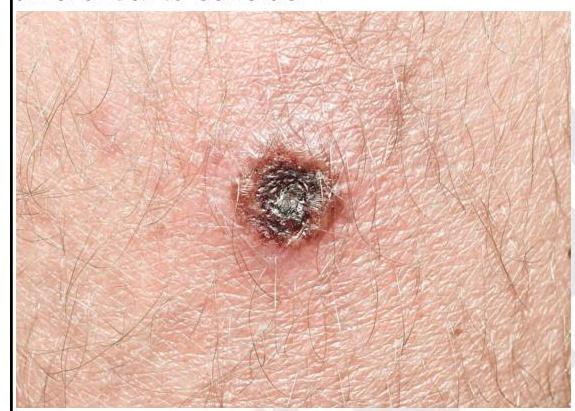
Which among the following occupations is a risk factor for cutaneous larva migrans?
All of the following statements are true regarding Q fever except -
For the prevention of human rabies, immediate flushing and washing the wound(s) in animal bite cases, with plenty of soap and water, under running tap should be carried out for how much time?
Most common widespread zoonotic disease in the world is -
A man with chills, fever, and headache is thought to have "atypical" pneumonia. History reveals that he raises chickens, and that approximately 2 weeks ago he lost a large number of them to an undiagnosed disease. Which of the following is the most likely diagnosis of this man's condition?
Zoonotic disease of viral etiology includes -
Considering that dogs are the most common carriers of rabies and that the disease predominantly affects children in developing countries, what is the most effective and direct method to significantly reduce the incidence of rabies?
A farmer presents you with a cauliflower-shaped mass on foot, which developed after a minor injury. Microscopy shows copper penny bodies. What is the most likely diagnosis?
Which organism does not require a vector for transmission?
Want unlimited practice?
Get full access to all questions, explanations, and performance tracking.
Scan to download app