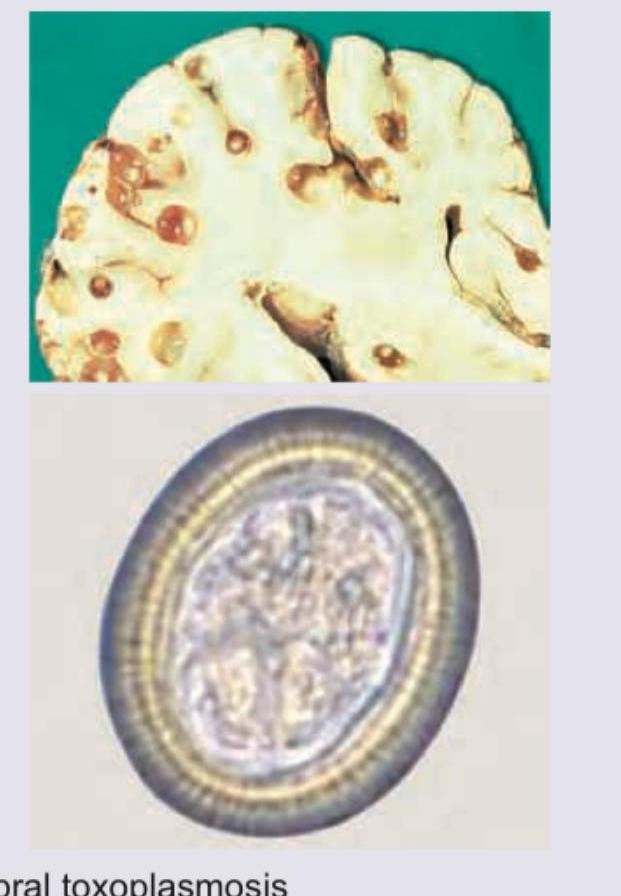
Which of the following CNS lesions is shown below?
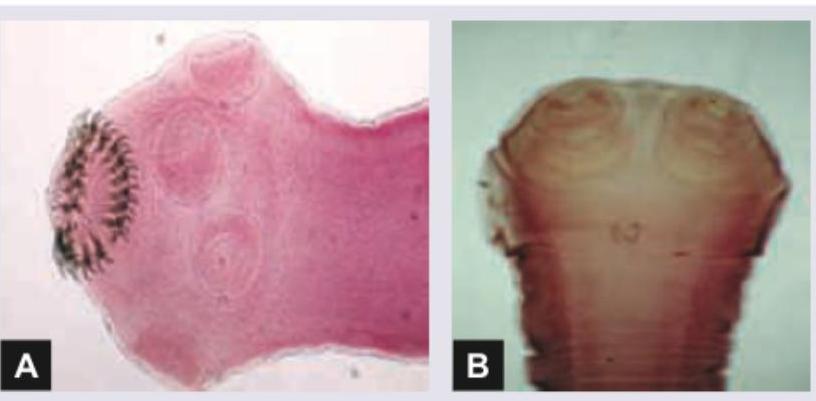
Which is correct of the parasite shown below?
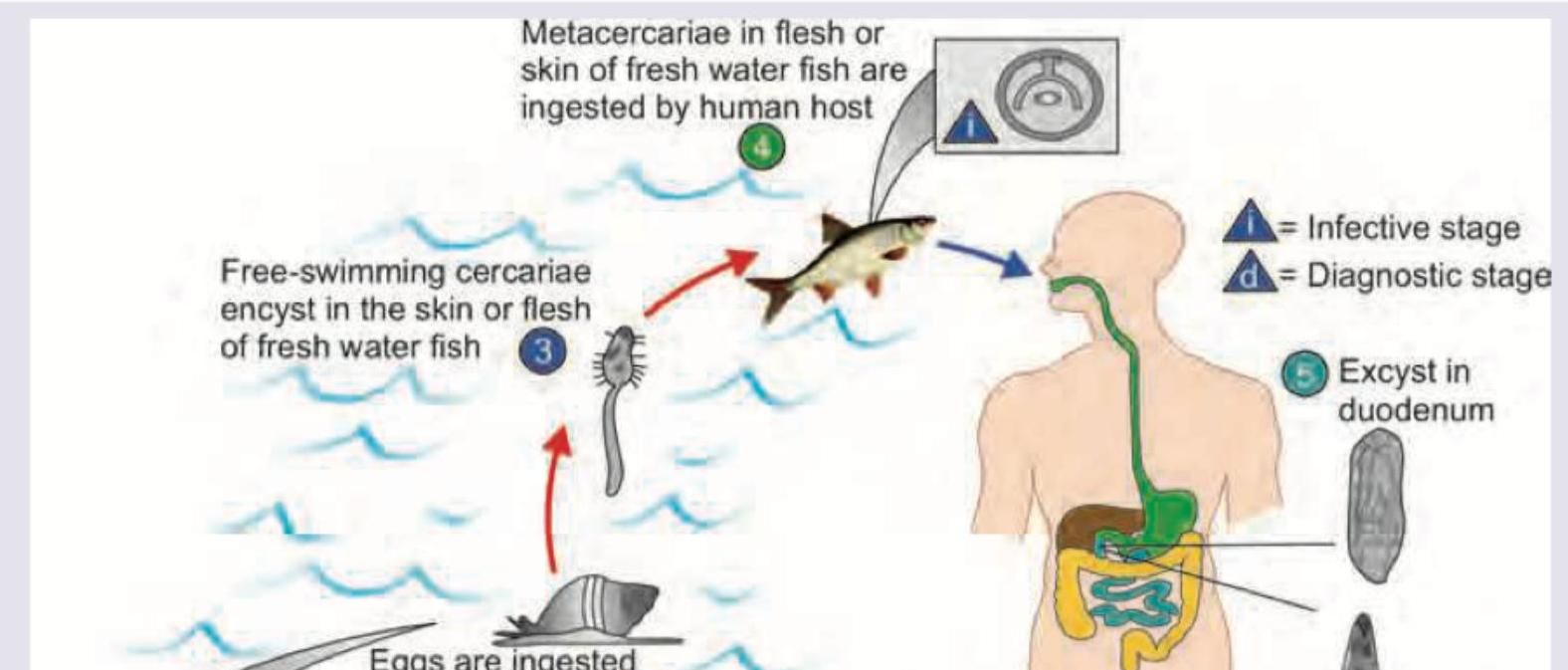
Which of the following life cycle is shown below?
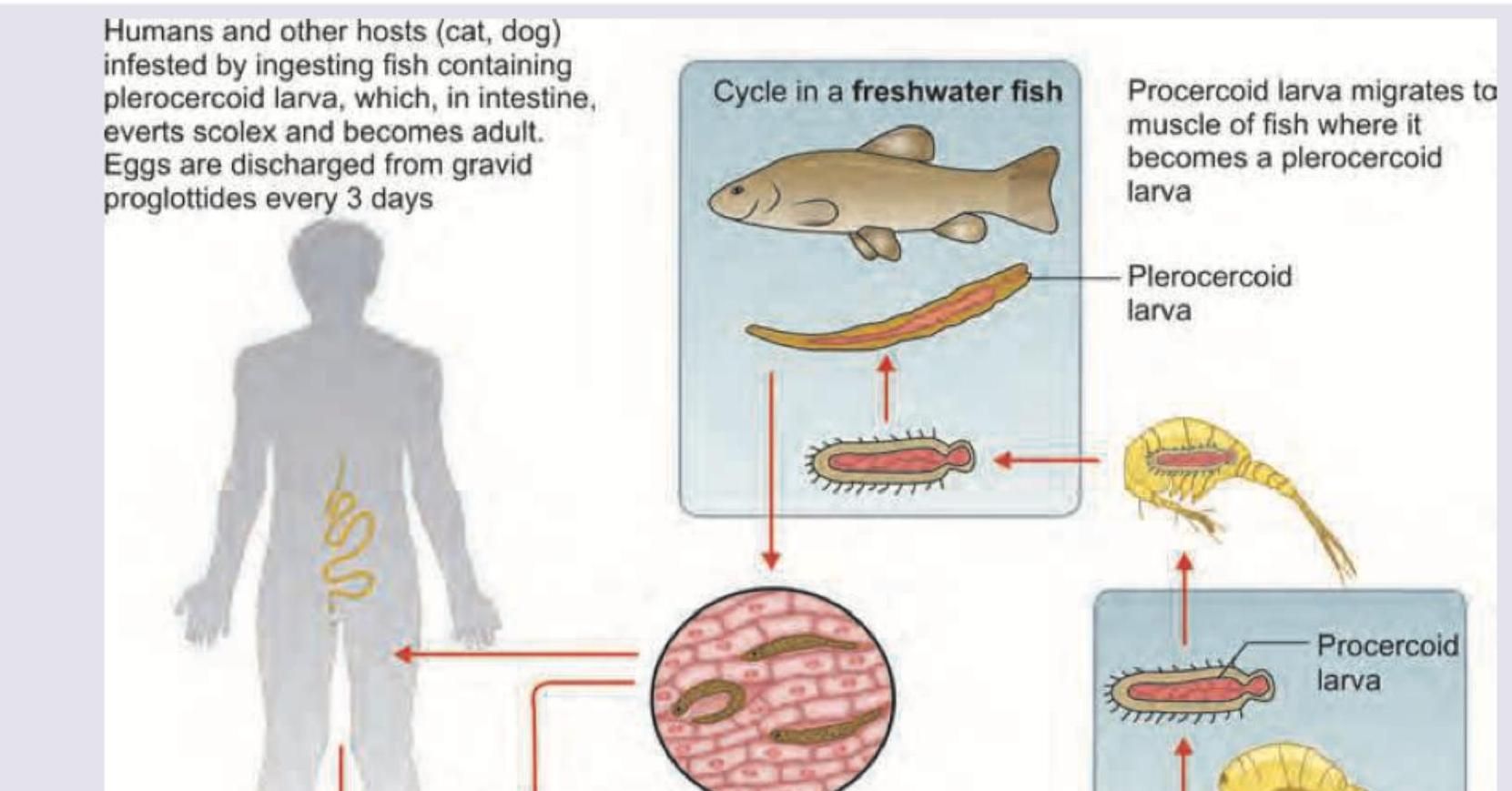
Which of the following life cycle is shown below?
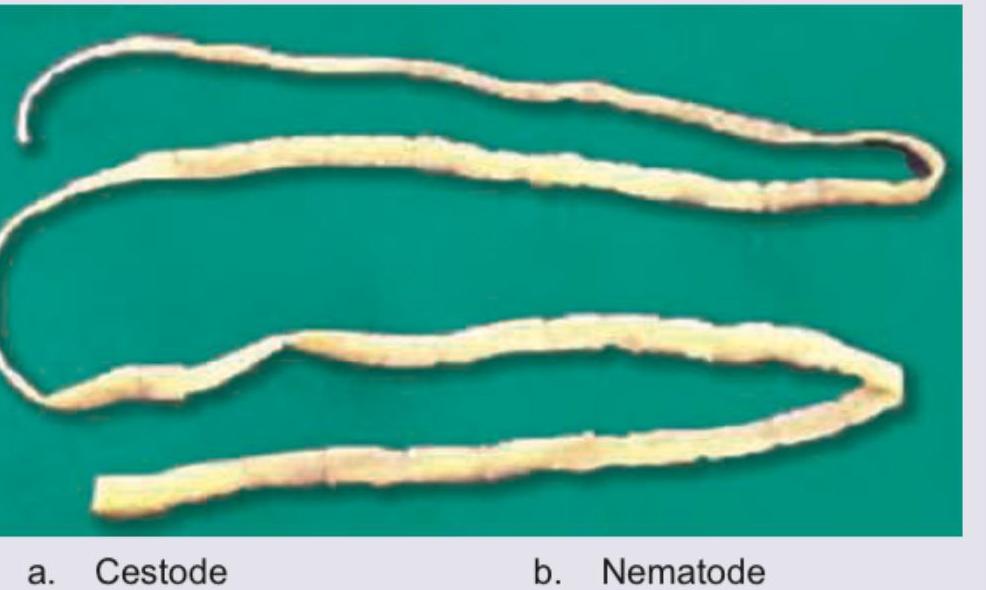
The following organism is called:
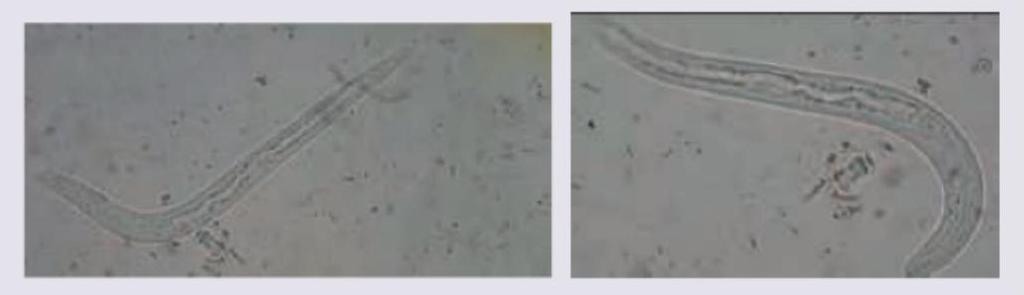
Post kidney transplantation, a patient presents with diarrhoea. The motility of the worms is shown in the figure. Correct statement about the organism is: (AIIMS Nov 2018)
Which one of the following statements is correct in the diagnosis of Giardiasis?
The period of time required for the development of the parasite from the gametocyte to sporozoite stage in the body of the mosquito is about 10-20 days. This period is also referred to as
A young boy who used to wash his contact lenses in tap water or with unhygienic lens fluid developed keratitis. Microscopy revealed an organism with spiked or star-shaped structures. Identify the correct organism responsible.
What is the vector for Leishmania, a parasite characterized by a prominent kinetoplast in its morphological forms?
Explanation: ***Neurocysticercosis*** - The top image displays multiple **cystic lesions** within the brain parenchyma, consistent with various stages of **neurocysticercosis**. - The bottom image shows an **egg of *Taenia solium***, the causative agent of cysticercosis, confirming the parasitic origin. *Cerebral toxoplasmosis* - This typically presents as **multiple ring-enhancing lesions**, often with a predilection for the **basal ganglia** in immunocompromised patients. - The pathological image shown here does not primarily depict ring-enhancing lesions but rather macroscopic cysts. *Cryptococcal meningitis* - While Cryptococcus can cause CNS lesions, they are usually **gelatinous pseudocysts** or **meningitis**, not the distinct cystic structures seen in the image. - The causative organism is a **fungus**, not a parasitic worm, so the associated egg image would be incorrect. *Hydatid cyst* - Hydatid cysts (caused by *Echinococcus granulosus*) are typically **solitary, large, well-defined cysts** with a characteristic laminated membrane. - The image shows **multiple, smaller cysts** and the egg is characteristic of *T. solium*, not *Echinococcus*.
Explanation: ***A = Dipylidium caninum, B = Hymenolepis nana*** - Image A displays a **scolex with four prominent suckers and a rostellum armed with hooks**, which is characteristic of *Dipylidium caninum*. - Image B shows a **scolex with four suckers and a distinct retractable rostellum armed with a single circlet of hooks**, a key morphological feature of *Hymenolepis nana*. *A = Taenia solium, B = Taenia saginata* - *Taenia solium* scolex (pork tapeworm) typically has **four suckers and a rostellum with a double crown of hooks**, not the single retractile coronet seen in B. - *Taenia saginata* scolex (beef tapeworm) is **unarmed (lacks hooks)** and only possesses four suckers, which contradicts both images. *A = Taenia saginata, B = Taenia solium* - This option is incorrect because *Taenia saginata* is an **unarmed tapeworm**, meaning it lacks hooks, which are clearly visible in Image A. - *Taenia solium* has a **scolex with hooks**, but Image B's scolex with a single circlet of hooks is more consistent with *Hymenolepis nana*. *A = Hymenolepis nana, B = Dipylidium caninum* - The scolex in Image A possesses a **double-crown rostellum with hooks clustered in rows**, which is characteristic of *Dipylidium caninum*, not *Hymenolepis nana*. - The scolex in Image B with four suckers and a retractile rostellum with a single circlet of hooks is indicative of *Hymenolepis nana*, not *Dipylidium caninum*.
Explanation: ***Clonorchiasis*** - The diagram displays metacercariae (infective stage) in freshwater fish being ingested by a human host, a defining characteristic of the Clonorchis sinensis life cycle. - The life cycle involves freshwater snails (first intermediate host) and freshwater fish (second intermediate host), which aligns with the image showing cercariae encysting in fish. *Diphylobothrium latum* - The infective stage for *Diphylobothrium latum* (fish tapeworm) is the **plerocercoid larva** in raw or undercooked freshwater fish, not metacercariae. - While it also involves freshwater fish, its larval forms and overall life cycle stages are distinct from what is depicted. *Echinococcus granulosus* - This parasite causes **hydatid disease** and has a life cycle involving canids (definitive host) and herbivores (intermediate host), with humans being accidental intermediate hosts. - The life cycle does not involve freshwater fish or metacercariae for human infection. *Tenia solium* - The human is the definitive host for **Taenia solium** (pork tapeworm), acquiring infection by ingesting undercooked pork containing **cysticerci**. - The intermediate host is pigs, and the life cycle does not involve freshwater fish or metacercariae.
Explanation: ***Diphyllobothrium latum*** - The diagram clearly illustrates a life cycle involving **freshwater fish** as a second intermediate host, where **plerocercoid larvae** are found, and humans ingesting these fish. The presence of **procercoid** and **plerocercoid larvae** in the depicted stages is characteristic of *Diphyllobothrium latum*. - The description mentions that humans are infected by ingesting fish containing **plerocercoid larvae**, which become adults in the intestine and discharge eggs from **gravid proglottides**, which is consistent with the life cycle of the **fish tapeworm**. *Echinococcus granulosus* - This parasite's life cycle involves **dogs as definitive hosts** and **sheep or humans as intermediate hosts** developing **hydatid cysts**, which is distinctly different from the fish-involved cycle shown. - Infection occurs through ingestion of **eggs passed in dog feces**, and not through contaminated fish. *Taenia solium* - *Taenia solium* (pork tapeworm) involves **pigs as intermediate hosts** and humans as definitive hosts, or humans as intermediate hosts in the case of **cysticercosis**. - Its life cycle does not involve **fish** or the **plerocercoid/procercoid larval stages** as depicted. *Clonorchis sinensis* - While *Clonorchis sinensis* (Chinese liver fluke) also involves **freshwater fish** as an intermediate host, it is a **fluke, not a tapeworm**, and its larval stages are **cercariae** and **metacercariae**, not procercoid or plerocercoid larvae. - The adult worm primarily infects the **biliary ducts (liver)**, not maturing in the intestine with proglottids as shown for the tapeworm in the diagram.
Explanation: ***Cestode*** - The image displays a long, **segmented, ribbon-like worm**, which is characteristic morphology of a **tapeworm (cestode)**. - Cestodes typically possess a head (scolex) for attachment and a body composed of repeating segments called **proglottids**. *Nematode* - **Nematodes** are generally **unsegmented**, cylindrical, and elongated worms, often described as roundworms. - They lack the distinct proglottids and flattened, ribbon-like appearance seen in the image. *Trematode* - **Trematodes**, also known as flukes, are typically **leaf-shaped** and **unsegmented**. - They are much broader and flatter than the organism shown, and do not have the visible segmentation. *Annelid* - **Annelids** are segmented worms like earthworms and leeches, but they have a **cylindrical body** with visible external ring-like segments. - Unlike cestodes, annelids have a complete digestive system and lack the flat, ribbon-like morphology and internal proglottid structure characteristic of tapeworms.
Explanation: ***Loeffler pneumonia is caused by the same organism*** - The image shows **Strongyloides stercoralis larvae** with characteristic motility. In a post-kidney transplant patient with diarrhea, this points to **Strongyloides hyperinfection** due to immunosuppression. - **Loeffler's syndrome (Loeffler pneumonia)** is a transient pulmonary infiltrative disease with eosinophilia, caused by larval migration through lungs. It is classically associated with *Strongyloides stercoralis*, *Ascaris lumbricoides*, and hookworms during their migratory phase. - This option represents an important **clinical association** that connects the organism to a significant pulmonary manifestation. *Monoecious organism related with parthenogenesis* - *Strongyloides stercoralis* is **dioecious (unisexual)**, not monoecious, meaning it has separate male and female forms. - While the parasitic females do exhibit **parthenogenesis** (reproducing without fertilization), the organism is not monoecious. *Transmitted by intake of contaminated food and water* - This is **incorrect**. *Strongyloides stercoralis* is transmitted through **percutaneous penetration** by filariform larvae from contaminated soil. - Fecal-oral transmission via contaminated food/water applies to parasites like *Entamoeba histolytica*, *Giardia*, *Ascaris*, and *Enterobius*, but not *Strongyloides*. *Infection occurs by filariform larvae* - This statement is **factually correct** - infection with *Strongyloides* does occur through **filariform (L3) larvae** penetrating intact skin. - However, in the context of this PYQ, Option C is preferred as it highlights the **clinically significant pulmonary manifestation** (Loeffler's syndrome) that is particularly relevant in immunocompromised patients, while this option merely describes the mode of transmission without clinical correlation.
Explanation: ***Stool sample at 2-3 days interval should be examined for cysts*** - Due to the **intermittent shedding** of *Giardia lamblia* cysts, multiple stool samples collected over several days (e.g., 2-3 days apart for a total of three samples) significantly increase the sensitivity of detection. - Microscopic examination of these samples for the presence of **cysts** is a primary diagnostic method for giardiasis. *String test is done to find out cysts of Giardia lamblia* - The **string test** (or Entero-Test) is primarily used to collect **trophozoites** from the duodenum, not cysts. - Cysts are typically found in **feces**, while trophozoites are free-living in the upper small intestine. *Jejunal biopsy samples can show presence of larvae of Giardia lamblia* - *Giardia lamblia* exists as **trophozoites** and **cysts**, not larvae. - While trophozoites can be seen in jejunal biopsies, they are **protozoan parasites**, not helminthic larvae. *Cystic form of Giardia lamblia remains viable in water upto 1 week only* - *Giardia lamblia* cysts are **highly resistant** and can remain viable in cold water for **months**, much longer than one week. - This extreme viability contributes to the widespread transmission of giardiasis through contaminated water sources.
Explanation: ***Extrinsic incubation period*** - This term refers to the time taken for the **Plasmodium parasite** to develop from the **ingested gametocytes** to the **infective sporozoites** within the mosquito vector. - The duration of this period is typically 10-20 days, depending on the **species of Plasmodium** and environmental factors such as temperature. *Asexual cycle* - The asexual cycle, or **schizogony**, occurs within the human host, specifically in the **liver** (exoerythrocytic) and **red blood cells** (erythrocytic). - This cycle involves the multiplication of the parasite and is responsible for the clinical symptoms of malaria. *Schizogony* - **Schizogony** is a form of asexual reproduction characteristic of **apicomplexan parasites**, including Plasmodium. - It describes the process where a single parasitic cell (e.g., a **merozoite** or **sporozoite**) divides multiple times within a host cell to produce many daughter cells. *Erythrocytic cycle* - The **erythrocytic cycle** is a specific part of the human asexual cycle where **merozoites** infect red blood cells, multiply, and then lyse the cells to release more merozoites. - This cycle is responsible for the periodic fevers and other symptoms of malaria, but does not involve development within the mosquito.
Explanation: ***Acanthamoeba*** - *Acanthamoeba* is a **free-living amoeba** found in water, soil, and inadequately disinfected contact lens solutions, specifically linked to **keratitis** in contact lens wearers. - Its characteristic morphology, often described as having **spiked or star-shaped structures**, refers to the **acanthopodia** (spine-like pseudopods) that are distinctive features visible microscopically. *Balantidium* - *Balantidium coli* is a **ciliated protozoan** and primarily causes **intestinal infections** (balantidiasis), not keratitis. - It would be distinguished microscopically by its **large size**, **kidney-shaped macronucleus**, and **cilia**, not spiked structures. *Pseudomonas* - *Pseudomonas aeruginosa* is a **bacterium** and a common cause of **bacterial keratitis**, especially in contact lens wearers, but it is not a protozoan. - Microscopically, it would appear as **rod-shaped bacteria**, not organisms with spiked or star-shaped structures. *Staphylococcus aureus* - *Staphylococcus aureus* is a **bacterium** and a frequent cause of various infections, including **bacterial keratitis**. - Under a microscope, it presents as **Gram-positive cocci in clusters**, not as an amoeba with spiked or star-shaped protrusions.
Explanation: ***Sand fly*** - **Sand flies** (genus *Phlebotomus* in the Old World and *Lutzomyia* in the New World) are the biological vectors responsible for transmitting *Leishmania* parasites to humans and other mammals. - The parasite exists in two main forms; the **promastigote** (flagellated) in the sand fly gut and the **amastigote** (non-flagellated) within host macrophages. *Female Anopheles Mosquito* - The **female Anopheles mosquito** is the primary vector for **malaria**, caused by *Plasmodium* parasites, and not *Leishmania*. - *Plasmodium* also undergoes sporogonic development in the mosquito, but it does not have a prominent kinetoplast in its mature forms. *Triatomine bug* - The **triatomine bug**, also known as the "kissing bug", is the vector for **Chagas disease**, caused by *Trypanosoma cruzi*. - While *Trypanosoma cruzi* is also a hemoflagellate with a kinetoplast, it is associated with different disease manifestations and geographical distribution than *Leishmania*. *TseTse fly* - The **tsetse fly** (genus *Glossina*) is the vector responsible for transmitting **African Trypanosomiasis**, or sleeping sickness, caused by *Trypanosoma brucei*. - Like *Leishmania*, *Trypanosoma brucei* also possesses a kinetoplast, but it causes a clinically distinct disease and is transmitted by a different insect vector.
Classification of Parasites
Practice Questions
Intestinal Protozoa
Practice Questions
Blood and Tissue Protozoa
Practice Questions
Malaria Parasites
Practice Questions
Leishmaniasis
Practice Questions
Intestinal Helminths: Nematodes
Practice Questions
Tissue Nematodes
Practice Questions
Trematodes
Practice Questions
Cestodes
Practice Questions
Ectoparasites
Practice Questions
Antiparasitic Drugs
Practice Questions
Laboratory Diagnosis of Parasitic Infections
Practice Questions
Get full access to all questions, explanations, and performance tracking.
Start For Free