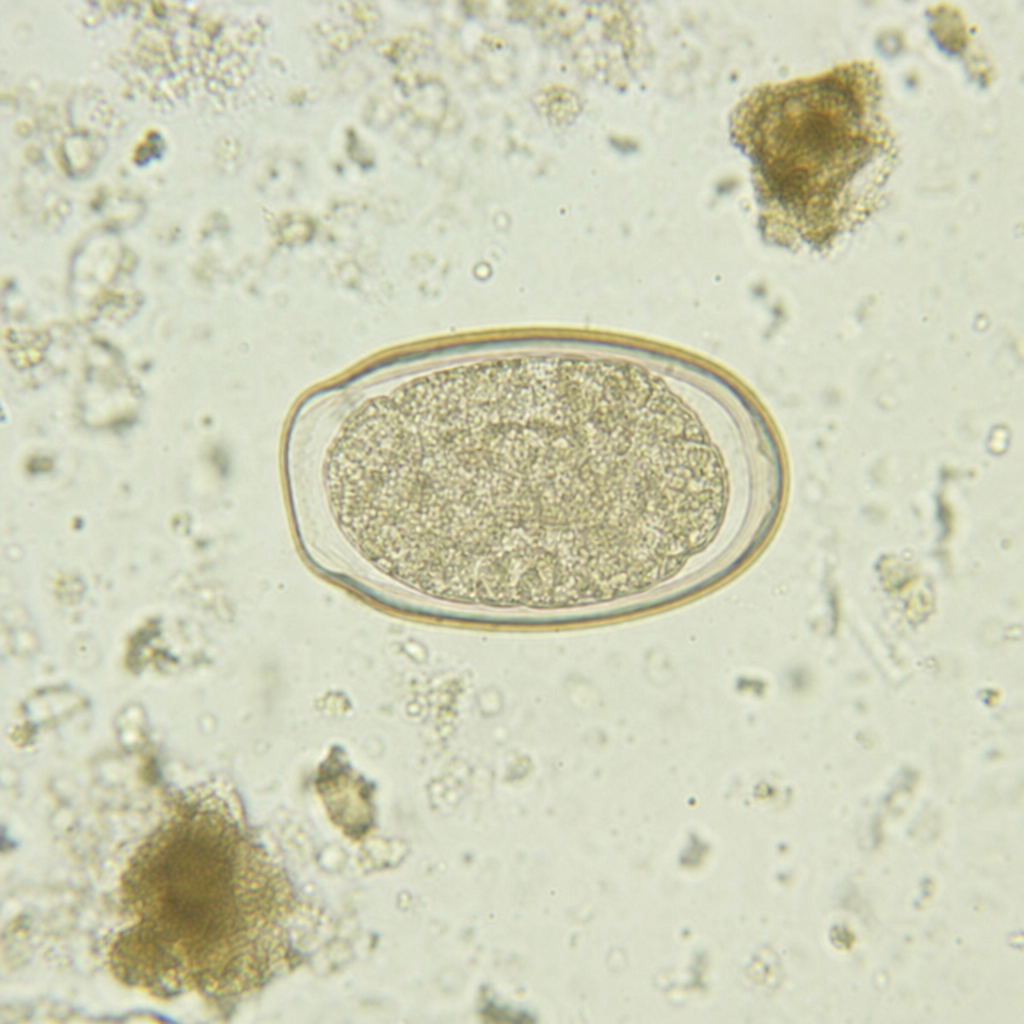
In malaria, which is the definitive host?
Which amoeba commonly causes meningoencephalitis?
Which tissue is most commonly affected in cysticercosis?
What is the definitive host in Toxoplasmosis?
A 28-year-old man presents with vague muscle pain involving his right arm that developed several weeks after eating undercooked meat. A biopsy from the affected muscle reveals encysted forms of Trichinella spiralis. What type of white blood cell is most likely to be increased in numbers in the peripheral blood of this individual?
What is the band form of P. malariae?
Dracunculosis infection occurs through which mode of transmission?
Sputum examination is not useful in the diagnosis of which of the following parasitic infections?
Black water fever is caused by?
Chagas disease is caused by which protozoan parasite?
Explanation: ### Explanation In parasitology, the **definitive host** is defined as the host in which the parasite undergoes its **sexual cycle** (syngamy and sporogony). Conversely, the intermediate host is where the asexual cycle (schizogony) occurs. **1. Why Option D is Correct:** In the life cycle of *Plasmodium*, the sexual phase occurs within the **Female Anopheles mosquito**. When the mosquito ingests gametocytes from an infected human, fertilization occurs in the mosquito's midgut, leading to the formation of a zygote, ookinete, oocyst, and eventually sporozoites. Because sexual reproduction happens here, the mosquito is the definitive host. Humans serve as the **intermediate host**. **2. Why Other Options are Incorrect:** * **Option A (Male Anopheles):** Male mosquitoes do not take blood meals; they feed on plant juices and nectar. Therefore, they cannot transmit malaria or host the parasite. * **Option B (Sand fly):** This is the vector for **Leishmaniasis** (Kala-azar) and Sandfly fever. * **Option C (Tsetse fly):** This is the vector for **African Trypanosomiasis** (Sleeping Sickness). **3. High-Yield Clinical Pearls for NEET-PG:** * **Exception Rule:** In most parasitic infections, humans are the definitive host. Malaria and *Echinococcus granulosus* (Hydatid cyst) are notable exceptions where humans are the intermediate host. * **Infective Form:** The **Sporozoite** is the infective form for humans (inoculated by the mosquito). * **Diagnostic Form:** The **Gametocyte** is the infective form for the mosquito (picked up from humans). * **Relapse:** Caused by **hypnozoites** (dormant stages in the liver) seen in *P. vivax* and *P. ovale*. * **Recrudescence:** Seen in *P. falciparum* due to incomplete clearance of parasites from the blood.
Explanation: **Explanation:** **Naegleria fowleri**, often referred to as the "brain-eating amoeba," is the correct answer. It is a free-living amoeba found in warm freshwater bodies. It enters the human body through the nasal mucosa, typically during swimming or diving, and migrates along the olfactory nerves through the cribriform plate to reach the brain. This results in **Primary Amoebic Meningoencephalitis (PAM)**, a rapidly progressive and usually fatal condition characterized by sudden onset headache, fever, and meningeal signs. **Why other options are incorrect:** * **Entamoeba histolytica:** While it is a major human pathogen, it primarily causes intestinal amoebiasis (dysentery) and amoebic liver abscesses. Brain involvement (cerebral amoebiasis) is an extremely rare, secondary complication. * **Giardia:** This is a flagellated protozoan, not an amoeba. It causes giardiasis, a malabsorptive diarrheal disease localized to the small intestine; it does not cause CNS infections. * **Escherichia coli:** This is a gram-negative bacterium, not an amoeba. While it is a common cause of neonatal meningitis, it does not fit the classification of "amoebic meningoencephalitis." **High-Yield Clinical Pearls for NEET-PG:** * **Diagnosis:** Look for motile trophozoites in a fresh **wet mount of CSF**. * **Drug of Choice:** Amphotericin B (often used in combination with Rifampicin or Miltefosine). * **Differential:** *Acanthamoeba* and *Balamuthia* cause **Granulomatous Amoebic Encephalitis (GAE)**, which is more chronic and typically occurs in immunocompromised hosts, unlike the acute PAM caused by *Naegleria* in healthy individuals.
Explanation: **Explanation:** Cysticercosis is caused by the larval stage (*Cysticercus cellulosae*) of the pork tapeworm, **Taenia solium**. Humans become accidental intermediate hosts by ingesting eggs through contaminated food or water. **1. Why Muscle is Correct:** While Neurocysticercosis (NCC) is the most clinically significant and symptomatic presentation, **subcutaneous tissue and skeletal muscles** are statistically the **most common** sites of larval lodgment. In many cases, muscular involvement remains asymptomatic or presents as small, palpable, painless nodules, which is why it is often underdiagnosed compared to neurological involvement. **2. Analysis of Incorrect Options:** * **Brain (Option A):** This is the most common site for **symptomatic** cysticercosis and the leading cause of adult-onset seizures worldwide. However, in terms of absolute frequency of larval distribution in the body, it ranks second to muscle/subcutaneous tissue. * **Eye (Option B):** Ocular cysticercosis occurs in about 1–3% of cases. It can involve the subretinal space or vitreous, potentially causing blindness, but it is far less common than muscular or neural involvement. * **Liver (Option C):** The liver is the primary site for **Hydatid disease** (*Echinococcus granulosus*), not cysticercosis. *T. solium* larvae rarely involve the hepatic parenchyma. **High-Yield NEET-PG Pearls:** * **Definitive Host:** Human (harbors adult worm). * **Intermediate Host:** Pig (normal); Human (accidental). * **Mode of Infection for Cysticercosis:** Ingestion of eggs (fecal-oral) or autoinfection. (Note: Ingesting undercooked pork leads to intestinal Taeniasis, not cysticercosis). * **Diagnosis:** MRI is the gold standard for NCC (shows "scolex within a cyst"). * **Treatment:** Albendazole is the drug of choice (combined with steroids to prevent inflammatory response to dying larvae).
Explanation: **Explanation:** In parasitology, the **definitive host** is defined as the host in which the parasite undergoes its **sexual reproductive cycle**. For *Toxoplasma gondii*, members of the family Felidae (domestic **cats** and their relatives) are the only definitive hosts. Within the intestinal epithelium of the cat, the parasite undergoes gametogeny and schizogony, resulting in the excretion of unsporulated **oocysts** in the feces. **Analysis of Options:** * **A. Cat (Correct):** As the definitive host, cats harbor the sexual stage. Humans and other animals become infected by ingesting sporulated oocysts from contaminated soil/water or bradyzoites in undercooked meat. * **B. Man (Incorrect):** Humans serve as **intermediate hosts**. In humans, the parasite only undergoes asexual reproduction (tachyzoites and bradyzoites) and exists in tissue cysts. Humans are usually a "dead-end" host. * **C. Pig (Incorrect):** Pigs, like sheep and rodents, are intermediate hosts. Ingesting undercooked pork containing tissue cysts is a common route of transmission to humans. * **D. Dog (Incorrect):** Dogs are accidental intermediate hosts. While they can carry the parasite in their tissues, they do not produce oocysts. **High-Yield NEET-PG Pearls:** * **Infective stage for humans:** Sporulated oocysts (from cat feces) or Bradyzoites (in tissue cysts). * **Diagnosis:** Sabin-Feldman Dye Test (Gold Standard), though rarely used now; IgM/IgG ELISA is standard. * **Congenital Toxoplasmosis Triad:** Chorioretinitis, Hydrocephalus, and Intracranial calcifications. * **HIV/Immunocompromised:** Most common cause of ring-enhancing lesions in the brain (CNS Toxoplasmosis). * **Treatment:** Pyrimethamine + Sulfadiazine (Drug of choice). Spiramycin is used in pregnancy to prevent vertical transmission.
Explanation: ### Explanation **Correct Option: B. Eosinophil** The clinical presentation describes **Trichinellosis**, caused by the nematode *Trichinella spiralis*. The hallmark of helminthic (parasitic) infections, especially those involving a tissue-invasive phase, is **peripheral blood eosinophilia**. When *Trichinella* larvae migrate from the intestines into the bloodstream and eventually encyst within striated muscle fibers, they trigger a Type I and Type IV hypersensitivity reaction. Eosinophils are recruited to the site and increased in the blood as part of the host's immune response. They contain **Major Basic Protein (MBP)** and **Eosinophil Cationic Protein (ECP)**, which are specifically designed to damage the tegument of large, non-phagocytosable parasites. **Why other options are incorrect:** * **A. Basophils:** These are primarily involved in systemic allergic reactions (anaphylaxis) and contain histamine. While they may rise in some hypersensitivity states, they are not the primary responders to tissue-invasive helminths. * **C. Macrophages:** These are chronic inflammatory cells and professional phagocytes. While they participate in granuloma formation, they do not typically cause a significant rise in the peripheral white cell count specifically for parasites. * **D. Neutrophils:** These are the primary responders to **acute bacterial infections** and pyogenic inflammation. They are not effective against large multicellular parasites like *Trichinella*. **NEET-PG High-Yield Pearls:** * **Classic Triad of Trichinellosis:** Myalgia, periorbital edema, and eosinophilia. * **Diagnosis:** Muscle biopsy (showing coiled larvae in "nurse cells") or serology (ELISA). * **Key Lab Finding:** Elevated **Creatine Kinase (CK)** due to muscle destruction. * **Eosinophilia Rule:** In parasitology, eosinophilia is most prominent during the **tissue migration phase** of helminths (e.g., *Ascaris* Loffler’s syndrome, *Hookworm*, *Strongyloides*, and *Trichinella*). It is generally *not* seen with protozoan infections (like Amoebiasis or Giardiasis).
Explanation: The correct answer is **B. Trophozoite stage**. ### **Explanation** *Plasmodium malariae* is unique among the malaria species for its specific morphological features in the peripheral blood smear. The **"Band form"** occurs during the **growing trophozoite stage**. As the parasite matures, it stretches across the diameter of the red blood cell (RBC), forming a characteristic rectangular or ribbon-like band. This happens because *P. malariae* prefers older RBCs, which are less flexible, constraining the parasite's growth into this distinct shape. ### **Why other options are incorrect:** * **Schizont stage:** In *P. malariae*, the schizont is characterized by a **"Daisy-head" or "Rosette" appearance**, typically containing 6–12 merozoites clustered around a central mass of brown pigment (hemozoin). * **Merozoite stage:** These are the small, individual daughter cells released upon the rupture of a schizont. They do not form bands; they are the invasive stage that targets new RBCs. * **Gametocyte stage:** The gametocytes of *P. malariae* are typically small, round, or oval and fill the RBC. They do not exhibit the elongated band morphology. ### **NEET-PG High-Yield Pearls for *P. malariae*:** 1. **Quartan Malaria:** It has a 72-hour erythrocytic cycle, leading to fever every fourth day. 2. **RBC Preference:** It infects only **senescent (old) RBCs**, leading to lower parasitemia levels compared to *P. falciparum*. 3. **Ziemann’s Stippling:** Fine dust-like pinkish dots may be seen in the cytoplasm of infected RBCs (unlike Schüffner’s dots in *P. vivax*). 4. **Clinical Complication:** It is classically associated with **Nephrotic Syndrome** (specifically Quartan Malarial Nephropathy) due to immune complex deposition.
Explanation: **Explanation:** **Dracunculiasis (Guinea Worm Disease)** is caused by the nematode *Dracunculus medinensis*. The infection follows a specific indirect life cycle involving an intermediate host. 1. **Why Option A is correct:** The infective stage of the parasite is the **L3 larva**, which develops inside a crustacean called **Cyclops** (the intermediate host). Humans acquire the infection by drinking stagnant water containing these infected Cyclops. Once ingested, gastric acids digest the Cyclops, releasing the larvae which then penetrate the intestinal wall to mature in the retroperitoneal space. 2. **Why other options are incorrect:** * **Option B:** Ingesting the parasite (larvae) directly without the Cyclops host does not cause infection, as the larvae must undergo maturation within the crustacean to become infective. * **Option C:** Fish are not part of the *D. medinensis* life cycle. This mode is characteristic of parasites like *Diphyllobothrium latum* or *Clonorchis sinensis*. * **Option D:** Skin penetration is the mode of transmission for "Hookworms" (*Ancylostoma, Necator*) and *Strongyloides stercoralis*, not Guinea worm. **High-Yield Clinical Pearls for NEET-PG:** * **Intermediate Host:** Cyclops (also known as the "Water Flea"). * **Definitive Host:** Humans (No animal reservoir). * **Clinical Presentation:** A painful blister, usually on the lower limb, which ruptures upon contact with water to release larvae. * **Diagnosis:** Detection of adult female worms (up to 1 meter long) emerging from the skin ulcer. * **Step-ladder treatment:** Slow extraction of the worm by winding it around a small stick over several days. * **Epidemiology:** India was declared **Guinea Worm Free** by the WHO in February 2000 (last case reported in 1996).
Explanation: ### Explanation The correct answer is **Trichuris trichiura (Whipworm)**. The diagnostic utility of sputum in parasitology depends on whether the parasite undergoes a **heart-lung migration phase** or primarily inhabits the pulmonary parenchyma. **1. Why Trichuris trichiura is the correct answer:** Unlike other common intestinal nematodes, *Trichuris trichiura* does **not** have a lung migration phase. After ingestion of embryonated eggs, the larvae hatch in the small intestine, move to the caecum, and mature into adults. Since they never enter the bloodstream or the respiratory tract, they cannot be detected in sputum. Diagnosis is primarily via stool microscopy for characteristic bile-stained, barrel-shaped eggs with polar plugs. **2. Why the other options are incorrect:** * **Ancylostoma duodenale (Hookworm):** These parasites undergo the "Loos cycle" (Skin → Blood → Lungs → Trachea → Gut). During the migratory phase, larvae can be found in the sputum. * **Paragonimus westermani (Lung fluke):** This is the classic cause of **Paragonimiasis**. Adult flukes live in cystic cavities within the lungs. Eggs are released into the bronchioles and are frequently found in the sputum (often tinged with blood, mimicking TB). * **Strongyloides stercoralis:** This parasite also undergoes heart-lung migration. In cases of **Hyperinfection Syndrome** (especially in immunocompromised patients), filariform larvae can be found in large numbers in the sputum. ### NEET-PG High-Yield Pearls * **Parasites found in Sputum:** *Ascaris lumbricoides* (larvae), *Hookworm* (larvae), *Strongyloides* (larvae), *Paragonimus* (eggs), *Entamoeba histolytica* (trophozoites in liver abscess rupture), and *Echinococcus granulosus* (hooklets/scolices in ruptured hydatid cyst). * **Loeffler’s Syndrome:** Characterized by transient pulmonary infiltrates and eosinophilia, caused by the lung migration of *Ascaris*, *Hookworm*, and *Strongyloides*. * **Trichuris trichiura** is famously associated with **rectal prolapse** in children with heavy infestations.
Explanation: **Explanation:** **Blackwater Fever** is a severe and life-threatening complication of malaria specifically caused by **Plasmodium falciparum**. **Why P. falciparum is correct:** The condition is characterized by massive **intravascular hemolysis** (destruction of red blood cells within the blood vessels). This leads to severe hemoglobinemia and subsequent **hemoglobinuria**, which turns the urine a dark red, brown, or black color (hence the name "Blackwater"). The underlying mechanism involves a Type II hypersensitivity-like reaction, often triggered in patients with repeated infections or those treated irregularly with Quinine. The massive release of hemoglobin can lead to acute tubular necrosis and **acute renal failure**, which is the primary cause of mortality. **Why other options are incorrect:** * **P. vivax:** While it causes significant morbidity and "Benign Tertian Malaria," it rarely causes the massive intravascular hemolysis required to produce blackwater fever. * **Kala-azar / Leishmaniasis:** These are caused by *Leishmania donovani*. While they cause pancytopenia and massive splenomegaly, they do not cause acute intravascular hemolysis or hemoglobinuria. **NEET-PG High-Yield Pearls:** * **Key Triad:** Hemolysis, hemoglobinuria, and acute renal failure. * **Parasite Load:** *P. falciparum* is the most severe because it infects RBCs of all ages (unlike *P. vivax* which prefers reticulocytes). * **Sequestration:** *P. falciparum* causes RBCs to develop "knobs" (PfEMP-1), leading to cytoadherence and microvascular occlusion (Cerebral Malaria). * **Drug Association:** Historically associated with **Quinine** therapy.
Explanation: **Explanation:** **1. Why Trypanosoma cruzi is Correct:** Chagas disease, also known as **American Trypanosomiasis**, is caused by the flagellate protozoan *Trypanosoma cruzi*. It is primarily transmitted to humans through the feces of the **Triatomine bug** (also known as the "kissing bug" or "assassin bug"). The parasite enters the bloodstream through the bite wound or mucous membranes. It is endemic to Central and South America. **2. Why Other Options are Incorrect:** * **Trypanosoma gambiense & Trypanosoma brucei:** These species cause **African Trypanosomiasis** (Sleeping Sickness). They are transmitted by the **Tsetse fly**. *T. gambiense* causes the chronic West African form, while *T. rhodesiense* causes the acute East African form. * **Leishmania donovani:** This parasite causes **Visceral Leishmaniasis** (Kala-azar), characterized by the pentad of fever, hepatosplenomegaly, pancytopenia, lymphadenopathy, and hypergammaglobulinemia. It is transmitted by the **Sandfly** (*Phlebotomus*). **3. High-Yield Clinical Pearls for NEET-PG:** * **Acute Phase Sign:** **Romaña’s sign** (painless unilateral periorbital edema). * **Chronic Phase Complications:** Dilated cardiomyopathy, **Megaesophagus**, and **Megacolon** (due to destruction of the myenteric/Auerbach’s plexus). * **Diagnostic Morphologies:** *T. cruzi* is found as **C-shaped trypomastigotes** in peripheral blood and **amastigotes** in cardiac/smooth muscle tissues. * **Drug of Choice:** Benznidazole or Nifurtimox.
Classification of Parasites
Practice Questions
Intestinal Protozoa
Practice Questions
Blood and Tissue Protozoa
Practice Questions
Malaria Parasites
Practice Questions
Leishmaniasis
Practice Questions
Intestinal Helminths: Nematodes
Practice Questions
Tissue Nematodes
Practice Questions
Trematodes
Practice Questions
Cestodes
Practice Questions
Ectoparasites
Practice Questions
Antiparasitic Drugs
Practice Questions
Laboratory Diagnosis of Parasitic Infections
Practice Questions
Get full access to all questions, explanations, and performance tracking.
Start For Free