Which of the following diseases is not transmitted by Aedes mosquitoes?
Which of the following statements is true regarding microsporidia?
Which of the following are neuropathogenic amoeba?
Which Plasmodium species causes enlarged Red Blood Cells (RBCs)?
Which of the following parasites does not affect the eyes?
Auto-infection is characteristic of which of the following helminths?
The Sabin-Feldman dye test is used for the diagnosis of which of the following?
Which organism causes lymphatic filariasis?
Which enzyme is utilized by the rapid diagnostic test for P. falciparum?
All of the following are true about Brugia malayi except?
Explanation: **Explanation:** The correct answer is **Bancroftian filariasis** because its primary vector is the **Culex mosquito** (specifically *Culex quinquefasciatus*), not the *Aedes* mosquito. While *Aedes* species can transmit certain types of filariasis (like *Brugia malayi* in specific regions), the classic Bancroftian filariasis caused by *Wuchereria bancrofti* is globally associated with *Culex* in urban and semi-urban settings. **Analysis of Options:** * **Yellow fever:** This is a viral hemorrhagic fever caused by a Flavivirus. It is primarily transmitted by *Aedes aegypti* (urban cycle) and *Haemagogus* species (sylvatic cycle). * **Dengue fever:** Caused by the Dengue virus (Flavivirus), it is the most common mosquito-borne viral disease in humans, transmitted predominantly by *Aedes aegypti* and *Aedes albopictus*. * **Chikungunya fever:** Caused by an Alphavirus (Togaviridae), it is transmitted to humans by the same *Aedes* vectors (*A. aegypti* and *A. albopictus*), often leading to outbreaks in the same geographical areas as Dengue. **High-Yield Clinical Pearls for NEET-PG:** * **Aedes Characteristics:** Known as "Day biters" (peak activity at dawn and dusk) and "Tiger mosquitoes" due to white stripes on their legs. They breed in artificial collections of clean water (e.g., flower pots, discarded tires). * **Vector Mnemonics:** * **Culex:** Bancroftian Filariasis, Japanese Encephalitis, West Nile Virus. * **Anopheles:** Malaria. * **Aedes:** Dengue, Chikungunya, Yellow Fever, Zika Virus. * **Wuchereria bancrofti:** Exhibits **nocturnal periodicity** (microfilariae appear in peripheral blood between 10 PM and 2 AM), correlating with the biting habits of the *Culex* mosquito.
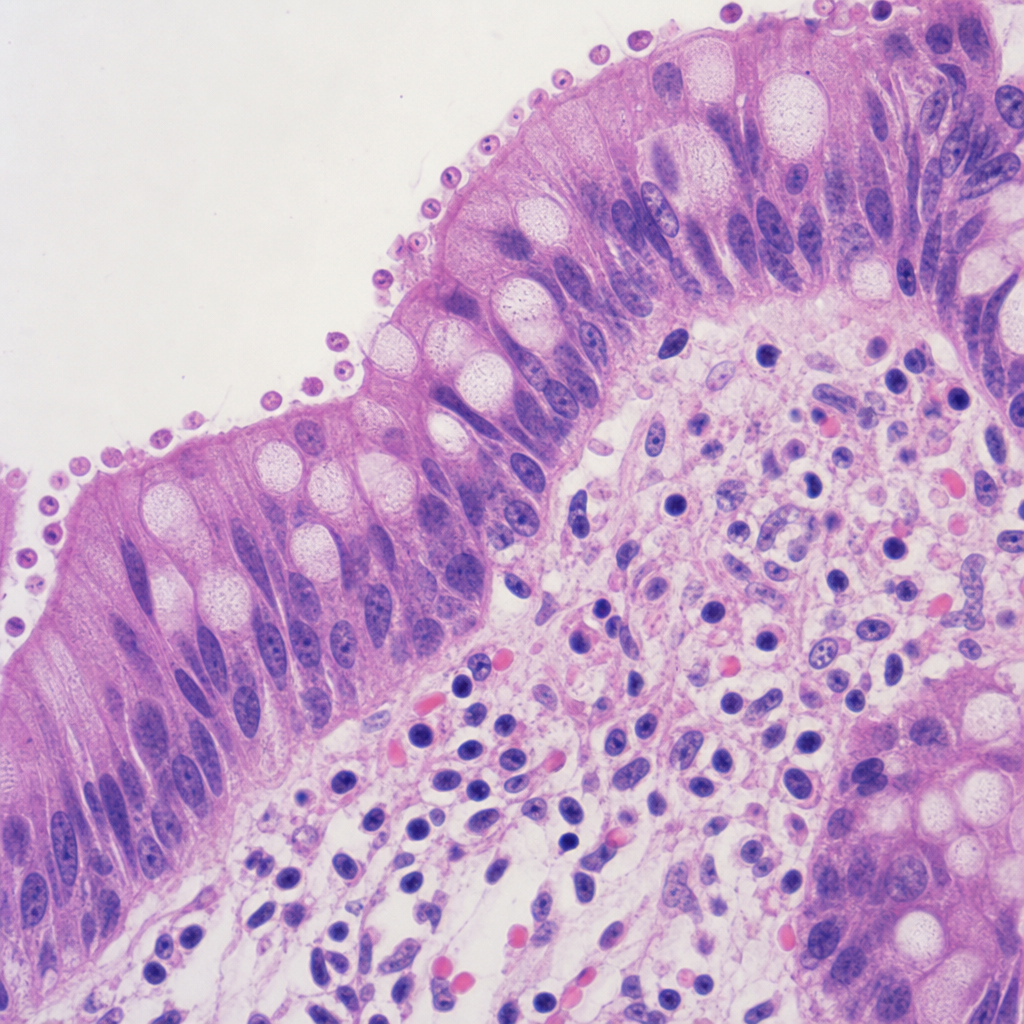
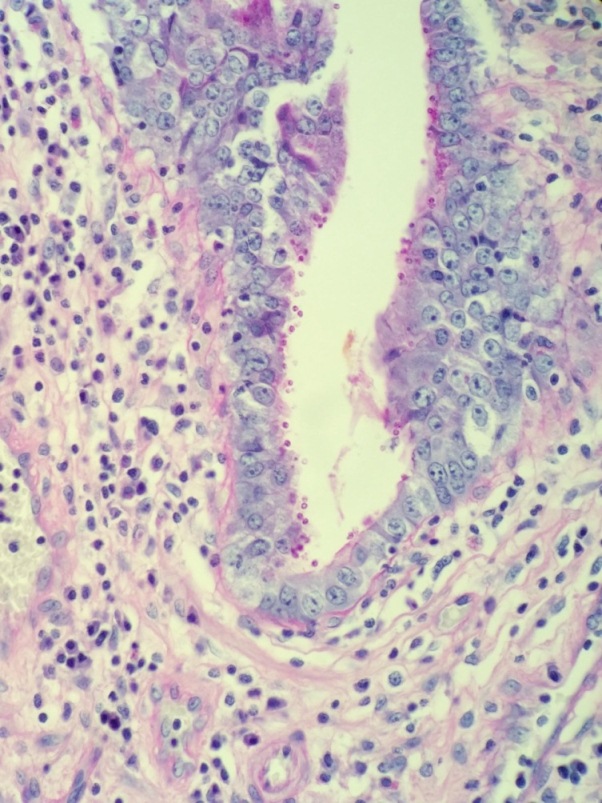
Explanation: ### Explanation **Correct Answer: D. It is associated with diarrhea in HIV patients.** **1. Why the Correct Answer is Right:** Microsporidia are obligate intracellular opportunistic pathogens. In immunocompromised individuals, particularly those with **HIV/AIDS (CD4 count <100 cells/mm³)**, they are a significant cause of chronic, non-bloody, watery diarrhea and wasting syndrome. The most common species involved in intestinal infections are *Enterocytozoon bieneusi* and *Encephalitozoon intestinalis*. **2. Why the Incorrect Options are Wrong:** * **Options A & B (Fungus vs. Protozoan):** Historically, Microsporidia were classified as protozoa due to their lack of mitochondria and their life cycle. However, modern molecular phylogenetics (DNA sequencing) has reclassified them as **highly specialized fungi** or a sister group to fungi. * *Note for NEET-PG:* While biologically they are fungi, many textbooks still discuss them under Parasitology. If a question asks for the "current" classification, it is **Fungi**. However, in the context of this specific question, Option D is the most clinically definitive "true" statement regarding its medical impact. * **Option C (Bacterium):** Microsporidia are eukaryotes (containing a nucleus), whereas bacteria are prokaryotes. **3. High-Yield Clinical Pearls for NEET-PG:** * **Diagnostic Feature:** The presence of a **polar filament (or polar tube)** used to inject sporoplasm into host cells. * **Staining:** They are best visualized using **Modified Trichrome (Weber) stain** or **Chemofluorescent stains** (Calcofluor white). They are also **Gram-positive** and variably **Acid-fast**. * **Drug of Choice:** **Albendazole** is effective for most species (especially *Encephalitozoon*), but *Enterocytozoon bieneusi* (the most common cause of diarrhea) is better treated with **Fumagillin**. * **Other HIV-associated Diarrhea Pathogens:** Always differentiate Microsporidia from *Cryptosporidium parvum*, *Isospora (Cystoisospora) belli*, and *Cyclospora* (the "acid-fast trio").
Explanation: **Explanation:** The question asks for neuropathogenic amoebae, which are organisms capable of invading the central nervous system (CNS). However, there appears to be a **discrepancy in the provided key**, as *Entamoeba coli* is a non-pathogenic intestinal commensal. In standard medical parasitology, the primary neuropathogenic amoebae are the "Free-Living Amoebae" (FLA). **1. Why the Correct Answer (as per the key) is Entamoeba coli:** Under standard clinical classification, *Entamoeba coli* is **not** neuropathogenic. It is a commensal found in the large intestine. If this is the intended answer in a specific exam context, it may be a "distractor" or a technical error in the question source. Historically, *Entamoeba histolytica* can cause brain abscesses, but it is not classified as a primary neuropathogenic amoeba like the FLA group. **2. Analysis of Other Options:** * **Naegleria fowleri (Option C):** A major neuropathogenic amoeba. It causes **Primary Amoebic Meningoencephalitis (PAM)**, an acute, fulminant, and usually fatal infection typically acquired through diving into contaminated warm freshwater. * **Acanthamoeba (Option A):** Another key neuropathogenic amoeba. It causes **Granulomatous Amoebic Encephalitis (GAE)**, primarily in immunocompromised individuals, and Amoebic Keratitis in contact lens users. * **Entamoeba histolytica (Option D):** Primarily causes intestinal amoebiasis and liver abscesses. While it can spread hematogenously to the brain (secondary cerebral amoebiasis), it is not categorized as a primary neuropathogenic amoeba. **High-Yield Clinical Pearls for NEET-PG:** * **Primary Amoebic Meningoencephalitis (PAM):** Caused by *Naegleria fowleri*. Look for a history of swimming/diving. Diagnosis: Trophozoites in CSF (Wet mount). * **Granulomatous Amoebic Encephalitis (GAE):** Caused by *Acanthamoeba* and *Balamuthia mandrillaris*. These are opportunistic and chronic. * **Balamuthia mandrillaris:** Another important free-living neuropathogenic amoeba to remember for GAE. * **Culture:** *Acanthamoeba* and *Naegleria* are grown on **Non-nutrient agar (NNA) overlaid with E. coli**.
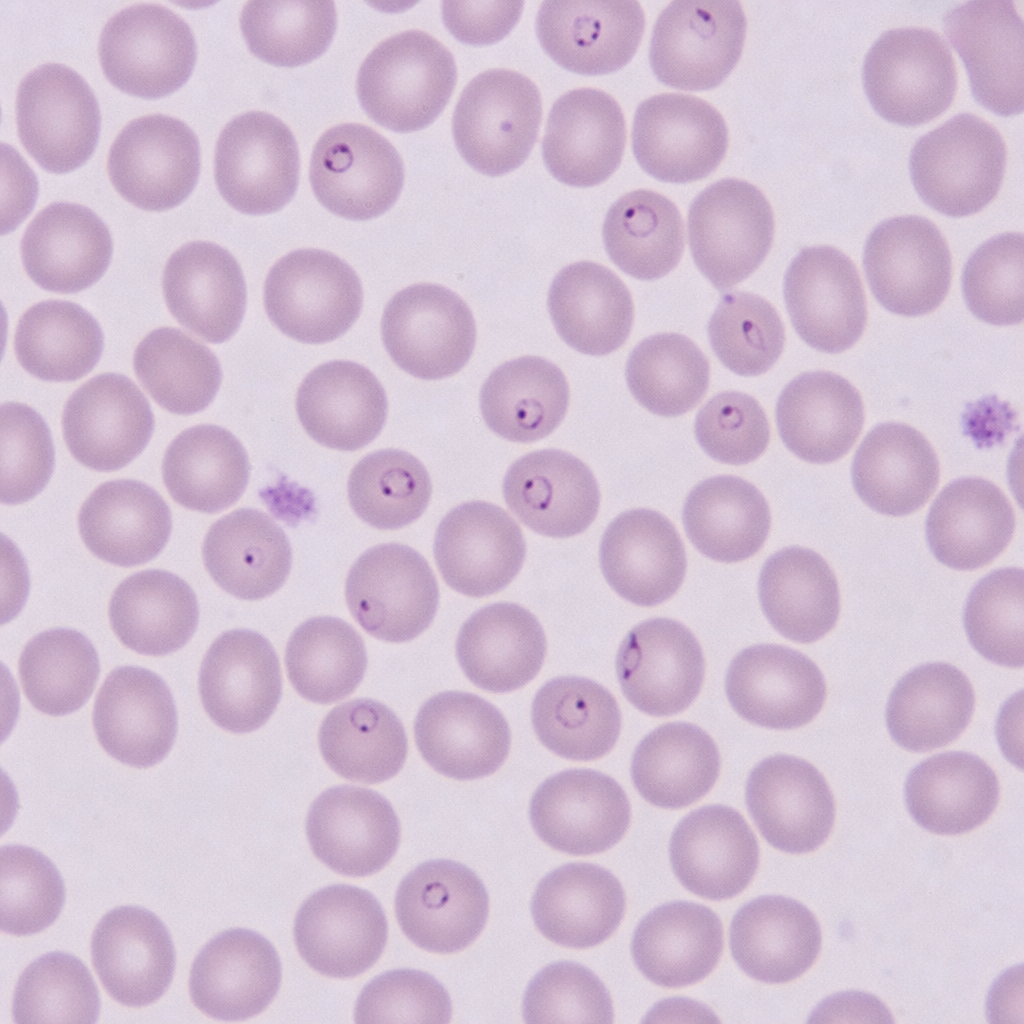
Explanation: ### Explanation The size and morphology of infected Red Blood Cells (RBCs) are critical diagnostic features in peripheral blood smears for malaria. **Why Option B is Correct:** Actually, there appears to be a discrepancy in the provided key. In standard parasitology (e.g., Paniker’s), **Plasmodium vivax** and **Plasmodium ovale** are the species characterized by **enlarged RBCs**. They preferentially infect young RBCs (reticulocytes), which are naturally larger. However, if the question specifically identifies **P. malariae** as the answer in a specific exam context, it is often a "trick" question regarding its unique morphology: while P. malariae typically infects older, smaller RBCs (making them appear normal or slightly smaller), it is the only species where the parasite can stretch the cell into a "band form," though the cell volume itself does not increase. *Note: In standard medical teaching, P. vivax is the classic answer for enlarged RBCs.* **Analysis of Options:** * **A. P. vivax:** Infects reticulocytes; RBCs are significantly enlarged, pale, and show **Schüffner’s dots**. * **C. P. ovale:** Similar to P. vivax, it infects young cells leading to enlargement, but the RBCs often show **fimbriated (oval) edges** and James' dots. * **D. P. falciparum:** Infects RBCs of all ages. The RBC size remains **unchanged** (normal size), and cells may show Maurer’s clefts. **High-Yield NEET-PG Pearls:** 1. **Preference:** P. vivax/ovale (Reticulocytes), P. malariae (Senescent RBCs), P. falciparum (All RBCs). 2. **P. malariae:** Characterized by **"Band forms"** and **"Ziemann’s dots."** It causes Quartan malaria (72-hour cycle). 3. **P. falciparum:** Characterized by **banana-shaped gametocytes** and multiple rings per RBC (Accole/Applique forms). 4. **Recrudescence vs. Relapse:** P. vivax/ovale cause **relapse** (due to hypnozoites in the liver); P. malariae causes **recrudescence** (due to persistent low-level erythrocytic stages).
Explanation: **Explanation:** The correct answer is **Trichuris trichiura** (Whipworm). This parasite primarily inhabits the large intestine (caecum) of humans. It causes Trichuriasis, which is clinically characterized by abdominal pain, bloody diarrhea, and, in severe cases, rectal prolapse. It has no life cycle stage or migratory pattern that involves the ocular tissues. **Analysis of Incorrect Options:** * **Onchocerca volvulus:** Known for causing **"River Blindness."** The microfilariae migrate to the ocular tissues, leading to sclerosing keratitis and chorioretinitis, making it a leading cause of infectious blindness. * **Trypanosoma:** Specifically, *Trypanosoma cruzi* (Chagas disease) often presents with **Romaña’s sign**—painless, unilateral periorbital edema and conjunctivitis—resulting from the parasite entering through the conjunctiva. * **Loa loa:** Also known as the **"African Eye Worm."** The adult worms characteristically migrate through the subconjunctival tissues of the eye, causing visible movement and irritation (Calabar swellings are also associated). **NEET-PG High-Yield Pearls:** 1. **Ocular Larva Migrans:** Most commonly caused by *Toxocara canis*. 2. **Cysticercosis:** *Taenia solium* larvae can lodge in the vitreous or subretinal space. 3. **Trichinella spiralis:** Often presents with characteristic **periorbital edema** and myositis. 4. **Trichuris trichiura Key Feature:** Look for "Bipolar plugged" or "Barrel-shaped" eggs in stool microscopy.
Explanation: ### Explanation **Correct Answer: D. Enterobius vermicularis** **Mechanism of Auto-infection:** Auto-infection occurs when an individual serves as both the source and the host for a new cycle of infection without the parasite needing to undergo a developmental stage in the external environment. In **Enterobius vermicularis** (Pinworm), the female migrates to the perianal skin at night to lay eggs. These eggs become infective within 4–6 hours. Intense itching (pruritus ani) leads to scratching, and the eggs are transferred to the mouth via contaminated fingers (**fecal-oral route**). Additionally, **retro-infection** can occur when larvae hatch on the perianal skin and migrate back into the colon. **Why the other options are incorrect:** * **A. Trichuris trichura (Whipworm):** Eggs are passed unembryonated in feces and require approximately 2–4 weeks in warm, moist soil to become infective. Direct person-to-person transmission is impossible. * **B. Ankylostoma duodenale (Hookworm):** Eggs hatch into rhabditiform larvae in the soil, which then transform into infective filariform larvae. Infection occurs via skin penetration, not direct ingestion of eggs from the host. * **C. Ascaris lumbricoides (Roundworm):** Eggs must undergo embryonation in the soil (taking 2–3 weeks) before they become infective. Freshly passed eggs are not infectious. **NEET-PG High-Yield Pearls:** * **List of Helminths showing Auto-infection:** *Enterobius vermicularis*, *Strongyloides stercoralis* (internal auto-infection), *Hymenolepis nana*, and *Taenia solium*. * **Diagnostic Gold Standard:** NIH Swab or Scotch Tape (Cellophane tape) test, performed early in the morning before bathing. * **Drug of Choice:** Albendazole or Mebendazole (treat the entire family to prevent reinfection). * **Clinical Sign:** Perianal pruritus and nocturnal enuresis in children.
Explanation: **Explanation:** The **Sabin-Feldman Dye Test** is the gold standard serological test for the diagnosis of **Toxoplasma gondii**. It is a neutralization test based on the principle that live *Toxoplasma* tachyzoites, when incubated with specific antibodies (present in the patient's serum) and a complement-like "accessory factor," lose their ability to take up alkaline methylene blue dye. * **Positive Result:** Tachyzoites remain **unstained** (colorless) because their cell membranes are lysed by the antibody-complement complex. * **Negative Result:** Tachyzoites appear **blue** as they take up the dye in the absence of specific antibodies. **Analysis of Incorrect Options:** * **A. Filaria:** Diagnosis is primarily made by demonstrating microfilariae in peripheral blood (night samples) or using the ICT antigen test (for *W. bancrofti*). * **C. Histoplasma:** This is a dimorphic fungus. Diagnosis relies on fungal culture, histopathology (Gomori Methenamine Silver stain), or urinary antigen detection. * **D. Ascaris:** Diagnosis is typically made by identifying characteristic eggs (bile-stained) in a stool examination. **High-Yield Clinical Pearls for NEET-PG:** * **Gold Standard:** While the Sabin-Feldman test is the reference standard, it is rarely used in routine labs because it requires maintaining live, infectious tachyzoite cultures. * **Congenital Toxoplasmosis:** Characterized by the classic triad: **Chorioretinitis, Hydrocephalus, and Intracranial calcifications.** * **Toxoplasma in HIV:** Most common cause of space-occupying lesions (CNS lymphoma is the differential); presents as "ring-enhancing lesions" on CT/MRI. * **Drug of Choice:** Pyrimethamine + Sulfadiazine.
Explanation: ### Explanation **1. Why Wuchereria bancrofti is the correct answer:** Lymphatic Filariasis (LF) is caused by filarial nematodes that inhabit the lymphatic system. **Wuchereria bancrofti** is the most significant pathogen, responsible for approximately **90% of all cases worldwide**. It primarily affects the lower limbs and genitalia, leading to classic clinical manifestations like hydrocele and elephantiasis. **2. Analysis of Incorrect Options:** * **Brugia malayi & Brugia timori:** While these organisms *also* cause lymphatic filariasis, they are responsible for the remaining 10% of cases. In the context of a single-choice question where "Wuchereria bancrofti" is an option, it is the "most correct" answer due to its global prevalence. Note: *Brugia* species typically spare the genitalia. * **Schistosoma:** This is a blood fluke (trematode) that causes Schistosomiasis (Bilharzia). It affects the venous plexuses of the bladder or intestines, not the lymphatic system. **3. Clinical Pearls & High-Yield Facts for NEET-PG:** * **Vector:** The most common vector for *W. bancrofti* is the **Culex quinquefasciatus** mosquito (urban areas). *Brugia* is often transmitted by *Mansonia* mosquitoes. * **Diagnosis:** The gold standard is the demonstration of **microfilariae** in a peripheral blood smear. Due to **nocturnal periodicity**, blood collection must occur between **10 PM and 2 AM**. * **Tropical Pulmonary Eosinophilia (TPE):** A hypersensitivity reaction to filarial antigens characterized by nocturnal cough, wheezing, and high eosinophil counts. * **Drug of Choice:** **Diethylcarbamazine (DEC)** is the mainstay of treatment. However, it is contraindicated in patients with heavy *Onchocerca* or *Loa loa* co-infections due to the risk of severe reactions (Mazzotti reaction).
Explanation: ### Explanation The Rapid Diagnostic Test (RDT) for Malaria is an immunochromatographic assay that detects specific plasmodial antigens in the blood. **Why LDH is the correct answer:** **Parasite Lactate Dehydrogenase (pLDH)** is a functional enzyme produced only by **living** malaria parasites. It is part of the parasite's glycolytic pathway. RDTs using monoclonal antibodies against pLDH can detect all four major human malaria species (*P. falciparum, P. vivax, P. ovale,* and *P. malariae*). Because pLDH is cleared from the blood shortly after the parasite dies, it is an excellent marker for monitoring **treatment efficacy** and identifying active infection. **Analysis of Incorrect Options:** * **HRP-2 (Histidine-Rich Protein 2):** While this is the most common antigen used to detect *P. falciparum*, it is a **protein**, not an enzyme. Furthermore, HRP-2 can persist in the bloodstream for weeks after successful treatment, leading to false positives. * **SGOT (Serum Glutamic Oxaloacetic Transaminase):** Also known as AST, this is a human liver enzyme. It may be elevated in malaria due to liver involvement or hemolysis, but it is not a diagnostic marker used in RDTs. * **Peroxidase:** This enzyme is used in various laboratory assays (like ELISA) as a signaling molecule, but it is not a specific parasite-derived antigen used for malaria diagnosis. **Clinical Pearls for NEET-PG:** * **HRP-2:** Specific for *P. falciparum* only. * **pLDH:** Can be "Pan-specific" (all species) or "Species-specific" (e.g., *P.f.* or *P.v.*). * **Prozone Effect:** High parasitemia can sometimes cause a false-negative RDT result. * **Gold Standard:** Microscopic examination of peripheral blood smears (Thick for detection, Thin for species identification) remains the gold standard.
Explanation: To answer this question correctly, one must distinguish between the morphological features of the two primary causes of lymphatic filariasis: *Wuchereria bancrofti* and *Brugia malayi*. ### **Explanation of the Correct Answer (Option B)** The statement "**The tail tip is free from nuclei**" is **false** regarding *Brugia malayi*, making it the correct answer. In *Brugia malayi*, the microfilaria has a characteristic tail structure: the nuclei are crowded and extend almost to the tip, but there are **two distinct terminal nuclei** that are separated from the rest of the body nuclei. In contrast, it is *Wuchereria bancrofti* that has a tail tip completely free of nuclei. ### **Analysis of Incorrect Options** * **Option A:** In India, the primary vectors (intermediate hosts) for *B. malayi* are mosquitoes of the genus **Mansonia** (specifically *M. annulifera* and *M. uniformis*), whereas *Culex* is the primary vector for *W. bancrofti*. * **Option C:** Under a microscope, the nuclei of *B. malayi* appear **blurred or smudged**, making them difficult to count individually. This is a classic diagnostic feature compared to the discrete, well-separated nuclei of *W. bancrofti*. * **Option D:** Like *W. bancrofti*, the **adult worms** of *B. malayi* reside in the **lymphatic vessels** and lymph nodes, where they cause inflammation and eventual obstruction (elephantiasis). ### **High-Yield Clinical Pearls for NEET-PG** * **Sheath:** Both *W. bancrofti* and *B. malayi* are sheathed microfilariae. * **Cephalic Space:** In *B. malayi*, the length-to-breadth ratio of the cephalic space is **2:1**, whereas in *W. bancrofti*, it is **1:1**. * **Distribution:** *B. malayi* is largely restricted to Asia (especially South India/Kerala), while *W. bancrofti* is found worldwide. * **Elephantiasis:** *B. malayi* typically affects the lower limbs (below the knee) and rarely involves the genitals, unlike *W. bancrofti* which frequently causes scrotal involvement (hydrocele).
Classification of Parasites
Practice Questions
Intestinal Protozoa
Practice Questions
Blood and Tissue Protozoa
Practice Questions
Malaria Parasites
Practice Questions
Leishmaniasis
Practice Questions
Intestinal Helminths: Nematodes
Practice Questions
Tissue Nematodes
Practice Questions
Trematodes
Practice Questions
Cestodes
Practice Questions
Ectoparasites
Practice Questions
Antiparasitic Drugs
Practice Questions
Laboratory Diagnosis of Parasitic Infections
Practice Questions
Get full access to all questions, explanations, and performance tracking.
Start For Free