Which of the following statements is FALSE regarding filariasis?
Flask-shaped ulcers in a patient with dysentery are diagnostic of which condition?
What is true about Cryptosporidium parvum?
A 30-year-old female stored her contact lenses in tap water and presented with severe retinitis and deterioration of vision. Culture of the tap water and vitreous fluid would most likely reveal which of the following microorganisms?
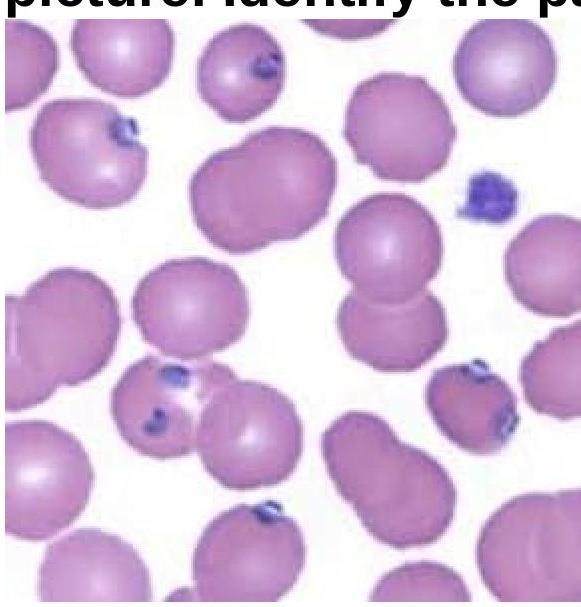
Plasmodium falciparum infection of man is characterized by?
Which among the following parasites is associated with malignancy?
Which among the following is acid-fast?
Persistent diarrhea in AIDS is caused by which of the following pathogens?
Which organism is associated with the causation of urinary bladder cancer?
Which parasitic intestinal infestation is commonly seen in immunosuppressed patients?
Explanation: ### Explanation **1. Why Option B is the Correct (False) Statement:** In lymphatic filariasis, **Cell-Mediated Immunity (CMI)**, specifically the Th2-type response, plays the dominant role in pathogenesis rather than humoral immunity. While antibodies (IgE and IgG4) are produced, the clinical manifestations—ranging from asymptomatic microfilaremia to elephantiasis—are primarily driven by the host's T-cell response to adult worm antigens. Chronic inflammation and lymphatic obstruction result from a complex interplay of CMI-induced granulomatous reactions and secondary bacterial infections. **2. Analysis of Other Options:** * **Option A (Morbidity increases with age):** This is **True**. In endemic areas, repeated exposure to infective larvae over years leads to a cumulative worm burden. Consequently, the prevalence of clinical manifestations like hydrocele and lymphedema increases as the population ages. * **Option C (It is usually unilateral):** This is **True**. Lymphatic filariasis typically presents asymmetrically. While both legs may be involved, one is usually significantly more affected than the other. * **Option D (Man is the only host):** This is **True** for *Wuchereria bancrofti*, which accounts for 90% of cases worldwide. It has no known animal reservoir, making humans the definitive host. (Note: *Brugia malayi* can have zoonotic strains, but for general "filariasis" questions, *W. bancrofti* is the prototype). ### High-Yield Clinical Pearls for NEET-PG: * **Vector:** *Culex quinquefasciatus* is the most common vector for *W. bancrofti*. * **Diagnosis:** The gold standard is the demonstration of microfilariae in a **peripheral blood smear** collected at night (10 PM – 2 AM) due to **nocturnal periodicity**. * **Drug of Choice:** **Diethylcarbamazine (DEC)**. It is effective against microfilariae but must be used cautiously in patients co-infected with *Onchocerca* or *Loa loa*. * **Tropical Pulmonary Eosinophilia (TPE):** A hypersensitivity reaction to filarial antigens characterized by paroxysmal cough, wheezing, and high peripheral eosinophilia.
Explanation: **Explanation:** **Amoebiasis** is the correct answer because the characteristic pathological lesion of intestinal amoebiasis, caused by *Entamoeba histolytica*, is the **flask-shaped ulcer**. The pathogenesis involves the trophozoites secreting proteolytic enzymes (histolysins) that breach the colonic epithelium. Once they reach the **submucosa**, they spread laterally because the submucosal tissue is more susceptible to destruction than the overlying mucosa. This creates an ulcer with a narrow neck (at the mucosa) and a broad base (in the submucosa), resembling a flask. These ulcers are most commonly found in the caecum and rectosigmoid colon. **Why other options are incorrect:** * **Typhoid (Enteric Fever):** Caused by *Salmonella Typhi*, it typically produces **longitudinal ulcers** along the long axis of the ileum, specifically involving Peyer’s patches. * **Giardiasis:** Caused by *Giardia lamblia*, it affects the duodenum and upper jejunum. It does not cause ulcers or dysentery; instead, it leads to malabsorption and steatorrhea (fatty stools). * **Shigellosis (Bacillary Dysentery):** Causes diffuse inflammation and **superficial, irregular, "map-like" ulcers** that do not penetrate the submucosa as deeply as amoebiasis. **High-Yield Clinical Pearls for NEET-PG:** * **Trophozoite Morphology:** Look for "ingested RBCs" (erythrophagocytosis) in the cytoplasm, which is pathognomonic for *E. histolytica*. * **Stool Examination:** Amoebic dysentery shows "Anchovy sauce" pus in liver abscesses, but the stool typically contains few pus cells and RBCs in clumps (unlike the cellular exudate in Shigellosis). * **Treatment:** Metronidazole or Tinidazole followed by a luminal amoebicide (e.g., Diloxanide furoate).
Explanation: ### Explanation **Correct Answer: B. It is a common opportunistic infection in AIDS.** *Cryptosporidium parvum* is an intracellular coccidian parasite that causes diarrheal illness. In immunocompetent individuals, it typically causes self-limiting watery diarrhea. However, in **immunocompromised patients (especially those with AIDS and CD4 counts <100 cells/mm³)**, it leads to chronic, profuse, life-threatening cholera-like diarrhea and malabsorption. It is one of the most common opportunistic protozoan infections in HIV patients globally. #### Analysis of Incorrect Options: * **Option A:** While severe in the immunocompromised, *C. parvum* also affects **immunocompetent** individuals (often via contaminated water or swimming pools), causing short-term diarrhea. * **Option B (Correct):** It is a hallmark opportunistic infection in advanced HIV/AIDS. * **Option C:** The oocysts are much smaller, measuring **4–6 µm** in diameter. The size mentioned (12–15 mm) is biologically impossible for a microscopic protozoan and significantly larger than even *Isospora* (25–30 µm). * **Option D:** This is a distractor. While the oocysts are indeed acid-fast, they are **Oocysts**, not "Cysts." In parasitology, *Cryptosporidium* produces infective oocysts via sporogony. #### High-Yield NEET-PG Pearls: * **Staining:** It is **Modified Acid-Fast positive** (Kinyoun stain), appearing as red/pink spherical bodies against a blue background. * **Infective Stage:** Sporulated oocyst (contains 4 sporozoites; **no sporocysts**). * **Transmission:** Fecal-oral route; highly resistant to chlorination. * **Diagnosis:** Stool microscopy (Modified AFB), Sheather’s sugar flotation technique, or Enzyme Immunoassay (EIA). * **Treatment:** **Nitazoxanide** is the drug of choice in immunocompetent patients; in AIDS patients, the primary treatment is **HAART** to restore CD4 counts.
Explanation: **Explanation:** The clinical presentation of a contact lens wearer using tap water for storage who develops severe ocular involvement is a classic "high-yield" scenario for **Acanthamoeba keratitis**. **Why Acanthamoeba is correct:** Acanthamoeba is a free-living amoeba found in soil and water (including tap water). In contact lens users, poor hygiene—specifically using non-sterile tap water or homemade saline—allows the organism to contaminate the lenses. It causes a painful, sight-threatening keratitis characterized by a pathognomonic **ring-shaped corneal infiltrate**. Diagnosis is confirmed by demonstrating trophozoites or double-walled cysts on corneal scrapings or culture on **non-nutrient agar (NNA) seeded with E. coli**. **Why other options are incorrect:** * **Naegleria fowleri:** Known as the "brain-eating amoeba," it causes Primary Amoebic Meningoencephalitis (PAM) after swimming in warm freshwater. It does not typically cause ocular infections. * **Pneumocystis jirovecii:** An opportunistic fungus that primarily causes interstitial pneumonia in immunocompromised patients (e.g., HIV/AIDS). It is not associated with contact lens use or keratitis. * **Babesia:** An intraerythrocytic protozoan transmitted by *Ixodes* ticks, causing a malaria-like illness (Babesiosis). It does not cause eye infections. **Clinical Pearls for NEET-PG:** * **Stain of choice:** Calcofluor white (binds to chitin in the cyst wall). * **Culture medium:** Non-nutrient agar with *E. coli* (look for "trailing" or "tracks" made by the amoeba). * **Pathognomonic sign:** Radial keratoneuritis (inflammation of corneal nerves) leading to exquisite pain out of proportion to clinical findings. * **Treatment:** Topical biguanides (PHMB) or chlorhexidine.
Explanation: ### Explanation **Correct Answer: C. Multiple infections of erythrocytes are seen.** *Plasmodium falciparum* is unique among malaria species due to its high parasitemia and specific morphological features in peripheral blood. **Why Option C is Correct:** *P. falciparum* can infect up to 30-40% of circulating RBCs. A hallmark diagnostic feature is **multiple infections of a single erythrocyte**, where two or more "ring forms" (trophozoites) are seen within one red cell. This occurs because *P. falciparum* can invade RBCs of all ages (young reticulocytes to old cells), unlike other species. **Why Other Options are Incorrect:** * **Option A:** Erythrocytes remain **normal in size**. Enlarged RBCs are characteristic of *P. vivax* and *P. ovale*, which preferentially infect young, flexible reticulocytes. * **Option B:** In *P. falciparum*, only **ring forms and gametocytes** are typically seen in peripheral blood. Mature schizonts and trophozoites undergo **sequestration** in deep capillaries (brain, kidneys, placenta) due to "knobs" on the RBC surface (PfEMP-1 protein), leading to cytoadherence. Seeing schizonts in a peripheral smear indicates "grave prognosis." * **Option D:** The erythrocytic cycle of *P. falciparum* lasts **48 hours**, resulting in **Malignant Tertian Malaria**. A 72-hour cycle is characteristic of *P. malariae* (Quartan Malaria). **High-Yield Clinical Pearls for NEET-PG:** * **Maurer’s Clefts:** Coarse granulations seen in *P. falciparum* infected RBCs. * **Accole/Applique forms:** Ring forms appearing at the very periphery of the RBC. * **Gametocytes:** Characteristically **crescent or banana-shaped**. * **Complications:** Cerebral malaria, Blackwater fever (hemoglobinuria), and ARDS are most common with *falciparum*.
Explanation: ### Explanation **Correct Option: B. Schistosoma hematobium** *Schistosoma hematobium* (the urinary blood fluke) is a well-established Group 1 carcinogen. The parasite resides in the vesical venous plexus. Chronic infection leads to the deposition of eggs in the bladder wall, causing chronic inflammation and irritation. Over time, this results in squamous metaplasia of the transitional epithelium, ultimately leading to **Squamous Cell Carcinoma (SCC) of the urinary bladder**. * *Key Distinction:* While most bladder cancers worldwide are Transitional Cell Carcinomas (TCC), Schistosomiasis specifically predisposes to the **Squamous Cell** variety. **Analysis of Incorrect Options:** * **A. Echinococcus granulosus:** Causes Hydatid cyst disease (primarily in the liver and lungs). While it causes space-occupying lesions and potential anaphylaxis upon rupture, it is not associated with malignancy. * **C. Paragonimus westermani:** The lung fluke causes a condition mimicking tuberculosis (hemoptysis and cavitary lesions) but is not oncogenic. * **D. Giardia lamblia:** An intestinal protozoan causing malabsorption and steatorrhea; it does not lead to neoplastic changes. **NEET-PG High-Yield Pearls:** 1. **Other Parasites & Malignancy:** * *Clonorchis sinensis* (Chinese liver fluke) and *Opisthorchis viverrini* are strongly associated with **Cholangiocarcinoma** (bile duct cancer). 2. **Diagnostic Feature:** *S. hematobium* eggs are characterized by a **terminal spine**. 3. **Intermediate Host:** Freshwater snails of the genus *Bulinus*. 4. **Drug of Choice:** Praziquantel is the gold standard treatment for all Schistosoma species.
Explanation: **Explanation:** The correct answer is **C. Cryptosporidium oocyst.** **Why it is correct:** Acid-fastness is a physical property of certain microorganisms that resist decolorization by acids during staining procedures. In parasitology, the **Modified Ziehl-Neelsen (Kinyoun) stain** is used to identify specific coccidian parasites. *Cryptosporidium parvum* oocysts are characteristically **acid-fast**, appearing as bright red/pink spherical structures against a blue or green background. This property is due to the presence of mycolic acid-like substances in their cyst wall. **Why other options are incorrect:** * **A & B (Entamoeba histolytica & Giardia lamblia):** These are common intestinal protozoa, but they do not possess acid-fast cell walls. They are typically identified using iodine or trichrome stains. * **D (Microsporidia):** While Microsporidia spores are small and can sometimes show partial staining, they are primarily identified using **Modified Trichrome (Weber) stain** or fluorescent brighteners (Calcofluor white). They are not classically categorized as acid-fast in the same context as coccidia. **High-Yield Clinical Pearls for NEET-PG:** * **The "Acid-Fast Trio" in Parasitology:** *Cryptosporidium*, *Cyclospora*, and *Cystoisospora* (formerly *Isospora*) are all acid-fast. * **Staining Strength:** *Cryptosporidium* and *Cystoisospora* are strongly acid-fast (1-3% $H_2SO_4$), whereas *Cyclospora* is variably acid-fast. * **Clinical Context:** *Cryptosporidium* is a leading cause of self-limiting diarrhea in immunocompetent hosts but causes chronic, life-threatening profuse watery diarrhea in **AIDS patients** (CD4 count <100 cells/mm³). * **Morphology:** *Cryptosporidium* oocysts are small (4-5 µm), while *Cystoisospora* is much larger (25-30 µm) and spindle-shaped.
Explanation: **Explanation:** In patients with HIV/AIDS, persistent or chronic diarrhea (lasting >14 days) is a common clinical manifestation, typically occurring when CD4 counts drop below 100 cells/mm³. **Why Option C is Correct:** The correct answer identifies **Cryptosporidium parvum** and **Cryptococcus neoformans**. * **Cryptosporidium parvum** is the most common cause of chronic, voluminous, watery diarrhea in AIDS patients. It is an acid-fast protozoan that infects the intestinal epithelium. * **Cryptococcus neoformans**, while primarily known for causing meningitis, can disseminate in advanced immunosuppression. Disseminated cryptococcosis can involve the gastrointestinal tract, leading to persistent diarrheal illness. **Analysis of Incorrect Options:** * **Option A & B:** While **Microsporidia** (e.g., *Enterocytozoon bieneusi*) and **Isospora belli** (now *Cystoisospora*) are significant causes of AIDS-related diarrhea, these options exclude the involvement of Cryptococcus, which is a classic association in many standardized medical curricula for disseminated disease. * **Option D:** **Giardia lamblia** causes diarrhea in both immunocompetent and immunocompromised hosts, but it is not specifically classified as a defining "persistent" opportunistic pathogen unique to the advanced stages of AIDS in the same category as the coccidian parasites. **High-Yield NEET-PG Pearls:** 1. **Acid-Fast Staining:** Cryptosporidium, Isospora, and Cyclospora are all **Modified Acid-Fast positive**. 2. **Size Matters:** Cryptosporidium is the smallest (4-5 µm), followed by Cyclospora (8-10 µm), and Isospora is the largest (25 µm). 3. **Treatment:** Nitazoxanide is used for Cryptosporidium; Cotrimoxazole (TMP-SMX) is the drug of choice for Isospora and Cyclospora. 4. **Microsporidia:** Diagnosed via Gram-chromotrope stain; treated with Albendazole or Fumagillin.
Explanation: **Explanation:** The correct answer is **Schistosoma haematobium**. This parasite is a well-known risk factor for **Squamous Cell Carcinoma (SCC)** of the urinary bladder. **1. Why Schistosoma is correct:** *Schistosoma haematobium* (the urinary blood fluke) resides in the vesical and pelvic venous plexuses. The female fluke deposits eggs in the bladder wall, which possess a characteristic **terminal spine**. These eggs cause chronic irritation, granuloma formation, and persistent inflammation. Over years, this chronic inflammatory state leads to **squamous metaplasia** of the bladder urothelium, which eventually progresses to Squamous Cell Carcinoma (unlike the more common transitional cell carcinoma seen in smokers). **2. Why other options are incorrect:** * **E. coli:** While the most common cause of urinary tract infections (UTIs), it is not an oncogenic organism. * **Paragonimus westermani:** Known as the lung fluke, it primarily causes pulmonary symptoms (hemoptysis) mimicking tuberculosis. * **Clonorchis sinensis:** Known as the Chinese liver fluke, it inhabits the bile ducts and is strongly associated with **Cholangiocarcinoma** (bile duct cancer), not bladder cancer. **3. High-Yield Clinical Pearls for NEET-PG:** * **Intermediate Host:** Freshwater snail (*Bulinus* species). * **Infective Stage:** Cercaria (enters via skin penetration during swimming). * **Diagnostic Feature:** Eggs with a **terminal spine** in urine microscopy. * **Drug of Choice:** Praziquantel. * **Key Distinction:** Most bladder cancers worldwide are Transitional Cell Carcinomas (TCC), but in endemic areas of Schistosomiasis (e.g., Egypt/Nile Valley), SCC is more prevalent.
Explanation: **Explanation:** The correct answer is **Strongyloides stercoralis**. The underlying medical concept is the unique ability of this parasite to undergo **autoinfection**. 1. **Why Strongyloides is correct:** Unlike most helminths, *Strongyloides stercoralis* can complete its entire life cycle within the human host. Rhabditiform larvae in the intestine can transform into infective filariform larvae, which penetrate the perianal skin or intestinal mucosa to re-enter the circulation. In **immunosuppressed patients** (especially those on high-dose corticosteroids, HTLV-1 infection, or hematologic malignancies), this process accelerates uncontrollably, leading to **Hyperinfection Syndrome** and **Disseminated Strongyloidiasis**. This can result in life-threatening complications like Gram-negative sepsis due to the translocation of enteric bacteria. 2. **Why other options are incorrect:** * **Giardiasis:** While common, it is not specifically associated with severe systemic dissemination in immunosuppression, though it may be more persistent in IgA deficiency. * **Ascariasis:** *Ascaris lumbricoides* requires a period in the soil to become infective; it cannot replicate or cause hyperinfection within the host. * **Liver fluke:** (e.g., *Clonorchis sinensis*) These infections are related to the ingestion of contaminated fish and are not primarily driven by the host's immune status. **High-Yield NEET-PG Pearls:** * **Drug of Choice:** Ivermectin (preferred over Albendazole). * **Diagnostic Clue:** Presence of **rhabditiform larvae** in stool (eggs are rarely seen as they hatch in the mucosa). * **Steroid Warning:** Always screen for *Strongyloides* before initiating long-term corticosteroids in endemic areas to prevent fatal hyperinfection. * **Larva Currens:** A pathognomonic, rapidly moving serpiginous cutaneous eruption.
Classification of Parasites
Practice Questions
Intestinal Protozoa
Practice Questions
Blood and Tissue Protozoa
Practice Questions
Malaria Parasites
Practice Questions
Leishmaniasis
Practice Questions
Intestinal Helminths: Nematodes
Practice Questions
Tissue Nematodes
Practice Questions
Trematodes
Practice Questions
Cestodes
Practice Questions
Ectoparasites
Practice Questions
Antiparasitic Drugs
Practice Questions
Laboratory Diagnosis of Parasitic Infections
Practice Questions
Get full access to all questions, explanations, and performance tracking.
Start For Free