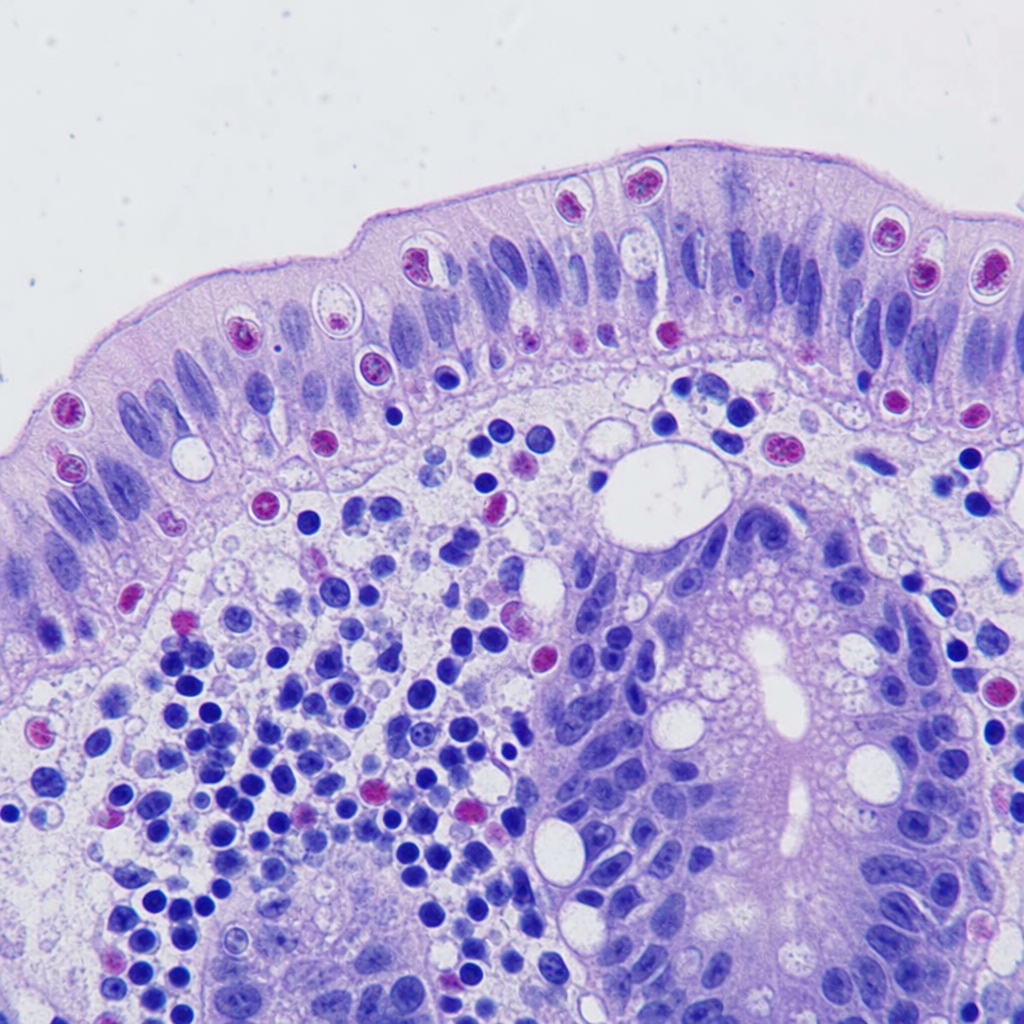
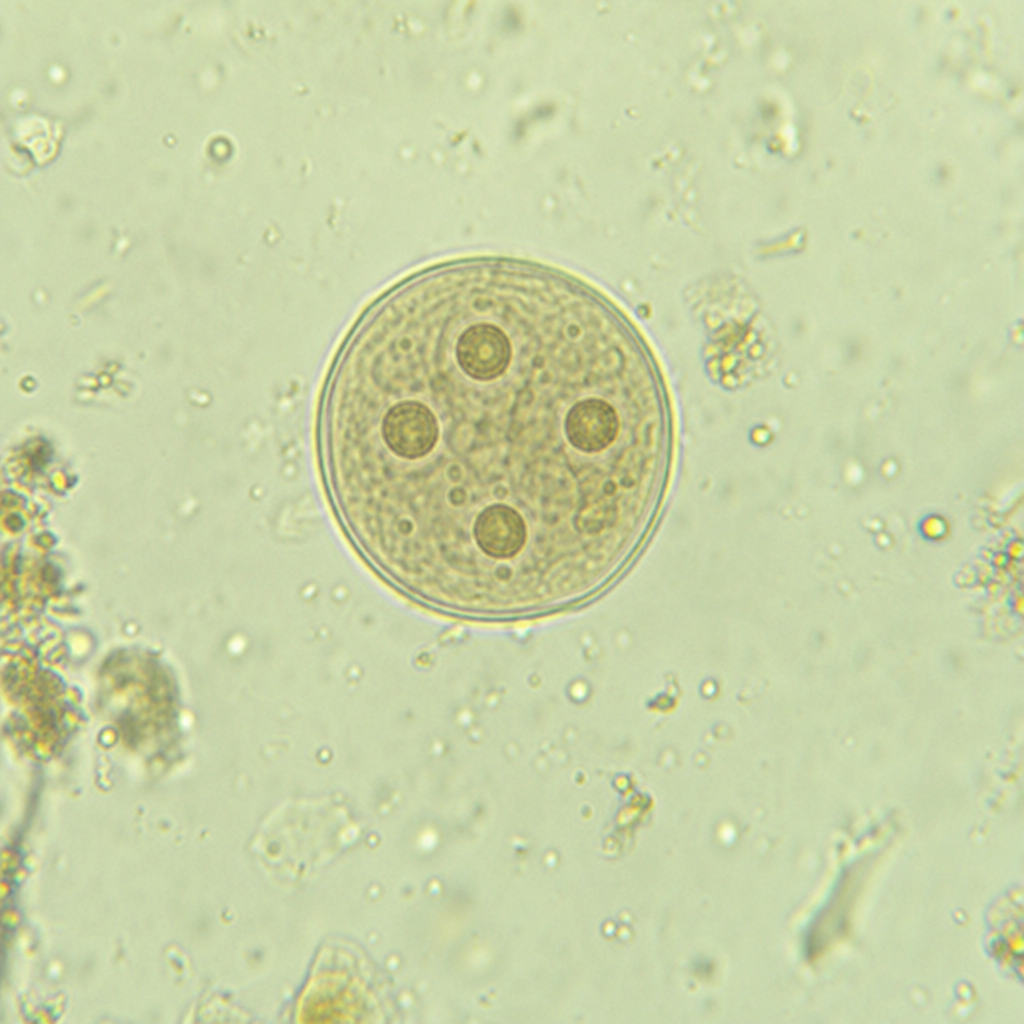
Which of the following statements about Giardiasis is FALSE?
In Plasmodium falciparum, how many cycles does the parasite undergo in the liver?
DEC Provocation test is used for which condition?
Urinary bladder cancer is caused by which species of Schistosoma?
Sleeping sickness is transmitted by which vector?
What is the infective form of Trypanosoma brucei?
What is the larval form of Taenia called?
Which of the following does NOT float in a saturated salt solution?
RK-39 antigen testing is performed for which disease?
Which of the following organisms does not cause neurodegeneration?
Explanation: ### Explanation **Correct Answer Analysis:** The statement **"Trophozoites have 4 pairs of flagella"** is actually **TRUE**, making it an incorrect choice for a "FALSE" question. However, in the context of many medical entrance exams (including NEET-PG), this question often appears with a technical error in the options or key. Morphologically, *Giardia lamblia* trophozoites are pear-shaped, binucleated, and possess **4 pairs (8 total) of flagella**. *Note: If this was a "Select the False Statement" question, Option A is typically the intended answer in clinical practice, as the Complement Fixation Test (CFT) is not a standard or reliable diagnostic method for Giardiasis.* **Analysis of Other Options:** * **Option B (Stools contain cysts and trophozoites):** This is **TRUE**. In formed stools, cysts are predominantly found, while in acute diarrheal episodes, motile trophozoites can be visualized. * **Option C (Habitat is small intestine):** This is **TRUE**. *Giardia* primarily inhabits the duodenum and upper jejunum. It attaches to the mucosal surface using a ventral sucking disc, leading to malabsorption. * **Option A (Complement fixation test is diagnostic):** This is **FALSE**. Diagnosis relies on stool microscopy (cysts/trophozoites), ELISA for fecal antigens (GSA-65), or the String Test (Entero-test). Serology (like CFT) is rarely used and lacks diagnostic specificity. **High-Yield Clinical Pearls for NEET-PG:** * **Morphology:** Described as "Monkey face" or "Tennis racket" appearance in stained smears. * **Clinical Feature:** Causes **Steatorrhea** (foul-smelling, greasy stools) due to fat malabsorption. It does **not** cause blood in stool (non-invasive). * **Drug of Choice:** Metronidazole or Tinidazole. * **Association:** Increased prevalence in patients with **Common Variable Immunodeficiency (CVID)** or IgA deficiency.
Explanation: **Explanation:** The correct answer is **B (1)**. In the life cycle of *Plasmodium falciparum*, the parasite undergoes exactly **one cycle** of pre-erythrocytic (exo-erythrocytic) schizogony in the liver. **Why Option B is correct:** When an infected female *Anopheles* mosquito bites a human, it injects sporozoites. These travel to the liver, infect hepatocytes, and multiply to form schizonts. In *P. falciparum* and *P. vivax*, this liver phase occurs only once before the parasites are released into the bloodstream to begin the erythrocytic stage. Once the liver schizont ruptures, the parasites do not re-infect new liver cells. **Why other options are incorrect:** * **Option A (0):** All *Plasmodium* species must undergo an initial liver stage to multiply before they can infect red blood cells. * **Options C & D (2 or 3):** There is no "secondary" liver cycle in *P. falciparum*. While *P. vivax* and *P. ovale* have dormant stages (hypnozoites) that can cause relapses, they still only undergo one initial cycle of development per infection event; the relapse is a delayed activation of that single infection, not a continuous cycling within the liver. **High-Yield Clinical Pearls for NEET-PG:** * **No Hypnozoites:** *P. falciparum* and *P. malariae* do not form hypnozoites; therefore, they **do not relapse**. They may "recrudesce" due to persistent low-level parasitemia in the blood. * **Shortest Incubation:** *P. falciparum* has the shortest pre-erythrocytic cycle (approx. 6 days), leading to a shorter incubation period compared to other species. * **Merozoite Yield:** A single *P. falciparum* sporozoite can produce up to 30,000–40,000 merozoites per liver cell, the highest among all species, contributing to its high pathogenicity.
Explanation: **Explanation:** **Diethylcarbamazine (DEC) Provocation Test** is a diagnostic technique used for **Lymphatic Filariasis**, specifically caused by *Wuchereria bancrofti* and *Brugia malayi*. **Why it is the correct answer:** In many endemic areas, microfilariae exhibit **nocturnal periodicity**, meaning they circulate in the peripheral blood only at night (usually between 10 PM and 2 AM). To avoid collecting blood samples at night, a "DEC Provocation Test" is performed. A small dose of DEC (2 mg/kg) is administered to the patient. This drug stimulates the microfilariae to emerge from the deep pulmonary capillaries into the peripheral circulation within 30–60 minutes, allowing for daytime blood collection and diagnosis. **Why other options are incorrect:** * **Malaria:** Diagnosis is primarily via thick and thin peripheral blood smears (Gold Standard) or Rapid Diagnostic Tests (RDTs) detecting PfHRP2 or LDH antigens. * **Guinea Worm (*Dracunculus medinensis*):** Diagnosis is clinical, based on the visualization of the adult worm emerging from a skin ulcer, usually on the lower distal limbs. * **Yellow Fever:** This is a viral hemorrhagic fever diagnosed via Serology (ELISA for IgM) or PCR; it has no relation to microfilariae. **High-Yield Clinical Pearls for NEET-PG:** * **Drug of Choice:** DEC is the treatment of choice for Filariasis (except in cases of co-infection with Onchocerciasis or Loiasis due to the risk of Mazzotti reaction). * **Contraindication:** DEC provocation should be avoided in patients suspected of having **Loiasis** (*Loa loa*), as it can trigger fatal encephalopathy. * **Tropical Pulmonary Eosinophilia (TPE):** A hypersensitivity reaction to filarial antigens; DEC is used here both for diagnosis and treatment.
Explanation: **Explanation:** The correct answer is **A. *Schistosoma haematobium***. **Why it is correct:** *Schistosoma haematobium* is uniquely associated with the **vesical venous plexus** (veins surrounding the bladder). The adult worms reside in these veins, and the females deposit eggs in the bladder wall. These eggs possess a characteristic **terminal spine**, which causes mechanical trauma as they penetrate the bladder mucosa to be excreted in the urine. Chronic inflammation and irritation caused by these eggs lead to **Squamous Cell Carcinoma (SCC)** of the urinary bladder. This is a classic example of a parasite acting as a biological carcinogen. **Why other options are incorrect:** * **B and C (*S. mansoni* and *S. japonicum*):** These species primarily inhabit the **mesenteric venous plexus** (veins of the intestines). They cause intestinal schistosomiasis and portal hypertension (leading to hepatosplenomegaly and esophageal varices). They do not typically involve the urinary tract and are not linked to bladder cancer. **High-Yield Clinical Pearls for NEET-PG:** * **Diagnostic Feature:** *S. haematobium* eggs have a **terminal spine**, whereas *S. mansoni* has a **lateral spine**, and *S. japonicum* has a **reduced/lateral knob**. * **Clinical Presentation:** The most common early symptom of *S. haematobium* infection is **painless terminal hematuria** (Endemic Hematuria). * **Intermediate Host:** Freshwater snails of the genus ***Bulinus***. * **Infective Stage:** **Cercaria** (enters via skin penetration during swimming). * **Drug of Choice:** **Praziquantel** is the gold standard treatment for all Schistosoma species.
Explanation: **Explanation:** **Correct Answer: A. Tsetse fly** Sleeping sickness, also known as **African Trypanosomiasis**, is caused by protozoan parasites of the genus *Trypanosoma brucei* (*T.b. gambiense* and *T.b. rhodesiense*). The definitive vector for this disease is the **Tsetse fly** (genus *Glossina*). When an infected fly takes a blood meal, it injects metacyclic trypomastigotes into the host's skin, leading to a systemic infection characterized by fever, lymphadenopathy (Winterbottom’s sign), and eventually CNS involvement (meningoencephalitis). **Why the other options are incorrect:** * **B. House fly (*Musca domestica*):** These are mechanical vectors. They do not support the biological life cycle of parasites but transmit pathogens like *E. coli*, *Shigella*, and various helminth eggs via contaminated feet and mouthparts. * **C. Sand fly (*Phlebotomus*):** This is the vector for **Leishmaniasis** (Kala-azar) and Sandfly fever. It transmits *Leishmania* promastigotes. * **D. Simulium fly (Black fly):** This is the vector for **Onchocerciasis** (River Blindness), transmitting the filarial nematode *Onchocerca volvulus*. **High-Yield Clinical Pearls for NEET-PG:** * **Winterbottom’s Sign:** Posterior cervical lymphadenopathy; a classic clinical sign of African Trypanosomiasis. * **Antigenic Variation:** *Trypanosoma brucei* undergoes **Variant Surface Glycoprotein (VSG)** switching, allowing it to evade the host immune system. * **Drug of Choice:** **Suramin** or **Pentamidine** for early stages; **Melarsoprol** or **Eflornithine** for late-stage CNS involvement. * **Chagas Disease:** Do not confuse with American Trypanosomiasis, which is caused by *T. cruzi* and transmitted by the **Reduviid (Triatomine) bug**.
Explanation: **Explanation:** The correct answer is **Trypomastigote**. Specifically, the infective stage for humans is the **metacyclic trypomastigote**, which is found in the salivary glands of the **Tsetse fly** (genus *Glossina*). **Why Trypomastigote is correct:** *Trypanosoma brucei* (the causative agent of African Sleeping Sickness) exists in two primary forms during its life cycle: the **trypomastigote** (found in the mammalian bloodstream and the insect vector) and the **epimastigote** (found in the insect vector). When the Tsetse fly bites a human, it injects metacyclic trypomastigotes into the skin tissue, which then enter the lymphatic and circulatory systems. **Why other options are incorrect:** * **Amastigote:** This is the intracellular, non-flagellated stage. While it is the diagnostic stage for *Leishmania* and *Trypanosoma cruzi* (Chagas disease), it is **not** a feature of the *Trypanosoma brucei* life cycle. * **Egg:** Trypanosomes are protozoa (unicellular organisms) and do not produce eggs. Eggs are characteristic of helminthic parasites (e.g., *Schistosoma*, *Ascaris*). **High-Yield NEET-PG Pearls:** * **Vector:** Tsetse fly (*Glossina* species). * **Winterbottom’s Sign:** Posterior cervical lymphadenopathy, a classic clinical sign of African Trypanosomiasis. * **Antigenic Variation:** *T. brucei* undergoes **Variant Surface Glycoprotein (VSG)** switching, allowing it to evade the host immune system and causing waves of parasitemia. * **Treatment:** Suramin or Pentamidine (early stage); Melarsoprol or Eflornithine (late/CNS stage). Remember: "Sure, a man (Suramin) is early; Mela (Melarsoprol) is late to the CNS party."
Explanation: **Explanation:** The larval stage of the genus *Taenia* (*T. saginata* and *T. solium*) is known as **Cysticercus**. Specifically, the larva of *T. saginata* is called *Cysticercus bovis* (found in cattle), and the larva of *T. solium* is called *Cysticercus cellulosae* (found in pigs). When humans ingest undercooked meat containing these larvae, they develop intestinal taeniasis. Notably, in *T. solium*, humans can also act as accidental intermediate hosts by ingesting eggs, leading to **Cysticercosis**. **Analysis of Incorrect Options:** * **B. Cysticercoid:** This is the larval form of *Hymenolepis nana* (Dwarf tapeworm) and *Dipylidium caninum*. Unlike the cysticercus, which has a large fluid-filled bladder, the cysticercoid is a small, solid body with a retracted scolex. * **C. Echinococcus:** This is a genus of tapeworm (e.g., *E. granulosus*). Its larval form is specifically called a **Hydatid cyst**, characterized by an ectocyst, endocyst, and brood capsules containing protoscolices. * **D. Coenurus:** This is the larval form of *Taenia multiceps* (Multiceps multiceps). It differs from a cysticercus by having multiple protoscolices (heads) budding from the internal wall of a single fluid-filled bladder. **High-Yield Clinical Pearls for NEET-PG:** * **Neurocysticercosis (NCC):** Caused by the larval stage of *T. solium*; it is the most common cause of adult-onset seizures in India. * **Imaging:** On MRI/CT, NCC typically shows a "scolex as a bright dot" (hole-with-dot appearance). * **Treatment:** Albendazole is the drug of choice for NCC (often with steroids to prevent inflammatory worsening). For intestinal taeniasis, Praziquantel is preferred.
Explanation: The **Saturated Salt Flotation Technique** (using NaCl with a specific gravity of 1.200) is a common diagnostic method in parasitology. It relies on the principle that eggs with a lower specific gravity than the solution will float to the surface, while heavier eggs will sink. ### **Explanation of the Correct Answer** **A. Clonorchis sinensis:** This is the correct answer because the eggs of **liver flukes** (like *Clonorchis*, *Fasciola*, and *Opisthorchis*) and **tapeworms** (like *Taenia*) are generally too heavy to float in a saturated salt solution. Specifically, *Clonorchis sinensis* eggs are operculated and have a high specific gravity, causing them to sediment at the bottom rather than float. ### **Analysis of Incorrect Options** * **B. Fertilized eggs of Ascaris:** These have a lower specific gravity and float readily. Note: **Unfertilized** eggs of *Ascaris* are heavier and do **not** float; this is a common trap in NEET-PG questions. * **C. Larva of Strongyloides:** While the technique is primarily for eggs, the larvae of *Strongyloides stercoralis* are light enough to be recovered in flotation fluids, though the Baermann technique is preferred for them. * **D. Trichuris trichura:** The bile-stained, barrel-shaped eggs of *Trichuris* have a specific gravity lower than 1.200 and float effectively. ### **NEET-PG High-Yield Pearls** * **Non-floating eggs (The "Sunk" list):** Unfertilized *Ascaris* eggs, eggs of all Flukes (Trematodes), and eggs of *Taenia* species. * **Specific Gravity:** The specific gravity of most floating eggs ranges from **1.050 to 1.150**. * **Saturated Salt Solution:** It is a simple, inexpensive screening tool but cannot be used for operculated eggs because the high osmotic pressure may cause the operculum to pop or the egg to shrink and sink.
Explanation: **Explanation:** **Correct Answer: A. Kala azar** The **rK39 antigen** is a recombinant protein derived from a 39-amino acid repeat unit found in the kinesin-like protein of *Leishmania donovani*. It is used in a rapid diagnostic test (Immunochromatographic Test - ICT) to detect circulating antibodies against Visceral Leishmaniasis (Kala azar). * **Why it is correct:** The rK39 test is highly sensitive (>90%) and specific for active Kala azar in the Indian subcontinent. It is the preferred point-of-care test because it is non-invasive, unlike the "gold standard" splenic or bone marrow aspiration. **Incorrect Options:** * **B & D. Chagas disease (American trypanosomiasis):** Caused by *Trypanosoma cruzi*. Diagnosis typically involves peripheral blood smears (C-shaped trypomastigotes), Xenodiagnosis, or the Machado-Guerreiro (CFE) test. * **C. African trypanosomiasis (Sleeping Sickness):** Caused by *Trypanosoma brucei*. Diagnosis relies on identifying trypomastigotes in lymph node aspirates (Winterbottom’s sign) or using the Card Agglutination Test for Trypanosomiasis (CATT). **High-Yield Clinical Pearls for NEET-PG:** * **Vector:** Kala azar is transmitted by the female Sandfly (*Phlebotomus argentipes*). * **Post-Kala Azar Dermal Leishmaniasis (PKDL):** Occurs in 10% of cases in India after apparent cure. rK39 remains positive in PKDL, but diagnosis often requires skin biopsy. * **Limitation:** The rK39 test can remain positive for several months even after a successful cure; therefore, it **cannot** be used to diagnose relapse or monitor treatment response. * **Drug of Choice:** Liposomal Amphotericin B is currently the first-line treatment for Kala azar in India.
Explanation: **Explanation:** The core concept tested here is the distinction between **pathogenic free-living amoebae** (which have a predilection for the Central Nervous System) and **intestinal amoebae**. **Why Iodamoeba is the correct answer:** *Iodamoeba bütschlii* is a commensal intestinal amoeba. It is considered **non-pathogenic** to humans and resides in the large intestine. It does not invade the bloodstream or cross the blood-brain barrier; therefore, it cannot cause neurodegeneration or any neurological pathology. **Analysis of Incorrect Options:** * **Naegleria fowleri:** Known as the "brain-eating amoeba," it causes **Primary Amoebic Meningoencephalitis (PAM)**. It enters via the olfactory neuroepithelium, leading to rapid, fulminant brain tissue destruction. * **Balamuthia mandrillaris:** A free-living amoeba that causes **Granulomatous Amoebic Encephalitis (GAE)**, a subacute to chronic necrotizing infection of the CNS, typically in both immunocompetent and immunocompromised hosts. * **Entamoeba histolytica:** While primarily an intestinal pathogen causing dysentery, it can spread hematogenously. **Cerebral amoebiasis** is a rare but recognized extraintestinal complication of *E. histolytica*, presenting as brain abscesses and secondary neurodegeneration. **NEET-PG High-Yield Pearls:** 1. **Free-living amoebae (FLA):** *Naegleria, Acanthamoeba,* and *Balamuthia* are the primary neuro-pathogens. 2. **Naegleria vs. Acanthamoeba:** *Naegleria* causes acute PAM (history of swimming), while *Acanthamoeba* causes chronic GAE (associated with keratitis in contact lens users). 3. **Diagnostic Key:** In *Naegleria* infections, only **trophozoites** are found in CSF; in *Acanthamoeba/Balamuthia*, both **cysts and trophozoites** are present in tissue. 4. **Iodamoeba characteristic:** It is named for its large **iodinophilic vacuole** (glycogen mass) that stains dark brown with iodine.
Classification of Parasites
Practice Questions
Intestinal Protozoa
Practice Questions
Blood and Tissue Protozoa
Practice Questions
Malaria Parasites
Practice Questions
Leishmaniasis
Practice Questions
Intestinal Helminths: Nematodes
Practice Questions
Tissue Nematodes
Practice Questions
Trematodes
Practice Questions
Cestodes
Practice Questions
Ectoparasites
Practice Questions
Antiparasitic Drugs
Practice Questions
Laboratory Diagnosis of Parasitic Infections
Practice Questions
Get full access to all questions, explanations, and performance tracking.
Start For Free