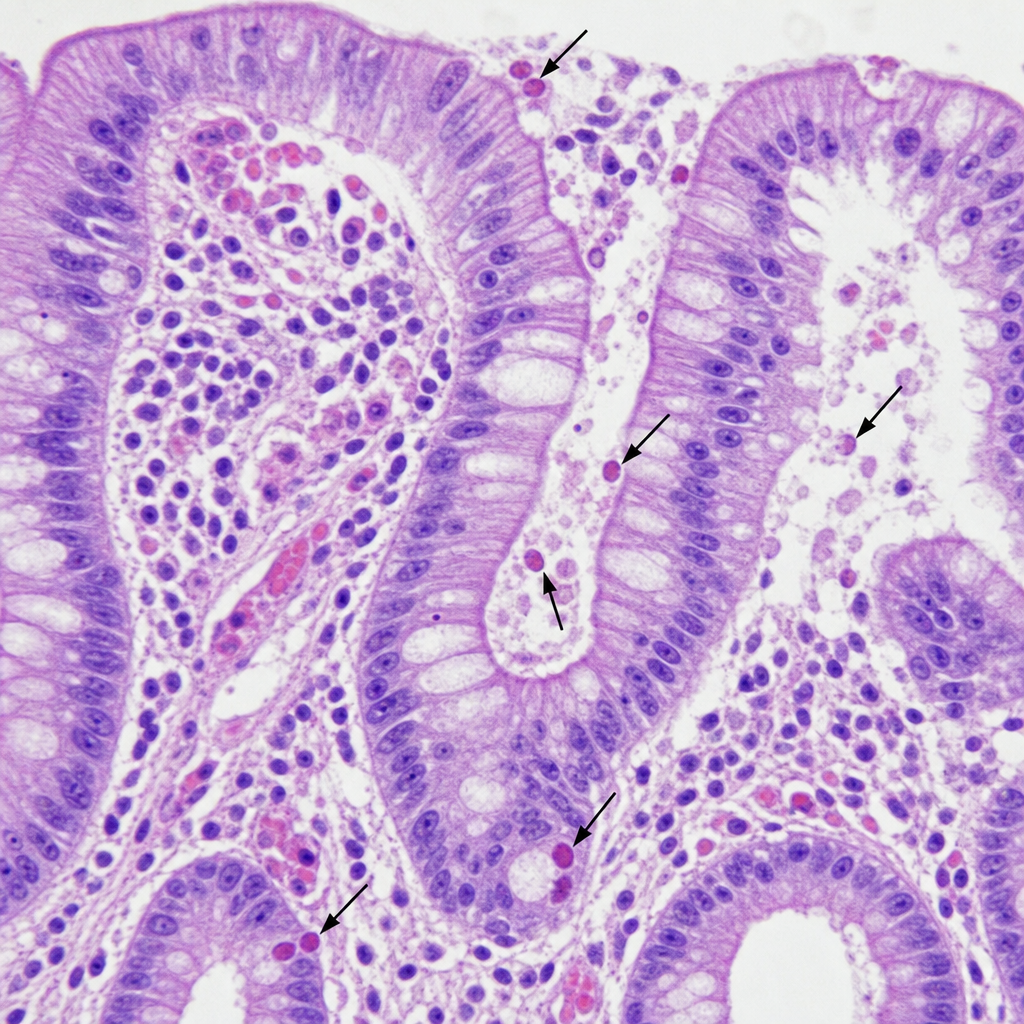
Malaria affects all the following organs except?
Band and shaped trophozoites are seen in which Plasmodium species?
Winter bottom sign is seen in which of the following conditions?
Which of the following helminths produces bile-stained eggs?
Trichomoniasis is transmitted through which stage?
Which one of the following does not pass through the lungs?
Which of the following filarial worms is not found in the blood?
What is the sensitivity of Casoni's test?
Which of the following is NOT a usual feature of Ascariasis?
All the following parasites cause malignancy except?
Explanation: **Explanation:** Malaria, caused by *Plasmodium* species, is a systemic protozoal infection characterized by an intra-erythrocytic life cycle. The pathophysiology primarily involves the destruction of Red Blood Cells (RBCs) and the sequestration of parasitized RBCs in the microvasculature of specific organs. **Why the Heart is the correct answer:** While severe malaria can lead to secondary hemodynamic changes (like tachycardia due to fever or anemia), the heart is **not** a primary target organ for the malarial parasite. Unlike the brain or kidneys, the heart does not typically show specific histopathological changes or primary organ failure directly caused by *Plasmodium* sequestration in routine clinical presentations. **Analysis of Incorrect Options:** * **Brain:** *P. falciparum* causes **Cerebral Malaria**. Parasitized RBCs express PfEMP-1, leading to cytoadherence in cerebral capillaries, causing microvascular obstruction, hypoxia, and coma. * **Liver:** The liver is the site of the **Exo-erythrocytic cycle**. Sporozoites infect hepatocytes to multiply (Schizogony). In *P. vivax* and *P. ovale*, dormant forms called **hypnozoites** persist here, causing relapses. * **Spleen:** The spleen is the primary organ for filtering damaged RBCs. Malaria typically causes **Splenomegaly** due to congestion and hyperplasia of the Reticuloendothelial system (RE system). **NEET-PG Clinical Pearls:** * **Blackwater Fever:** Intravascular hemolysis leading to hemoglobinuria, often associated with *P. falciparum* and quinine use. * **Tropical Splenomegaly Syndrome (HMS):** An abnormal immunologic response to malaria. * **Recrudescence:** Seen in *P. falciparum* (due to sub-optimal treatment); **Relapse:** Seen in *P. vivax/ovale* (due to hypnozoites).
Explanation: **Explanation:** The correct answer is **D. P. malariae**. This is a classic morphological feature frequently tested in NEET-PG. **1. Why P. malariae is correct:** In *Plasmodium malariae* infections, the growing trophozoite often stretches across the diameter of the red blood cell (RBC), forming a characteristic **"Band form."** This occurs because the parasite tends to be more compact and less amoeboid than other species. Additionally, *P. malariae* preferentially infects **older RBCs**, which are smaller and more rigid, constraining the parasite into this band shape. **2. Why other options are incorrect:** * **P. vivax:** Characterized by **amoeboid trophozoites** (irregular, spread-out shapes) and the presence of **Schüffner’s dots**. It infects young RBCs (reticulocytes), causing the host cell to become enlarged and pale. * **P. falciparum:** Typically shows only **delicate ring forms** (often with "appliqué" or "accole" positions) and **crescent/banana-shaped gametocytes** in peripheral blood. Mature trophozoites are rarely seen as they sequester in deep capillaries. * **P. ovale:** The RBCs often become **oval-shaped with fimbriated (tufted) edges**. Like *P. vivax*, it shows Schüffner’s dots (James' dots). **3. High-Yield Clinical Pearls for NEET-PG:** * **P. malariae:** Associated with **Quartan malaria** (72-hour fever cycle) and **Nephrotic syndrome** (specifically Quartan Malarial Nephropathy). * **Ziemann’s dots:** These are the fine dust-like stipplings seen specifically in *P. malariae*. * **Basket forms:** Another morphological variant seen in *P. malariae* trophozoites. * **Daisy head/Rosette appearance:** Refers to the mature schizont of *P. malariae*, which typically contains 6–12 merozoites arranged symmetrically.
Explanation: **Explanation:** **Winterbottom’s sign** is a classic clinical feature of **African Trypanosomiasis** (Sleeping Sickness), specifically caused by *Trypanosoma brucei gambiense*. It refers to the painless enlargement of lymph nodes in the **posterior cervical triangle**. This lymphadenopathy occurs during the hemolymphatic stage of the disease as the parasite disseminates through the lymphatic system before crossing the blood-brain barrier. **Analysis of Options:** * **Trypanosomiasis (Correct):** Winterbottom’s sign is pathognomonic for the West African form of the disease. In contrast, the South American form (Chagas disease) presents with **Romaña’s sign** (unilateral painless periorbital edema). * **Toxoplasmosis:** While it can cause lymphadenopathy, it typically involves the suboccipital or generalized nodes and is not associated with Winterbottom’s sign. * **Cryptosporidiosis:** This is a protozoan cause of diarrhea, especially in immunocompromised patients; it does not present with peripheral lymphadenopathy. * **Leishmaniasis:** Visceral leishmaniasis (Kala-azar) is characterized by massive splenomegaly, hepatomegaly, and pancytopenia, rather than isolated posterior cervical lymphadenopathy. **High-Yield Clinical Pearls for NEET-PG:** * **Vector:** Tsetse fly (*Glossina* species). * **Kerandel’s sign:** Delayed hyperesthesia (deep pain) seen in Trypanosomiasis. * **Sleeping Sickness:** The meningoencephalitic stage leads to reversal of the sleep-wake cycle. * **Diagnosis:** Identification of **trypomastigotes** in peripheral blood or lymph node aspirates. * **Treatment:** Suramin or Pentamidine (early stage); Melarsoprol or Eflornithine (late/CNS stage).
Explanation: **Explanation:** In parasitology, the presence or absence of **bile staining** is a crucial morphological feature used to identify helminth eggs in stool samples. Bile-stained eggs absorb bile pigments in the intestine, giving them a characteristic golden-brown or yellowish color. **1. Why Taenia solium is correct:** The eggs of *Taenia* species (both *T. solium* and *T. saginata*) are characterized by a thick, radially striated embryophore that is **bile-stained**. Inside the egg is a hexacanth embryo (oncosphere) with three pairs of hooklets. Because these eggs are exposed to bile in the small intestine, they consistently appear brown. **2. Why the other options are incorrect:** * **Ancylostoma duodenale & Necator americanus (Hookworms):** Both produce eggs that are **non-bile stained**. They are characterized by a thin, transparent hyaline shell and are usually seen in the 4-to-8-cell cleavage stage. * **Enterobius vermicularis (Pinworm):** These eggs are also **non-bile stained**. They have a unique "D-shape" (one side flattened) and a double-layered translucent shell. They are rarely found in feces as they are typically deposited on the perianal skin. **Clinical Pearls for NEET-PG:** * **Mnemonic for Bile-Stained Eggs:** Remember **"ABC of Bile"** — **A**scaris lumbricoides (Fertilized), **B**ile-stained (General), **C**lonorchis, and **T**aenia/**T**richuris. * **Non-Bile Stained Eggs:** Hookworms (*Ancylostoma, Necator*), *Enterobius*, and *Hymenolepis nana* (the only bile-stained exception in the Cestode group is *Taenia*; *H. nana* is colorless). * **High-Yield Fact:** *Taenia solium* eggs are indistinguishable from *Taenia saginata* eggs; species differentiation requires examining the gravid proglottid or the scolex.
Explanation: ### Explanation **Correct Answer: D. Trophozoite** **Medical Concept:** *Trichomonas vaginalis* is a flagellated protozoan that is unique because it **exists only in the trophozoite stage**. Unlike most intestinal protozoa (like *Entamoeba* or *Giardia*), it does not possess a cyst stage in its life cycle. Since there is no cyst to protect the organism from environmental stress, it is primarily transmitted through direct mucosal contact—most commonly via sexual intercourse. The pear-shaped, motile trophozoite is both the **infective stage** and the **diagnostic stage**. **Why the other options are incorrect:** * **A. Cyst:** While cysts are the infective stage for many protozoa (e.g., *E. histolytica*), *Trichomonas* does not form cysts. This is why it cannot survive long outside the human host. * **B. Oocyst:** This stage is characteristic of Apicomplexan parasites like *Cryptosporidium*, *Cyclospora*, and *Toxoplasma*. * **C. Sporozoite:** This is the infective stage for *Plasmodium* (Malaria), transmitted via the bite of an infected female Anopheles mosquito. **High-Yield Clinical Pearls for NEET-PG:** * **Clinical Presentation:** Causes a foul-smelling, **frothy, yellowish-green vaginal discharge** and vulvar irritation. * **Strawberry Cervix:** Colposcopy may reveal punctate hemorrhages on the cervix (Cervicitis emphysematosa), a classic board-exam finding. * **Diagnosis:** The gold standard is **Whiff test** (KOH) and **Wet mount microscopy**, which shows "jerky, twitching motility." Culture (Diamond’s medium) is the most sensitive method. * **Treatment:** The drug of choice is **Metronidazole**. It is crucial to **treat both partners** to prevent "ping-pong" reinfection.
Explanation: **Explanation** The correct answer is **Enterobius vermicularis** (Pinworm). The underlying medical concept here is the **Loeffler’s cycle** (Lung migration). Certain nematodes have a complex life cycle where larvae must migrate through the bloodstream to the lungs, penetrate the alveoli, ascend the tracheobronchial tree, and are then swallowed to reach the small intestine where they mature into adults. **Why Enterobius vermicularis is the correct answer:** Unlike the other options, *Enterobius vermicularis* follows a direct life cycle. Infection occurs via the ingestion of embryonated eggs (fecal-oral route or retroinfection). The larvae hatch in the duodenum and migrate directly to the cecum and appendix to mature. There is **no systemic or pulmonary migration phase**. **Why the other options are incorrect:** * **Ascaris lumbricoides:** Follows the classic "ASH" (Ascaris, Strongyloides, Hookworm) mnemonic for lung migration. Larvae reach the lungs via the portal circulation. * **Hookworms (Ancylostoma duodenale & Necator americanus):** Filariform larvae penetrate the skin, enter the venous circulation, and must pass through the lungs to reach the GI tract. * **Strongyloides stercoralis:** Similar to hookworms, larvae penetrate the skin and undergo pulmonary migration. It is also unique for its "autoinfection" cycle. **NEET-PG High-Yield Pearls:** * **Mnemonic for Lung Migration:** **"NASSA"** – **N**ecator americanus, **A**scaris lumbricoides, **S**trongyloides stercoralis, **S**chistosomes (transient), **A**ncylostoma duodenale. * **Loeffler’s Syndrome:** Characterized by transient pulmonary infiltrates and peripheral eosinophilia, commonly seen during the lung phase of *Ascaris*. * **Enterobius Diagnosis:** The investigation of choice is the **NIH Swab** or **Scotch Tape Test** to detect eggs on the perianal skin, as eggs are rarely found in routine stool samples.
Explanation: ### Explanation The diagnostic hallmark of filarial infections is the detection of **microfilariae** (embryonic larvae). The location of these microfilariae determines the diagnostic specimen required. **Why Onchocerca volvulus is the correct answer:** Unlike most filarial nematodes, the microfilariae of *Onchocerca volvulus* (the causative agent of River Blindness) do not circulate in the peripheral blood. Instead, they reside in the **subcutaneous lymphatics and the dermis**. Therefore, the diagnosis is made via **skin snips** rather than blood films. **Analysis of Incorrect Options:** * **Wuchereria bancrofti & Brugia malayi:** These are lymphatic filarial worms. Their microfilariae circulate in the peripheral blood, typically exhibiting **nocturnal periodicity** (peak density between 10 PM and 2 AM). * **Loa loa:** Also known as the African eye worm, its microfilariae circulate in the blood with **diurnal periodicity** (peak density during the day). **NEET-PG High-Yield Pearls:** 1. **Specimen of Choice:** * Blood: *W. bancrofti, B. malayi, Loa loa, Mansonella* species. * Skin Snip: *Onchocerca volvulus, Mansonella streptocerca*. 2. **Vector Mnemonic:** * *W. bancrofti*: *Culex* (urban), *Anopheles* (rural), *Aedes*. * *Onchocerca*: *Simulium* (Blackfly). * *Loa loa*: *Chrysops* (Deerfly/Mango fly). 3. **Clinical Signs:** *Onchocerca* is associated with **Mazzotti reaction** (severe immune response to dying microfilariae after treatment) and "hanging groin." 4. **Drug of Choice:** **Ivermectin** is the treatment of choice for *Onchocerca*, whereas **Diethylcarbamazine (DEC)** is used for *W. bancrofti*. (Note: DEC is contraindicated in Onchocerciasis due to the risk of severe ocular damage).
Explanation: **Explanation:** **Casoni’s test** is an immediate hypersensitivity (Type I) skin test used for the diagnosis of **Hydatid disease** caused by *Echinococcus granulosus*. It involves the intradermal injection of 0.2 ml of sterile hydatid fluid; a positive result is indicated by the formation of a large wheal with pseudopodia within 20 minutes. * **Why 90% is correct:** The sensitivity of Casoni’s test is generally reported to be around **90%** for hepatic cysts. However, its specificity is relatively low because it often cross-reacts with other helminthic infections (like Taeniasis or Cysticercosis) and can remain positive for years even after surgical removal of the cyst. * **Why other options are incorrect:** Options A (50%), B (60%), and C (75%) underestimate the sensitivity of the test in active hepatic cases. While sensitivity may drop significantly in pulmonary hydatid cysts (around 60-70%) or in calcified/dead cysts, the standard textbook value for the test's peak sensitivity is 90%. **High-Yield Clinical Pearls for NEET-PG:** * **Current Status:** Casoni’s test is now largely replaced by serological assays (ELISA, Indirect Hemagglutination) and imaging (USG/CT) due to its low specificity and the risk of anaphylaxis. * **Antigen Source:** The fluid used is typically collected from human or sheep hydatid cysts and sterilized (Seitz filtered). * **Imaging Gold Standard:** Ultrasound is the primary screening tool; the **WHO classification** (CL to CE5) is used to stage the cysts. * **Treatment of Choice:** Surgical removal (with care to avoid spillage) or the **PAIR** technique (Puncture, Aspiration, Injection, Re-aspiration) combined with Albendazole.
Explanation: **Explanation:** The correct answer is **Anemia (Option C)** because *Ascaris lumbricoides* (Giant Roundworm) does not feed on host blood. Unlike hookworms (*Ancylostoma duodenale* and *Necator americanus*), which attach to the intestinal mucosa and cause chronic blood loss leading to Iron Deficiency Anemia, *Ascaris* lives freely in the intestinal lumen and competes with the host for nutrients, leading to malnutrition and Vitamin A deficiency rather than anemia. **Analysis of other options:** * **Abdominal pain (Option A):** This is a common symptom. Large burdens of adult worms can cause mechanical irritation, vague abdominal discomfort, or even intestinal obstruction (the most common complication in children). * **Urticaria (Option B):** During the life cycle, *Ascaris* larvae migrate through various tissues. This migration triggers a Type I hypersensitivity reaction, often manifesting as allergic symptoms like urticaria (hives) or angioedema. * **Loeffler’s syndrome (Option D):** This is a classic feature occurring during the pulmonary phase of larval migration. It is characterized by transient pulmonary infiltrates on X-ray, cough, dyspnea, and peripheral eosinophilia. **High-Yield Clinical Pearls for NEET-PG:** * **Most common helminthic infection** worldwide: *Ascaris lumbricoides*. * **Infective stage:** Embryonated egg; **Diagnostic stage:** Bile-stained eggs in stool. * **Complications:** Biliary ascariasis (causing cholangitis or pancreatitis) and intestinal bolus obstruction at the ileocecal valve. * **Drug of choice:** Albendazole or Mebendazole.
Explanation: **Explanation:** The association between parasitic infections and carcinogenesis is a high-yield topic in NEET-PG. Certain parasites are classified as **Group 1 Carcinogens** by the IARC because chronic inflammation and metabolic byproducts lead to DNA damage and malignant transformation. **Why Onchocerca volvulus is the correct answer:** *Onchocerca volvulus* is a nematode responsible for **River Blindness** (Onchocerciasis). While it causes severe pathology, including sclerosing keratitis and lichenified dermatitis ("lizard skin"), it has **no known association with malignancy**. **Analysis of Incorrect Options (Parasites that DO cause malignancy):** * **Schistosoma haematobium:** This trematode (blood fluke) inhabits the vesical venous plexus. Chronic irritation from eggs in the bladder wall leads to **Squamous Cell Carcinoma (SCC) of the urinary bladder** (Note: Not transitional cell carcinoma). * **Clonorchis sinensis (Chinese Liver Fluke):** Inhabits the bile ducts. Chronic infection causes biliary epithelial hyperplasia, which can progress to **Cholangiocarcinoma** (bile duct cancer). * **Opisthorchis viverrini (Southeast Asian Liver Fluke):** Similar to *Clonorchis*, it resides in the biliary tract and is a potent risk factor for **Cholangiocarcinoma**. **NEET-PG High-Yield Pearls:** 1. **Schistosoma mansoni/japonicum:** Associated with Hepatocellular Carcinoma (HCC) and Colorectal cancer, though the link is less definitive than *S. haematobium*. 2. **Strongyloides stercoralis:** Linked to Adult T-cell Leukemia/Lymphoma (ATLL) due to its co-infection synergy with HTLV-1. 3. **Key Distinction:** If a question asks for the most common bladder cancer worldwide, it is Transitional Cell Carcinoma; however, in **endemic areas** of Schistosomiasis (e.g., Egypt), **Squamous Cell Carcinoma** is more prevalent.
Classification of Parasites
Practice Questions
Intestinal Protozoa
Practice Questions
Blood and Tissue Protozoa
Practice Questions
Malaria Parasites
Practice Questions
Leishmaniasis
Practice Questions
Intestinal Helminths: Nematodes
Practice Questions
Tissue Nematodes
Practice Questions
Trematodes
Practice Questions
Cestodes
Practice Questions
Ectoparasites
Practice Questions
Antiparasitic Drugs
Practice Questions
Laboratory Diagnosis of Parasitic Infections
Practice Questions
Get full access to all questions, explanations, and performance tracking.
Start For Free