Clonorchis sinensis is classified as which type of organism?
What is true about Plasmodium falciparum?
What condition is characterized by the occurrence of tetrads in red blood cells?
Which is the most sensitive method for detecting low-density microfilaraemia?
Which statement is NOT true regarding the fluorescent antibody detection test for diagnosing falciparum malaria?
Sandfly acts as a vector to all of the following diseases, EXCEPT?
Duffy antigen is associated with which Plasmodium species?
Schizonts are not seen in the peripheral blood of which malarial parasite?
A 20-year-old female presents with complaints of vaginal itching, discharge, pain with intercourse, and discomfort with urination. She has had 3 different sexual partners over the past 2 years. A wet mount of vaginal secretions reveals a flagellated organism, approximately the size of a white blood cell, with "twitching motility", suggestive of Trichomonas vaginalis. Which of the following statements regarding Trichomonas vaginalis is FALSE?
Chagas disease is caused by which organism?
Explanation: **Explanation:** *Clonorchis sinensis*, commonly known as the **Chinese Liver Fluke**, belongs to the class **Trematoda** within the phylum Platyhelminthes. Trematodes are leaf-shaped, unsegmented flatworms characterized by the presence of suckers (acetabula) for attachment, which is why they are colloquially termed **Flukes**. **Why the other options are incorrect:** * **A. Tapeworm:** These belong to the class **Cestoda**. Unlike flukes, tapeworms are ribbon-like and segmented (proglottids), and they lack a digestive tract (e.g., *Taenia solium*). * **B. Roundworm:** These belong to the phylum **Nematoda**. They are cylindrical, non-segmented, and possess a complete digestive system and a body cavity (e.g., *Ascaris lumbricoides*). * **C. Threadworm:** This is the common name for *Strongyloides stercoralis*, which is also a **Nematode** (roundworm), not a trematode. **High-Yield Clinical Pearls for NEET-PG:** * **Habitat:** Resides in the distal biliary passages of humans. * **Transmission:** Acquired by ingesting undercooked **freshwater fish** containing **metacercariae** (infective stage). * **Intermediate Hosts:** Requires two intermediate hosts—1st: Snail (*Parafossarulus*); 2nd: Freshwater fish. * **Clinical Association:** Chronic infection is a major risk factor for **Cholangiocarcinoma** (Bile duct cancer). * **Diagnosis:** Identification of characteristic "operculated eggs with a small posterior knob" in stool samples. * **Drug of Choice:** Praziquantel.
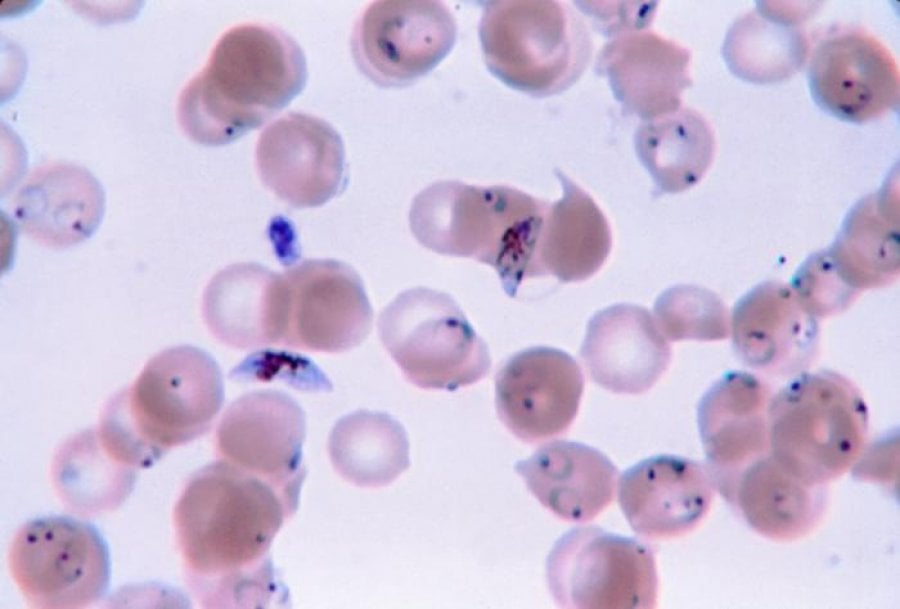
Explanation: **Explanation:** *Plasmodium falciparum* is the most virulent species of malaria, characterized by unique morphological features and a high parasite load. **Why Option C is Correct:** The hallmark of *P. falciparum* is the presence of **crescentic (banana-shaped) gametocytes**. These appear in the peripheral blood about 7–10 days after the initial asexual cycle. The macrogametocyte (female) is typically longer and more slender with central, compact chromatin, while the microgametocyte (male) is broader with diffuse chromatin. **Analysis of Incorrect Options:** * **A. Preferentially infects old erythrocytes:** This is incorrect. *P. falciparum* is unique because it **infects RBCs of all ages** (young and old), leading to very high levels of parasitemia. In contrast, *P. vivax* prefers reticulocytes (young RBCs), and *P. malariae* prefers senescent (old) RBCs. * **B. Schuffner's dots:** These are characteristic of *P. vivax* and *P. ovale*. In *P. falciparum*, the dots seen are called **Maurer’s clefts** (coarse granulations). * **D. Large schizonts:** While *P. falciparum* does form schizonts, they are **rarely seen in peripheral blood** because they sequester in deep capillaries (leading to cerebral malaria). When seen, they are smaller than those of *P. vivax*. **High-Yield Clinical Pearls for NEET-PG:** * **Multiple rings per RBC** and **Appole forms** (rings at the margin) are diagnostic of *P. falciparum*. * **Sequestration:** Mediated by **PfEMP-1** protein, causing cytoadherence to vascular endothelium (CD36/ICAM-1). * **Recrudescence** is seen in *P. falciparum* (due to sub-optimal treatment), whereas **Relapse** (hypnozoites) is seen in *P. vivax/ovale*.
Explanation: **Explanation:** The correct answer is **Babesiosis**. This condition is caused by the protozoan parasite *Babesia microti*, which infects red blood cells (RBCs). The hallmark diagnostic feature on a Giemsa-stained peripheral blood smear is the presence of **merozoites arranged in a cross-like formation**, known as the **"Maltese Cross"** or **tetrad**. This occurs due to the parasite budding in pairs without producing pigment or gametocytes. **Analysis of Options:** * **Malaria:** While *Plasmodium falciparum* also infects RBCs and can show multiple ring forms, it typically presents with **crescent-shaped gametocytes** or Schüffner’s dots. It never forms tetrads. * **Lyme disease:** Caused by the spirochete *Borrelia burgdorferi*, it is a bacterial infection. While it shares the same vector (*Ixodes* tick) as Babesiosis, it is an extracellular pathogen and does not infect RBCs. * **Plague:** Caused by *Yersinia pestis*, it is a gram-negative coccobacillus. On microscopy, it shows a characteristic **"safety-pin" appearance** (bipolar staining) but does not involve intra-erythrocytic tetrads. **High-Yield Clinical Pearls for NEET-PG:** * **Vector:** *Ixodes scapularis* (deer tick). Co-infection with Lyme disease is common. * **Clinical Presentation:** Fever, hemolytic anemia, and hemoglobinuria. It is particularly severe or fatal in **asplenic patients**. * **Diagnosis:** Peripheral smear (Maltese cross) is the gold standard; PCR is more sensitive. * **Treatment:** Combination of **Atovaquone + Azithromycin** (preferred) or Quinine + Clindamycin.
Explanation: **Explanation:** The detection of microfilariae (Mf) in peripheral blood is the gold standard for diagnosing lymphatic filariasis. However, when the parasite density is low (occult filariasis or low-density microfilaraemia), standard smears often fail. **1. Why Membrane Filter Concentration (MFC) is correct:** MFC is considered the **most sensitive** technique for detecting microfilariae. It involves passing a large volume of venous blood (usually 1–5 mL) through a polycarbonate filter (pore size ~3–5 μm). The microfilariae are trapped on the membrane while the blood cells pass through. This allows for the concentration of parasites from a large sample, making it significantly more sensitive than a standard thick smear (which uses only 20 μL of blood). **2. Analysis of Incorrect Options:** * **Mass Blood Survey:** This refers to the screening of a population using thick blood smears. While useful for epidemiological data, it lacks the sensitivity to detect low-density infections because of the small volume of blood used. * **DEC Provocation Test:** This involves giving a small dose of Diethylcarbamazine (2 mg/kg) to induce microfilariae to enter the peripheral blood during the day. While it helps bypass the "nocturnal periodicity," it is a diagnostic aid, not a concentration method. * **Xenodiagnosis:** This involves allowing a vector (mosquito) to feed on a patient and later examining the vector for larvae. It is primarily used for *Trypanosoma cruzi* (Chagas disease) and is not a standard or sensitive method for filariasis. **High-Yield Clinical Pearls for NEET-PG:** * **Gold Standard for Density:** Membrane Filter Concentration. * **Standard Screening:** Thick blood smear (collected between 10 PM – 2 AM for nocturnal periodic species like *W. bancrofti*). * **Knott’s Concentration:** Another concentration technique using 1 mL of blood and 2% formalin; however, MFC remains more sensitive. * **Antigen Detection:** Immunochromatographic tests (ICT) are now preferred for *W. bancrofti* as they can detect infection even in the absence of microfilaraemia and can be done during the day.
Explanation: ### Explanation **1. Why Option D is the correct (NOT true) statement:** The Rapid Diagnostic Tests (RDTs) for *Plasmodium falciparum* specifically detect **Histidine-Rich Protein 2 (HRP-2)**, not HRP-1. HRP-2 is a water-soluble protein secreted by the asexual stages and young gametocytes of *P. falciparum*. While HRP-1 (also known as the Knob-Associated Histidine-Rich Protein) exists, it is not the target antigen used in commercial diagnostic kits. **2. Analysis of other options:** * **Option A (True):** Fluorescent antibody detection and most rapid malaria tests are based on **Immunochromatographic (ICT)** technology (lateral flow assays), which allows for quick bedside diagnosis without microscopy. * **Option B (True):** **Aldolase** is an enzyme in the parasite's glycolytic pathway. Tests targeting aldolase are "pan-specific," meaning they detect all four major human malaria species (*P. falciparum, P. vivax, P. ovale, and P. malariae*). * **Option C (True):** **Parasite Lactate Dehydrogenase (pLDH)** is another common target. Like aldolase, it is produced by all species, but specific isomers can distinguish *P. falciparum* from non-falciparum species. **3. Clinical Pearls for NEET-PG:** * **HRP-2 Advantage:** It is highly sensitive for *P. falciparum*. * **HRP-2 Disadvantage:** It can remain positive for **2–4 weeks even after successful treatment** (antigen persistence), leading to false positives during follow-up. * **pLDH Advantage:** It is only produced by **living parasites**; therefore, it is a good marker for monitoring treatment efficacy (it clears quickly once the parasite is dead). * **Prozone Effect:** Very high parasitemia can sometimes cause a false-negative result in RDTs.
Explanation: **Explanation:** The correct answer is **D. Onchocerciasis**. The **Sandfly** (*Phlebotomus* species in the Old World and *Lutzomyia* in the New World) is a significant medical vector. However, **Onchocerciasis** (River Blindness), caused by the nematode *Onchocerca volvulus*, is transmitted by the bite of the **Blackfly** (*Simulium* species). **Analysis of Options:** * **Oriental Sore (A):** This is a form of Old World Cutaneous Leishmaniasis caused by *Leishmania tropica*. It is transmitted by the bite of the female Sandfly. * **Oraya Fever (B):** Also known as Carrion’s disease (caused by *Bartonella bacilliformis*), this bacterial infection is transmitted by the *Lutzomyia* sandfly, primarily in the Andes region of South America. * **Kala-azar (C):** Visceral Leishmaniasis, caused by *Leishmania donovani*, is the most clinically significant disease transmitted by the *Phlebotomus argentipes* sandfly in the Indian subcontinent. **Clinical Pearls for NEET-PG:** 1. **Sandfly Characteristics:** They are small, fuzzy, and fly in short hops. Only the **females** bite as they require a blood meal for egg production. 2. **Leishmaniasis Life Cycle:** The sandfly injects the **promastigote** stage into the human host; inside the host, these transform into **amastigotes** within macrophages. 3. **Vector Mnemonic:** * **Sandfly:** Leishmaniasis, Sandfly fever (Pappataci fever), Chandipura virus, and Bartonellosis. * **Blackfly:** Onchocerciasis (Remember: **B**lackfly = **B**lindness). * **Tsetse fly:** Sleeping Sickness (Trypanosomiasis).
Explanation: ### Explanation **Correct Answer: C. Plasmodium vivax** **Mechanism and Pathophysiology:** *Plasmodium vivax* requires the **Duffy Antigen Receptor for Chemokines (DARC)**, located on the surface of red blood cells (RBCs), to act as a receptor for its attachment and subsequent invasion. Specifically, the parasite uses the **Duffy Binding Protein (DBP)** to bind to these receptors. Individuals who are **Duffy-negative** (genotype *Fy/Fy*, common in West African populations) are naturally resistant to *P. vivax* infection because the merozoites cannot penetrate the RBCs. **Analysis of Incorrect Options:** * **A. Plasmodium falciparum:** Uses multiple alternative receptors (like Glycophorin A, B, and C) to invade RBCs of all ages. It is not dependent on the Duffy antigen, which is why it remains the dominant species in Africa. * **B. Plasmodium ovale:** Primarily infects young RBCs (reticulocytes) but uses different, less clearly defined receptors. It is often found in Duffy-negative individuals where *P. vivax* cannot survive. * **D. Plasmodium malariae:** Prefers older RBCs (senescent cells) and does not utilize the Duffy antigen for entry. **NEET-PG High-Yield Pearls:** 1. **Selectivity:** *P. vivax* and *P. ovale* selectively infect **reticulocytes** (young RBCs), whereas *P. malariae* infects **old RBCs**, and *P. falciparum* infects **RBCs of all ages** (leading to high parasitemia). 2. **Relapse:** Both *P. vivax* and *P. ovale* form **hypnozoites** in the liver, which can cause clinical relapse months or years later. 3. **Schuffner’s Dots:** These are characteristic stippling seen on peripheral smears in *P. vivax* and *P. ovale* infections. 4. **Sickle Cell Trait:** Provides protection specifically against severe *P. falciparum* malaria, whereas **Duffy negativity** protects against *P. vivax*.
Explanation: **Explanation:** The correct answer is **P. falciparum**. This is due to a unique phenomenon known as **Sequestration**. In *Plasmodium falciparum* infections, the late trophozoite and schizont stages express a protein called **PfEMP-1** (Plasmodium falciparum Erythrocyte Membrane Protein-1) on the surface of the infected Red Blood Cells (RBCs). These proteins form "knobs" that cause the RBCs to adhere to the endothelial lining of deep vascular beds (capillaries and venules) in internal organs like the brain, liver, and kidneys. Consequently, these mature stages are "sequestered" from the general circulation, and only the early **ring forms** and **gametocytes** are typically seen in a peripheral blood smear. **Analysis of Options:** * **P. vivax, P. ovale, and P. malariae:** These species do not exhibit significant sequestration. Their entire erythrocytic cycle—from ring forms to mature schizonts—circulates freely in the peripheral blood and can be easily identified on a routine thick or thin smear. **High-Yield Clinical Pearls for NEET-PG:** * **Sequestration** is the primary reason why *P. falciparum* causes severe complications like **Cerebral Malaria**. * If schizonts of *P. falciparum* are seen in a peripheral smear, it indicates a very high parasite load and a **poor prognosis**. * **Maurer’s dots** are associated with *P. falciparum*, while **Schüffner’s dots** are seen in *P. vivax* and *P. ovale*. * *P. falciparum* is the only species that typically shows multiple rings per RBC and crescent-shaped (banana-shaped) gametocytes.
Explanation: **Explanation:** The correct answer is **B** because *Trichomonas vaginalis* is unique among pathogenic protozoa as it **lacks a cyst stage**. It exists only as a **trophozoite**. Because it cannot form a resistant cyst, it does not survive well in the external environment and is transmitted primarily through direct skin-to-skin contact during sexual intercourse. **Analysis of Options:** * **Option A:** This is a true statement. In men, the infection is usually asymptomatic or causes mild urethritis/prostatitis. However, they act as a reservoir and efficiently transmit the parasite to female partners. * **Option C:** This is a true statement. *T. vaginalis* is a Sexually Transmitted Infection (STI). To prevent the "ping-pong" effect (re-infection), concurrent treatment of all sexual partners is mandatory, regardless of their symptom status. * **Option D:** This is a true statement. While many women are asymptomatic, severe cases present with a "strawberry cervix" (colpitis macularis), characterized by punctate hemorrhages on the cervical mucosa. **High-Yield Clinical Pearls for NEET-PG:** * **Morphology:** Pear-shaped trophozoite with 4 anterior flagella and an undulating membrane. It exhibits characteristic **"twitching motility"** on a saline wet mount. * **Clinical Presentation:** Foul-smelling, **frothy, greenish-yellow** vaginal discharge. * **Diagnosis:** The gold standard is **Whiff test negative** (unlike Bacterial Vaginosis) and a vaginal pH **>4.5**. Culture (Diamond’s medium) is the most sensitive traditional method, though NAAT is now preferred. * **Treatment:** Drug of choice is **Metronidazole** (2g single dose or 500mg BID for 7 days). Remember to advise patients to avoid alcohol due to the disulfiram-like reaction.
Explanation: **Explanation:** **Trypanosoma cruzi (Option A)** is the correct answer. It is the causative agent of **Chagas disease** (American Trypanosomiasis), a zoonotic infection primarily found in Latin America. The parasite is transmitted to humans via the feces of the **Reduviid bug** (also known as the "kissing bug" or Triatomine bug) when it defecates near the site of a bite. **Why the other options are incorrect:** * **Leishmania donovani (Option B):** Causes Visceral Leishmaniasis (Kala-azar), transmitted by the Phlebotomus sandfly. It typically presents with the triad of fever, massive splenomegaly, and pancytopenia. * **Giardia lamblia (Option C):** A flagellated protozoan that causes Giardiasis, characterized by foul-smelling, fatty diarrhea (steatorrhea) and malabsorption. It is transmitted via the feco-oral route. * **Toxoplasma gondii (Option D):** An obligate intracellular parasite transmitted via cat feces or undercooked meat. It is a major cause of CNS lesions in AIDS patients and congenital infections (Chorioretinitis, Hydrocephalus, and Intracranial calcifications). **High-Yield Clinical Pearls for NEET-PG:** * **Acute Phase:** Look for **Romana’s sign** (unilateral painless periorbital edema) or a **Chagoma** (skin nodule at the bite site). * **Chronic Phase:** Characterized by "Mega-syndromes" due to destruction of the myenteric plexus—specifically **Dilated Cardiomyopathy** (most common cause of death), **Megaesophagus**, and **Megacolon**. * **Diagnosis:** C-shaped trypomastigotes on peripheral blood smear (acute) or Xenodiagnosis (chronic). * **Treatment:** Benznidazole or Nifurtimox.
Classification of Parasites
Practice Questions
Intestinal Protozoa
Practice Questions
Blood and Tissue Protozoa
Practice Questions
Malaria Parasites
Practice Questions
Leishmaniasis
Practice Questions
Intestinal Helminths: Nematodes
Practice Questions
Tissue Nematodes
Practice Questions
Trematodes
Practice Questions
Cestodes
Practice Questions
Ectoparasites
Practice Questions
Antiparasitic Drugs
Practice Questions
Laboratory Diagnosis of Parasitic Infections
Practice Questions
Get full access to all questions, explanations, and performance tracking.
Start For Free