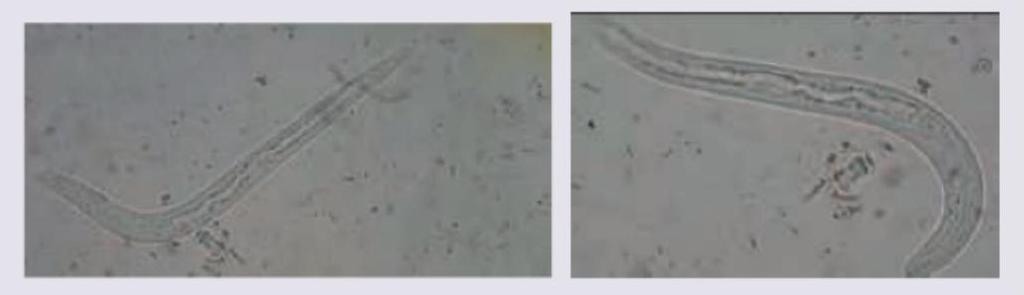
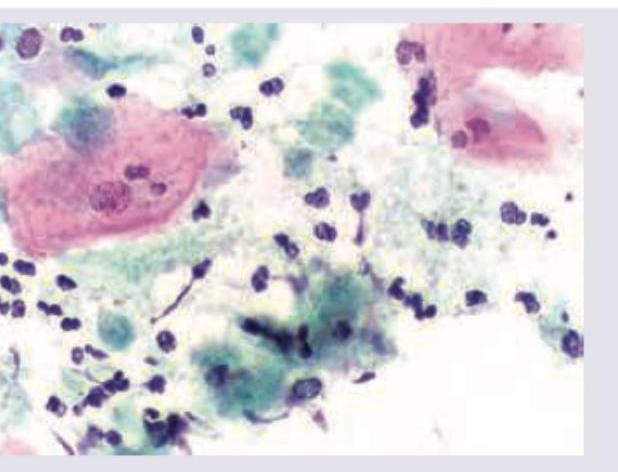
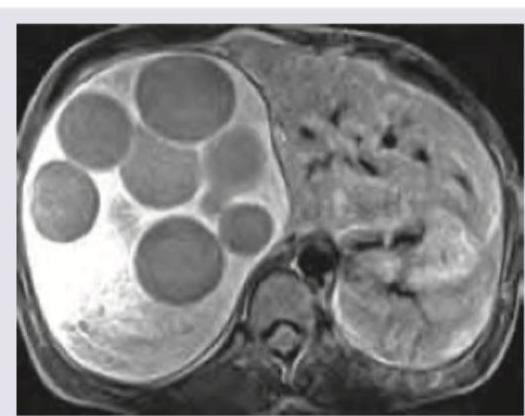
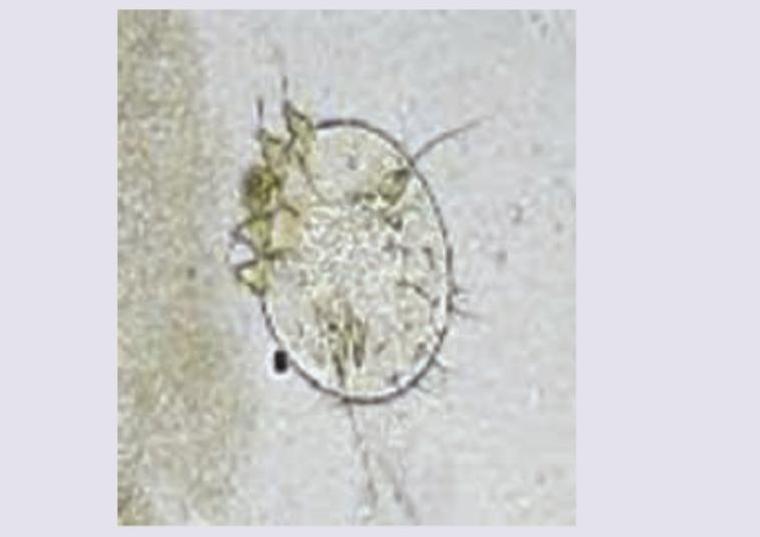
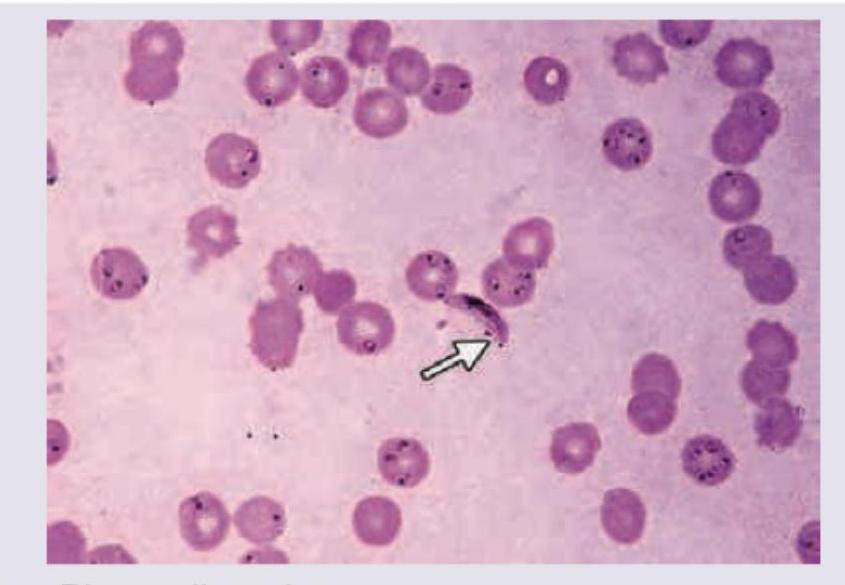
What is the diagnostic method for cryptosporidiosis in fecal matter?
What is the selective medium for Naegleria fowleri?
What is the sensitivity of Casoni's test?
Which of the following parasites does not enter the body by skin penetration?
What is the most common clinical feature of toxoplasmosis in an immunocompetent adult?
Which of the following acts as the intermediate host for the malaria parasite?
In Toxoplasmosis, the oocyst and pseudocyst are respectively seen in:
Which of the following parasites is NOT transmitted via the feco-oral route?
Which statement is false regarding malaria?
Hookworm infestation is associated with which of the following findings?
Explanation: **Explanation:** **1. Why Option A is Correct:** *Cryptosporidium parvum* is a coccidian parasite that causes self-limiting diarrhea in immunocompetent individuals and life-threatening, chronic watery diarrhea in immunocompromised patients (e.g., HIV/AIDS). The diagnostic stage is the **oocyst**, which is excreted in feces. These oocysts are **acid-fast**, meaning they contain mycolic acid-like substances in their cell walls that retain carbol fuchsin stain even after decolorization with acid. Therefore, a **Modified Ziehl-Neelsen (ZN) stain** (using a weaker decolorizer like 1-3% sulfuric acid) is the gold standard for visualizing bright red/pink spherical oocysts against a blue background. **2. Why Other Options are Incorrect:** * **B. Gram stain:** This is used for bacteria. While *Cryptosporidium* may appear as Gram-positive "ghost cells," it is not a definitive or reliable diagnostic method. * **C. Normal saline suspension:** Used primarily to detect motile trophozoites (e.g., *Giardia* or *E. histolytica*). *Cryptosporidium* oocysts are too small (4-6 µm) and colorless to be reliably identified in a simple saline wet mount. * **D. Iodine suspension:** Used to highlight nuclear details of protozoal cysts. However, *Cryptosporidium* oocysts do not take up iodine well and remain indistinguishable from yeast cells or debris. **3. NEET-PG High-Yield Pearls:** * **Size:** *Cryptosporidium* oocysts are **4-6 µm** (smaller than *Cyclospora* at 8-10 µm and *Isospora* at 25-30 µm). * **Acid-fastness:** All three intestinal coccidia (*Cryptosporidium, Cyclospora, Isospora*) are acid-fast. * **Infective dose:** Very low (as few as 10-100 oocysts). * **Treatment:** **Nitazoxanide** is the drug of choice for immunocompetent patients; HAART is the priority for HIV patients. * **Alternative Diagnosis:** Enzyme-linked immunosorbent assay (ELISA) or Immunofluorescence (DFA) are more sensitive than microscopy.
Explanation: ### Explanation **Correct Answer: C. Non-nutrient agar with E. coli** *Naegleria fowleri*, the causative agent of Primary Amoebic Meningoencephalitis (PAM), is a free-living amoeba. In the laboratory, it is cultured using a **"lawn culture"** technique. The organism is grown on **Non-Nutrient Agar (NNA)** that has been pre-seeded with a layer of heat-killed or live **Escherichia coli**. The underlying concept is that *Naegleria* is bacterivorous; it does not derive nutrients from the agar itself but survives by feeding on the *E. coli*. As the amoebae multiply and migrate, they create visible "tracks" on the agar surface, a diagnostic feature known as the **"trailing effect."** #### Analysis of Incorrect Options: * **A. Nutrient agar rich with E. coli:** Nutrient agar contains peptones and beef extract which promote heavy bacterial overgrowth. This overgrowth can inhibit the visualization and isolation of the amoebae. * **B. NNN (Novy-MacNeal-Nicolle) media:** This is the classic blood-based medium used for culturing Hemoflagellates, specifically **Leishmania** and **Trypanosoma cruzi**. * **D. Diamond media:** This is a specialized liquid medium used primarily for the cultivation of **Trichomonas vaginalis** and *Entamoeba histolytica*. #### NEET-PG High-Yield Pearls: * **Clinical Presentation:** PAM is an acute, fulminant, and usually fatal infection occurring in healthy individuals with a recent history of **diving or swimming** in warm freshwater. * **Entry Route:** Through the **cribriform plate** via the olfactory nerves. * **Diagnostic Clue:** Wet mount of CSF shows **actively motile trophozoites** (pseudopodial movement). Note: Cysts are never found in human tissue, only trophozoites. * **Drug of Choice:** Amphotericin B (often used in combination with Miltefosine).
Explanation: **Explanation:** **Casoni’s test** is an immediate (Type I) hypersensitivity skin test historically used for the diagnosis of **Hydatid disease** (caused by *Echinococcus granulosus*). 1. **Why 60% is correct:** The sensitivity of Casoni’s test is relatively low, typically cited around **60–70%**. This means that in a significant number of confirmed cases, the test may yield a false-negative result. Due to this low sensitivity and the risk of anaphylaxis, it has largely been replaced by modern serological assays (ELISA) and imaging (USG/CT). 2. **Why other options are incorrect:** * **50% (Option A):** While the test is insensitive, 50% is lower than the established clinical average. * **75% and 90% (Options C & D):** These values overestimate the test's performance. While sensitivity can occasionally reach 75% in hepatic cysts, it rarely reaches 90%. High-sensitivity values (90%+) are more characteristic of modern serological tests like ELISA or Indirect Hemagglutination (IHA). **High-Yield Clinical Pearls for NEET-PG:** * **Antigen used:** Sterile hydatid fluid (filtered) from human or sheep cysts. * **Procedure:** 0.2 ml of antigen is injected intradermally; a wheal >2 cm within 20 minutes indicates a positive result. * **Specificity Issues:** The test has poor specificity and often shows cross-reactivity with *Taenia solium* (Cysticercosis). * **Current Status:** It is now considered "obsolete" in modern clinical practice due to the risk of inducing **anaphylaxis** and the availability of superior diagnostic tools like the **Casoni-replacement ELISA** and the **Weinberg complement fixation test**. * **Imaging Gold Standard:** Ultrasound (WHO classification) is the primary diagnostic modality.
Explanation: The correct answer is **Dracunculus medinensis** (Guinea worm). ### 1. Why Dracunculus is the Correct Answer Unlike the other parasites listed, *Dracunculus medinensis* is transmitted via the **fecal-oral (ingestion) route**. Infection occurs when a person drinks unfiltered water containing **Cyclops** (water fleas) infected with L3 larvae. Once ingested, the larvae are released in the stomach, penetrate the intestinal wall, and mature in the retroperitoneal space. While the adult female eventually creates a blister to *exit* through the skin, it never *enters* via skin penetration. ### 2. Analysis of Incorrect Options (Skin Penetrators) The other three options are classic examples of parasites that enter the body by penetrating intact skin (usually the feet): * **Ancylostoma duodenale & Necator americanus (Hookworms):** The filariform larvae (L3) penetrate the skin, causing "ground itch," and migrate via the lungs to the small intestine. * **Strongyloides stercoralis:** Similar to hookworms, the filariform larvae penetrate the skin. It is unique because it can also cause **autoinfection**, where larvae penetrate the perianal skin or intestinal mucosa. ### 3. NEET-PG High-Yield Pearls To remember parasites that penetrate the skin, use the mnemonic **"SANN"**: * **S**trongyloides stercoralis * **A**ncylostoma duodenale * **N**ecator americanus * **N**on-human hookworms (causing Cutaneous Larva Migrans) * *Note:* **Schistosoma** (Cercariae) also enters via skin penetration. **Key Fact:** India was declared free of Guinea worm disease by the WHO in 2000. The intermediate host is **Cyclops**, and the definitive host is **Humans**.
Explanation: **Explanation:** **Toxoplasmosis**, caused by the obligate intracellular protozoan *Toxoplasma gondii*, presents differently depending on the host's immune status. 1. **Why Lymphadenopathy is Correct:** In approximately 80–90% of **immunocompetent** adults, primary infection is asymptomatic. However, when symptoms do occur, the **most common clinical manifestation is painless cervical lymphadenopathy**. This may be accompanied by a self-limiting flu-like illness (fever, malaise, myalgia). The lymph node biopsy typically shows Piringer-Kuchinka follicles (reactive follicular hyperplasia). 2. **Why Other Options are Incorrect:** * **Encephalitis:** This is the most common presentation in **immunocompromised** patients (especially those with HIV/AIDS and CD4 counts <100 cells/μL). It typically presents as ring-enhancing lesions on CT/MRI. * **Chorioretinitis:** While this is the most common manifestation of **congenital toxoplasmosis** (often presenting years after birth), it is rare as a primary feature in acute adult immunocompetent cases. * **Glaucoma:** This is a potential secondary complication of ocular toxoplasmosis (due to uveitis) but is not a primary clinical feature of the infection itself. **High-Yield Clinical Pearls for NEET-PG:** * **Definitive Host:** Cat (where the sexual cycle occurs). * **Intermediate Host:** Humans and other mammals (asexual cycle). * **Infective Forms:** Oocysts (from cat feces), Tissue cysts (in undercooked meat), and Tachyzoites (transplacental transmission). * **Congenital Triad (Sabin’s Triad):** Chorioretinitis, Hydrocephalus, and Intracranial calcifications. * **Treatment of Choice:** Pyrimethamine + Sulfadiazine (with Folinic acid to prevent bone marrow suppression).
Explanation: **Explanation:** In parasitology, the classification of hosts is determined by the type of reproduction that occurs within them. The **Definitive Host** is where the parasite undergoes its sexual cycle, while the **Intermediate Host** is where the asexual cycle occurs. 1. **Why Human is Correct:** In the life cycle of *Plasmodium* (the malaria parasite), humans host the **asexual phase** (Schizogony). This includes the exo-erythrocytic cycle in the liver and the erythrocytic cycle in red blood cells. Therefore, humans are the intermediate hosts. 2. **Why Female Anopheles is Incorrect:** The **sexual phase** (Sporogony) occurs within the mosquito's gut (formation of zygote and ookinete). Thus, the female *Anopheles* mosquito is the **definitive host**. 3. **Why Culex is Incorrect:** *Culex* mosquitoes are vectors for other diseases such as Japanese Encephalitis, West Nile Virus, and Lymphatic Filariasis (*Wuchereria bancrofti*), but they do not transmit human malaria. 4. **Why Trombiculid mite is Incorrect:** This is the vector for *Orientia tsutsugamushi*, the causative agent of **Scrub Typhus**. **High-Yield NEET-PG Pearls:** * **Infective form to humans:** Sporozoites (injected by mosquito bite). * **Infective form to mosquitoes:** Gametocytes (ingested during a blood meal). * **Exo-erythrocytic stage:** Absent in *P. falciparum* (no relapses); present in *P. vivax* and *P. ovale* as **hypnozoites** (responsible for relapses). * **Recrudescence:** Seen in *P. falciparum* and *P. malariae* due to the persistence of low-level parasitemia in the blood.
Explanation: ### Explanation The life cycle of *Toxoplasma gondii* involves two types of hosts: definitive and intermediate. Understanding the stages found in each is crucial for NEET-PG. **1. Why Option C is Correct:** * **Oocysts:** These are the product of the sexual cycle (gametogony), which occurs **only** in the intestinal epithelium of the definitive host—the **Cat** (and other felids). Oocysts are shed in cat feces. * **Pseudocysts (and Tissue Cysts):** These are found in the intermediate host—**Humans** (and other mammals/birds). When a human ingests sporulated oocysts, the parasite transforms into tachyzoites (active form) and eventually bradyzoites, which aggregate within host cells to form **pseudocysts** (clusters of tachyzoites) or true tissue cysts (clusters of bradyzoites) in muscles and the brain. **2. Why Other Options are Incorrect:** * **Option A & D:** These confuse the *location* with the *host*. While oocysts are found in feces and pseudocysts in tissue, the question asks for the host/site "respectively." * **Option B:** This reverses the hosts. Humans do not harbor the sexual stage (oocysts); cats do. **3. High-Yield Clinical Pearls for NEET-PG:** * **Definitive Host:** Cat; **Intermediate Host:** Human. * **Infective Forms for Humans:** Sporulated oocysts (from cat feces) or tissue cysts (from undercooked meat). * **Congenital Toxoplasmosis Triad:** Chorioretinitis, Hydrocephalus, and Intracranial calcifications. * **Diagnosis:** Sabin-Feldman Dye Test (Gold Standard) and "Ring-enhancing lesions" on CT/MRI in HIV patients. * **Drug of Choice:** Pyrimethamine + Sulfadiazine.
Explanation: ### Explanation The correct answer is **A. *Strongyloides stercoralis***. **1. Why *Strongyloides stercoralis* is the correct answer:** The primary mode of transmission for *Strongyloides stercoralis* is **skin penetration** (usually through bare feet) by filariform larvae present in contaminated soil. Unlike the other options, it does not enter the body via ingestion. It is also unique for its ability to cause **autoinfection**, where rhabditiform larvae transform into filariform larvae within the host's intestine and re-penetrate the perianal skin or intestinal mucosa. **2. Analysis of Incorrect Options:** * **B. *Taenia solium*:** Transmitted via the feco-oral route through the ingestion of food or water contaminated with eggs (leading to **Cysticercosis**). Note: Ingestion of undercooked pork containing cysticerci leads to intestinal Taeniasis. * **C. *Ascaris lumbricoides*:** Transmitted via the feco-oral route through the ingestion of **embryonated eggs** from contaminated soil or food. * **D. *Dracunculus medinensis*:** Transmitted via the feco-oral route by drinking water containing **Cyclops** (intermediate host) infected with L3 larvae. **3. NEET-PG Clinical Pearls:** * **Skin Penetrators (Mnemonic: "S-A-N-D"):** ***S***trongyloides, ***A***ncylostoma (Hookworm), ***N***ecator (Hookworm), and ***D***ermatobia. * **Strongyloides & Immunosuppression:** In patients on steroids or with HTLV-1, it can cause **Hyperinfection Syndrome**, leading to disseminated disease and Gram-negative sepsis. * **Diagnostic Choice:** The **Baermann technique** or agar plate culture is used to detect larvae in stool (eggs are rarely seen as they hatch in the intestinal mucosa). * **Treatment of Choice:** **Ivermectin** is the drug of choice for *Strongyloides*, whereas Albendazole is preferred for most other soil-transmitted helminths.
Explanation: ### Explanation **1. Why Option C is the Correct (False) Statement:** Relapse occurs due to the activation of **hypnozoites** (dormant stages) in the liver. This phenomenon is strictly seen in **_Plasmodium vivax_** and **_Plasmodium ovale_**. _Plasmodium falciparum_ (and _P. malariae_) does not form hypnozoites; therefore, it does not cause relapse. Any reappearance of _P. falciparum_ in the blood after treatment is termed **recrudescence**, which results from the survival of erythrocytic forms in the blood due to inadequate treatment or drug resistance. **2. Analysis of Other Options:** * **Option A (True):** _P. falciparum_ is the most severe form because it can infect **RBCs of all ages** (young and old), leading to high parasitemia. In contrast, _P. vivax_ prefers reticulocytes (young RBCs), and _P. malariae_ prefers senescent (old) RBCs. * **Option B (True):** In _P. vivax_ infections, the infected RBCs become **enlarged and pale**. This is a key diagnostic feature under the microscope, often accompanied by the presence of **Schüffner’s dots**. * **Option D (True):** Malaria is transmitted by the bite of an infected **female Anopheles mosquito**, which requires a blood meal for egg production. **3. NEET-PG High-Yield Pearls:** * **Maurer’s dots:** Seen in _P. falciparum_ infected RBCs. * **Ziemann’s dots:** Seen in _P. malariae_ infected RBCs. * **Crescent-shaped gametocytes:** Pathognomonic for _P. falciparum_. * **Drug of Choice for Relapse:** **Primaquine** is administered for 14 days to eradicate hypnozoites (radical cure). It is contraindicated in G6PD deficiency. * **Most common cause of Nephrotic Syndrome (Quartan Malarial Nephropathy):** _P. malariae_.
Explanation: **Explanation:** **Chandler’s Index** is the correct answer as it is a standard epidemiological measure used to assess the severity of hookworm infestation (primarily *Ancylostoma duodenale* and *Necator americanus*) in a community. It is calculated by taking the average number of eggs per gram (EPG) of stool across a sampled population. An index of less than 2000-2500 is generally considered low, while higher values indicate a significant public health problem and a higher risk of iron-deficiency anemia among the population. **Analysis of Incorrect Options:** * **Metafren index:** This is a distractor and not a recognized clinical or epidemiological scoring system in parasitology. * **MELD score (Model for End-Stage Liver Disease):** This is a scoring system used to predict the 3-month mortality risk in patients with chronic liver disease and is primarily used for prioritizing patients for liver transplantation. * **Burrows in skin:** This is the classic clinical finding of **Scabies** (*Sarcoptes scabiei*), where the female mite tunnels into the stratum corneum. While hookworms cause "creeping eruption" (Cutaneous Larva Migrans), they do not form permanent burrows in the same manner as scabies. **High-Yield Clinical Pearls for NEET-PG:** * **Hookworm Anemia:** The primary morbidity is microcytic hypochromic anemia due to chronic blood loss (0.03–0.2 ml/day/worm). * **Ground Itch:** An allergic reaction at the site of larval entry (usually the feet). * **Loeffler’s Syndrome:** Transient pulmonary eosinophilia occurring during the larval migration phase through the lungs. * **Treatment:** Albendazole (400 mg single dose) is the drug of choice.
Classification of Parasites
Practice Questions
Intestinal Protozoa
Practice Questions
Blood and Tissue Protozoa
Practice Questions
Malaria Parasites
Practice Questions
Leishmaniasis
Practice Questions
Intestinal Helminths: Nematodes
Practice Questions
Tissue Nematodes
Practice Questions
Trematodes
Practice Questions
Cestodes
Practice Questions
Ectoparasites
Practice Questions
Antiparasitic Drugs
Practice Questions
Laboratory Diagnosis of Parasitic Infections
Practice Questions
Get full access to all questions, explanations, and performance tracking.
Start For Free