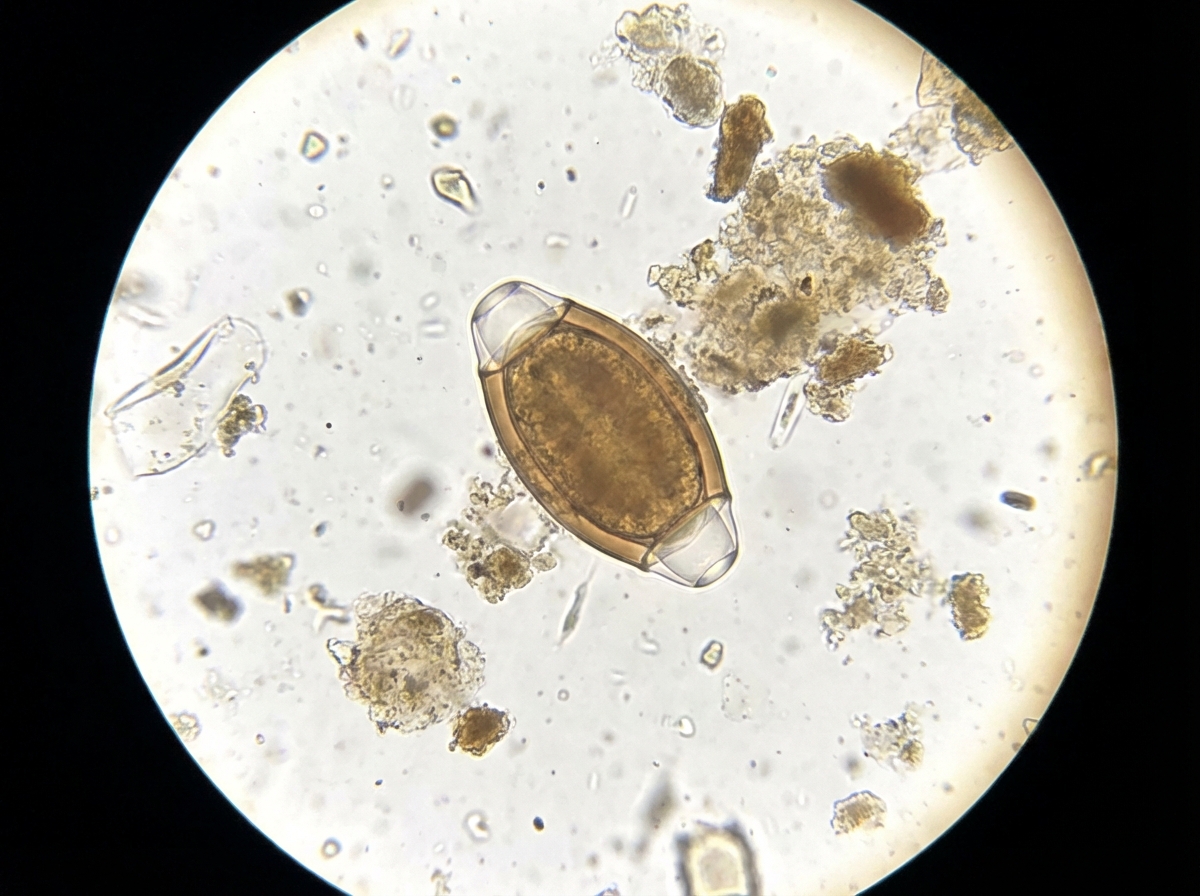
A dog trainer presented with recurrent fever and weight loss since a few days. The liver and spleen have enlarged. Blood investigations show eosinophilia. Visceral larva migrans is suspected. What is the causative organism?
Which tapeworm can be transmitted directly from human to human?
Which of the following is the vector for a disease characterized by specific findings on polarized microscopy?
Which of the following is an infective form of Ascaris?
Which parasite is associated with Charcot-Leyden crystals in stool but lacks pus cells?
A company executive, who travels worldwide, presents with an upper abdominal mass and a positive Casoni's test. What is the causative organism?
What is the incubation period for Necator americanus?
Which helminth species among the following require two hosts?
Ova that float in saturated saline are of:
A butcher develops fatigue and lymphadenopathy after years of consuming raw, ground meat. Examination reveals intensely white focal retinal lesions with vitritis and diagnosed chorioretinitis. An older laboratory test, the Sabin-Feldman dye test, is found positive. This patient is most likely infected with which of the following organisms?
Explanation: **Explanation:** **1. Why Toxocara canis is correct:** Visceral Larva Migrans (VLM) is a clinical syndrome caused by the migration of second-stage larvae of nematodes through human tissues. The most common causative agent is **Toxocara canis** (dog roundworm). * **Pathogenesis:** Humans (accidental hosts) ingest embryonated eggs from soil contaminated with dog feces. The larvae hatch in the intestine, penetrate the wall, and migrate to the liver, lungs, and other organs. * **Clinical Presentation:** As seen in this case, it typically presents in individuals with close animal contact (dog trainer) with fever, hepatosplenomegaly, and marked **peripheral eosinophilia** (a hallmark of migrating helminths). **2. Why other options are incorrect:** * **Ascariasis (*Ascaris lumbricoides*):** While it can cause Loeffler’s syndrome (transient pulmonary eosinophilia), the adult worms typically reside in the human intestine. It does not cause the chronic systemic larval migration seen in VLM. * **Schistosomiasis:** This is a trematode infection (blood fluke) acquired through skin penetration in contaminated water. It causes "Swimmer's itch" or Katayama fever, but is not the cause of VLM. * **Loa Loa (African Eye Worm):** This filarial nematode is transmitted by the *Chrysops* fly. It is characterized by Calabar swellings (subcutaneous edema) and subconjunctival migration, not visceral organ involvement. **3. High-Yield Clinical Pearls for NEET-PG:** * **Ocular Larva Migrans (OLM):** Also caused by *Toxocara canis*; it can mimic retinoblastoma on fundoscopy. * **Diagnosis:** Primarily clinical and serological (ELISA for secretory-excretory antigens). Stool examination is **useless** because the larvae do not develop into egg-laying adults in humans. * **Treatment:** Albendazole is the drug of choice. * **Cutaneous Larva Migrans:** Most commonly caused by *Ancylostoma braziliense* (dog/cat hookworm).
Explanation: **Explanation:** The correct answer is **Dwarf Tapeworm (*Hymenolepis nana*)**. **Why it is correct:** *Hymenolepis nana* is unique among tapeworms because it is the only one that does not mandatory require an intermediate host to complete its life cycle. It can be transmitted via the **fecal-oral route** (ingestion of eggs from contaminated hands or food). Furthermore, it is capable of **internal autoinfection**, where eggs hatch within the intestine and develop into larvae (cysticercoids) without ever leaving the host. This direct mode of transmission allows for easy human-to-human spread, especially in crowded environments or among children. **Why the other options are incorrect:** * **A. Fish Tapeworm (*Diphyllobothrium latum*):** Requires two intermediate hosts (Cyclops and freshwater fish). Humans are infected by eating undercooked fish. * **B. Beef Tapeworm (*Taenia saginata*):** Requires cattle as an intermediate host. Humans are infected by eating "measly beef" containing cysticerci. * **C. Dog Tapeworm (*Echinococcus granulosus*):** Humans are accidental intermediate hosts (dead-end) infected by ingesting eggs from dog feces. It does not spread human-to-human. **High-Yield Clinical Pearls for NEET-PG:** * **Smallest Cestode:** *H. nana* is the smallest tapeworm infecting the human intestine. * **Morphology:** The egg has a characteristic **double membrane** with **polar filaments** (a classic "basket-like" appearance). * **Treatment:** **Praziquantel** is the drug of choice. * **Life Cycle:** It is the only tapeworm that can complete its entire life cycle (egg to adult) in a single host.
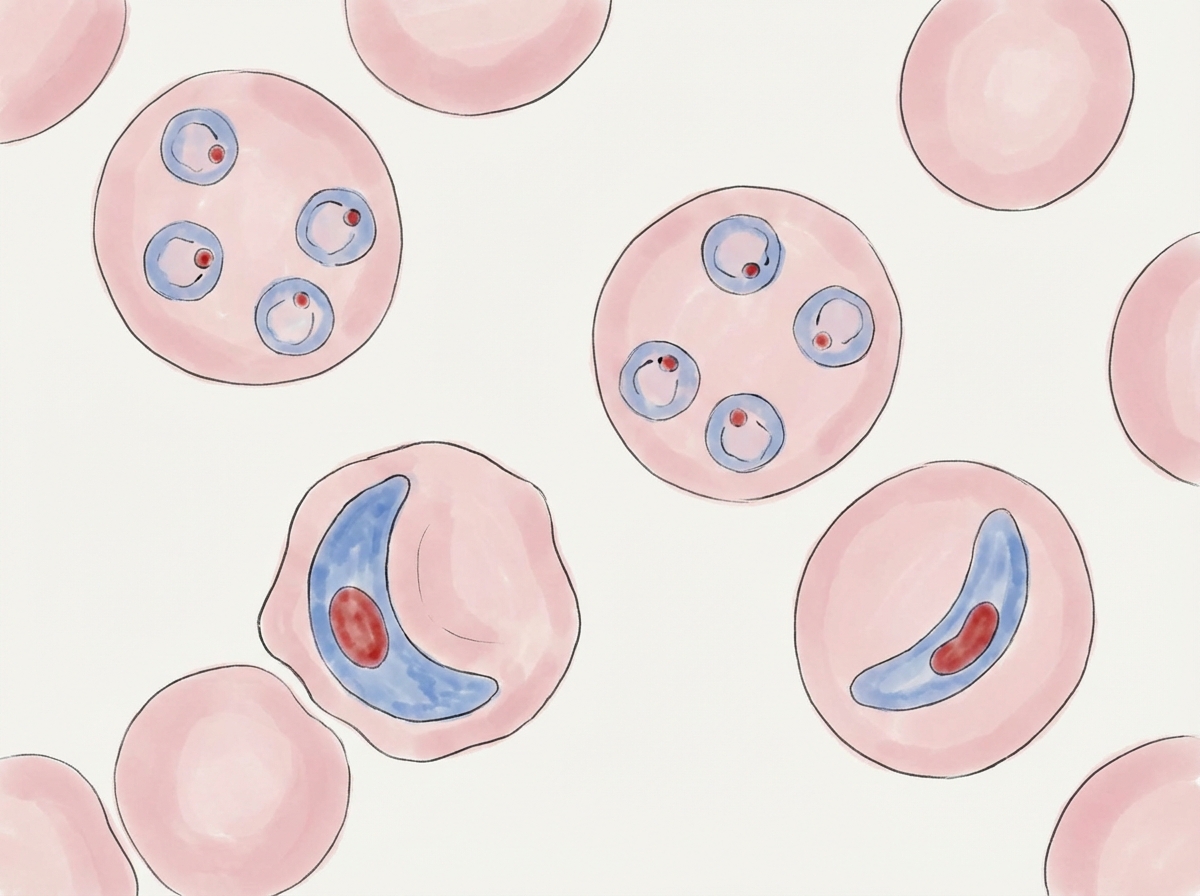
Explanation: The question hinges on identifying the disease associated with **polarized microscopy** and its corresponding vector. ### **1. Why Option B is Correct** The disease characterized by specific findings on polarized microscopy is **Babesiosis**, caused by *Babesia microti*. * **The Finding:** Under polarized light, the intraerythrocytic parasites (specifically the **Maltese Cross** or tetrad forms) exhibit **birefringence**. This is a high-yield diagnostic feature used to differentiate *Babesia* from *Plasmodium falciparum* in blood smears. * **The Vector:** *Babesia* is transmitted by the **Ixodes scapularis** tick (the same vector for Lyme disease and Anaplasmosis). ### **2. Why Other Options are Incorrect** * **A. Anopheles mosquito:** Vector for **Malaria**. While malaria presents with ring forms similar to Babesia, it does not show the "Maltese Cross" birefringence under polarized microscopy. Malaria is associated with *hemozoin* pigment, which is birefringent, but the question specifically points to the diagnostic "Maltese Cross" of Babesia. * **C. Louse:** Vector for **Epidemic Typhus** (*Rickettsia prowazekii*), Relapsing fever (*Borrelia recurrentis*), and Trench fever. None of these are diagnosed via polarized microscopy of RBCs. * **D. Rat flea:** Vector for **Bubonic Plague** (*Yersinia pestis*) and **Endemic Typhus** (*Rickettsia typhi*). Diagnosis is usually via culture, serology, or Wayson stain (safety-pin appearance). ### **3. High-Yield Clinical Pearls for NEET-PG** * **Babesia Triad:** Hemolytic anemia, jaundice, and fever in a patient from an endemic area (e.g., Northeastern USA). * **Maltese Cross:** Pathognomonic for *Babesia*. * **Co-infection:** Always remember that *Ixodes* ticks can co-transmit **Babesia, Borrelia burgdorferi (Lyme), and Anaplasma**. * **Treatment:** Atovaquone + Azithromycin (unlike Malaria, which uses Chloroquine/Artesunate).
Explanation: **Explanation:** The life cycle of *Ascaris lumbricoides* (Giant Roundworm) is unique because it does not require an intermediate host. The correct answer is **Embryonated egg** because the eggs passed in human feces are unsegmented and non-infective. They must undergo development in the soil for 2–3 weeks to become "embryonated," containing the **rhabditiform larva (L2 stage)**, which is the specific infective stage for humans upon ingestion. **Analysis of Incorrect Options:** * **Coracidium:** This is the ciliated first-stage larva of *Diphyllobothrium latum* (Fish Tapeworm), which hatches in water to be ingested by cyclops. * **Filariform larvae (L3):** This is the infective stage for Hookworms (*Ancylostoma duodenale*) and *Strongyloides stercoralis*. These larvae infect humans via active skin penetration, not ingestion. * **Rhabditiform larvae (L1):** In *Ascaris*, this larva develops inside the egg but is not infective if it hatches outside the host. In Hookworms/Strongyloides, this is the feeding, non-infective stage found in soil or feces. **High-Yield Clinical Pearls for NEET-PG:** * **Mode of Transmission:** Fecal-oral route (ingestion of contaminated water/vegetables). * **Loeffler’s Syndrome:** Characterized by fever, cough, and eosinophilia, occurring during the pulmonary migration phase of the larvae. * **Diagnosis:** Identification of bile-stained eggs (mammillated/albuminous coat) on stool microscopy. * **Complications:** Most common cause of intestinal obstruction due to worms in children; can also cause biliary ascariasis or appendicitis. * **Treatment:** Albendazole (Drug of Choice).
Explanation: ### Explanation The correct answer is **C. *Entamoeba histolytica***. **1. Why *E. histolytica* is correct:** *E. histolytica* causes amoebic dysentery. A hallmark of the stool examination in this condition is the presence of **Charcot-Leyden crystals**, which are diamond-shaped crystals formed from the breakdown of eosinophils. Crucially, amoebic dysentery is characterized by a **lack of pus cells (neutrophils)**. This occurs because the parasite produces a potent toxin (amoebic pore-forming protein) that causes **lysis of host inflammatory cells**. Therefore, while the stool contains blood and mucus, it is notably "scanty" in cellular exudate compared to bacillary dysentery. **2. Why the other options are incorrect:** * **A. Giardia:** Causes malabsorption and steatorrhea (fatty, foul-smelling stools). It does not cause mucosal invasion or significant eosinophilic response; hence, no Charcot-Leyden crystals are seen. * **B. Taenia:** These are intestinal helminths (tapeworms). While helminthic infections can cause systemic eosinophilia, they do not typically present with the acute dysenteric picture or the specific stool findings associated with *E. histolytica*. * **C. Trichomonas:** *T. vaginalis* is a urogenital parasite causing vaginitis, not an intestinal pathogen. *T. hominis* is a non-pathogenic commensal in the gut. **3. NEET-PG High-Yield Pearls:** * **Amoebic vs. Bacillary Dysentery:** Bacillary dysentery (e.g., *Shigella*) contains **abundant pus cells** and lacks Charcot-Leyden crystals. * **Stool Microscopy:** In *E. histolytica*, look for "quadrinucleate cysts" (infective stage) or "trophozoites with ingested RBCs" (diagnostic of invasive disease). * **Charcot-Leyden Crystals:** These are also found in other conditions with high eosinophil turnover, such as **bronchial asthma** (in sputum) and **Isosporiasis**.
Explanation: **Explanation:** The clinical presentation of an upper abdominal mass combined with a positive **Casoni’s test** is pathognomonic for **Hydatid disease**, caused by the larval stage of the cestode ***Echinococcus granulosus*** (Dog tapeworm). 1. **Why Echinococcus is correct:** * **Casoni’s Test:** This is an immediate hypersensitivity (Type I) skin test used to diagnose Hydatid disease. It involves the intradermal injection of sterile hydatid fluid; a wheal-and-flare response within 20 minutes indicates a positive result. * **Clinical Presentation:** The "upper abdominal mass" typically represents a slow-growing hydatid cyst in the liver (the most common site of infection). The "worldwide traveler" history is relevant as the disease is endemic in sheep-raising regions. 2. **Why other options are incorrect:** * **Entamoeba histolytica:** Causes amoebic liver abscesses. While it presents with RUQ pain and hepatomegaly, diagnosis is via "anchovy sauce" aspirate and serology, not Casoni’s test. * **Hepatitis:** This is a viral inflammation of the liver (e.g., HBV, HCV). It presents with jaundice and constitutional symptoms rather than a localized cystic mass. * **Ascariasis:** Caused by *Ascaris lumbricoides*, it primarily causes intestinal obstruction or Loeffler’s syndrome (pulmonary phase). It does not produce a positive Casoni’s test. **High-Yield Clinical Pearls for NEET-PG:** * **Imaging:** Ultrasound shows the characteristic **"Water lily sign"** (detached germinal membrane) or **"Wheel spoke"** appearance (daughter cysts). * **Treatment:** The **PAIR** technique (Puncture, Aspiration, Injection, Re-aspiration) is used, often alongside Albendazole. * **Caution:** Great care must be taken during surgery to avoid cyst rupture, which can lead to life-threatening **anaphylactic shock**. * **Note:** Casoni’s test is now largely replaced by more sensitive serological tests (ELISA) and imaging but remains a classic "favorite" for exam questions.
Explanation: **Explanation:** The incubation period (pre-patent period) for *Necator americanus* (New World Hookworm) refers to the time elapsed from the penetration of the skin by third-stage filariform larvae to the appearance of eggs in the feces. **Why D is correct:** Upon skin penetration, the larvae enter the venous circulation, travel to the right heart, and reach the lungs. They break into the alveoli, ascend the tracheobronchial tree, are swallowed, and finally reach the small intestine where they mature into adults. This complex migratory cycle (Looss cycle) and subsequent maturation take approximately **5 to 8 weeks** (averaging 5-6 weeks). **Why other options are incorrect:** * **A & B (1-2 weeks):** This timeframe corresponds to the onset of "Ground Itch" (dermal allergic reaction) or the pulmonary phase (Loeffler’s-like syndrome), but the adult worms are not yet mature enough to produce eggs. * **C (3 weeks):** While larvae reach the intestine within a few days, they require several more weeks to undergo final molting and reach sexual maturity. **NEET-PG High-Yield Pearls:** * **Infective stage:** L3 Filariform larva (penetrates intact skin, usually the feet). * **Diagnostic stage:** Non-bile stained, segmented eggs in stool (usually 4-8 cell stage). * **Clinical Hallmark:** Iron deficiency anemia (Microcytic Hypochromic) due to chronic blood loss. *N. americanus* causes less blood loss (~0.03 ml/day) compared to *Ancylostoma duodenale* (~0.2 ml/day). * **Treatment of choice:** Albendazole (single dose).
Explanation: **Explanation:** The core concept tested here is the classification of parasites based on their life cycles: **Monoxenous** (requiring one host) vs. **Heteroxenous** (requiring two or more hosts). **Why Option A is correct:** * **_Taenia solium_ (Pork Tapeworm):** Heteroxenous. It requires two hosts: Humans (Definitive Host) and Pigs (Intermediate Host). * **_Entamoeba histolytica_:** While traditionally considered monoxenous in a strictly intestinal sense, in the context of this specific question's framing (often found in older competitive exam patterns), it is grouped with parasites that can involve multiple stages or hosts in broader epidemiological cycles. However, the key differentiator in this set is **_Toxoplasma gondii_**. * **_Toxoplasma gondii_:** Heteroxenous. It requires Felines (Definitive Host) and mammals/birds like Humans or rodents (Intermediate Hosts). **Analysis of Incorrect Options:** * **Options B, C, and D** all include **_Giardia lamblia_**. _Giardia_ is a strictly **monoxenous** parasite. It completes its entire life cycle (cyst and trophozoite) within a single host (human or animal) via the fecal-oral route. Its inclusion makes these options incorrect. * **_Taenia saginata_** (in Option C) also requires two hosts (Humans and Cattle), but the presence of _Giardia_ invalidates the choice. **NEET-PG High-Yield Pearls:** * **Definitive Host (DH):** Where the parasite undergoes the sexual cycle (e.g., Mosquito for Malaria, Human for _Taenia_). * **Intermediate Host (IH):** Where the parasite undergoes the asexual cycle (e.g., Human for Malaria, Pig for _T. solium_). * **Exception:** In **Hydatid disease (_Echinococcus granulosus_)**, Humans are the **Accidental Intermediate Host** (Dead-end host), while Dogs are the DH. * **_Hymenolepis nana_** is unique as it is the only tapeworm that can complete its entire life cycle in a single host (Human).
Explanation: ### Explanation The principle behind the **Salt Flotation Technique** (using saturated sodium chloride solution with a specific gravity of 1.200) is based on the difference in specific gravity. Eggs that are lighter (lower specific gravity) than the salt solution will float to the surface, while heavier eggs will sink. **Why H. nana is correct:** Most nematode eggs, including *Hymenolepis nana* (dwarf tapeworm), have a specific gravity between **1.050 and 1.150**. Since this is lower than that of saturated saline (1.200), *H. nana* eggs float effectively, making this a standard method for their recovery. **Analysis of Incorrect Options:** * **Unfertilized eggs of Ascaris lumbricoides:** While *fertilized* eggs of *Ascaris* float, **unfertilized eggs** are heavier due to their dense lecithin granules and thick shells. Their specific gravity exceeds 1.200, causing them to sink. * **T. saginata:** The eggs (oncospheres) of *Taenia* species are heavy and have a thick, striated shell. Their high specific gravity prevents them from floating in saturated saline. * **Other non-floating eggs:** These include eggs of *Fasciola hepatica*, *Schistosoma* species, and operculated eggs (like *Diphyllobothrium latum*). **NEET-PG High-Yield Pearls:** * **Floaters (Mnemonic: "HOOK the ROUND WHIP for the DWARF"):** **Hook**worm, **Round**worm (Fertilized), **Whip**worm (*Trichuris*), and **Dwarf** tapeworm (*H. nana*). * **Sinkers:** Unfertilized *Ascaris* eggs, *Taenia* eggs, and all Trematode eggs (except *Schistosoma*, which are usually recovered via sedimentation). * **Saturated Saline Specific Gravity:** Always remember the value **1.200**. If the solution is not fully saturated, even "floaters" may sink.
Explanation: ### Explanation The correct answer is **Toxoplasma gondii**. **1. Why Toxoplasma gondii is correct:** The clinical triad of **raw meat consumption** (ingestion of tissue cysts), **lymphadenopathy**, and **chorioretinitis** (characterized by focal white retinal lesions and "headlight in the fog" vitritis) is classic for Toxoplasmosis. The **Sabin-Feldman dye test** is the historical gold standard serological test for *T. gondii*. It measures IgG antibodies; if antibodies are present, they neutralize the parasite, preventing methylene blue dye from staining the live tachyzoites. **2. Why the other options are incorrect:** * **Giardia lamblia:** An intestinal protozoan causing malabsorption and foul-smelling steatorrhea. It does not cause lymphadenopathy or chorioretinitis. * **Schistosoma species:** Trematodes associated with freshwater snails. They typically cause portal hypertension (S. mansoni/japonicum) or hematuria (S. haematobium), not ocular lesions. * **Trichinella spiralis:** Also associated with raw meat (especially pork), but presents with the triad of **periorbital edema, myositis, and eosinophilia**. While it affects muscles, it does not cause the specific focal chorioretinitis seen here. **3. High-Yield NEET-PG Pearls:** * **Definitive Host:** Domestic cat (sheds oocysts in feces). * **Intermediate Host:** Humans/Mammals (tissue cysts in muscle/brain). * **Congenital Triad:** Chorioretinitis, Hydrocephalus, and Intracranial calcifications. * **HIV/Immunocompromised:** Most common cause of CNS mass lesions (Ring-enhancing lesions on MRI). * **Treatment:** Pyrimethamine + Sulfadiazine (plus folinic acid to prevent bone marrow suppression).
Classification of Parasites
Practice Questions
Intestinal Protozoa
Practice Questions
Blood and Tissue Protozoa
Practice Questions
Malaria Parasites
Practice Questions
Leishmaniasis
Practice Questions
Intestinal Helminths: Nematodes
Practice Questions
Tissue Nematodes
Practice Questions
Trematodes
Practice Questions
Cestodes
Practice Questions
Ectoparasites
Practice Questions
Antiparasitic Drugs
Practice Questions
Laboratory Diagnosis of Parasitic Infections
Practice Questions
Get full access to all questions, explanations, and performance tracking.
Start For Free