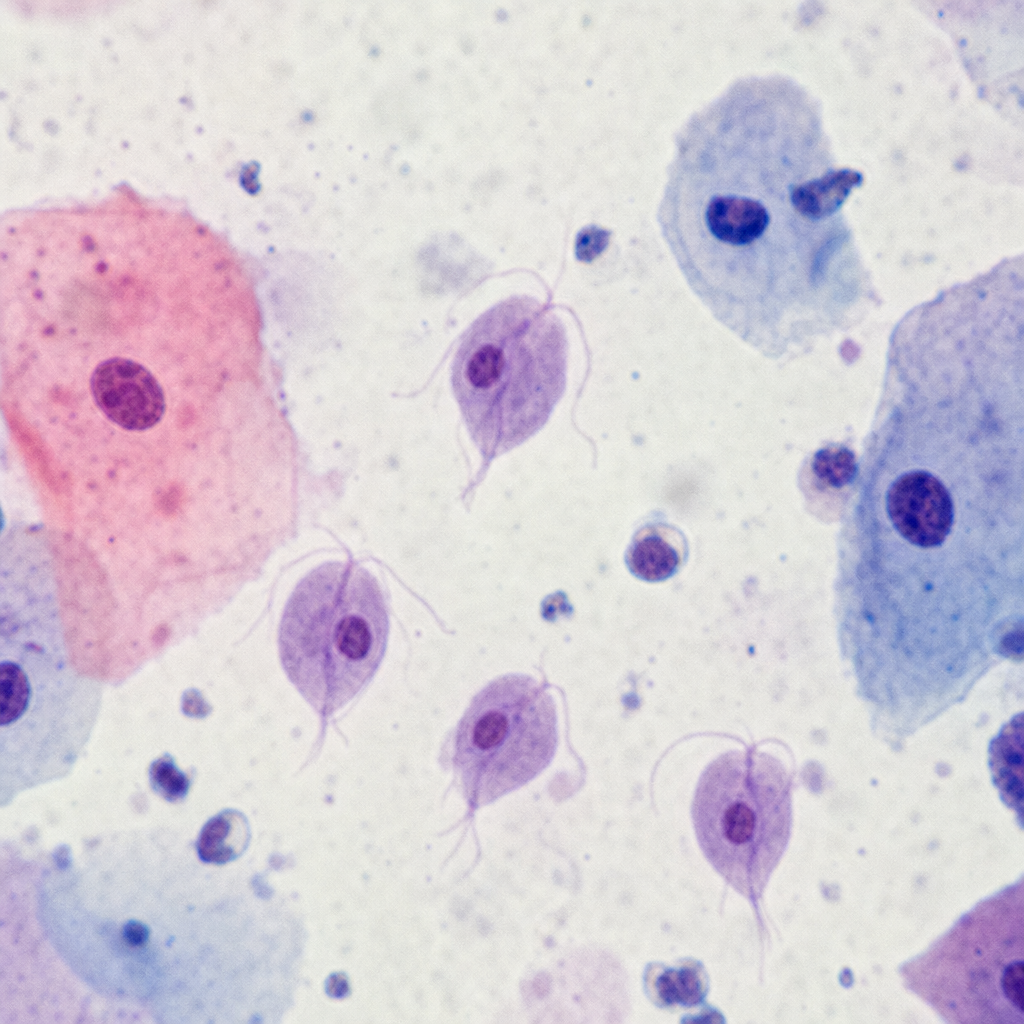
Which of the following protozoa lacks a cyst stage in its life cycle?
A housefly lands on cow dung, contaminating its appendages with bacteria from the faeces, and then lands on food prior to consumption. This is an example of which type of disease transmission?
A patient was being treated with a drug that interferes with the activity of the enzyme pyruvate ferredoxin oxidoreductase. Which of the following is the most likely organism causing infection in this patient?
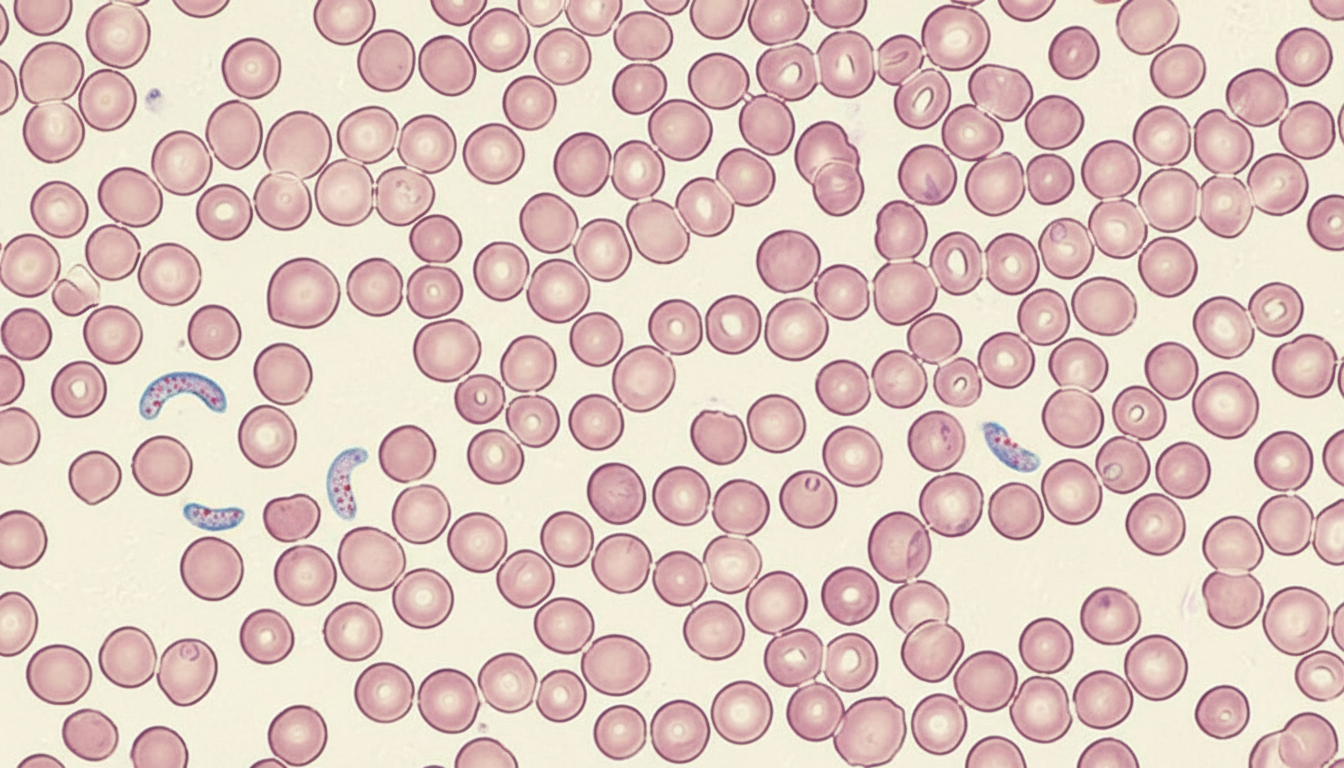
A 7-year-old child presented with high-grade fever with chills and rigor. Peripheral smear examination revealed Plasmodium vivax. The child was treated for malaria. Subsequently, the child presented with jaundice, and a repeat peripheral smear showed abnormalities. What is your diagnosis?
Which of the following is the most common portal of entry in Blastomyces dermatitidis infection?
Which of the following is not a neuroparasite?
An HIV+ patient with a CD4 count of 47 cells/mL presents with diarrhea. Acid-fast oocysts are found in the stool. What is the most likely diagnosis and its typical course?
Which type of fly is commonly used for maggot therapy in wound debridement?
What is the common name for Trichuris trichiura?
Which of the following microfilariae lacks nuclei extending to the tail tip?
Explanation: ### Explanation **Correct Answer: A. Dientamoeba fragilis** **1. Why Dientamoeba fragilis is the correct answer:** In medical parasitology, most intestinal protozoa follow a life cycle involving two stages: the **Trophozoite** (motile, feeding, pathogenic stage) and the **Cyst** (non-motile, resistant, infective stage). However, *Dientamoeba fragilis* is a notable exception. It exists **only in the trophozoite stage** and does not form cysts. Because it lacks a protective cyst wall, the trophozoite is fragile and easily destroyed by gastric acid. It is hypothesized that *D. fragilis* may be transmitted via the eggs of helminths like *Enterobius vermicularis* (Pinworm), acting as a "hitchhiker" to survive the external environment. **2. Why the other options are incorrect:** * **B. Entamoeba coli:** This is a non-pathogenic commensal of the large intestine. It has a well-defined life cycle consisting of trophozoites, precysts, and mature **octanucleate cysts** (containing 8 nuclei), which are the infective forms. * **C. Entamoeba histolytica:** This is the causative agent of amoebiasis. Its life cycle includes a trophozoite stage and a **quadrinucleate cyst** stage. The mature cyst is highly resistant and is the diagnostic and infective stage found in formed stools. **3. NEET-PG Clinical Pearls & High-Yield Facts:** * **Morphology:** Despite its name, *D. fragilis* is taxonomically classified as a **flagellate** (related to *Trichomonas*), not an amoeba, though it moves using pseudopodia. * **Nuclear Feature:** It typically contains **two nuclei** (hence "*Di*-entamoeba") with fragmented karyosomes. * **Other Protozoa lacking a cyst stage:** * *Trichomonas vaginalis* (transmitted sexually; no need for a resistant environmental stage). * *Entamoeba gingivalis* (found in the mouth). * *Pentatrichomonas hominis*. * **Treatment of choice:** Iodoquinol, Paromomycin, or Metronidazole.
Explanation: ### Explanation **Correct Answer: C. Mechanical** **1. Why Mechanical Transmission is Correct:** Mechanical transmission occurs when a pathogen is physically carried from one location to another by a vector (like a housefly or cockroach) without any biological development or multiplication of the pathogen within the vector. In this scenario, the housefly acts as a "passive carrier," transporting bacteria from cow dung to food via its legs, wings, or mouthparts. The pathogen undergoes no change in its life cycle during this transit. **2. Why Other Options are Incorrect:** These options represent **Biological Transmission**, where the pathogen must undergo a specific biological process within the vector: * **Propagative (D):** The pathogen multiplies in number but does not change its stage or form (e.g., Plague bacilli in rat fleas). * **Cyclo-developmental (A):** The pathogen undergoes developmental changes (morphological transformation) but does not multiply (e.g., Filarial worms in *Culex* mosquitoes). * **Cyclo-propagative (B):** The pathogen undergoes both developmental changes and multiplication (e.g., *Plasmodium* in *Anopheles* mosquitoes). **3. Clinical Pearls & High-Yield Facts for NEET-PG:** * **Common Mechanical Vectors:** *Musca domestica* (Housefly) and *Blattaria* (Cockroaches). * **Diseases transmitted mechanically:** Typhoid (Salmonella), Cholera, Amoebiasis, and Trachoma. * **Key Distinction:** If the vector is essential for the pathogen's life cycle, it is **Biological**. If the vector is merely a transport vehicle, it is **Mechanical**. * **Extrinsic Incubation Period:** This term applies only to biological transmission; it is the time required for the pathogen to develop/multiply within the vector before it becomes infective.
Explanation: ### Explanation **Correct Answer: C. Cryptosporidium species** The enzyme **Pyruvate Ferredoxin Oxidoreductase (PFOR)** is a critical component of the anaerobic metabolic pathway. It catalyzes the oxidative decarboxylation of pyruvate to acetyl-CoA. This enzyme is the primary target of **Nitoxanide**, which is the drug of choice for treating infections caused by *Cryptosporidium parvum* and *Giardia lamblia*. Nitoxanide acts as an antiprotozoal by inhibiting PFOR, thereby disrupting the energy metabolism of the parasite. **Analysis of Incorrect Options:** * **A. Taenia saginata (Cestode):** The drug of choice is Praziquantel, which works by increasing calcium permeability of the parasite's tegument, leading to paralysis. * **B. Trichuris trichiura (Nematode):** Treated with Benzimidazoles (e.g., Albendazole/Mebendazole), which inhibit microtubule synthesis by binding to beta-tubulin. * **D. Trypanosoma species (Hemoflagellate):** Treatment depends on the species and stage (e.g., Nifurtimox, Benznidazole, or Suramin). These drugs do not primarily target the PFOR enzyme. **NEET-PG Clinical Pearls:** * **Nitoxanide** is a broad-spectrum antiparasitic used for *Cryptosporidium* in both immunocompetent and pediatric patients. * **PFOR** is also the target for **Metronidazole**; however, Metronidazole requires PFOR to reduce its nitro group into a toxic free radical. In contrast, Nitoxanide directly inhibits the enzyme's activity. * *Cryptosporidium* is a major cause of chronic, life-threatening diarrhea in **HIV/AIDS patients** (CD4 count <200 cells/mm³). * Diagnosis of *Cryptosporidium* is typically made using **Modified Acid-Fast staining** (showing red-pink oocysts).
Explanation: ### Explanation **Correct Option: D (Glucose-6-Phosphate Dehydrogenase Deficiency)** The clinical presentation describes a classic case of **drug-induced oxidative hemolysis**. *Plasmodium vivax* malaria requires treatment with **Primaquine** to eliminate the hypnozoite stage (preventing relapse). However, Primaquine is a potent oxidizing agent. In patients with G6PD deficiency, the red blood cells cannot generate sufficient NADPH to maintain reduced glutathione levels. This leads to oxidative damage, hemoglobin denaturation (forming **Heinz bodies**), and subsequent intravascular hemolysis, which manifests clinically as **jaundice** and dark urine shortly after starting treatment. **Why Incorrect Options are Wrong:** * **A. Viral Hepatitis:** While it causes jaundice, it does not typically follow malaria treatment or show specific "abnormalities" on a peripheral smear related to acute hemolysis. * **B. Sickle Cell Anemia:** This is a chronic hemolytic condition. While malaria can trigger a crisis, the temporal relationship with *P. vivax* treatment specifically points toward G6PD deficiency. * **C. Hemolytic Uremic Syndrome (HUS):** HUS typically presents with a triad of microangiopathic hemolytic anemia, thrombocytopenia, and acute renal failure, usually following a diarrheal prodrome (e.g., Shiga toxin-producing *E. coli*), not standard malaria therapy. **NEET-PG High-Yield Pearls:** * **Screening Rule:** Always screen for G6PD levels before prescribing **Primaquine** or **Tafenoquine**. * **Peripheral Smear Findings:** Look for **Heinz bodies** (supravital stain) and **"Bite cells"** (degmacytes) resulting from splenic macrophages removing denatured hemoglobin. * **Inheritance:** G6PD deficiency is an **X-linked recessive** disorder, making it more common in males. * **Protective Effect:** G6PD deficiency provides a selective advantage against *Plasmodium falciparum* malaria.
Explanation: **Explanation:** *Blastomyces dermatitidis* is a **dimorphic fungus** endemic to the soil of the Ohio and Mississippi River Valleys. The primary mode of transmission is the **inhalation of conidia** (spores) from disturbed soil or decomposing organic matter. **1. Why Respiratory Tract is Correct:** The respiratory tract is the **most common portal of entry**. Once inhaled, the conidia settle in the pulmonary alveoli. At body temperature (37°C), they undergo a morphological shift into the yeast phase. This yeast phase is characterized by its thick walls and **broad-based budding**, which allows it to evade phagocytosis and cause primary pulmonary blastomycosis. **2. Why Other Options are Incorrect:** * **Skin:** While "dermatitidis" suggests skin involvement, primary cutaneous blastomycosis (via direct inoculation) is extremely rare. Skin lesions are usually the result of **hematogenous dissemination** from a primary pulmonary focus. * **Lymphatic System:** The lymphatic system is a route for spread, not a portal of entry. Unlike *Histoplasma*, *Blastomyces* does not typically cause prominent lymphadenopathy. * **Genitourinary Tract:** This is a common site for systemic dissemination (especially the prostate and testes), but it is never the initial portal of entry. **Clinical Pearls for NEET-PG:** * **Microscopy:** Look for "Broad-Based Budding Yeast" (B for Blastomyces, B for Broad-based). * **Clinical Presentation:** Can mimic tuberculosis or bacterial pneumonia; skin lesions often appear as verrucous (wart-like) or ulcerated plaques. * **Drug of Choice:** Itraconazole (mild-to-moderate); Amphotericin B (severe/systemic). * **Dimorphism:** "Mold in the Cold (25°C), Yeast in the Heat (37°C)."
Explanation: **Explanation:** The term **neuroparasite** refers to parasites that have a predilection for the Central Nervous System (CNS), causing significant neurological pathology. **Why Trichinella spiralis is the correct answer:** *Trichinella spiralis* is a nematode primarily known for causing **Trichinellosis**. While the larvae migrate through various tissues, they specifically encyst in **striated skeletal muscle** (e.g., extraocular muscles, diaphragm, biceps). Although severe cases can involve the CNS (causing encephalitis), it is fundamentally classified as a **tissue/muscle parasite**, not a neuroparasite. **Analysis of Incorrect Options:** * **Taenia solium:** The larval stage (*Cysticercus cellulosae*) frequently invades the brain, causing **Neurocysticercosis (NCC)**. This is the most common cause of adult-onset seizures in developing countries. * **Naegleria fowleri:** Known as the "brain-eating amoeba," it enters via the olfactory mucosa to cause **Primary Amoebic Meningoencephalitis (PAM)**, which is rapidly fatal. * **Acanthamoeba:** This free-living amoeba causes **Granulomatous Amoebic Encephalitis (GAE)**, typically in immunocompromised individuals, along with amoebic keratitis. **High-Yield Clinical Pearls for NEET-PG:** * **Most common neuroparasite worldwide:** *Taenia solium* (NCC). * **Drug of choice for NCC:** Albendazole (Praziquantel is an alternative). * **Naegleria fowleri habitat:** Warm freshwater; infection occurs during swimming/diving. * **Trichinella diagnosis:** Muscle biopsy showing "coiled larvae" and elevated Serum Creatine Kinase (due to myositis). * **Other Neuroparasites to remember:** *Toxoplasma gondii* (ring-enhancing lesions in HIV), *Echinococcus granulosus* (hydatid cyst in brain), and *Plasmodium falciparum* (Cerebral Malaria).
Explanation: **Explanation:** The clinical presentation of chronic diarrhea in an HIV+ patient with a severely low CD4 count (<100 cells/mL) and the presence of **acid-fast oocysts** in the stool is classic for **Cryptosporidiosis** (caused by *Cryptosporidium hominis/parvum*). **1. Why Option D is Correct:** In immunocompetent individuals, Cryptosporidiosis causes a self-limiting, watery diarrhea. However, in immunocompromised patients (especially those with CD4 <100 cells/mL), the infection becomes **chronic, profuse, and unrelenting**. While Nitazoxanide is the drug of choice, it is often ineffective without immune reconstitution (HAART). The parasite undergoes both asexual and sexual cycles within the same host, leading to internal autoinfection that perpetuates the disease. **2. Why Other Options are Incorrect:** * **Option A:** While self-limiting in healthy hosts, it is life-threatening and persistent in HIV patients; "no treatment" is incorrect for this clinical scenario. * **Option B:** While *Cystoisospora belli* is also acid-fast, its oocysts are larger and **ellipsoidal** (unlike the small, spherical oocysts of *Cryptosporidium*). Furthermore, Cystoisosporiasis typically responds well to Trimethoprim-Sulfamethoxazole (TMP-SMX), unlike the refractory nature of Cryptosporidiosis. * **Option C:** *Toxoplasma gondii* does not typically cause diarrhea or produce oocysts in human stool (humans are intermediate hosts); it usually presents as CNS mass lesions in HIV. Antituberculous drugs are not used for Toxoplasmosis. **High-Yield Clinical Pearls for NEET-PG:** * **Stain:** Modified Ziehl-Neelsen (Acid-fast) stain is the gold standard. * **Size:** *Cryptosporidium* (4–6 µm, spherical), *Cyclospora* (8–10 µm, spherical), *Cystoisospora* (25–30 µm, oval). * **Transmission:** Fecal-oral; notably resistant to chlorination in swimming pools. * **Management:** The most definitive treatment in HIV patients is starting **HAART** to increase the CD4 count.
Explanation: **Explanation:** **Maggot Debridement Therapy (MDT)**, also known as larval therapy, involves the intentional application of live, disinfected fly larvae to non-healing skin and soft tissue wounds. **Why the Green Bottle Fly is correct:** The **Green bottle fly (*Lucilia sericata*)** is the primary species used globally for MDT. The medical significance lies in its **necrophagous** nature—the larvae selectively consume only necrotic (dead) tissue while sparing healthy granulation tissue. They achieve debridement through the secretion of proteolytic enzymes (collagenase, trypsin-like proteases) that liquefy necrotic tissue, which they then ingest. Additionally, their secretions have antimicrobial properties (e.g., allantoin, urea, and ammonia) that raise the wound pH and inhibit bacterial growth, including MRSA. **Analysis of Incorrect Options:** * **Black fly (*Simulium*):** These are vectors for *Onchocerca volvulus* (River blindness). They are blood-suckers, not scavengers used for debridement. * **House fly (*Musca domestica*):** While they can cause accidental myiasis, they are primarily mechanical vectors for enteric pathogens (cholera, typhoid) and are not used therapeutically. * **Blue bottle fly (*Calliphora vomitoria*):** Although they are scavengers, they are less selective than *Lucilia sericata* and are not the standard species approved for medical use. **High-Yield Clinical Pearls for NEET-PG:** * **Mechanism of MDT:** 1. Debridement (enzymatic), 2. Disinfection (antimicrobial secretions), 3. Stimulation of healing (granulation). * **Myiasis Classification:** MDT is a form of **"Induced Myiasis."** * **Key Species:** *Lucilia sericata* (Green bottle fly) is the most common; *Phormia regina* (Black blowfly) is occasionally used. * **Contraindications:** Wounds communicating with body cavities or major blood vessels.
Explanation: **Explanation:** **Trichuris trichiura**, a soil-transmitted helminth, is commonly known as the **Whipworm**. This name is derived from its characteristic morphology: the anterior three-fifths of the worm is thin and hair-like (resembling the lash of a whip), while the posterior two-fifths is thick and stout (resembling the whip handle). The thin anterior end tunnels into the mucosal epithelium of the large intestine, primarily the cecum. **Analysis of Incorrect Options:** * **A. Roundworm:** This refers to *Ascaris lumbricoides*, the largest nematode infecting the human intestine. * **C. Tapeworm:** This is a general term for Cestodes (e.g., *Taenia solium*, *Taenia saginata*), which are flat, segmented hermaphroditic worms. * **D. Seat worm:** Also known as Pinworm or Threadworm, this refers to *Enterobius vermicularis*, known for causing perianal pruritus. **High-Yield Clinical Pearls for NEET-PG:** * **Morphology:** The eggs are characteristic—**barrel-shaped** (lemon-shaped) with **bipolar mucus plugs**. They are bile-stained (brown). * **Clinical Presentation:** While often asymptomatic, heavy infections in children can lead to **Rectal Prolapse** due to increased peristalsis and mucosal edema. * **Blood Picture:** Unlike many other helminthic infections, *Trichuris* typically causes **Iron Deficiency Anemia** (due to mucosal oozing) but may show only mild or no peripheral eosinophilia. * **Treatment:** The drug of choice is **Albendazole** or Mebendazole.
Explanation: ### Explanation The identification of microfilariae in peripheral blood smears is a high-yield topic for NEET-PG, primarily based on two morphological features: the presence of an **enveloping sheath** and the **distribution of nuclei in the tail**. **1. Why Wuchereria bancrofti is correct:** *Wuchereria bancrofti* is a sheathed microfilaria. Its most distinguishing feature under the microscope is that its **nuclei do not extend to the tip of the tail**. The terminal portion of the tail is empty (column of nuclei ends abruptly before the tip), which helps differentiate it from other filarial worms. **2. Analysis of Incorrect Options:** * **Loa loa (African Eye Worm):** It is sheathed, but unlike *W. bancrofti*, its **nuclei extend in a continuous row to the very tip** of the tail. * **Mansonella perstans:** This is an unsheathed microfilaria. Its **nuclei extend to the tip** of the tail, which is blunt. * **Brugia malayi:** It is sheathed but characterized by having **two distinct, terminal nuclei** that are separated from the main column of nuclei (sub-terminal and terminal nuclei). **3. High-Yield Clinical Pearls for NEET-PG:** * **Sheathed Microfilariae:** *W. bancrofti, B. malayi, Loa loa.* * **Unsheathed Microfilariae:** *Mansonella* species, *Onchocerca volvulus.* * **No Nuclei at Tail Tip:** Only *Wuchereria bancrofti*. * **Nocturnal Periodicity:** *W. bancrofti* and *B. malayi* (sampled between 10 PM – 2 AM). * **Diurnal Periodicity:** *Loa loa* (sampled during the day). * **Drug of Choice:** Diethylcarbamazine (DEC) is the standard treatment for most, except *Onchocerca* (where Ivermectin is preferred).
Classification of Parasites
Practice Questions
Intestinal Protozoa
Practice Questions
Blood and Tissue Protozoa
Practice Questions
Malaria Parasites
Practice Questions
Leishmaniasis
Practice Questions
Intestinal Helminths: Nematodes
Practice Questions
Tissue Nematodes
Practice Questions
Trematodes
Practice Questions
Cestodes
Practice Questions
Ectoparasites
Practice Questions
Antiparasitic Drugs
Practice Questions
Laboratory Diagnosis of Parasitic Infections
Practice Questions
Get full access to all questions, explanations, and performance tracking.
Start For Free