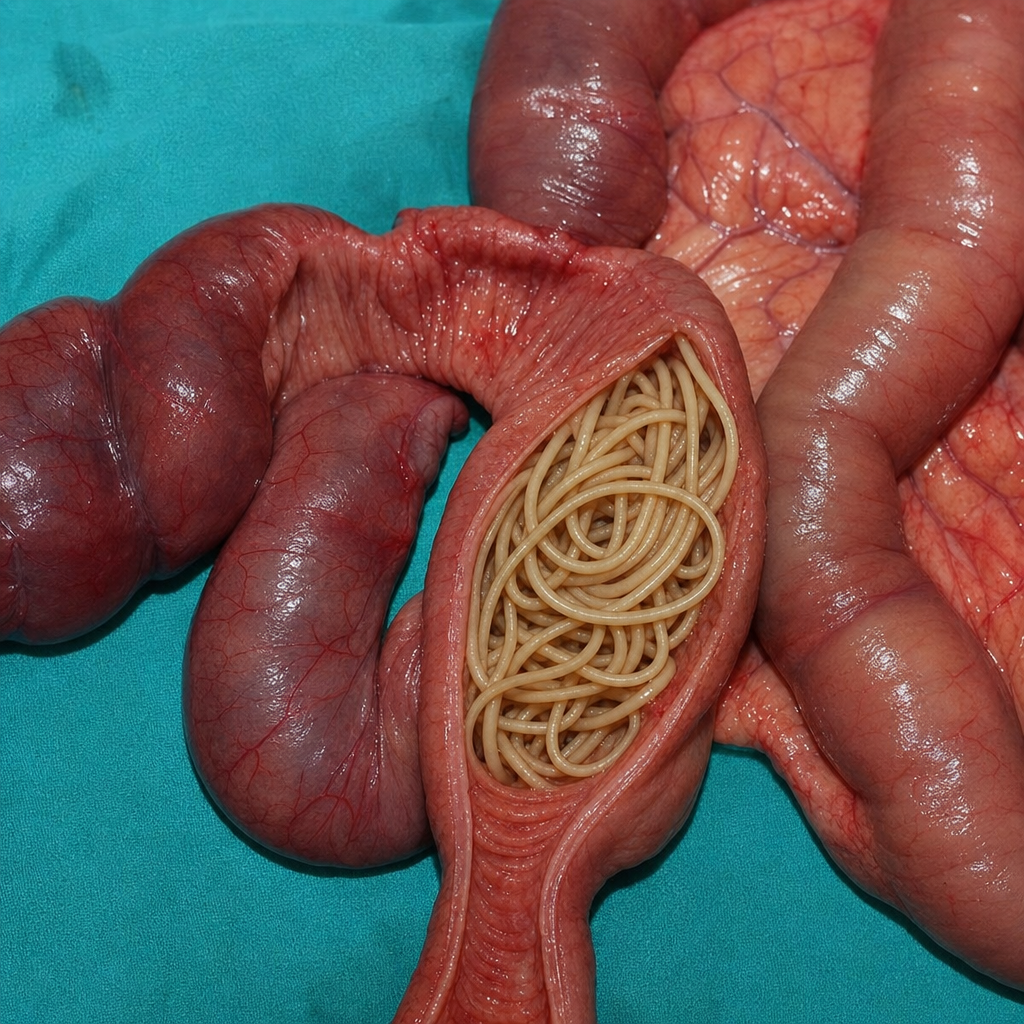
Iron deficiency anemia is commonly caused by:
Napier's Aldehyde test is done for which of the following?
Which parasite is a cause of pancreatic cancer?
What is the infective form of Toxoplasma gondii?
A 40-year-old male from Bihar complains of pain abdomen and has hepatosplenomegaly. A peripheral smear stain shows findings suggestive of which of the following parasitic infections?

LD bodies are typically found in which stage of the Leishmania parasite lifecycle?
Which disease is transmitted by the black fly?
Which parasite is known as the rat lung worm?
Which of the following helminth eggs are typically non-bile stained?
Amastigote forms are seen in which of the following organisms?
Explanation: **Explanation:** **Ancylostoma duodenale** (Hookworm) is the classic cause of **Microcytic Hypochromic Iron Deficiency Anemia (IDA)**. The pathogenesis involves the adult worms attaching to the small intestinal mucosa using their buccal capsules (teeth). They secrete anticoagulants (e.g., factor Xa inhibitors) and suck blood from the host. A single *A. duodenale* can cause a loss of approximately **0.15–0.2 ml of blood per day**. Chronic infection leads to the depletion of iron stores, especially in individuals with poor dietary intake. **Analysis of Incorrect Options:** * **Enterobius vermicularis (Pinworm):** Primarily causes perianal pruritus (itching) at night. It does not invade the mucosa or suck blood; therefore, it is not associated with anemia. * **Taenia solium (Pork Tapeworm):** While it competes for nutrients in the intestine, it typically causes vague abdominal symptoms or cysticercosis (in the larval stage). It is not a significant cause of blood loss or iron deficiency. **High-Yield Clinical Pearls for NEET-PG:** * **Blood Loss Comparison:** *Ancylostoma duodenale* (0.15–0.2 ml/day) causes significantly more blood loss than *Necator americanus* (0.03 ml/day). * **Other Parasites & Anemia:** * **Diphyllobothrium latum:** Causes Vitamin B12 deficiency (Megaloblastic anemia). * **Trichuris trichiura (Whipworm):** Can cause IDA and rectal prolapse in children due to heavy mucosal infestation. * **Malaria (Plasmodium):** Causes Hemolytic anemia. * **Ground Itch:** The characteristic dermatitis at the site of filariform larva entry. * **Loeffler’s Syndrome:** Transient pulmonary eosinophilia occurring during the larval migratory phase in the lungs.
Explanation: **Explanation:** **Napier’s Aldehyde Test** (also known as the Formol-gel test) is a non-specific biochemical test used for the presumptive diagnosis of **Kala-azar (Visceral Leishmaniasis)**. **Why Kala-azar is correct:** The underlying principle of this test is the detection of **hypergammaglobulinemia**. In chronic Kala-azar, there is a massive, polyclonal increase in serum IgG levels. When 1–2 drops of 40% formalin are added to 1 mL of the patient's serum, the excess globulins undergo denaturation. A **positive result** is indicated by the serum turning opaque and solidifying (resembling the white of a boiled egg) within 2–20 minutes. Note that it usually becomes positive only after the disease has persisted for more than 3 months. **Why other options are incorrect:** * **Malaria:** Diagnosis is primarily made via peripheral blood smears (thick and thin) or Rapid Diagnostic Tests (RDTs) detecting PfHRP2 or LDH antigens. * **Acanthamoeba:** Diagnosis involves microscopic examination of corneal scrapings or CSF, and culture on non-nutrient agar seeded with *E. coli*. * **Entamoeba:** Diagnosis of intestinal amoebiasis relies on stool microscopy for cysts/trophozoites or stool antigen detection (EIA). **High-Yield Clinical Pearls for NEET-PG:** * **Chopra’s Antimony Test:** Another non-specific serum test for Kala-azar (uses urea stibamine). * **Specific Test of Choice:** The **rk39 immunochromatographic test** is the rapid gold standard for field diagnosis. * **Definitive Diagnosis:** Demonstration of **LD bodies** (Amastigotes) in bone marrow or splenic aspirates. * **Culture:** Uses **NNN (Novy-MacNeal-Nicolle) medium**, where the Promastigote form is seen.
Explanation: **Explanation:** The correct answer is **Clonorchis sinensis**. This parasite, commonly known as the **Chinese Liver Fluke**, is a significant risk factor for hepatobiliary malignancies. **1. Why Clonorchis sinensis is correct:** *Clonorchis sinensis* (and its close relative *Opisthorchis viverrini*) inhabits the distal bile ducts. Chronic infection leads to mechanical irritation, localized inflammation, and epithelial hyperplasia. This chronic inflammatory state induces DNA damage and cellular proliferation, which can progress to **Cholangiocarcinoma** (bile duct cancer). While primarily associated with the bile ducts, these parasites can also migrate into the **pancreatic ducts**, leading to chronic pancreatitis and an increased risk of **pancreatic adenocarcinoma**. The IARC (International Agency for Research on Cancer) classifies *C. sinensis* as a Group 1 carcinogen. **2. Why other options are incorrect:** * **Fasciola hepatica:** Known as the Sheep Liver Fluke, it resides in the larger bile ducts. While it causes "Halzoun syndrome" and biliary obstruction, it is **not** strongly linked to malignancy. * **Paragonimus westermani:** Known as the Oriental Lung Fluke, it primarily causes pulmonary infections mimicking tuberculosis (hemoptysis and cavitary lesions). It does not involve the biliary or pancreatic systems. **3. NEET-PG High-Yield Pearls:** * **Infective stage:** Metacercaria (found in undercooked freshwater fish). * **Intermediate hosts:** 1st – Snail (*Parafossarulus*); 2nd – Freshwater fish. * **Drug of Choice:** Praziquantel. * **Diagnostic feature:** Eggs are "flask-shaped" with a distinct operculum and an abopercular knob. * **Other Parasite-Cancer Link:** *Schistosoma haematobium* is classically associated with **Squamous Cell Carcinoma of the urinary bladder**.
Explanation: **Explanation:** *Toxoplasma gondii* is a unique obligate intracellular protozoan because it possesses **multiple infective stages**, making it highly versatile in its transmission. **Why "All of the above" is the most accurate clinical concept, but "Oocyst" is often the primary focus:** In the context of the life cycle, humans can be infected by all three forms: 1. **Oocysts (Option A):** These are the product of sexual reproduction in the definitive host (cats). Humans get infected by ingesting sporulated oocysts from soil, water, or cat litter. 2. **Bradyzoites (Option B):** These are slow-growing forms found in tissue cysts. Infection occurs by consuming undercooked meat (e.g., pork or lamb) containing these cysts. 3. **Tachyzoites (Option C):** These are the rapidly multiplying forms. They are the infective stage in **vertical transmission** (transplacental) and can also be transmitted via blood transfusion or organ transplantation. **Why "Oocyst" is frequently marked as the key answer:** In many traditional competitive exams, the **Oocyst** is emphasized as the "classic" infective form originating from the definitive host environment. However, modern parasitology recognizes that **all three stages** are technically infective to humans depending on the mode of transmission. **High-Yield Clinical Pearls for NEET-PG:** * **Definitive Host:** Domestic cat (and other felids). * **Intermediate Host:** Humans, birds, and rodents. * **Congenital Toxoplasmosis Triad:** Chorioretinitis, Hydrocephalus, and Intracranial calcifications. * **Diagnosis:** Sabin-Feldman Dye Test (Gold Standard) and detection of IgM/IgG antibodies. * **Treatment:** Pyrimethamine and Sulfadiazine (Spiramycin is used in pregnancy to prevent transmission).
Explanation: ***Leishmania*** - **Bihar** is highly endemic for **visceral leishmaniasis (Kala-azar)**, and the classic triad of abdominal pain, **hepatosplenomegaly**, and fever strongly suggests this diagnosis. - Peripheral smear shows **LD bodies (amastigotes)** within **monocytes/macrophages**, which are pathognomonic for leishmaniasis. *Plasmodium vivax* - Shows **intra-erythrocytic trophozoites** and **gametocytes** on peripheral smear, not intracellular amastigotes in white blood cells. - Typically presents with **cyclical fever** and **rigors**, without the characteristic hepatosplenomegaly pattern seen in kala-azar. *Microfilaria* - Appears as **extracellular sheathed larvae** circulating freely in blood, not as intracellular parasites. - Clinical presentation includes **lymphatic obstruction**, **elephantiasis**, and **nocturnal periodicity**, not hepatosplenomegaly. *Cryptosporidium parvum* - Primarily causes **intestinal infections** with **watery diarrhea** and is diagnosed through **stool examination**, not peripheral blood smear. - Does **not appear** on peripheral blood smears and does not cause hepatosplenomegaly.
Explanation: **Explanation:** **LD bodies (Leishman-Donovan bodies)** are the diagnostic hallmark of Visceral Leishmaniasis (Kala-azar). They represent the **Amastigote stage** of the *Leishmania* parasite. 1. **Why Option A is correct:** In the human host (vertebrate), the parasite resides within the phagolysosomes of macrophages. Here, it exists in the **amastigote form**—a small, oval, non-flagellated body (2–4 µm). When these are visualized in tissue smears (like splenic or bone marrow aspirates) using Giemsa or Leishman stain, they are referred to as LD bodies. They are characterized by a large nucleus and a rod-shaped kinetoplast. 2. **Why other options are incorrect:** * **Option B:** The **Promastigote form** is the extracellular, motile, flagellated stage found in the midgut of the **Sandfly vector** (*Phlebotomus* spp.) and in artificial culture media (e.g., NNN medium). It is the infective stage for humans but is not referred to as an LD body. * **Options C & D:** These are incorrect because the term "LD body" specifically and exclusively describes the intracellular amastigote stage found in mammalian tissues. **High-Yield Clinical Pearls for NEET-PG:** * **Infective Form:** Promastigote (injected by sandfly bite). * **Diagnostic Form:** Amastigote (LD bodies in macrophages). * **Gold Standard Diagnosis:** Splenic aspirate (highest sensitivity) showing LD bodies. * **Culture Medium:** NNN (Novy-MacNeal-Nicolle) medium, where the parasite converts back to the promastigote form. * **Vector:** *Phlebotomus argentipes* (in the Indian subcontinent).
Explanation: ### Explanation The correct answer is **Onchocerciasis** (Option B). **1. Why Onchocerciasis is correct:** Onchocerciasis, also known as **River Blindness**, is caused by the nematode *Onchocerca volvulus*. It is transmitted through the bite of an infected female **Black fly** (genus ***Simulium***). These flies breed in fast-flowing rivers and streams, which explains the geographical distribution of the disease. The larvae (microfilariae) migrate to the skin and eyes, leading to severe dermatitis and irreversible blindness. **2. Analysis of Incorrect Options:** * **A. Filaria (Lymphatic Filariasis):** Primarily caused by *Wuchereria bancrofti* and *Brugia malayi*. These are transmitted by **Mosquitoes** (*Culex*, *Anopheles*, or *Aedes*), not black flies. * **C. Chagas Disease:** Caused by the protozoan *Trypanosoma cruzi*. It is transmitted by the **Reduviid bug** (also known as the Triatomine or "Kissing" bug) via infected feces. * **D. Oroya Fever:** This is the acute phase of Carrion’s disease, caused by *Bartonella bacilliformis*. It is transmitted by the **Sandfly** (genus *Lutzomyia*). **3. High-Yield Clinical Pearls for NEET-PG:** * **Vector Mnemonic:** Remember **"S"** for **S**imulium, **S**treams (breeding site), and **S**kin/Sight (clinical features). * **Diagnosis:** The gold standard is the **Skin Snip Test** to identify microfilariae. * **Treatment:** **Ivermectin** is the drug of choice (Mnemonic: *Iver*mectin for *River* blindness). It kills microfilariae but not adult worms. * **Mazzotti Reaction:** A severe systemic reaction (fever, rash, hypotension) that can occur after treating onchocerciasis with diethylcarbamazine (DEC) due to the rapid death of microfilariae.
Explanation: ### Explanation **Correct Answer: D. Angiostrongylus cantonensis** *Angiostrongylus cantonensis* is known as the **rat lungworm**. Its definitive hosts are rats, where the adult worms reside in the pulmonary arteries. Humans are accidental hosts, typically infected by consuming raw or undercooked intermediate hosts (snails/slugs) or transport hosts (prawns/crabs) carrying third-stage larvae. In humans, the larvae migrate to the brain but cannot complete their life cycle, leading to **Eosinophilic Meningitis**, a classic high-yield association for NEET-PG. **Analysis of Incorrect Options:** * **A. Gnathostoma spinigerum:** Known as the **pig/cat stomach worm**. It causes Larva Migrans (cutaneous and visceral) and is associated with eating undercooked freshwater fish or frogs. * **B. Anisakis simplex:** Known as the **herring worm** or whale worm. It is acquired by eating raw saltwater fish (sushi/sashimi) and causes acute gastrointestinal symptoms. * **C. Toxocara catis:** Along with *T. canis*, these are the **cat and dog roundworms**. They are the primary causes of **Visceral Larva Migrans (VLM)** and Ocular Larva Migrans in humans. **High-Yield Clinical Pearls for NEET-PG:** * **Most common cause of Eosinophilic Meningitis:** *Angiostrongylus cantonensis*. * **Diagnosis:** Characterized by CSF pleocytosis with >10% eosinophils and elevated protein. * **Intermediate Host:** *Achatina fulica* (Giant African land snail). * **Treatment:** Primarily supportive (corticosteroids); the role of anthelmintics like Albendazole is controversial as killing larvae may worsen inflammation.
Explanation: In parasitology, the distinction between **bile-stained** and **non-bile stained** eggs is a high-yield classification for identifying helminths under microscopy. ### 1. Why Ancylostoma duodenale is Correct **Ancylostoma duodenale** (Hookworm) eggs are **non-bile stained**. These eggs are characterized by a thin, transparent hyaline shell membrane. Because they do not absorb bile pigments during their passage through the intestine, they appear colorless or pearly white under the microscope. Other common non-bile stained eggs include *Enterobius vermicularis* (Pinworm) and *Necator americanus*. ### 2. Why the Other Options are Incorrect * **Trichuris trichiura (Whipworm):** These eggs are classic examples of **bile-stained** eggs. They are yellowish-brown, barrel-shaped, and possess characteristic polar plugs. * **Ascaris lumbricoides (Roundworm):** Both fertilized and unfertilized eggs of *Ascaris* are **bile-stained**, giving them a distinct golden-brown color. (Note: Decorticated eggs may appear clear, but the species is fundamentally classified as bile-stained). * **Option D:** Incorrect because only *Ancylostoma* fits the non-bile stained criteria in this list. ### 3. Clinical Pearls for NEET-PG * **Mnemonic for Non-Bile Stained Eggs:** "**NH**E" (**N**ecator americanus, **H**ookworm/Ancylostoma, **E**nterobius vermicularis). *Note: Hymenolepis nana is also non-bile stained.* * **Mnemonic for Bile Stained Eggs:** "**ABC**T" (**A**scaris, **B**ile-stained, **C**lonorchis, **T**richuris/Taenia). * **Hookworm Key Feature:** The egg is typically seen in the "segmented" stage (usually 4–8 blastomeres) with a clear space between the shell and the internal yolk mass.
Explanation: **Explanation:** The correct answer is **Leishmania donovani**. **1. Why Leishmania donovani is correct:** The genus *Leishmania* is characterized by a dimorphic life cycle consisting of two stages: the **Amastigote** and the **Promastigote**. * **Amastigote (LD Body):** This is the non-flagellated, intracellular form found in the reticuloendothelial cells (macrophages, liver, spleen) of the mammalian host (humans). It is oval, contains a nucleus and a kinetoplast, and is the diagnostic stage identified in bone marrow or splenic aspirates. * **Promastigote:** This is the flagellated, extracellular form found in the midgut of the vector (Sandfly) and in artificial culture media (NNN medium). **2. Analysis of Incorrect Options:** * **Toxoplasma gondii:** This is an apicomplexan parasite. Its life cycle stages include tachyzoites, bradyzoites (in tissue cysts), and oocysts. It does not possess an amastigote stage. * **Leishmania major:** While *L. major* also has an amastigote stage (causing cutaneous leishmaniasis), in the context of standard medical examinations, *L. donovani* is the classic prototype for "LD bodies" (Leishman-Donovan bodies) and Visceral Leishmaniasis. However, if this were a "multiple correct" type question, both A and C would technically be correct. In a single-choice format, *L. donovani* is the preferred clinical answer. * **Entamoeba histolytica:** This is an amoeba that exists in two forms: the **Trophozoite** (motile, invasive form) and the **Cyst** (infective form). It lacks flagellated or amastigote stages. **3. NEET-PG High-Yield Pearls:** * **Vector:** *Phlebotomus argentipes* (Sandfly). * **Diagnostic Stage:** Amastigote (LD bodies) in macrophages. * **Culture:** NNN (Novy-MacNeal-Nicolle) medium shows Promastigotes. * **Clinical Triad:** Irregular fever, hepatosplenomegaly (massive splenomegaly), and pancytopenia. * **Drug of Choice:** Liposomal Amphotericin B.
Classification of Parasites
Practice Questions
Intestinal Protozoa
Practice Questions
Blood and Tissue Protozoa
Practice Questions
Malaria Parasites
Practice Questions
Leishmaniasis
Practice Questions
Intestinal Helminths: Nematodes
Practice Questions
Tissue Nematodes
Practice Questions
Trematodes
Practice Questions
Cestodes
Practice Questions
Ectoparasites
Practice Questions
Antiparasitic Drugs
Practice Questions
Laboratory Diagnosis of Parasitic Infections
Practice Questions
Get full access to all questions, explanations, and performance tracking.
Start For Free