What does 'Cyclo propagative' mean?
A butcher, who is fond of eating raw hamburger, develops chorioretinitis. A Sabin-Feldman dye test is positive. This patient is most likely infected with which organism?
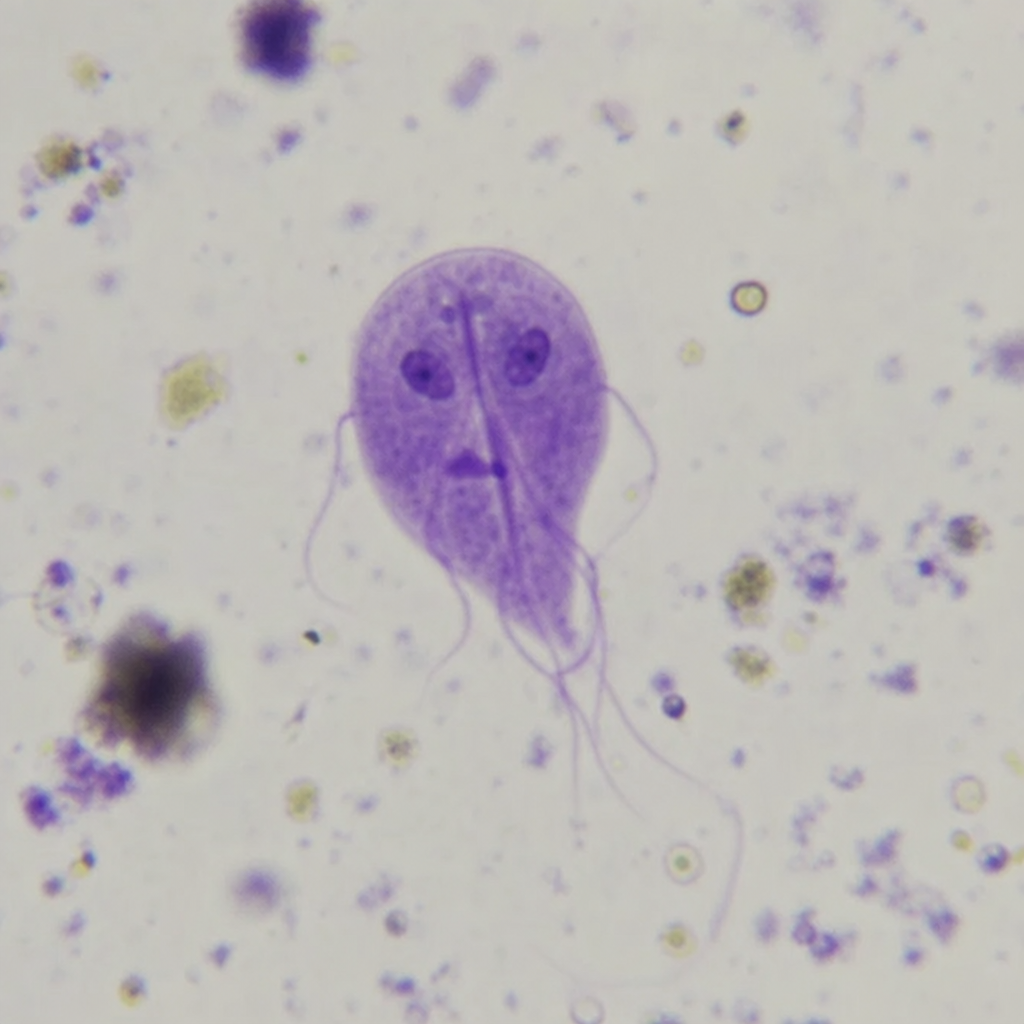
Which protozoan causes dysenteric symptoms?
What is the infective stage of hookworm?
Scrub typhus is transmitted by:
Which of the following is true regarding Wucheria bancrofti?
Man is the intermediate host for which of the following infections?
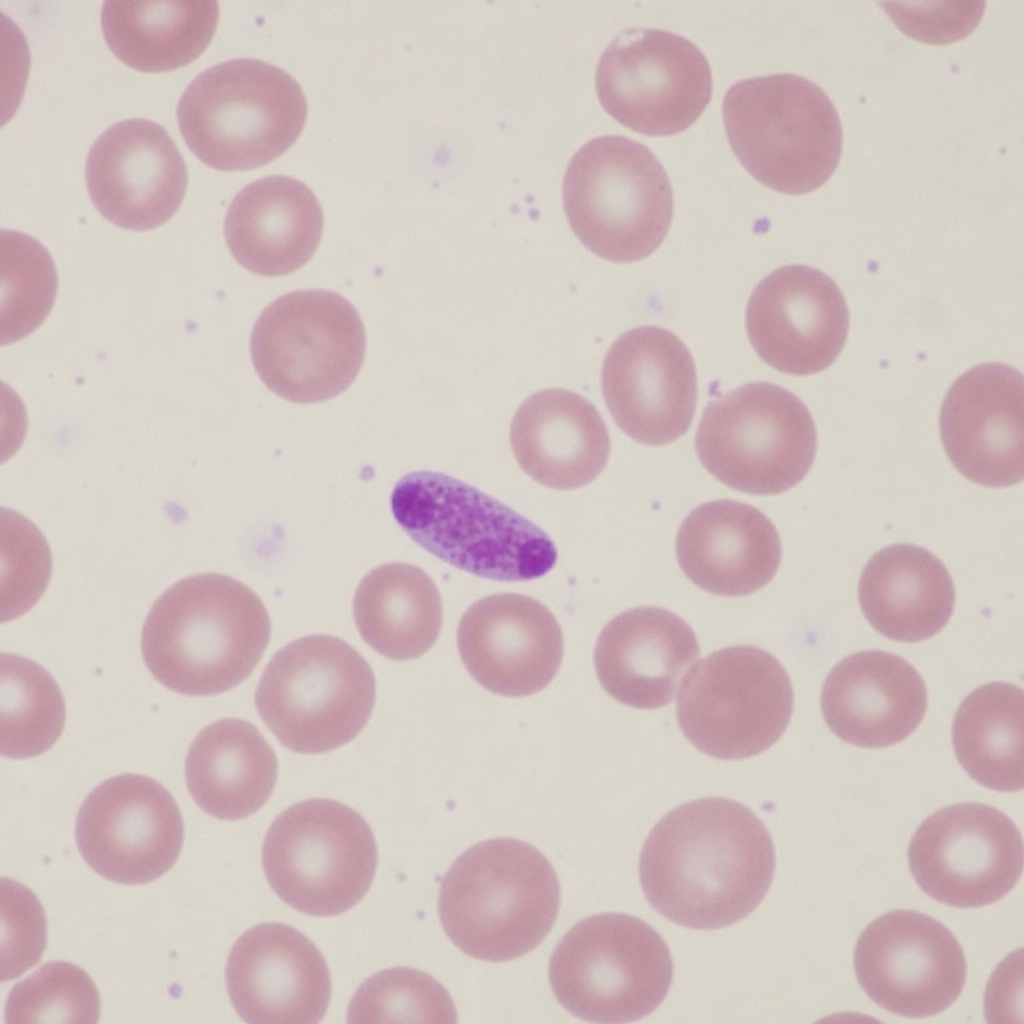
In a case of Plasmodium falciparum malaria, if the peripheral blood smear does not demonstrate trophozoites and schizonts, what is the most likely reason?
Regarding cutaneous amoebiasis, which statement is not true?
The Sabin Feldman dye test is used for the diagnosis of which of the following conditions?
Explanation: In medical parasitology and entomology, the relationship between a parasite and its vector is classified based on what happens to the parasite inside the vector's body. ### 1. Why Option D is Correct: **Cyclo-propagative transmission** occurs when the parasite undergoes both **multiplication** (increase in number) and **development** (change in stage/morphology) within the vector. * **Medical Concept:** The parasite uses the vector not just as a transport vehicle, but as a biological host where it must mature to an infective stage while simultaneously increasing its population to ensure successful transmission to the next host. * **Classic Example:** *Plasmodium* species (Malaria) in the Anopheles mosquito. The parasite undergoes sporogony, changing from a gametocyte to a sporozoite (development) while multiplying into thousands of sporozoites (multiplication). ### 2. Why Other Options are Incorrect: * **Option A (Only development):** This is termed **Cyclo-developmental**. The parasite matures from one stage to another but does not multiply. *Example: Wuchereria bancrofti (Filaria) in mosquitoes.* * **Option B (Only multiplication):** This is termed **Propagative**. The parasite simply multiplies in number without changing its form. *Example: Yersinia pestis (Plague) in rat fleas.* * **Option C (No development and no multiplication):** This is termed **Mechanical transmission**. The vector acts as a passive carrier (like a "flying syringe"). *Example: Houseflies carrying enteric pathogens on their feet.* ### 3. NEET-PG High-Yield Pearls: * **Malaria:** Cyclo-propagative (Mosquito). * **Filaria:** Cyclo-developmental (Mosquito). * **Plague/Yellow Fever:** Propagative (Flea/Aedes). * **Extrinsic Incubation Period:** The time required for the parasite to complete this development/multiplication inside the vector before it becomes infective.
Explanation: **Explanation:** The clinical presentation and diagnostic findings point directly to **Toxoplasmosis**, caused by the protozoan *Toxoplasma gondii*. **Why Toxoplasmosis is correct:** 1. **Transmission:** The patient is a butcher who eats raw hamburger. *T. gondii* is commonly transmitted via the ingestion of undercooked meat containing **tissue cysts** (bradyzoites) or food contaminated with oocysts from cat feces. 2. **Clinical Feature:** **Chorioretinitis** is a classic manifestation of toxoplasmosis, occurring in both congenital cases and as a reactivation in immunocompromised or occasionally immunocompetent adults. 3. **Diagnostic Gold Standard:** The **Sabin-Feldman Dye Test** is the definitive serological reference test for Toxoplasmosis. It measures IgG antibodies; if antibodies are present, they prevent methylene blue dye from staining the live *Toxoplasma* tachyzoites. **Why other options are incorrect:** * **Trichinosis (*Trichinella spiralis*):** Also associated with raw meat (usually pork), but typically presents with periorbital edema, severe myalgia, and eosinophilia, not chorioretinitis. * **Schistosomiasis:** A trematode infection acquired through skin penetration in contaminated water. It primarily affects the portal or venous system (causing hematuria or portal hypertension). * **Visceral Larva Migrans (*Toxocara canis*):** Caused by migrating dog roundworm larvae. While it can cause "Ocular Larva Migrans," the Sabin-Feldman test is specific only to *Toxoplasma*. **High-Yield Clinical Pearls for NEET-PG:** * **Classic Triad (Congenital):** Chorioretinitis, Hydrocephalus, and Intracranial calcifications. * **Imaging:** In HIV patients, it presents as **ring-enhancing lesions** on brain CT/MRI. * **Treatment:** Pyrimethamine + Sulfadiazine (with Leucovorin/Folinic acid to prevent bone marrow suppression). * **Tachyzoites:** The active, replicating form seen in acute infections.
Explanation: **Explanation:** **Balantidium coli** is the correct answer because it is the only ciliated protozoan known to be pathogenic to humans. It primarily inhabits the large intestine. Like *Entamoeba histolytica*, it produces the enzyme **hyaluronidase**, which allows it to invade the intestinal mucosa, leading to flask-shaped ulcers. This tissue destruction results in **balantidial dysentery**, characterized by blood and mucus in the stool. **Analysis of Incorrect Options:** * **Entamoeba coli (B):** This is a commensal organism of the human colon. It is non-pathogenic and does not cause tissue invasion or dysentery. It is often confused with *E. histolytica* in stool exams but is distinguished by having 8 nuclei in its mature cyst stage. * **Giardia lamblia (C):** This parasite affects the duodenum and upper jejunum. It causes **malabsorptive diarrhea** (steatorrhea) characterized by foul-smelling, greasy stools without blood, as it does not invade the mucosa. * **Trichomonas vaginalis (D):** This is a urogenital flagellate. It causes vaginitis and urethritis (foul-smelling greenish discharge) but has no involvement in the gastrointestinal tract. **High-Yield Clinical Pearls for NEET-PG:** * **Reservoir:** Pigs are the primary reservoir for *B. coli*; infection is common among pig handlers. * **Morphology:** It is the **largest protozoan** infecting humans. It possesses two nuclei: a large kidney-shaped **macronucleus** and a small **micronucleus**. * **Locomotion:** It moves via rows of cilia (synchronous "boring" motion). * **Treatment:** The drug of choice for Balantidiasis is **Tetracycline** (Metronidazole is an alternative).
Explanation: The correct answer is **B. Filiform larva** (specifically the **third-stage or L3 filariform larva**). ### **Educational Explanation** **1. Why Filiform Larva is Correct:** Hookworms (*Ancylostoma duodenale* and *Necator americanus*) follow a specific life cycle where eggs are passed in feces and hatch into non-infective rhabditiform larvae (L1) in the soil. After two molts, they transform into **filariform larvae (L3)**. This stage is characterized by a long, slender body and a closed mouth, making it non-feeding but highly motile. It is the only stage capable of penetrating intact human skin (usually the feet), which is the primary mode of infection. **2. Why Other Options are Incorrect:** * **A. Trophozoite form:** This is the active, feeding, and motile stage of **protozoa** (e.g., *Entamoeba histolytica* or *Giardia*). Helminths like hookworms do not have a trophozoite stage. * **C. Cyst:** This is the dormant, resistant stage of many **protozoa** (e.g., *E. histolytica*). While some nematodes have "encysted" larvae (like *Trichinella*), hookworms do not utilize a cyst for transmission. ### **High-Yield Clinical Pearls for NEET-PG** * **Mode of Entry:** Skin penetration (Ancylostoma can also be transmitted via ingestion/transmammary routes, but filariform larva remains the infective stage). * **Ground Itch:** An allergic reaction/dermatitis at the site of larval entry. * **Loeffler’s Syndrome:** Hookworms exhibit a **heart-lung migration**; larvae can cause transient pulmonary symptoms and eosinophilia. * **Pathogenesis:** Adult worms attach to the small intestine mucosa using buccal capsules (teeth/cutting plates) and suck blood, leading to **Microcytic Hypochromic Anemia** (Iron deficiency). * **Diagnosis:** Presence of non-bile stained, segmented eggs with a clear space between the shell and embryo in stool.
Explanation: **Explanation:** **Scrub Typhus** is caused by the obligate intracellular bacterium ***Orientia tsutsugamushi***. The correct answer is **Mite** because the disease is transmitted to humans through the bite of the larval stage (known as **chiggers**) of trombiculid mites, specifically *Leptotrombidium deliense*. These mites serve as both the vector and the natural reservoir through transovarial transmission. **Analysis of Incorrect Options:** * **Flea:** Transmits **Endemic typhus** (*Rickettsia typhi*) via the rat flea (*Xenopsylla cheopis*) and **Plague** (*Yersinia pestis*). * **Tick:** Transmits **Rocky Mountain Spotted Fever** (*R. rickettsii*) and **Indian Tick Typhus** (*R. conorii*) via hard ticks (Ixodid ticks). * **Louse:** Transmits **Epidemic typhus** (*Rickettsia prowazekii*) via the human body louse (*Pediculus humanus corporis*). **High-Yield Clinical Pearls for NEET-PG:** * **The Eschar:** A pathognomonic clinical sign of Scrub Typhus is a painless, punched-out ulcer with a black crust at the site of the chigger bite, resembling a cigarette burn. * **Weil-Felix Test:** This heterophile agglutination test is used for diagnosis. Scrub typhus shows a positive reaction with **OX-K** antigens (negative for OX-2 and OX-19). * **Drug of Choice:** **Doxycycline** is the gold standard treatment. Azithromycin is an alternative, especially in pregnancy. * **Habitat:** Often associated with "secondary scrub" vegetation (areas where forest has been cleared), giving the disease its name.
Explanation: **Explanation:** *Wuchereria bancrofti* is the primary causative agent of Lymphatic Filariasis. Identifying its microfilariae in peripheral blood smears is a high-yield topic for NEET-PG, focusing on specific morphological features. **1. Why the Correct Answer is Right:** The microfilaria of *W. bancrofti* is characterized by a body filled with central granules (nuclei). A key diagnostic feature is that these **nuclei do not extend to the tip of the tail** (the tail tip is "free from nuclei"). This distinguishes it from other filarial worms like *Loa loa* (nuclei extend to the tip) or *Brugia malayi* (two terminal nuclei). **2. Why the Other Options are Wrong:** * **Option A (Unsheathed):** *W. bancrofti* microfilariae are **sheathed**. The sheath is a delicate, translucent covering (derived from the egg membrane) that is much longer than the embryo itself. Unsheathed microfilariae are characteristic of *Onchocerca volvulus* and *Mansonella* species. * **Option C (Non-periodic):** In India and most endemic regions, *W. bancrofti* exhibits **Nocturnal Periodicity**. This means microfilariae appear in the peripheral blood primarily between 10 PM and 2 AM, coinciding with the biting habits of the *Culex* mosquito vector. **High-Yield Clinical Pearls for NEET-PG:** * **Vector:** Primarily *Culex quinquefasciatus* (breeds in dirty/stagnant water). * **Habitat:** Adult worms reside in the **lymphatic vessels** and nodes. * **Diagnosis:** The **Membrane Filtration Concentration (MFC)** technique is the most sensitive for detecting microfilariae. * **Drug of Choice:** **Diethylcarbamazine (DEC)**; however, in mass drug administration (MDA), it is often combined with Albendazole. * **Tropical Pulmonary Eosinophilia (TPE):** A hypersensitivity reaction to filarial antigens characterized by nocturnal cough, wheezing, and high eosinophil counts.
Explanation: In parasitology, the classification of hosts is determined by the stage of the parasite's life cycle: * **Definitive Host:** Where the **sexual cycle** occurs or the adult parasite resides. * **Intermediate Host:** Where the **asexual cycle** occurs or the larval stages develop. ### Why Malaria is Correct In **Malaria (*Plasmodium* species)**, the sexual cycle (sporogony) takes place within the female *Anopheles* mosquito, making it the definitive host. The asexual cycle (schizogony) occurs in humans (within hepatocytes and erythrocytes). Therefore, **man is the intermediate host** for Malaria. ### Why Other Options are Incorrect * **Filaria (*Wuchereria bancrofti*):** Man is the **definitive host** because the adult worms reside in the human lymphatic system and reproduce sexually. The mosquito acts as the intermediate host (larval development). * **Dengue:** This is a viral infection. The terms "intermediate" and "definitive" host are specific to parasites. In virology, humans and mosquitoes are referred to as **reservoirs/hosts** and **vectors**, respectively. * **Plague (*Yersinia pestis*):** This is a bacterial infection. Like Dengue, the parasite host classification does not apply. Rats are the primary reservoirs, and fleas are the vectors. ### NEET-PG High-Yield Pearls * **Exceptions to the Rule:** In most parasitic infections, man is the definitive host. The major exceptions where **man is the intermediate host** are: 1. **Malaria** (*Plasmodium*) 2. **Hydatid Disease** (*Echinococcus granulosus*) 3. **Cysticercosis** (*Taenia solium* - Note: Man is the definitive host for Taeniasis, but intermediate for Cysticercosis). 4. **Toxoplasmosis** (*Toxoplasma gondii*) * **Accidental Host:** Man is an accidental (dead-end) host in Hydatid disease and Toxoplasmosis.
Explanation: In *Plasmodium falciparum* infection, the peripheral blood smear typically shows only **early ring forms** and **crescent-shaped gametocytes**. The absence of mature trophozoites and schizonts is a hallmark of this species and is explained by the phenomenon of **Cytoadherence**. ### 1. Why the Correct Answer is Right *Plasmodium falciparum* expresses a high-molecular-weight protein called **PfEMP-1** (*P. falciparum* erythrocyte membrane protein 1) on the surface of infected Red Blood Cells (RBCs). These proteins form "knobs" that allow the infected RBCs to adhere to the endothelial lining of capillaries and post-capillary venules in internal organs (brain, kidneys, and placenta). This process, known as **sequestration**, prevents the parasites from passing through the spleen, where they would be destroyed. Consequently, mature stages (trophozoites and schizonts) remain "stuck" in the deep tissues and do not circulate in the peripheral blood. ### 2. Why the Other Options are Wrong * **A & B:** While hemozoin is toxic and RBC lysis occurs during the erythrocytic cycle (causing fever), these processes do not selectively remove specific life stages from the circulation. * **C:** This is the opposite of what happens. Sequestration is an evolutionary mechanism specifically designed to **avoid** the spleen. In other species like *P. vivax*, infected cells do circulate through the spleen because they lack the cytoadherence property. ### 3. NEET-PG High-Yield Pearls * **Sequestration** is the primary reason for **Cerebral Malaria** and other organ failures in falciparum malaria. * **Maurer’s dots** are the characteristic inclusions seen in *P. falciparum* infected RBCs. * If you see **all stages** of the parasite (rings, trophozoites, and schizonts) in a peripheral smear, think of ***P. vivax*** or ***P. malariae***. * **Recrudescence** is seen in *P. falciparum* due to sub-optimal treatment; **Relapse** is seen in *P. vivax/ovale* due to hypnozoites in the liver.
Explanation: ### Explanation **Cutaneous amoebiasis** is a rare but severe manifestation of *Entamoeba histolytica* infection. Understanding its pathogenesis is key to identifying the incorrect statement. **1. Why Option D is the Correct Answer (The False Statement):** The primary mode of infection in cutaneous amoebiasis is **direct inoculation** or **contiguous spread** from an internal organ to the skin, rather than hematogenous (bloodstream) spread. It typically occurs when trophozoites from an intestinal or hepatic lesion directly infect the skin through a fistulous tract or via fecal contamination of pre-existing wounds. **2. Analysis of Other Options:** * **Option A:** It is characterized by a **spreading necrotizing inflammation**. The trophozoites release proteolytic enzymes (histolysins) that cause rapid tissue destruction, leading to painful ulcers with undermined edges and a sloughing base. * **Option B:** Despite its aggressive appearance, it shows a **rapid clinical response** to anti-amoebic drugs like Metronidazole or Tinidazole. This dramatic improvement is a diagnostic hallmark. * **Option C:** The **perianal region** is the most common site. This occurs due to the direct spread of trophozoites from the rectum in patients with amoebic dysentery, especially in those with poor hygiene or following anal intercourse. **Clinical Pearls for NEET-PG:** * **Pathognomonic Feature:** Ulcers with "undermined edges" and a foul-smelling discharge. * **Diagnosis:** Demonstration of motile trophozoites (with ingested RBCs) in a wet mount of the scrapings from the ulcer base or biopsy. * **Common Sites:** Perianal area (most common), abdominal wall (post-drainage of liver abscess), and genitalia. * **Differential Diagnosis:** Must be differentiated from Squamous Cell Carcinoma and Pyoderma Gangrenosum.
Explanation: **Explanation:** The **Sabin-Feldman Dye Test (SFDT)** is the gold standard serological test for the diagnosis of **Toxoplasmosis**, caused by the protozoan *Toxoplasma gondii*. **Mechanism:** The test is based on the principle of **complement-mediated neutralization**. Live tachyzoites of *T. gondii* are incubated with the patient's serum and fresh complement. * **Positive Result:** If specific antibodies are present in the patient's serum, they bind to the tachyzoites and activate the complement system, resulting in membrane lysis. These lysed tachyzoites **do not take up** the alkaline methylene blue dye (appearing colorless/unstained). * **Negative Result:** In the absence of antibodies, the tachyzoites remain intact and **stain blue**. **Analysis of Incorrect Options:** * **A. Leishmaniasis:** Diagnosis typically involves the Montenegro skin test (leishmanin test) or demonstrating LD bodies in bone marrow/splenic aspirates. * **B. Echinococcosis (Hydatid Disease):** Diagnosed via imaging (USG/CT showing "water lily sign") and serology like Casoni’s skin test (historical) or ELISA for Echinococcus antibodies. * **D. Balantidiasis:** Diagnosis is primarily made by identifying large ciliated trophozoites or cysts in stool samples (microscopy). **High-Yield Clinical Pearls for NEET-PG:** 1. **Gold Standard:** Although SFDT is the reference standard, it is rarely performed today because it requires live, infectious tachyzoites; ELISA is the preferred modern alternative. 2. **Congenital Toxoplasmosis:** Characterized by the classic triad: **Chorioretinitis, Hydrocephalus, and Intracranial calcifications.** 3. **Treatment:** The drug of choice for Toxoplasmosis is **Pyrimethamine + Sulfadiazine** (with Folinic acid to prevent bone marrow suppression).
Classification of Parasites
Practice Questions
Intestinal Protozoa
Practice Questions
Blood and Tissue Protozoa
Practice Questions
Malaria Parasites
Practice Questions
Leishmaniasis
Practice Questions
Intestinal Helminths: Nematodes
Practice Questions
Tissue Nematodes
Practice Questions
Trematodes
Practice Questions
Cestodes
Practice Questions
Ectoparasites
Practice Questions
Antiparasitic Drugs
Practice Questions
Laboratory Diagnosis of Parasitic Infections
Practice Questions
Get full access to all questions, explanations, and performance tracking.
Start For Free