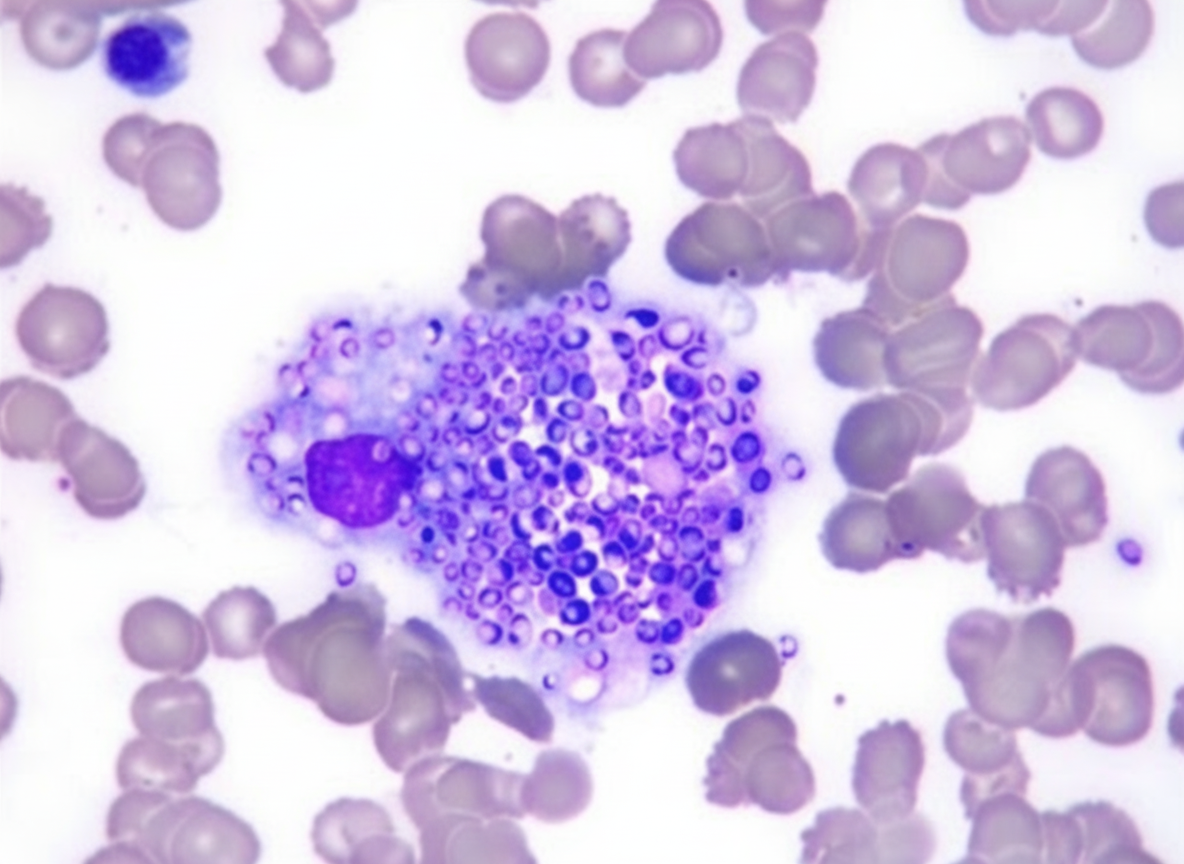
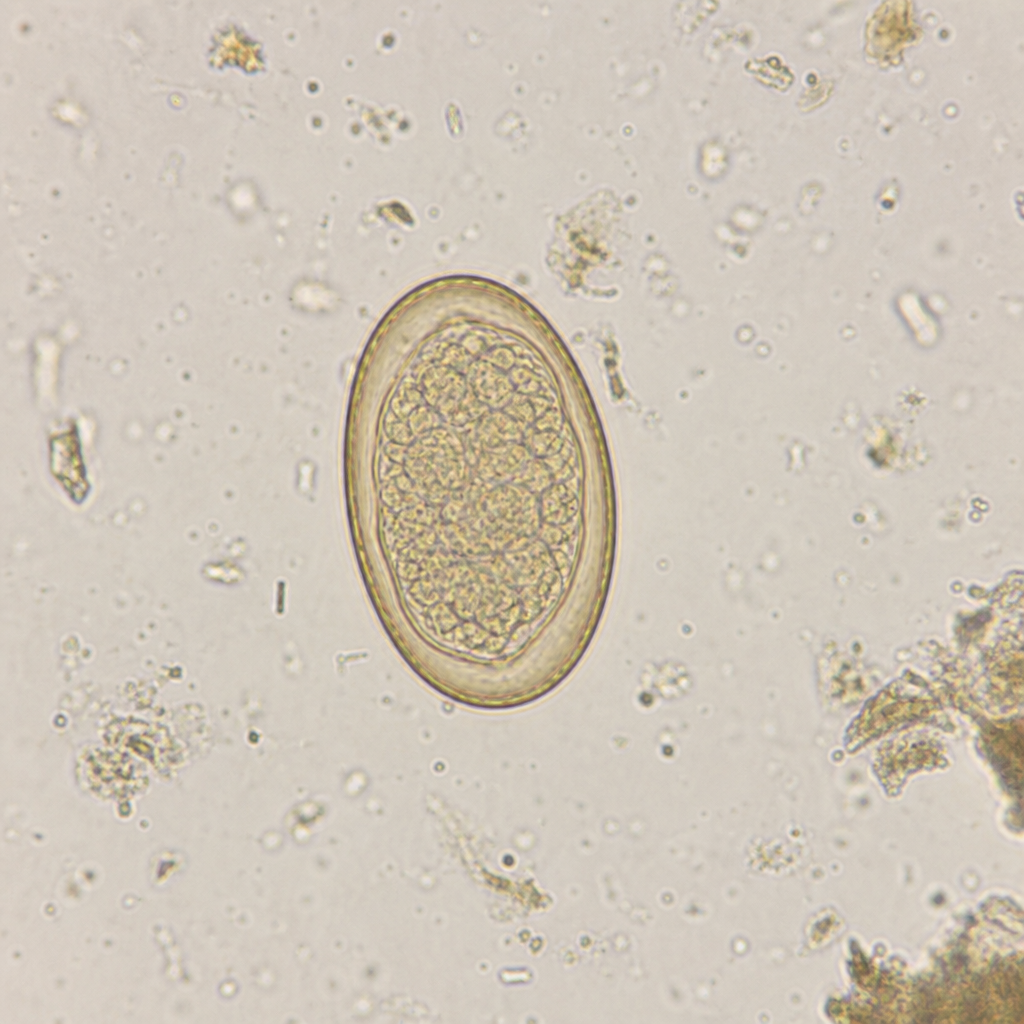
Terminal spined eggs are seen in which parasite?
Casoni's test is used in the diagnosis of:
Which is not a feature of tropical eosinophilia?
Which of the following organisms uses man as an intermediate host?
A man presented with diarrhea and lower abdominal pain. The stool is heme-positive. What is the investigation of choice for amoebiasis?
In vivax and ovale malaria, relapses are due to which of the following?
Which of the following is true about amoebic colitis?
Which of the following statements is TRUE regarding visceral leishmaniasis?
Acute toxoplasmosis is commonly associated with all of the following except?
Which of the following is characteristic of a hemoflagellate?
Explanation: The identification of *Schistosoma* species is a high-yield topic in NEET-PG, primarily based on the morphology of their eggs. **Correct Answer: A. Schistosoma haematobium** *Schistosoma haematobium* is uniquely characterized by eggs that possess a distinct **terminal spine** at one end. These eggs are typically excreted in the **urine** (and occasionally feces). Clinically, this parasite inhabits the vesical venous plexuses, leading to hematuria and an increased risk of squamous cell carcinoma of the urinary bladder. **Explanation of Incorrect Options:** * **B. Schistosoma mansoni:** These eggs are characterized by a prominent **lateral spine**. They are found in the feces and are associated with intestinal schistosomiasis and portal hypertension. * **C. Schistosoma japonicum:** These eggs are more rounded/oval and possess a very small, inconspicuous **lateral knob** (rudimentary spine) rather than a prominent spine. * **D. Clonorchis sinensis:** Also known as the Chinese Liver Fluke, its eggs are much smaller, flask-shaped, and possess an **operculum** (lid) at one pole and a small knob at the other, but they do not have spines. **High-Yield Clinical Pearls for NEET-PG:** * **Intermediate Host:** All Schistosomes require **snails** as intermediate hosts (e.g., *Bulinus* for *S. haematobium*). * **Infective Stage:** **Cercaria** (penetrates unbroken skin during swimming). * **Diagnostic Test:** Urine microscopy (10 AM to 2 PM sample) for *S. haematobium*; Kat-Katz technique for stool samples. * **Drug of Choice:** **Praziquantel** is the gold standard for all Schistosoma species.
Explanation: **Explanation:** **Casoni’s test** is an immediate hypersensitivity skin test (Type I Hypersensitivity) used for the diagnosis of **Hydatid disease**, caused by the larval stage of the tapeworm *Echinococcus granulosus*. 1. **Why Hydatid Disease is correct:** The test involves the intradermal injection of 0.2 ml of sterile "hydatid fluid" (derived from human or sheep cysts). A positive result is indicated by the formation of a large wheal (>1.5 cm) with pseudopodia within 20 minutes. While historically significant, it has largely been replaced by more specific serological tests (ELISA) and imaging (USG/CT) due to its low specificity and risk of anaphylaxis. 2. **Why other options are incorrect:** * **Sarcoidosis:** The diagnostic skin test for Sarcoidosis is the **Kveim-Siltzbach test**, which uses an injection of spleen/lymph node extract from a known sarcoid patient. * **Kala-azar (Visceral Leishmaniasis):** The **Montenegro (Leishmanin) skin test** is used here. It is a delayed-type hypersensitivity (Type IV) test, which is typically negative in active Kala-azar but positive in recovered patients or those with Post-Kala-azar Dermal Leishmaniasis (PKDL). * **Cutaneous Microfilaria:** Diagnosis is primarily made via skin snip biopsy or peripheral blood smears. There is no specific "Casoni-like" skin test routinely used for microfilaria. **High-Yield Facts for NEET-PG:** * **Gold Standard Diagnosis:** Ultrasonography (WHO classification: CL to CE5) is the primary tool for Hydatid disease. * **Serology:** ELISA for IgG antibodies is the preferred screening method. * **Treatment Pearl:** The **PAIR** technique (Puncture, Aspiration, Injection, Re-aspiration) is used for certain cyst stages, always under the cover of **Albendazole** to prevent secondary hydatidosis from spillage.
Explanation: **Explanation:** Tropical Pulmonary Eosinophilia (TPE) is a distinct clinical manifestation of lymphatic filariasis (caused by *Wuchereria bancrofti* or *Brugia malayi*). It represents a **hypersensitivity reaction** (Type I and Type IV) to the microfilarial antigens rather than a typical infection. **Why "Microfilaria in blood" is the correct answer:** In TPE, the immune system becomes hyper-responsive and rapidly clears microfilariae from the peripheral circulation. The microfilariae are trapped and destroyed in the pulmonary capillaries and reticuloendothelial tissues. Consequently, **microfilariae are characteristically absent from the peripheral blood**, making this a "cryptic" form of filariasis. **Analysis of other options:** * **A. Eosinophilia >3000/mm³:** This is a hallmark feature. Patients typically present with massive absolute eosinophil counts, often exceeding 3,000/mm³ (frequently >10,000/mm³). * **B. Microfilaria in tissue:** While absent in blood, degenerating microfilariae can be found in lung biopsies, liver, or lymph nodes, often surrounded by eosinophilic aggregates (Meyers-Kouwenaar bodies). * **D. Lymphadenopathy:** Along with hepatosplenomegaly, lymphadenopathy is a common systemic finding in TPE due to the generalized immune activation. **High-Yield Clinical Pearls for NEET-PG:** * **Clinical Triad:** Paroxysmal nocturnal cough/wheezing, massive eosinophilia, and high serum IgE levels (>1000 units/ml). * **Chest X-ray:** Shows bilateral diffuse miliary mottling or increased bronchovascular markings (predominantly in lower zones). * **Drug of Choice:** **Diethylcarbamazine (DEC)** for 21 days. A rapid clinical response to DEC is often used as a diagnostic criterion. * **Key Difference:** Unlike classical filariasis, TPE does not typically present with lymphedema or elephantiasis.
Explanation: ### Explanation In parasitology, the classification of hosts is determined by the stage of the parasite's life cycle: * **Definitive Host:** Where the **sexual cycle** occurs or the adult parasite resides. * **Intermediate Host:** Where the **asexual cycle** occurs or the larval stages develop. **Why Plasmodium is Correct:** In the life cycle of *Plasmodium* (Malaria), the **sexual cycle (sporogony)** occurs within the female *Anopheles* mosquito, making it the definitive host. The **asexual cycle (schizogony)** occurs in humans (hepatic and erythrocytic stages), thus making **man the intermediate host**. **Analysis of Incorrect Options:** * **Brugia malayi & Wuchereria bancrofti:** For these filarial nematodes, **man is the definitive host** because the adult worms reside in the human lymphatic system. The mosquito acts as the intermediate host where larval development (L1 to L3) occurs. * **Taenia saginata (Beef Tapeworm):** **Man is the definitive host** (harbors the adult worm in the intestine). Cattle serve as the intermediate host. *Note: In Taenia solium, man can be both the definitive host (taeniasis) and the accidental intermediate host (cysticercosis).* **NEET-PG High-Yield Pearls:** * **Man as Intermediate Host:** Remember the mnemonic **"MPT"** — **M**alaria (*Plasmodium*), **P**neumocystis (rarely asked this way), and **T**oxoplasma. Also includes *Echinococcus granulosus* (Hydatid disease). * **Exception:** In *Hymenolepis nana*, man serves as both definitive and intermediate host in the same individual. * **Accidental Host:** Man is the "dead-end" intermediate host for *Echinococcus granulosus* and *Toxocara canis*.
Explanation: **Explanation:** The diagnosis of intestinal amoebiasis (caused by *Entamoeba histolytica*) relies on distinguishing the pathogen from non-pathogenic commensals like *E. dispar*. 1. **Why "Microscopy and ELISA" is correct:** While **microscopy** is the traditional first-line test to visualize trophozoites (containing ingested RBCs) or quadrinucleate cysts, it has low sensitivity (approx. 60%) and cannot morphologically distinguish *E. histolytica* from *E. dispar*. **ELISA** for fecal antigen detection (specifically targeting the Gal/GalNAc lectin) provides high specificity and sensitivity, allowing for definitive identification of the pathogen. Combining both methods maximizes diagnostic yield and accuracy. 2. **Why other options are incorrect:** * **ELISA (Option A):** While highly specific, relying solely on ELISA may miss cases if the antigen load is low; microscopy remains a necessary screening tool. * **Colonoscopy (Option B):** This is an invasive procedure. While it may show characteristic "flask-shaped ulcers," it is reserved for cases where stool studies are negative but clinical suspicion remains high. * **Microscopy (Option C):** Insufficient as a standalone test due to its inability to differentiate species and its dependence on the skill of the microscopist. **High-Yield Clinical Pearls for NEET-PG:** * **Pathognomonic finding:** Trophozoites with **ingested RBCs** (Erythrophagocytosis) in stool microscopy. * **Stain of choice:** Iron-hematoxylin or Trichrome stain. * **Serology:** Serum antibody ELISA is more useful for **Extra-intestinal amoebiasis** (e.g., Amoebic Liver Abscess) than for intestinal disease. * **Treatment:** Luminal agents (Diloxanide furoate/Paromomycin) are needed even in asymptomatic cyst passers to prevent transmission.
Explanation: **Explanation:** The correct answer is **Hypnozoites**. In the life cycle of *Plasmodium vivax* and *Plasmodium ovale*, some sporozoites do not immediately undergo exo-erythrocytic schizogony upon entering the liver. Instead, they enter a dormant phase known as **hypnozoites** (derived from "hypnos," meaning sleep). These dormant forms can remain in the liver for weeks, months, or even years. When they eventually reactivate, they initiate a new cycle of erythrocytic infection, leading to a clinical **relapse**. **Analysis of Incorrect Options:** * **Bradyzoites (A):** These are the slow-growing, dormant stages of *Toxoplasma gondii* found within tissue cysts. They are not associated with the Malaria parasite. * **Merozoites (B):** These are the stages released from liver schizonts (exo-erythrocytic) or red blood cells (erythrocytic). They are responsible for the clinical symptoms of malaria but do not cause relapses through dormancy. * **Sporozoites (D):** This is the infectious stage injected by the female Anopheles mosquito. While they initiate the primary infection, they do not persist in a dormant state themselves; they either transform into schizonts or hypnozoites. **High-Yield Clinical Pearls for NEET-PG:** * **Drug of Choice:** **Primaquine** (or Tafenoquine) is the only drug effective against hypnozoites (radical cure). It must be avoided in patients with **G6PD deficiency** due to the risk of acute hemolysis. * **Recrudescence vs. Relapse:** *P. falciparum* and *P. malariae* do **not** have hypnozoites; they cause "recrudescence" due to the persistence of sub-clinical parasites in the blood, not "relapse" from the liver. * **Schüffner’s dots:** Characteristically seen in RBCs infected with *P. vivax* and *P. ovale*.
Explanation: **Explanation:** Amoebic colitis is an intestinal infection caused by the protozoan parasite **Entamoeba histolytica**. It is a significant cause of diarrheal disease worldwide, particularly in areas with poor sanitation. **1. Why Option A is correct:** *Entamoeba histolytica* is the definitive causative agent of amoebiasis. It exists in two stages: the infective **quadrinucleate cyst** and the invasive **trophozoite**. The trophozoites invade the intestinal mucosa by secreting proteolytic enzymes (histolysins), leading to tissue destruction and colitis. **2. Analysis of Incorrect Options:** * **Option B:** The mature infective cyst of *E. histolytica* contains **four nuclei** (quadrinucleate). A cyst with eight nuclei is characteristic of *Entamoeba coli*, which is a non-pathogenic commensal. * **Option C:** While **flask-shaped ulcers** are indeed a classic pathological hallmark of amoebic colitis, the question asks for the most fundamental truth. (Note: In many competitive exams, if multiple statements are technically true, the primary definition or the most specific causative agent is prioritized. However, in standard pathology, C is also a "true" feature. In the context of this specific MCQ structure, A is the primary identification). * **Option D:** The **cecum and ascending colon** are the most common sites for amoebic lesions due to stasis of contents, followed by the sigmoid colon and rectum. **High-Yield Clinical Pearls for NEET-PG:** * **Pathology:** The "flask-shaped" ulcer has a narrow neck and a broad base. * **Microscopy:** Look for trophozoites containing **ingested RBCs** (erythrophagocytosis)—this is pathognomonic for *E. histolytica* and distinguishes it from the morphologically identical *E. dispar*. * **Complications:** The most common extra-intestinal site is the liver (**Amoebic Liver Abscess**), typically presenting with "anchovy sauce" pus. * **Treatment:** Drug of choice for symptomatic colitis is **Metronidazole** or Tinidazole, followed by a luminal amebicide (e.g., Paromomycin or Diloxanide furoate) to eradicate cysts.
Explanation: **Explanation:** **Visceral Leishmaniasis (Kala-azar)** is a systemic protozoal infection caused by the *Leishmania donovani* complex, transmitted by the bite of the female sandfly (*Phlebotomus argentipes*). 1. **Why Option C is Correct:** **Pentavalent Antimonials** (e.g., Sodium Stibogluconate and Meglumine Antimoniate) have historically been the mainstay of treatment. While resistance is increasing (especially in Bihar, India), they remain a classic pharmacological association for the disease. Currently, **Liposomal Amphotericin B** is the drug of choice due to higher efficacy and lower toxicity. 2. **Why Other Options are Incorrect:** * **Option A:** *L. tropica* and *L. major* cause **Cutaneous Leishmaniasis** (Oriental Sore). Visceral Leishmaniasis is caused by *L. donovani* and *L. infantum*. * **Option B:** The correct term is **Post-Kala-azar Dermal Leishmaniasis (PKDL)**, not "dermatitis." PKDL is a non-ulcerative skin condition that develops months to years after the apparent cure of visceral leishmaniasis, acting as a reservoir for the parasite. * **Option D:** Diagnosis is primarily through **bone marrow or splenic aspiration** (demonstrating Amastigote/LD bodies). Blood smears are rarely sensitive enough; however, the rK39 immunochromatographic test is the preferred rapid diagnostic tool. **High-Yield Clinical Pearls for NEET-PG:** * **Classic Triad:** Fever, massive splenomegaly, and significant weight loss (cachexia). * **Hematology:** Characterized by **Pancytopenia** and **Hypergammaglobulinemia** (reversed Albumin:Globulin ratio). * **Napier’s Aldehyde Test:** A non-specific screening test based on elevated serum globulins. * **Culture:** NNN (Novy-MacNeal-Nicolle) medium is used to grow the Promastigote stage.
Explanation: **Explanation:** **Toxoplasmosis**, caused by the protozoan *Toxoplasma gondii*, presents differently depending on the host's immune status. In **immunocompetent individuals**, acute infection is asymptomatic in 80–90% of cases. When symptoms do occur, the most common clinical manifestation is **painless lymphadenopathy**. 1. **Why Myocarditis is the Correct Answer:** While *Toxoplasma* can theoretically affect any organ, **myocarditis** is an extremely rare complication in acute, immunocompetent cases. It is typically seen only in **severely immunocompromised patients** (e.g., advanced HIV/AIDS) or as part of a disseminated infection in neonates. Therefore, it is not "commonly associated" with standard acute toxoplasmosis. 2. **Analysis of Incorrect Options:** * **Cervical and Axillary Lymphadenopathy (Options A & B):** These are the hallmark signs of acute toxoplasmosis. The cervical nodes are most frequently involved, followed by axillary and inguinal nodes. The nodes are usually discrete and non-suppurative. * **Muscle Pain (Option C):** A "mononucleosis-like syndrome" is common in acute toxoplasmosis, characterized by fever, headache, fatigue, and **myalgia** (muscle pain) due to the systemic spread of tachyzoites. **High-Yield Clinical Pearls for NEET-PG:** * **Definitive Host:** Cat (sexual cycle occurs in the intestinal epithelium). * **Intermediate Host:** Humans and other mammals (asexual cycle). * **Infective Forms:** Oocysts (from cat feces), Tissue cysts (undercooked meat), and Tachyzoites (transplacental). * **Diagnosis:** Serology (Sabin-Feldman Dye Test is the gold standard; IgM indicates acute infection). * **Congenital Triad:** Chorioretinitis, Hydrocephalus, and Intracranial calcifications. * **Treatment of Choice:** Pyrimethamine + Sulfadiazine (with Folinic acid).
Explanation: **Explanation:** Hemoflagellates (Genera: *Leishmania* and *Trypanosoma*) are obligate heteroxenous parasites, meaning they **require an intermediate host** (an insect vector) to complete their life cycle. They alternate between a vertebrate host (man) and an invertebrate host (sandfly or tsetse/triatomine bug). This complex life cycle involves distinct morphological stages like amastigotes, promastigotes, epimastigotes, and trypomastigotes. **Analysis of Options:** * **Option A (Correct):** All medically important hemoflagellates are transmitted by insect vectors (e.g., *Leishmania* by Sandfly, *T. brucei* by Tsetse fly). * **Option B (Incorrect):** While they inhabit living tissue, this is not a defining characteristic unique to hemoflagellates; many other parasites (like *Toxoplasma*) also grow in living tissue. * **Option C (Incorrect):** Hemoflagellates **can** be grown in specialized artificial culture media. The most common is **NNN (Novy-MacNeal-Nicolle) medium**, where they typically grow in the promastigote or epimastigote stage. * **Option D (Incorrect):** While *Trypanosoma* species possess an undulating membrane, *Leishmania* species (specifically the amastigote form found in humans) do not. Therefore, it is not a characteristic shared by all hemoflagellates. **NEET-PG High-Yield Pearls:** * **Kinetoplast:** A specialized mitochondrial DNA structure found in all hemoflagellates, located near the base of the flagellum. * **Culture:** NNN medium is the gold standard; look for "water of condensation" where the parasites multiply. * **Vector Summary:** * *Leishmania donovani*: Female Sandfly (*Phlebotomus*). * *Trypanosoma cruzi*: Triatomine (Reduviid) bug. * *Trypanosoma brucei*: Tsetse fly (*Glossina*).
Classification of Parasites
Practice Questions
Intestinal Protozoa
Practice Questions
Blood and Tissue Protozoa
Practice Questions
Malaria Parasites
Practice Questions
Leishmaniasis
Practice Questions
Intestinal Helminths: Nematodes
Practice Questions
Tissue Nematodes
Practice Questions
Trematodes
Practice Questions
Cestodes
Practice Questions
Ectoparasites
Practice Questions
Antiparasitic Drugs
Practice Questions
Laboratory Diagnosis of Parasitic Infections
Practice Questions
Get full access to all questions, explanations, and performance tracking.
Start For Free