Suramin is the drug of choice for which of the following conditions?
Vitamin B12 deficiency is seen in which tapeworm infestation?
The 'cyclops' stage is part of the life cycle of which of the following?
Autoinfection is seen with which of the following parasites?
What is the intermediate host for the parasite that causes hydatid disease?
Flask shaped ulcers are characteristically seen in which of the following conditions?
Eosinophilic meningoencephalitis is caused by which of the following?
Cysticercus cellulosae is seen in which of the following?
What is the most common site of abscess formation due to amoeba?
A 23-year-old male presented with abdominal pain and bloody diarrhea of one-week duration. What is the diagnosis based on the following rectal mucosa biopsy?

Explanation: **Explanation:** **Suramin** is the drug of choice for the early (hemolymphatic) stage of **African Trypanosomiasis** (Sleeping Sickness) caused by *Trypanosoma brucei rhodesiense*. It is a non-metal-containing polyanionic compound that inhibits enzymes involved in energy metabolism. It does not cross the blood-brain barrier, making it ineffective for the late (neurological) stage, where Melarsoprol is preferred. **Analysis of Incorrect Options:** * **Options A, B, and D (Brill-Zinsser disease, Rocky Mountain spotted fever, and Q fever):** These are all **Rickettsial diseases** (caused by *Rickettsia prowazekii*, *Rickettsia rickettsii*, and *Coxiella burnetii*, respectively). The gold standard treatment for almost all Rickettsial infections is **Doxycycline**. Suramin has no antibacterial or anti-rickettsial activity. **High-Yield Clinical Pearls for NEET-PG:** * **African Trypanosomiasis Treatment Regimen:** * *T. b. rhodesiense:* **Suramin** (Early stage); **Melarsoprol** (Late stage). * *T. b. gambiense:* **Pentamidine** (Early stage); **Eflornithine** (Late stage). * **Suramin Side Effects:** Nephrotoxicity (most common), neurological toxicity, and idiosyncratic shock. * **Vector:** African Trypanosomiasis is transmitted by the **Tsetse fly** (*Glossina* species). * **Winterbottom’s Sign:** Posterior cervical lymphadenopathy, a classic clinical sign of Gambian sleeping sickness. * **Brill-Zinsser Disease:** This is a recrudescence (relapse) of epidemic typhus years after the primary attack.
Explanation: **Explanation:** **Diphyllobothrium latum** (the Fish Tapeworm) is the correct answer because of its unique metabolic requirement for Vitamin B12. This parasite competes with the host for Vitamin B12 absorption in the small intestine. It can absorb up to **80-100% of the host's dietary B12**, leading to a state of deficiency. Clinically, this manifests as **Megaloblastic Anemia** (Bothriocephalus anemia) and, in severe cases, subacute combined degeneration of the spinal cord, mimicking Pernicious Anemia. **Analysis of Incorrect Options:** * **Taenia saginata (Beef Tapeworm):** Primarily causes mild gastrointestinal symptoms or malnutrition but does not specifically interfere with Vitamin B12 absorption. * **Echinococcus granulosus (Dog Tapeworm):** Causes **Hydatid disease**, characterized by cyst formation in the liver and lungs. It does not reside in the intestinal lumen as an adult worm in humans and thus does not cause B12 deficiency. * **Hymenolepis nana (Dwarf Tapeworm):** The smallest intestinal tapeworm. While it can cause autoinfection and abdominal pain, it is not associated with megaloblastic anemia. **NEET-PG High-Yield Pearls:** * **Largest Tapeworm:** *D. latum* is the longest tapeworm infecting humans (up to 10-15 meters). * **Intermediate Hosts:** 1st—Cyclops; 2nd—Freshwater fish. * **Infective Stage:** Plerocercoid larva. * **Diagnostic Feature:** Operculated, unembryonated eggs in stool (resembling *Fasciola* eggs). * **Treatment:** Praziquantel is the drug of choice.
Explanation: **Explanation:** **Dracunculosis** (Guinea worm disease), caused by *Dracunculus medinensis*, is the correct answer. The **Cyclops** (water flea) serves as the essential **intermediate host** in its life cycle. Humans become infected by drinking unfiltered water containing Cyclops infected with L3 larvae. Once inside the human stomach, the Cyclops is digested, releasing the larvae which then penetrate the intestinal wall and mature into adults in the subcutaneous tissues. **Analysis of Incorrect Options:** * **Toxoplasmosis (*Toxoplasma gondii*):** This is a coccidian parasite where the definitive hosts are cats (felines) and intermediate hosts are mammals/birds. It does not involve an aquatic crustacean like Cyclops. * **Echinococcus (*E. granulosus*):** The life cycle involves dogs (definitive host) and sheep/humans (intermediate host). It is transmitted via the feco-oral route through the ingestion of eggs. * **Leishmaniasis (*Leishmania* spp.):** This protozoan is transmitted by the bite of an infected female **Sandfly** (*Phlebotomus*), which serves as the biological vector. **High-Yield Clinical Pearls for NEET-PG:** * **Intermediate Host:** Cyclops is also the intermediate host for *Diphyllobothrium latum* (Fish tapeworm). * **Step-ladder removal:** The traditional treatment involves slowly winding the adult female worm around a small stick over several days. * **Diagnosis:** Usually made clinically when the adult female worm emerges through a painful skin ulcer, typically on the lower limbs. * **Eradication:** Dracunculosis is on the verge of global eradication; India was declared Guinea worm-free in the year 2000.
Explanation: **Explanation:** **Strongyloides stercoralis** is the correct answer because it is one of the few helminths capable of completing its entire life cycle within a single human host. This occurs through **internal autoinfection**, where rhabditiform larvae in the intestine transform into infective filariform larvae before being excreted. These larvae then penetrate the intestinal mucosa or perianal skin, entering the venous circulation to initiate a new cycle (the "internal cycle"). This mechanism allows the infection to persist for decades without external re-exposure and can lead to life-threatening **Hyperinfection Syndrome** in immunocompromised patients (e.g., those on steroids or with HTLV-1). **Analysis of Incorrect Options:** * **Ascaris lumbricoides:** Requires a period of maturation in the **soil** (embryonation) before the eggs become infective. Therefore, direct person-to-person transmission or autoinfection is impossible. * **Giardia lamblia:** Transmission is primarily fecal-oral via ingestion of cysts. While "hand-to-mouth" reinfection can occur, it is not classified as a biological autoinfection cycle like that of *Strongyloides*. * **Gnathostoma:** Humans are accidental, dead-end hosts. The parasite causes *Larva Migrans* but cannot reach maturity or reproduce within humans to cause autoinfection. **High-Yield NEET-PG Pearls:** * **Parasites showing Autoinfection:** Remember the mnemonic **"CHEST"**: **C**apillaria philippinensis, **H**ymenolepis nana, **E**nterobius vermicularis (External), **S**trongyloides stercoralis (Internal), and **T**aenia solium. * **Strongyloides** is unique because the diagnostic stage in stool is the **larva**, not the egg. * **Drug of choice** for Strongyloidiasis: **Ivermectin**.
Explanation: Hydatid disease is caused by the cestode **_Echinococcus granulosus_**. Understanding its life cycle is crucial for NEET-PG, as it involves a distinct transition between definitive and intermediate hosts. ### **Explanation of the Correct Answer** **C. Sheep:** In the natural life cycle, sheep (and other herbivores) serve as the **Intermediate Host**. They ingest eggs passed in the feces of the definitive host. The eggs hatch into oncospheres, migrate to visceral organs (primarily the liver), and develop into **Hydatid Cysts** (the larval stage). ### **Analysis of Incorrect Options** * **A. Human:** Humans are considered **Accidental Intermediate Hosts**. We are a "dead-end" for the parasite because the life cycle is broken (dogs do not typically consume human viscera). While the disease occurs in humans, sheep remain the primary natural intermediate host. * **B. Dog:** The dog (and other canids) is the **Definitive Host**. It harbors the adult tapeworm in its small intestine. It becomes infected by eating the hydatid cysts found in the organs of the intermediate host. * **C. Fox:** Foxes are the definitive hosts for _Echinococcus multilocularis_, which causes alveolar hydatid disease, but they are not the primary host for _E. granulosus_. ### **High-Yield Clinical Pearls for NEET-PG** * **Infective Form to Humans:** Embryonated eggs (found in dog feces). * **Diagnostic Classic:** **Casoni’s Test** (immediate hypersensitivity; now largely replaced by serology/ELISA). * **Radiology:** Look for **"Water-lily sign"** (collapsed germinal membrane) or **"Eggshell calcification"** on X-ray/CT. * **Management:** **PAIR** technique (Puncture, Aspiration, Injection of scolicidal agent like hypertonic saline, Re-aspiration). * **Complication:** Rupture of the cyst can lead to potentially fatal **Anaphylaxis**.
Explanation: **Explanation:** The correct answer is **Amoebiasis (Option B)**. **Why it is correct:** Amoebiasis is caused by the protozoan *Entamoeba histolytica*. The pathogenesis involves the parasite’s trophozoites secreting proteolytic enzymes (histolysins) that degrade the intestinal epithelium. The infection typically begins in the crypts of the colon; once the trophozoites penetrate the muscularis mucosae, they spread laterally in the submucosa. This lateral spread creates a wide base with a narrow neck at the site of entry, resulting in the characteristic **"flask-shaped ulcer."** **Analysis of incorrect options:** * **Bacillary dysentery (Shigellosis):** Causes diffuse inflammation with multiple superficial, "map-like" or irregular ulcers. They do not penetrate deeply into the submucosa in a flask-like fashion. * **Typhoid (Enteric fever):** Characterized by longitudinal ulcers along the long axis of the ileum, specifically involving the Peyer's patches. * **Tuberculosis (Intestinal):** Typically presents with transverse (circumferential) ulcers due to the arrangement of lymphatics in the intestine. **NEET-PG High-Yield Pearls:** * **Site:** The most common site for amoebic ulcers is the **Cecum** and ascending colon. * **Microscopy:** Look for trophozoites containing **ingested RBCs** (erythrophagocytosis), which is pathognomonic for *E. histolytica*. * **Complications:** The most common extra-intestinal site is the liver (**Amoebic Liver Abscess**), characterized by "Anchovy sauce" pus. * **Stool findings:** In amoebic dysentery, the stool is acidic, contains Charcot-Leyden crystals, and shows clumped RBCs with few pus cells (unlike Bacillary dysentery, which has many pus cells).
Explanation: **Explanation:** The correct answer is **Angiostrongylus cantonensis** (the rat lungworm). **1. Why Angiostrongylus is correct:** *Angiostrongylus cantonensis* is the most common cause of **Eosinophilic Meningoencephalitis** worldwide. Humans are accidental hosts, typically infected by ingesting larvae in raw/undercooked snails, slugs, or contaminated vegetables. Once ingested, the larvae migrate to the central nervous system (CNS). Because they cannot complete their life cycle in humans, they die in the brain, triggering a profound inflammatory response characterized by a high count of **eosinophils in the cerebrospinal fluid (CSF)** (usually >10% of the total CSF leukocyte count). **2. Why other options are incorrect:** * **Acanthamoeba:** Causes **Granulomatous Amoebic Encephalitis (GAE)**, a subacute to chronic infection typically seen in immunocompromised individuals. It is also associated with amoebic keratitis in contact lens users. * **Naegleria fowleri:** Causes **Primary Amoebic Meningoencephalitis (PAM)**. This is an acute, fulminant, and highly fatal infection acquired through swimming in warm freshwater. The CSF shows a neutrophilic (not eosinophilic) pleocytosis. * **Toxoplasma gondii:** Typically causes **Ring-enhancing lesions** (brain abscesses) in HIV/AIDS patients. It does not present as a primary eosinophilic meningitis. **3. NEET-PG High-Yield Pearls:** * **Definition:** Eosinophilic meningitis is defined as >10 eosinophils/mm³ in CSF or eosinophils accounting for >10% of CSF WBCs. * **Other causes:** *Gnathostoma spinigerum*, *Baylisascaris procyonis*, and Neurocysticercosis (occasionally). * **Clinical Clue:** History of eating raw snails or slugs followed by severe headache and meningeal signs. * **Treatment:** Primarily supportive; corticosteroids are used to reduce inflammation caused by dying worms. Albendazole is controversial as it may worsen inflammation.
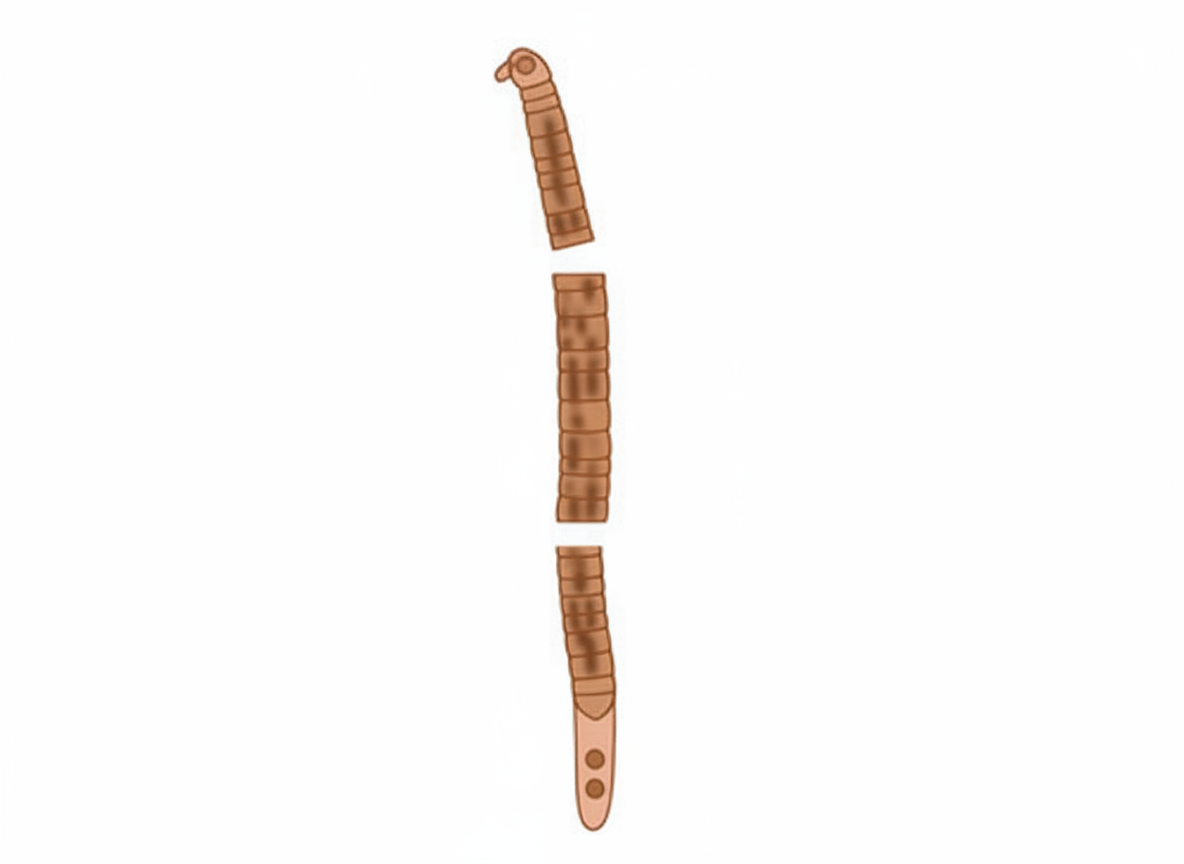
Explanation: **Explanation:** The correct answer is **Taenia solium**. **Cysticercus cellulosae** is the larval stage (bladder worm) of *Taenia solium* (Pork tapeworm). In the normal life cycle, pigs ingest eggs, and the larvae develop in their muscles. However, humans can act as accidental intermediate hosts by ingesting eggs through contaminated food or water (autoinfection). This leads to **Cysticercosis**, where these larvae lodge in various tissues, most critically the brain (**Neurocysticercosis**), appearing as "scolex within a cyst" on imaging. **Analysis of Incorrect Options:** * **A. Taenia saginata (Beef tapeworm):** Its larval stage is called **Cysticercus bovis**. Crucially, *T. saginata* does not cause cysticercosis in humans because the eggs are not infectious to humans. * **C. Diphyllobothrium latum (Fish tapeworm):** It has two larval stages: the **Procercoid** (in cyclops) and the **Plerocercoid/Sparganum** (in fish). It is clinically associated with Vitamin B12 deficiency (Megaloblastic anemia). * **D. Schistosoma haematobium (Blood fluke):** This is a trematode. Its infective stage is the **Cercaria**, and it does not have a cysticercus stage. It is primarily associated with urinary schistosomiasis and squamous cell carcinoma of the bladder. **High-Yield Clinical Pearls for NEET-PG:** * **Definitive Host:** Human (for both *T. solium* and *T. saginata*). * **Intermediate Host:** Pig (*T. solium*); Cow (*T. saginata*). * **Neurocysticercosis (NCC):** The most common cause of adult-onset seizures in developing countries. MRI shows the "hole-with-dot" appearance. * **Drug of Choice:** Albendazole is preferred for NCC (Praziquantel is an alternative).
Explanation: **Explanation:** **Amoebic Liver Abscess (ALA)** is the most common extra-intestinal manifestation of infection by *Entamoeba histolytica*. **Why the Liver is the most common site:** The parasite primarily infects the large intestine (colon). Trophozoites invade the intestinal mucosa and enter the **portal venous system**. Since the portal vein drains directly into the liver, the liver acts as the first major "filter" for these parasites. Once in the liver, the trophozoites cause focal necrosis and liquefaction, leading to the characteristic "Anchovy sauce" pus. The **Right Lobe** is most frequently involved due to the bulk of portal blood flow directed there. **Analysis of Incorrect Options:** * **A. Lungs:** This is the second most common extra-intestinal site. It usually occurs due to direct extension (rupture) of a liver abscess through the diaphragm or via hematogenous spread. * **C. Kidney:** Renal involvement is extremely rare and typically occurs only in cases of widespread systemic dissemination. * **D. Brain:** Cerebral amoebiasis is a rare but highly fatal complication, usually occurring secondary to hematogenous spread from the liver or lungs. **High-Yield Clinical Pearls for NEET-PG:** * **Pus Characteristics:** "Anchovy sauce" appearance (chocolate brown, odorless, sterile). * **Most Common Site in Liver:** Superior-posterior aspect of the **Right Lobe**. * **Diagnosis:** Serology (ELISA) is highly sensitive; Ultrasound is the initial imaging of choice. * **Treatment:** **Metronidazole** or Tinidazole (Drug of choice) followed by a luminal amoebicide (e.g., Diloxanide furoate) to eradicate the intestinal carrier state.
Explanation: ***Amoebiasis*** - **Flask-shaped ulcers** in the rectal mucosa with **Entamoeba histolytica trophozoites** showing **erythrophagocytosis** are pathognomonic features seen on histopathological examination. - The clinical presentation of **bloody diarrhea** with **abdominal pain** in a young male is highly consistent with invasive amoebiasis affecting the colon. *Giardiasis* - Caused by **Giardia lamblia**, which typically affects the **small intestine** and presents with **watery diarrhea**, not bloody stools. - Histologically shows **villous atrophy** and **trophozoites** in the duodenum, not flask-shaped ulcers in the rectum. *Enterobius vermicularis* - **Pinworm infection** primarily causes **perianal itching** and is diagnosed by finding eggs on **cellophane tape test**, not rectal biopsy. - Does not cause **bloody diarrhea** or **invasive colonic lesions** as seen in this case. *Severe bacterial infection* - Bacterial colitis typically shows **neutrophilic infiltration** and **superficial mucosal ulceration**, not the characteristic **flask-shaped ulcers**. - Would not demonstrate **parasitic trophozoites** with **erythrophagocytosis** on histological examination.
Classification of Parasites
Practice Questions
Intestinal Protozoa
Practice Questions
Blood and Tissue Protozoa
Practice Questions
Malaria Parasites
Practice Questions
Leishmaniasis
Practice Questions
Intestinal Helminths: Nematodes
Practice Questions
Tissue Nematodes
Practice Questions
Trematodes
Practice Questions
Cestodes
Practice Questions
Ectoparasites
Practice Questions
Antiparasitic Drugs
Practice Questions
Laboratory Diagnosis of Parasitic Infections
Practice Questions
Get full access to all questions, explanations, and performance tracking.
Start For Free