Two different specimens from two patients are received. Which of the following techniques can confirm they are from different individuals (in the context of Mycobacterium tuberculosis)?
What is the technique shown in the graph that demonstrates antibody-antigen interaction and response kinetics?
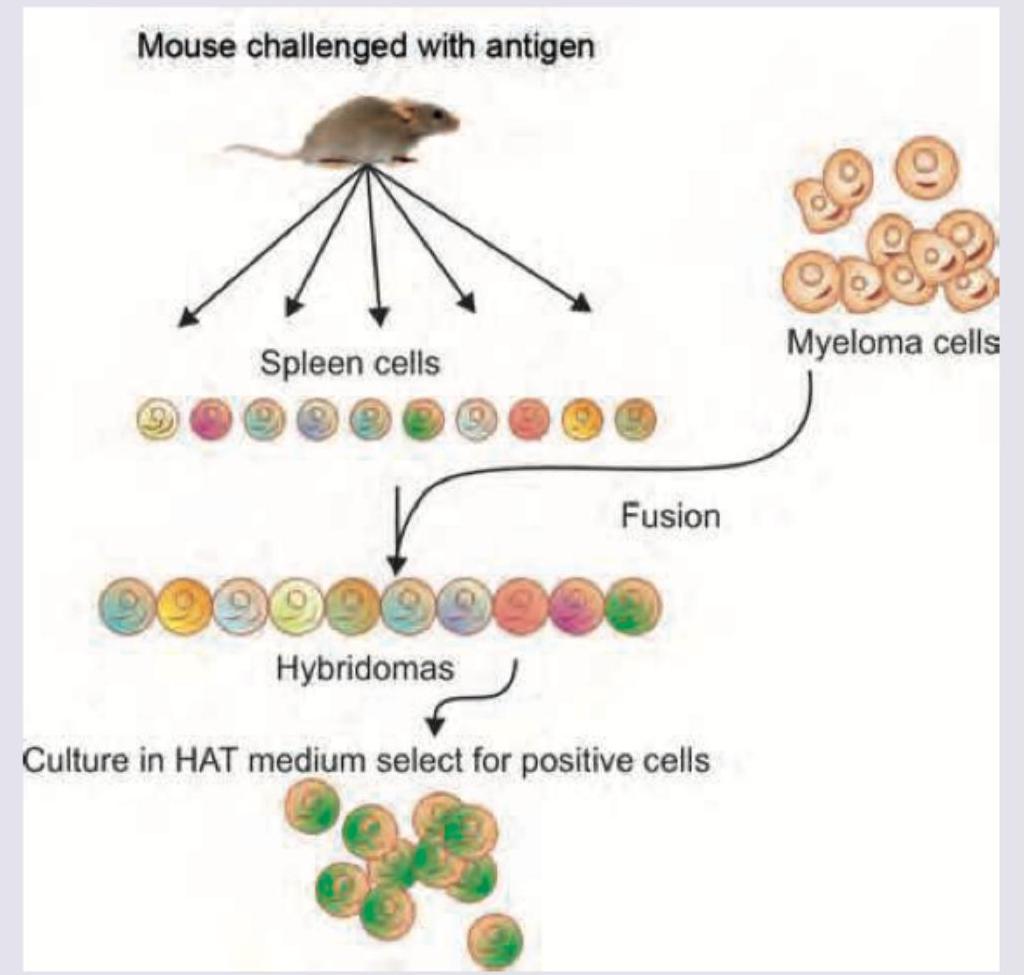
The technique shown in the picture is used for: (AIIMS Nov 2018)
Which virus can be identified by a PCR method and is endemic to India?
Which molecular biology technique is used to amplify a specific DNA sequence and is essential for diagnosing infections by detecting pathogen DNA in clinical samples?
A laboratory technician is preparing to perform PCR for the detection of a viral pathogen. The sample is suspected to contain RNA viruses. What modification should be made to the standard PCR protocol?
By which method foreign DNA is introduced into a cell by a virus or viral vector?
Which of the following is a primary cell line?
Explanation: ***Correct: RFLP*** - **RFLP** (Restriction Fragment Length Polymorphism), particularly using the **IS6110 insertion sequence**, is the traditional gold standard tool for **epidemiological strain typing** of *M. tuberculosis*. - Confirmation that two specimens are from different individuals relies on visualizing two distinct banding patterns, indicating different arrangements of the **IS6110** elements in their respective genomes. - RFLP has **high discriminatory power** for differentiating between strains and establishing epidemiological links. *Incorrect: Mutation analysis* - This technique primarily focuses on detecting **point mutations** in specific genes (e.g., *rpoB*, *katG*) to determine drug susceptibility or resistance patterns. - While differences in resistance profiles suggest different strains, it lacks the **high discriminatory power** of RFLP or VNTR for broad epidemiological linkage assessment. *Incorrect: Pyrosequencing* - Pyrosequencing is a rapid method of DNA sequencing often used to detect **single nucleotide polymorphisms (SNPs)** or specific mutations, such as those related to drug resistance. - It is utilized for sequencing short regions and is not the primary technique for comparing the **large-scale genomic structures** necessary for definitive strain fingerprinting. *Incorrect: RAPD* - **RAPD** (Random Amplification of Polymorphic DNA) is an older PCR-based method that uses arbitrary primers to generate a pattern of amplified DNA fragments. - While used for strain comparison in some bacteria, RAPD is generally considered **less reproducible** and has **lower discriminatory power** than RFLP or VNTR for *M. tuberculosis* typing.
Explanation: ***Surface plasmon resonance for affinity*** - **Surface Plasmon Resonance (SPR)** is the only technique among these capable of measuring biological interactions **in real time**, displaying a sensorgram that maps response units versus time, indicating association and dissociation phases. - The curve shown depicting the binding (association rate, $\text{k}_{on}$) and unbinding (dissociation rate, $\text{k}_{off}$) kinetics is characteristic of SPR, which allows for the accurate calculation of **binding affinity ($\text{K}_{D})$** derived from these kinetic constants. ***Competitive ELISA for antibody affinity*** - **ELISA** is an endpoint assay; it records the final quantity of bound product rather than the **real-time kinetic** curves (association and dissociation) shown in the graph. - While affinity can be approximated using specialized competitive ELISA formats, it relies on static equilibrium measurements, not the detailed kinetic analysis provided by $\text{k}_{on}$ and $\text{k}_{off}$. ***Competitive ELISA for antibody concentration*** - This technique is typically used for **quantitation** (determining concentration) by comparing an unknown sample to a standard curve at a single time point (endpoint). - It cannot generate the characteristic graph showing dynamic changes in the **association and dissociation profile** over time, which are essential for kinetic analysis. ***Surface plasmon resonance for concentration*** - While SPR can be used for quantitation, the primary purpose of generating and analyzing the complex **full kinetic curve** (both association and dissociation phases) is to precisely determine the binding affinity ($\text{K}_{D}$). - Simple concentration measurements using SPR often involve a brief contact time or steady-state analysis, not the detailed monitoring of the specific **dissociation phase** necessary to calculate $\text{k}_{off}$ and thus affinity.
Explanation: ***Synthesis of monoclonal antibodies*** - The image depicts the process of creating **hybridomas** by fusing antibody-producing spleen cells from an immunized mouse with myeloma cells. - These hybridomas are then cultured in **HAT medium** to select for stable cell lines that continuously produce a single type of antibody, known as **monoclonal antibodies**. *Preparing cell lines for viral culture* - While cell cultures are used for viral studies, the specific methodology shown involving immunization, spleen cell extraction, and fusion with myeloma cells is not for preparing routine **viral cultures**. - Viral culture typically involves growing target cells that are susceptible to a virus and then inoculating them with the virus for replication and study. *Synthesis of vaccine* - **Vaccine synthesis** involves producing antigens (e.g., inactivated viruses, attenuated microbes, or recombinant proteins) to stimulate an immune response, not the production of antibodies themselves. - The process shown aims to generate antibodies, which could *potentially* be used therapeutically, but not primarily for vaccine production. *Process of genetic engineering* - **Genetic engineering** involves manipulating an organism's genes, such as introducing foreign DNA or modifying existing genes. - While molecular biology techniques are involved in antibody production, the core process of fusing cells to create hybridomas specifically for large-scale antibody production is distinct from typical genetic engineering methods like gene cloning or gene editing.
Explanation: ***Chikungunya virus*** - The **Chikungunya virus** is a mosquito-borne alphavirus that causes fever, severe joint pain, and rash, and is **endemic to India** and other tropical regions. - Diagnosis is commonly confirmed using **PCR** (polymerase chain reaction) to detect viral RNA in acute samples. *Ebola virus* - The **Ebola virus** causes severe hemorrhagic fever and is primarily prevalent in **Sub-Saharan Africa**, not endemic to India. - While it can be detected by **PCR**, its geographical distribution does not match the endemic criteria for India. *Yellow fever* - **Yellow fever virus** is transmitted by mosquitoes and is endemic to **tropical and subtropical areas of South America and Africa**. - India is not considered an endemic area for yellow fever, though it can be detected by **PCR**. *Hendra virus* - The **Hendra virus** is a zoonotic virus primarily found in **Australia**, transmitted from bats to horses and then to humans. - It is not endemic to India and thus does not fit the criteria of the question.
Explanation: ***Polymerase chain reaction (PCR)*** - PCR is a molecular biology technique that **amplifies specific DNA sequences** exponentially, allowing for the detection of even tiny amounts of pathogen DNA. - This high sensitivity and specificity make it an essential tool for **diagnosing infections** by molecular identification of pathogens. *Western blotting* - **Western blotting** is used to detect specific **proteins**, not DNA, in a sample. - It's mainly used for confirming the presence of antibodies to a pathogen or detecting specific pathogen proteins, not for DNA amplification. *ELISA* - **ELISA** (Enzyme-Linked Immunosorbent Assay) is an immunological assay used to detect and quantify **antigens** or **antibodies** in a sample. - While used in infection diagnosis, it does not involve the amplification of DNA sequences. *Flow cytometry* - **Flow cytometry** is a technique used to analyze the **physical and chemical characteristics of cells** or particles suspended in a fluid as they pass through a laser beam. - It is primarily used for **cell counting** and sorting, and does not amplify DNA.
Explanation: ***Include a reverse transcription step before amplification*** - **RNA viruses** have their genetic material in the form of RNA, which cannot be directly amplified by standard PCR. - **Reverse transcriptase** is required to convert the RNA into a complementary DNA (cDNA) strand, which then serves as a template for PCR amplification. *Increase the denaturation temperature* - Increasing denaturation temperature is typically used to separate **DNA strands** that have high GC content, not to handle RNA templates. - An excessively high temperature can denature the polymerase and reduce amplification efficiency. *Add more magnesium ions to the reaction* - Magnesium ions (Mg2+) are a **cofactor** for Taq polymerase; however, increasing their concentration beyond optimal levels can lead to non-specific amplification and reduce specificity. - This adjustment does not address the fundamental issue of an RNA template. *Reduce the annealing time* - Reducing annealing time might be considered to prevent **non-specific primer binding** in certain scenarios but would make it less likely for primers to bind to their target, potentially reducing reaction efficiency. - It does not enable the amplification of an RNA template.
Explanation: ***Transduction*** - **Transduction** is the process by which foreign DNA is introduced into a cell by a **virus** or **viral vector**. - This method is widely used in **genetic engineering** and **gene therapy** to deliver genes into target cells. *Transcription* - **Transcription** is the process where a segment of **DNA** is copied into **RNA** by the enzyme **RNA polymerase**. - It describes the synthesis of RNA from a DNA template within a cell and is not a mechanism for introducing foreign DNA. *Transformation* - **Transformation** is the genetic alteration of a cell resulting from the direct uptake, incorporation, and expression of **exogenous genetic material** (DNA) from its surroundings. - While it involves introducing foreign DNA, it typically refers to the uptake of naked DNA by bacteria, not via a viral vector. *Lysogenic conversion* - **Lysogenic conversion** occurs when a temperate **bacteriophage** integrates its DNA into the host bacterium's genome (**lysogeny**), leading to the expression of new genes carried by the phage. - While it involves phage DNA, it's a specific phenomenon associated with bacteriophages altering bacterial phenotypes, not a general method for introducing foreign DNA into diverse cell types using viral vectors.
Explanation: ***Chick embryo fibroblasts*** - Primary cell lines are directly derived from **tissues** and have a limited lifespan in culture before undergoing senescence. - **Chick embryo fibroblasts** are isolated directly from chick embryos and propagated for a limited number of passages, making them a true primary cell culture. *Hela cells* - HeLa cells are a well-known example of a **continuous cell line**, meaning they can be cultured indefinitely. - They were originally derived from a cervical cancer patient and are considered **immortalized**. *Vero cells* - Vero cells are an **immortalized cell line** derived from the kidney of an African green monkey. - They are used extensively in virology and vaccine production due to their ability to be propagated for many passages. *WI-38* - WI-38 is a **diploid human cell strain** derived from lung tissue. - While they have a finite lifespan similar to primary cells, they represent a **cell strain** that has been subcultured and characterized, with more homogeneous growth characteristics than fresh primary cultures.
Nucleic Acid Extraction Methods
Practice Questions
Polymerase Chain Reaction
Practice Questions
Real-Time PCR
Practice Questions
DNA Sequencing Techniques
Practice Questions
Next-Generation Sequencing in Microbiology
Practice Questions
Pulsed-Field Gel Electrophoresis
Practice Questions
Whole Genome Sequencing
Practice Questions
MALDI-TOF Mass Spectrometry
Practice Questions
Microarrays in Microbial Diagnostics
Practice Questions
Molecular Typing Methods
Practice Questions
Bioinformatics Tools in Microbiology
Practice Questions
Metagenomics
Practice Questions
Get full access to all questions, explanations, and performance tracking.
Start For Free