Which of the following organisms are acid-fast?
Which of the following is the most common cause of emergency department visits related to LSD and its related substances?
Mammalian mitochondria are involved in all of the following processes except:
Metachromatic granules are stained by which of the following stains?
Osgood Schlatter disease is associated with osteochondritis of which anatomical location?
Which of the following iodinated compounds is present in the maximum concentration in the thyroid?
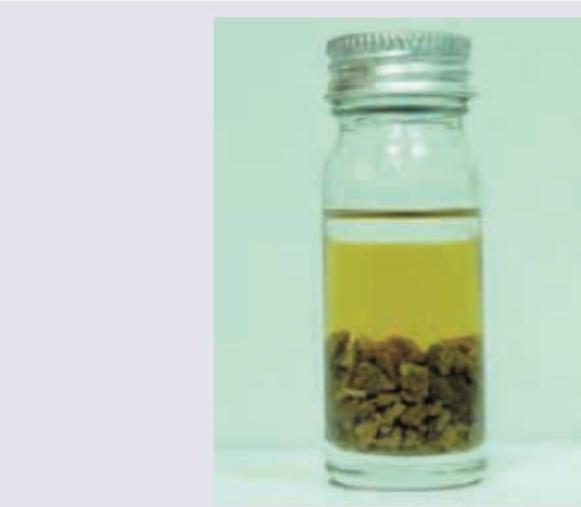
Which of the following is correct about the media shown below?
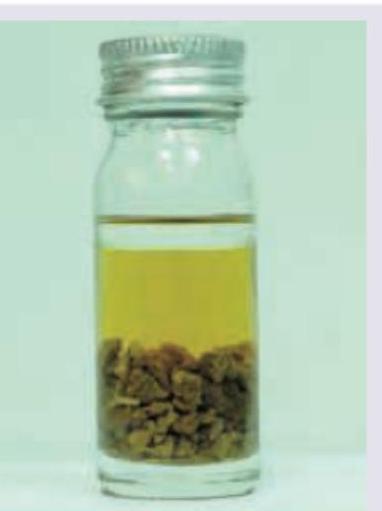
The image shows:
The germ theory of disease was propounded by
The ability of bacteria and microcolonies within biofilm to communicate with one another is?
Explanation: **Explanation:** Acid-fastness is the physical property of certain microorganisms to resist decolorization by acids during staining procedures (like the Ziehl-Neelsen stain). This property is typically due to high lipid content (mycolic acids) in the cell wall or a specialized thick coat. **Why Spores are the Correct Answer:** Bacterial spores (e.g., *Bacillus* and *Clostridium* species) possess a thick, impermeable spore coat containing **calcium dipicolinate**. This structure makes them highly resistant to environmental stress and chemical stains. In the context of acid-fast staining, spores are **acid-fast** when modified techniques (using 0.25%–0.5% sulfuric acid) are used, appearing as bright red structures. **Analysis of Other Options:** * **Nocardia:** While *Nocardia* is indeed "weakly" or "partially" acid-fast (due to shorter mycolic acid chains), it requires a weaker decolorizer (1% sulfuric acid). In many standard NEET-PG questions, if "Spores" or "Mycobacteria" are options, they are prioritized as the classic examples. * **Legionella:** These are Gram-negative bacilli. Only one specific species, *Legionella micdadei*, is partially acid-fast in tissue sections, but the genus as a whole is not classified as acid-fast. * **Rhodococcus:** Similar to *Nocardia*, *Rhodococcus equi* can be partially acid-fast, but it is less commonly tested than spores or Mycobacteria. **High-Yield NEET-PG Pearls:** * **Classic Acid-Fast Organisms (Mnemonic: MY NOSE):** **My**cobacterium, **No**cardia (partial), **S**pores (bacterial), **E**xoskeleton of head lice. * **Parasites:** Oocysts of *Cryptosporidium parvum*, *Cyclospora*, and *Isospora* (Cystoisospora) are acid-fast. * **Acid Concentrations used in ZN Stain:** * 20% Sulfuric acid: *M. tuberculosis* * 5% Sulfuric acid: *M. leprae* * 1% Sulfuric acid: *Nocardia* * 0.25%–0.5% Sulfuric acid: Bacterial Spores and *Oocysts*.
Explanation: **Explanation:** **LSD (Lysergic Acid Diethylamide)** is a potent hallucinogen that acts primarily as a partial agonist at the **5-HT2A receptors**. **1. Why "Bad Trip" is correct:** The most frequent reason for emergency department (ED) visits following LSD ingestion is an acute adverse psychological reaction, commonly known as a **"Bad Trip."** This is characterized by intense anxiety, terrifying hallucinations, panic attacks, and a loss of control. Patients often present with "behavioral toxicity," where their distorted perception leads to agitation or dangerous behavior, necessitating medical intervention (usually with benzodiazepines). **2. Analysis of Incorrect Options:** * **Flashbacks (Hallucinogen Persisting Perception Disorder):** These are spontaneous recurrences of the sensory distortions experienced during a previous trip. While distressing, they are usually brief and less likely to result in an acute ED visit compared to an active bad trip. * **Synaesthesia:** This is a classic effect of LSD where senses "merge" (e.g., "hearing colors" or "seeing sounds"). It is a subjective pharmacological effect rather than a medical emergency. * **Pupillary Dilatation (Mydriasis):** This is a common physical sign of LSD use due to sympathetic stimulation. While clinically observable, it is an expected physiological effect and not a reason for emergency presentation. **High-Yield Clinical Pearls for NEET-PG:** * **Mechanism:** 5-HT2A receptor agonism. * **Physical Signs:** Mydriasis, tachycardia, tremors, and hyperreflexia. * **Tolerance:** Develops very rapidly (tachyphylaxis) but there is no physical dependence or withdrawal syndrome. * **Management:** Most LSD-related ED visits are managed with a "calm down" technique in a quiet room; severe agitation is treated with **Benzodiazepines**. Antipsychotics (like Haloperidol) should be used with caution as they can lower the seizure threshold.
Explanation: ### Explanation The correct answer is **D. Protein synthesis**. While mitochondria are often called the "powerhouse of the cell," they are unique organelles that possess their own genome (mtDNA) and machinery for replication and transcription. However, the question asks about the processes the mitochondria are **involved in** versus where the bulk of these processes occur. 1. **Why "Protein Synthesis" is the correct answer (the "Except"):** In the context of standard medical examinations like NEET-PG, **protein synthesis** is primarily attributed to the **Ribosomes** (either free in the cytoplasm or attached to the Rough Endoplasmic Reticulum). Although mitochondria contain their own 70S ribosomes and synthesize a very small number of mitochondrial proteins (13 essential polypeptides), the vast majority of mitochondrial proteins are encoded by nuclear DNA and synthesized in the **cytosol** before being imported. Therefore, in a comparative sense, protein synthesis is not a primary "mitochondrial process" in the same way as the others listed. 2. **Analysis of Incorrect Options:** * **Fatty acid synthesis (A):** Mitochondria are involved in the elongation of fatty acids and provide the necessary Acetyl-CoA (via the citrate shuttle) for lipogenesis. * **DNA synthesis (B):** Mitochondria contain circular, double-stranded DNA (mtDNA) which undergoes independent replication (DNA synthesis) via DNA polymerase gamma. * **Fatty acid oxidation (C):** Beta-oxidation of fatty acids occurs exclusively within the **mitochondrial matrix**. This is a core function of the organelle to generate NADH and FADH2 for the electron transport chain. ### High-Yield Clinical Pearls for NEET-PG: * **Mitochondrial Inheritance:** mtDNA is inherited exclusively from the **mother** (maternal inheritance). * **Endosymbiotic Theory:** Mitochondria resemble prokaryotes; they have **70S ribosomes** (unlike the 80S cytosolic ribosomes) and circular DNA. * **Metabolic Crossroads:** Mitochondria are the site of the TCA cycle, Beta-oxidation, Ketogenesis, and the Urea cycle (initial steps). * **Mitochondrial Diseases:** Often present with "Ragged Red Fibers" on muscle biopsy (e.g., MELAS, MERRF).
Explanation: **Explanation:** Metachromatic granules (also known as **Volutin** or **Babes-Ernst granules**) are intracellular storage polymers of inorganic polyphosphates. They are characteristic of *Corynebacterium diphtheriae*. The term "metachromatic" refers to the property where the granules stain a different color (usually reddish-purple) than the dye used (usually blue) due to the high concentration of polymerized phosphates. **Why Ponder's Stain is Correct:** Ponder’s stain (along with **Albert’s** and **Neisser’s** stains) is a specialized differential stain designed to visualize these granules. Ponder’s reagent contains toluidine blue; the granules appear reddish-pink while the bacillary body stains light blue, creating a distinct contrast essential for the presumptive diagnosis of Diphtheria. **Analysis of Incorrect Options:** * **Negative Stain:** Uses dyes like India ink or Nigrosin to stain the background, leaving the organism clear. It is primarily used to demonstrate **capsules** (e.g., *Cryptococcus neoformans*). * **Gram’s Stain:** This is a general differential stain based on cell wall composition. While *C. diphtheriae* is Gram-positive, the granules are not reliably distinguished from the cytoplasm using this method. * **Leishman Stain:** A Romanowsky stain used primarily for peripheral blood smears to identify blood cells and parasites (like *Plasmodium* or *Leishmania*), not for bacterial storage granules. **High-Yield Clinical Pearls for NEET-PG:** * **Mnemonic for Metachromatic Stains:** "**P**onder **A**nd **N**eisser" (**P**onder’s, **A**lbert’s, **N**eisser’s). * **Appearance:** In Albert’s stain, granules appear **bluish-black** against a **green** bacillary body. * **Clinical Association:** The presence of these granules in a "Chinese letter" or "cuneiform" arrangement is highly suggestive of *Corynebacterium diphtheriae*.
Explanation: **Explanation:** **Osgood-Schlatter disease** is a common cause of knee pain in active adolescents. It is characterized as a **traction apophysitis** (overuse injury) resulting from repetitive strain on the patellar tendon at its insertion point. 1. **Why Tibial Tubercle is Correct:** During growth spurts, the quadriceps muscle pulls on the patellar tendon, which in turn puts tension on the **tibial tubercle** (the ossification center of the proximal tibia). Repetitive microtrauma leads to inflammation, pain, and a visible bony prominence at this site. It is classically seen in young athletes involved in jumping or running sports. 2. **Why Other Options are Incorrect:** * **Patella:** Osteochondritis of the inferior pole of the patella is known as **Sinding-Larsen-Johansson syndrome**, not Osgood-Schlatter. * **Femur Medial Condyle:** This is the most common site for **Osteochondritis Dissecans (OCD)**, where a fragment of articular cartilage and underlying bone detaches from the joint surface. * **Femur Lateral Condyle:** While OCD can occur here, it is significantly less common than the medial condyle and is unrelated to the traction mechanism of Osgood-Schlatter. **NEET-PG High-Yield Pearls:** * **Radiology:** Lateral X-ray may show fragmentation or prominence of the tibial tubercle and soft tissue swelling. * **Management:** Primarily conservative (RICE protocol, NSAIDs, and activity modification). It is self-limiting and resolves once the growth plate closes. * **Differential Diagnosis:** Always differentiate from **Sever’s disease**, which is traction apophysitis of the **calcaneus** (heel).
Explanation: **Explanation:** The synthesis of thyroid hormones occurs within the thyroid follicle through the iodination of tyrosine residues on the protein **thyroglobulin**. This process, known as organification, involves the enzyme thyroid peroxidase (TPO). **Why DIT is the correct answer:** During the synthesis process, iodine is added to tyrosine to form Monoiodotyrosine (MIT) and Diiodotyrosine (DIT). Statistically and biochemically, the coupling process favors the formation of DIT. In the thyroid gland, the ratio of DIT to MIT is approximately **2:1**. Since T3 and T4 are stored in the colloid as part of the thyroglobulin complex, and DIT is the precursor for both T4 (DIT + DIT) and T3 (MIT + DIT), **Diiodotyrosine (DIT)** remains the most abundant iodinated compound stored within the gland. **Analysis of Incorrect Options:** * **A. Monoiodotyrosine (MIT):** While present in significant amounts, its concentration is roughly half that of DIT. * **C. Triiodothyronine (T3):** T3 is the most biologically active form, but it is produced in much smaller quantities within the gland compared to its precursors. Most circulating T3 is actually derived from the peripheral conversion of T4. * **D. Reverse T3:** This is a metabolically inactive product formed primarily in peripheral tissues (not the thyroid) during states of illness or starvation. **High-Yield Clinical Pearls for NEET-PG:** * **Wolff-Chaikoff Effect:** A transient reduction in thyroid hormone synthesis caused by the ingestion of a large amount of iodine. * **Storage:** The thyroid is unique among endocrine glands because it stores its hormones extracellularly (in the colloid) in quantities sufficient to last 2–3 months. * **Coupling:** 2 DIT = T4 (Thyroxine); 1 MIT + 1 DIT = T3. Since T4 is produced in a 10:1 ratio to T3, the requirement for DIT is significantly higher.
Explanation: ***Liquid paraffin layering over the broth prevents air entry*** - The image depicts **Cooked Meat Medium (CMM)**, which is used primarily for cultivating **anaerobic bacteria**, particularly Clostridia species. - **Liquid paraffin layering** on top of the broth is a key feature of CMM that **creates anaerobic conditions** by preventing oxygen diffusion into the medium. - This technique, combined with the reducing substances from meat particles, ensures a truly anaerobic environment suitable for obligate anaerobes. *Saccharolytic bacteria turn meat black* - **Saccharolytic bacteria** primarily ferment carbohydrates and produce acid/gas, but do not typically cause blackening of meat. - Blackening in CMM is associated with **hydrogen sulfide (H2S) production** by proteolytic bacteria, not saccharolytic activity. *Proteolytic bacteria turn meat red* - This is incorrect. **Proteolytic bacteria** break down proteins and typically turn the meat particles **black** due to H2S production. - The digestion of meat proteins by proteolytic Clostridia results in darkening (blackening), not reddening of the medium. *Favor growth of microaerophilic bacteria* - CMM is designed for **anaerobic bacteria**, not microaerophiles. - **Microaerophilic bacteria** require low oxygen tension (5-10% O2) and are cultivated in specialized conditions like candle jars or microaerophilic atmosphere generators, not in CMM. - CMM provides an anaerobic environment through liquid paraffin seal and reducing agents from meat.
Explanation: ***Robertson cooked meat broth*** - The image displays a glass jar containing a **meat-based medium** at the bottom, covered with a liquid, which is characteristic of Robertson cooked meat broth. - This medium is primarily used for the **cultivation of anaerobic bacteria**, as the meat particles create an anaerobic environment and provide nutrients. *Alkaline peptone water* - Alkaline peptone water is a **liquid enrichment medium** that appears as a clear, yellowish broth without any particulate matter like cooked meat. - It is specifically used for the enrichment of *Vibrio cholerae* due to its high pH. *Lowenstein Jensen media* - Lowenstein Jensen media is a **solid egg-based medium** that is typically green in color and typically slants in test tubes or petri dishes. - It is used for the isolation and culture of **mycobacteria**, and its appearance is distinctly different from the image. *Cary Blair medium* - Cary Blair medium is a **semisolid transport medium** used for the preservation of enteric bacteria in stool samples. - It appears as a clear or slightly opalescent gel in a tube and does not contain visible chunks of meat.
Explanation: ***Louis Pasteur*** - **Louis Pasteur** is credited with **propounding the germ theory of disease** in the 1860s-1870s through his groundbreaking experiments. - He provided experimental evidence that **microorganisms cause fermentation, putrefaction, and infectious diseases**, definitively disproving **spontaneous generation**. - His work laid the **foundational framework** for understanding that specific microbes cause specific diseases, revolutionizing medicine and public health. *Robert Koch* - **Robert Koch** made crucial contributions by **validating and systematizing** the germ theory through his work on anthrax, tuberculosis, and cholera. - He developed **Koch's postulates**, providing a rigorous methodology for proving causation between specific microorganisms and diseases. - However, he built upon **Pasteur's foundational work** rather than originally propounding the theory. *Hippocrates* - **Hippocrates** is the "Father of Medicine" but his theories predated germ theory by over 2000 years. - His **humoral theory** attributed disease to imbalances in bodily fluids, not microorganisms. - While he emphasized observation and rational thought, his work did not involve the concept of germs. *August Weismann* - **August Weismann** was a German evolutionary biologist known for his **germ plasm theory** in genetics. - His work distinguished between **germ cells and somatic cells** in heredity and evolution. - His contributions were to genetics, not to the germ theory of infectious disease causation.
Explanation: ***Quorum sensing*** - **Quorum sensing** is a system of stimuli and response that is correlated to population density, allowing bacteria within a biofilm to **communicate and coordinate their behavior**. - This communication enables bacteria to organize tasks like gene expression, biofilm formation, and virulence factor production once a certain **population density (quorum)** is reached. *Transmission* - **Transmission** describes the spread of a disease or pathogen from one host to another, or from a source to a host. - It does not refer to the internal communication mechanisms between microorganisms within a biofilm. *Conjugation* - **Conjugation** is a mechanism of bacterial gene transfer where genetic material, typically a plasmid, is transferred directly from one bacterium to another through a **pilus**. - While it involves bacterial interaction, it's about gene exchange rather than population-density-dependent communication. *Transformation* - **Transformation** is a process by which bacterial cells take up **naked DNA** from their environment. - This is another mechanism of genetic exchange, distinct from cell-to-cell communication that regulates group behavior based on population density.
History and Scope of Microbiology
Practice Questions
Classification of Microorganisms
Practice Questions
Bacterial Morphology and Structure
Practice Questions
Bacterial Physiology and Metabolism
Practice Questions
Bacterial Genetics
Practice Questions
Microbial Growth and Nutrition
Practice Questions
Sterilization and Disinfection
Practice Questions
Bacterial Identification Methods
Practice Questions
Normal Microbiota and Pathogenicity
Practice Questions
Antimicrobial Susceptibility Testing
Practice Questions
Get full access to all questions, explanations, and performance tracking.
Start For Free