Stuart's medium is a transport medium for
Which is false regarding Spaulding's criteria?
Which of the following statements about transport media is false?
How many blood samples should be drawn in cases of fever of unknown origin to optimize detection of intermittent bacteremia?
What are the reasons a sample may be disqualified for culture?
Which of the following statements is MOST true regarding water reabsorption in the nephron?
A patient presents with suspected diphtheria. What media will be used to diagnose this condition?
Order of drawing blood in vacutainers should be in the following sequence to prevent contamination?
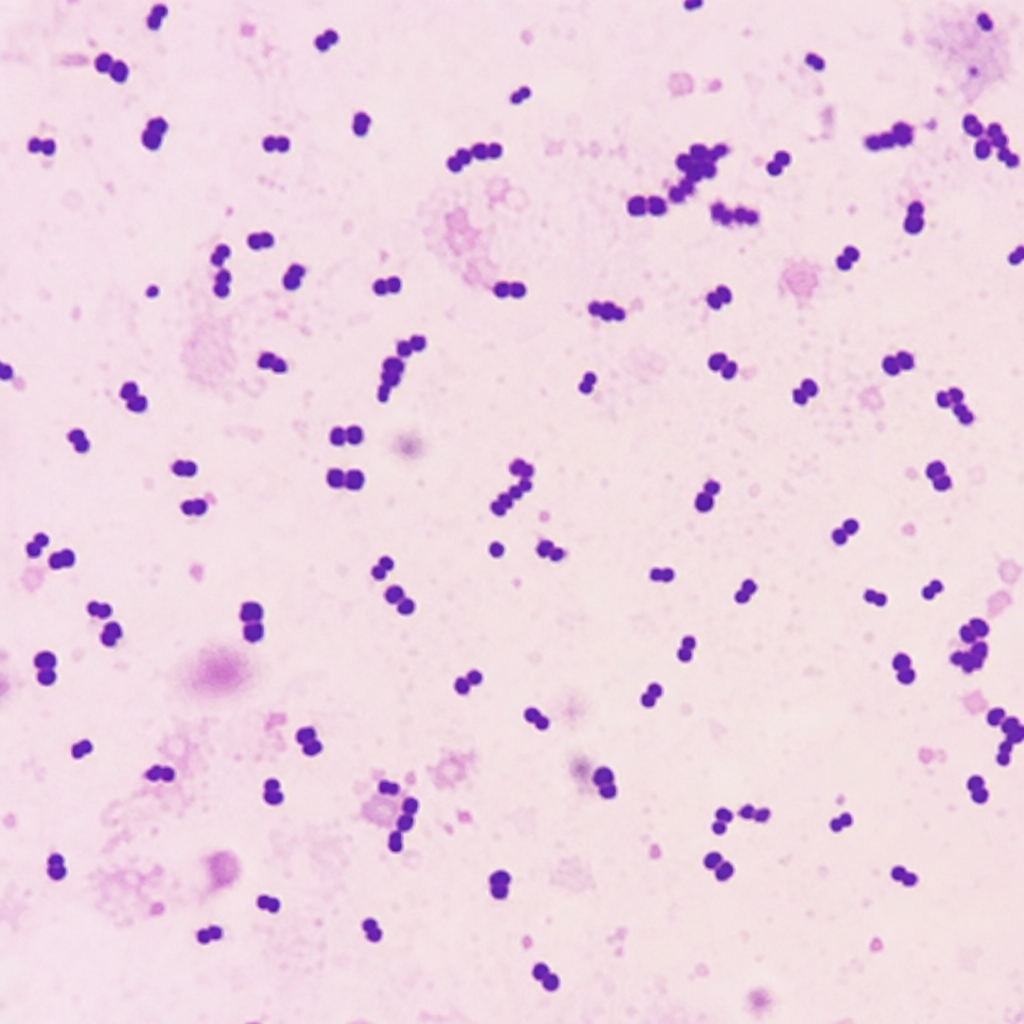
A patient presented with meningitis, and the CSF sample was subjected to gram staining and microscopy and appears as shown in the microscopic image given below. Which of the following features / tests will be characteristic of the organism?
Darting motility which occurs in V.cholerae, also found in -
Explanation: ***Neisseria*** - **Stuart's medium** is a classic transport medium specifically designed to preserve the viability of fastidious organisms like **Neisseria gonorrhoeae** and **Neisseria meningitidis** during transport to the laboratory. - It contains ingredients like charcoal to neutralize toxic substances and a redox indicator to monitor oxygen levels, which helps maintain the anaerobic or microaerophilic conditions preferred by these bacteria. *Shigella* - While other transport media like **Cary-Blair medium** are commonly used for stool pathogens, including *Shigella*, Stuart's medium is not the primary choice. - *Shigella* is less fastidious than *Neisseria* and can survive in various transport conditions, but specific media are preferred for optimal recovery. *Streptococcus* - **Stuart's medium** is not typically used for the transport of **Streptococcus** species. - *Streptococcus pneumoniae* or *Streptococcus pyogenes* are commonly transported on their own specialized media or in simple saline. *Vibrio* - **Vibrio** species, particularly *Vibrio cholerae*, are usually transported in **Cary-Blair medium** for optimal recovery. - **Stuart's medium** is not specifically formulated to maintain the viability of *Vibrio* species, which thrive in alkaline conditions.
Explanation: ***Semi critical items need low level disinfection*** - This statement is **FALSE** and is the **correct answer** to this question. - **Semi-critical items** require **high-level disinfection**, NOT low-level disinfection. - Semi-critical items come into contact with mucous membranes or non-intact skin and require removal of all vegetative bacteria, fungi, mycobacteria, and most viruses. - Examples include endoscopes, laryngoscope blades, and respiratory therapy equipment. *Non critical items require only decontamination* - This statement is **TRUE** (or at least acceptable in context). - Non-critical items contact intact skin and require **cleaning** and **low-level disinfection** (which falls under the umbrella term "decontamination"). - Examples include blood pressure cuffs, stethoscopes, and bedpans. *Cardiac catheters are examples of critical items* - This statement is **TRUE**. - **Cardiac catheters** enter the **vascular system** (sterile tissue), making them **critical items**. - Critical items require **sterilization** to prevent severe systemic infection. *Semi critical items are those which come in contact with mucous membrane or non intact skin* - This statement is **TRUE** and correctly defines **semi-critical items** according to Spaulding's classification. - This is the standard definition used in medical device processing protocols.
Explanation: ***Bacteria multiply vigorously*** - Transport media are designed to maintain the viability of microorganisms without allowing them to multiply significantly. - Vigorous multiplication would alter the original microbial load and potentially lead to overgrowth of commensals or contaminants, making accurate diagnosis difficult. *Organisms remain viable* - The primary purpose of transport media is to ensure that the pathogens present in the specimen remain alive and in a stable condition until they can be cultured. - This viability is crucial for successful isolation and identification of the causative agent. *Pike's medium is used as transport medium for Streptococcus pyogenes* - Pike's medium is indeed a specialized transport medium specifically formulated to preserve the viability of fastidious organisms like *Streptococcus pyogenes*. - It helps inhibit the growth of commensal flora while maintaining the target organism's integrity. *Used for transport of specimens* - Transport media are essential for collecting and transporting clinical specimens collected at one site to a laboratory for analysis at another site. - They prevent desiccation and maintain the integrity of the sample during transit, ensuring reliable diagnostic results.
Explanation: ***3*** - Drawing **three separate blood samples** significantly increases the likelihood of detecting intermittent bacteremia, as bacteria may not always be present in high concentrations in the bloodstream. - This practice maximizes the diagnostic yield while minimizing the risk of false positives from contamination. *1* - A single blood sample has a **low sensitivity** for detecting intermittent bacteremia, as transient presence of bacteria might be missed. - Relying on one sample increases the chance of a **false negative**, delaying appropriate treatment. *2* - While two samples are better than one, they still may not be sufficient to reliably detect **intermittent bacteremia** which can fluctuate. - This quantity might be acceptable for some conditions but is suboptimal for robust exclusion of **bacteremia in FUO** [1]. *4* - While four samples might slightly increase sensitivity over three, the **incremental benefit** in diagnostic yield is often negligible. - This approach adds to the **patient discomfort** and increases resource utilization without substantial additional diagnostic value.
Explanation: ***Sample brought in formalin*** - Formalin is a **fixative** that will kill any viable **microorganisms** present in the sample, rendering it unsuitable for culture because no growth will occur. - The purpose of a culture is to identify living organisms; a fixed sample prevents this crucial step. *Sample brought within 2 hr of collection* - This is an **ideal scenario** for sample integrity, as it minimizes the time for degradation or overgrowth of contaminants. - **Prompt transport** ensures the viability of fastidious organisms and accurate representation of the original microbial load. *Sample brought in sterile plastic container* - Using a **sterile container** is essential for preventing **contamination** from external sources. - A non-sterile container would introduce environmental microbes, leading to misleading culture results. *Sample obtained after cleaning the collection site* - **Cleaning the collection site** reduces the presence of **normal flora** or skin contaminants. - This practice helps to ensure that any organisms grown in culture are more likely to be pathogens from the infection site rather than surface contaminants.
Explanation: ***The bulk of water reabsorption occurs in the proximal tubule secondary to Na+ reabsorption.*** - Approximately 65-70% of filtered water is reabsorbed in the **proximal tubule**, largely driven by the active transport of **Na+**, which creates an osmotic gradient. - This process is **obligatory**, meaning it occurs regardless of the body's hydration status, and is essential for maintaining fluid balance. *Facultative reabsorption primarily occurs in the collecting ducts.* - While facultative water reabsorption, **regulated by ADH**, does occur in the **collecting ducts**, this statement is not "most true" because it overlooks the quantitative significance of the proximal tubule. - The collecting ducts are responsible for fine-tuning water reabsorption to match the body's hydration needs, but only a smaller, variable amount compared to the proximal tubule. *Obligatory reabsorption occurs regardless of hydration state.* - This statement is true, but it is not the MOST true statement compared to the option highlighting the bulk reabsorption in the proximal tubule. **Obligatory reabsorption** primarily occurs in the **proximal convoluted tubule** and **loop of Henle**. - It is a constant process that recovers a large, fixed percentage of filtered water, essential for basic volume maintenance **independent of ADH**. *Water reabsorption can vary significantly depending on the body's hydration needs.* - This statement is true, specifically referring to **facultative water reabsorption**, which is regulated by **antidiuretic hormone (ADH)** in the collecting ducts. - However, this variation is only for about 10-20% of total reabsorption, while the *bulk* of reabsorption is constant and occurs in the **proximal tubule**.
Explanation: ***Loffler's serum slope*** - **Löffler's serum slope** is a specific enrichment medium used for the isolation and identification of *Corynebacterium diphtheriae*, the causative agent of diphtheria. - It enhances the characteristic **metachromatic granules** (Babes-Ernst bodies) within the bacteria, aiding in microscopic identification. *Chocolate agar* - **Chocolate agar** is a non-selective enrichment medium often used for fastidious organisms like *Haemophilus influenzae* and *Neisseria* species. - While it supports the growth of many bacteria, it is not specifically optimized for the isolation or enhanced identification of *Corynebacterium diphtheriae*. *Cary-Blair* - **Cary-Blair transport medium** is designed to preserve enteric pathogens like *Salmonella* and *Shigella* in fecal samples during transport. - It is not a primary culture medium for *Corynebacterium diphtheriae* and would not be used for diagnosis of diphtheria. *Lowenstein-Jensen* - **Lowenstein-Jensen (LJ) medium** is a specialized egg-based medium primarily used for the isolation and culture of *Mycobacterium tuberculosis*. - It contains malachite green to inhibit the growth of other bacteria and is not suitable for the growth of *Corynebacterium diphtheriae*.
Explanation: ***Blue, Red, Violet, Grey*** - This sequence follows the **CLSI (Clinical and Laboratory Standards Institute) order of draw** guidelines, which are critical for preventing **cross-contamination** between additives of different vacutainers. - The order starts with tubes for **coagulation studies** (blue top with sodium citrate), followed by serum tubes (red top), EDTA tubes (violet top for hematology), and finally glycolytic inhibitor tubes (grey top for glucose). - This prevents tissue thromboplastin contamination and anticoagulant carryover that could affect laboratory test results. *Grey, Blue, Red, Violet* - This order is incorrect as it places the **grey top tube** (containing fluoride/oxalate) first, which could contaminate subsequent tubes with its additives and affect tests. - The **blue top tube** for coagulation studies should come early in the sequence to minimize tissue thromboplastin contamination. *Blue, Violet, Red, Grey* - This sequence is incorrect because the **violet top tube** (EDTA) is placed before the **red top tube** (serum). - **EDTA contamination** can chelate calcium and other cations, interfering with chemistry tests performed on serum in the red top tube. *Red, Blue, Violet, Grey* - This order is incorrect as the **red top tube** is placed first, followed by the **blue top tube** (citrate). - The blue top tube should precede tubes with clot activators to **prevent tissue thromboplastin** from contaminating coagulation samples, which would lead to falsely shortened clotting times.
Explanation: ***Catalase negative, optochin sensitive*** - The image shows **Gram-positive diplococci** (lancet-shaped, occurring in pairs), indicative of *Streptococcus pneumoniae*. - *S. pneumoniae* is known for being **catalase-negative** and **optochin-sensitive**, which are key diagnostic features that distinguish it from other α-hemolytic streptococci. - Additional characteristic: *S. pneumoniae* **ferments inulin** (bile soluble, quellung positive). *Ferments glucose and maltose but not inulin* - The phrase "does not ferment inulin" would suggest a streptococcus species OTHER than *S. pneumoniae*. - *S. pneumoniae* characteristically **DOES ferment inulin**, which is an important diagnostic feature. - This option is incorrect because it describes sugar fermentation that contradicts *S. pneumoniae* characteristics. *Oxidase and catalase negative, does not ferment inulin* - While *S. pneumoniae* is catalase-negative and oxidase-negative (oxidase test not routinely used for Gram-positive cocci), the statement "does not ferment inulin" is **incorrect** for *S. pneumoniae*. - *S. pneumoniae* **ferments inulin**, which is a key differentiating feature from other streptococci. - This combination of features does not match the organism shown in the microscopy. *Oxidase and catalase positive and does not ferment maltose or glucose* - This biochemical profile is typical for non-fermenting Gram-negative bacteria like *Pseudomonas aeruginosa*. - Such organisms would appear as **Gram-negative rods**, not the **Gram-positive diplococci** seen in the image. - This option is clearly incorrect based on the Gram stain morphology alone.
Explanation: ***Campylobacter jejuni*** - *Campylobacter jejuni* is well-known for its **rapid, corkscrew-like motility**, often described as **darting motility**, which is a key characteristic for its identification. - This characteristic movement is due to its **polar flagella** and helps the bacterium penetrate the intestinal mucosa. *Shigella* - *Shigella* species are notable for being **non-motile**, a crucial feature distinguishing them from other enterobacteriaceae. - Their lack of flagella and motility prevents them from exhibiting darting or any other form of self-propulsion. *Bacillus anthracis* - *Bacillus anthracis* is typically described as **non-motile** in its vegetative form. - While other *Bacillus* species can be motile, *B. anthracis* lacks the flagella necessary for darting motility. *Pneumococcus* - *Pneumococcus* (Streptococcus pneumoniae) is a **non-motile** bacterium. - It does not possess flagella and therefore cannot exhibit darting or any other type of active movement.
Get full access to all questions, explanations, and performance tracking.
Start For Free