A 25-year-old male presents with a burning sensation during urination and purulent discharge from the penis, which started 5 days ago. He reports unprotected sexual intercourse with a new partner two weeks ago. Examination reveals an erythematous urethral meatus with noticeable purulent discharge. A Gram stain of the discharge reveals intracellular gramnegative diplococci. The patient is otherwise healthy with no known drug allergies. What is the most appropriate treatment for this patient?
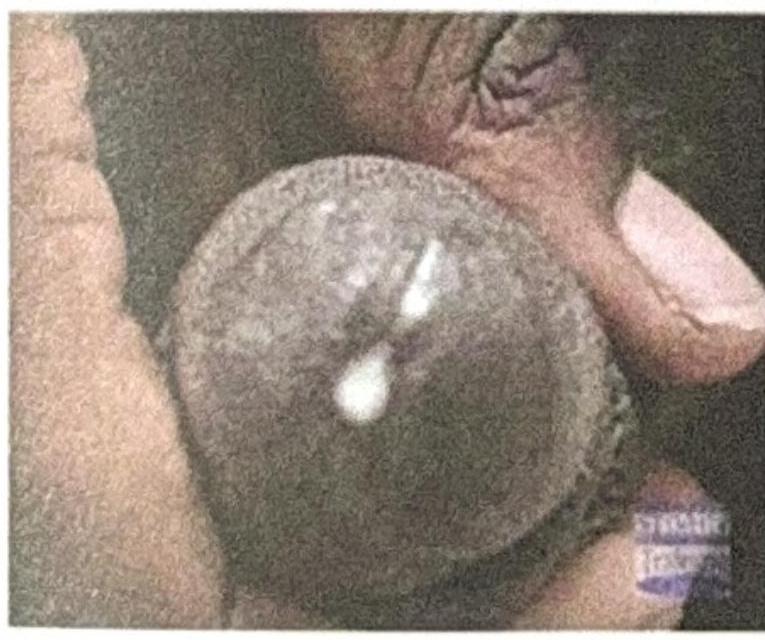
A male presents with urethral discharge as shown in the figure. What is the most likely cause?
A 28-year-old man presents with painless anal ulcer. Dark-field microscopy shows spirochetes. He is allergic to penicillin with history of anaphylaxis. Which of the following is the most appropriate treatment?
A 25-year-old woman presents for STI screening. She reports consistent condom use with her partner. Which of the following STIs is least effectively prevented by proper condom use?
A 42-year-old man presents with painless penile ulcer and rash on palms and soles. VDRL is positive at 1:64. CSF examination shows: WBC 35/μL (lymphocytes), protein 65 mg/dL, VDRL positive. Which of the following is the most appropriate treatment?
A 35-year-old man presents with burning penile lesions 3 days after unprotected intercourse. He has no prior history of similar lesions. Which of the following best differentiates primary from recurrent HSV infection?
A 45-year-old man presents with a 2-month history of painless testicular swelling. He reports being treated for syphilis 20 years ago. Examination reveals bilateral, non-tender testicular enlargement. Which of the following is the most likely diagnosis?
A 30-year-old man presents with generalized lymphadenopathy, palmar rash, and condylomata lata 2 months after being treated for primary syphilis. VDRL is positive at 1:128. Which of the following best explains the pathogenesis of these manifestations?
A 19-year-old woman presents for STI screening. She is asymptomatic but reports multiple sexual partners. Which of the following screening tests should be performed according to current guidelines?
A 24-year-old man presents with dysuria and urethral discharge 5 days after unprotected sexual intercourse. Gram stain of the discharge shows intracellular gram-negative diplococci. The patient reports penicillin allergy. Which of the following is the most appropriate empiric treatment?
Explanation: ***Cefixime 400 mg orally once*** - This patient presents with symptoms and a Gram stain consistent with **gonococcal urethritis** (**intracellular gram-negative diplococci**) [1]. - Oral cefixime is an alternative first-line option for **uncomplicated gonococcal infections** when intramuscular ceftriaxone is not feasible or available [1]. *Metronidazole 500 mg orally twice daily for 7 days* - **Metronidazole** is primarily used to treat **anaerobic bacterial infections** and **parasitic infections** (e.g., trichomoniasis, bacterial vaginosis). - It is not effective against **Neisseria gonorrhoeae**, the causative agent of this patient's condition. *Doxycycline 100 mg orally twice daily for 7 days* - **Doxycycline** is the treatment of choice for **Chlamydia trachomatis infections** and is often co-administered empirically with gonorrhea treatment due to high rates of co-infection [1]. - While it addresses potential chlamydial co-infection, it is not the primary treatment for **gonococcal urethritis** itself. *Ceftriaxone 500 mg intramuscularly* - **Ceftriaxone 500 mg IM (or 1 gram in some guidelines)** is the **preferred first-line treatment for uncomplicated gonococcal infections** due to its high efficacy and single-dose administration [1]. - While an excellent choice, the question asks for the *most appropriate* given the options, and oral cefixime is an acceptable alternative, especially in scenarios where IM injections are impractical.
Explanation: ***Gonorrhea*** - The image depicts **purulent urethral discharge**, a classic symptom frequently seen in **gonococcal urethritis**. - **Neisseria gonorrhoeae** commonly causes urethritis with a thick, yellowish, or greenish discharge. *HIV* - HIV primarily affects the immune system and does not typically present with **gonorrhea-like urethral discharge** as a direct symptom. - While HIV can increase susceptibility to other STIs, the discharge itself is not a direct manifestation of HIV infection. *Haemophilus ducreyi* - This bacterium is the causative agent of **chancroid**, which presents as painful genital ulcers, not urethral discharge. - **Chancroid ulcers** are typically soft, ragged, and associated with tender inguinal lymphadenopathy. *Syphilis* - Syphilis, caused by **Treponema pallidum**, presents with a **painless chancre** in its primary stage, not urethral discharge. - Later stages of syphilis involve rashes, neurological symptoms, or gummas, which are distinct from the penile discharge shown.
Explanation: **Doxycycline 100 mg orally twice daily for 14 days** - **Doxycycline** is the recommended alternative for treating **primary syphilis** in patients with a **penicillin allergy**, especially with a history of anaphylaxis. - The 14-day duration for doxycycline is appropriate for treating early syphilis, including primary syphilis. *Erythromycin 500 mg four times daily for 14 days* - While erythromycin is an alternative, its efficacy for syphilis is **lower than doxycycline**, and it requires a longer duration of treatment. - It is generally considered a less preferred option than doxycycline for penicillin-allergic patients due to adherence issues and potential for gastrointestinal side effects. *Penicillin desensitization followed by benzathine penicillin* - **Penicillin desensitization** is typically reserved for situations where penicillin is the **only truly effective treatment** and alternatives are not suitable, such as in neurosyphilis or syphilis in pregnancy. - For primary syphilis in a non-pregnant patient with a clear anaphylactic allergy, an effective alternative like doxycycline is preferred over the risks associated with desensitization. *Azithromycin 2 g orally once* - **Azithromycin** resistance in *Treponema pallidum* is increasingly prevalent, making it an unreliable treatment for syphilis. - A single dose is insufficient for effective treatment and carries a higher risk of treatment failure. *Ceftriaxone 250 mg IM* - **Ceftriaxone** is an alternative in some cases of syphilis, but the recommended dose for primary syphilis is typically higher and given for a longer duration (e.g., 1-2 g IM or IV daily for 10-14 days). - A single 250 mg IM dose is insufficient for the treatment of syphilis and is more commonly used for gonorrhea.
Explanation: ***HPV*** - **Human Papillomavirus** is primarily transmitted through skin-to-skin contact, making it difficult to prevent even with consistent condom use [1]. - Condoms may not cover all infected skin areas, allowing for transmission from areas like the **scrotum** or **perineum** [1]. *Chlamydia* - **Chlamydia trachomatis** is a bacterial infection primarily transmitted through **genital fluid exchange**, which is largely prevented by condoms. - Consistent and correct condom use significantly reduces the risk of transmission. *Gonorrhea* - **Neisseria gonorrhoeae** is a bacterial infection transmitted through **mucous membrane contact** and **genital fluids**, effectively blocked by condoms. - Condoms serve as a reliable barrier against the transmission of this bacterium. *HIV* - **Human Immunodeficiency Virus** is transmitted through **bodily fluids** including semen and vaginal fluid; condoms are highly effective in preventing this exchange. - When used correctly and consistently, condoms are a critical tool in preventing HIV transmission. *Hepatitis B* - **Hepatitis B virus (HBV)** is transmitted through **blood** and **bodily fluids**, including sexual contact. - Condoms provide a significant physical barrier against the exchange of these fluids, thus reducing transmission risk.
Explanation: ***Aqueous crystalline penicillin G IV for 14 days*** - This patient presents with symptoms indicating **secondary syphilis** (painless penile ulcer, rash on palms/soles, positive VDRL) and **neurosyphilis** (positive VDRL in CSF, elevated CSF WBC and protein) [1]. - **Aqueous crystalline penicillin G IV** is the recommended treatment for neurosyphilis due to its excellent penetration into the central nervous system, administered for **10-14 days**. *Benzathine penicillin G IM weekly for 3 weeks* - This regimen is typically used for **late latent syphilis** or **tertiary syphilis** without neurological involvement [1]. - While it's a form of penicillin, it does not achieve adequate CNS levels to effectively treat neurosyphilis. *Benzathine penicillin G IM once* - A single dose of **benzathine penicillin G IM** is the standard treatment for **primary, secondary, and early latent syphilis** [1]. - However, it is insufficient for neurosyphilis as it does not reliably achieve treponemicidal concentrations in the CSF. *Ceftriaxone IV for 10 days* - **Ceftriaxone** can be an alternative treatment for syphilis in **penicillin-allergic patients** and has some CNS penetration. - However, for neurosyphilis, penicillin is still universally considered the **most effective first-line agent**, and ceftriaxone efficacy is less established. *Doxycycline for 28 days* - **Doxycycline** is an alternative treatment for **early syphilis** in penicillin-allergic patients (usually 14 days) or **late latent syphilis** (28 days). - It does not achieve adequate CNS concentrations and is therefore **not recommended for neurosyphilis**.
Explanation: Systemic symptoms and bilateral lymphadenopathy - **Primary HSV infection** often presents with noticeable **systemic symptoms** such as fever, malaise, myalgia, and bilateral inguinal lymphadenopathy [1], [2]. - These systemic features are typically **absent or very mild** during recurrent episodes due to partial immunity. *Duration of symptoms* - While primary HSV infections often have a **longer duration of symptoms** compared to recurrent outbreaks, this is not the most definitive differentiating factor as there can be overlap [1]. - Recurrent lesions tend to resolve more quickly due to the host's existing immune response [1]. *Number of lesions* - Primary infections generally present with a **greater number and wider distribution of lesions** compared to recurrent episodes [3]. - However, the size and extent of an outbreak can vary, making it less specific than systemic symptoms for differentiation. *Location of lesions* - The location of lesions is often **consistent in recurrent HSV infections**, usually appearing in the same or adjacent anatomical region as the primary infection [2]. - While primary infections might have a broader initial distribution, this isn't the primary differentiating factor compared to the presence of systemic symptoms. *Viral culture positivity* - **Viral cultures are typically positive for both primary and recurrent HSV infections**, indicating active viral shedding [3]. - Therefore, culture positivity does not help differentiate between a primary and a recurrent episode.
Explanation: ***Gummatous orchitis*** - This diagnosis is strongly suggested by the history of treated **syphilis 20 years ago** and the presentation of **painless, bilateral, non-tender testicular enlargement**. Gummatous orchitis is a manifestation of **tertiary syphilis** [1]. - **Gumma** formation is a characteristic lesion of tertiary syphilis, leading to chronic, inflammatory, and often painless infiltrates in various organs, including the testes [1]. *Hydrocele* - While hydroceles cause painless testicular swelling, they are typically **transilluminable** and feel like a fluid-filled sac separate from the testis. The clinical description of "non-tender testicular enlargement" implies involvement of the testicular tissue itself, not just fluid accumulation around it. - Hydroceles are usually not associated with a remote history of syphilis in this manner and would not explain the **bilateral** and **solid-feeling** enlargement expected with gummatous orchitis. *Tuberculosis orchitis* - Tuberculosis orchitis usually presents with a more **indurated** or **nodular** feel and is often associated with symptoms of systemic tuberculosis (e.g., fever, weight loss, night sweats) or other genitourinary TB manifestations [2]. - While it can be painless, the specific history of syphilis points away from TB as the most likely cause without other supporting evidence. *Epididymitis* - Epididymitis is typically characterized by **pain and tenderness** of the epididymis, often accompanied by fever and dysuria, especially in acute cases. Even chronic epididymitis usually involves some degree of tenderness. - The presented case describes a **painless** condition primarily affecting the testis, not the epididymis, making epididymitis less likely. *Testicular cancer* - Testicular cancer typically presents as a **unilateral, painless mass or enlargement** of the testis. While it can be painless, the **bilateral involvement** seen in this patient makes testicular cancer less likely as a primary diagnosis. - Although it's a differential for painless testicular swelling, the strong history of syphilis is a powerful indicator for an infectious cause like gummatous orchitis.
Explanation: Hematogenous dissemination of spirochetes - The manifestations described (generalized lymphadenopathy, palmar rash, and condylomata lata) are classic signs of secondary syphilis, which occurs due to widespread dissemination of T. pallidum through the bloodstream [1]. - The persistence of a high-titer VDRL after primary syphilis treatment further supports active infection with systemic involvement [1]. *Treatment failure* - While possible, treatment failure typically presents with persistent primary lesions or symptoms, not necessarily the characteristic widespread rash and lymphadenopathy of secondary syphilis, especially if the primary infection was reportedly 'treated'. - The specific array of symptoms points more definitively to a stage of syphilis where the pathogen has widely disseminated. *Reinfection with T. pallidum* - Reinfection would typically lead to a primary chancre, although atypical presentations can occur [1]. - The described generalized symptoms and high VDRL titer are more consistent with the secondary stage of a continuous infection rather than a new primary infection. *Immune complex deposition* - While immune complex deposition can play a role in some manifestations of syphilis (e.g., glomerulonephritis), it is not the primary mechanism for the widespread mucocutaneous lesions and lymphadenopathy characteristic of secondary syphilis. - The immune response to the disseminated spirochetes, rather than immune complex deposition, is largely responsible for the clinical findings. *Direct invasion of skin by spirochetes* - While spirochetes are present in skin lesions, the generalized nature of the rash and lymphadenopathy indicates a systemic process, which begins with hematogenous spread to various tissues, including the skin, rather than direct invasion being the sole or primary mechanism [1]. - Direct invasion alone wouldn't explain the systemic lymphadenopathy.
Explanation: Chlamydia and gonorrhea NAAT, HIV testing, and syphilis serology - Current guidelines recommend screening for Chlamydia, gonorrhea, HIV, and syphilis in sexually active individuals, especially those with multiple sexual partners [1]. - Asymptomatic screening is crucial for these infections due to potential long-term complications if left untreated [1]. *HPV DNA testing* - HPV DNA testing is primarily used for cervical cancer screening in women over 25 or as a reflex test for abnormal Pap smears. - It is not a general STI screening test in asymptomatic individuals under 25 without abnormal cervical cytology. *Chlamydia PCR only* - While Chlamydia screening is essential, limiting the screening to only Chlamydia would miss other common and clinically significant STIs such as gonorrhea, HIV, and syphilis [1]. - A comprehensive approach is necessary given the patient's risk factors [1]. *Syphilis serology only* - Syphilis serology is an important component of STI screening, but it alone is insufficient for a comprehensive evaluation [1]. - This approach would fail to identify other prevalent STIs like Chlamydia, gonorrhea, and HIV [1]. *HIV testing only* - HIV testing is critical due to the lifelong implications of an HIV diagnosis [2]. - However, relying solely on HIV testing would overlook other treatable and preventable STIs that can cause significant morbidity [1].
Explanation: ***Spectinomycin 2g IM single dose*** - **Spectinomycin** is an effective alternative treatment for **gonorrhea** in patients with severe **penicillin/cephalosporin allergies** [1], [2]. - It is administered as a **single intramuscular dose**, which is convenient for adherence. *Ciprofloxacin 500 mg orally single dose* - **Ciprofloxacin** is a fluoroquinolone that was previously used for gonorrhea, but **resistance is now widespread**, making it ineffective for empiric treatment [2]. - Current guidelines do not recommend fluoroquinolones for uncomplicated gonococcal infections due to high rates of **antimicrobial resistance** [2]. *Doxycycline 100 mg orally twice daily for 7 days* - **Doxycycline** is the primary treatment for **Chlamydia trachomatis**, not Neisseria gonorrhoeae [2]. - While co-infection is common, doxycycline alone would not adequately treat the **gonococcal infection** confirmed by Gram stain [3]. *Azithromycin 2g orally single dose* - A **2g dose of azithromycin** is sometimes used in specific situations, but it's increasingly associated with **gonococcal resistance**. - Current CDC guidelines recommend **azithromycin 1g** often in combination with ceftriaxone, reserving higher doses for specific cases or as second-line. *Ceftriaxone 250 mg IM single dose* - **Ceftriaxone** is the **first-line recommended treatment** for uncomplicated gonorrhea, but the patient has a reported **penicillin allergy** [2]. - While cross-reactivity between penicillins and cephalosporins is low, in severe allergies, an alternative like **spectinomycin** is preferred [1].
Syphilis
Practice Questions
Gonorrhea
Practice Questions
Chlamydial Infections
Practice Questions
Chancroid and Other Genital Ulcers
Practice Questions
Genital Herpes
Practice Questions
Human Papillomavirus Infections
Practice Questions
HIV and STIs
Practice Questions
Pelvic Inflammatory Disease
Practice Questions
STI Screening and Prevention
Practice Questions
Partner Notification and Treatment
Practice Questions
Sexually Transmitted Enteric Infections
Practice Questions
Special Populations Management
Practice Questions
Get full access to all questions, explanations, and performance tracking.
Start For Free