
Sleep-Disordered Breathing — MCQs

The most appropriate immediate management of prolonged Scoline apnea is
A 56-year-old woman with diabetes, hypertension, and hyperlipidemia is found to have an A1C of 11 despite her best attempts at diet and faithfully taking her metformin and glyburide. She reports severe fatigue and sleepiness in the daytime, which has limited her ability to exercise. On examination, she is obese, has a full appearing posterior pharynx, clear lungs, a normal heart examination, and trace bilateral edema. Her TSH is 2.0 m/L (normal). Before adding another oral agent or switching to insulin, what is the best next step?
A 40-year-old man presents with daytime sleepiness and impaired concentration and memory. On examination his BMI is 41 kg/m2, BP is 160/100 mm Hg. His awake ABG analysis is given: PaO2=66 mm Hg, PaCO2=50 mm Hg, HCO3=28 mEq/L. What is the most likely diagnosis?
What is the minimum diagnostic threshold for obstructive sleep apnoea according to current guidelines?
Long-standing obstruction due to enlarged tonsils and adenoids can cause:
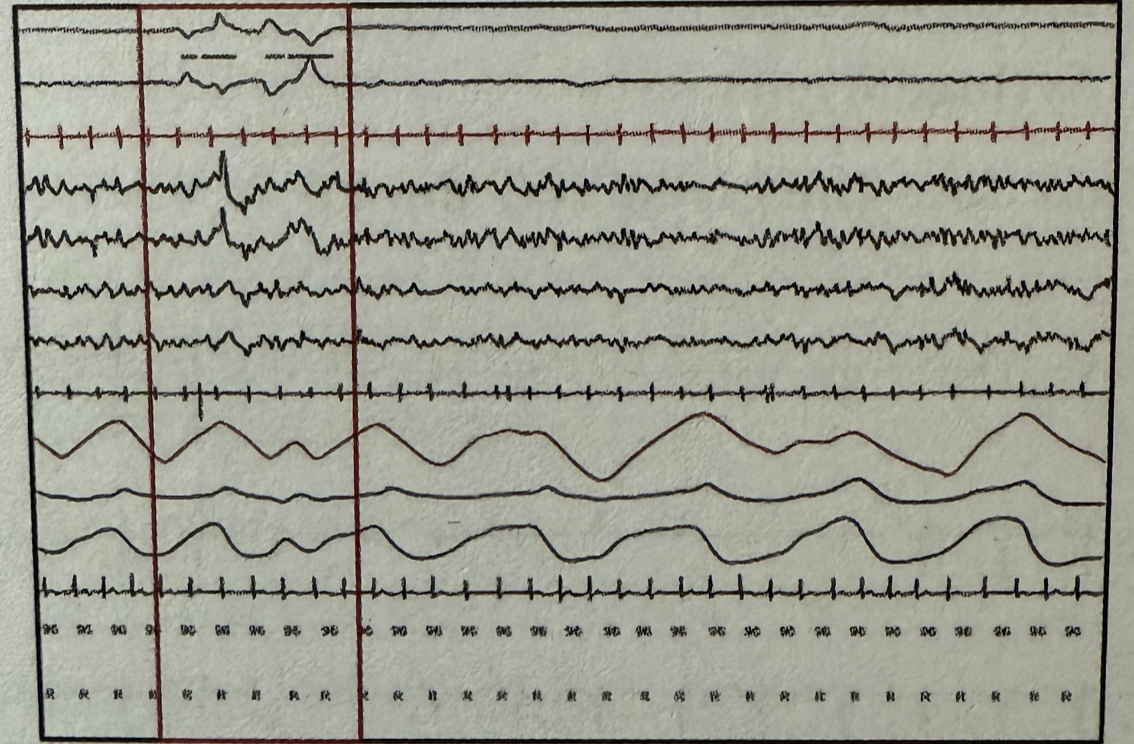
During polysomnography, which stage of sleep is represented by the marked areas when observing the following wave patterns? EOG (Electrooculography) EEG (Electroencephalography) EMG (Electromyography)
What is a likely diagnosis for a patient with persistent fever after treatment for pneumonia?
A 45-year-old man presents after a motor vehicle collision with severe left-sided chest pain and dyspnea. He has bruising and marked tenderness over the left anterolateral chest. The initial chest radiograph shown reveals no pneumothorax, pleural effusion, or focal pulmonary consolidation. CT of the chest demonstrates fractures of the left fourth through seventh ribs at two sites along each rib, creating a free-floating chest-wall segment. Which respiratory pattern is most likely observed on inspection?
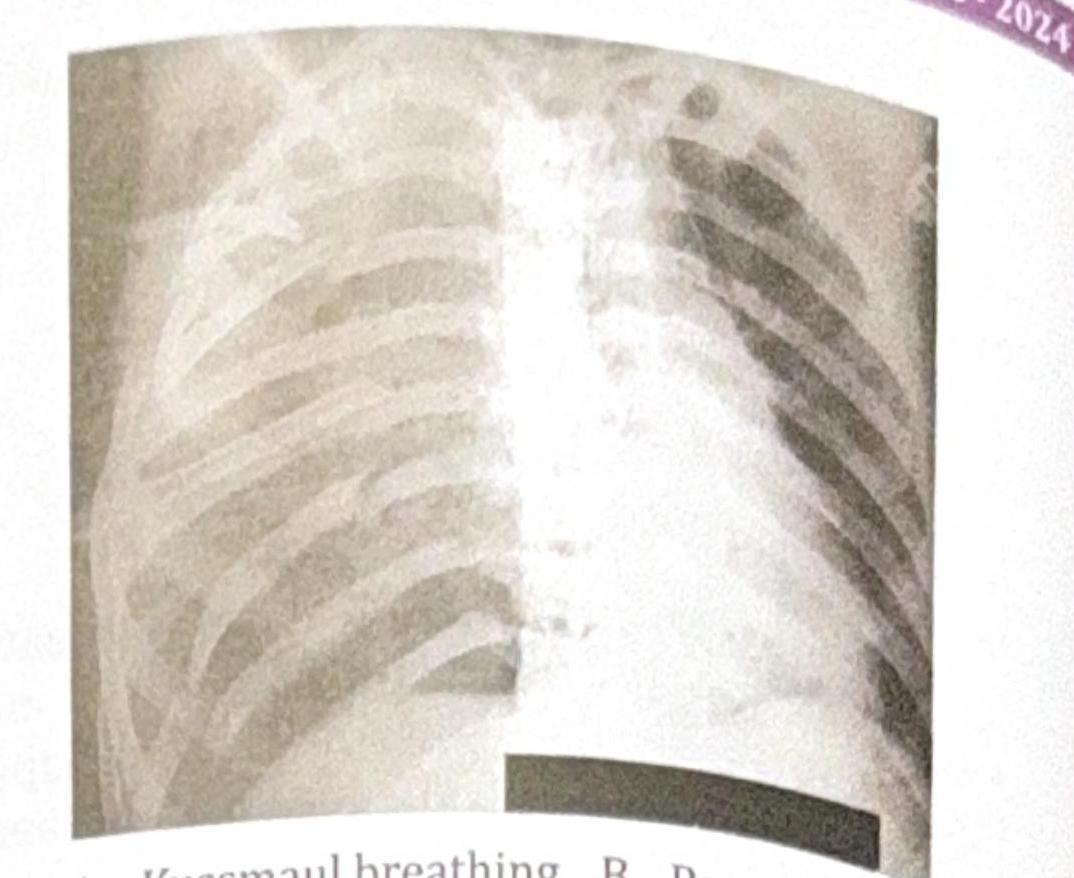
Consider the following statements: The clinical features of tension pneumothorax include 1. tracheal shift to contralateral side 2. absent breath sounds on the affected side 3. low output circulatory failure 4. peripheral cyanosis Which of the statements given above is/are correct?
All of the following criteria are required for diagnosis of obesity hypoventilation syndrome except -
Want unlimited practice?
Get full access to all questions, explanations, and performance tracking.
Scan to download app