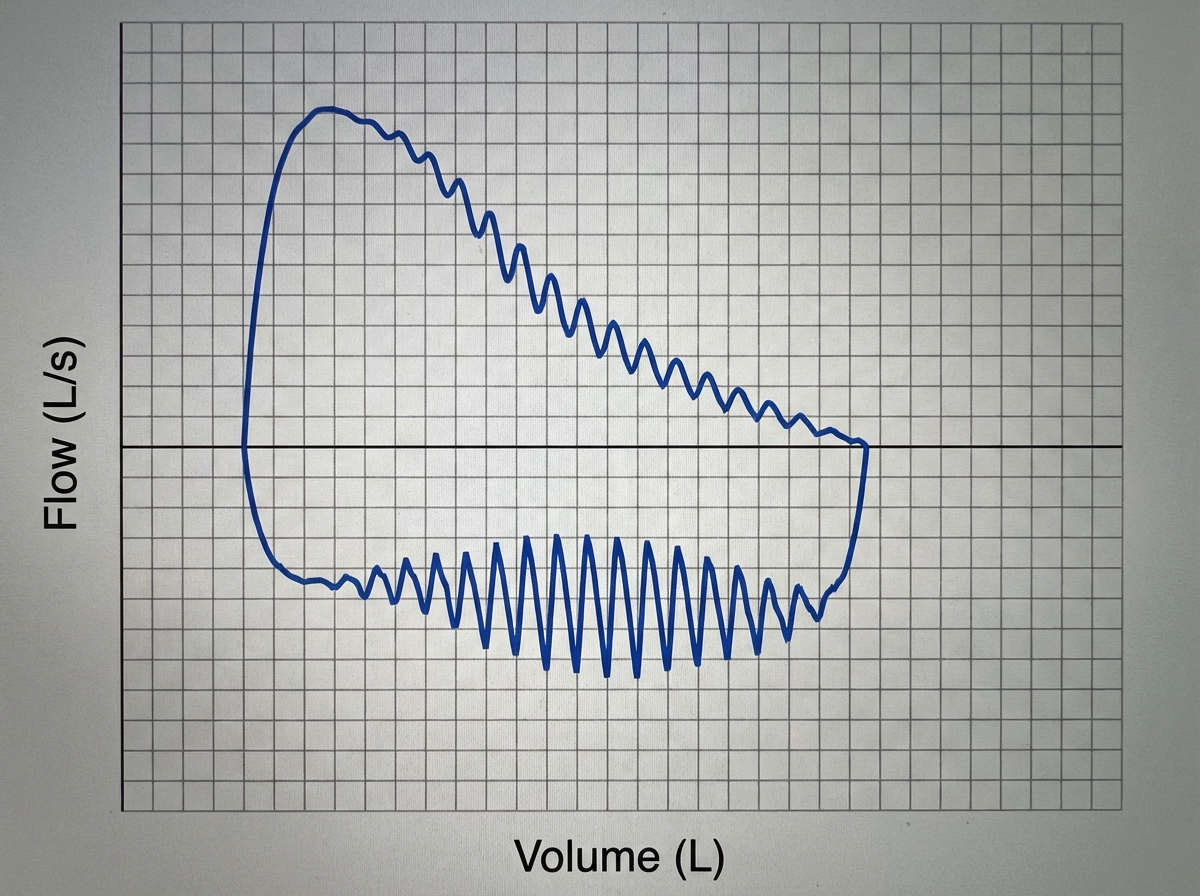
Pseudochylous pleural effusion is characteristically seen in which of the following conditions?
Which of the following is a clinical feature of pneumonia?
Which of the following is NOT a feature of acute severe asthma?
The most common cause of chronic bronchitis is:
Hydrostatic Pulmonary edema with fluid in alveoli is usually seen when PCWP is?
Which of the following characterizes Bronchial Asthma?
Asthma is associated with all of the following EXCEPT:
A 41-year-old woman presents with a week of increasing dyspnea. Physical examination reveals a temperature of 37.3°C, pulse of 85/min, respirations of 20/min, and blood pressure of 150/95 mm Hg. There is dullness to percussion over the lung bases. A chest radiograph shows large bilateral pleural effusions and a normal heart size. Laboratory findings include serum creatinine of 3.1 mg/dL, urea nitrogen of 29 mg/dL, troponin I of 0.1 ng/mL, WBC count of 3760/mm³, hemoglobin of 11.7 g/dL, and positive ANA and anti-double-stranded DNA antibody test results. Which of the following cardiac lesions is most likely to be present in this patient?
A 25-year-old male with a long history of severe asthma presents to the emergency room with shortness of breath. He has previously required hospital admission and was once intubated for asthma. Which of the following findings on physical exam would indicate a benign course?
Breath sound audible for more than how many seconds on auscultation over the trachea during forced expiration denotes significant airway obstruction?
Explanation: **Explanation:** **Pseudochylous pleural effusion** (also known as cholesterol effusion) is characterized by the accumulation of cholesterol crystals in the pleural space. It typically occurs in **long-standing, chronic pleural effusions** where the pleura has become thickened and calcified [1]. 1. **Why Tuberculosis is Correct:** Chronic **Tuberculous pleurisy** is the most common cause of pseudochylous effusion [1]. The underlying mechanism involves the breakdown of red blood cells and neutrophils within a long-standing, trapped effusion. The thickened, fibrotic pleura prevents the absorption of these lipids, leading to a high concentration of cholesterol (usually >200 mg/dL) while triglyceride levels remain low. 2. **Why Other Options are Incorrect:** * **Lymphoma, Carcinoma of the lung, and Filariasis:** These conditions are classic causes of **Chylous effusion** (True Chyle) [1]. Chylous effusions result from the disruption or obstruction of the thoracic duct, leading to the leakage of lymph containing high levels of **triglycerides** (>110 mg/dL) and chylomicrons. **High-Yield Clinical Pearls for NEET-PG:** * **Appearance:** Both chylous and pseudochylous effusions appear milky/opalescent [1]. * **Key Diagnostic Difference:** * **Chylous:** High Triglycerides (>110 mg/dL), presence of Chylomicrons. * **Pseudochylous:** High Cholesterol (>200 mg/dL), presence of rhomboid-shaped cholesterol crystals on microscopy. * **Common Causes of Pseudochylous Effusion:** Chronic Tuberculosis and Rheumatoid Arthritis (RA). * **Common Causes of Chylous Effusion:** Trauma (most common), Malignancy (Lymphoma), and Filariasis.
Explanation: **Explanation:** The clinical hallmark of pneumonia is **consolidation**, which occurs when the alveoli are filled with inflammatory exudate (fluid, pus, and cells) instead of air. **Why "Increased breath sounds" is correct:** In a normal lung, air-filled alveoli act as a filter that attenuates high-pitched sounds from the large airways. In pneumonia, the consolidated (solidified) lung tissue conducts sound more efficiently than air. This leads to **bronchial breath sounds**, which are characterized by a loud, high-pitched quality with a distinct pause between inspiration and expiration. **Analysis of Incorrect Options:** * **A. Tracheal shift:** This occurs when there is a significant pressure imbalance in the hemithorax. It is seen in large pleural effusions or tension pneumothorax (shift away) or significant collapse/atelectasis (shift toward). Pneumonia typically does not cause a tracheal shift. * **C. Decreased vocal fremitus:** In consolidation, sound vibrations from the larynx are conducted better through the solid medium. Therefore, pneumonia presents with **increased** tactile vocal fremitus. Decreased fremitus is seen in pleural effusion, pneumothorax, or COPD. * **D. Absence of egophony:** Egophony (the "E to A" change) is a classic sign of consolidation. Its **presence**, not absence, is a clinical feature of pneumonia. **NEET-PG High-Yield Pearls:** * **The "Consolidation Triad":** Increased tactile vocal fremitus, Dullness on percussion, and Bronchial breath sounds/Crackles. * **Vocal Resonance:** Look for *Bronchophony* (whispered words are louder) and *Whispered Pectoriloquy*. * **Differentiating Feature:** Both Pleural Effusion and Pneumonia show dullness on percussion, but **Fremitus** is the key differentiator (Increased in pneumonia; Decreased in effusion).
Explanation: Acute severe asthma (formerly known as "Status Asthmaticus") is a life-threatening exacerbation that requires immediate recognition [1]. The correct answer is **D** because all the listed options are clinical indicators of severe or life-threatening airway obstruction. ### **Explanation of Features:** 1. **Tachycardia (>120/min):** Increased heart rate is a physiological response to the stress of respiratory distress, hypoxia, and the increased work of breathing. It is a key marker of severity in the British Thoracic Society (BTS) guidelines [1]. 2. **Pulsus Paradoxus:** This refers to an exaggerated fall in systolic blood pressure (>10 mmHg) during inspiration. In severe asthma, massive swings in intrapleural pressure (due to hyperinflation and labored breathing) affect venous return and left ventricular stroke volume. Its presence indicates significant airway obstruction. 3. **Respiratory Acidosis:** Initially, asthma causes hyperventilation leading to respiratory alkalosis (low $PaCO_2$) [2]. However, as the patient tires (respiratory muscle fatigue) and airway obstruction worsens, $CO_2$ retention occurs. A "normal" or rising $PaCO_2$ is an ominous sign of impending respiratory failure and results in respiratory acidosis [2], [3]. ### **High-Yield Clinical Pearls for NEET-PG:** * **Silent Chest:** The most ominous sign in acute asthma; it indicates that airflow is so restricted that wheezing cannot even be produced. * **PEFR (Peak Expiratory Flow Rate):** In acute severe asthma, PEFR is typically **33–50%** of the predicted best. If it is **<33%**, it is classified as life-threatening asthma [1]. * **The "Normal" $PaCO_2$ Trap:** In a distressed asthmatic, a $PaCO_2$ between 35-45 mmHg is **not** normal; it indicates the patient is exhausting their compensatory mechanisms and requires urgent intervention (potentially ICU/intubation) [3]. * **Management:** Oxygen, high-dose nebulized SABA (Salbutamol), Ipratropium bromide, and systemic corticosteroids (Hydrocortisone/Prednisolone) are the mainstays [1], [3].
Explanation: **Explanation:** **Chronic Bronchitis** is clinically defined as a chronic productive cough for at least 3 months in each of 2 successive years, provided other causes of cough have been excluded. It is a major component of Chronic Obstructive Pulmonary Disease (COPD) [1]. **Why Smoking is the Correct Answer:** Cigarette smoking is the **single most important etiologic factor** for chronic bronchitis [1]. Inhaled irritants (tobacco smoke) trigger a protective response in the airways characterized by **hypertrophy of submucosal glands** and an increase in **goblet cells** in the trachea and bronchi. This leads to excessive mucus production and impaired ciliary function, resulting in airway obstruction and chronic cough. The Reid Index (ratio of gland thickness to wall thickness) is characteristically increased (>0.4). **Why Other Options are Incorrect:** * **Air Pollution:** While pollutants like sulfur dioxide and nitrogen dioxide can exacerbate symptoms and contribute to the disease (especially in non-smokers), they are statistically less common as a primary cause compared to smoking. * **Septic Fibrosis:** This is not a standard medical term associated with the etiology of chronic bronchitis. Conditions like Cystic Fibrosis cause bronchiectasis, which is a distinct obstructive pathology. * **Recurrent Aspiration Pneumonia:** This typically leads to localized lung abscesses or chemical pneumonitis, not the diffuse, chronic airway remodeling seen in chronic bronchitis. **High-Yield Clinical Pearls for NEET-PG:** * **Pathological Hallmark:** Hypertrophy of mucus-secreting glands (Reid Index >0.4). * **Clinical Phenotype:** Often referred to as **"Blue Bloaters"** (due to cyanosis and edema from right-sided heart failure/cor pulmonale). * **Key Complication:** Secondary polycythemia due to chronic hypoxemia. * **Alpha-1 Antitrypsin Deficiency:** Consider this in a young, non-smoker presenting with emphysema (panacinar type).
Explanation: **Explanation:** The development of hydrostatic pulmonary edema is governed by **Starling’s Law**, which describes the balance between hydrostatic and oncotic pressures. In a healthy state, the Pulmonary Capillary Wedge Pressure (PCWP)—a surrogate for left atrial pressure—ranges between **8–12 mmHg**. **Why 25 mmHg is correct:** Pulmonary edema occurs in stages as PCWP rises: 1. **Stage I (13–18 mmHg):** Increased lymphatic flow; minimal clinical findings. 2. **Stage II (18–25 mmHg):** **Interstitial edema** occurs. Fluid leaks into the perivascular and peribronchial spaces (seen as Kerley B lines on X-ray). 3. **Stage III (>25 mmHg):** The compensatory capacity of the lymphatics is overwhelmed, and fluid floods the **alveoli**. Therefore, frank alveolar edema with clinical features like rales and "bat-wing" opacities typically requires a PCWP **>25 mmHg** [1]. **Analysis of Incorrect Options:** * **A (>6 mmHg) & B (0 mmHg):** These are within or below the normal physiological range (8–12 mmHg). At these pressures, the oncotic pressure (approx. 25 mmHg) easily keeps fluid within the capillaries. * **C (15 mmHg):** This represents mild elevation (often seen in early heart failure or fluid overload) but typically only results in vascular redistribution (cephalization) rather than alveolar flooding. **NEET-PG High-Yield Pearls:** * **Normal PCWP:** 8–12 mmHg. * **Cephalization (Upper lobe diversion):** Seen at PCWP 12–18 mmHg. * **Kerley B Lines:** Seen at PCWP 18–25 mmHg. * **Bat-wing appearance:** Classic radiological sign of alveolar edema (PCWP >25 mmHg) [1]. * **Non-cardiogenic edema (e.g., ARDS):** Characterized by alveolar fluid with a **normal PCWP (<18 mmHg)** due to increased permeability rather than hydrostatic pressure.
Explanation: **Explanation:** Bronchial Asthma is a chronic clinical syndrome characterized by three hallmark features: **Airway Inflammation, Airway Hyper-responsiveness (AHR), and Reversible Airflow Obstruction.** 1. **Inflammatory Disease (Option A):** Asthma is primarily a chronic inflammatory disorder of the airways. This inflammation involves various cells (mast cells, eosinophils, T-lymphocytes, neutrophils) and mediators. Even in asymptomatic patients, subclinical inflammation is often present. 2. **Allergic Disease (Option B):** Atopy (the genetic predisposition to develop IgE antibodies against common environmental allergens) is the strongest identifiable risk factor for asthma [1]. While non-atopic asthma exists, the majority of cases (especially in children and young adults) are triggered by allergic mechanisms (Type I Hypersensitivity) [1]. 3. **Hyper-responsiveness (Option D):** This refers to the exaggerated bronchoconstrictor response to stimuli that are harmless to healthy individuals (e.g., cold air, exercise, smoke). It is the physiological consequence of the underlying inflammation [1]. Since all three components are fundamental to the definition and pathophysiology of the disease, **Option C (All of the above)** is the correct choice. **High-Yield Clinical Pearls for NEET-PG:** * **Gold Standard Diagnosis:** Spirometry showing reversibility (increase in FEV1 of **>12% and >200 ml**) after inhalation of a short-acting beta-agonist (SABA). * **Pathology:** Look for **Curschmann spirals** (mucus plugs), **Charcot-Leyden crystals** (eosinophil breakdown products), and **Creola bodies** (sloughed epithelial cells) in sputum. * **Airway Remodeling:** Chronic untreated inflammation leads to structural changes, including subepithelial fibrosis and smooth muscle hypertrophy. * **Drug of Choice:** Inhaled Corticosteroids (ICS) are the mainstay of treatment to address the underlying inflammation.
Explanation: **Explanation:** Asthma is a chronic inflammatory disorder of the airways characterized by **reversible airflow obstruction**, bronchial hyperresponsiveness [2], and inflammation. **Why "Normal Spirometry" is the correct answer:** While a patient with asthma may have normal spirometry during asymptomatic periods (inter-ictal phase), the hallmark of the disease is **obstructive lung function**. During an exacerbation or in persistent asthma, spirometry typically shows a reduced FEV1 and a reduced FEV1/FVC ratio (<0.7). The defining physiological feature is **reversibility**, demonstrated by an increase in FEV1 of ≥12% and ≥200 mL after inhaling a short-acting beta-agonist (SABA). Therefore, "normal spirometry" is not a characteristic association of the disease process itself, but rather a possible finding during clinical remission. **Analysis of other options:** * **A. Hyperreactive airways:** This is a core pathophysiological feature [2]. The airways constrict excessively in response to triggers (allergens, cold air, exercise) [3], which is often measured via a Methacholine Challenge Test [1]. * **B. Persistent cough:** Cough is a classic symptom, particularly at night or early morning [4]. In "Cough Variant Asthma," it may be the only presenting symptom. * **C. Episodic wheezing:** Asthma is typically episodic. Patients experience "attacks" of high-pitched whistling sounds (wheezing) triggered by specific factors [4], interspersed with symptom-free intervals. **NEET-PG High-Yield Pearls:** * **Diagnosis:** Spirometry is the gold standard. If spirometry is normal but asthma is suspected, use a **Bronchial Provocation Test** (Methacholine) [1]. * **Diurnal Variation:** A peak expiratory flow (PEF) variability of >10% is diagnostic. * **Pathology:** Characterized by Curschmann spirals (mucus plugs) and Charcot-Leyden crystals (eosinophil breakdown products) in sputum. * **Phenotypes:** Aspirin-exacerbated respiratory disease (AERD) presents with the **Samter’s Triad**: Asthma, Aspirin sensitivity, and Nasal polyps [1].
Explanation: ### Explanation **Diagnosis: Systemic Lupus Erythematosus (SLE)** The patient is a middle-aged woman presenting with multisystem involvement: **serositis** (bilateral pleural effusions) [1], **renal dysfunction** (elevated creatinine/BUN), **hematologic abnormalities** (leukopenia), and positive serology (**ANA and anti-dsDNA**). These findings fulfill the ACR/SLICC criteria for SLE. **1. Why Libman-Sacks Endocarditis is Correct:** Libman-Sacks endocarditis (LSE) is the classic cardiac manifestation of SLE. It is characterized by **small, sterile, non-bacterial vegetations** (verrucae) that can develop on any heart valve, most commonly the mitral and aortic valves. Unlike infective endocarditis, these vegetations can occur on **both sides of the valve leaflets** (undersurface and chordae tendineae). While often asymptomatic, they can lead to valvular regurgitation or embolic events. **2. Why the Other Options are Incorrect:** * **A. Calcific aortic stenosis:** This is a degenerative "wear and tear" disease typically seen in elderly patients or those with bicuspid valves; it is not associated with SLE. * **B. Hemorrhagic pericarditis:** While SLE commonly causes *fibrinous* pericarditis, hemorrhagic pericarditis is more characteristic of malignancy or tuberculosis. * **C. Nonbacterial thrombotic endocarditis (NBTE):** Also known as marantic endocarditis, this is typically associated with advanced malignancy (pro-coagulant states) or wasting diseases. While LSE is a form of NBTE, "Libman-Sacks" is the specific term used when the underlying cause is SLE. **3. NEET-PG High-Yield Pearls:** * **LSE Location:** Classically described as "randomly distributed" on the valve surface, especially the **undersurface** (ventricular surface) of the mitral valve. * **Pathology:** Vegetations consist of fibrin, inflammatory cells, and **hematoxylin bodies** (remnants of cell nuclei). * **Most Common Cardiac Feature of SLE:** Although LSE is high-yield, **pericarditis** is actually the most common cardiac manifestation of SLE [1]. * **Association:** LSE is strongly associated with **Antiphospholipid Syndrome (APS)** [1].
Explanation: ### Explanation In the context of an acute asthma exacerbation, the clinical priority is to distinguish between a moderate attack and a **life-threatening (near-fatal) asthma** episode. **1. Why Pulsus Paradoxus of 5 mmHg is the Correct Answer:** Pulsus paradoxus is defined as an exaggerated fall in systolic blood pressure (>10 mmHg) during inspiration. In severe asthma, the massive increase in negative intrathoracic pressure required to breathe leads to increased venous return to the right heart, which compromises left ventricular filling, thus dropping the BP. * A value of **5 mmHg is within the normal physiological range** (<10 mmHg). * Its presence indicates that the patient is not generating the extreme intrathoracic pressure swings associated with severe airway obstruction. Therefore, it suggests a **benign (milder) course** compared to the other options. **2. Why the Other Options are Incorrect:** * **A. Silent Chest:** This is a "dreaded sign." It indicates such severe airflow obstruction that there is insufficient air movement to even generate a wheeze. It precedes respiratory arrest [1]. * **B. Hypercapnia ($PaCO_2 > 45$ mmHg):** In early asthma, patients hyperventilate, leading to hypocapnia [2]. A rising or "normal" $PaCO_2$ in a struggling patient indicates **respiratory muscle fatigue** and impending failure [1]. * **C. Thoracoabdominal Paradox:** This occurs when the abdomen moves inward during inspiration (asynchronous breathing). it is a definitive sign of **diaphragmatic fatigue** and the need for immediate mechanical ventilation [1]. **3. NEET-PG High-Yield Pearls:** * **Pulsus Paradoxus >25 mmHg** is a marker of very severe asthma. * **The "Normal" $PCO_2$ Trap:** A patient with severe asthma who has a "normal" $PCO_2$ (40 mmHg) is actually deteriorating; they should be hypocapnic due to tachypnea [2]. * **Indications for Intubation in Asthma:** Altered sensorium, silent chest, persistent exhaustion, and refractory hypercapnia [1].
Explanation: ### Explanation The correct answer is **6 seconds (Option C)**. #### Underlying Medical Concept The **Forced Expiratory Time (FET)** is a simple, bedside clinical test used to screen for obstructive airway diseases like COPD and Asthma. To perform this, the patient is asked to inhale deeply to total lung capacity and then exhale as forcefully and completely as possible. The clinician listens with a stethoscope over the **trachea**. In healthy individuals, the lungs empty rapidly, and the audible breath sound typically lasts less than 4 seconds. However, in patients with significant airway obstruction, the increased resistance and premature airway closure prolong the expiratory phase [1]. An FET of **6 seconds or longer** is a highly specific indicator of significant airflow limitation (FEV1/FVC ratio < 50%) [1]. #### Analysis of Incorrect Options * **A & B (2 and 4 seconds):** These are considered within the normal or borderline range. Most healthy young adults have an FET of approximately 3 seconds. * **D (8 seconds):** While an FET of 8 seconds certainly indicates obstruction, the clinical threshold established in medical literature (and frequently tested in exams) for "significant" obstruction is the 6-second mark. #### NEET-PG High-Yield Pearls * **Sensitivity/Specificity:** FET > 6 seconds has a high specificity (approx. 90%) for obstructive lung disease but lower sensitivity. * **Correlation:** FET correlates well with the **FEV1/FVC ratio**; the longer the time, the lower the ratio [1]. * **Bedside Utility:** It is a valuable tool when formal spirometry is unavailable or to determine which patients require urgent pulmonary function testing. * **Other Signs of Obstruction:** Look for "Hoover’s sign" (inward movement of the lower rib cage during inspiration) and the use of accessory muscles (sternocleidomastoid).
Obstructive Airway Diseases (Asthma, COPD)
Practice Questions
Interstitial Lung Diseases
Practice Questions
Pulmonary Infections
Practice Questions
Pulmonary Vascular Diseases
Practice Questions
Pleural Diseases
Practice Questions
Sleep-Disordered Breathing
Practice Questions
Respiratory Failure
Practice Questions
Mediastinal Disorders
Practice Questions
Occupational Lung Diseases
Practice Questions
Pulmonary Function Testing
Practice Questions
Bronchiectasis and Cystic Fibrosis
Practice Questions
Lung Cancer Approach
Practice Questions
Get full access to all questions, explanations, and performance tracking.
Start For Free