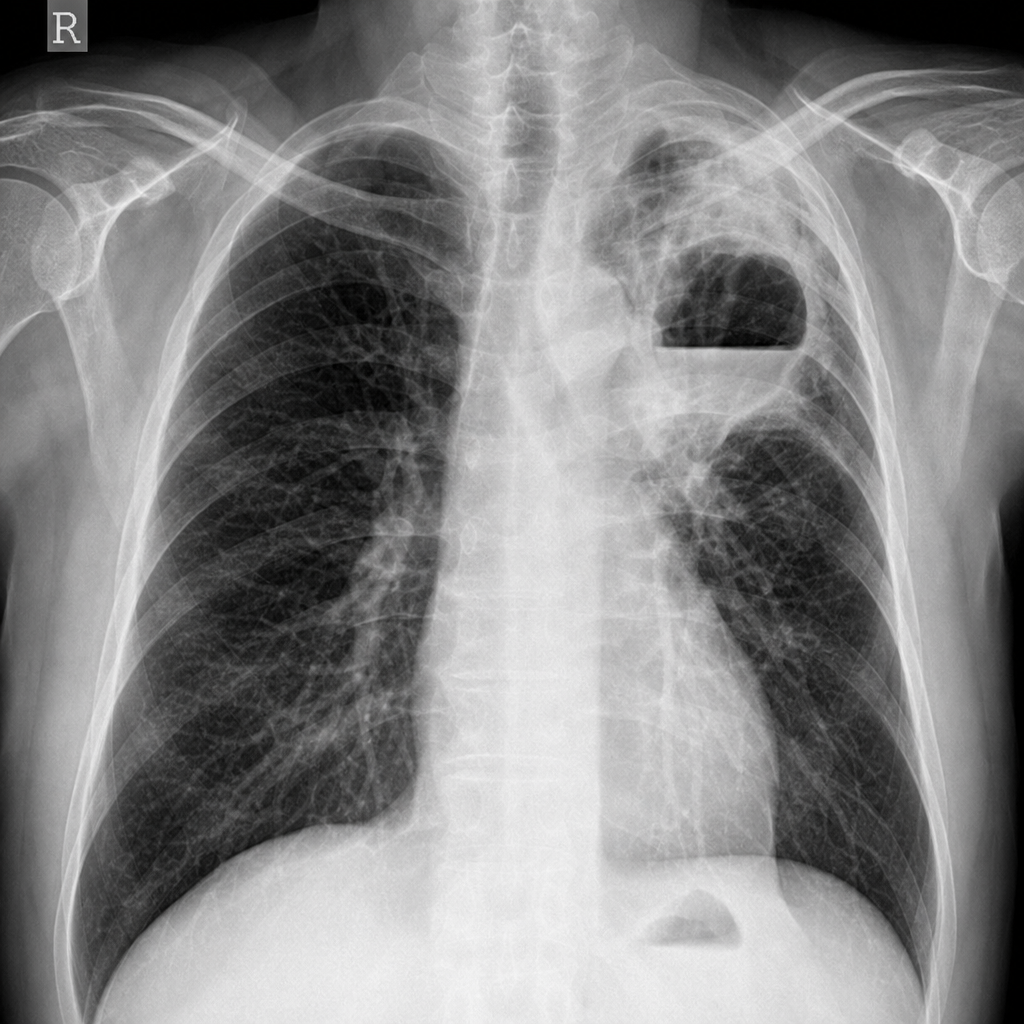
In scrub typhus all are true except:
A 28 year old man with 3 weeks of fever presented with tricuspid valve vegetation. What is the MOST common cause of Endocarditis in I.V. drug abusers?
Painless terminal hematuria is seen as one of the manifestations in the infection caused by ?
Fatal gastroenteritis is caused by -
A major criterion for Jones classification is
Devi, a 28 year female, has diarrhea, confusion, high grade fever with bilateral pneumonitis. The diagnosis is -
A 25-year-old female presented to the hospital on 3rd day of menstruation with complaints of high fever, vomiting and rash on her trunk and extremities. On investigations she had leukocytosis and negative blood culture. She is diagnosed as:
Rash is absent in ?
A 17 year old adolescent, presented with fever since one week which is step-ladder in pattern. He also has loose stools which are "pea-soup" in consistency. Rose spots are seen on his body. He is most probably infected with:
All of the following statements are true regarding Q fever except -
Explanation: ***Icterus*** - While **scrub typhus** can cause **hepatic dysfunction** and abnormal liver enzymes, **frank icterus** (jaundice) is an uncommon and non-specific finding, making it the least likely "always" true symptom among the options. - Severe liver involvement causing jaundice is rare and usually indicates a **complicated** or severe disease course. *Maculopapular rash* - A **maculopapular rash** is a common dermatological manifestation in **scrub typhus**, often appearing a few days after fever onset. - It results from widespread **vasculitis** caused by the obligate intracellular bacterium *Orientia tsutsugamushi* [1]. *Lymphadenopathy* - **Regional lymphadenopathy** is a very common finding, particularly in the lymphatic drainage area corresponding to the eschar [1]. - This symptom is a direct response to the **local bacterial infection** spreading via the lymphatic system [1]. *Fever* - **Fever** is a hallmark symptom of **scrub typhus**, typically high-grade and persistent [1]. - It is one of the earliest and most consistent clinical signs, indicating a systemic inflammatory response to the infection [1].
Explanation: ***Staph.aureus*** - **_Staphylococcus aureus_** is the most common cause of **infective endocarditis** in intravenous drug abusers due to its prevalence on the skin and ability to adhere to damaged endothelial surfaces [1]. - The organism frequently accesses the bloodstream through contaminated needles, leading to tricuspid valve involvement as it is the first valve encountered by venous blood. *Pseudomonas* - While **_Pseudomonas aeruginosa_** can cause endocarditis, particularly in _IV drug users_ or immunocompromised individuals, it is significantly less common than **_Staphylococcus aureus_**. - Its infections are often associated with more severe, rapidly progressive disease and may be more challenging to treat. *Candida albicans* - **_Candida albicans_** can cause endocarditis, especially in **immunocompromised patients** or those with **indwelling catheters** or prosthetic valves, but it is not the most common cause in intravenous drug abusers [2]. - Fungal endocarditis is generally rarer than bacterial endocarditis and has a higher mortality rate. *Streptococcus viridans* - **_Streptococcus viridans_** group is a common cause of subacute bacterial endocarditis, especially in patients with **pre-existing valvular heart disease** [1]. - However, in the context of intravenous drug abuse, **_Staphylococcus aureus_** is significantly more prevalent than **_Streptococcus viridans_** [1].
Explanation: ***Schistosoma haematobium*** - *Schistosoma haematobium* characteristically infects the **urinary bladder**, leading to inflammation and ulceration of the bladder wall [1]. - This irritation often manifests as **painless terminal hematuria**, which is the passage of blood at the end of micturition without associated pain [1]. *Plasmodium falciparum* - *Plasmodium falciparum* is the causative agent of **malaria**, a parasitic infection that primarily affects red blood cells and the liver. - While it can cause severe systemic symptoms, **hematuria** is not a typical or distinguishing feature of *P. falciparum* infection; rather, it often presents with fever, chills, and organ damage. *Schistosoma japonicum* - *Schistosoma japonicum* primarily infects the **mesenteric veins** of the small intestine, leading to intestinal and hepatic schistosomiasis [1]. - Symptoms are usually gastrointestinal (e.g., abdominal pain, diarrhea) or hepatic (e.g., hepatosplenomegaly), with **urinary tract involvement** and hematuria being highly uncommon [1]. *Schistosoma mansoni* - *Schistosoma mansoni* mainly infects the **mesenteric veins** of the large intestine, causing intestinal schistosomiasis. - Its clinical manifestations typically include **abdominal pain**, bloody diarrhea, and liver fibrosis, but not urinary symptoms like **hematuria**.
Explanation: ***Typhoid*** - Typhoid fever, caused by **Salmonella Typhi**, can lead to severe gastrointestinal complications, including intestinal perforation and hemorrhage, which can be fatal if untreated [1]. - While other forms of gastroenteritis are usually self-limiting, **typhoid** can progress to systemic illness with multi-organ involvement, significantly increasing mortality risk [1]. *Amoebiasis* - Amoebiasis, caused by **Entamoeba histolytica**, can lead to dysentery and liver abscesses but is generally less acutely fatal as a primary cause of gastroenteritis compared to severe typhoid. - While it can cause severe disease, its progression to a fatal outcome directly from gastroenteritis is often slower and with more specific complications than the rapid systemic deterioration seen in severe typhoid. *Anthrax* - **Gastrointestinal anthrax** is a severe form of infection caused by *Bacillus anthracis* that can be fatal [2], but it is a rare cause of gastroenteritis and is typically associated with ingestion of contaminated animal products, not general gastroenteritis. - Its clinical presentation is distinct, involving severe abdominal pain, vomiting, bloody diarrhea, and often leads to **septic shock**, differentiating it from common gastroenteritis [2]. *Giardiasis* - Giardiasis, caused by **Giardia lamblia**, is a common parasitic infection leading to chronic diarrhea, malabsorption, and weight loss, but it is typically not fatal. - The disease course is usually associated with non-bloody diarrhea and abdominal cramping, without the systemic toxicity or high fatality risk observed in severe typhoid.
Explanation: ***Chorea*** - **Sydenham's chorea** is a neurological disorder characterized by involuntary, jerky movements, and is a **major criterion** [1] in the Jones classification for **rheumatic fever** [1]. - It is one of the five major manifestations, alongside carditis, polyarthritis, erythema marginatum, and subcutaneous nodules [1]. *TPR Interval* - The **Jones criteria** are used to diagnose **rheumatic fever** and do not directly include the TPR interval as a major or minor criterion. - While cardiac involvement is a major criterion (carditis), specific ECG findings like the TPR interval are not listed as stand-alone criteria. *Arthralgia* - **Arthralgia** (joint pain) is considered a **minor criterion** in the Jones classification. - Unlike **polyarthritis**, which is a major criterion due to objective joint inflammation, arthralgia alone lacks the definitive signs of inflammation. *Fever* - **Fever** is a **minor criterion** in the Jones classification for rheumatic fever. - It is a non-specific symptom that, while common in rheumatic fever, is not sufficiently diagnostic on its own to be considered a major criterion.
Explanation: ***Legionella*** - The constellation of **diarrhea, confusion (neurological symptoms), high-grade fever, and bilateral pneumonitis** is highly characteristic of **Legionnaires' disease**, caused by *Legionella pneumophila* [1]. - This organism commonly causes **extrapulmonary symptoms** such as gastrointestinal and neurological manifestations, in addition to severe pneumonia. *H. influenzae* - While *H. influenzae* can cause pneumonia, it typically presents with **lobar pneumonia** [1] and rarely involves gastrointestinal or significant neurological symptoms beyond general debility. - It is more commonly associated with **epiglottitis** and **meningitis** in unimmunized children. *Streptococcus pneumoniae* - *Streptococcus pneumoniae* is the most common cause of **community-acquired pneumonia**, often presenting with acute onset of fever, chills, and productive cough [1]. - While it can cause bacteremia and sepsis, **gastrointestinal symptoms like prominent diarrhea and significant neurological confusion** are not typical primary features of pneumococcal pneumonia. *Neisseria meningitidis* - *Neisseria meningitidis* is primarily known for causing **meningitis** and **meningococcemia**, involving symptoms like stiff neck, headache, rash, and fever [1]. - While it can sometimes cause pneumonia, the combination with **prominent diarrhea and severe, bilateral pneumonitis** as the primary presentation is not characteristic; the neurological symptoms point more towards Legionella given the other features.
Explanation: ***Toxic shock syndrome*** - The combination of **high fever, vomiting, rash, leukocytosis, and menstruation** (especially tampon use) is highly suggestive of **Toxic Shock Syndrome (TSS)**, which is often caused by *Staphylococcus aureus* exotoxins. - A **negative blood culture** is common in TSS as it is a toxemia, not primarily a bacteremia, though bacteria are present at the local infection site. *Staphylococcal food poisoning* - While caused by *Staphylococcus aureus* toxins, **food poisoning** is typically characterized by rapid onset **gastrointestinal symptoms** (nausea, vomiting, diarrhea) [1] and usually resolves within 24 hours. - It does not typically present with the widespread **exfoliative rash** and systemic features seen in TSS. *Scalded skin syndrome* - **Staphylococcal scalded skin syndrome (SSSS)** is characterized by **blistering and exfoliation of the skin**, primarily affecting young children. - While both involve staphylococcal toxins, SSSS does not typically present with the prominent **fever, vomiting, and menstrual association** seen in this patient. *Varicella zoster infection* - **Varicella zoster infection** (chickenpox or shingles) presents with characteristic **vesicular lesions** in various stages of healing. - The rash described (trunk and extremities without vesicles) and the association with menstruation do not fit the clinical picture of a varicella zoster infection.
Explanation: ***Q. fever*** - Q fever, caused by **Coxiella burnetii**, is characterized by **flu-like symptoms**, pneumonia, and hepatitis, but **does not typically present with a rash**. - This differentiates it from other rickettsial infections that commonly involve skin manifestations. *Endemic typhus* - Endemic (murine) typhus, caused by **Rickettsia typhi**, is transmitted by **fleas** and commonly presents with a **maculopapular rash** on the trunk and extremities [2]. - The rash usually appears several days after fever onset [2]. *Epidemic typhus* - Epidemic typhus, caused by **Rickettsia prowazekii** and transmitted by the **human body louse**, classically presents with a **centrifugal rash** that spares the face, palms, and soles [2]. - The rash typically starts on the trunk and spreads outwards [2]. *Scrub typhus* - Scrub typhus, caused by **Orientia tsutsugamushi**, is transmitted by **chiggers** and often features an **eschar** (a necrotic lesion at the bite site) along with a **maculopapular rash** [1]. - The rash may be transient or absent in some cases, but an eschar is a highly characteristic finding [1].
Explanation: ***Salmonella typhi*** - The combination of **step-ladder fever**, **"pea-soup" diarrhea**, and **rose spots** is a classic presentation of **typhoid fever**, caused by *Salmonella typhi* [1]. - This bacterial infection predominantly affects the gastrointestinal tract and can lead to systemic symptoms [1]. *Adenovirus* - **Adenovirus** typically causes **respiratory tract infections**, **conjunctivitis**, or **gastroenteritis**, but not with the specific symptom profile of step-ladder fever or rose spots. - While it can cause diarrhea, it's usually not described as "pea-soup" and lacks the other systemic features. *Rotavirus* - **Rotavirus** is a common cause of **severe gastroenteritis** in infants and young children, characterized by **watery diarrhea** and vomiting. - It does not present with step-ladder fever or rose spots, which are pathognomonic for typhoid. *Vibrio cholerae* - **Vibrio cholerae** causes **cholera**, an acute diarrheal illness characterized by **profuse watery diarrhea** (often described as "rice-water stools") and rapid dehydration. - It does not typically cause step-ladder fever or skin manifestations like rose spots.
Explanation: ***Weil-felix reaction is very useful for diagnosis*** - The **Weil-Felix reaction** is a test primarily used for diagnosing certain **Rickettsial infections**, which belong to a different genus than *Coxiella burnetii*. - It detects antibodies against specific **Proteus antigens**, which cross-react with Rickettsial antigens, but it is **not sensitive or specific** for Q fever. *It is zoonotic disease* - Q fever is indeed a **zoonotic disease** [1], meaning it is transmitted from animals to humans, primarily through **aerosols** from infected livestock. - The main reservoirs include **cattle, sheep, and goats**, and exposure often occurs in occupational settings involving these animals. *No rash is seen* - A characteristic feature of Q fever is the **absence of a rash**, which helps differentiate it from many other febrile illnesses, particularly other **rickettsial diseases**. - While other symptoms like fever, headache, and myalgia are common, **cutaneous manifestations are rare**. *Human disease is characterized by an interstitial pneumonia* - **Pneumonia**, often an **interstitial pneumonia**, is a common and characteristic manifestation of acute Q fever in humans. - This respiratory involvement can range from mild to severe, and diagnosis often relies on imaging findings consistent with **atypical pneumonia**.
Principles of Antimicrobial Therapy
Practice Questions
Fever of Unknown Origin
Practice Questions
HIV/AIDS and Related Infections
Practice Questions
Tuberculosis and Mycobacterial Diseases
Practice Questions
Tropical and Parasitic Infections
Practice Questions
Viral Infections (Hepatitis, Herpes, etc.)
Practice Questions
Healthcare-Associated Infections
Practice Questions
Fungal Infections
Practice Questions
Sepsis and Septic Shock
Practice Questions
Infection in Immunocompromised Hosts
Practice Questions
Emerging and Re-emerging Infections
Practice Questions
Antimicrobial Resistance
Practice Questions
Vaccination Principles
Practice Questions
Get full access to all questions, explanations, and performance tracking.
Start For Free