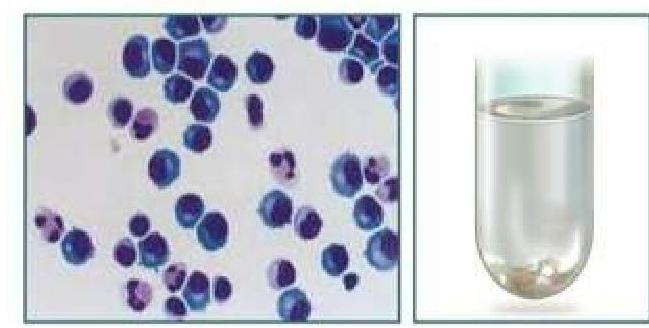
A young man, home on leave from the military, went camping in the woods to detect deer movement for future hunting. Ten days later, he developed fever, malaise, and myalgia. Leukopenia and thrombocytopenia were observed, as well as several tick bites. Which of the following statements best describes human monocytic ehrlichiosis (HME)?
Sputum positivity in T. B. is -
Which is true about salmonella gastroenteritis?
Characteristic features of rabies include all except-
A sewerage worker presents to OPD with acute febrile illness alongwith jaundice and conjunctivitis. His blood sample was taken and sent to lab . Lab findings are suggestive of kidney failure and elevated hepatic enzymes. Which of following is likely diagnosis ?
What does Legionnaire's disease cause?
Which of the following may be prodromal symptoms of tetanus except:
The common causative agent in diarrhea in AIDS patients is -
Most common organism causing chronic complications in allograft transplant recipients:
FALSE about lepromin test is:
Explanation: Diagnosis is usually made serologically but morulae may be seen in the cytoplasm of monocytes - **Human monocytic ehrlichiosis (HME)** is caused by *Ehrlichia chaffeensis*, an obligate intracellular bacterium that infects monocytes. [1] - The gold standard for diagnosis is often **serology** (e.g., indirect immunofluorescence assay), but microscopic examination of peripheral blood smears may reveal characteristic **morulae** (microcolony of bacteria) within the cytoplasm of monocytes, especially in the early stages of infection. *It is a fatal disease transmitted by the bite of a dog* - HME is typically transmitted by the **lone star tick** (*Amblyomma americanum*), not by dog bites. While severe cases can be fatal, it is not universally fatal and is generally treatable with antibiotics. - The primary vector is the lone star tick, with reservoir hosts including white-tailed deer. [1] *Clinical diagnosis is based on the presence of erythema migrans (EM)* - **Erythema migrans (EM)** is the characteristic rash associated with **Lyme disease**, caused by *Borrelia burgdorferi*, and is not seen in HME. [1] - HME symptoms include fever, headache, malaise, and muscle aches, often accompanied by **leukopenia** and **thrombocytopenia**, but no distinctive rash like EM. *Symptoms include vomiting and paralysis* - While vomiting can occur with HME, **paralysis** is not a typical symptom of this disease. - Symptoms more commonly include **fever, headache, malaise, muscle aches, leukopenia, and thrombocytopenia**.
Explanation: ***More specific than sensitive*** - A **positive sputum smear** directly identifies M. tuberculosis, making it highly specific for active pulmonary tuberculosis [1]. - However, sputum microscopy has lower sensitivity as it requires a high bacterial load (typically 5,000-10,000 bacilli/mL) to be detectable [2]. *More sensitive than specific* - This is incorrect because **sputum microscopy** for acid-fast bacilli (AFB) has limited sensitivity, often missing cases with low bacterial counts. - While other **non-tuberculous mycobacteria** can also be acid-fast, diluting its specificity, the direct visualization of the characteristic bacilli in a patient with clinical symptoms still carries high specificity for TB in endemic areas. *More sensitive as well as specific* - This is incorrect as **sputum microscopy** is neither highly sensitive nor highly specific when considered alone without clinical context. - While a positive result is highly indicative of TB, a negative result does not rule it out due to its lower sensitivity. *Non sensitive or specific* - This is incorrect; while **sputum microscopy** is not perfect, a positive result is quite specific for active tuberculosis, especially in the appropriate clinical setting. - It does possess some sensitivity, allowing for diagnosis in cases with sufficient bacterial burden, making this statement an understatement of its diagnostic value [2].
Explanation: **Diarrhea is nonbloody** - In typical **Salmonella gastroenteritis** (non-typhoidal Salmonella), the diarrhea is usually **watery and non-bloody**, though in some cases, microscopic blood may be present [1]. - The illness is self-limiting and rarely progresses to invasive disease, unlike typhoidal salmonellosis. *Is due to exotoxin* - **Salmonella gastroenteritis** primarily results from the bacteria invading the intestinal mucosa and causing inflammation, rather than the action of a preformed exotoxin. - While Salmonella can produce some toxins, their primary pathogenesis involves **endotoxin (LPS)** and direct mucosal invasion, leading to an inflammatory response. *Always associated with blood and mucus in stools* - While some gastrointestinal infections, such as those caused by *Shigella* or enteroinvasive *E. coli*, are classically associated with **bloody and mucoid stools** (dysentery), this is not consistently true for **Salmonella gastroenteritis** [1]. - As mentioned, Salmonella typically causes watery, non-bloody diarrhea; gross blood and mucus are less common unless the infection is more severe or invasive [1]. *Mainly diagnosed by serological testing* - **Salmonella gastroenteritis** is primarily diagnosed by **stool culture**, which identifies the presence of the bacteria in the feces. - **Serological tests** (e.g., Widal test) are rarely used for acute gastroenteritis diagnosis as they detect antibody responses that may take time to develop and can be non-specific.
Explanation: Characterstic features of rabies include all except- ***Hemotogenous spread to brain*** - Rabies virus spreads to the brain via **retrograde axonal transport** along peripheral nerves, not primarily through the bloodstream (hematogenous spread). - The virus travels from the site of infection up the nerve pathways to the central nervous system. *Can be transmitted by bites other than dogs also* - While dogs are a common vector, rabies can be transmitted by bites from other **mammals**, such as bats, raccoons, foxes, and skunks. - The transmission occurs when infected saliva enters a wound, typically a bite [1]. *Can manifest as ascending paralysis* - Rabies can present in two main forms: **furious rabies** (characterized by hyperactivity and hydrophobia) and **paralytic rabies**, which manifests as an ascending paralysis. - This **paralytic form** can be difficult to distinguish from other neurological syndromes. *Is invariably fatal* - Once **symptoms of rabies** appear, the disease is almost universally fatal, often within days. - Survival is extremely rare and usually only with intensive medical intervention, making prevention and post-exposure prophylaxis critical [1].
Explanation: ***Leptospirosis*** - The patient's occupation as a **sewerage worker** points to potential exposure to contaminated water, a known risk factor for leptospirosis [1]. - The classic triad of **febrile illness**, **jaundice**, and **conjunctivitis**, combined with **kidney failure** and **elevated hepatic enzymes**, is highly characteristic of severe leptospirosis (Weil's disease) [1], [2]. *Typhoid* - While typhoid can cause fever and, in severe cases, liver dysfunction, it is typically associated with **gastrointestinal symptoms** like abdominal pain and constipation/diarrhea [2]. - **Conjunctivitis** and significant **jaundice** with acute kidney failure are not typical presenting features of typhoid [2]. *Malaria* - Malaria presents with **cyclical fevers**, **chills**, and **sweats**, and can cause jaundice and kidney injury in severe cases [2]. - However, **conjunctivitis** as a prominent symptom is less common, and the distinct occupational exposure makes leptospirosis more likely [1], [2]. *Hepatitis A* - Hepatitis A causes **jaundice** and **elevated hepatic enzymes**, but it is primarily a liver infection and does not typically lead to acute **kidney failure** [3]. - While fever can be present, **conjunctivitis** and rapid progression to kidney failure are not characteristic of Hepatitis A [3].
Explanation: Respiratory disease - **Legionnaire's disease** is a severe form of **pneumonia** caused by the bacterium *Legionella pneumophila* [1]. - It primarily affects the **lungs**, leading to symptoms such as cough, shortness of breath, fever, and muscle aches [1]. *U.T.I* - **Urinary tract infections (UTIs)** are typically caused by bacteria like *E. coli* affecting the bladder or kidneys. - Legionella does not commonly cause UTIs; its primary target organ is the **lung**. *Acute gastroenteritis* - **Acute gastroenteritis** is an inflammation of the stomach and intestines, usually caused by viruses or bacteria, leading to symptoms like diarrhea and vomiting. - While *Legionella* infection can sometimes cause gastrointestinal symptoms, its defining characteristic and primary pathology is **pneumonia** [1]. *Retroperitoneal fibrosis* - **Retroperitoneal fibrosis** is a rare disorder characterized by the formation of fibrous tissue in the retroperitoneum, often encasing the ureters and great vessels. - This condition is not related to **Legionnaire's disease**; *Legionella* infection does not cause fibrotic changes in the retroperitoneal space.
Explanation: ***Urinary incontinence*** - **Urinary incontinence** is not a typical prodromal symptom of tetanus; it develops later in severe cases due to autonomic dysfunction or muscle spasms affecting the bladder [1]. - Prodromal symptoms usually involve **neuromuscular excitability** (e.g., stiffness, spasms) and general discomfort or anxiety. *Anxious expression* - **Anxious expression** is a common prodromal symptom of tetanus, as patients often feel a sense of unease or apprehension before more severe symptoms develop [1]. - This symptom reflects the early effects of the **tetanospasmin toxin** on the central nervous system. *Sleeplessness* - **Sleeplessness** is a frequent prodromal symptom, often due to the increasing muscle stiffness, general discomfort, and anxiety associated with the onset of tetanus [1]. - The heightened neuromuscular excitability can make it difficult for patients to relax and sleep. *Headache* - **Headache** is a general prodromal symptom that can occur early in tetanus, indicative of the systemic effects of the bacterial infection and the body's response to the toxin [1]. - It often accompanies other non-specific symptoms like irritability and general malaise before the characteristic spasms appear.
Explanation: ***Cryptosporidium*** - **Cryptosporidium parvum** is a common parasitic cause of severe and **chronic diarrhea** in AIDS patients due to their compromised immune systems [1]. - It leads to **profuse watery diarrhea**, abdominal cramps, nausea, and weight loss, and can be life-threatening in severely immunocompromised individuals [1]. *Mycobacteria* - While various species of **Mycobacteria**, especially **Mycobacterium avium complex (MAC)**, can cause disseminated infection in AIDS patients, diarrhea is typically a less specific or severe symptom compared to Cryptosporidium [1]. - MAC usually presents with systemic symptoms like fever, weight loss, and abdominal pain, but **diarrhea is not its primary or most common manifestation** in the context of causative agents for diarrhea [1]. *Toxoplasma* - **Toxoplasma gondii** primarily causes **cerebral toxoplasmosis** in AIDS patients, presenting as focal neurological deficits, seizures, and altered mental status. - While gastrointestinal involvement can occur, it is **rarely the primary or most common cause of diarrhea** in AIDS patients. *Salmonellae* - **Salmonella species** can cause diarrheal disease in AIDS patients, often leading to bacteremia and recurrent infections due to impaired cell-mediated immunity. - However, it is **less common overall** as a causative agent of chronic, severe diarrhea in this population compared to opportunistic parasites like Cryptosporidium.
Explanation: ***Virus*** - Viruses, particularly **cytomegalovirus (CMV)**, **Epstein-Barr virus (EBV)**, and **BK virus**, are common causes of chronic complications such as **allograft dysfunction**, **post-transplant lymphoproliferative disorder (PTLD)**, and **nephropathy** in transplant recipients [1], [2]. - The immunocompromised state of transplant patients due to immunosuppressive therapy makes them highly susceptible to reactivation of latent viral infections or new viral exposures, leading to long-term morbidities [2]. *Bacteria* - While **bacterial infections** are common in the early post-transplant period, leading to acute complications such as **pneumonia** or **surgical site infections**, they are less frequently the primary cause of chronic complications directly affecting allograft survival over the long term [1]. - Patients can still get chronic bacterial infections, but their impact on overall chronic allograft complications is not as widespread as that of viral infections. *Fungi* - **Fungal infections** can cause severe, disseminated disease in immunocompromised transplant recipients and are associated with high mortality [1]. - However, they are generally less frequent than viral infections and tend to lead to more acute, severe complications rather than chronic allograft dysfunction in the broader transplant population. *Parasite* - **Parasitic infections** are relatively uncommon in transplant recipients in developed countries, although they can cause significant morbidity and mortality, especially in endemic regions. - They are not considered the most common cause of general chronic complications affecting allograft recipients.
Explanation: ***The test is of great value in estimating prognosis in leprosy cases of all types*** - The **lepromin test** is primarily used to classify the type of leprosy (tuberculoid vs. lepromatous) and to assess the host's cellular immune response to *Mycobacterium leprae* [1]. - It has **very limited utility** in estimating overall prognosis in all types of leprosy, as treatment response and disease progression are influenced by many other factors. *It is performed by injecting 0.1 ml of lepromin intradermally* - This statement is **correct**. The lepromin test involves an **intradermal injection** of 0.1 ml of lepromin antigen, similar to a tuberculin skin test. - The reaction is read at 48-72 hours (Fernandez reaction) and at 3-4 weeks (Mitsuda reaction) to assess delayed-type hypersensitivity [1]. *It is a diagnostic test* - This statement is **incorrect**. The lepromin test is **not a diagnostic test** for leprosy itself, as a positive reaction can occur in healthy individuals with prior exposure or immunity. - Its main purpose is to determine the **cell-mediated immune response** of the patient, which helps in classifying the form of leprosy [1]. *If diameter of redness >10 mm, test is positive* - This statement is **correct** for the Mitsuda reaction (delayed reaction) of the lepromin test. A **nodule or induration** with a diameter greater than 10 mm indicates a strong positive reaction. - A strong positive reaction is typically seen in patients with **tuberculoid leprosy** due to a robust cell-mediated immune response [1].
Principles of Antimicrobial Therapy
Practice Questions
Fever of Unknown Origin
Practice Questions
HIV/AIDS and Related Infections
Practice Questions
Tuberculosis and Mycobacterial Diseases
Practice Questions
Tropical and Parasitic Infections
Practice Questions
Viral Infections (Hepatitis, Herpes, etc.)
Practice Questions
Healthcare-Associated Infections
Practice Questions
Fungal Infections
Practice Questions
Sepsis and Septic Shock
Practice Questions
Infection in Immunocompromised Hosts
Practice Questions
Emerging and Re-emerging Infections
Practice Questions
Antimicrobial Resistance
Practice Questions
Vaccination Principles
Practice Questions
Get full access to all questions, explanations, and performance tracking.
Start For Free