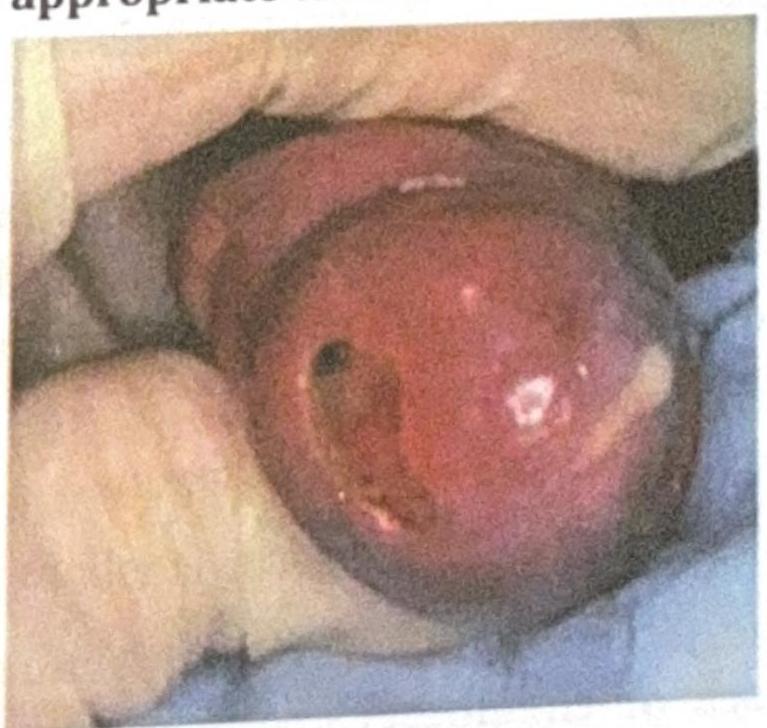
A 23-year-old woman develops vesicular lesions on an erythematous base on her vulvar area. She has tender lymphadenopathy and dysuria. Which of the following is the most likely causative organism?
A 35-year-old woman presented with swelling and pain of her left wrist of ten days' duration. Twelve days prior, she was bitten on the left hand by her pet cat. Two days after the bite, she developed pain, redness, and swelling of her hand. On examination, she had mild fever, an erythematous left wrist and thenar eminence, and reduced range of motion of her fingers. Her white blood cell count was 13,000/ml, with a marked increase in the percentage of immature granulocytes. Gram stain of the wrist fluid was performed. What is the most likely cause?
Which maturation stage of RBCs is infected by Plasmodium falciparum?
A person suffers from B27 associated reactive arthritis, urethritis, and conjunctivitis. Which is the most likely organism involved in this case?
Cardiovascular complications of HIV infection include all of the following, except:
A 50-year-old chronic alcoholic male agricultural worker presented with a one-week history of high-grade fever with chills and rigor. Examination of the respiratory system revealed bilateral crepitations with scattered rhonchi. Multiple subcutaneous nodules were found on the extensor surfaces of the left forearm, arm, and left leg. Direct microscopy of pus aspirated from a skin nodule revealed numerous Gram-negative bacilli with bipolar staining. Culture revealed distinct rough corrugated grey-white colonies on blood agar. The organisms were motile and oxidase-positive. What is the most likely diagnosis?
A resident doctor sustains a needle-stick injury with a suture needle used on an HIV-infected patient. The patient has been compliant with therapy for several years, recently changed medications due to altered appearance, and has a last CD4 count of 360 cells/mm³. What is the recommended post-exposure prophylaxis regimen for the resident doctor?
Which of the following is NOT a disease caused by Chlamydia?
What is the best and least toxic treatment for amoebic dysentery?
Regarding actinomyces infection, all are true except?
Explanation: ### Explanation The clinical presentation of **vesicular lesions on an erythematous base** (often described as "dewdrops on a rose petal"), accompanied by **exquisite tenderness**, dysuria, and painful lymphadenopathy, is classic for **Primary Genital Herpes** [1]. **1. Why HSV-2 is correct:** Genital herpes is most commonly caused by **HSV-2** (though HSV-1 is increasing in frequency) [2]. The primary infection is typically the most severe, characterized by systemic symptoms (fever, malaise), local pain, and painful bilateral inguinal lymphadenopathy [1]. The vesicles eventually rupture to form shallow, exquisitely tender ulcers. Dysuria occurs when urine contacts the open lesions (urological involvement) [1][2]. **2. Why the other options are incorrect:** * **Cytomegalovirus (CMV):** While a herpesvirus, CMV typically causes mononucleosis-like syndromes or opportunistic infections in immunocompromised patients (retinitis, colitis). It does not present with painful vulvar vesicles. * **Gonococcus (*N. gonorrhoeae*):** This typically presents as purulent vaginal discharge and cervicitis. It does not cause vesicular or ulcerative skin lesions. * **Treponema pallidum:** The causative agent of **Syphilis**. The primary stage (Chancre) is characterized by a **painless**, indurated ulcer with non-tender lymphadenopathy, contrasting sharply with the painful vesicles of HSV. **3. NEET-PG High-Yield Pearls:** * **Gold Standard Diagnosis:** Viral culture or PCR (PCR is more sensitive). * **Tzanck Smear:** Shows **Multinucleated Giant Cells** with Cowdry Type A inclusion bodies (low sensitivity but high-yield for exams). * **Treatment:** Acyclovir, Valacyclovir, or Famciclovir. These reduce viral shedding and symptom duration but do not cure the latent infection in the **sacral ganglia** [2]. * **Neonatal Transmission:** Highest risk occurs if the mother acquires a primary infection near the time of delivery; Cesarean section is indicated if active lesions are present.
Explanation: ### Explanation The clinical presentation of a rapid-onset soft tissue infection following a **cat bite** is classic for **Pasteurella multocida**. **1. Why Pasteurella multocida is correct:** * **Microbiology:** *Pasteurella multocida* is a small, Gram-negative coccobacillus found in the normal oral flora of cats (up to 90%) and dogs. * **Clinical Timeline:** The hallmark of *Pasteurella* is its **rapid progression**. Symptoms typically develop within **24 hours** of the bite (as seen in this patient, who developed symptoms 2 days later). * **Complications:** It frequently causes cellulitis, but can progress to tenosynovitis, septic arthritis, or osteomyelitis, especially if the bite is near a joint (like the wrist). The leukocytosis and immature granulocytes indicate an acute pyogenic infection. **2. Why the other options are incorrect:** * **Bartonella henselae:** Causes **Cat-Scratch Disease**. It typically presents with a subacute regional lymphadenopathy (axillary/epitrochlear) and a small papule at the site. The incubation period is longer (1–3 weeks), and it does not usually cause acute, purulent joint swelling. * **Streptobacillus moniliformis:** One of the causes of **Rat-bite fever**. It presents with fever, rash (maculopapular or petechial), and polyarthralgia following contact with rodents, not cats. * **Lactobacillus casei:** Generally considered a non-pathogenic commensal organism (probiotic) and is not associated with animal bite infections. **3. NEET-PG High-Yield Pearls:** * **Drug of Choice:** **Amoxicillin-Clavulanate** is the first-line treatment for animal bites (covers *Pasteurella*, anaerobes, and *Staph/Strep*). * **Gram Stain:** *Pasteurella* shows characteristic **bipolar staining** (looks like a "safety pin"). * **Cat vs. Dog Bites:** Cat bites are more likely to cause deep infections (tenosynovitis/osteomyelitis) because their long, sharp teeth act like "inoculating needles," penetrating deep into periosteum or joint spaces.
Explanation: ### Explanation The correct answer is **D. RBC of all ages**. **1. Underlying Medical Concept** *Plasmodium falciparum* is the most virulent species of malaria because it lacks selectivity regarding the age of the host erythrocyte [1]. It can invade **young RBCs (reticulocytes)**, **mature RBCs**, and **older RBCs** alike. The parasite utilizes multiple invasion pathways and ligands (such as EBA-175 and PfRh5) that bind to receptors widely expressed across all RBC maturation stages. Because it can infect the entire pool of circulating red cells, it leads to **high levels of parasitemia** (often >5%), resulting in severe complications like profound anemia and cerebral malaria. **2. Why Other Options are Incorrect** * **A. Reticulocyte stage only:** This is characteristic of ***Plasmodium vivax*** and ***Plasmodium ovale*** [1]. These species specifically target young RBCs (reticulocytes) via the Duffy antigen receptor (for *P. vivax*). Since reticulocytes make up only 1–2% of total RBCs, parasitemia in these infections is typically low. * **B. Normoblast stage:** Normoblasts are nucleated RBC precursors found in the bone marrow. While some infection can occur in the marrow, the primary clinical cycle occurs in circulating erythrocytes. * **C. Old RBC:** This is the preference of ***Plasmodium malariae*** [1]. It specifically targets aging erythrocytes, which also limits the total parasite load in the blood. **3. High-Yield Clinical Pearls for NEET-PG** * **Parasitemia Levels:** *P. falciparum* (>5-10% parasitemia) vs. *P. vivax* (<2% parasitemia). * **Sequestration:** *P. falciparum* causes RBCs to develop "knobs" (PfEMP-1 protein), leading to cytoadherence to vascular endothelium. This is why mature trophozoites and schizonts are rarely seen on peripheral smears (only rings and gametocytes are usually visible). * **Duffy Antigen:** Individuals lacking the Duffy antigen (Fy a-b-) are resistant to *P. vivax*. * **Maurer’s Clefts:** Associated with *P. falciparum*; **Schüffner’s dots** are associated with *P. vivax/ovale*.
Explanation: ### Explanation **Correct Option: B. Ureaplasma urealyticum** The clinical triad of **arthritis, urethritis, and conjunctivitis** (classically known as Reiter’s Syndrome) is the hallmark of **Reactive Arthritis (ReA)** [1][2]. This is a sterile joint inflammation that occurs following an infection at a distant site, typically the gastrointestinal or urogenital tract [1]. It is strongly associated with the **HLA-B27** genotype [1]. * **Ureaplasma urealyticum** and *Chlamydia trachomatis* are the most common urogenital triggers [1][2]. Since the question specifies urethritis as part of the presentation, a urogenital pathogen like *Ureaplasma* is the most likely causative agent. **Analysis of Incorrect Options:** * **A. Borrelia burgdorferi:** This is the causative agent of **Lyme Disease**. While it causes arthritis (typically a large joint monoarthritis like the knee), it does not typically present with the triad of urethritis and conjunctivitis. * **C. Beta-hemolytic streptococci:** These are associated with **Acute Rheumatic Fever** (Group A Strep) or post-streptococcal reactive arthritis. However, they do not cause the classic urogenital-associated triad seen in HLA-B27 positive patients. * **D. Streptococcus bovis:** This organism is classically associated with **subacute bacterial endocarditis** and is a high-yield marker for underlying **colonic malignancy**. It is not a trigger for reactive arthritis. **Clinical Pearls for NEET-PG:** * **Mnemonic for Triad:** "Can't see (conjunctivitis), can't pee (urethritis), can't climb a tree (arthritis)." [2] * **Common Triggers:** * *Urogenital:* Chlamydia, Ureaplasma [2]. * *Enteric:* Shigella, Salmonella, Yersinia, Campylobacter [2]. * **Skin Findings:** Look for **Keratoderma blennorrhagicum** (vesicular/pustular lesions on palms/soles) and **Circinate balanitis** [2]. * **HLA-B27 Association:** Present in 60–80% of cases; these patients often have a more severe and chronic course [1].
Explanation: Explanation: HIV infection can involve any layer of the heart (pericardium, myocardium, or endocardium), primarily due to opportunistic infections, malignancy, or the direct effects of the virus and antiretroviral therapy (ART). **Why Aortic Aneurysm is the Correct Answer:** Aortic aneurysm is **not** a classic or direct cardiovascular complication of HIV. While chronic inflammation in HIV can lead to premature atherosclerosis and coronary artery disease, it does not typically manifest as aortic aneurysms. In contrast, infectious (mycotic) aneurysms are more commonly associated with *Syphilis* or *Salmonella* rather than HIV itself. **Analysis of Incorrect Options:** * **Pericardial Effusion:** This is the **most common** cardiovascular manifestation of HIV. It is often asymptomatic but can be caused by opportunistic infections (TB, Cryptococcus) or malignancies like Kaposi sarcoma. * **Cardiac Tamponade:** Large pericardial effusions, particularly those caused by Tuberculosis (the most common cause of symptomatic effusion in HIV patients), can progress to life-threatening cardiac tamponade. * **Congestive Cardiac Failure (CCF):** HIV-associated cardiomyopathy is a well-recognized entity leading to dilated cardiomyopathy and CCF. It can result from direct HIV invasion of myocytes, nutritional deficiencies (Selenium), or myocarditis caused by CMV or Coxsackie virus. **NEET-PG High-Yield Pearls:** * **Most common cardiac finding in HIV:** Pericardial effusion. * **Most common cause of CCF in HIV:** HIV-associated dilated cardiomyopathy. * **Drug-related complication:** Protease Inhibitors (PIs) are strongly linked to metabolic syndrome, dyslipidemia, and increased risk of **Myocardial Infarction**. * **Marantic Endocarditis:** HIV patients are at risk for Non-Bacterial Thrombotic Endocarditis (NBTE).
Explanation: **Explanation:** The clinical presentation and microbiological findings are classic for **Melioidosis**, caused by the Gram-negative saprophyte ***Burkholderia pseudomallei***. **Why Melioidosis is correct:** 1. **Risk Factors:** The patient is a chronic alcoholic and an agricultural worker (soil exposure), the two most significant risk factors for Melioidosis. 2. **Clinical Features:** It often presents as a "Great Mimicker." Pulmonary involvement (fever, crepitations) and **disseminated abscesses** (subcutaneous nodules) are hallmark features. In more chronic forms, multiple abscesses occur in subcutaneous tissue and bone [1]. 3. **Microscopy:** *B. pseudomallei* shows characteristic **"Safety-pin" appearance** (bipolar staining) with Gram-negative staining. 4. **Culture:** It grows on standard media, producing **wrinkled/corrugated colonies** (especially on Ashdown’s agar or blood agar) and is **oxidase-positive** and **motile**. Culture of blood, sputum or pus may yield B. pseudomallei [1]. **Why other options are incorrect:** * **Plague (*Yersinia pestis*):** While it shows bipolar staining ("safety-pin"), it is **non-motile** and typically presents with painful lymphadenopathy (buboes) or acute pneumonia, not chronic subcutaneous nodules in an agricultural setting. * **Bartonellosis:** *Bartonella henselae* (Cat scratch disease) or *B. quintana* (Trench fever) are small Gram-negative rods but do not typically show corrugated colonies or the specific bipolar staining/motility pattern described. * **Actinomycosis:** Caused by *Actinomyces israelii*, which is a **Gram-positive**, filamentous, anaerobic bacterium. It presents with "sulfur granules" and is non-motile. **High-Yield Pearls for NEET-PG:** * **Drug of Choice:** Intravenous **Ceftazidime** (Initial intensive phase) followed by Oral Trimethoprim-Sulfamethoxazole (Maintenance phase) [1]. * **Appearance:** Often described as having a "metallic sheen" or "earthy odor" on culture. * **Bipolar Staining D/D:** *Yersinia pestis*, *Burkholderia pseudomallei*, *Pasteurella multocida*, and *Vibrio parahemolyticus*.
Explanation: The management of Post-Exposure Prophylaxis (PEP) for HIV depends on the risk assessment of the exposure and the source patient’s status. In this scenario, the resident sustained a percutaneous injury from a source patient with a known HIV infection and a CD4 count of 360 cells/mm³ (suggesting symptomatic disease or advanced stage). [1] **Why Option B is Correct:** According to the standard guidelines (historically emphasized in NEET-PG based on WHO/NACO protocols), PEP is categorized into Basic and Expanded regimens. 1. **Basic Regimen:** Used for low-risk exposures (e.g., Zidovudine + Lamivudine). 2. **Expanded Regimen:** Indicated for high-risk exposures (large bore needles, deep injuries, or source patients with high viral loads/advanced AIDS). [2] The addition of a **Protease Inhibitor (Indinavir or Lopinavir/Ritonavir)** to the dual-NRTI backbone (Zidovudine + Lamivudine) constitutes the expanded regimen, which is the treatment of choice here given the patient's clinical history. **Why Other Options are Incorrect:** * **Option A:** This is a basic 2-drug regimen, insufficient for a high-risk needle-stick injury from a patient with established disease. * **Option C:** Stavudine and Zidovudine should **never** be used together as they are both thymidine analogs and compete for the same phosphorylation pathway (antagonistic effect). * **Option D:** Abacavir is not typically used in standard PEP regimens due to the risk of hypersensitivity reactions (HLA-B*5701) and is not part of the recommended expanded protocol. **High-Yield Clinical Pearls for NEET-PG:** * **Timing:** PEP should be started as soon as possible, ideally within **2 hours**, and no later than **72 hours**. [1] * **Duration:** The total duration of PEP is **28 days**. * **Current NACO Update:** While older questions focus on Zidovudine/Indinavir, the current preferred PEP regimen is **Tenofovir (300mg) + Lamivudine (300mg) + Dolutegravir (50mg)** once daily. * **Risk:** The average risk of HIV transmission after a percutaneous skin puncture is approximately **0.3%**.
Explanation: ### Explanation The correct answer is **C. Granuloma inguinale**. #### 1. Why Granuloma Inguinale is the Correct Answer Granuloma inguinale (also known as **Donovanosis**) is caused by the Gram-negative intracellular bacterium ***Klebsiella granulomatis*** (formerly *Calymmatobacterium granulomatis*), not by *Chlamydia*. It is characterized by painless, beefy-red, highly vascularized ulcerative lesions that bleed easily on contact. A hallmark diagnostic feature is the presence of **Donovan bodies** (safety-pin appearance) within macrophages on a tissue smear. #### 2. Analysis of Incorrect Options * **A. Lymphogranuloma venereum (LGV):** This is caused by ***Chlamydia trachomatis* serotypes L1, L2, and L3**. It typically presents with a transient primary genital lesion followed by painful regional lymphadenopathy (buboes) and the "Groove sign." * **B. Trachoma:** This is the leading infectious cause of blindness worldwide, caused by ***Chlamydia trachomatis* serotypes A, B, Ba, and C**. * **D. Nonspecific cervicitis:** *Chlamydia trachomatis* (**serotypes D–K**) is the most common bacterial cause of sexually transmitted infections, frequently leading to cervicitis in women and non-gonococcal urethritis (NGU) in men. #### 3. Clinical Pearls for NEET-PG * **Chlamydia Serotypes Memory Aid:** * **A, B, C:** **A**frican **B**lindness (**C**hronic infection/Trachoma). * **D–K:** **D**irect contact (Genital infections, Neonatal conjunctivitis). * **L1–L3:** **L**ymphatics (LGV). * **Donovanosis vs. LGV:** Donovanosis is **painless** and has no true lymphadenopathy (pseudobuboes), whereas LGV involves **painful** lymph node suppuration. * **Drug of Choice:** For most Chlamydial infections, **Azithromycin** (single dose) or **Doxycycline** (7 days) is preferred. For Granuloma inguinale, Azithromycin is the first-line treatment.
Explanation: **Explanation:** The treatment of amoebic dysentery (caused by *Entamoeba histolytica*) requires an agent that can effectively eliminate trophozoites in the intestinal wall and systemic sites [1]. **Why Metronidazole is correct:** Metronidazole is the **drug of choice** for invasive amoebiasis (amoebic dysentery and liver abscess). It is highly effective against the trophozoite form of the parasite. While it has side effects like a metallic taste and disulfiram-like reaction, it is significantly **less toxic** and more effective than older alternatives like Emetine. **Analysis of Incorrect Options:** * **Emetine (A):** Once a mainstay for severe amoebiasis, it is now rarely used due to its **high toxicity**, particularly its potential for serious cardiotoxicity (arrhythmias, hypotension) and neuromuscular weakness. * **Chloroquine (B):** This drug reaches high concentrations in the liver but not in the intestinal wall. Therefore, it is used only as an adjunct for **amoebic liver abscess**, not for intestinal dysentery. * **Diloxanide furoate (D):** This is a **luminal amoebicide**. It is excellent for treating asymptomatic cyst passers or for eradicating cysts remaining in the gut after a course of metronidazole, but it is ineffective against the invasive trophozoites that cause dysentery. **NEET-PG High-Yield Pearls:** * **Standard Regimen:** Treatment usually involves a "Nitroimidazole" (Metronidazole or Tinidazole) followed by a "Luminal Amoebicide" (Diloxanide furoate or Paromomycin) to prevent relapse. * **Drug of Choice for Asymptomatic Cyst Passers:** Diloxanide furoate. * **Drug of Choice for Amoebic Liver Abscess:** Metronidazole. * **Key Side Effect:** Avoid alcohol with Metronidazole due to the **Disulfiram-like reaction**.
Explanation: Actinomycosis is a chronic, granulomatous infection caused by *Actinomyces israelii*, a Gram-positive, anaerobic, non-acid-fast commensal bacterium. **Why Option D is the Correct Answer (The "Except" statement):** The drug of choice for Actinomycosis is **High-dose Penicillin G** (intravenous followed by oral therapy for 6–12 months). While sulfonamides are the treatment of choice for *Nocardia* [1], they are **not** the standard or effective treatment for *Actinomyces*. This is a high-yield distinction: *Actinomyces* (Anaerobic) = Penicillin; *Nocardia* (Aerobic) = Sulfonamides (TMP-SMX) [1]. **Analysis of Other Options:** * **Option A (Rib periostitis):** Thoracic actinomycosis is known for its "aggressive" nature, crossing anatomical boundaries. It can involve the pleura, chest wall, and ribs, leading to periostitis or osteomyelitis. * **Option B (Multiple sinus formation):** A hallmark of this infection is the formation of chronic, indurated abscesses that eventually drain through multiple cutaneous sinus tracts [1]. * **Option C (Sulfur granules):** These are pathognomonic macroscopic yellow clumps found in the pus. They represent colonies of organisms trapped in a matrix of calcium phosphate and are not actually made of sulfur. **NEET-PG High-Yield Pearls:** * **Morphology:** Gram-positive branching filaments (resembling fungi, but are bacteria). * **Clinical Forms:** Cervicofacial ("Lumpy Jaw") is the most common, followed by Thoracic, Abdominal, and Pelvic (associated with long-term IUD use). * **Diagnosis:** Presence of "Sulfur granules" and growth on anaerobic culture (Molar tooth appearance on agar). * **Key Differentiator:** Unlike *Nocardia*, *Actinomyces* is **not** acid-fast and is an **obligate anaerobe** [1].
Principles of Antimicrobial Therapy
Practice Questions
Fever of Unknown Origin
Practice Questions
HIV/AIDS and Related Infections
Practice Questions
Tuberculosis and Mycobacterial Diseases
Practice Questions
Tropical and Parasitic Infections
Practice Questions
Viral Infections (Hepatitis, Herpes, etc.)
Practice Questions
Healthcare-Associated Infections
Practice Questions
Fungal Infections
Practice Questions
Sepsis and Septic Shock
Practice Questions
Infection in Immunocompromised Hosts
Practice Questions
Emerging and Re-emerging Infections
Practice Questions
Antimicrobial Resistance
Practice Questions
Vaccination Principles
Practice Questions
Get full access to all questions, explanations, and performance tracking.
Start For Free