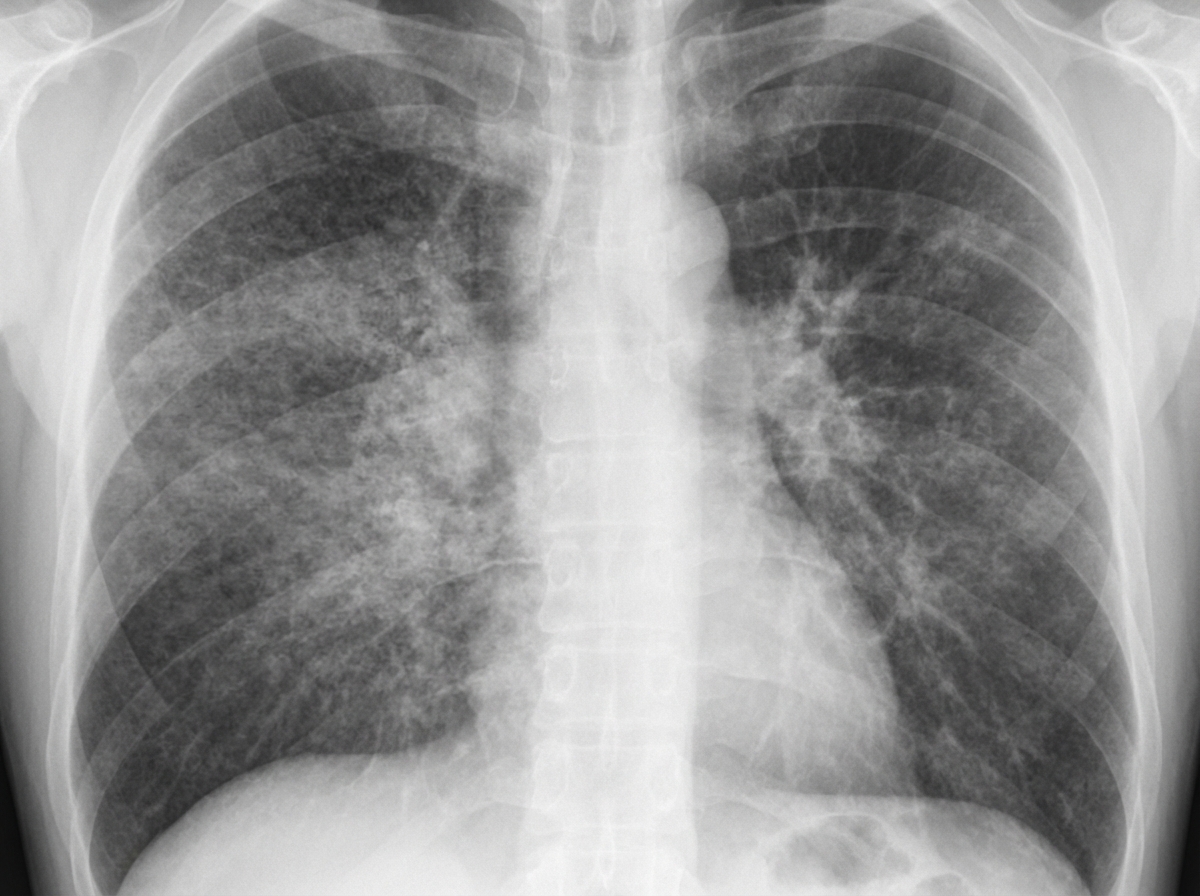
Which geographical region has the highest prevalence of HIV-E?
Which of the following is NOT a feature of dengue hemorrhagic fever?
A 29-year-old male is found to be HBsAg positive with highly increased SCOT levels but HBeAg negative. Which of the following is true about the status of the patient?
A person had an episode of dengue serotype 1, followed by an infection with serotype 2 two years later. What is the likely effect of the second episode?
What is the most common cause of amoebic lung abscess?
Which of the following statements about cysticercosis is true?
Prophylactic therapy should be started against Pneumocystis carinii pneumonia in AIDS patients with CD4 counts below what threshold?
Opportunistic lung infections in AIDS are most commonly caused by which of the following pathogens?
What is the increased risk factor for developing tuberculosis (TB) in a patient with a positive Mantoux test?
A nurse has been vaccinated against Hepatitis B and has no prior history of Hepatitis B infection. Which of the following would be found in a blood examination?
Explanation: The question refers to **HIV-1 Subtype E** (now more accurately classified as the **CRF01_AE** recombinant form). While HIV-1 Subtype C is the most common globally, HIV-1 Subtype E (CRF01_AE) shows a distinct geographical clustering. **1. Why Thailand is Correct:** Thailand is the epicenter for **HIV-1 Subtype E (CRF01_AE)**. It was first identified among female sex workers and military recruits in Thailand in the late 1980s. This subtype is characterized by its high efficiency in heterosexual transmission and its specific tropism for the mucosal surfaces of the genital tract, which facilitated its rapid spread across Southeast Asia [1]. **2. Why other options are incorrect:** * **India:** The predominant strain in India is **Subtype C**, accounting for over 90% of infections. * **Africa:** Sub-Saharan Africa has the highest overall global burden of HIV, but the dominant strain is **Subtype C** (Southern Africa) and a mix of Subtypes A and D (East/Central Africa) [1]. * **Europe:** Western Europe and North America are dominated by **Subtype B**, which is historically associated with transmission among men who have sex with men (MSM) and intravenous drug users [1]. **High-Yield Clinical Pearls for NEET-PG:** * **Most common subtype worldwide:** Subtype C. * **Most common subtype in India:** Subtype C. * **Subtype B:** Most common in the Americas, Europe, and Australia. * **Subtype E (CRF01_AE):** Associated with Southeast Asia (Thailand) and heterosexual transmission. * **HIV-2:** Primarily restricted to West Africa; it is less virulent and has a slower progression than HIV-1 [1].
Explanation: To understand this question, it is essential to distinguish between **Dengue Hemorrhagic Fever (DHF)** and **Dengue Shock Syndrome (DSS)** based on the WHO classification. ### **Explanation of the Correct Answer** **Option B (Narrow pulse pressure)** is the correct answer because it is a hallmark of **Dengue Shock Syndrome (DSS)**, not DHF. Narrow pulse pressure (≤ 20 mmHg) or hypotension occurs when plasma leakage becomes so severe that the compensatory mechanisms fail, leading to circulatory collapse. While DHF involves plasma leakage, the presence of shock markers like narrow pulse pressure upgrades the diagnosis to DSS [1]. ### **Analysis of Incorrect Options** The WHO criteria for DHF require the presence of **all four** of the following: * **A. Thrombocytopenia:** Defined as a platelet count < 100,000 cells/mm³. This is a mandatory criterion for DHF. * **C. Elevated Hematocrit:** This is a sign of **plasma leakage**. An increase in hematocrit ≥ 20% above baseline (hemoconcentration) is the most objective evidence of DHF. * **D. Positive Tourniquet Test:** This indicates increased capillary fragility. While it can be seen in simple Dengue Fever, it is one of the hemorrhagic manifestations required to fulfill the DHF criteria [1]. ### **NEET-PG High-Yield Pearls** * **The "Critical Phase":** Occurs during defervescence (when fever drops). This is when plasma leakage and DHF/DSS typically manifest [1]. * **Pathophysiology:** The primary mechanism behind DHF is **increased vascular permeability** (not just bleeding), often due to "Antibody-Dependent Enhancement" (ADE) during a secondary infection with a different serotype. * **Grading of DHF:** * Grade I: Positive tourniquet test is the only hemorrhagic manifestation [1]. * Grade II: Spontaneous bleeding (epistaxis, GI bleed). * Grade III: Circulatory failure (narrow pulse pressure/rapid pulse). * Grade IV: Profound shock (undetectable BP/pulse). * *Note: Grades III and IV are classified as DSS.*
Explanation: ### Explanation This clinical scenario describes a patient with active Hepatitis B infection (HBsAg positive and elevated transaminases) who is **HBeAg negative**. In a typical wild-type infection, active viral replication and liver damage are associated with the presence of HBeAg [1]. However, when HBeAg is absent despite high viral activity, it indicates a **Precore Mutant**. **1. Why Precore Mutant is Correct:** The precore region of the HBV genome (specifically the **G1896A mutation**) introduces a premature stop codon. This prevents the synthesis of the Hepatitis B e-antigen (HBeAg) without affecting the virus's ability to replicate. Consequently, the patient remains HBeAg negative but has high HBV DNA levels and elevated SGOT/SGPT due to ongoing immune-mediated hepatic injury [1]. **2. Why Other Options are Incorrect:** * **Core-promoter mutant:** While these also result in reduced HBeAg production, they involve mutations in the *basal core promoter (BCP)* region rather than the precore region. They are often associated with higher viral loads and increased risk of hepatocellular carcinoma, but "Precore mutant" is the classic textbook answer for the complete absence of HBeAg in active disease. * **Wild type:** In wild-type HBV, active replication and elevated liver enzymes are almost always accompanied by **HBeAg positivity**, as HBeAg is a marker of secretory protein production during replication [1]. * **Surface mutant:** These involve mutations in the 'a' determinant of the HBsAg (e.g., G145R). This leads to "diagnostic failure" where HBsAg is not detected by standard assays, or "vaccine escape," but it does not explain the HBeAg-negative/high-enzyme status. **Clinical Pearls for NEET-PG:** * **Serological Hallmark:** HBsAg (+), Anti-HBe (+), HBV DNA high, and HBeAg (-). * **Treatment:** Precore mutants often require longer durations of therapy and have higher relapse rates compared to wild-type infections [1]. * **Distinction:** Always differentiate from the "Inactive Carrier State," where HBeAg is also negative, but transaminases and HBV DNA levels are **low/normal** [1].
Explanation: ### Explanation The correct answer is **B. Increased chances of developing Dengue Hemorrhagic Fever (DHF).** This phenomenon is explained by the concept of **Antibody-Dependent Enhancement (ADE)**. There are four distinct serotypes of the Dengue virus (DEN-1 to DEN-4). Primary infection with one serotype provides lifelong immunity to that specific serotype but only short-lived, partial cross-protection against others. When a secondary infection occurs with a different serotype (e.g., DEN-2 after DEN-1), the pre-existing non-neutralizing antibodies from the first infection bind to the new virus. Instead of neutralizing it, these antibodies act as a "bridge," facilitating the entry of the virus into macrophages via **Fc receptors**. This leads to increased viral replication, a massive release of cytokines (Cytokine Storm), and subsequent vascular permeability, leading to DHF or Dengue Shock Syndrome (DSS) [1]. #### Analysis of Incorrect Options: * **Option A:** Neutralizing antibodies are serotype-specific. While they protect against a repeat infection of DEN-1, they do not neutralize DEN-2; instead, they enhance the disease. * **Option C & D:** These are incorrect because a secondary heterologous infection is the single most significant risk factor for severe dengue (DHF/DSS). #### High-Yield Clinical Pearls for NEET-PG: * **Risk Factors for DHF:** Secondary infection (most common), infection with DEN-2 serotype, and young age. * **Pathophysiology:** The hallmark of DHF is **plasma leakage** due to endothelial dysfunction [1]. * **WHO Criteria for DHF:** Fever, hemorrhagic manifestations, thrombocytopenia (<100,000/mm³), and evidence of plasma leakage (e.g., >20% rise in hematocrit, pleural effusion, or ascites). * **Tourniquet Test:** A positive test (≥10 petechiae per square inch) is a marker of capillary fragility [1].
Explanation: **Explanation:** **Amoebic lung abscess** is almost always a secondary complication of **Amoebic Liver Abscess (ALA)**, caused by the protozoan *Entamoeba histolytica* [1]. **1. Why "Direct extension from the liver" is correct:** The most common mechanism is the **direct rupture** of a liver abscess (usually in the right lobe) through the diaphragm into the pleural space or the lung parenchyma [1]. This occurs because the superior surface of the liver is in close anatomical proximity to the base of the right lung. When an ALA reaches the diaphragmatic surface, it causes local inflammation, adhesion, and eventual penetration into the thoracic cavity. **2. Why other options are incorrect:** * **Hematogenous spread:** While *E. histolytica* can travel via the bloodstream (portal circulation) to reach the liver, primary hematogenous spread to the lungs without liver involvement is extremely rare. * **Lymphatic spread:** This is not a recognized primary route for the dissemination of amoebiasis to the thoracic cavity. * **Inhalation:** *E. histolytica* is transmitted via the fecal-oral route (ingestion of cysts). It is not an airborne pathogen and cannot be acquired through inhalation [1]. **High-Yield NEET-PG Pearls:** * **Most common site:** The **lower lobe of the right lung** is most frequently involved due to the anatomical position of the liver. * **Anchovy Sauce Sputum:** If the abscess ruptures into a bronchus (hepatobronchial fistula), the patient may expectorate "anchovy sauce" or "chocolate sauce" colored sputum, which is pathognomonic [1]. * **Treatment:** The drug of choice is **Metronidazole** (or Tinidazole), followed by a luminal amoebicide (e.g., Diloxanide furoate) to eradicate the intestinal carrier state.
Explanation: Cysticercosis is a systemic parasitic infection caused by the larval stage (*Cysticercus cellulosae*) of the pork tapeworm, **Taenia solium** [1]. **1. Why Option C is correct:** Human cysticercosis occurs when a human acts as an **accidental intermediate host**. This happens via the **ingestion of T. solium eggs (ova)** through contaminated food or water (fecal-oral route) or via autoinfection [1], [2]. Once ingested, the eggs hatch in the intestine, releasing oncospheres that migrate to tissues (brain, muscles, eyes) to form cysticerci. **2. Why other options are incorrect:** * **Option A:** *Echinococcus granulosus* causes Hydatid disease, not cysticercosis [1]. * **Option B:** In the life cycle of *T. solium*, **man is the definitive host** only for the adult tapeworm (intestinal taeniasis, acquired by eating undercooked pork containing cysticerci) [1], [2]. However, for **cysticercosis**, man acts as the intermediate host. * **Option D:** The treatment of choice for neurocysticercosis (NCC) involves **Albendazole** (preferred) or Praziquantel, often administered with corticosteroids to reduce inflammation. Levamisole is an anthelmintic used primarily for Ascariasis. **High-Yield Clinical Pearls for NEET-PG:** * **Neurocysticercosis (NCC):** The most common cause of adult-onset seizures in developing countries. * **Imaging:** CT/MRI shows the "starry sky" appearance (multiple calcified cysts) or a "hole-with-dot" appearance (scolex within the cyst). * **Key Distinction:** Ingesting **larvae** (in pork) leads to **Taeniasis** (intestinal); ingesting **eggs** (fecal-oral) leads to **Cysticercosis** (tissue) [1], [2].
Explanation: The risk of opportunistic infections in HIV/AIDS patients is directly correlated with the decline in CD4+ T-lymphocyte counts. **Pneumocystis jirovecii (formerly P. carinii)** is the most common opportunistic respiratory infection in these patients [1]. Clinical data shows that the incidence of PCP increases significantly once the CD4 count drops below **200 cells/µL**. Therefore, primary prophylaxis with **Trimethoprim-Sulfamethoxazole (TMP-SMX)** is initiated at this threshold to reduce morbidity and mortality [1]. **Analysis of Options:** * **A (< 50/µL):** This is the threshold for initiating prophylaxis against **Mycobacterium avium complex (MAC)** (using Azithromycin) and is also the level where CMV retinitis becomes highly prevalent. * **B (< 150/µL):** This threshold is often associated with an increased risk for fungal infections like **Histoplasmosis** in endemic areas, but it is not the standard cutoff for PCP. * **C (< 200/µL):** **Correct.** This is the standard guideline for starting PCP prophylaxis [1]. It is also the threshold for starting prophylaxis against **Toxoplasma gondii** (if the patient is seropositive). * **D (< 400/µL):** At this level, patients are generally not at high risk for major opportunistic infections, though they may show signs of generalized lymphadenopathy or skin infections. **High-Yield Clinical Pearls for NEET-PG:** * **Drug of Choice:** TMP-SMX (Double strength, once daily). * **Alternative for Sulfa-allergic patients:** Dapsone, Atovaquone, or Pentamidine (aerosolized) [1]. * **Discontinuation:** Prophylaxis can be safely stopped if the CD4 count remains **>200 cells/µL for at least 3 months** in response to ART. * **Chest X-ray finding:** Classic "bat-wing" appearance or bilateral perihilar interstitial infiltrates [1].
Explanation: **Explanation:** The correct answer is **Pneumocystis jirovecii**. **1. Why Pneumocystis jirovecii is correct:** *Pneumocystis jirovecii* (formerly *P. carinii*) is the most common opportunistic respiratory infection in patients with AIDS, particularly when the **CD4+ T-cell count falls below 200 cells/µL** [1]. It is a unicellular fungus that causes **Pneumocystis Pneumonia (PCP)**. The underlying pathophysiology involves the inability of the compromised immune system to clear the fungus, leading to alveolar damage, impaired gas exchange, and a classic presentation of progressive dyspnea, non-productive cough, and fever [2]. **2. Why the other options are incorrect:** * **Klebsiella pneumoniae:** This is a common cause of community-acquired pneumonia (CAP) in alcoholics and diabetics, characterized by "currant jelly" sputum. While it can occur in HIV patients, it is not the most common *opportunistic* infection [3]. * **Mucor species:** These cause invasive fungal infections (Mucormycosis), typically seen in patients with uncontrolled diabetes (DKA) or profound neutropenia. It is less common than PCP in AIDS patients. * **Mycoplasma pneumoniae:** This is the leading cause of "atypical pneumonia" in young adults and healthy populations, not specifically associated with the profound immunosuppression of AIDS. **3. NEET-PG Clinical Pearls:** * **Radiology:** Characterized by bilateral, symmetrical **perihilar ground-glass opacities** (bat-wing appearance) on CXR/HRCT [1]. * **Diagnosis:** Definitive diagnosis requires visualization of cysts via **Gomori Methenamine Silver (GMS)** stain or Giemsa stain from induced sputum or Bronchoalveolar Lavage (BAL) [1]. * **Treatment:** Drug of choice is **High-dose IV/Oral Trimethoprim-Sulfamethoxazole (TMP-SMX)** [1]. * **Steroid Rule:** Add corticosteroids if $PaO_2 < 70$ mmHg or A-a gradient $> 35$ mmHg to prevent inflammatory worsening [1]. * **Prophylaxis:** Start TMP-SMX when CD4 count is $< 200$ cells/µL.
Explanation: The question focuses on the risk factors for the **reactivation** of latent tuberculosis infection (LTBI) in a patient who already has a positive Mantoux test (indicating prior exposure). [2] **1. Why Adrenal Steroid Therapy is the Correct Answer:** Corticosteroids are potent immunosuppressants that inhibit T-cell activation and decrease the production of cytokines like TNF-alpha and IFN-gamma, which are crucial for maintaining the integrity of the **tuberculous granuloma**. When a patient with a positive Mantoux test receives systemic steroids (typically ≥15 mg of prednisolone for >2-4 weeks), the granuloma "breaks down," allowing dormant bacilli to multiply, leading to active disease. **2. Analysis of Other Options:** * **B. HIV Infection:** While HIV is the strongest overall risk factor for TB progression, the question structure in many standard medical textbooks (like Harrison’s) specifically highlights corticosteroid therapy and other TNF-antagonists as primary pharmacological triggers for reactivation in the context of a positive Mantoux. [1] * **C. Diabetes Mellitus:** DM increases the risk of TB by approximately 3-fold due to impaired chemotaxis and phagocytosis. However, it is considered a "moderate" risk factor compared to the "high" risk posed by pharmacological immunosuppression or HIV. [2] * **D. All the above:** While all are risk factors, in the specific context of many NEET-PG clinical vignettes, **Adrenal Steroid Therapy** is prioritized as the classic iatrogenic cause for reactivation that requires mandatory screening before initiation. **Clinical Pearls for NEET-PG:** * **High-Risk Reactivation Factors:** HIV/AIDS, TNF-alpha inhibitors (Infliximab), Treatment with corticosteroids, and End-stage renal disease (ESRD). [2] * **Mantoux Cut-offs:** A result of **≥5 mm** is considered positive in HIV-positive patients or those on immunosuppressive steroid therapy. * **Rule of Thumb:** Always screen for LTBI using Mantoux or IGRA before starting a patient on long-term steroids or biologicals.
Explanation: The correct answer is **Anti-HBs Ag**. This question tests the ability to differentiate between immunity acquired through vaccination versus natural infection. **1. Why Anti-HBs Ag is correct:** Hepatitis B vaccines (like the recombinant Engerix-B) contain only the **Hepatitis B surface antigen (HBsAg)**. When a person is vaccinated, their immune system recognizes this surface protein and produces **Anti-HBs antibodies**. Since the vaccine does not contain the core of the virus, the body never produces antibodies against the core antigen. Therefore, a successfully vaccinated individual will be positive for Anti-HBs but negative for all other markers [1]. **2. Why the other options are incorrect:** * **HBsAg (Option A):** This is a marker of active infection (either acute or chronic) [1]. It would not be present in a healthy, vaccinated individual. * **Anti-HBc Ag (Option C):** These are antibodies against the **core antigen**. The core antigen is only found in the actual virus, not the vaccine. The presence of Anti-HBc indicates a **past or current natural infection** [1]. * **Anti-HBs and Anti-HBc (Option D):** This pattern is seen in individuals who have **recovered from a natural infection**. They develop Anti-HBs for immunity and Anti-HBc as a "scar" of the prior viral encounter [1]. **NEET-PG High-Yield Pearls:** * **Window Period:** The time when HBsAg has disappeared but Anti-HBs has not yet appeared. During this phase, **IgM Anti-HBc** is the only diagnostic marker. * **Chronic Infection:** Defined by the persistence of HBsAg for >6 months [1]. * **Infectivity:** **HBeAg** is the primary marker of high viral replication and high infectivity. * **Protective Titer:** An Anti-HBs level of **>10 mIU/mL** is considered protective after a full vaccination series.
Principles of Antimicrobial Therapy
Practice Questions
Fever of Unknown Origin
Practice Questions
HIV/AIDS and Related Infections
Practice Questions
Tuberculosis and Mycobacterial Diseases
Practice Questions
Tropical and Parasitic Infections
Practice Questions
Viral Infections (Hepatitis, Herpes, etc.)
Practice Questions
Healthcare-Associated Infections
Practice Questions
Fungal Infections
Practice Questions
Sepsis and Septic Shock
Practice Questions
Infection in Immunocompromised Hosts
Practice Questions
Emerging and Re-emerging Infections
Practice Questions
Antimicrobial Resistance
Practice Questions
Vaccination Principles
Practice Questions
Get full access to all questions, explanations, and performance tracking.
Start For Free