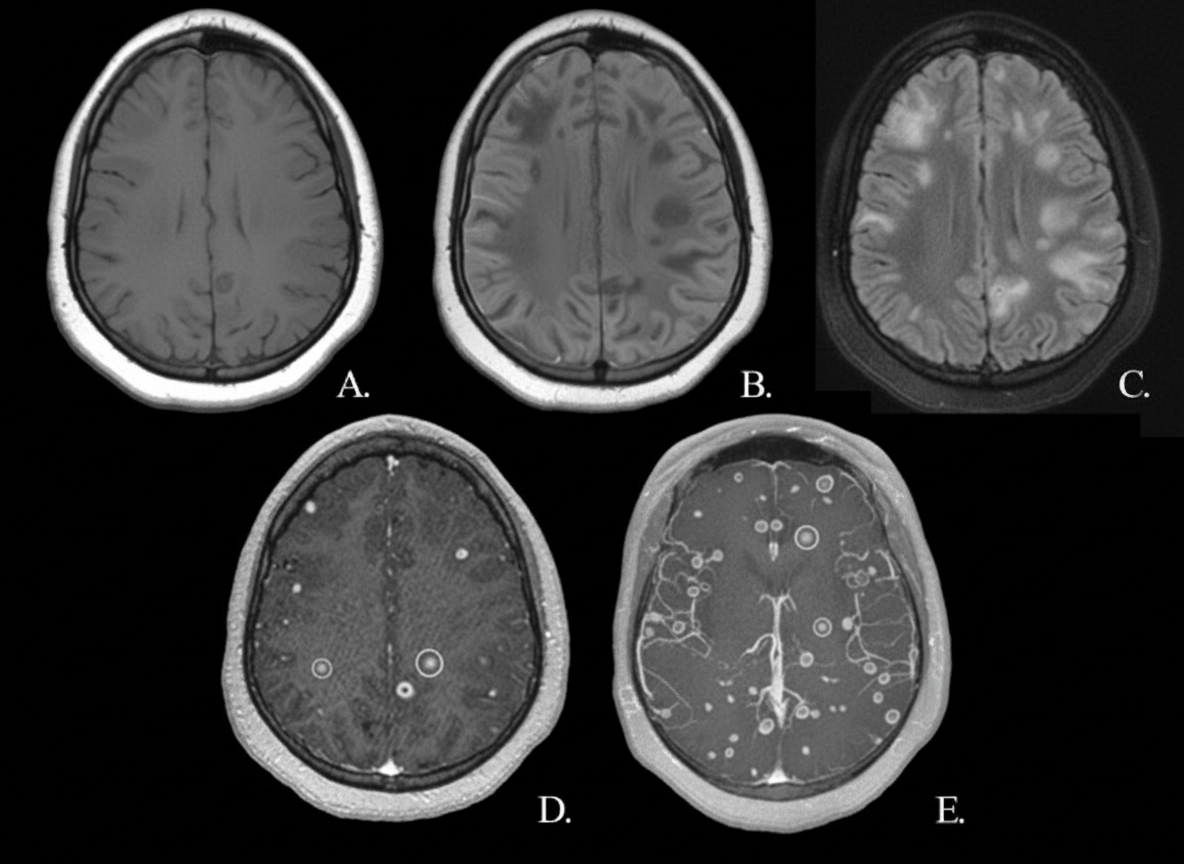
Which of the following is not an AIDS-defining lesion?
An adult male with a history of pneumonia, who is unconscious and has a 10-year history of alcoholism, requires treatment. What is the drug of choice for treating pneumonia in this patient?
A 25-year-old man presented with fever, cough, expectoration, and breathlessness of 2 months' duration. Contrast-enhanced computed tomography of the chest showed bilateral upper lobe fibrotic lesions and mediastinal enlarged necrotic nodes with peripheral rim enhancement. Which one of the following is the most probable diagnosis?
A 46-year-old male with HIV and severe penicillin allergy, receiving zidovudine, indinavir, and stavudine, presents with fever, nonproductive cough, and severe hypoxia. Chest x-ray reveals diffuse increased interstitial markings and a possible lobar consolidation in the left lower lobe. After appropriate evaluation, the patient receives levofloxacin, trimethoprim-sulfamethoxazole, and acyclovir. Initial serum creatinine is 1.6 mg/dL. On day 4, it has risen to 3.8 mg/dL and a normal serum potassium has risen to 7.1 mg/dL. Urinalysis reveals no casts, 10 to 20 WBC/HPF, and rare RBCs. Which drug is the most likely cause of renal failure?
Clindamycin is the drug of choice in which of the following?
A 52-year-old male presented with purpura, arthralgia, neuropathy, and glomerulonephritis. Blood routine examination revealed low hemoglobin and high ESR, with mild alteration in LFT and mild transaminase elevation. He has a history of blood transfusion in 1987 following an accident. What is the underlying pathology in this clinical setting?
Toxic shock syndrome caused by Staphylococcus is due to which of the following?
Which of the following types of Kaposi sarcoma is associated with HIV?
All of the following are seen in severe Falciparum malaria infection EXCEPT?
Zidovudine toxicity is increased by all except?
Explanation: ### Explanation The classification of AIDS-defining illnesses is a high-yield topic for NEET-PG. These are specific opportunistic infections and malignancies that indicate a profound collapse of cell-mediated immunity (usually CD4 count <200 cells/µL) in an HIV-positive individual [1]. **Why the Correct Answer is D (Hodgkin’s Lymphoma):** *Note: There appears to be a clerical error in the provided prompt’s key. **Hodgkin’s Lymphoma is NOT an AIDS-defining lesion.** While its incidence is increased in HIV patients, it is not used to define the transition from HIV to AIDS. Conversely, Kaposi Sarcoma is one of the most classic AIDS-defining conditions. **Analysis of Options:** * **Kaposi Sarcoma (Option A):** A vascular tumor caused by HHV-8. It is a hallmark AIDS-defining illness, typically presenting as violaceous cutaneous nodules [1]. * **Histoplasmosis (Option B):** Disseminated or extrapulmonary histoplasmosis is classified as an AIDS-defining opportunistic fungal infection [1]. * **Burkitt Lymphoma (Option C):** High-grade B-cell lymphomas, including Burkitt’s, immunoblastic lymphoma, and primary CNS lymphoma, are all AIDS-defining malignancies [1]. * **Hodgkin’s Lymphoma (Option D):** Although HIV patients have a 5–10 fold higher risk of developing Hodgkin’s Lymphoma compared to the general population, it remains **non-AIDS-defining** according to CDC and WHO criteria [1]. **High-Yield Clinical Pearls for NEET-PG:** 1. **Most common AIDS-defining neoplasm:** Kaposi Sarcoma [1]. 2. **Most common AIDS-defining infection:** *Pneumocystis jirovecii* pneumonia (PCP). 3. **Cervical Cancer:** Only **Invasive** Cervical Cancer is AIDS-defining (Cervical Intraepithelial Neoplasia is not) [1]. 4. **Tuberculosis:** Both pulmonary and extrapulmonary TB are now considered AIDS-defining in HIV-positive individuals [1]. 5. **Wasting Syndrome:** Defined as >10% involuntary weight loss plus chronic diarrhea or weakness [1].
Explanation: **Explanation:** The clinical scenario describes a patient with two major risk factors for **Aspiration Pneumonia**: chronic alcoholism and a decreased level of consciousness (unconscious). In such patients, the loss of the cough reflex and glottic closure leads to the inhalation of oropharyngeal flora [1], which typically includes a mix of aerobic and **anaerobic bacteria** (e.g., *Bacteroides, Prevotella, Fusobacterium*). **Why Clindamycin is the Correct Choice:** Clindamycin is historically the drug of choice for aspiration pneumonia and lung abscess because it provides excellent coverage against anaerobic organisms and Gram-positive cocci. While Beta-lactam/Beta-lactamase inhibitor combinations (like Piperacillin-Tazobactam) are also used, Clindamycin remains a classic high-yield answer for anaerobic pulmonary infections in competitive exams. Furthermore, since the patient is unconscious, parenteral administration (**Inj.** Clindamycin) is mandatory. **Analysis of Incorrect Options:** * **A & B (Tab Amoxicillin/Azithromycin):** These are oral formulations. An unconscious patient cannot take oral medications due to the risk of further aspiration and inability to swallow. Additionally, they lack sufficient anaerobic coverage. * **D (Inj Levofloxacin):** While Levofloxacin is a broad-spectrum respiratory fluoroquinolone, it has poor activity against the anaerobes typically found in the oral cavity compared to Clindamycin or Metronidazole. **Clinical Pearls for NEET-PG:** * **Most common site for aspiration:** The **Right Lower Lobe** (due to the more vertical and wider right main bronchus). If the patient is supine, the superior segment of the lower lobes or posterior segment of the upper lobes are commonly involved. * **Putrid Sputum:** A classic clinical sign of anaerobic lung infection. * **First-line alternative:** Amoxicillin-Clavulanate (IV) is now often preferred in modern clinical practice, but Clindamycin remains the "textbook" answer for isolated anaerobic suspicion.
Explanation: ### Explanation The clinical presentation and radiological findings are classic for **Post-primary (Reactivation) Tuberculosis**. **Why Tuberculosis is the Correct Answer:** * **Clinical Profile:** A young male with a chronic history (2 months) of constitutional symptoms (fever, cough, expectoration, breathlessness) strongly suggests a chronic granulomatous infection. * **Upper Lobe Predilection:** TB has a high affinity for the apical and posterior segments of the upper lobes due to higher oxygen tension, leading to fibrosis and cavitation [1]. * **Necrotic Nodes:** The pathognomonic radiological sign here is **mediastinal lymphadenopathy with peripheral rim enhancement and central low attenuation (necrosis)** [2]. This represents "caseating necrosis," which is the hallmark of Tuberculosis. **Analysis of Incorrect Options:** * **Sarcoidosis:** While it causes mediastinal lymphadenopathy, the nodes are typically **bilateral, symmetrical, and non-necrotic** (homogeneous enhancement). It usually presents with "potato nodes" and interstitial lung disease rather than upper lobe fibrosis with necrosis. * **Lymphoma:** Presents with bulky, coalesced mediastinal masses. While necrosis can occur in aggressive types, it lacks the specific upper lobe fibrotic predilection and usually presents with "B-symptoms" like significant weight loss and night sweats. * **Silicosis:** Characterized by "eggshell calcification" of hilar nodes and nodular opacities. While it affects the upper lobes, it is an occupational lung disease and does not typically present with necrotic nodes unless complicated by TB (Silicotuberculosis). **NEET-PG High-Yield Pearls:** 1. **Ghon’s Complex:** Seen in Primary TB (Subpleural nodule + lymphangitis + hilar node) [3]. 2. **Ranke Complex:** Calcified Ghon’s complex [3]. 3. **Rim Enhancement:** On CECT, peripheral rim enhancement of lymph nodes is the most specific sign for TB in a high-prevalence country like India [2]. 4. **Hotspot:** The most common site for TB reactivation is the **Apical segment of the Right Upper Lobe** [1].
Explanation: ### **Explanation** The patient presents with **Acute Kidney Injury (AKI)** and life-threatening **hyperkalemia** (7.1 mg/dL) following the initiation of treatment for suspected opportunistic infections. **1. Why Trimethoprim-Sulfamethoxazole (TMP-SMX) is the correct answer:** TMP-SMX is the drug of choice for *Pneumocystis jirovecii* pneumonia (PCP) [2]. It causes nephrotoxicity and electrolyte imbalances through two distinct mechanisms: * **Hyperkalemia:** The Trimethoprim component is structurally related to the potassium-sparing diuretic **Amiloride**. It blocks the epithelial sodium channels (ENaC) in the distal nephron, inhibiting sodium reabsorption and decreasing potassium secretion. This effect is dose-dependent and common in HIV patients receiving high-dose therapy. * **Interstitial Nephritis:** The Sulfamethoxazole component can cause **Acute Interstitial Nephritis (AIN)**, suggested here by the presence of pyuria (10-20 WBC/HPF) without casts [1]. Additionally, TMP can cause a "pseudo-azotemia" by inhibiting tubular secretion of creatinine, though the significant rise and hyperkalemia here point to true AKI [4]. **2. Why the other options are incorrect:** * **Acyclovir:** While it causes AKI via **obstructive uropathy** (crystal precipitation), it typically presents with hematuria and characteristic needle-shaped crystals. It does not characteristically cause severe hyperkalemia. * **Indinavir:** This Protease Inhibitor causes **nephrolithiasis** (radiolucent stones) and crystalluria. While it can cause obstructive AKI, it is less likely to cause the acute interstitial picture and rapid hyperkalemia seen here. * **Levofloxacin:** Though it can rarely cause AIN, it is not a classic cause of severe hyperkalemia or rapid-onset renal failure compared to TMP-SMX. **3. Clinical Pearls for NEET-PG:** * **TMP-SMX Triad:** Hyperkalemia, increased Serum Creatinine, and Type 4 Renal Tubular Acidosis (RTA). * **HIV & Hyperkalemia:** Always look for TMP-SMX or Pentamidine as the culprit. * **Drug-Induced AIN:** Look for "sterile pyuria" (WBCs in urine without bacteria) and sometimes peripheral eosinophilia [1]. * **Zidovudine (AZT) Side Effect:** Macrocytic anemia (High MCV) is a high-yield monitoring parameter [3].
Explanation: **Explanation:** **Clindamycin** is a lincosamide antibiotic that inhibits protein synthesis by binding to the 50S ribosomal subunit. It is classically known for its excellent activity against **Gram-positive cocci** and **anaerobes**. [1] 1. **Why Bacteroides fragilis is correct:** Clindamycin is historically the drug of choice for anaerobic infections occurring **above the diaphragm** (e.g., lung abscess, aspiration pneumonia). While resistance is increasing, it remains a primary agent for treating *Bacteroides fragilis* and other anaerobes in skin, soft tissue, and oral cavity infections. 2. **Why other options are incorrect:** * **MRSA:** While Clindamycin can be used for community-acquired MRSA (CA-MRSA) skin infections, it is not the "drug of choice." [1] Vancomycin remains the gold standard for systemic MRSA. [2] * **Mycoplasma pneumoniae:** This is an atypical bacterium lacking a cell wall. The drugs of choice are Macrolides (Azithromycin) or Tetracyclines (Doxycycline). * **Pseudomonas:** This is a Gram-negative aerobe. Clindamycin has **zero activity** against aerobic Gram-negative bacilli like *Pseudomonas*. Antipseudomonal penicillins (Piperacillin) or Cephalosporins (Ceftazidime) are required. [3] **High-Yield NEET-PG Pearls:** * **The "Diaphragm Rule":** Use **Clindamycin** for anaerobes *above* the diaphragm (aspiration pneumonia) and **Metronidazole** for anaerobes *below* the diaphragm (intra-abdominal infections). * **D-Test:** Used to detect inducible clindamycin resistance in Staphylococci. A positive test (D-shaped zone) indicates the presence of the *erm* gene; Clindamycin should not be used. * **Side Effect:** Clindamycin is the antibiotic most classically associated with **Pseudomembranous colitis** caused by *Clostridioides difficile*.
Explanation: The clinical presentation of **purpura, arthralgia, and weakness (Meltzer’s triad)**, combined with neuropathy and glomerulonephritis, is the classic hallmark of **Mixed Cryoglobulinemia (Type II or III)**. 1. **Why the correct answer is right:** The patient’s history of a blood transfusion in 1987 (prior to routine screening for Hepatitis C) and elevated transaminases strongly suggest **Chronic Hepatitis C Virus (HCV) infection**. Over 90% of mixed cryoglobulinemia cases are associated with HCV. The pathology involves immune complexes (cryoglobulins) that precipitate in the cold, leading to a small-to-medium vessel vasculitis [1]. This causes systemic involvement: skin (purpura), joints (arthralgia), nerves (mononeuritis multiplex), and kidneys (membranoproliferative glomerulonephritis). These systemic diseases result from generalized deposition of immune complexes known as Type III hypersensitivity [2]. 2. **Why incorrect options are wrong:** * **Henoch-Schonlein Purpura (IgA Vasculitis):** Typically affects children and follows an upper respiratory infection [1]. While it presents with purpura and nephritis, the history of transfusion and LFT derangement points specifically toward HCV-related cryoglobulinemia. * **Amyloidosis:** While it can cause renal failure and neuropathy, it does not typically present with palpable purpura or the acute vasculitic triad seen here. * **Chronic Malaria:** Can cause anemia and splenomegaly (Tropical Splenomegaly Syndrome), but it is not a recognized cause of systemic vasculitis or cryoglobulinemia. **High-Yield Pearls for NEET-PG:** * **Meltzer’s Triad:** Purpura, Arthralgia, and Myalgia/Asthenia. * **Lab Findings:** Low **C4** levels are a highly sensitive marker for cryoglobulinemia (even when C3 is normal). * **Gold Standard Diagnosis:** Detection of circulating cryoglobulins (requires blood to be kept at 37°C during transport). * **Association:** Always screen for **Hepatitis C** in any patient presenting with unexplained vasculitis or MPGN.
Explanation: **Explanation:** **Why Superantigens are the Correct Answer:** Staphylococcal Toxic Shock Syndrome (TSS) is primarily mediated by **Toxic Shock Syndrome Toxin-1 (TSST-1)**. This toxin acts as a **superantigen**, which bypasses the normal antigen-processing pathway. Unlike regular antigens that bind to the antigen-binding groove of the Major Histocompatibility Complex (MHC) II, superantigens bind directly to the **external surface of MHC II** and the **Vβ region of the T-cell receptor (TCR)**. This results in the non-specific activation of up to 20% of the body’s T-cells (compared to <0.01% in normal responses), leading to a massive "cytokine storm" (TNF-α, IL-1, IL-6, and IFN-γ). This systemic inflammation causes the characteristic fever, hypotension, and multi-organ failure. **Why the Other Options are Incorrect:** * **A. Hemolytic antigen:** While *S. aureus* produces hemolysins (like alpha-toxin) that lyse red blood cells, they are involved in localized tissue damage and abscess formation, not the systemic cytokine cascade of TSS. * **C. Hyaluronidase:** Also known as the "spreading factor," this enzyme breaks down connective tissue (hyaluronic acid) to help the bacteria invade deeper tissues. It does not trigger a systemic immune response. * **D. Coagulase:** This enzyme converts fibrinogen to fibrin, helping the bacteria wall itself off from the immune system. It is a diagnostic marker for *S. aureus* but not the cause of TSS. **High-Yield Clinical Pearls for NEET-PG:** * **Clinical Triad:** High fever, hypotension, and a diffuse macular erythroderma (sunburn-like rash) that later desquamates (especially on palms and soles). * **Risk Factors:** Classically associated with highly absorbent **tampon use**, but also occurs in surgical wound infections and burns. * **Management:** Requires aggressive fluid resuscitation, source removal (e.g., removing the tampon), and antibiotics (Clindamycin is often added because it inhibits toxin production).
Explanation: **Explanation:** The correct answer is **None of the above** because the type of Kaposi Sarcoma (KS) associated with HIV is specifically classified as **Epidemic Kaposi Sarcoma** (also known as AIDS-associated KS) [1]. Kaposi Sarcoma is a multicentric angioproliferative tumor caused by **Human Herpesvirus 8 (HHV-8)** [1]. While all forms of KS are linked to HHV-8, they are categorized into four distinct clinical-epidemiological types: * **Epidemic (AIDS-associated) KS:** This is the most common and aggressive form. It occurs in HIV-infected individuals, typically when CD4 counts are low [1]. It often involves the skin, mucous membranes (especially the hard palate), and viscera [1]. * **Classic KS (Option B & C):** This type typically affects elderly men of Mediterranean, Eastern European, or Jewish descent. It is usually indolent, presenting as slow-growing lesions on the lower extremities. "European KS" is simply a geographic descriptor for the Classic type. * **Endemic (African) KS (Option A):** This occurs in HIV-negative individuals in equatorial Africa [1]. It presents in two forms: an indolent cutaneous form in adults and a highly aggressive lymphadenopathic form in children. * **Iatrogenic (Transplant-associated) KS:** Occurs in patients on chronic immunosuppressive therapy, particularly following solid organ transplantation. **High-Yield Clinical Pearls for NEET-PG:** * **Most common site of involvement:** Skin (lower extremities in Classic; face/trunk in Epidemic). * **Most common oral site:** Hard palate [1]. * **Histopathology:** Characterized by **spindle-shaped cells**, slit-like vascular spaces, and extravasated RBCs. * **Treatment:** Highly Active Antiretroviral Therapy (HAART) is the mainstay for Epidemic KS; systemic chemotherapy (e.g., Liposomal Doxorubicin) is used for advanced disease.
Explanation: Severe Falciparum malaria is a medical emergency characterized by vital organ dysfunction and high parasite counts. [1] **1. Why Hyperglycemia is the Correct Answer (The Exception):** In severe malaria, **Hypoglycemia** (not hyperglycemia) is a common and dangerous complication. It occurs due to two primary mechanisms: * **Host factors:** Failure of hepatic gluconeogenesis and increased consumption of glucose by both the host and the parasites. * **Drug-induced:** Quinine and quinidine (traditionally used for treatment) [1] are potent stimulators of pancreatic insulin secretion, leading to hyperinsulinemic hypoglycemia. **2. Analysis of Incorrect Options (Features of Severe Malaria):** * **Severe Anemia (Option A):** Defined as a hemoglobin <5 g/dL or hematocrit <15%. It results from the direct destruction of parasitized RBCs, splenic clearance of non-parasitized RBCs, and bone marrow suppression. [1] * **Renal Failure (Option B):** Acute Kidney Injury (AKI) is common in adults, often presenting as "Blackwater Fever" (hemoglobinuria) due to massive intravascular hemolysis or acute tubular necrosis. * **Acidosis (Option D):** Metabolic acidosis (pH <7.35 or bicarbonate <15 mmol/L) is a major predictor of mortality. [1] It is primarily caused by hyperlactatemia due to microvascular obstruction by sequestered parasites and tissue hypoxia. **Clinical Pearls for NEET-PG:** * **WHO Criteria for Severe Malaria:** Includes Cerebral malaria (GCS <11), Pulmonary edema (ARDS), Jaundice (Bilirubin >3 mg/dL), and Hyperparasitemia (>10% or 500,000/μL). [1] * **Drug of Choice:** Intravenous **Artesunate** is the gold standard for severe malaria. [1] * **Sequestration:** The hallmark of *P. falciparum* is "cytoadherence," where infected RBCs stick to vascular endothelium, causing organ ischemia. [1]
Explanation: **Explanation:** Zidovudine (AZT), a Nucleoside Reverse Transcriptase Inhibitor (NRTI), is primarily metabolized in the liver via **glucuronidation** (by UDP-glucuronosyltransferase) and excreted by the kidneys. Toxicity, characterized by bone marrow suppression (anemia and neutropenia), increases when its metabolism or excretion is inhibited. **Why Azithromycin is the correct answer:** Azithromycin is a macrolide antibiotic that, unlike Erythromycin or Clarithromycin, **does not inhibit the Cytochrome P450 system** or interfere with the glucuronidation pathway. Therefore, it does not significantly increase the plasma levels or toxicity of Zidovudine. **Analysis of incorrect options:** * **Probenecid:** It inhibits both the hepatic glucuronidation and the renal tubular secretion of Zidovudine, leading to significantly increased plasma levels and risk of toxicity. * **Cisplatin:** This chemotherapeutic agent is nephrotoxic. By impairing renal function, it reduces the clearance of Zidovudine. Furthermore, both drugs cause additive bone marrow suppression. * **Paracetamol (Acetaminophen):** It is also metabolized via glucuronidation. Competitive inhibition for the same enzyme pathway can decrease Zidovudine metabolism, potentially increasing its toxicity (though clinical significance varies). **High-Yield Clinical Pearls for NEET-PG:** * **Most common side effect of Zidovudine:** Macrocytic anemia and bone marrow suppression. * **Drug of choice for preventing vertical transmission** of HIV (mother-to-child) during labor is Zidovudine. * **L-type interaction:** Drugs like Ganciclovir and Amphotericin B also increase Zidovudine toxicity due to additive hematotoxicity and nephrotoxicity respectively. * **Nail hyperpigmentation** is a characteristic physical finding associated with chronic Zidovudine use.
Principles of Antimicrobial Therapy
Practice Questions
Fever of Unknown Origin
Practice Questions
HIV/AIDS and Related Infections
Practice Questions
Tuberculosis and Mycobacterial Diseases
Practice Questions
Tropical and Parasitic Infections
Practice Questions
Viral Infections (Hepatitis, Herpes, etc.)
Practice Questions
Healthcare-Associated Infections
Practice Questions
Fungal Infections
Practice Questions
Sepsis and Septic Shock
Practice Questions
Infection in Immunocompromised Hosts
Practice Questions
Emerging and Re-emerging Infections
Practice Questions
Antimicrobial Resistance
Practice Questions
Vaccination Principles
Practice Questions
Get full access to all questions, explanations, and performance tracking.
Start For Free