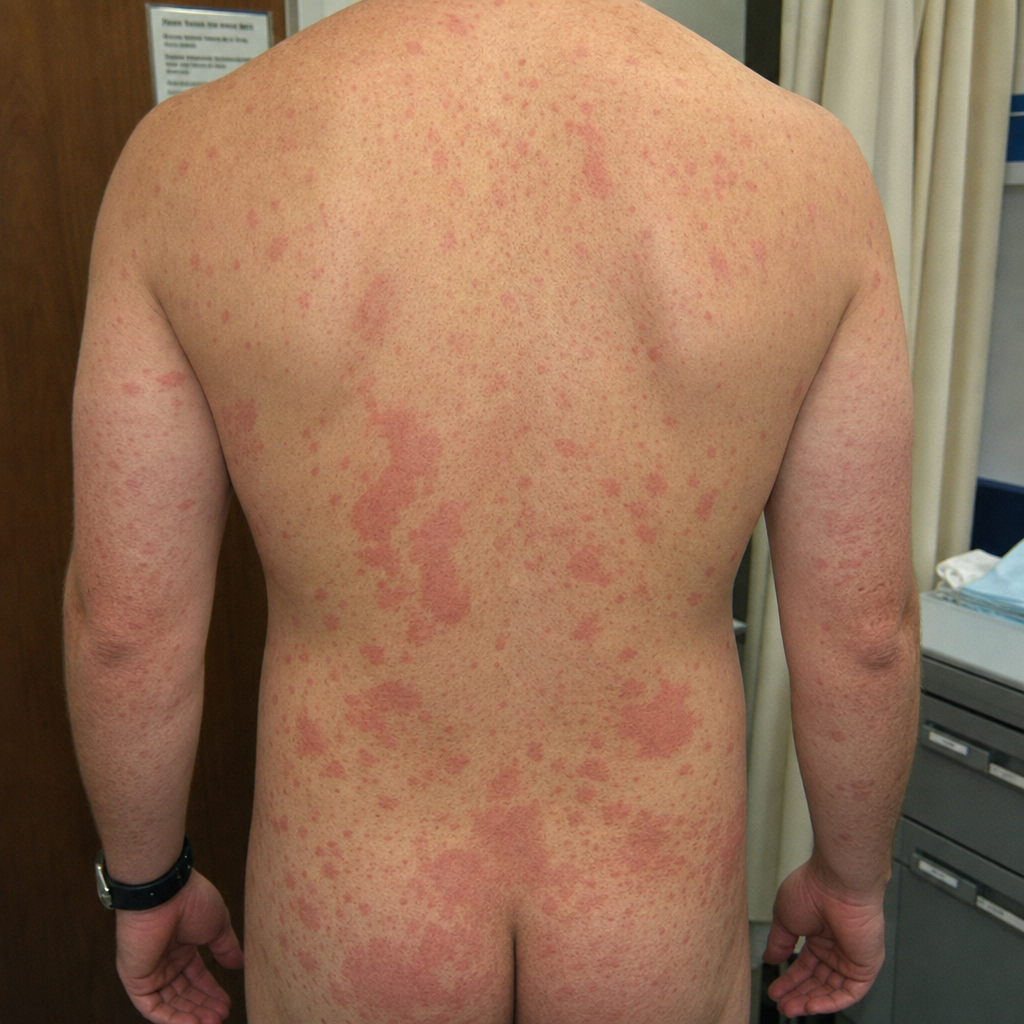
Besides zidovudine and lamivudine, which of the following drugs is a reverse transcriptase inhibitor used in the treatment of HIV infection?
The most severe form of respiratory complication in influenza virus infection is:
Klebsiella pneumonia is characterized by which of the following features?
What is the recommended treatment for AIDS?
Which organism is a common cause of pneumatocele?
In Aspergillus infection, all the following drugs are used except?
What is the percentage of coincidence between a sore throat and acute rheumatic fever?
What is an alternative parenteral drug for multi-drug resistant malaria?
All of the following are true about Amoebic liver abscess except:
Fulminant hepatitis is most commonly associated with which type of hepatitis?
Explanation: The treatment of HIV involves **Highly Active Antiretroviral Therapy (HAART)**, which utilizes different classes of drugs targeting specific stages of the viral life cycle. **1. Why Abacavir is Correct:** Abacavir belongs to the **Nucleoside Reverse Transcriptase Inhibitors (NRTIs)** class. Like Zidovudine and Lamivudine, it acts as a competitive inhibitor of the viral enzyme **Reverse Transcriptase**. It is a guanosine analogue that incorporates itself into the growing viral DNA chain, causing premature chain termination. [2] **2. Why the Other Options are Incorrect:** * **Saquinavir, Indinavir, and Ritonavir (Options A, B, D):** These drugs belong to the **Protease Inhibitors (PIs)** class. They work by inhibiting the viral protease enzyme, which is responsible for cleaving precursor polyproteins into functional mature proteins [1]. This results in the production of immature, non-infectious virions. **High-Yield Clinical Pearls for NEET-PG:** * **Abacavir Hypersensitivity:** A critical side effect of Abacavir is a potentially fatal hypersensitivity reaction. It is strongly associated with the **HLA-B*5701** allele. Screening for this allele is mandatory before starting the drug. * **Ritonavir Boosting:** Ritonavir is a potent inhibitor of the **CYP3A4** enzyme [1]. In clinical practice, it is often used in low doses to "boost" the plasma concentrations of other protease inhibitors rather than for its own antiviral effect. * **NRTI Class Side Effects:** The most common class-wide side effect of NRTIs is **lactic acidosis** due to mitochondrial toxicity. * **Zidovudine (AZT):** Frequently tested for causing **macrocytic anemia** and bone marrow suppression.
Explanation: **Explanation:** **Primary viral pneumonia** is the most severe and least common respiratory complication of influenza [1]. It typically occurs in high-risk groups (e.g., patients with mitral stenosis or pregnancy). It is characterized by rapid progression of fever, dyspnea, and cyanosis within 24–48 hours of flu onset. Pathologically, it causes diffuse interstitial inflammation, alveolar hemorrhage, and edema, often leading to Acute Respiratory Distress Syndrome (ARDS) and high mortality rates. **Analysis of Incorrect Options:** * **Secondary bacterial pneumonia:** While more common than primary viral pneumonia, it is usually less severe [1]. It typically presents as a "biphasic illness" where the patient improves then worsens. *S. pneumoniae* is the most common cause, but *S. aureus* is the most serious secondary invader [2]. * **Acute pneumatocele:** These are thin-walled, air-filled cysts typically associated with *Staphylococcus aureus* pneumonia. While serious, they are a localized complication rather than a systemic respiratory failure. * **Bilateral pleural effusion:** While effusions can occur in severe pneumonia, they are usually reactive (parapneumonic) and do not represent the primary life-threatening mechanism of the influenza virus itself. **High-Yield Clinical Pearls for NEET-PG:** * **Most common complication of Influenza:** Secondary bacterial pneumonia [1]. * **Most common organism in secondary pneumonia:** *Streptococcus pneumoniae* [2]. * **Most concerning organism in secondary pneumonia:** *Staphylococcus aureus* (often MRSA, causing necrotizing pneumonia) [2]. * **Radiology:** Primary viral pneumonia shows diffuse interstitial infiltrates; secondary bacterial pneumonia shows focal lobar consolidation. * **Drug of Choice:** Oseltamivir (Neuraminidase inhibitor), most effective if started within 48 hours.
Explanation: **Explanation:** *Klebsiella pneumoniae* is a Gram-negative, encapsulated bacillus that typically causes severe, necrotizing pneumonia, particularly in patients with underlying risk factors such as chronic alcoholism, diabetes mellitus, or COPD [1]. **Why Option C is Correct:** *Klebsiella* is notorious for causing **tissue necrosis and abscess formation**. Because the organism produces a thick polysaccharide capsule and triggers a violent inflammatory response, it leads to the destruction of lung parenchyma. This results in **cavitation**, which is a hallmark radiologic feature of *Klebsiella* compared to other typical pneumonias like *Streptococcus pneumoniae* [1]. **Analysis of Incorrect Options:** * **Option A:** While *Klebsiella* causes lobar pneumonia, it is characterized by a **dense inflammatory exudate** that fills the bronchi. This often results in an **absent air bronchogram sign** (unlike *S. pneumoniae* where they are common). However, the "bulging fissure sign" (due to heavy mucoid exudate) is a more specific classic description. * **Option B:** *Klebsiella* has a strong predilection for the **upper lobes** (especially the right upper lobe), likely due to the aspiration of oropharyngeal flora in a recumbent position. * **Option D:** **Pleural effusion** and empyema are actually **frequent complications** of *Klebsiella* pneumonia due to the intense local inflammation and tendency for parenchymal destruction [1]. **High-Yield Clinical Pearls for NEET-PG:** * **Classic Sputum:** "Red-currant jelly" sputum (due to blood and thick mucus). * **X-ray Sign:** **Bulging Fissure Sign** (heavy exudate causes the interlobar fissure to sag downwards). * **Risk Group:** Most common in **chronic alcoholics** [1]. * **Treatment:** Typically treated with third-generation cephalosporins, carbapenems, or aminoglycosides (though resistance via ESBL/KPC is rising).
Explanation: **Explanation:** The standard of care for HIV/AIDS is **Highly Active Antiretroviral Therapy (HAART)**. The primary goal of HAART is to achieve maximal and durable suppression of viral load, prevent drug resistance, and restore immune function (CD4 count). **Why Option B is Correct:** The most common and effective initial regimen consists of a **"Triple Therapy"** backbone. This typically includes **Two Nucleoside Reverse Transcriptase Inhibitors (NRTIs)**—which inhibit the viral DNA synthesis—combined with a third agent from a different class to ensure complete viral suppression [1]. While Integrase Inhibitors (INSTIs) are now often preferred in modern guidelines, the classic board-standard answer remains **2 NRTIs + 1 Protease Inhibitor (PI)** or **2 NRTIs + 1 Non-Nucleoside Reverse Transcriptase Inhibitor (NNRTI)** [1]. Using drugs from different classes targets the virus at multiple stages of its life cycle, significantly reducing the risk of resistance [1]. **Why Other Options are Incorrect:** * **Option A:** Using only three RTIs (e.g., 3 NRTIs) is generally less potent and associated with a higher rate of virological failure compared to multi-class regimens. * **Options C & D:** Adding extra Protease Inhibitors or a fourth drug does not typically provide additional benefit for treatment-naive patients and significantly increases drug toxicity, pill burden, and metabolic side effects [1]. **NEET-PG High-Yield Pearls:** * **Current WHO/NACO Preferred Regimen:** TLD (Tenofovir + Lamivudine + Dolutegravir). Dolutegravir is an Integrase Inhibitor. * **Zidovudine (AZT):** Known for causing macrocytic anemia and bone marrow suppression. * **Nevirapine:** Associated with Stevens-Johnson Syndrome (SJS) and hepatotoxicity. * **Protease Inhibitors (e.g., Ritonavir):** Frequently cause dyslipidemia, insulin resistance (buffalo hump), and are potent CYP3A4 inhibitors [1].
Explanation: **Staphylococcus aureus** is the most common cause of **pneumatoceles**, particularly in the pediatric population. A pneumatocele is a thin-walled, air-filled cyst within the lung parenchyma. The underlying pathophysiology involves a "check-valve" mechanism where inflammatory exudate or necrotic debris partially obstructs a small bronchiole. This allows air to enter the distal alveolar space during inspiration but prevents it from escaping during expiration, leading to focal overdistension and cyst formation. *S. aureus* is highly associated with this because of its tendency to cause necrotizing pneumonia and tissue destruction [1]. **Analysis of Incorrect Options:** * **Streptococcus pyogenes:** While it can cause severe pleuropulmonary infections and empyema, it rarely results in the specific formation of pneumatoceles. * **Hemophilus parainfluenzae:** This is generally a commensal of the upper respiratory tract and is an infrequent cause of pneumonia; it does not typically cause cavitary or cystic lung lesions. * **Mycoplasma pneumoniae:** Known for causing "atypical pneumonia," it usually presents with interstitial infiltrates rather than necrotizing changes or pneumatoceles. **Clinical Pearls for NEET-PG:** * **Pneumatocele Management:** Most pneumatoceles are asymptomatic and resolve spontaneously over weeks to months; surgical intervention is rarely required unless they become tension pneumatoceles or secondary infection occurs. * **Other Causes:** Besides *S. aureus*, pneumatoceles can be seen in *Klebsiella pneumoniae*, *Pneumocystis jirovecii* (especially in HIV patients), and following hydrocarbon aspiration. * **Radiology:** On X-ray, they appear as thin-walled, smooth, air-filled cavities without an air-fluid level (unless secondarily infected).
Explanation: **Explanation:** The correct answer is **Fluconazole** because it has **no clinical activity against *Aspergillus* species.** ### 1. Why Fluconazole is the Correct Answer Fluconazole is a first-generation triazole that is highly effective against *Candida* and *Cryptococcus* [1], but it lacks the structural profile necessary to inhibit the 14-alpha-demethylase enzyme in *Aspergillus*. Therefore, it is never used in the management of Aspergillosis. ### 2. Analysis of Other Options * **Voriconazole (Option C):** This is the **drug of choice (DOC)** for Invasive Aspergillosis. It is a second-generation triazole with superior efficacy and better survival outcomes compared to Amphotericin B [2]. * **Amphotericin B (Option B):** A polyene antifungal that is effective against most *Aspergillus* species. Lipid formulations are used as alternative primary therapy or salvage therapy, especially in cases where azoles are contraindicated [2]. * **Itraconazole (Option D):** This was the first azole with anti-Aspergillus activity. It is primarily used for non-invasive forms like **Allergic Bronchopulmonary Aspergillosis (ABPA)** and chronic cavitary aspergillosis. ### 3. NEET-PG High-Yield Pearls * **Drug of Choice for Invasive Aspergillosis:** Voriconazole. * **Drug of Choice for ABPA:** Oral Corticosteroids (Itraconazole is used as an adjunctive to reduce steroid dose). * **Aspergilloma (Fungus Ball):** Surgery is the definitive treatment; systemic antifungals have poor penetration into the cavity. * **Caspofungin (Echinocandin):** Used as salvage therapy for refractory invasive aspergillosis. * **Specific Resistance:** *Aspergillus terreus* is characteristically resistant to Amphotericin B.
Explanation: ### Explanation **1. Understanding the Correct Answer (Option A: 3%)** Acute Rheumatic Fever (ARF) is a nonsuppurative inflammatory complication that follows a Group A Streptococcal (GAS) pharyngitis. Epidemiological studies conducted in the mid-20th century (notably at Warren Air Force Base) established that approximately **3% of individuals** with untreated or inadequately treated exudative streptococcal sore throats will develop ARF. This "3% rule" applies specifically to epidemic situations [1]. In endemic settings or during sporadic outbreaks, the attack rate can be significantly lower (often <1.0%), but for standardized examinations like NEET-PG, 3% is the classic, high-yield figure. **2. Analysis of Incorrect Options** * **Option B (5%):** This overestimates the incidence. While GAS is common, the host immune response required to trigger ARF is specific and occurs in a minority of the population. * **Options C & D (7% and 9%):** These figures are significantly higher than documented clinical data. Even in the absence of antibiotics, the vast majority of patients with a sore throat do not develop the systemic autoimmune response characteristic of ARF. **3. Clinical Pearls for NEET-PG** * **The Latent Period:** ARF typically develops **1–5 weeks** (average 3 weeks) after the initial sore throat. * **Prevention:** Primary prevention of ARF involves treating GAS pharyngitis with a single dose of Benzathine Penicillin G or a 10-day course of oral Penicillin V [1]. * **Jones Criteria:** Diagnosis is clinical, based on the Revised Jones Criteria (Major: Carditis, Polyarthritis, Chorea, Erythema Marginatum, Subcutaneous nodules) [1]. * **Site Specificity:** Note that ARF follows **pharyngeal** infections only, whereas Post-Streptococcal Glomerulonephritis (PSGN) can follow either pharyngeal or skin (impetigo) infections.
Explanation: **Explanation:** The treatment of multi-drug resistant (MDR) malaria, particularly *Plasmodium falciparum*, requires rapid-acting schizonticides to prevent progression to severe disease. **Correct Option: C. Artemisinin** Artemisinin and its derivatives (Artesunate, Artemether) are the drugs of choice for MDR malaria. They act by producing free radicals within the parasite's food vacuole, leading to rapid reduction in parasite biomass. While **Artesunate** is the preferred parenteral (IV/IM) agent globally due to its superior solubility and efficacy, **Artemisinin** serves as the parent compound and the correct alternative parenteral choice among the provided options for resistant cases. **Analysis of Incorrect Options:** * **A. Mefloquine:** This is an oral drug used for prophylaxis or as part of combination therapy. It is not available in a parenteral formulation and is associated with neuropsychiatric side effects. * **B. Sulfamethoxazole:** This is a sulfonamide used in combination with Pyrimethamine (Fansidar). It is an oral folate antagonist and is not used as a standalone parenteral treatment for MDR malaria. * **D. Dihydroartemisinin:** While a potent metabolite of artemisinin, it is primarily administered **orally** (often in combination with Piperaquine). It is not the standard parenteral alternative compared to Artemisinin/Artesunate. **NEET-PG High-Yield Pearls:** * **Drug of Choice for Severe/Cerebral Malaria:** Intravenous **Artesunate** (preferred over Quinine). * **Mechanism of Action:** Artemisinins act via **endoperoxide bridge** cleavage, catalyzed by intra-parasitic iron, leading to oxidative stress. * **Safe in Pregnancy:** Artesunate is now considered safe in the **first trimester** for severe malaria (WHO guidelines). * **Gameto-cytocidal activity:** Artemisinins are effective against all stages of the parasite, including gametocytes, reducing transmission.
Explanation: ### Explanation Amoebic Liver Abscess (ALA), caused by *Entamoeba histolytica*, is the most common extra-intestinal manifestation of amoebiasis [1]. **Why Option B is the Correct Answer (The False Statement):** While there is a strong epidemiological association between alcohol consumption and ALA (particularly in India), alcoholics are **not** inherently more susceptible to the infection itself. The actual reason for the high prevalence in alcoholics is attributed to **nutritional deficiencies** (specifically iron overload in country liquor) and **poor hygiene** associated with the lifestyle of heavy drinkers, rather than a direct physiological susceptibility caused by alcohol. In the context of standard medical examinations, alcohol is considered a significant risk factor/association, but not a direct cause of susceptibility. **Analysis of Other Options:** * **Option A:** The **right posterosuperior part** of the liver is the most common site. This is due to the portal blood flow from the superior mesenteric vein (draining the cecum and ascending colon) preferentially flowing to the right lobe. * **Option C:** The classic description of the aspirate is **"anchovy sauce" pus** [1]. This is a sterile, odorless, chocolate-brown fluid formed by the liquefactive necrosis of hepatocytes; it does not contain many inflammatory cells or trophozoites (which reside in the abscess wall). * **Option D:** **Fever** is indeed the most common presenting **sign** (and symptom), often accompanied by right upper quadrant pain and hepatomegaly. **High-Yield Clinical Pearls for NEET-PG:** * **Demographics:** Striking male predilection (7:1 to 10:1 ratio), typically in the 20–40 age group. * **Diagnosis:** **USG** is the initial investigation of choice. **Serology (IHA/ELISA)** is highly sensitive. * **Treatment:** **Metronidazole** (Drug of Choice) followed by a luminal amoebicide (e.g., Paromomycin or Diloxanide furoate) to eradicate the intestinal colonization [2]. * **Complication:** The most common complication is rupture into the subphrenic space or pleural cavity.
Explanation: **Explanation:** Fulminant hepatitis (Acute Liver Failure) is defined as the rapid onset of hepatic encephalopathy and coagulopathy (INR ≥1.5) within 8 weeks of the onset of symptoms in a patient without pre-existing cirrhosis [1]. **Why Hepatitis B is the correct answer:** While most cases of Hepatitis B (HBV) resolve spontaneously, **HBV is the most common viral cause of fulminant hepatitis worldwide.** The massive hepatic necrosis seen in fulminant HBV is not due to the virus itself, but rather an exaggerated immune-mediated destruction of infected hepatocytes by cytotoxic T-cells. **Analysis of Incorrect Options:** * **Hepatitis A:** Although it can cause acute liver failure, it does so in less than 1% of cases [2]. It is generally a self-limiting disease and never progresses to chronicity. * **Hepatitis C:** HCV is a leading cause of chronic liver disease and cirrhosis, but it **rarely, if ever**, causes fulminant hepatitis in its acute phase [2]. * **Hepatitis D:** HDV requires HBV for replication. While a **superinfection** of HDV on a chronic HBV carrier can cause severe acute liver failure, isolated HBV remains statistically more common as a cause of fulminant failure in the general population [2]. **High-Yield Clinical Pearls for NEET-PG:** * **Pregnancy Alert:** In pregnant women (especially in the 3rd trimester), **Hepatitis E** is the most common cause of fulminant hepatitis, with mortality rates reaching 20%. * **Serum Markers:** In fulminant hepatitis, a sudden **decrease in liver size** and a paradoxical **drop in transaminases** (ALT/AST) alongside a rising bilirubin/INR indicates massive hepatocyte death and is a poor prognostic sign [1]. * **Most common cause overall:** In developed countries, **Acetaminophen (Paracetamol) toxicity** has overtaken viral hepatitis as the leading cause of acute liver failure [1].
Principles of Antimicrobial Therapy
Practice Questions
Fever of Unknown Origin
Practice Questions
HIV/AIDS and Related Infections
Practice Questions
Tuberculosis and Mycobacterial Diseases
Practice Questions
Tropical and Parasitic Infections
Practice Questions
Viral Infections (Hepatitis, Herpes, etc.)
Practice Questions
Healthcare-Associated Infections
Practice Questions
Fungal Infections
Practice Questions
Sepsis and Septic Shock
Practice Questions
Infection in Immunocompromised Hosts
Practice Questions
Emerging and Re-emerging Infections
Practice Questions
Antimicrobial Resistance
Practice Questions
Vaccination Principles
Practice Questions
Get full access to all questions, explanations, and performance tracking.
Start For Free