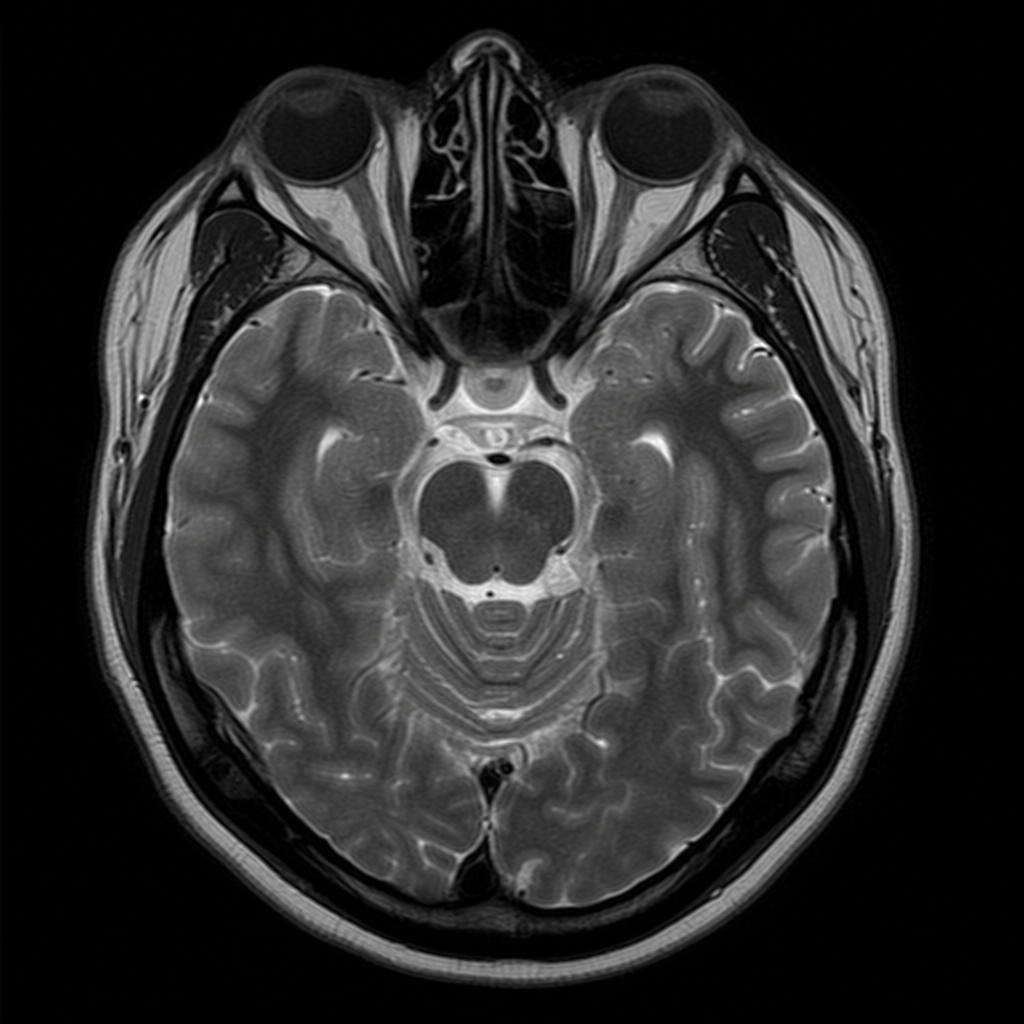
A 55-year-old man, a kidney transplant recipient of 5 years on tacrolimus and prednisone, presented with a two-day history of headache, fever, and generalized weakness. On neurologic examination, he was confused and incoherent. Cranial nerves were normal, but he had a hazy left retina. Magnetic resonance imaging of the brain with gadolinium showed multiple enhancing lesions in both cerebral hemispheres. The patient had a subretinal abscess; aspirate staining revealed findings suggestive of which of the following?
What is the drug of choice for craniofacial mucormycosis?
A 40-year-old male presented with altered mental status, seizures, and vomiting. He has no history of fever or neck stiffness. On CECT and MRI, a ring-enhancing lesion at the gray-white interface is seen. General hygiene was poor, and he has multiple dental caries. What is the next best step in the management of this patient?
Which pathogenic organism is responsible for the causation of Donovaniasis?
What is the most common opportunistic infection in HIV patients globally?
Hand, foot, and mouth disease is characterized by which of the following?
A 9-year-old boy presents with a severe sore throat, fever, and dysphagia. Physical examination reveals grayish-white papulovesicular lesions on an erythematous base that have ulcerated. The lesions are located on the soft palate, anterior pillars of the tonsils, and uvula, but not on the gingiva, tongue, or lips. A clinical diagnosis of herpangina is made. Which of the following is the most likely causative organism?
Cryptococcal meningitis is most common in which of the following patient populations?
In the course of an epidemic of hepatitis, fulminant hepatitis is most commonly seen in which population group?
Which of the following statements regarding hepatitis C infection is true?
Explanation: ### **Explanation** The clinical presentation of an immunocompromised patient (post-kidney transplant on tacrolimus and steroids) with fever, altered mental status, and **multiple ring-enhancing brain lesions** associated with a **subretinal abscess** is classic for **Nocardiosis** [2]. **1. Why the correct answer is right:** * **Nocardia asteroides** is an opportunistic pathogen that primarily causes pulmonary infection but has a high predilection for hematogenous spread to the **brain** (forming abscesses) and the **eyes** (causing endophthalmitis or subretinal abscesses). * Microscopically, *Nocardia* are Gram-positive, branching, filamentous bacteria. Their cell walls contain mycolic acid, making them **weakly acid-fast** (modified Ziehl-Neelsen stain positive). This distinguishes them from *Actinomyces*, which are also filamentous but strictly anaerobic and not acid-fast. **2. Why the incorrect options are wrong:** * **Gram-positive cocci (e.g., *Staphylococcus aureus*):** While they cause brain abscesses, they typically present with acute endocarditis or skin infections and are not acid-fast [1]. * **Gram-negative cocci (e.g., *Neisseria meningitidis*):** These cause acute meningitis rather than multiple parenchymal enhancing lesions and subretinal abscesses. * **Coccobacillus (e.g., *Haemophilus influenzae* or *Listeria*):** *Listeria* is common in transplant patients but typically causes meningitis or rhombencephalitis, not multifocal ring-enhancing lesions with retinal involvement. **3. Clinical Pearls for NEET-PG:** * **Triad of Nocardiosis:** Pulmonary infection + Brain abscess + Skin/Ocular lesions in an immunocompromised host. * **Staining:** *Nocardia* = Modified ZN stain positive (uses 1% sulfuric acid instead of 20%). * **Treatment of Choice:** Sulfonamides (Trimethoprim-Sulfamethoxazole). * **Differential for Brain Lesions in HIV/Transplant:** Toxoplasmosis (most common), Primary CNS Lymphoma, and Nocardiosis [2]. The presence of a **subretinal abscess** is a high-yield "clue" pointing specifically toward *Nocardia*.
Explanation: **Explanation:** **Liposomal Amphotericin B** is the drug of choice for craniofacial (rhinocerebral) mucormycosis because *Mucorales* fungi are highly aggressive, angioinvasive, and naturally resistant to most conventional antifungals. Amphotericin B acts by binding to ergosterol in the fungal cell membrane, creating pores that lead to cell death. The **liposomal formulation** is preferred over the conventional deoxycholate form because it allows for higher dosing with significantly reduced nephrotoxicity and better penetration into the central nervous system. **Analysis of Incorrect Options:** * **Voriconazole:** This is the drug of choice for Invasive Aspergillosis but has **no activity** against *Mucorales*. Using it in suspected mucormycosis can lead to treatment failure. * **Itraconazole:** While it has some activity against certain fungi, it is ineffective against the species causing mucormycosis. * **Hyperbaric Oxygen:** This is an adjunctive therapy that may inhibit fungal growth in some cases, but it is never a primary treatment or the "drug of choice." **Clinical Pearls for NEET-PG:** * **Risk Factors:** Uncontrolled Diabetes Mellitus (especially Ketoacidosis), neutropenia, and post-transplant immunosuppression. * **Diagnosis:** Definitive diagnosis requires biopsy showing **broad, ribbon-like, non-septate hyphae** with **right-angle (90°) branching**. * **Management Triad:** 1. Aggressive surgical debridement (most critical step), 2. Liposomal Amphotericin B, 3. Control of underlying risk factors (e.g., reversing ketoacidosis). * **Step-down therapy:** Once the patient is stable, oral **Isavuconazole** or **Posaconazole** can be used for maintenance.
Explanation: **Explanation:** The clinical presentation of altered mental status, seizures, and a **ring-enhancing lesion** at the gray-white interface—especially in a patient with poor dental hygiene—is highly suggestive of a **Pyogenic Brain Abscess**. Dental caries are a common source of anaerobic or streptococcal seeding to the brain [1]. **1. Why Option A is Correct:** In cases of suspected brain abscess, **urgent parenteral antibiotics** are the priority to prevent further neurological deterioration and expansion of the lesion [1]. Empiric therapy typically includes a 3rd generation cephalosporin (e.g., Ceftriaxone) plus Metronidazole (to cover anaerobes from dental sources). If the lesion is small (<2.5 cm) and the patient is stable, medical management alone may suffice; however, even if surgery is planned, antibiotics must be started immediately. Despite advances in therapy, mortality remains high, often related to delays in initiation of treatment [1]. **2. Why Other Options are Incorrect:** * **B. ICP Monitor:** While intracranial pressure may be elevated, an ICP monitor is not the initial management step. Management of mass effect is usually handled with steroids (Dexamethasone) or surgical drainage. * **C. Lumbar Puncture:** This is **contraindicated** in patients with a space-occupying lesion (like an abscess) due to the high risk of **uncal herniation**. * **D. Craniotomy:** While surgical aspiration (stereotactic) or excision may be required for diagnosis or large lesions, it is not the "next best step" before initiating life-saving antibiotics. **Clinical Pearls for NEET-PG:** * **Most common site:** Frontal or Temporal lobes. * **Most common source:** Hematogenous (multiple lesions) or contiguous spread (single lesion, e.g., Otitis Media/Sinusitis). * **Imaging Gold Standard:** MRI with Diffusion-Weighted Imaging (DWI) shows **restricted diffusion** (bright signal), which helps differentiate an abscess from a necrotic tumor. * **Triad (only in 20%):** Fever, headache, and focal neurological deficit. (Note: Fever is absent in many cases, as seen in this question).
Explanation: Donovaniasis, also known as Granuloma Inguinale, is a chronic, progressive bacterial infection of the genital and perianal skin [1]. 1. Why Option B is correct: The causative agent is Calymmatobacterium granulomatis (now reclassified as Klebsiella granulomatis). It is a Gram-negative, pleomorphic, intracellular bacterium. The hallmark of this disease is the presence of Donovan bodies—safety-pin-shaped organisms seen within the cytoplasm of large mononuclear cells (macrophages) on Giemsa or Wright stain [1]. Clinically, it presents as painless, beefy-red, velvety ulcers that bleed easily on touch (friable) and lack regional lymphadenopathy (pseudobuboes may occur) [1]. 2. Why the other options are incorrect: Option A (Chlamydia trachomatis): Serotypes L1, L2, and L3 cause Lymphogranuloma Venereum (LGV), characterized by painful lymphadenopathy (Groove sign) [1]. Option C (Haemophilus ducreyi): This causes Chancroid, which presents as painful, soft ulcers with ragged edges and painful inguinal buboes [1]. Option D (Herpes simplex virus): HSV-2 typically causes painful, multiple, vesicular lesions that recur. High-Yield Clinical Pearls for NEET-PG: Clinical triad: Painless ulcer + Beefy red appearance + No true lymphadenopathy. Diagnosis: Tissue smear/crush biopsy showing Donovan bodies (Safety-pin appearance). Drug of Choice: Azithromycin (1g orally once a week or 500mg daily) for at least 3 weeks or until lesions heal. Pseudobubo: Granulomatous process in the inguinal folds that mimics a bubo but is not true lymph node involvement [1].
Explanation: **Explanation:** **Pneumocystis jiroveci pneumonia (PCP)** is historically and clinically recognized as the most common opportunistic infection (OI) defining AIDS globally [1]. While the incidence has decreased with the advent of Highly Active Antiretroviral Therapy (HAART) and trimethoprim-sulfamethoxazole (TMP-SMX) prophylaxis, it remains the leading opportunistic respiratory infection in patients with CD4 counts below 200 cells/mm³ [1]. **Analysis of Options:** * **A. Pneumocystis jiroveci (Correct):** It is the most frequent "defining" OI. It typically presents with a subacute onset of fever, non-productive cough, and exertional dyspnea. * **B. Candida species:** While oral candidiasis (thrush) is the most common *fungal* infection in HIV patients, it is often considered a "minor" OI or a precursor to more severe immunosuppression [1]. Esophageal candidiasis is the AIDS-defining condition but is less frequent than PCP. * **C. Mycobacterium tuberculosis:** TB is the most common cause of *death* among HIV patients globally and the most common cause of admission in countries with high incidence [1]. However, in global standardized examinations, PCP is traditionally cited as the most common opportunistic infection. * **D. Cryptococcus species:** *Cryptococcus neoformans* is the most common cause of opportunistic meningitis but is less prevalent than PCP or TB. **High-Yield Clinical Pearls for NEET-PG:** 1. **CD4 Thresholds:** PCP (<200), Toxoplasmosis (<100), MAC and CMV (<50). 2. **Diagnosis:** Silver stain (Gomori Methenamine Silver) showing "crushed ping-pong ball" appearance [1]. Bronchoalveolar lavage (BAL) is the gold standard for diagnosis [1]. 3. **Chest X-ray:** Classically shows bilateral perihilar interstitial infiltrates ("bat-wing" appearance) [1]. 4. **Treatment:** High-dose TMP-SMX. Add **Corticosteroids** if PaO₂ < 70 mmHg or A-a gradient > 35 mmHg to prevent paradoxical worsening [1].
Explanation: Hand, Foot, and Mouth Disease (HFMD) is a highly contagious viral illness primarily affecting children under 5 years of age. **1. Why Option A is Correct:** HFMD is notorious for causing **mini-epidemics in schools**, daycare centers, and summer camps [1]. Because the virus spreads through direct contact with nasal secretions, saliva, blister fluid, and the fecal-oral route, the close proximity of children in educational settings facilitates rapid outbreaks. **2. Analysis of Incorrect Options:** * **Option B:** The incubation period is typically **3 to 6 days**, not 3-10 days [1]. While this seems close, in competitive exams like NEET-PG, the standard textbook range (3-6 days) is preferred. * **Option C:** While HFMD is indeed caused by a virus (Coxsackievirus A16 and Enterovirus 71), this is a general characteristic [1]. In the context of multiple-choice questions, "causing mini-epidemics" is considered the more specific epidemiological hallmark of the disease. * **Option D:** HFMD in humans is **unrelated** to Foot-and-Mouth Disease (FMD) in cattle. FMD is caused by an Aphthovirus and does not infect humans; the two diseases are clinically and etiologically distinct. **High-Yield Clinical Pearls for NEET-PG:** * **Etiology:** Most common cause is **Coxsackievirus A16**; the most severe outbreaks (associated with neurological complications/pulmonary edema) are caused by **Enterovirus 71** [1]. * **Clinical Presentation:** Characterized by a prodrome of fever, followed by painful oral vesicles (stomatitis) and a maculopapular or vesicular rash on the palms and soles [1]. * **Seasonality:** Peak incidence occurs in summer and autumn [1]. * **Management:** Treatment is purely supportive (hydration and analgesia) [1].
Explanation: The clinical presentation of fever, sore throat, and characteristic **grayish-white papulovesicular lesions** localized specifically to the **posterior oropharynx** (soft palate, tonsillar pillars, and uvula) is diagnostic of **Herpangina**. [1] 1. **Why Coxsackievirus A is correct:** Herpangina is most commonly caused by **Coxsackievirus Group A** (specifically types A1–A10, A12, and A22). The hallmark of this infection is the anatomical distribution of the ulcers; they are confined to the posterior structures of the mouth and spare the anterior oral cavity (lips, tongue, and gingiva). [1] 2. **Why other options are incorrect:** * **HSV-1:** Causes **Gingivostomatitis**. Unlike Herpangina, HSV-1 lesions typically involve the **anterior** mouth, including the gingiva (gums), lips (herpes labialis), and the tongue. * **Measles:** Associated with **Koplik spots**, which are bluish-white spots on an erythematous base found on the **buccal mucosa** opposite the lower molars, usually appearing during the prodromal phase. * **Rubella:** May present with **Forchheimer spots** (petechiae on the soft palate), but these are not ulcerative vesicles and are accompanied by prominent post-auricular lymphadenopathy. **NEET-PG High-Yield Pearls:** * **Herpangina vs. Hand-Foot-Mouth Disease (HFMD):** Both are caused by Coxsackievirus A (A16 is common for HFMD). HFMD includes the posterior pharyngeal lesions plus vesicles on the palms, soles, and buttocks. [1] * **Seasonality:** These infections typically peak in **summer and early autumn**. [1] * **Management:** Treatment is purely supportive (hydration and analgesics) as the condition is self-limiting. [1]
Explanation: **Explanation:** **1. Why Renal Transplant Recipients is Correct:** *Cryptococcus neoformans* is an opportunistic encapsulated yeast that primarily affects patients with **defective cell-mediated immunity (CMI)** [1]. Renal transplant recipients are at high risk because their immunosuppressive regimen (e.g., corticosteroids, calcineurin inhibitors) specifically targets T-cell function. Among solid organ transplant recipients, *Cryptococcus* is the third most common invasive fungal infection and has a high predilection for the Central Nervous System (CNS) [1]. **2. Why Other Options are Incorrect:** * **B & D (Agammaglobulinemia and IgA deficiency):** These are **humoral (B-cell) immunity** defects. While antibodies play a minor role in opsonization, the primary defense against *Cryptococcus* is macrophage activation by T-helper cells (Th1 response). Patients with B-cell defects are more prone to sinopulmonary infections by encapsulated bacteria (e.g., *S. pneumoniae*). * **C (Neutropenia):** Neutrophils are the primary defense against molds like *Aspergillus* and *Mucor*. While neutrophils do participate in the early response to fungi, *Cryptococcus* is classically associated with T-cell deficits (HIV/AIDS, transplants, lymphomas) rather than isolated neutropenia. **Clinical Pearls for NEET-PG:** * **Most Common Cause:** *Cryptococcus* is the most common cause of fungal meningitis worldwide. * **Diagnosis:** The most sensitive screening test is the **Cryptococcal Antigen (CrAg)** in CSF or serum (Lateral Flow Assay). * **Microscopy:** **India Ink** preparation shows a "halolike" unstained capsule. * **Culture:** Grows on **Sabouraud Dextrose Agar (SDA)**; colonies appear creamy/mucoid. It is urease positive. * **Treatment:** Induction with **Amphotericin B + Flucytosine**, followed by maintenance with Fluconazole. * **CSF Finding:** Characteristically shows high opening pressure and low glucose.
Explanation: **Explanation:** The correct answer is **Children younger than 15 years**. In the context of an epidemic of hepatitis, the most common causative agent is **Hepatitis A Virus (HAV)** or **Hepatitis E Virus (HEV)**, both transmitted via the feco-oral route. While Hepatitis A is generally a self-limiting illness in children, epidemiological data indicates that in large-scale outbreaks, the sheer volume of infections in the pediatric population (under 15 years) leads to a higher absolute number of fulminant hepatitis cases compared to other groups. **Analysis of Options:** * **Children younger than 15 years (Correct):** During epidemics, this age group has the highest attack rate. Even though the case fatality rate is low, the high prevalence of infection makes them the most common group to present with fulminant hepatic failure in a population-wide outbreak. * **Pregnant females (Incorrect):** While **Hepatitis E (HEV)** is notorious for causing high mortality (up to 20%) and fulminant hepatic failure in pregnant women, they do not represent the *most common* group in a general epidemic. They are the "highest risk" group for mortality, but not the most frequent demographic affected. * **Elderly individuals (Incorrect):** While the elderly have a higher risk of complications and mortality from Hepatitis A compared to young adults, they are less frequently affected during mass epidemics due to pre-existing immunity. * **Malnourished children (Incorrect):** While malnutrition can worsen the prognosis of any infection, it is not a primary epidemiological determinant for the occurrence of fulminant hepatitis in an epidemic setting. **High-Yield Clinical Pearls for NEET-PG:** * **Most common cause of epidemic hepatitis:** Hepatitis E (globally) and Hepatitis A (in children). * **Highest mortality in pregnancy:** Hepatitis E (specifically in the 3rd trimester). * **Fulminant Hepatitis:** Defined as the development of hepatic encephalopathy within 8 weeks of the onset of jaundice. * **Hepatitis A:** Never causes chronic hepatitis; Hepatitis E can cause chronic hepatitis only in immunocompromised patients (e.g., organ transplant recipients).
Explanation: **Explanation:** **Hepatitis C Virus (HCV)** is a major cause of chronic liver disease worldwide. The correct answer is **B** because HCV is notorious for its high rate of chronicity. Unlike Hepatitis B, where only 5–10% of infected adults develop chronic disease [2], approximately **75%–85% of patients** infected with HCV fail to clear the virus and progress to chronic infection. **Analysis of Options:** * **Option A is incorrect:** Most acute HCV infections (approx. 80%) are **asymptomatic** or subclinical [1]. Patients rarely present with jaundice or fulminant hepatic failure during the initial phase, which often leads to a delayed diagnosis. * **Option C is incorrect:** HCV is primarily a **blood-borne pathogen**. Transmission occurs via IV drug use (most common), needle-stick injuries [1], or blood transfusions (pre-1992). Transmission via raw oysters is characteristic of **Hepatitis A or E** (fecal-oral route) [3]. * **Option D is incorrect:** HCV is a single-stranded, enveloped **RNA virus** belonging to the *Flaviviridae* family. **High-Yield NEET-PG Pearls:** * **Screening & Diagnosis:** The first-line test is **Anti-HCV antibody**. Confirmation of active infection requires **HCV RNA** (PCR) [1]. * **Extrahepatic Manifestations:** HCV is strongly associated with **Mixed Cryoglobulinemia**, Membranoproliferative Glomerulonephritis (MPGN), and Porphyria Cutanea Tarda. * **Treatment:** The current standard of care involves **Direct-Acting Antivirals (DAAs)** like Sofosbuvir, which achieve a Sustained Virologic Response (SVR) in >95% of cases. * **Complications:** Chronic HCV is a leading indication for liver transplantation and a major risk factor for **Hepatocellular Carcinoma (HCC)**.
Principles of Antimicrobial Therapy
Practice Questions
Fever of Unknown Origin
Practice Questions
HIV/AIDS and Related Infections
Practice Questions
Tuberculosis and Mycobacterial Diseases
Practice Questions
Tropical and Parasitic Infections
Practice Questions
Viral Infections (Hepatitis, Herpes, etc.)
Practice Questions
Healthcare-Associated Infections
Practice Questions
Fungal Infections
Practice Questions
Sepsis and Septic Shock
Practice Questions
Infection in Immunocompromised Hosts
Practice Questions
Emerging and Re-emerging Infections
Practice Questions
Antimicrobial Resistance
Practice Questions
Vaccination Principles
Practice Questions
Get full access to all questions, explanations, and performance tracking.
Start For Free