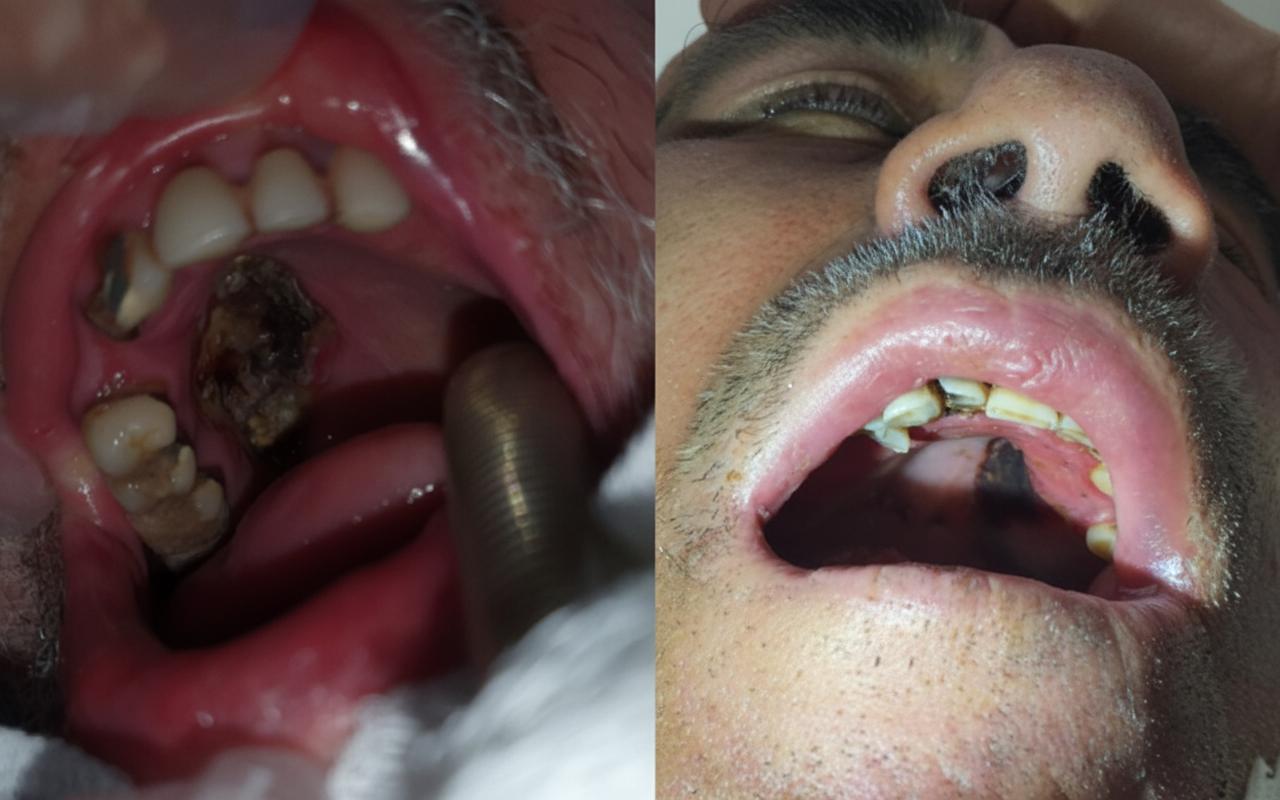
What is the standard treatment therapy for Pneumocystis jirovecii pneumonia (PCP)?
A 30-year-old male presented with complaints of sudden onset of fever, chills, severe headache, backache, and retro-orbital pain for 3 days. On the 3rd day, a rash appeared on the face, thorax, and flexor surfaces. The rash was macular and confluent. The tourniquet test was positive. Lab findings revealed a low platelet count, low WBC count, increased SGOT and SGPT levels, and a hematocrit increase by >20%. The above disease is transmitted by which of the following vectors?
Which of the following is NOT a cause of community-acquired pneumonia?
Which of the following causes tropical spastic paraplegia?
Infection with which organism during pregnancy can cause congenital hydrocephalus?
A 65-year-old man presented with skin lesions six weeks after returning from a vacation in Belize, which included time spent at the beach and in the rainforest. What is the diagnosis?

What is the most common route of transmission for hepatitis C?
Thermophilus actinomycetes is NOT a causative agent for which of the following conditions?
Rasmussen's aneurysm is seen in which of the following arteries?
A 38-year-old male presents with swelling in the inguinal region. On examination, inguinal nodes are enlarged along with multiple discharging sinuses from the enlarged lymph nodes. What is the most probable diagnosis?
Explanation: **Explanation:** **Pneumocystis jirovecii pneumonia (PCP)** is a life-threatening opportunistic fungal infection primarily seen in immunocompromised individuals, particularly those with HIV/AIDS (CD4 count <200 cells/µL). **1. Why Co-trimoxazole is correct:** Co-trimoxazole (Trimethoprim-Sulfamethoxazole/TMP-SMX) is the **drug of choice** for both the treatment and prophylaxis of PCP [1]. It works by inhibiting sequential steps in the fungal folic acid synthesis pathway. For moderate-to-severe cases, it is administered intravenously; for mild cases, oral administration is sufficient. It has superior efficacy compared to alternative agents like Pentamidine or Atovaquone. **2. Why the other options are incorrect:** * **Ceftriaxone (Option B):** A third-generation cephalosporin used for community-acquired bacterial pneumonia (e.g., *S. pneumoniae*). It has no activity against fungi like *P. jirovecii*. * **Ceftazidime (Option C):** An antipseudomonal third-generation cephalosporin used for hospital-acquired infections. It is ineffective against PCP. * **Amikacin (Option D):** An aminoglycoside antibiotic used for Gram-negative bacterial infections and certain mycobacteria. It does not target fungal pathogens. **High-Yield Clinical Pearls for NEET-PG:** * **Steroid Add-on:** In HIV patients, if the arterial oxygen partial pressure (**PaO2**) is **<70 mmHg** or the **A-a gradient is >35 mmHg**, systemic corticosteroids (Prednisolone) must be added to Co-trimoxazole to reduce inflammation caused by dying organisms [1]. * **Diagnosis:** The gold standard is identifying the organism via **Gomori Methenamine Silver (GMS)** stain or Direct Fluorescent Antibody (DFA) testing of induced sputum or Bronchoalveolar Lavage (BAL) fluid [1]. * **Radiology:** Classic presentation shows bilateral perihilar "ground-glass" opacities on CXR/HRCT.
Explanation: ### Explanation **Diagnosis: Dengue Fever (Dengue Hemorrhagic Fever)** The clinical presentation of sudden onset high-grade fever, severe headache, retro-orbital pain (classic "break-bone fever"), and a confluent macular rash is characteristic of Dengue [1]. The laboratory findings of **thrombocytopenia** (low platelets), **leukopenia** (low WBC), and **elevated transaminases** (SGOT/SGPT) further support this. Crucially, a **positive tourniquet test** and a **hematocrit increase of >20%** (indicating plasma leakage) satisfy the WHO criteria for **Dengue Hemorrhagic Fever (DHF)** [1]. **Why the Correct Answer is Right:** * **Aedes aegypti mosquito:** This is the primary vector for the Dengue virus (a Flavivirus). It is a day-biting mosquito that typically breeds in stagnant clean water (e.g., flower pots, coolers). While *Aedes albopictus* can also transmit the virus, *Aedes aegypti* is the most efficient and common urban vector. **Why Other Options are Wrong:** * **Anopheles mosquito:** The primary vector for **Malaria**. It typically bites at night and does not present with the "rash and retro-orbital pain" triad seen here. * **Aedes mosquito:** While technically correct, it is less specific than "Aedes aegypti." In NEET-PG, if a specific species is provided alongside a genus, the specific species is the preferred answer. * **Culex mosquito:** The vector for **Japanese Encephalitis, West Nile Virus, and Bancroftian Filariasis**. **NEET-PG Clinical Pearls:** * **Herman’s Rash:** The classic Dengue rash is described as "islands of white in a sea of red." * **Critical Phase:** Occurs during defervescence (days 3–7), where plasma leakage leads to pleural effusion, ascites, and hemoconcentration [1]. * **NS1 Antigen:** The most reliable marker for early diagnosis (Days 1–5). * **Aedes aegypti** also transmits: Zika virus, Chikungunya, and Yellow Fever.
Explanation: The correct answer is **D. Blastomyces**. **1. Why Blastomyces is the correct answer:** Community-acquired pneumonia (CAP) refers to an acute infection of the lung parenchyma in a patient who has acquired the infection in the community (outside of healthcare settings). CAP is predominantly caused by **bacteria** and **respiratory viruses** [1]. *Blastomyces dermatitidis* is a dimorphic fungus that causes **Blastomycosis**, a systemic granulomatous infection. While it can present with pulmonary symptoms, it is classified as a **fungal/endemic pneumonia** rather than a typical cause of CAP. It is geographically restricted (e.g., Ohio and Mississippi River valleys) and usually follows a more subacute or chronic course compared to the acute presentation of CAP. **2. Analysis of Incorrect Options:** * **A. Streptococcus pneumoniae:** The most common cause of CAP worldwide ("The Typical Pathogen") [1]. It classically presents with rust-colored sputum and lobar consolidation [2]. * **B. Mycoplasma pneumoniae:** The most common cause of "Atypical Pneumonia," especially in young adults and school-aged children. It often presents with extrapulmonary symptoms like bullous myringitis or hemolytic anemia. * **C. Moraxella catarrhalis:** A common cause of CAP, particularly in patients with underlying chronic obstructive pulmonary disease (COPD) or the elderly. **3. High-Yield Clinical Pearls for NEET-PG:** * **Most common cause of CAP:** *Streptococcus pneumoniae* [1]. * **Post-viral (Influenza) pneumonia:** Often caused by *Staphylococcus aureus* (MRSA) [1]. * **Alcoholics/Aspiration:** *Klebsiella pneumoniae* (Currant jelly sputum) [2]. * **CURB-65 Score:** Used to decide the site of care (Outpatient vs. Inpatient) for CAP patients [2]. * **First-line Empiric Treatment (Outpatient):** Amoxicillin or Macrolides (if resistance is low).
Explanation: ### Explanation **Correct Answer: C. HTLV-I** **Underlying Medical Concept:** Tropical Spastic Paraplegia (TSP), also known as **HTLV-I Associated Myelopathy (HAM)**, is a chronic progressive demyelinating disease of the spinal cord [1]. It is caused by the **Human T-cell Lymphotropic Virus Type I (HTLV-I)**, a retrovirus [1]. The pathogenesis involves a robust immune response against virus-infected T-cells, leading to bystander damage of the spinal cord (primarily the thoracic levels). Clinically, it presents with slowly progressive spastic weakness of the lower limbs, bladder dysfunction, and sensory changes [1]. **Analysis of Incorrect Options:** * **A. EBV (Epstein-Barr Virus):** Primarily associated with Infectious Mononucleosis, Burkitt Lymphoma, Nasopharyngeal Carcinoma, and Oral Hairy Leukoplakia. It does not cause chronic spastic paraplegia. * **B. CMV (Cytomegalovirus):** In immunocompromised patients (like those with AIDS), CMV typically causes retinitis, esophagitis, or polyradiculopathy, but not the specific clinical entity of TSP. * **D. HSV (Herpes Simplex Virus):** HSV-1 is the most common cause of sporadic viral encephalitis, while HSV-2 is associated with aseptic meningitis and Mollaret’s meningitis. **High-Yield Clinical Pearls for NEET-PG:** * **Epidemiology:** TSP/HAM is most common in tropical regions (Caribbean, South America, Africa) and Southern Japan [1]. * **Other HTLV-I Associations:** It is also the causative agent of **Adult T-cell Leukemia/Lymphoma (ATL)**, characterized by "flower cells" on peripheral smear and hypercalcemia [1]. * **Diagnosis:** Detection of HTLV-I antibodies in both serum and CSF (CSF titers are often higher). * **Key Differential:** Always rule out Multiple Sclerosis and spinal cord compression (Pott’s spine) in cases of progressive paraparesis [2].
Explanation: **Explanation:** **Toxoplasma gondii** is the correct answer because it is a classic member of the **TORCH** group of infections [1]. When a pregnant woman acquires a primary infection (often via cat feces or undercooked meat), the parasite can cross the placenta. The hallmark of Congenital Toxoplasmosis is the **Classic Triad of Sabin**: 1. **Hydrocephalus** (due to aqueductal stenosis caused by periventricular inflammation) [1]. 2. **Chorioretinitis** (the most common finding) [1]. 3. **Diffuse Intracranial Calcifications** (scattered throughout the brain parenchyma). **Analysis of Incorrect Options:** * **Clostridium tetani:** Causes Neonatal Tetanus (usually due to unsterile cord cutting), characterized by muscle rigidity and spasms, not congenital malformations or hydrocephalus. * **Treponema pallidum:** Causes Congenital Syphilis. While it affects multiple systems, its classic signs include **Hutchinson’s triad** (interstitial keratitis, sensorineural deafness, and notched incisors), snuffles, and periostitis, rather than hydrocephalus. * **Streptococcus species:** Group B Streptococcus (GBS) is a leading cause of neonatal sepsis and meningitis, but it is an acute postnatal or intrapartum infection rather than a cause of congenital hydrocephalus. **NEET-PG High-Yield Pearls:** * **Calcification Pattern:** Toxoplasmosis causes **diffuse** calcifications, whereas CMV (the most common TORCH infection) causes **periventricular** calcifications. * **Treatment:** Maternal infection is treated with **Spiramycin**; fetal infection is treated with **Pyrimethamine, Sulfadiazine, and Folinic acid**. * **Diagnosis:** Best initial test is serology (IgM/IgG); PCR of amniotic fluid is the gold standard for fetal diagnosis.
Explanation: ***Bot fly*** - **Bot fly myiasis** (Dermatobia hominis) is endemic in **Central America** including Belize, presenting as **boil-like lesions** with a central pore developing weeks after exposure. - The **6-week incubation period** and travel to **rainforest and beach areas** in Belize are classic for bot fly larval development under the skin. *Cutaneous leishmaniasis* - Caused by **Leishmania species** transmitted by **sandflies**, typically presents as **painless ulcers** with raised borders, not boil-like lesions. - More commonly associated with **Mediterranean, Middle Eastern, or South American** regions rather than Belize's specific epidemiology. *Onchocerciasis* - Caused by **Onchocerca volvulus**, transmitted by **blackflies**, primarily presents with **subcutaneous nodules** and **chronic skin changes**. - Endemic in **sub-Saharan Africa** and some parts of Central/South America, but skin lesions develop over **months to years**, not weeks. *Plague* - Caused by **Yersinia pestis**, transmitted by **flea bites** from infected rodents, presents with **painful lymphadenopathy** (bubonic) or systemic illness. - **Acute onset** within days, not weeks, and skin lesions are **eschars** at bite sites, not boil-like lesions.
Explanation: **Explanation:** Hepatitis C Virus (HCV) is primarily a **blood-borne pathogen**. The most common route of transmission currently is **Intravenous Drug Abuse (IVDA)**, accounting for approximately 60% of new infections [2]. This occurs through the sharing of contaminated needles, syringes, or other drug-paraphernalia. Because HCV is highly stable in the environment, even microscopic amounts of blood can transmit the virus effectively. **Analysis of Options:** * **A. Intravenous drug abuse (Correct):** This is the leading risk factor worldwide and in India for HCV transmission due to direct percutaneous exposure. * **B. Sexual contact:** While possible, the efficiency of sexual transmission for HCV is very low (unlike HBV or HIV). it is primarily seen in MSM (men who have sex with men) with co-existing HIV. * **C. Factor 8 concentrate:** Historically, hemophiliacs were at high risk. However, with the advent of heat treatment of clotting factors and rigorous blood donor screening (since the early 1990s), this risk has been virtually eliminated. * **D. Fecal-oral route:** This is the route for Hepatitis A and E ("The Vowels hit the Bowels"). HCV does not spread via contaminated food or water. **High-Yield Clinical Pearls for NEET-PG:** * **Post-Transfusion Hepatitis:** HCV was formerly the most common cause of post-transfusion hepatitis; however, due to modern screening, IVDA has overtaken it. * **Chronicity:** HCV has the highest rate of progression to chronic infection (~75-85%) among all hepatitis viruses. * **Vertical Transmission:** The risk of mother-to-child transmission is low (~5-6%) unless the mother is co-infected with HIV. * **Needle Stick Injury:** The risk of transmission after a needle stick is ~1.8% (higher than HIV at 0.3%, but lower than HBV at 30%) [1].
Explanation: This question tests your knowledge of **Hypersensitivity Pneumonitis (Extrinsic Allergic Alveolitis)**, a group of immune-mediated lung diseases caused by the inhalation of organic dusts. ### **Explanation of the Correct Answer** **Miller’s lung disease** is caused by the inhalation of dust from infested grain or flour. The specific causative agent is the **Grain Weevil (*Sitophilus granarius*)**, not *Thermophilic actinomycetes*. This distinction is a high-yield fact for NEET-PG, as it differentiates grain-related allergies from those caused by thermophilic bacteria found in decaying organic matter. ### **Analysis of Incorrect Options** * **Farmer’s Lung Disease:** This is the classic example of hypersensitivity pneumonitis. It is caused by exposure to moldy hay containing **Saccharopolyspora rectivirgula** (formerly *Micropolyspora faeni*), which is a type of **Thermophilic actinomycete**. * **Bagassosis:** This occurs in workers handling moldy sugarcane stalks (bagasse). The causative agent is **Thermoactinomyces sacchari**, another member of the **Thermophilic actinomycetes** group. * **Mushroom Worker’s Lung:** This is caused by exposure to the compost used for mushroom cultivation, which is rich in **Thermophilic actinomycetes** (specifically *T. vulgaris* and *S. rectivirgula*). ### **High-Yield Clinical Pearls for NEET-PG** * **Thermophilic Actinomycetes:** These are Gram-positive, branching bacteria that thrive at high temperatures (45–60°C), typically found in decaying organic material like hay, compost, and sugarcane. * **Common Causative Agents Table:** * **Farmer's Lung:** *Saccharopolyspora rectivirgula* * **Bagassosis:** *Thermoactinomyces sacchari* * **Bird Fancier’s Lung:** Avian proteins (droppings/feathers) [1] * **Byssinosis:** Cotton dust (Monday Morning Fever) * **Air Conditioner Lung:** *Thermoactinomyces vulgaris* * **Radiology:** Acute cases show "ground-glass opacities," while chronic cases show a "reticulonodular pattern" or honeycombing in the upper lobes [1].
Explanation: Rasmussen’s aneurysm is a pseudoaneurysm of the pulmonary artery (Option B) that occurs as a late complication of pulmonary tuberculosis. It develops when a tuberculous cavity expands and erodes the wall of an adjacent pulmonary artery. The chronic inflammation weakens the adventitia and media of the vessel, leading to focal dilation. If this aneurysm ruptures into the cavity, it results in massive, life-threatening hemoptysis. Analysis of Options: * Option A (Bronchial artery): While bronchial arteries are the most common source of massive hemoptysis in chronic lung diseases (due to high-pressure systemic circulation), they are *not* the site of Rasmussen’s aneurysm. * Options C & D (Vertebral/Internal carotid): These are systemic arteries. Aneurysms here (like Berry aneurysms) are associated with subarachnoid hemorrhages or vascular syndromes, not pulmonary tuberculosis. High-Yield Clinical Pearls for NEET-PG: * Pathogenesis: It is a pseudoaneurysm (not a true aneurysm) caused by the erosion of the vessel wall from the *outside* (the cavity side) rather than intraluminal pressure. * Location: Usually occurs in the branches of the pulmonary artery located in the walls of upper lobe cavities. * Management: The gold standard for diagnosis and immediate management is Bronchial/Pulmonary Angiography followed by Embolization. * Differential: Do not confuse this with Dieulafoy’s lesion (a vascular malformation in the bronchus or GI tract) or Aspergilloma (fungal ball), both of which also cause massive hemoptysis in old TB cavities [1].
Explanation: ### Explanation **1. Why Lymphogranuloma Venereum (LGV) is correct:** LGV is caused by **Chlamydia trachomatis (serotypes L1, L2, L3)**. The clinical hallmark of the secondary stage is the **inguinal syndrome**. This involves painful, unilateral or bilateral inguinal lymphadenopathy (buboes). A pathognomonic feature is the **"Groove sign,"** where the inguinal ligament divides the matted nodes. If left untreated, these buboes undergo suppuration and form **multiple discharging sinuses**, as seen in this patient [1]. **2. Why other options are incorrect:** * **Chancroid (*Haemophilus ducreyi*):** Presents with a painful, "soft" ulcer and painful inguinal lymphadenopathy. While buboes can rupture, they typically form a **single** large discharging sinus rather than multiple chronic sinuses [1]. * **Syphilis (*Treponema pallidum*):** Primary syphilis presents with a **painless** hard chancre [2]. The associated lymphadenopathy is typically bilateral, painless, firm, and "shotty," without suppuration or sinus formation. * **Granuloma Inguinale (Donovanosis):** Caused by *Klebsiella granulomatis*. It is characterized by painless, beefy-red, vascular ulcers. It involves "pseudobuboes" (subcutaneous granulation tissue) rather than true lymphadenopathy, and sinuses are not a feature [1]. **3. NEET-PG High-Yield Pearls:** * **Groove Sign:** Pathognomonic for LGV (produced by the inguinal ligament). * **Esthiomene:** Chronic lymphatic obstruction in females leading to vulvar elephantiasis (late-stage LGV). * **Diagnosis:** Nucleic Acid Amplification Test (NAAT) is the preferred method. * **Drug of Choice:** **Doxycycline** (100 mg BID for 21 days). Erythromycin is the alternative for pregnant patients. * **Donovan Bodies:** Safety-pin appearance in tissue smears, diagnostic for Granuloma Inguinale.
Principles of Antimicrobial Therapy
Practice Questions
Fever of Unknown Origin
Practice Questions
HIV/AIDS and Related Infections
Practice Questions
Tuberculosis and Mycobacterial Diseases
Practice Questions
Tropical and Parasitic Infections
Practice Questions
Viral Infections (Hepatitis, Herpes, etc.)
Practice Questions
Healthcare-Associated Infections
Practice Questions
Fungal Infections
Practice Questions
Sepsis and Septic Shock
Practice Questions
Infection in Immunocompromised Hosts
Practice Questions
Emerging and Re-emerging Infections
Practice Questions
Antimicrobial Resistance
Practice Questions
Vaccination Principles
Practice Questions
Get full access to all questions, explanations, and performance tracking.
Start For Free