Which is the most common manifestation of recurrent HSVl infection:
All of the following cause hemolytic uremic syndrome except
A 35-year-old patient presents with white plaques on the tongue and inner cheeks, which can be scraped off, leaving a red base. The patient also complains of a sore throat. What is the most appropriate management for this condition?
Rose spot is associated with
Dharmendra's index and Jopling's classification deals with -
True about diphtheria is -
The most common cause of menstrual toxic shock syndrome is -
Most common site of gastrointestinal TB:
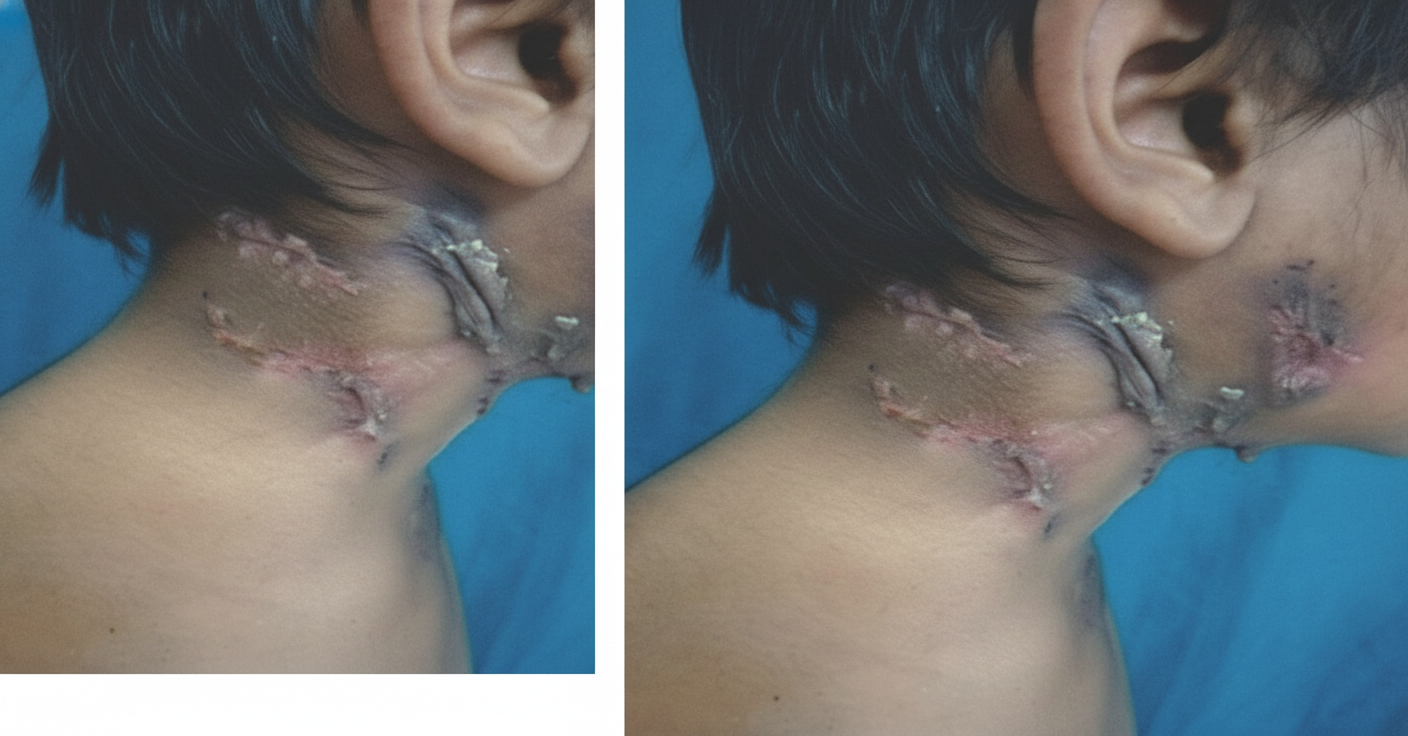
A lesion was seen on the face of a 42 year old patient as shown below. Which of the following would be ideal management for this condition?
HIV patient presented with diarrhea. On stool examination, acid-fast organisms (Isospora belli) were seen. What is the drug of choice in this patient?
Explanation: **Recurrent herpes labialis** - **Recurrent herpes labialis**, or **cold sores**, is the most common manifestation of recurrent HSV-1 infection [1]. - It typically presents as vesicles and ulcers on the lips and perioral region due to reactivation of the virus from the **trigeminal ganglia** [1]. *Herpetic whitlow* - **Herpetic whitlow** is an HSV infection of the fingers or toes, often seen in healthcare workers or children, but it is not the most common recurrent manifestation [2]. - It is characterized by painful, vesicular lesions on the digits [2]. *Herpetic keratitis* - **Herpetic keratitis** is a serious ocular infection that can lead to corneal scarring and vision loss, but it is less common than recurrent oral lesions [2]. - It involves the **cornea** and can cause pain, redness, and blurred vision [2]. *Herpos encephalitis* - **Herpes encephalitis** is a rare but severe neurological complication of HSV infection that can cause significant morbidity and mortality. - It involves inflammation of the **brain** and is characterized by fever, headache, altered mental status, and seizures.
Explanation: ***Vibrio cholera*** - *Vibrio cholerae* causes **cholera**, characterized by severe watery diarrhea, dehydration, and electrolyte imbalance, but does not typically produce **Shiga toxin** or cause microangiopathic hemolytic anemia, thrombocytopenia, and acute kidney injury characteristic of HUS. - While it can lead to acute kidney injury due to severe dehydration, it does not directly cause the **microangiopathic hemolytic anemia** and thrombocytopenia seen in HUS. *EHEC* - **Enterohemorrhagic *E. coli* (EHEC)**, particularly serotype O157:H7, is the most common cause of **Shiga toxin-producing E. coli (STEC)-HUS** [2]. - The **Shiga toxin** produced by EHEC damages endothelial cells, leading to platelet aggregation, hemolysis, and renal damage [2]. *Campylobacter* - **Campylobacter jejuni** infections can sometimes precede the development of **HUS**, particularly in children. - While less common than EHEC, *Campylobacter* can produce a **cytolethal distending toxin** which has been implicated in endothelial damage and HUS. *Shigella* - Certain species of **Shigella**, especially *Shigella dysenteriae type 1*, produce **Shiga toxin** and are a known cause of **HUS**. - Similar to EHEC, the Shiga toxin from *Shigella* leads to widespread endothelial damage, resulting in microangiopathic hemolytic anemia, thrombocytopenia, and acute kidney injury [1].
Explanation: ***Prescribe antifungal medication*** - The symptoms described, **white plaques on the tongue and inner cheeks** that can be **scraped off leaving a red base**, along with a **sore throat**, are classic for **oral candidiasis** (thrush). - Oral candidiasis is a **fungal infection** caused by *Candida albicans*, and therefore, **antifungal medications** are the appropriate treatment [1]. *Provide vitamin supplements* - While nutritional deficiencies can sometimes impact oral health, they do not directly cause **oral candidiasis** or present with these specific findings. - Vitamin supplements would not address the underlying **fungal infection**. *Administer dapsone and steroids* - **Dapsone** is an antibiotic/anti-inflammatory often used for dermatological conditions like dermatitis herpetiformis, and **steroids** are anti-inflammatory but can actually predispose to fungal infections. - This combination is not indicated for the treatment of **oral candidiasis** and could potentially worsen the condition if steroids suppress the immune response. *Advise smoking cessation and screen for malignancy* - While smoking cessation is beneficial for overall health and reducing the risk of oral cancers, and malignancy screening is important for suspicious oral lesions, these actions are not the primary management for an acute presentation of **oral candidiasis**. - The lesions described are characteristic of a fungal infection, not immediately suggestive of malignancy, especially given their **removable nature**.
Explanation: ***Typhoid fever*** - **Rose spots** are a characteristic rash of **typhoid fever** [1], appearing as transient, salmon-colored, maculopapular lesions, usually on the trunk and chest. - They are caused by bacterial emboli in the dermal capillaries, appearing in about 30% of patients during the first week of infection. *Scarlet fever* - Characterized by a **blanching erythematous rash** with a sandpaper-like texture (scarlatiniform rash), often starting on the neck and chest and spreading to the trunk and extremities. - This rash is typically due to the release of **erythrogenic toxins** by *Streptococcus pyogenes*. *Malaria* - While malaria can cause skin manifestations such as **jaundice**, petechiae, or urticaria, classical rose spots are **not a feature** of malaria [1]. - Its symptoms often include cycles of fever, chills, and sweats, rather than specific rashes. *Wilson disease* - This is a genetic disorder of **copper metabolism** and does not typically present with skin rashes like rose spots. - Manifestations include Kayser-Fleischer rings in the eyes, liver disease, and neurological symptoms.
Explanation: Leprosy - Dharmendra's index is a method for classifying leprosy based on the bacillary load in skin smears. - Jopling's classification is a widely used system that categorizes leprosy based on clinical, histological, and immunological features. Polio - Polio is a viral disease primarily affecting the nervous system, leading to paralysis, and is not classified by Dharmendra's index or Jopling's classification. - Diagnosis typically involves detecting the poliovirus in stool samples or throat swabs. Syphilis - Syphilis is a sexually transmitted bacterial infection caused by Treponema pallidum, which is diagnosed through serological tests and clinical presentation. - Its staging (primary, secondary, latent, tertiary) is distinct from the classification systems mentioned. TB - Tuberculosis is a bacterial infection caused by Mycobacterium tuberculosis, primarily affecting the lungs, and its classification relates to infection site and drug resistance. - Diagnosis involves sputum tests, chest X-rays, and PPD skin tests, which are unrelated to Dharmendra's index or Jopling's classification.
Explanation: ***Erythromycin is an alternative antibiotic for penicillin-allergic patients*** - For patients allergic to penicillin, **erythromycin** is a suitable alternative for treating diphtheria, as both antibiotics effectively inhibit **bacterial protein synthesis**. - Treatment with antibiotics helps to eliminate the bacterium *Corynebacterium diphtheriae* and prevent further **toxin production**. *Passive immunization is harmful and should not be tried* - **Passive immunization** (administration of diphtheria antitoxin) is **crucial and life-saving** for diphtheria, as it neutralizes circulating toxin. - It should be administered as early as possible in suspected cases, particularly when **toxin-mediated complications** like myocarditis are a concern. *Cause cranial nerve palsies in 2nd & 3rd week* - **Cranial nerve palsies** in diphtheria typically manifest in the **first few days to one week** after the onset of pharyngeal symptoms due to the local action of the diphtheria toxin [1]. - Palsies occurring in the **2nd and 3rd week** are more often related to **systemic toxin effects**, such as **myocarditis** or **peripheral neuropathies**, rather than isolated cranial nerve involvement. *It is gram negative organism* - *Corynebacterium diphtheriae*, the causative agent of diphtheria, is a **Gram-positive, club-shaped bacillus**, not a Gram-negative organism. - Its distinct **Gram-positive staining** and characteristic morphology are important for microscopic identification [2].
Explanation: ***Prolonged use of tampons*** - **Toxic shock syndrome (TSS)** is primarily associated with the use of **highly absorbent tampons** left in place for extended periods, creating an environment for bacterial overgrowth. - This allows ***Staphylococcus aureus*** to produce toxins, leading to a systemic inflammatory response. *IUCD* - While an **intrauterine contraceptive device (IUCD)** can rarely be associated with pelvic infections, it is not the most common cause of **menstrual toxic shock syndrome**. - IUCDs are more commonly linked to **pelvic inflammatory disease (PID)** or localized infections, not the systemic shock seen in TSS. *Septic abortion* - **Septic abortion** involves a severe uterine infection after an abortion, leading to systemic infection and potential septic shock [1]. - However, it is a distinct condition from **menstrual TSS**, which is specifically linked to menstruation and tampon use. *Pelvic examination* - A **pelvic examination** is a routine medical procedure and does not typically cause **toxic shock syndrome**. - While it carries a minimal risk of introducing bacteria, it is not a recognized risk factor for the development of menstrual TSS.
Explanation: ***Terminal ileum*** - The **terminal ileum** is the most common site for gastrointestinal tuberculosis due to its rich lymphatic tissue (Peyer's patches) and slower transit time, allowing for increased contact time with the bacteria. - The organism, *Mycobacterium tuberculosis*, usually enters via ingested contaminated sputum or dairy products and predominantly affects the ileocecal region. *Colon* - While the colon can be affected by gastrointestinal TB, it is less common than the terminal ileum. - Colonic involvement often presents with symptoms mimicking **inflammatory bowel disease** or **carcinoma**. *Stomach* - Gastric involvement in TB is rare due to the highly acidic environment of the stomach, which is not conducive to bacterial survival. - When it does occur, it may present as **gastric ulcers** or hypertrophic lesions. *Duodenum* - Duodenal involvement in TB is also uncommon; the rapid transit of food and the less prominent lymphoid tissue in this region make it a less favorable site for infection. - Symptoms, if present, can include **obstruction** or **ulceration**.
Explanation: ***Start on ATT*** - The presented image shows a **gummy lesion** on the face, which is characteristic of **tuberculosis cutis colliquativa**, a form of cutaneous tuberculosis. - **Anti-tubercular therapy (ATT)** is the primary and most effective treatment for all forms of tuberculosis, including cutaneous manifestations. *Topical retinoids* - Topical retinoids are primarily used for **acne vulgaris** and certain **disorders of keratinization** and are not indicated for infectious granulomatous conditions. - They work by **regulating cell growth and differentiation**, which is not the mechanism required to treat tuberculosis. *Oral steroids* - Oral steroids are **immunosuppressive** and generally contraindicated in active infections like tuberculosis, as they can worsen the disease. - While they might be used short-term in some inflammatory skin conditions, they would **not address the underlying tuberculous infection**. *Start on MDT for leprosy* - **Multi-drug therapy (MDT)** is the standard treatment for leprosy, which also presents with skin lesions and nerve involvement. - However, the image shows a **single, nodular, ulcerated lesion** more typical of cutaneous tuberculosis rather than the varied forms of leprosy (macular, papular, nodular lesions, or nerve thickening).
Explanation: ***TMP-SMX*** - **Trimethoprim-sulfamethoxazole (TMP-SMX)** is the primary treatment for **Isospora belli** infections, especially in HIV-positive patients [1]. - It is highly effective in eradicating the parasite and preventing relapses in immunocompromised individuals [1]. *Niclosamide* - **Niclosamide** is an antihelminthic drug primarily used for treating **tapeworm infections** [2]. - It is not effective against protozoal parasites like *Isospora belli*. *Nitazoxanide* - **Nitazoxanide** is an antiparasitic drug that can be used for various protozoal and helminthic infections, including *Cryptosporidium* and *Giardia*. - While it has some efficacy against *Isospora belli*, it is generally considered a second-line agent, with **TMP-SMX** being the drug of choice [1]. *Primaquine* - **Primaquine** is an antimalarial drug specifically used to prevent relapse of **Plasmodium vivax** and **Plasmodium ovale** malaria by targeting hypnozoites. - It has no role in the treatment of **Isospora belli** infection.
Principles of Antimicrobial Therapy
Practice Questions
Fever of Unknown Origin
Practice Questions
HIV/AIDS and Related Infections
Practice Questions
Tuberculosis and Mycobacterial Diseases
Practice Questions
Tropical and Parasitic Infections
Practice Questions
Viral Infections (Hepatitis, Herpes, etc.)
Practice Questions
Healthcare-Associated Infections
Practice Questions
Fungal Infections
Practice Questions
Sepsis and Septic Shock
Practice Questions
Infection in Immunocompromised Hosts
Practice Questions
Emerging and Re-emerging Infections
Practice Questions
Antimicrobial Resistance
Practice Questions
Vaccination Principles
Practice Questions
Get full access to all questions, explanations, and performance tracking.
Start For Free