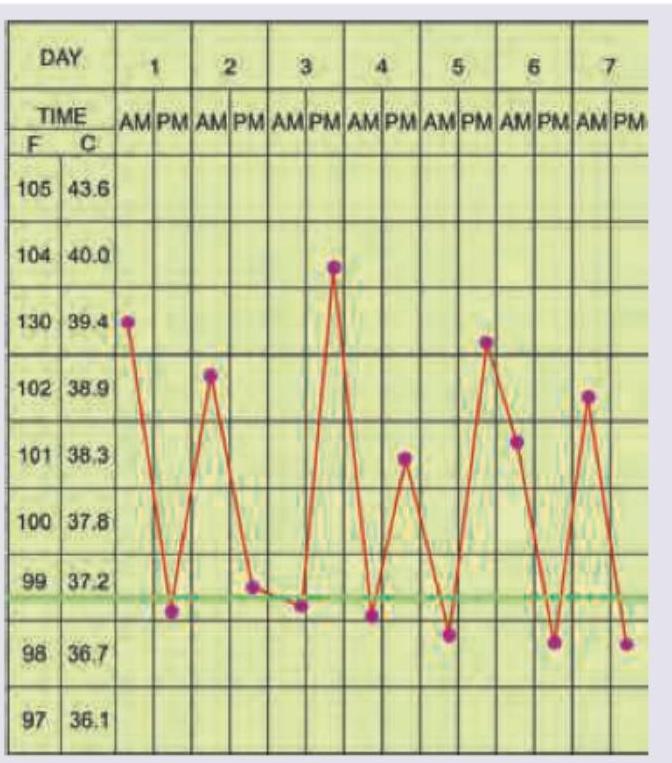
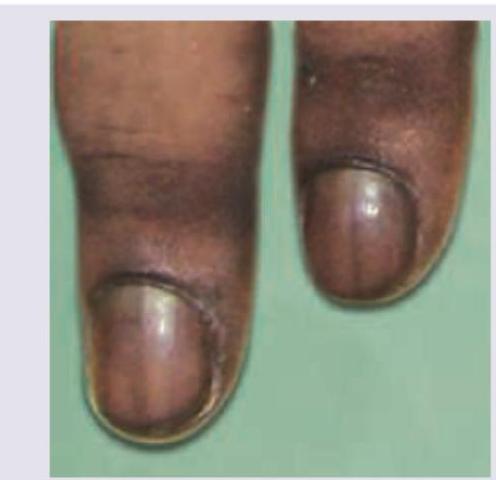
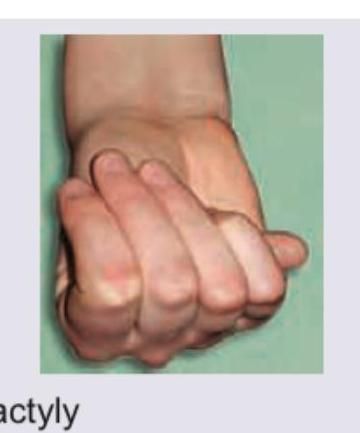
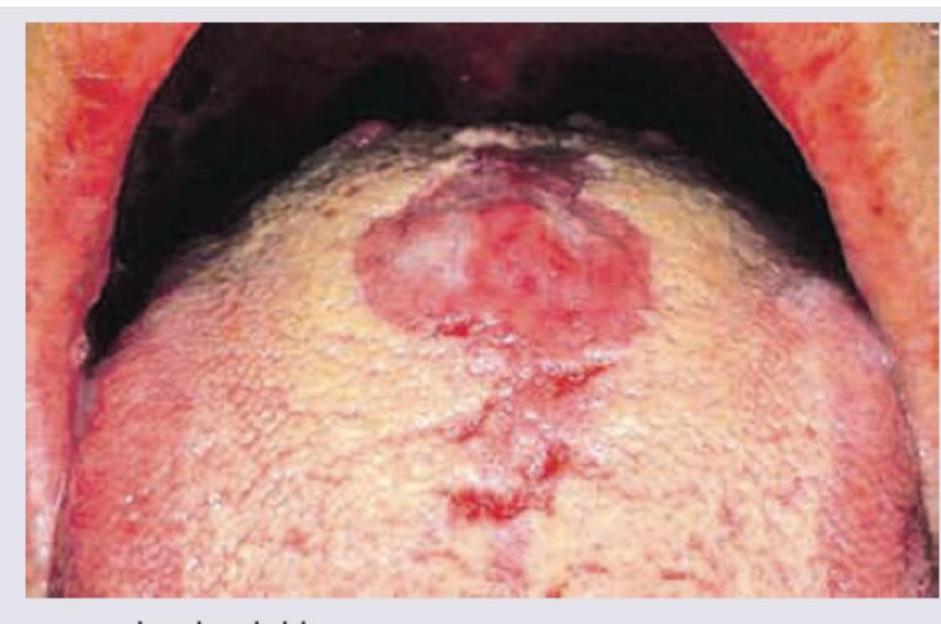
Which of the following is NOT a feature of Superior Vena Cava (SVC) syndrome?
Which ECG finding is characteristic of hypokalemia?
Palmar erythema in liver failure is due to:
Causes of unilateral clubbing include all of the following, EXCEPT?
Postural hypotension is not seen in which of the following conditions?
Which among the following is not a cause for cyanosis?
A patient presented with diminished vision and neuropsychiatric manifestations along with hepatic dysfunction. Ocular examination revealed characteristic findings. What is the next investigation to be performed?

All of the following are features of Superior Vena Cava (SVC) Syndrome except?
A 60-year-old male presented to the emergency with breathlessness, facial swelling, and dilated veins on the chest wall. What is the most common cause?
A pigmented lesion is found in the mouth but not on the skin. What is the most likely diagnosis?
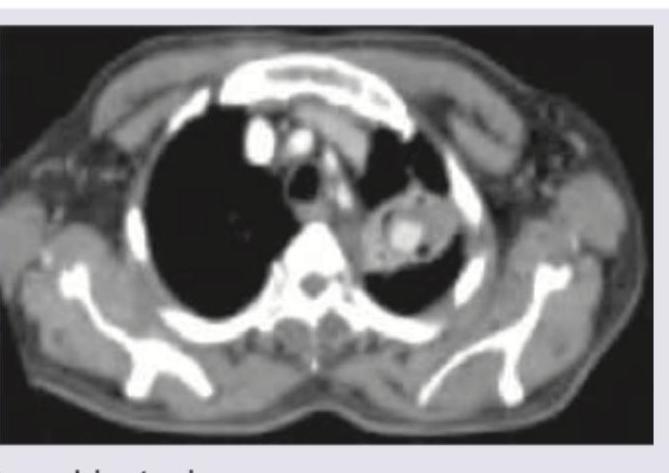
Explanation: **Explanation:** Superior Vena Cava (SVC) syndrome results from the obstruction of blood flow through the SVC, most commonly due to intrathoracic malignancies (e.g., Bronchogenic carcinoma, Lymphoma). **Why Caput Medusae is the Correct Answer:** **Caput medusae** refers to the engorgement of superficial epigastric veins radiating from the umbilicus. It is a classic sign of **Portal Hypertension**, where collateral circulation develops between the portal venous system and the systemic veins of the abdominal wall. It is not associated with SVC obstruction, which affects the drainage of the head, neck, and upper extremities. **Analysis of Incorrect Options:** * **Facial Plethora:** This is a hallmark sign caused by venous congestion and decreased drainage from the head and neck, leading to a "puffy," ruddy appearance. * **Laryngeal Edema:** Increased venous pressure in the upper airway can lead to mucosal edema of the larynx and pharynx, potentially causing hoarseness, stridor, and life-threatening airway compromise. * **Esophageal Varices:** Specifically, **"downhill" varices** occur in SVC syndrome. Unlike the "uphill" varices seen in portal hypertension (located in the distal esophagus), downhill varices form in the upper third of the esophagus as blood bypasses the obstructed SVC to reach the azygos system or inferior vena cava. **NEET-PG High-Yield Pearls:** * **Most common cause:** Small Cell Lung Cancer (historically), though non-small cell is now frequently cited. * **Pemberton’s Sign:** Facial flushing and inspiratory stridor elicited by elevating both arms above the head; indicates thoracic outlet obstruction (often substernal goiter or SVC syndrome). * **Clinical Triad:** Facial edema, cyanosis, and dilated collateral veins on the chest wall.
Explanation: **Explanation:** Hypokalemia (serum potassium <3.5 mEq/L) affects the repolarization phase of the cardiac action potential. As potassium levels drop, the resting membrane potential becomes more negative, and the duration of the action potential increases. **Why Prominent U waves are correct:** The most characteristic ECG finding in hypokalemia is the appearance of **prominent U waves**, typically seen in the precordial leads (V2-V4). As potassium levels decrease, the T wave flattens and the U wave becomes more apparent, often appearing larger than the T wave itself. This can sometimes lead to a "pseudo-prolonged QT interval" (actually a QU interval). **Analysis of Incorrect Options:** * **A. Absent P wave:** This is characteristic of **hyperkalemia** (due to atrial paralysis) or arrhythmias like atrial fibrillation. In hypokalemia, P waves actually tend to become peaked or prominent. * **C. ST elevation:** This is typically associated with myocardial infarction, pericarditis, or Brugada syndrome. Hypokalemia characteristically causes **ST-segment depression**. * **D. T wave flattening:** While T wave flattening (and inversion) does occur in hypokalemia, it is a non-specific finding. The **prominent U wave** is the more specific and "classic" hallmark tested in exams. **NEET-PG High-Yield Pearls:** * **ECG Progression in Hypokalemia:** T-wave flattening → ST depression → Prominent U waves → Prolonged PR interval. * **Danger:** Severe hypokalemia can precipitate **Torsades de Pointes** and ventricular fibrillation. * **Management Tip:** Always check magnesium levels in refractory hypokalemia, as hypomagnesemia often coexists and hinders potassium correction.
Explanation: **Explanation:** The correct answer is **D. Estrogen**. **Pathophysiology:** Palmar erythema (also known as "Liver Palms") is a classic cutaneous manifestation of chronic liver disease [1]. In liver failure, the liver’s ability to metabolize and clear steroid hormones is significantly impaired. This leads to increased serum levels of **free estrogen**. Estrogen has a potent vasodilatory effect on the microvasculature. Specifically, it causes the dilation of the terminal arterioles and capillaries in the subpapillary plexus of the palms, particularly over the thenar and hypothenar eminences. **Analysis of Incorrect Options:** * **A. Coagulopathy:** While liver failure leads to a deficiency of clotting factors, this manifests as petechiae, purpura, or ecchymosis (bruising), not localized erythema [1]. * **B. Hyperbilirubinemia:** Elevated bilirubin levels lead to jaundice (icterus), characterized by yellow discoloration of the skin and sclera [2], but it does not cause vasodilation. * **C. Hyperammonemia:** Increased ammonia levels are primarily responsible for Hepatic Encephalopathy [1] and the characteristic "flapping tremor" (asterixis), but they have no direct effect on skin vascularity. **NEET-PG High-Yield Pearls:** * **Distribution:** Palmar erythema typically spares the central portion of the palm and is most prominent on the thenar and hypothenar eminences. * **Other Hyperestrogenic Signs:** Look for **Spider Angiomas** (Spider Nevi), **Gynecomastia**, and **Testicular Atrophy** in male patients with cirrhosis; all are driven by the same mechanism of impaired estrogen metabolism. * **Differential Diagnosis:** Palmar erythema is not pathognomonic for liver disease; it can also be seen in **pregnancy** (due to high estrogen) and **thyrotoxicosis**.
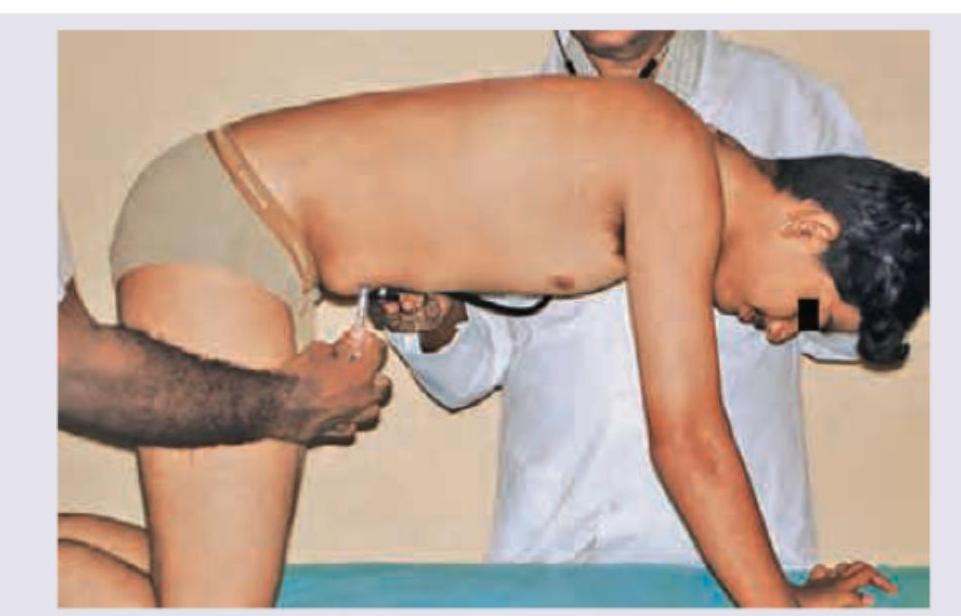
Explanation: Clubbing is a clinical sign characterized by the focal bulbous enlargement of the terminal phalanges. To answer this question, one must differentiate between causes of **unilateral** (one limb) and **bilateral** (both limbs) clubbing. **1. Why "Congenital Cyanotic Heart Disease" is the correct answer:** Congenital cyanotic heart diseases (e.g., Tetralogy of Fallot) cause **bilateral, symmetrical clubbing** [1]. This is because the underlying mechanism—shunting of deoxygenated blood and megakaryocytes into the systemic circulation—affects the entire body equally. Therefore, it cannot cause unilateral clubbing. Tetralogy of Fallot specifically involves right-to-left shunting through a ventricular septal defect, leading to systemic cyanosis [2]. **2. Analysis of Incorrect Options (Causes of Unilateral Clubbing):** Unilateral clubbing is typically caused by local vascular or neurological lesions affecting a single limb: * **Pancoast Tumor:** An apical lung tumor can involve the brachial plexus or local vascular structures, leading to unilateral changes. Bronchial carcinoma is a well-recognized cause of clubbing [3]. * **Aortic Aneurysm:** An aneurysm of the arch of the aorta or the innominate artery can cause pressure or embolic phenomena affecting the circulation of a single arm. * **Brachial AV Fistulas:** Localized arteriovenous shunts increase regional blood flow and digital perfusion in that specific limb, leading to unilateral clubbing. **Clinical Pearls for NEET-PG:** * **Differential Clubbing:** Clubbing occurring only in the toes (lower limbs) but not the fingers is a classic sign of **PDA with reversal of shunt (Eisenmenger syndrome)**. * **Unididigtal Clubbing:** Clubbing in a single finger is most commonly due to local trauma or a glomus tumor. * **Mechanism:** The most accepted theory involves **PDGF (Platelet-Derived Growth Factor)** released by trapped megakaryocytes in the digital capillaries, stimulating fibrovascular proliferation. * **Schamroth’s Sign:** The loss of the diamond-shaped window when dorsal surfaces of terminal phalanges are opposed; its absence confirms clubbing.
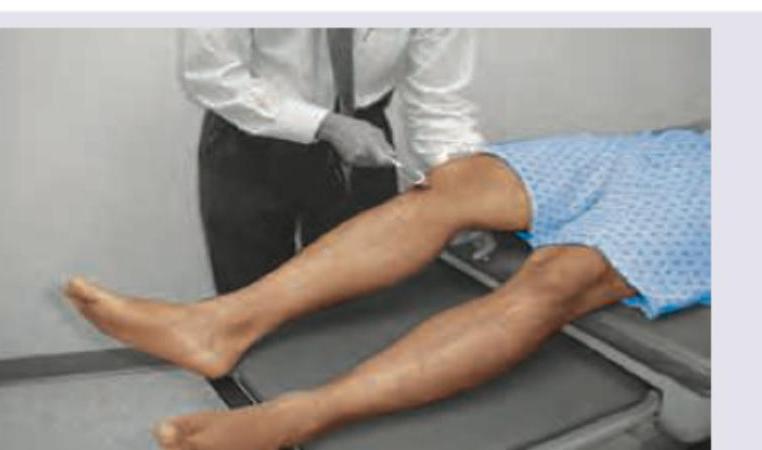
Explanation: **Explanation:** Postural (orthostatic) hypotension is defined as a drop in systolic BP of ≥20 mmHg or diastolic BP of ≥10 mmHg within three minutes of standing [1]. It occurs due to a failure of the autonomic nervous system or a depletion of intravascular volume. **Why Hypoglycemia is the Correct Answer:** Hypoglycemia typically triggers a **sympathoadrenal response** (release of epinephrine and norepinephrine) to mobilize glucose [2]. This results in tachycardia and peripheral vasoconstriction, which generally maintains or even slightly elevates blood pressure. While hypoglycemia can cause dizziness and syncope (neuroglycopenia), it does not physiologically cause a postural drop in blood pressure. **Why the other options are incorrect:** * **Diabetes Mellitus:** This is the most common cause of **autonomic neuropathy**. Chronic hyperglycemia damages the autonomic fibers that mediate the baroreceptor reflex, preventing the necessary vasoconstriction upon standing. * **Tabes Dorsalis:** A late manifestation of neurosyphilis involving the posterior columns and sensory nerve roots. It can involve the autonomic pathways, leading to orthostatic intolerance. * **Antihypertensive Drugs:** Diuretics (volume depletion), alpha-blockers (preventing vasoconstriction), and ACE inhibitors are classic pharmacological causes of postural hypotension. **NEET-PG High-Yield Pearls:** * **Bedside Test:** The "Tilt Table Test" is the gold standard for diagnosing orthostatic intolerance. * **Shy-Drager Syndrome:** A form of Multiple System Atrophy (MSA) characterized by severe autonomic failure and parkinsonism. * **Management:** First-line non-pharmacological treatment includes increased salt/water intake and compression stockings. Pharmacological options include **Fludrocortisone** (volume expansion) and **Midodrine** (alpha-1 agonist).
Explanation: **Explanation:** The correct answer is **Carboxyhemoglobin**. **Why Carboxyhemoglobin is the correct answer:** Cyanosis is the bluish discoloration of the skin and mucous membranes caused by an absolute increase in reduced (deoxygenated) hemoglobin (>5 g/dL) or the presence of certain abnormal hemoglobin derivatives. **Carboxyhemoglobin (COHb)**, formed during carbon monoxide poisoning, does not cause cyanosis. Instead, it imparts a characteristic **"cherry-red"** appearance to the skin and mucous membranes [2]. This occurs because COHb has a bright red color and shifts the oxygen-dissociation curve to the left, preventing the release of oxygen to tissues and thus preventing the formation of reduced (blue) hemoglobin [3]. **Why the other options are incorrect:** * **Methemoglobin (MetHb):** This occurs when iron in hemoglobin is oxidized to the ferric ($Fe^{3+}$) state. It causes "pseudocyanosis" or a brownish-blue (slate-gray) discoloration that does not respond to oxygen therapy [1]. * **Sulfhemoglobin:** A rare condition where a sulfur atom is incorporated into the heme group [4]. It produces a greenish-blue cyanosis even at very low concentrations. * **Cirrhosis:** Liver cirrhosis can cause central cyanosis via **Hepatopulmonary Syndrome**, where intrapulmonary vascular dilatations lead to right-to-left shunting and impaired oxygenation. **High-Yield Clinical Pearls for NEET-PG:** * **Threshold for Cyanosis:** Requires at least **5 g/dL** of reduced hemoglobin. Therefore, severely anemic patients may not show cyanosis despite hypoxia. * **Differential Coloration:** * Methemoglobinemia = Chocolate-colored blood / Slate-gray skin [1]. * CO Poisoning = Cherry-red skin [2]. * **Treatment:** Methemoglobinemia is treated with **Methylene Blue**, while CO poisoning is treated with **100% Hyperbaric Oxygen**.
Explanation: ***Serum ceruloplasmin level*** - **Wilson's disease** triad of hepatic dysfunction, neuropsychiatric symptoms, and characteristic **Kayser-Fleischer rings** on ocular examination makes serum ceruloplasmin the initial screening test. - **Low ceruloplasmin levels** (typically <20 mg/dL) are found in 85-90% of Wilson's disease patients and represent the most accessible first-line diagnostic test. *24-hour urine copper level* - While elevated **24-hour urine copper** (>100 μg/24h) is diagnostic for Wilson's disease, it's typically performed after initial screening tests. - This test is more cumbersome and time-consuming compared to **serum ceruloplasmin**, making it a second-line investigation. *MRI brain* - MRI may show **basal ganglia changes** in Wilson's disease but is not diagnostic and doesn't confirm the underlying copper metabolism disorder. - Brain imaging is useful for assessing neurological damage but doesn't establish the primary diagnosis of **copper accumulation disorder**. *Haplotyping* - **Genetic testing** for ATP7B mutations is confirmatory but expensive and time-consuming, typically reserved for cases with equivocal biochemical results. - **Haplotyping** is used for family screening after diagnosis is established, not as the initial diagnostic approach in symptomatic patients.
Explanation: ### Explanation **Superior Vena Cava (SVC) Syndrome** results from the obstruction of blood flow through the SVC, most commonly due to extrinsic compression by intrathoracic malignancies (e.g., Bronchogenic carcinoma, Lymphoma). **Why Hoarseness of Voice is the Correct Answer:** Hoarseness of voice is **not** a direct feature of SVC obstruction. It typically occurs due to the involvement of the **Recurrent Laryngeal Nerve**. While a mediastinal mass (like lung cancer) can cause both SVC syndrome and hoarseness simultaneously, the hoarseness is a sign of nerve infiltration or compression, not a result of venous congestion itself. **Analysis of Other Options:** * **Facial Swelling:** This is a hallmark sign. Obstruction leads to increased venous pressure in the upper body, causing edema of the face, neck, and upper extremities (often described as a "plethoric" or "puffy" appearance). * **Dilatation and Congestion of Neck Veins:** Due to the blockage of the main drainage pathway to the right atrium, neck veins become prominent and non-pulsatile [1]. Collateral venous channels often develop on the anterior chest wall. * **Headache:** Increased venous pressure is transmitted to the cerebral circulation, leading to cerebral edema or venous congestion, which manifests as a dull, bursting headache (often worse when bending forward). **High-Yield Clinical Pearls for NEET-PG:** * **Pemberton’s Sign:** Asking the patient to lift both arms above the head causes facial flushing and cyanosis; it is a classic physical exam finding for SVC syndrome (often seen in retrosternal goiters). * **Most Common Cause:** Bronchogenic carcinoma (Small cell lung cancer is highly associated) [1]. * **Management:** The immediate priority is airway assessment and head-of-bed elevation. Definitive treatment involves radiation or stenting, depending on the etiology.
Explanation: ### Explanation The clinical presentation of **breathlessness, facial swelling (plethora), and dilated collateral veins on the chest wall** is the classic triad of **Superior Vena Cava (SVC) Obstruction** [1]. **1. Why the Correct Answer is Right:** SVC obstruction occurs when blood flow through the SVC is compromised, either by external compression or internal thrombosis. This leads to venous congestion in the head, neck, and upper extremities. The "Pemberton’s sign" (facial flushing when arms are raised) is often positive. In modern clinical practice, the most common underlying cause of SVC syndrome is **malignancy** (specifically Bronchogenic Carcinoma, followed by Non-Hodgkin Lymphoma) [1]. **2. Why the Incorrect Options are Wrong:** * **Thymoma (A):** While a thymoma is an anterior mediastinal mass that *can* cause SVC syndrome, it is a much less common cause compared to lung cancer or the syndrome itself as a clinical entity [1]. * **Cervical Rib (B):** This typically causes **Thoracic Outlet Syndrome**, presenting with neurological symptoms (pain, paresthesia in the ulnar distribution) or arterial compromise, but not generalized facial swelling and chest wall collaterals. * **Hodgkin’s Lymphoma (C):** Like thymoma, this can cause SVC obstruction, but it is not the "most common cause" or the name of the clinical presentation described. **3. NEET-PG High-Yield Pearls:** * **Most Common Cause:** Bronchogenic Carcinoma (Small cell variant is highly associated) [1]. * **Most Common Benign Cause:** Iatrogenic (indwelling central venous catheters or pacemaker wires causing thrombosis). Historically, it was Syphilitic aneurysms. * **Clinical Sign:** Dilated veins on the chest wall [1]; blood flow in these collaterals is **downward** (towards the azygos system or IVC). * **Management:** The immediate priority is airway assessment and head-of-bed elevation. Definitive treatment depends on the histology (Radiation for NSCLC; Chemotherapy for SCLC/Lymphoma).
Explanation: **Explanation:** The correct answer is **None of the above** because the systemic conditions listed (Cushing’s, Addison’s, and Peutz-Jeghers) typically present with **both** mucosal and cutaneous pigmentation, or primarily cutaneous findings. **1. Why the options are incorrect:** * **Addison Disease:** This is characterized by primary adrenal insufficiency leading to high ACTH levels. ACTH shares a precursor (POMC) with Melanocyte-Stimulating Hormone (MSH). This results in generalized hyperpigmentation of **both** the skin (especially sun-exposed areas, palmar creases, and scars) and the oral mucosa (buccal mucosa/gums). * **Cushing Syndrome:** While ACTH-dependent Cushing (Cushing Disease or Ectopic ACTH) can cause hyperpigmentation due to the same mechanism as Addison’s, it involves both skin and mucosa. Furthermore, "Cushing Syndrome" as a general term often refers to cortisol excess, which more commonly presents with striae and plethora rather than isolated oral pigment. * **Peutz-Jeghers Syndrome:** This autosomal dominant disorder is classic for mucocutaneous pigmentation. However, the pigmented macules (lentigines) are characteristically found on the **lips and perioral skin**, as well as the buccal mucosa, hands, and feet. **2. Clinical Reasoning:** If a pigmented lesion is found **exclusively** in the mouth without skin involvement, clinicians should consider localized causes such as an **Amalgam tattoo** (most common), **Oral Melanotic Macule**, or **Oral Melanoma**. **NEET-PG High-Yield Pearls:** * **Addison’s Disease:** Look for "bronze skin" + mucosal pigmentation + hypotension + hyponatremia. * **Peutz-Jeghers:** Look for the triad of mucocutaneous pigmentation + hamartomatous GI polyps + increased risk of visceral malignancies (STK11 mutation). * **Nelson Syndrome:** Rapid enlargement of a pituitary adenoma post-bilateral adrenalectomy, leading to intense skin and mucosal hyperpigmentation due to massive ACTH release.
Approach to Common Symptoms (Fever, Pain, Fatigue)
Practice Questions
Constitutional Symptoms and Their Differential Diagnosis
Practice Questions
Syncope and Presyncope
Practice Questions
Dizziness and Vertigo
Practice Questions
Dyspnea and Respiratory Distress
Practice Questions
Chest Pain Evaluation
Practice Questions
Abdominal Pain Assessment
Practice Questions
Headache Classification and Management
Practice Questions
Weight Loss and Cachexia
Practice Questions
Edema and Fluid Retention
Practice Questions
Get full access to all questions, explanations, and performance tracking.
Start For Free