Duroziez sign is seen in which of the following conditions?
A patient develops sudden palpitation with HR 150/min, regular. What could be the cause?
What is the most appropriate intervention for acute myocardial infarction?
What are the absolute contraindications for fibrinolytic therapy?
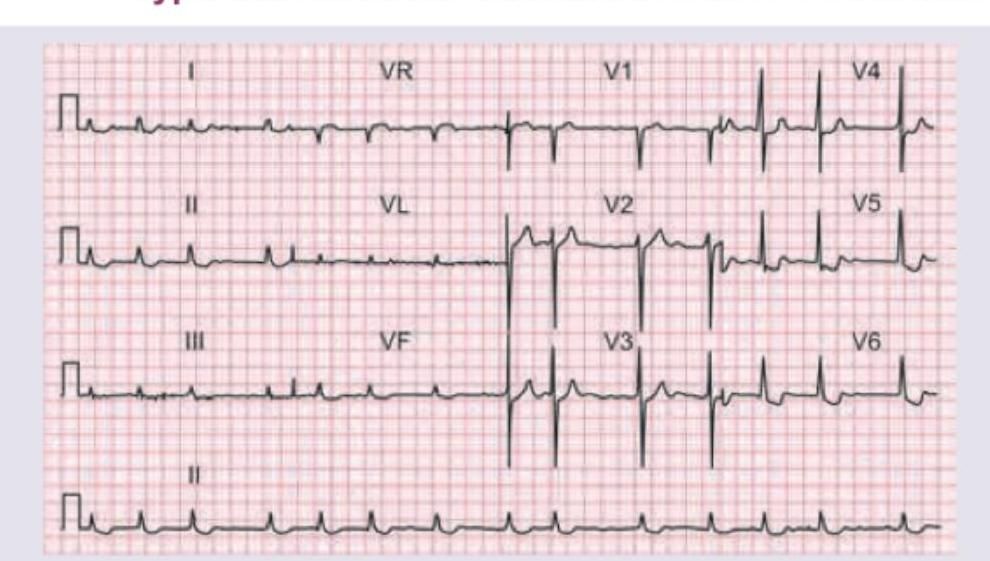
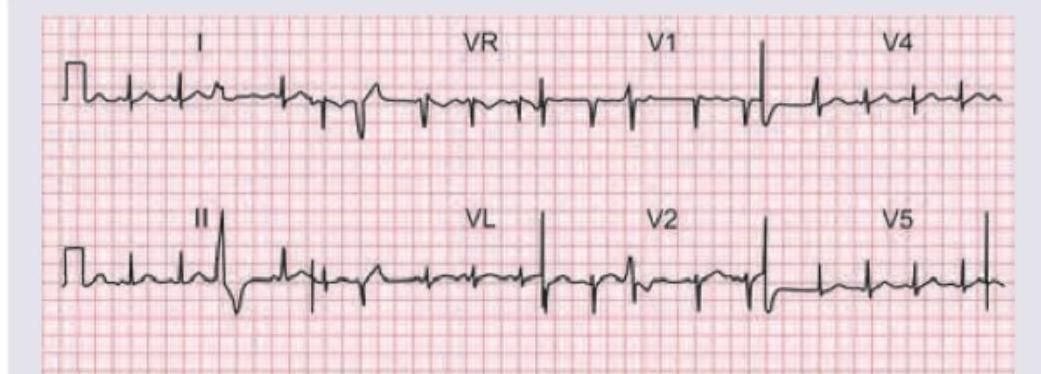
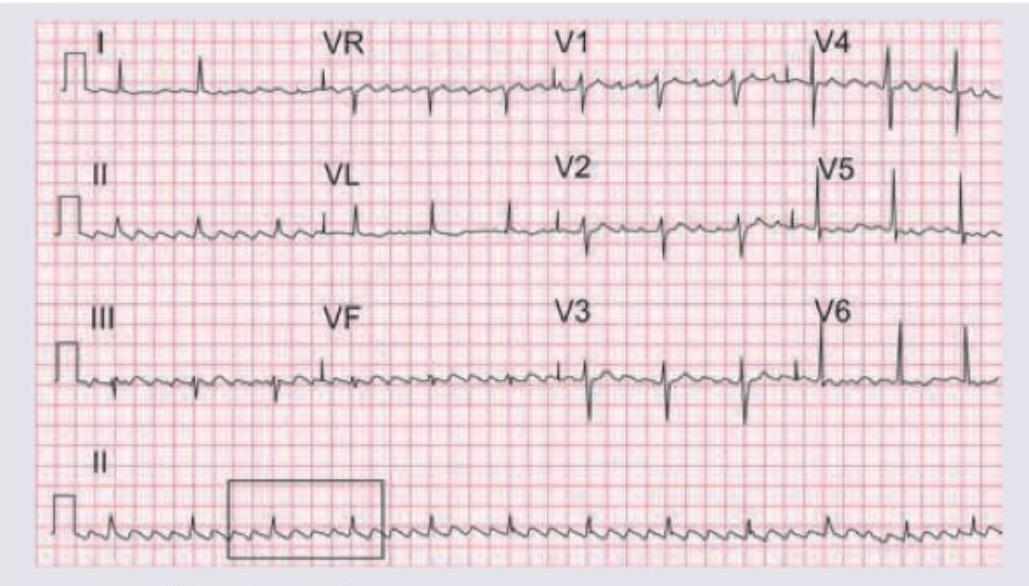
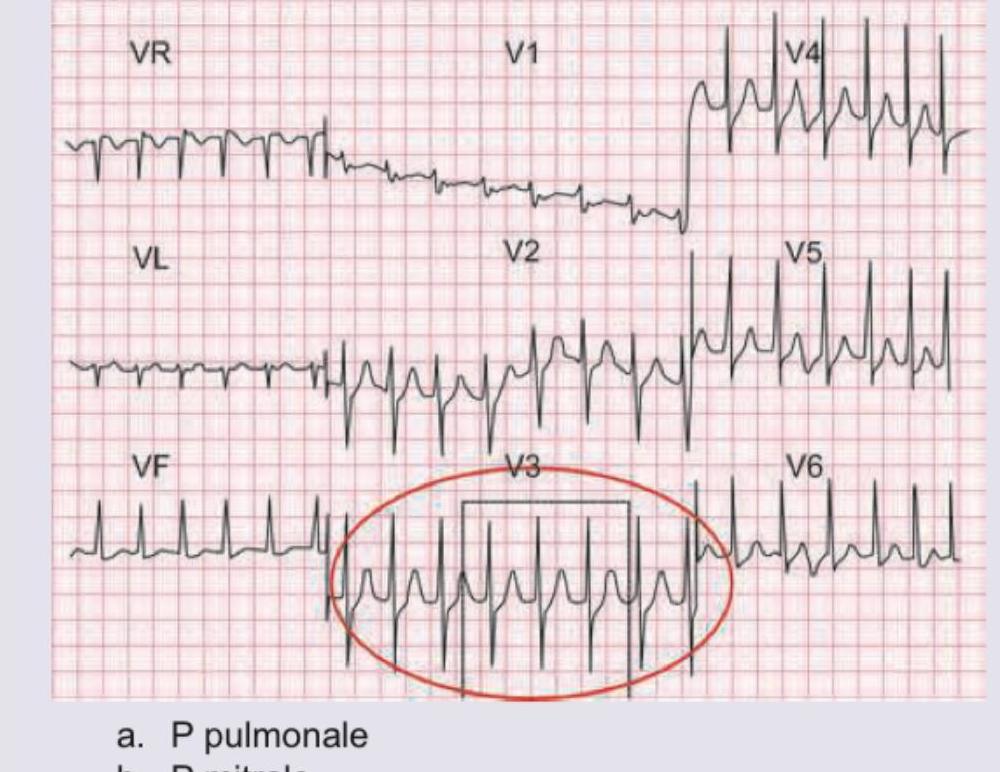
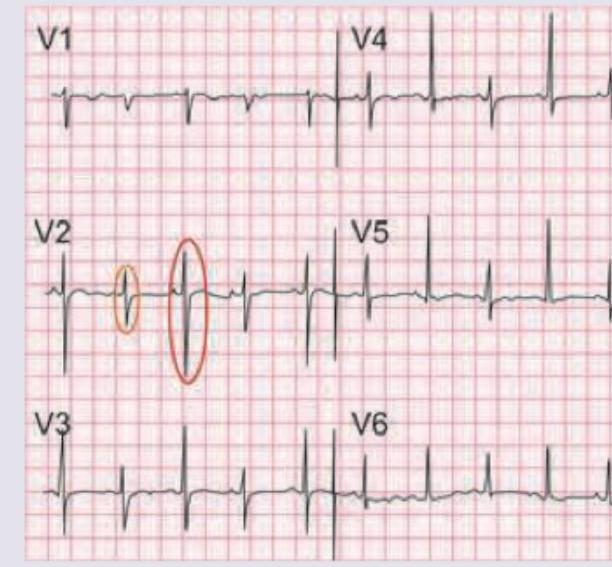
What is the abnormality shown in the ECG?

Pulsus bisferiens is best felt in which artery?
Which of the following arrhythmias is most frequent in Holiday Heart Syndrome?
Which of the following is the best predictor of cardiovascular risk?
A 73-year-old man has angina pectoris on exertion, but an angiogram reveals noncritical stenosis of the coronary arteries. This clinical presentation is most frequently associated with which of the following valvular heart diseases?
A patient with acute inferior wall myocardial infarction has developed shock. Which of the following is the most likely cause of shock?
Explanation: **Explanation:** **Duroziez’s sign** is a classic peripheral vascular sign of **Aortic Regurgitation (AR)** [1]. It is characterized by a "double murmur" heard over a large peripheral artery (usually the femoral artery) when it is compressed with a stethoscope. * **Mechanism:** When the stethoscope diaphragm is tilted proximally (towards the heart), a systolic murmur is heard due to rapid forward flow. When tilted distally (away from the heart), a **diastolic murmur** is heard. This diastolic component is the hallmark of AR, caused by the rapid backward flow (retrograde) of blood toward the heart during diastole due to the incompetent aortic valve [1]. **Analysis of Incorrect Options:** * **B. Aortic Stenosis:** Characterized by a narrow pulse pressure and slow-rising pulse (*pulsus parvus et tardus*). There is no retrograde flow in diastole to produce Duroziez’s sign. * **C & D. Mitral Stenosis/Regurgitation:** These are left-sided valvular lesions that do not typically result in the hyperdynamic peripheral circulatory states or significant retrograde arterial flow required to produce this sign. **High-Yield Clinical Pearls for NEET-PG:** * **Hyperdynamic Circulation:** AR is associated with a wide pulse pressure [2]. Other eponymous signs include: * **Corrigan’s Pulse:** "Water-hammer" or collapsing pulse [2]. * **de Musset’s Sign:** Head nodding in sync with the heartbeat [2]. * **Quincke’s Pulse:** Capillary pulsations in the nail bed. * **Traube’s Sign:** "Pistol shot" sounds heard over the femoral artery. * **Hill’s Sign:** Popliteal systolic BP > Brachial systolic BP by >20 mmHg (most sensitive sign for AR severity). * **Auscultation:** AR typically presents with an early diastolic, decrescendo murmur heard best at the left 3rd intercostal space [1].
Explanation: ### Explanation The clinical presentation of sudden-onset palpitations with a regular heart rate of exactly 150 bpm is a classic description of **Paroxysmal Supraventricular Tachycardia (PSVT)**. **1. Why PSVT is the Correct Answer:** PSVT (most commonly AVNRT) is characterized by a sudden ("paroxysmal") start and finish [3]. It typically presents with a very regular rhythm and a heart rate ranging from 120 to 240 bpm [1]. The "sudden" nature of the palpitations is the key clinical differentiator from sinus tachycardia, which usually has a gradual onset. **2. Analysis of Incorrect Options:** * **Sinus Tachycardia:** This is a physiological response to stress, fever, or exercise. It has a **gradual onset and offset** (warm-up and cool-down effect) rather than a sudden start. * **Ventricular Tachycardia (VT):** While regular, VT usually presents in patients with underlying structural heart disease (e.g., old MI) and is often associated with hemodynamic instability (hypotension/shock) [4]. While possible, PSVT is the more common "textbook" answer for stable, sudden palpitations in a general context. * **Atrial Flutter with Block:** Atrial flutter typically has an atrial rate of 300 bpm. With a common 2:1 conduction block, the ventricular rate is often exactly **150 bpm**. However, the "sudden" onset is more characteristic of the re-entrant mechanism of PSVT [2]. **3. NEET-PG High-Yield Pearls:** * **First-line Management:** Vagal maneuvers (Modified Valsalva). * **Drug of Choice (DOC):** **Adenosine** (6mg → 12mg rapid IV push). It works by slowing conduction through the AV node. * **ECG Finding:** Narrow QRS complex tachycardia with absent or retrograde P-waves [1]. * **Definitve Treatment:** Radiofrequency Ablation (RFA) of the slow pathway. * **Prophylaxis:** Calcium channel blockers (Verapamil/Diltiazem) or Beta-blockers.
Explanation: **Explanation:** The management of acute ST-elevation myocardial infarction (STEMI) focuses on the rapid restoration of coronary blood flow to salvage myocardium. **Primary Percutaneous Coronary Intervention (PCI)** is the gold standard and most appropriate intervention when performed within 90–120 minutes of first medical contact [1]. **Why Option C is correct:** Primary PCI (angioplasty with or without stenting) is superior to fibrinolysis (thrombolysis) because it achieves higher rates of "TIMI 3 flow" (complete reperfusion), carries a lower risk of intracranial hemorrhage, and significantly reduces the rates of re-infarction and mortality [1]. **Why other options are incorrect:** * **Options A, B, and D:** These involve **Streptokinase**, a first-generation fibrinolytic agent. While fibrinolysis is an alternative if PCI is unavailable within the recommended timeframe, it is pharmacologically inferior to PCI [1]. Furthermore, Streptokinase is non-fibrin-specific and carries a higher risk of systemic bleeding and allergic reactions compared to newer agents like Tenecteplase. While Aspirin and Heparin are essential *adjuncts* in STEMI management, they do not replace the need for definitive mechanical reperfusion (PCI). **High-Yield Clinical Pearls for NEET-PG:** * **Door-to-Balloon Time:** Should be **<90 minutes** (at a PCI-capable hospital) or **<120 minutes** (if transfer is required). * **Door-to-Needle Time:** If PCI is not possible within 120 minutes, fibrinolysis should be initiated within **30 minutes**. * **Absolute Contraindications to Fibrinolysis:** Prior intracranial hemorrhage, known structural cerebrovascular lesion, ischemic stroke within 3 months, or active internal bleeding. * **Drug of Choice:** Tenecteplase is now preferred over Streptokinase due to its fibrin specificity and bolus administration [1].
Explanation: **Explanation:** Fibrinolytic therapy (thrombolysis) is a high-stakes intervention used in ST-elevation myocardial infarction (STEMI) and acute ischemic stroke. The primary risk is life-threatening hemorrhage [1]. **Absolute contraindications** are conditions where the risk of catastrophic bleeding (especially intracranial or aortic rupture) outweighs any potential benefit. 1. **Prior Intracranial Hemorrhage (ICH):** Any history of ICH, regardless of timing, is an absolute contraindication because it indicates a structural or vascular vulnerability in the brain that significantly increases the risk of a fatal re-bleed [1]. 2. **Ischemic Stroke within 3 months:** Recent ischemic strokes disrupt the blood-brain barrier and cause tissue necrosis. Administering fibrinolytics during the healing phase can lead to "hemorrhagic transformation" of the old infarct. 3. **Suspected Aortic Dissection:** Fibrinolytics prevent the body from forming a clot to contain a dissection. If administered, it can lead to rapid exsanguination into the pericardium (causing tamponade) or the pleural space. **Why "All of the above" is correct:** Each of these conditions represents a scenario where the administration of a fibrinolytic (like Alteplase or Tenecteplase) would likely result in immediate mortality or severe morbidity. **Clinical Pearls for NEET-PG:** * **Time Window:** For STEMI, fibrinolytics are ideally given within **12 hours** of symptom onset if PCI cannot be performed within 120 minutes. * **Other Absolute Contraindications:** Known structural cerebral vascular lesion (e.g., AVM), known malignant intracranial neoplasm, active internal bleeding (excluding menses), and significant closed-head or facial trauma within 3 months. * **Relative Contraindications (High-Yield):** Severe uncontrolled hypertension (BP >180/110 mmHg), pregnancy, active peptic ulcer, and current use of anticoagulants. * **Mnemonic:** Remember the **"3 Months"** rule for ischemic stroke and major trauma/surgery.
Explanation: ***Premature ventricular contractions*** - Characterized by **wide, bizarre QRS complexes** (>120 ms) with **no preceding P wave**, indicating ventricular origin. - Followed by a **compensatory pause** before the next normal beat, distinguishing them from other arrhythmias. *Sine wave pattern* - Associated with **severe hyperkalemia** (K+ >8-9 mEq/L) showing smooth, undulating waves without distinct P, QRS, or T waves. - Represents a **life-threatening electrolyte abnormality** requiring immediate treatment, not isolated premature beats. *ST segment depression* - Indicates **myocardial ischemia** or **subendocardial injury**, appearing as horizontal or downsloping depression ≥1mm. - Would affect multiple leads consistently in **ischemic patterns**, not present as isolated abnormal beats. *Electrical alternans* - Shows **beat-to-beat variation** in QRS amplitude or axis, typically seen in **pericardial effusion** with cardiac tamponade. - Involves **regular rhythm** with alternating QRS morphology, not premature or ectopic beats.
Explanation: **Explanation:** **Pulsus bisferiens** (or biphasic pulse) is characterized by two strong systolic peaks separated by a mid-systolic dip. It is classically seen in conditions like **Aortic Regurgitation (AR)**, **Combined Aortic Stenosis and Regurgitation (AS+AR)**, and **Hypertrophic Obstructive Cardiomyopathy (HOCM)**. **Why Radial Artery is the Correct Answer:** While central pulses (like the carotid) are better for assessing the *volume* and *character* of most pulses [2], **Pulsus bisferiens is best appreciated in peripheral arteries, specifically the radial or brachial artery.** This is because the double peak is often accentuated as the pressure wave travels peripherally. In clinical practice and standard medical examinations (like NEET-PG), the radial artery is cited as the most accessible and reliable site to palpate these two distinct systolic waves. **Analysis of Incorrect Options:** * **A. Carotid Artery:** Though the carotid is ideal for assessing *Pulsus Parvus et Tardus* (Aortic Stenosis), the rapid, forceful double-peak of bisferiens is often too brisk to distinguish clearly in the neck; it is better felt distally. * **B. Brachial Artery:** While it can be felt here, the radial artery is the conventional textbook answer for the "best" site of palpation for this specific finding. * **D. Femoral Artery:** This is used to check for radio-femoral delay (Coarctation of Aorta) but is not the preferred site for bisferiens [2]. **High-Yield Clinical Pearls for NEET-PG:** * **Mechanism:** The first peak is the 'percussion wave' (rapid ejection), and the second is the 'tidal wave' (reflected wave). * **Differentiating HOCM vs. AR:** In HOCM, the pulse is "Spike and Dome," whereas in AR, both peaks are usually sharp [1]. * **Pulsus Alternans:** Best felt in the **Radial artery** (seen in Left Ventricular Failure). * **Pulsus Paradoxus:** Best assessed using a **Sphygmomanometer** (seen in Cardiac Tamponade).
Explanation: **Explanation:** **Holiday Heart Syndrome** refers to the occurrence of acute cardiac rhythm disturbances, most commonly supraventricular, following a period of heavy alcohol consumption (“binge drinking”) in individuals without structural heart disease. It is typically seen after weekends or holidays. **1. Why Atrial Fibrillation (AFib) is correct:** **Atrial Fibrillation** is the most frequent arrhythmia associated with Holiday Heart Syndrome [1]. The underlying pathophysiology involves alcohol’s ability to shorten the atrial refractory period, increase sympathetic and parasympathetic activity, and induce a transient state of oxidative stress and electrolyte imbalance (like hypomagnesemia). These factors create an ideal substrate for the rapid, disorganized electrical activity characteristic of AFib. **2. Why other options are incorrect:** * **Atrial Flutter (Option A):** While Atrial Flutter can occur in Holiday Heart Syndrome, it is significantly less common than AFib [2]. * **Ventricular Premature Depolarization (Option C):** These are common in the general population and can be exacerbated by alcohol, but they are not the defining or most frequent feature of this specific syndrome. * **Ventricular Tachycardia (Option D):** Alcohol can be pro-arrhythmic for the ventricles, but sustained ventricular arrhythmias are rare in Holiday Heart Syndrome unless there is significant underlying structural heart disease or severe electrolyte derangement. **Clinical Pearls for NEET-PG:** * **Prognosis:** The arrhythmia is usually paroxysmal and self-limiting; it typically reverts to sinus rhythm within 24–48 hours with abstinence from alcohol. * **Key Trigger:** Binge drinking (even in "social drinkers" without chronic alcoholism). * **Differential:** Always rule out pulmonary embolism or thyrotoxicosis in new-onset AFib, but the history of recent alcohol intake is the diagnostic clue here. * **Management:** Observation and correction of electrolytes are often sufficient; long-term anti-arrhythmics are generally not indicated if the patient remains abstinent.
Explanation: **Explanation:** The correct answer is **C-reactive protein (CRP)**, specifically measured via high-sensitivity assays (**hs-CRP**). **1. Why CRP is the best predictor:** Atherosclerosis is now recognized as a chronic inflammatory process rather than just a lipid-storage disease. [1] hs-CRP is an acute-phase reactant produced by the liver in response to Interleukin-6. [2] It serves as a stable, systemic marker of low-grade vascular inflammation. Large-scale clinical trials (e.g., the JUPITER trial) have demonstrated that hs-CRP is a powerful independent predictor of myocardial infarction, stroke, and peripheral arterial disease, often providing more prognostic value than LDL cholesterol levels alone. **2. Analysis of Incorrect Options:** * **Antichlamydial antibody (A):** While *Chlamydia pneumoniae* has been found in atherosclerotic plaques, clinical trials using antibiotics have failed to reduce cardiovascular events. It is not a reliable or standard predictor of risk. * **Lipoprotein (a) (B):** Lp(a) is an independent genetic risk factor for CAD and aortic stenosis. [3] However, it is not as widely used or as strong a dynamic predictor of overall cardiovascular risk in the general population compared to hs-CRP. * **Homocysteine (D):** Elevated homocysteine (hyperhomocysteinemia) is associated with endothelial damage. However, lowering homocysteine levels with B-vitamins has not consistently shown a reduction in cardiovascular events, making it a weaker predictor than inflammatory markers. **High-Yield Clinical Pearls for NEET-PG:** * **hs-CRP Risk Stratification:** * <1 mg/L: Low Risk * 1–3 mg/L: Average Risk * \>3 mg/L: High Risk * **Metabolic Syndrome:** hs-CRP is often elevated in patients with obesity and insulin resistance, further compounding their CV risk. * **Statin Therapy:** Statins not only lower LDL but also significantly reduce hs-CRP levels (pleiotropic effect).
Explanation: ### Explanation **1. Why Aortic Stenosis (AS) is Correct:** Angina pectoris is a classic symptom of the **triad of Aortic Stenosis** (SAD: Syncope, Angina, Dyspnea). In AS, angina occurs even in the absence of obstructive coronary artery disease (CAD) due to a severe **mismatch between myocardial oxygen supply and demand** [1]. * **Increased Demand:** The left ventricle (LV) undergoes concentric hypertrophy to overcome the pressure gradient, increasing muscle mass and wall tension [1]. * **Decreased Supply:** High intraventricular pressure compresses the intramyocardial coronary vessels (especially during diastole), and the elevated LV end-diastolic pressure reduces the coronary perfusion pressure gradient [1]. Approximately **50% of patients with symptomatic AS** who have angina are found to have noncritical or normal coronary arteries on angiography. **2. Why Other Options are Incorrect:** * **Mitral Stenosis (MS):** While MS can cause dyspnea and hemoptysis, angina is rare. If chest pain occurs, it is usually due to pulmonary hypertension or right ventricular strain, not typical exertional angina with normal coronaries. * **Mitral Insufficiency (MR):** MR leads to volume overload rather than pressure overload. It does not typically cause the massive concentric hypertrophy required to produce exertional angina in the absence of CAD [2]. * **Pulmonary Stenosis:** This affects the right heart. While it can cause exertional chest pain due to RV hypertrophy, it is far less common in a 73-year-old and does not fit the classic clinical profile of "angina pectoris" as closely as AS does. **3. NEET-PG High-Yield Pearls:** * **Classic Triad of AS:** Syncope (3 years survival), Angina (5 years survival), Dyspnea/HF (2 years survival). * **Physical Exam:** Look for *Pulsus Parvus et Tardus* (slow-rising, low-volume pulse) and a harsh crescendo-decrescendo systolic murmur at the right second intercostal space radiating to the carotids [3]. * **Heyde’s Syndrome:** Association of Aortic Stenosis with GI bleeding from angiodysplasia. * **Indicator for Surgery:** The onset of any symptoms in AS is a definitive indication for Aortic Valve Replacement (AVR/TAVI) [4].
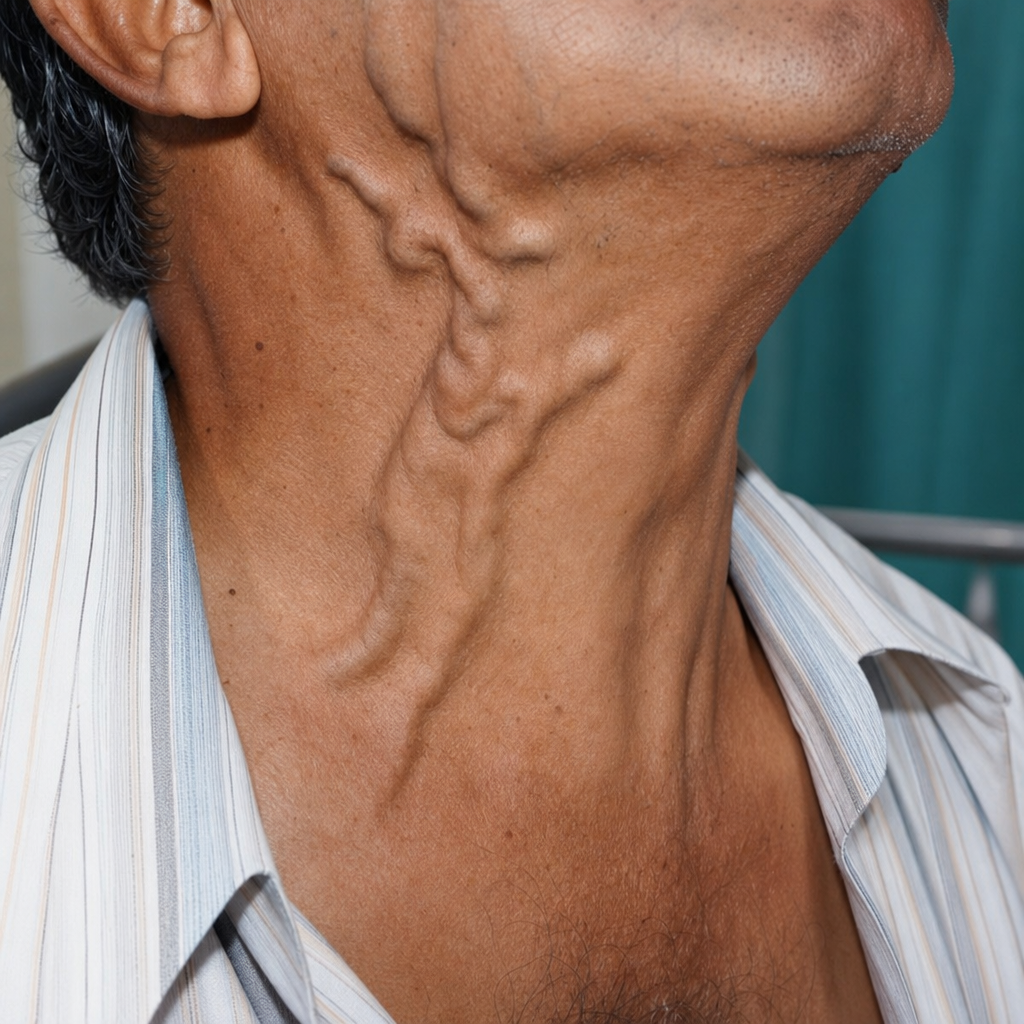
Explanation: **Explanation:** **Right Ventricular Infarction (RVI)** is the most common cause of shock specifically associated with an **acute inferior wall myocardial infarction (MI)**. In RVI, the right ventricle fails as a pump, leading to decreased preload for the left ventricle, resulting in hypotension and cardiogenic shock [1]. This occurs because the Right Coronary Artery (RCA) typically supplies both the inferior wall of the left ventricle and the right ventricle. **Why the other options are incorrect:** * **Cardiac Rupture (Free Wall):** Usually occurs 3–7 days post-MI and leads to rapid cardiac tamponade and sudden death, rather than isolated shock in the acute phase [2]. * **Interventricular Septal Perforation (VSD):** A mechanical complication occurring 3–5 days post-MI. While it causes shock, it is characterized by a new harsh pansystolic murmur and left-to-right shunt, and is less frequent than RVI in the immediate acute setting. * **Papillary Muscle Rupture:** Typically involves the posteromedial papillary muscle (supplied by the RCA). It causes acute, severe mitral regurgitation and pulmonary edema. While it causes shock, the presence of "clear lungs" in the question stem (implied by typical RVI presentations) points away from this. **High-Yield Clinical Pearls for NEET-PG:** * **Clinical Triad of RVI:** Hypotension, Clear Lungs, and Elevated JVP (Kussmaul’s sign may be present). * **Diagnosis:** ST-segment elevation in right-sided leads (especially **V4R**). * **Management:** The mainstay is **aggressive IV fluids** to maintain RV preload. **Avoid nitrates, diuretics, and morphine**, as they reduce preload and can worsen hypotension.
Coronary Artery Disease and Angina
Practice Questions
Acute Coronary Syndromes
Practice Questions
Heart Failure
Practice Questions
Cardiac Arrhythmias
Practice Questions
Valvular Heart Diseases
Practice Questions
Cardiomyopathies
Practice Questions
Pericardial Diseases
Practice Questions
Congenital Heart Disease in Adults
Practice Questions
Hypertension and Hypertensive Emergencies
Practice Questions
Pulmonary Hypertension
Practice Questions
Non-invasive Cardiac Diagnostics
Practice Questions
Preventive Cardiology
Practice Questions
Get full access to all questions, explanations, and performance tracking.
Start For Free