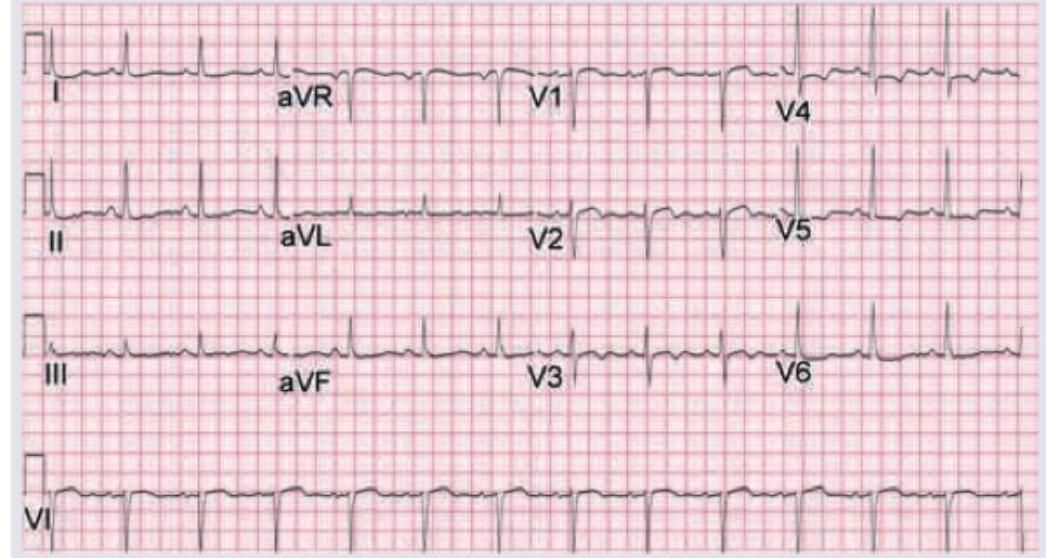
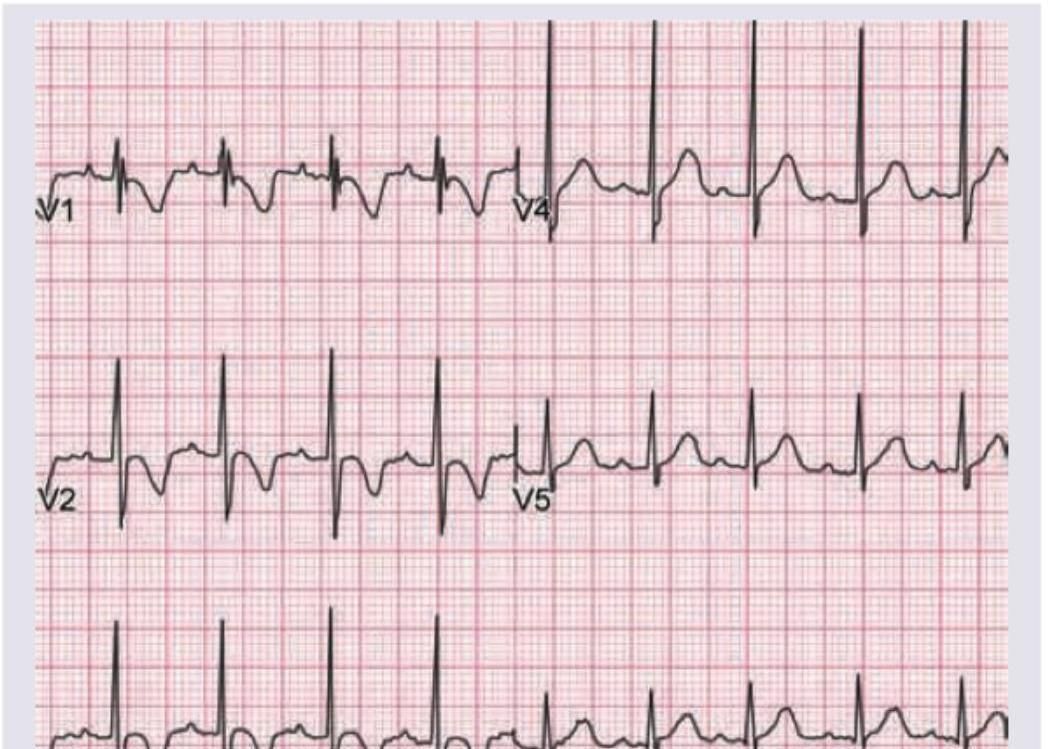
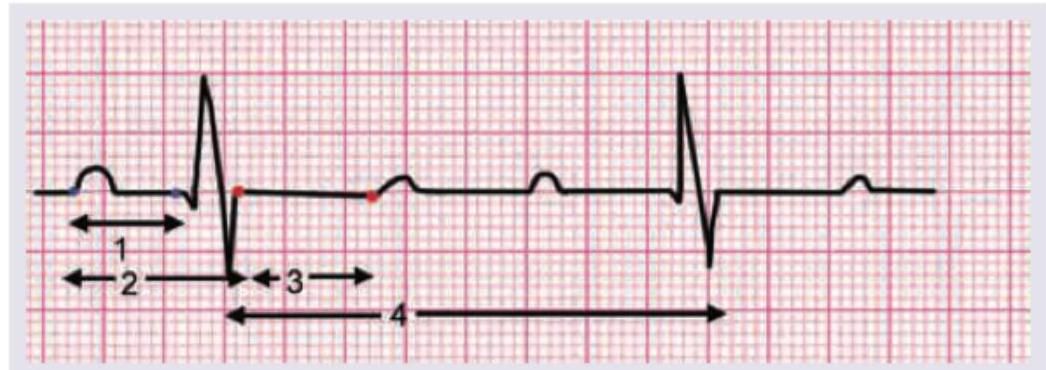
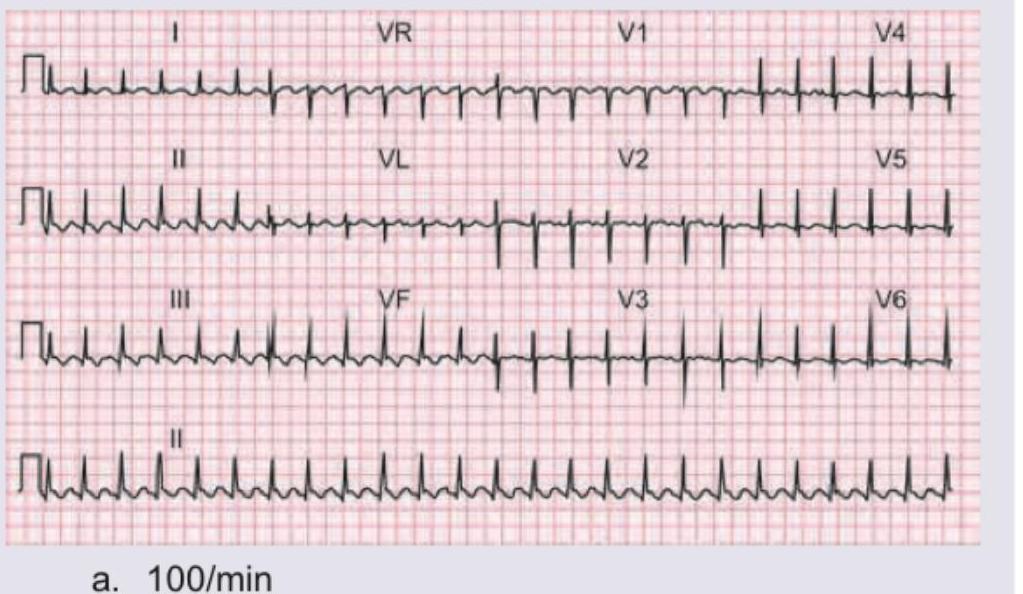
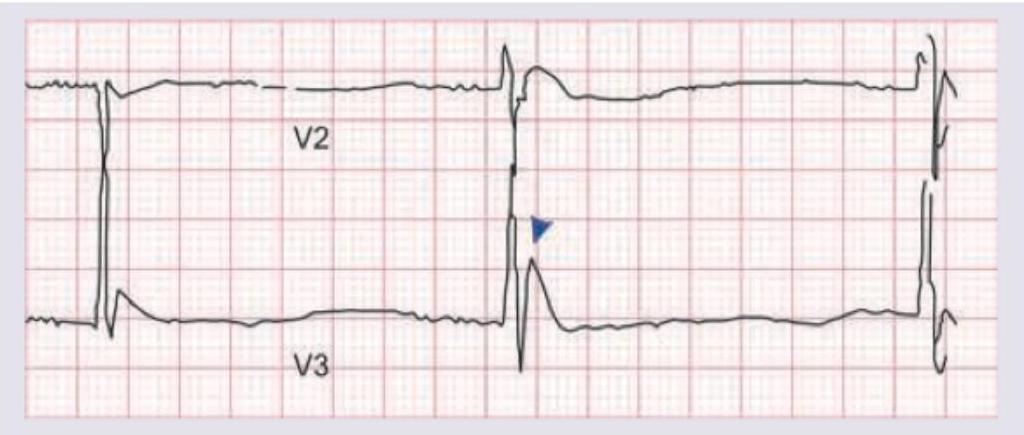
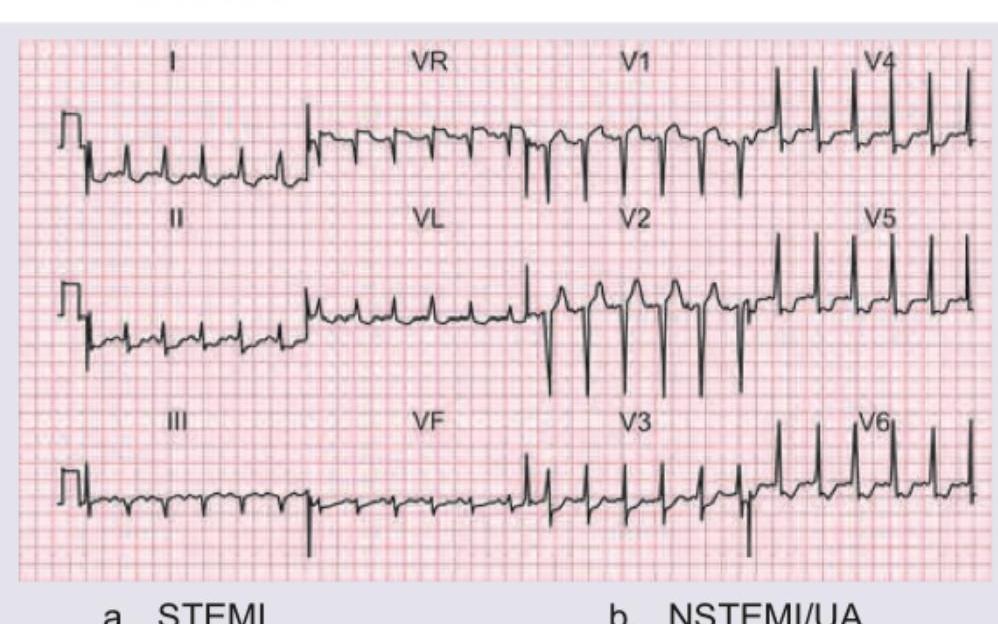
Which of the following statements about Wolff-Parkinson-White syndrome is FALSE?
In Takayasu arteritis, which artery is most commonly involved?
Complete AV nodal block results in?
A 68-year-old man with a history of recent syncopal episodes presents with congestive heart failure. His blood pressure is 160/80 mm Hg, pulse rate is 80 beats/minute, and he has a grade III/VI harsh systolic murmur. Which of the following findings is most suggestive of aortic stenosis?
A 72-year-old obese man, 1 hour after undergoing repair of a left indirect inguinal hernia, is admitted to the emergency department with severe retrosternal pain of 1-hour duration. The pain radiates to the medial aspect of the left hand. The ECG shows Q waves and an elevated ST-segment. A diagnosis of acute myocardial infarction is established 1 hour after admission. What is the immediate management?
Which of the following conditions is most commonly associated with heart failure with preserved ejection fraction?
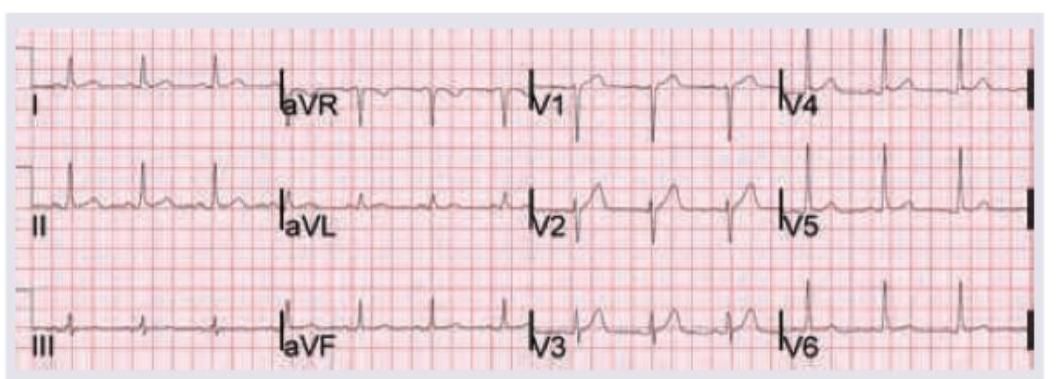
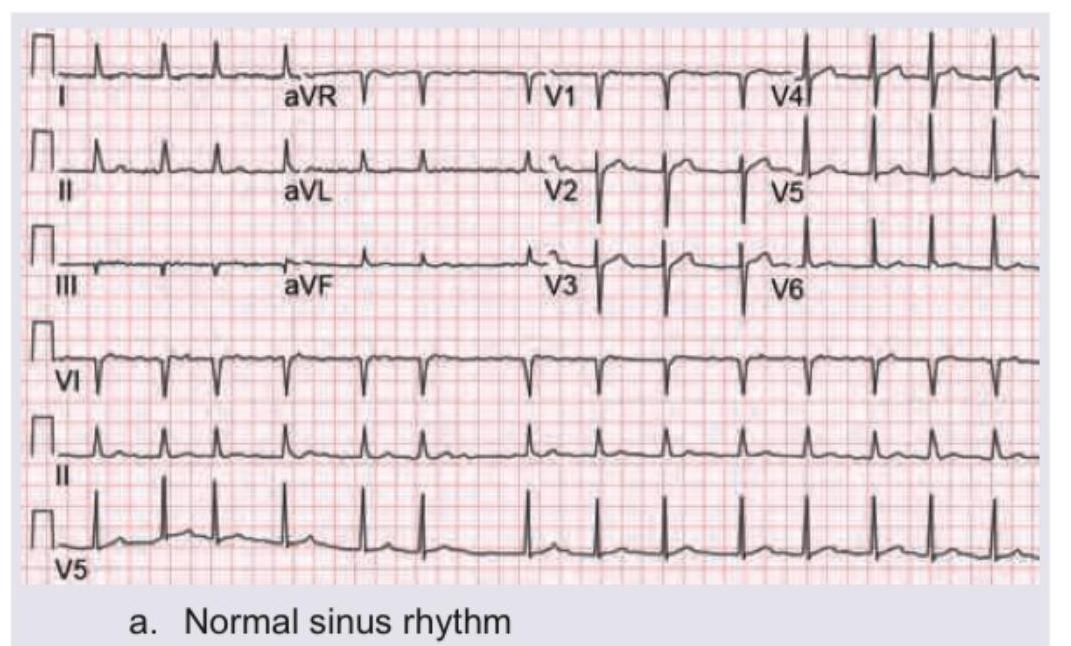
The normal electrical axis of the heart is best described as being between which of the following ranges?
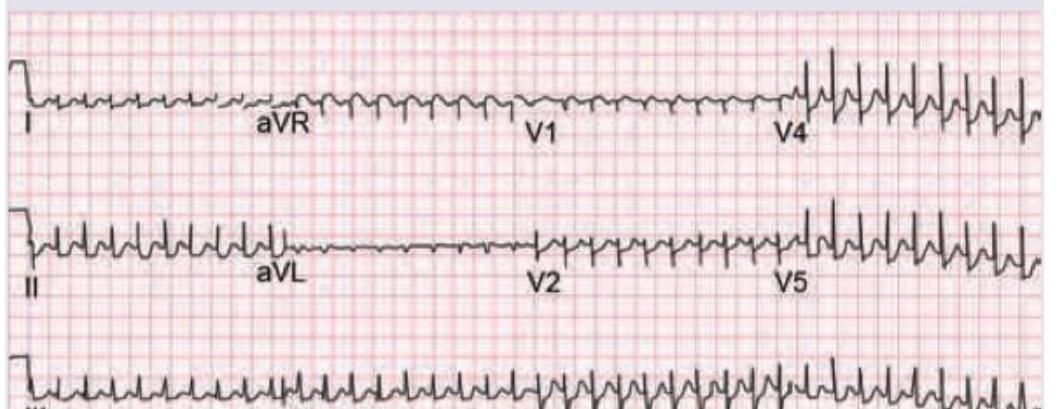
In which condition can atrial fibrillation degenerate into ventricular fibrillation?
A 69-year-old woman complains of atypical chest pain. On examination, the JVP is at 8 cm, with a positive Kussmaul sign, and normal heart sounds. The lungs are clear. The ECG is abnormal, and the CXR shows a normal cardiac silhouette. For the patient presenting with shortness of breath and peripheral edema, what is the most likely diagnosis?
Pulses paradoxus can be seen in which of the following clinical states EXCEPT?
Explanation: The correct answer is **C**. This option is false because it incorrectly equates **Delta waves** with **Epsilon waves**. While Delta waves are the hallmark of Wolff-Parkinson-White (WPW) syndrome [1], Epsilon waves are distinct findings associated with Arrhythmogenic Right Ventricular Cardiomyopathy (ARVC). **Why Option C is False:** In WPW, an accessory pathway (Bundle of Kent) bypasses the AV node, leading to early ventricular activation [1]. This results in a **Delta wave** (a slurred upstroke of the QRS) [1]. An **Epsilon wave**, however, is a small notch at the end of the QRS complex, signifying delayed right ventricular activation in ARVC. **Analysis of Other Options:** * **Option A (Decremental Conduction):** This is false regarding the *classic* accessory pathway in WPW. Most accessory pathways in WPW exhibit **non-decremental conduction** (all-or-none), unlike the AV node which slows conduction as heart rate increases. This is why WPW is prone to rapid ventricular rates during atrial fibrillation [2]. * **Option B (Shortened PR):** True. Because the impulse bypasses the physiological delay of the AV node, the PR interval is typically <0.12 seconds [1]. * **Option D (Widened QRS):** True. The QRS is widened (>0.12s) because it is a fusion beat—partially activated by the accessory pathway (slow intramyocardial spread) and partially by the normal His-Purkinje system [1]. **High-Yield Clinical Pearls for NEET-PG:** * **WPW Triad:** Short PR interval, Delta wave, and wide QRS [1]. * **Drug Contraindication:** Avoid **ABCD** (Adenosine, Beta-blockers, Calcium channel blockers, Digoxin) in WPW with Atrial Fibrillation, as they block the AV node and may precipitate Ventricular Fibrillation [2]. * **Treatment of Choice:** Radiofrequency ablation of the accessory pathway.
Explanation: **Explanation:** Takayasu arteritis (also known as "Pulseless Disease") is a chronic, large-vessel vasculitis that primarily affects the aorta and its major branches [1]. **Why Subclavian Artery is Correct:** The **left subclavian artery** is the most frequently involved vessel in Takayasu arteritis (occurring in up to 90% of cases). This involvement leads to the classic clinical presentation of diminished or absent peripheral pulses and significant blood pressure discrepancies between the arms. The inflammation causes segmental stenosis, occlusion, or aneurysmal dilation of the vessel. **Analysis of Incorrect Options:** * **Common carotid artery:** This is the second most common vessel involved. While frequently affected (leading to syncope or carotidynia), it is statistically less common than the subclavian artery. * **Renal artery:** Involved in approximately 40-50% of cases. While it is a major cause of secondary hypertension (renovascular hypertension) in young females, it is not the *most* common site. * **Inferior mesenteric artery:** Large vessel vasculitis rarely involves the mesenteric circulation compared to the arch of the aorta. The abdominal aorta is involved in about 50% of cases, but the subclavian remains the primary site. **High-Yield Clinical Pearls for NEET-PG:** * **Demographics:** Most common in young females (<40 years) of Asian descent. * **Clinical Sign:** Bruits (especially subclavian or carotid) are a hallmark finding. * **Diagnosis:** Gold standard is **Conventional Angiography** (showing "string of pearls" or tapered stenosis), though CT/MR Angiography is now preferred. * **Classification:** Ishikawa’s criteria or ACR criteria are used for diagnosis. * **Treatment:** Glucocorticoids are the first-line treatment to reduce inflammation.
Explanation: ### Explanation **Correct Answer: D. Unequal PP interval and RR interval** **Understanding the Concept:** Complete AV nodal block (3rd-degree Heart Block) is characterized by **AV dissociation**. In this condition, no atrial impulses reach the ventricles [2]. Consequently, the atria are depolarized by the SA node (at their own intrinsic rate), while the ventricles are depolarized by a subsidiary escape pacemaker (either junctional or ventricular) at a much slower rate. Because the SA node and the escape pacemaker function independently: 1. The **PP intervals** are constant (atrial rate). 2. The **RR intervals** are constant (ventricular rate). 3. However, the **PP interval is shorter than the RR interval** (Atrial rate > Ventricular rate). This results in an unequal relationship between the two intervals and P waves that appear to "march through" the QRS complexes. **Analysis of Incorrect Options:** * **Option A:** This describes **Mobitz Type I (Wenckebach) 2nd-degree AV block**, where the PR interval progressively lengthens until a QRS complex is dropped [1]. * **Option B:** This is the hallmark of **Multifocal Atrial Tachycardia (MAT)**, commonly associated with COPD, not a conduction block. * **Option C:** Absent P waves are seen in **Atrial Fibrillation** (replaced by f-waves) or **Sinuatrial arrest**. In 3rd-degree block, P waves are present but unrelated to QRS complexes. **NEET-PG High-Yield Pearls:** * **Clinical Sign:** Look for **"Cannon A waves"** in the JVP, caused by the right atrium contracting against a closed tricuspid valve. * **Heart Sounds:** Characterized by a **variable intensity of S1**. * **ECG Hallmark:** Complete AV dissociation with a regular RR interval (distinguishes it from Mobitz II where RR is irregular). * **Management:** The definitive treatment for symptomatic 3rd-degree heart block is a **Permanent Pacemaker** [2].
Explanation: ### Explanation **1. Why "Delayed Carotid Upstroke" is Correct:** The hallmark of hemodynamically significant **Aortic Stenosis (AS)** is the **Pulsus Parvus et Tardus** (small volume and delayed peak) [1]. In AS, the narrowed aortic valve orifice creates a physical obstruction to left ventricular outflow. This results in a slower rate of pressure rise in the aorta and peripheral arteries, leading to a palpable delay between the apical impulse and the carotid pulse [2]. Among all physical findings, the carotid contour is the most reliable clinical indicator of the severity of valvular AS [1]. **2. Analysis of Incorrect Options:** * **Radiation of the murmur to the neck (Option A):** While common in AS, this finding is not specific. Murmurs of aortic sclerosis (common in the elderly) and even some carotid bruits can be heard in the neck [1]. It does not correlate with the severity of the stenosis. * **Decrease of the murmur with handgrip (Option B):** Handgrip increases afterload. In AS, increased afterload typically **decreases** the pressure gradient across the valve, softening the murmur. However, this is a general maneuver and is less specific for diagnosing AS compared to the carotid upstroke. * **Reduced LV Ejection Fraction (Option C):** While chronic AS leads to LV hypertrophy and eventual heart failure, a reduced LVEF is a late-stage complication and can be caused by numerous other pathologies (e.g., CAD, dilated cardiomyopathy). It is not specific to the diagnosis of AS itself. **3. High-Yield Clinical Pearls for NEET-PG:** * **Classic Triad of AS:** Dyspnea (HF), Angina, and Syncope (**SAD**). * **Gallavardin Phenomenon:** The harsh systolic murmur of AS may sound musical or high-pitched at the apex, potentially mimicking Mitral Regurgitation [1]. * **S2 Changes:** In severe AS, the A2 component is delayed, leading to **Paradoxical Splitting of S2** (P2 occurs before A2). * **Critical AS Area:** A valve area **<1.0 cm²** is considered severe.
Explanation: ### Explanation **Correct Answer: A. Thrombolytic therapy with tissue plasminogen activator (tPA)** **1. Why it is correct:** The patient presents with classic symptoms of **ST-Elevation Myocardial Infarction (STEMI)**: retrosternal pain radiating to the left hand, Q waves, and ST-segment elevation. The gold standard for STEMI is immediate reperfusion. While Primary Percutaneous Coronary Intervention (PCI) is preferred if available within 90–120 minutes, **thrombolytic therapy (tPA)** is the immediate pharmacological management to dissolve the occluding thrombus and restore coronary blood flow when PCI is not readily accessible. *Note on Contraindications:* While recent major surgery (within 3 weeks) is a relative contraindication for thrombolytics, in the context of this specific board-style question, tPA is the only life-saving reperfusion strategy provided among the options. **2. Why the other options are incorrect:** * **B. Vitamin K:** This is used to reverse the effects of warfarin or treat Vitamin K deficiency; it has no role in the acute management of MI. * **C. Ampicillin:** This is an antibiotic. While post-operative infections occur, they do not cause ST-elevation or acute chest pain radiating to the arm. * **D. Hydrochlorothiazide:** This is a thiazide diuretic used for hypertension and edema. It does not address the acute coronary occlusion. **3. NEET-PG High-Yield Pearls:** * **Time is Muscle:** Reperfusion should ideally occur within 12 hours of symptom onset. * **Door-to-Needle Time:** For thrombolytics, the goal is **<30 minutes**. * **Door-to-Balloon Time:** For Primary PCI, the goal is **<90 minutes**. * **Absolute Contraindications for Thrombolysis:** Prior intracranial hemorrhage, known structural cerebrovascular lesion, ischemic stroke within 3 months, active internal bleeding, or suspected aortic dissection. * **ECG Evolution:** Hyperacute T-waves → ST-elevation → Q-waves → T-wave inversion.
Explanation: ### Explanation **Heart Failure with Preserved Ejection Fraction (HFpEF)**, also known as diastolic heart failure, occurs when the left ventricle (LV) has a normal or near-normal ejection fraction (≥50%) but suffers from impaired relaxation and increased stiffness. This leads to elevated filling pressures and clinical symptoms of heart failure [1]. **Why Restrictive Cardiomyopathy (RCM) is correct:** RCM is the classic pathological model for HFpEF [1]. In RCM, the ventricular walls are excessively rigid (due to fibrosis or infiltrative diseases like amyloidosis), which severely restricts diastolic filling [1]. While the contractile (systolic) function remains preserved in the early to mid-stages, the non-compliant ventricle cannot accommodate blood volume without a significant rise in pressure [1]. **Analysis of Incorrect Options:** * **A. Dilated Cardiomyopathy (DCM):** This is the prototype for **Heart Failure with Reduced Ejection Fraction (HFrEF)**. It is characterized by ventricular enlargement and impaired systolic contraction [2]. * **C. Myocardial Infarction (MI):** Post-MI heart failure is typically due to the loss of viable myocardium and subsequent remodeling, leading to systolic dysfunction (HFrEF) [1]. * **D. Hypertension:** While chronic hypertension is the **most common risk factor/etiology** for HFpEF in the general population, in the context of this specific question, **Restrictive Cardiomyopathy** is the definitive pathological condition defined by preserved EF and diastolic dysfunction. (Note: If the question asks for the most common *comorbidity*, hypertension is the answer; if it asks for the *type of cardiomyopathy*, RCM is the answer). **NEET-PG High-Yield Pearls:** * **HFpEF Criteria:** Symptoms of HF + EF ≥50% + evidence of diastolic dysfunction (via Echo/E/e' ratio) + elevated BNP. * **Amyloidosis:** The most common cause of restrictive cardiomyopathy; look for "low voltage ECG with thickened ventricles on Echo" (the **Voltage-Thickness Paradox**). * **Treatment:** Unlike HFrEF, no single drug class (like ACE inhibitors or Beta-blockers) has shown a definitive mortality benefit in HFpEF, though **SGLT2 inhibitors** (Empagliflozin/Dapagliflozin) are now the first-line agents to reduce hospitalizations.
Explanation: The electrical axis of the heart represents the net direction of ventricular depolarization (the mean QRS vector) in the frontal plane [1]. In a healthy adult, the heart is positioned such that the majority of the electrical activity travels downward and to the left. **1. Why Option A is Correct:** The standard physiological range for a **normal axis is -30° to +90° or +110°** [1]. While some textbooks define it strictly up to +90°, most clinical guidelines (including those followed by NEET-PG) extend the normal range to +110° to account for vertical heart positions often seen in thin individuals. **2. Analysis of Incorrect Options:** * **Option B (+30° to -110°):** This range is anatomically incorrect as it spans through the "no man's land" (extreme axis) and the superior quadrants. * **Option C (-30° to -110°):** This defines **Left Axis Deviation (LAD)** [1]. Common causes include Left Anterior Fascicular Block (LAFB), inferior wall MI, and LVH. * **Option D (+90° to +110°):** This is a very narrow subset of the normal range. Values beyond +110° (e.g., +120°) would constitute **Right Axis Deviation (RAD)** [1], seen in RVH, PE, or Left Posterior Fascicular Block (LPFB). **High-Yield Clinical Pearls for NEET-PG:** * **Quick Look Method:** If QRS is positive in Lead I and Lead II, the axis is normal. * **Left Axis Deviation (-30° to -90°):** Look for "Leaves" (Lead I positive, Lead aVF negative). * **Right Axis Deviation (+110° to +180°):** Look for "Reaching" (Lead I negative, Lead aVF positive). * **Extreme Axis (-90° to -180°):** Also called "Northwest Axis," often seen in Ventricular Tachycardia or severe hyperkalemia.
Explanation: The correct answer is **Wolff-Parkinson-White (WPW) Syndrome**. [1] **1. Why WPW Syndrome is correct:** In WPW syndrome, an accessory pathway (Bundle of Kent) bypasses the AV node, which normally acts as a "gatekeeper" by limiting the number of impulses reaching the ventricles. [1], [2] If Atrial Fibrillation (AF) occurs in a patient with WPW, the rapid atrial impulses (300–600 bpm) can be conducted 1:1 down the accessory pathway because it lacks the decremental conduction properties of the AV node. This leads to an extremely rapid ventricular rate (Pre-excited AF), which can trigger the R-on-T phenomenon, resulting in **Ventricular Fibrillation (VF)** and sudden cardiac death. [1] **2. Why other options are incorrect:** * **HOCM:** While HOCM is a common cause of sudden cardiac death due to ventricular arrhythmias, AF in HOCM typically leads to heart failure or stroke rather than direct degeneration into VF. * **ARVD:** This condition involves fibro-fatty replacement of the right ventricle, leading to Ventricular Tachycardia (VT). While AF can coexist, the primary mechanism of VF is usually related to the diseased ventricular substrate itself. * **Pulmonary Embolism:** AF is a common complication of PE due to right heart strain, but it typically causes hemodynamic instability or pulseless electrical activity (PEA) rather than AF-to-VF degeneration. **High-Yield Clinical Pearls for NEET-PG:** * **ECG in Pre-excited AF:** Characterized by an irregularly irregular rhythm, wide QRS complexes (due to delta waves), and varying QRS morphology. [1] * **Contraindicated Drugs:** In WPW with AF, avoid **AV nodal blockers (ABCD: Adenosine, Beta-blockers, Calcium channel blockers, Digoxin)**. These drugs can paradoxically increase conduction through the accessory pathway, precipitating VF. * **Treatment of Choice:** Hemodynamically unstable patients require immediate **DC Cardioversion**. Stable patients can be treated with **Procainamide** or **Ibutilide**. Definitive treatment is **Radiofrequency Ablation** of the accessory pathway.
Explanation: ### Explanation The correct diagnosis is **Right Ventricular Myocardial Infarction (RVMI)**. **1. Why RVMI is the correct answer:** The clinical triad of RVMI consists of **hypotension** (or low cardiac output symptoms like SOB), **elevated JVP**, and **clear lung fields** [1]. * **Kussmaul Sign:** This is a paradoxical rise in JVP during inspiration. In RVMI, the infarcted right ventricle is non-compliant and cannot accommodate the increased venous return during inspiration, leading to this sign. * **Normal Cardiac Silhouette:** Unlike chronic conditions or large effusions, acute RVMI does not typically cause cardiomegaly on CXR [1]. * **ECG Findings:** The question mentions an abnormal ECG, which in this context would likely show ST-elevation in lead V4R or inferior leads (II, III, aVF) [1]. **2. Why other options are incorrect:** * **Cardiac Tamponade:** While it presents with elevated JVP and clear lungs, it is characterized by **Beck’s Triad** (hypotension, JVP, muffled heart sounds) [2]. Crucially, Kussmaul sign is typically **absent** in tamponade (pulsus paradoxus is present instead). Diagnosis is often confirmed via echocardiography [2]. * **Constrictive Pericarditis:** While it features Kussmaul sign and clear lungs, it is a chronic process. CXR often shows **pericardial calcification** [1], and it rarely presents as an acute "atypical chest pain" event in an elderly patient without prior history. * **Restrictive Cardiomyopathy:** This can cause Kussmaul sign, but it usually presents with signs of both right and left heart failure (e.g., pulmonary congestion/rales), which contradicts the "clear lungs" finding. **3. High-Yield Clinical Pearls for NEET-PG:** * **Kussmaul Sign** is seen in: Constrictive Pericarditis (most common association), RVMI, Restrictive Cardiomyopathy, and Tricuspid Stenosis. It is **NOT** seen in Cardiac Tamponade. * **Management Tip:** In RVMI, avoid nitrates and diuretics (which decrease preload); the mainstay of treatment is **aggressive IV fluids** to maintain RV filling pressure. * **Gold Standard Diagnosis:** Right-sided ECG (Lead V4R is the most sensitive).
Explanation: **Explanation:** **Pulsus paradoxus** is defined as an exaggerated fall in systolic blood pressure (>10 mmHg) during inspiration. Under normal physiological conditions, inspiration increases venous return to the right heart, causing the interventricular septum to bulge slightly into the left ventricle (LV), minimally reducing LV stroke volume. **1. Why Acute Myocardial Infarction (AMI) is the correct answer:** In a standard AMI, there is no mechanical restriction to the expansion of the heart or significant exaggerated interventricular dependence [2]. Therefore, pulsus paradoxus is **not** a feature of AMI. However, it is important to note that if an AMI leads to a mechanical complication like **free wall rupture** causing cardiac tamponade, pulsus paradoxus may then develop [1]. **2. Analysis of incorrect options:** * **Pericardial Tamponade:** This is the classic cause. Fluid in the pericardial space limits total cardiac volume [1]. During inspiration, the increased right heart filling forces the septum to shift significantly toward the LV, severely compromising LV filling and stroke volume. * **Acute Severe Asthma:** Large negative intrathoracic pressures during inspiration increase the afterload on the LV and increase venous return to the RV, leading to septal shifting and a drop in systolic BP. * **Massive Pulmonary Embolism:** This causes acute right ventricular strain and dilation. The dilated RV pushes the septum into the LV, limiting LV filling (ventricular interdependence). **Clinical Pearls for NEET-PG:** * **Reverse Pulsus Paradoxus:** Seen in Hypertrophic Obstructive Cardiomyopathy (HOCM) and during positive pressure ventilation. * **Kussmaul’s Sign vs. Pulsus Paradoxus:** Pulsus paradoxus is characteristic of **Tamponade**, whereas Kussmaul’s sign (elevation of JVP on inspiration) is characteristic of **Constrictive Pericarditis** [1]. * **Condition with Tamponade but NO Pulsus Paradoxus:** Aortic regurgitation or Atrial Septal Defect (ASD).
Coronary Artery Disease and Angina
Practice Questions
Acute Coronary Syndromes
Practice Questions
Heart Failure
Practice Questions
Cardiac Arrhythmias
Practice Questions
Valvular Heart Diseases
Practice Questions
Cardiomyopathies
Practice Questions
Pericardial Diseases
Practice Questions
Congenital Heart Disease in Adults
Practice Questions
Hypertension and Hypertensive Emergencies
Practice Questions
Pulmonary Hypertension
Practice Questions
Non-invasive Cardiac Diagnostics
Practice Questions
Preventive Cardiology
Practice Questions
Get full access to all questions, explanations, and performance tracking.
Start For Free