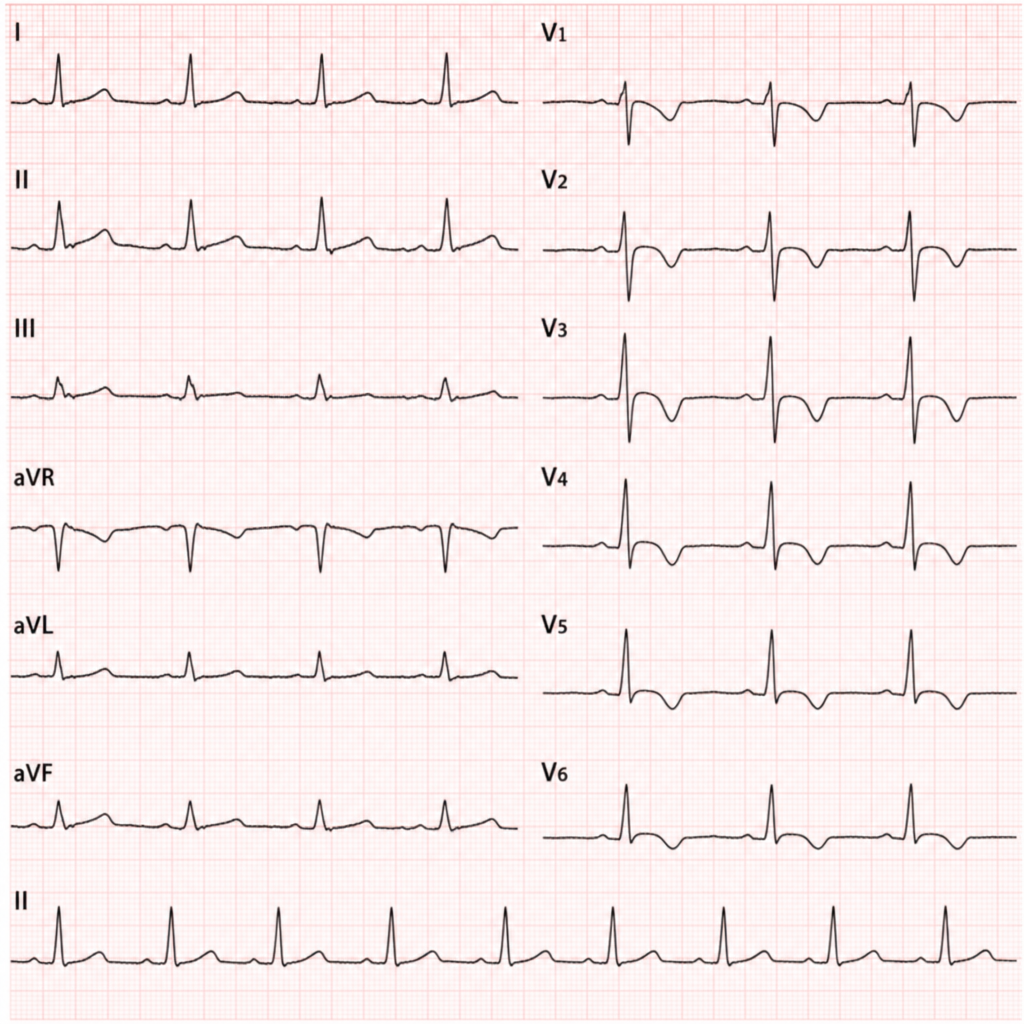
A 47-year-old woman presents with accelerated hypertension (blood pressure 210/105 mm Hg) and frequent headaches for the past month. She has a past medical history notable for hypertension during her first pregnancy, and her family history is positive for hypertension in both parents and a brother. On physical examination, her blood pressure is 210/105 mm Hg in both arms, heart rate is 88/min, and she is alert and oriented. Cardiac examination reveals an S4, lungs are clear, and there are no focal neurological deficits. Which of the following findings are most likely on examination of the fundi?
What is the most common cause of mitral stenosis?
Sudden death can be due to which of the following conditions?
What is the most common heart valve involved in intravenous drug users?
Pseudo resistant hypertension is seen in which situation?
Kussmaul's sign is most commonly seen in which of the following conditions?
Which of the following conditions is associated with a "pea soup" or "head bag" appearance on abdominal X-ray?
A 48-year-old male presents with a history of precordial chest pain. His blood pressure is 80/60 mm Hg. An ECG shows a wide QRS complex with no preceding P waves and a rate of 112/min. What is the most immediate step in the management of this patient?
A 65-year-old man presents with dyspnea, chest pain, and several syncopal episodes. His symptoms have worsened over the past few months, and his third syncopal episode prompted this visit. On examination, a systolic ejection murmur with an ejection click is auscultated in the right second intercostal space. Rales are present at the lung bases. He has a history of rheumatic fever in his twenties. Which of the following might explain the angina pectoris in this patient?
Which of the following is NOT associated with prolonged QT syndrome?
Explanation: The patient presents with **Accelerated Hypertension**, characterized by a significant elevation in blood pressure (210/105 mm Hg) associated with signs of target organ damage (S4 gallop indicating left ventricular hypertrophy). In the context of hypertensive retinopathy, accelerated hypertension corresponds to **Grade III (Keith-Wagener-Barker classification)**. [1] **Why the correct answer is right:** * **Cotton wool spots** are a hallmark of Grade III hypertensive retinopathy. They represent "soft exudates" caused by micro-infarctions of the retinal nerve fiber layer due to arteriolar occlusion and ischemia. Other findings at this stage include flame-shaped hemorrhages and hard exudates (macular star). **Why the incorrect options are wrong:** * **Retinitis obliterans:** This is not a standard term in hypertensive retinopathy; it typically refers to inflammatory or vascular occlusive diseases (like Buerger’s disease) not associated with acute hypertensive crises. [2] * **Retinal detachment:** While severe hypertension can cause exudative retinal detachment (Grade IV), it is a rare complication and less characteristic of the initial presentation of accelerated hypertension compared to cotton wool spots. [1] * **Optic atrophy:** This is a late-stage finding representing the end-result of chronic optic nerve damage (e.g., post-papilledema or glaucoma). In acute/accelerated hypertension, you would see **papilledema** (optic disc swelling), which defines Grade IV retinopathy, rather than atrophy. **Clinical Pearls for NEET-PG:** * **Keith-Wagener-Barker Classification:** * **Grade I:** Silver/Copper wiring (Arteriolar narrowing). * **Grade II:** AV nicking (Salus’s sign). * **Grade III:** Cotton wool spots, flame hemorrhages, hard exudates. * **Grade IV:** Papilledema (Malignant Hypertension). * **Management:** In hypertensive emergencies, the goal is to reduce Mean Arterial Pressure (MAP) by no more than 25% within the first hour to prevent cerebral hypoperfusion.
Explanation: ### Explanation **Correct Option: A. Rheumatic Heart Disease (RHD)** Rheumatic heart disease remains the **most common cause** of mitral stenosis (MS) worldwide, accounting for nearly 99% of cases involving the mitral valve [1]. The underlying mechanism involves an autoimmune reaction following Group A Streptococcal pharyngitis, leading to chronic inflammation of the endocardium. This results in characteristic morphological changes: **commissural fusion**, thickening of the leaflet margins, and shortening/fusion of the chordae tendineae, creating a "fish-mouth" or "funnel-shaped" orifice. **Why other options are incorrect:** * **B. Infective Endocarditis:** While it commonly affects the mitral valve, it typically causes **mitral regurgitation** (due to leaflet perforation or chordal rupture) rather than stenosis. Large vegetations can rarely cause functional obstruction, but it is not a primary cause of MS [1]. * **C. Diabetes Mellitus:** DM is a risk factor for coronary artery disease and can contribute to mitral annular calcification (MAC) in the elderly. However, MAC usually causes mitral regurgitation; significant stenosis from calcification is rare and distinct from true valvular MS. * **D. Congenital:** Congenital mitral stenosis (e.g., **Parachute Mitral Valve**) is a rare entity usually diagnosed in infancy or childhood. It is far less common than the acquired rheumatic form [1]. **High-Yield Clinical Pearls for NEET-PG:** 1. **Auscultation:** Characterized by a loud S1, an **Opening Snap (OS)**, and a mid-diastolic rumbling murmur heard best at the apex [2]. 2. **Severity Marker:** The interval between S2 and the Opening Snap (**S2-OS gap**) is inversely proportional to the severity; a shorter gap indicates more severe stenosis. 3. **ECG/X-ray:** Look for "P-mitrale" (broad, notched P waves) and "straightening of the left heart border" due to left atrial enlargement [2]. 4. **Treatment of Choice:** Percutaneous Transvenous Mitral Commissurotomy (PTMC) is the preferred intervention if the Wilkins score (valve morphology) is favorable [3].
Explanation: Explanation: **Sudden Cardiac Death (SCD)** is defined as a natural, unexpected death due to cardiac causes, usually occurring within one hour of the onset of symptoms. **1. Why Ventricular Fibrillation (VF) is correct:** Ventricular fibrillation is the most common terminal rhythm identified in cases of sudden cardiac arrest [3]. In VF, the ventricles lose their coordinated contraction and instead "quiver" chaotically [2]. This results in an immediate loss of cardiac output, leading to cessation of cerebral blood flow and death within minutes unless immediate defibrillation is performed [1]. It is frequently triggered by acute myocardial ischemia or underlying structural heart disease. **2. Analysis of Incorrect Options:** * **QT Prolongation:** While a prolonged QT interval (Congenital or Acquired) is a significant *risk factor* for SCD because it can lead to Torsade de Pointes, it is the resulting arrhythmia (VF or VT), not the prolongation itself, that causes death [1]. * **Atrial Flutter:** This is a supraventricular tachycardia. While it can cause palpitations or hemodynamic compromise in patients with poor ventricular function, it is rarely life-threatening as the AV node protects the ventricles from the high atrial rate. * **Ventricular Premature Contractions (VPCs):** These are common, often benign ectopic beats. While frequent VPCs can be markers of underlying heart disease, they do not cause sudden death in isolation. **Clinical Pearls for NEET-PG:** * **Most common cause of SCD:** Coronary Artery Disease (CAD) is responsible for ~80% of cases. * **Hypertrophic Cardiomyopathy (HCM):** The most common cause of SCD in young athletes. * **The "Golden Hour":** Survival rates for VF decrease by 7-10% for every minute that passes without defibrillation [3]. * **Commotio Cordis:** Sudden death caused by a blunt, non-penetrating blow to the chest during the vulnerable phase of ventricular repolarization [2].
Explanation: Explanation: In the context of Infective Endocarditis (IE), the choice of valve involvement is heavily influenced by the route of entry of the pathogen. Why the Tricuspid Valve is Correct: Intravenous drug use (IVDU) involves the direct introduction of pathogens (most commonly *Staphylococcus aureus*) into the venous circulation [1]. These pathogens travel through the superior or inferior vena cava directly into the right side of the heart. The **Tricuspid Valve** is the first cardiac valve they encounter. Approximately 60–70% of IE cases in IVDU involve the tricuspid valve. Analysis of Incorrect Options: * **Mitral Valve (A):** This is the most common valve involved in the **general population** (non-IVDU) and in patients with underlying rheumatic heart disease. In IVDUs, left-sided involvement can occur but is less frequent than right-sided involvement. * **Aortic Valve (B):** This is the second most common valve involved in the general population. While it can be affected in IVDUs (often concurrently with the mitral valve), it is not the *most* common. * **Pulmonary Valve (C):** This is the least commonly involved valve in both IVDUs and the general population. High-Yield Clinical Pearls for NEET-PG: * **Most Common Organism (IVDU):** *Staphylococcus aureus* (often MRSA) [1]. * **Septic Emboli:** Right-sided endocarditis (Tricuspid) frequently presents with **septic pulmonary emboli**, leading to cough, chest pain, and "flea-bitten" lung appearance on imaging. * **Classic Triad:** Fever, anemia, and a new murmur (though murmurs are often absent in early right-sided IE). * **Culture-Negative IE:** Most commonly due to prior antibiotic use or HACEK group organisms. * **Treatment:** IVDU-associated tricuspid IE is often managed medically with antibiotics (e.g., Nafcillin/Vancomycin + Gentamicin); surgery is reserved for refractory cases.
Explanation: **Explanation:** **Pseudo-resistant hypertension** refers to a situation where a patient’s blood pressure (BP) appears to be poorly controlled (meeting the criteria for resistant hypertension) despite being on three or more antihypertensive drugs, but the elevation is not representative of their true systemic BP. [1] **Why Option A is Correct:** The most common cause of pseudo-resistance is the **"White Coat Effect."** When a patient is at the **office/clinic**, the anxiety or stress of the medical environment triggers a sympathetic response, leading to falsely elevated BP readings [1]. Other causes of pseudo-resistance include poor medication adherence and inaccurate measurement techniques [2]. **Why Other Options are Incorrect:** * **Option B (Patient at home):** Home BP monitoring (HBPM) or Ambulatory BP monitoring (ABPM) are the gold standards for ruling out pseudo-resistance. If BP is elevated at home, it is more likely to be "True Resistant Hypertension." * **Option C (Patient at the hospital):** While hospitalization can be stressful, "pseudo-resistance" specifically refers to the diagnostic challenge of distinguishing clinic-induced spikes from baseline hypertension. Hospitalized patients are usually monitored more consistently, reducing the "white coat" diagnostic error. **High-Yield Clinical Pearls for NEET-PG:** * **Definition of Resistant Hypertension:** BP >140/90 mmHg despite adherence to a 3-drug regimen (including a diuretic, a CCB, and an ACEi/ARB) at optimal doses. * **First Step in Management:** If a patient presents with resistant hypertension, the first step is to **exclude pseudo-resistance** using ABPM or HBPM [1]. * **True Resistant Hypertension:** Once pseudo-resistance is ruled out, the drug of choice to add as a fourth agent is **Spironolactone** (Mineralocorticoid Receptor Antagonist). * **Osler’s Maneuver:** Used to detect "Pseudohypertension" (different from pseudo-resistant) in elderly patients with severely atherosclerotic, non-compressible arteries.
Explanation: **Explanation:** **Kussmaul’s sign** is defined as a paradoxical rise (or lack of fall) in the Jugular Venous Pressure (JVP) during inspiration. Normally, JVP falls during inspiration because the negative intrathoracic pressure increases venous return to the right heart. **1. Why Constrictive Pericarditis is the Correct Answer:** In **Constrictive Pericarditis**, the heart is encased in a rigid, non-compliant pericardium [1]. During inspiration, the increased venous return cannot be accommodated by the right ventricle because it cannot expand outward. This leads to a backup of pressure into the vena cava and jugular veins, causing the JVP to rise. While it is also seen in Restrictive Cardiomyopathy, it is a **classic hallmark** and most frequently associated with Constrictive Pericarditis in exam scenarios. **2. Analysis of Incorrect Options:** * **Pericardial Tamponade:** This is the most important distractor [1]. Kussmaul’s sign is **absent** in tamponade because the intrapericardial pressure is fluid-based and can still transmit negative intrathoracic pressure changes. Instead, tamponade is characterized by **Pulsus Paradoxus**. * **Restrictive Cardiomyopathy:** While Kussmaul’s sign can occur here, it is less common than in constriction. * **Right Ventricular Infarct:** It can be seen here due to RV failure, but it is a transient finding compared to the chronic presentation of pericardial disease [2]. **3. NEET-PG High-Yield Pearls:** * **Kussmaul’s Sign vs. Pulsus Paradoxus:** Remember, Kussmaul’s sign is seen in Constriction (not Tamponade), while Pulsus Paradoxus is seen in Tamponade (not Constriction). * **Other causes of Kussmaul’s sign:** Right Ventricular Infarction, Tricuspid Stenosis, and Right-sided Heart Failure. * **JVP Waveform:** In Constrictive Pericarditis, look for prominent **'y' descents** (Friedreich’s sign).
Explanation: **Explanation:** **Hypermagnesemia** is the correct answer. The "pea soup" or "head bag" appearance on an abdominal X-ray refers to the presence of diffuse, amorphous, granular opacities within the bowel lumen. This occurs due to the precipitation of magnesium salts (often from magnesium-containing laxatives or antacids) in the gastrointestinal tract. Magnesium is a potent neuromuscular depressant; high levels lead to decreased smooth muscle contractility, resulting in paralytic ileus [1]. This stasis allows the magnesium salts to concentrate and become radiopaque, creating the characteristic mottled appearance. **Incorrect Options:** * **Hypomagnesemia:** Low magnesium levels typically present with neuromuscular irritability (tetany, seizures) and arrhythmias (Torsades de Pointes), but do not produce radiopaque findings on X-ray. * **Hypernatremia:** Primarily affects the central nervous system (altered mental status, brain shrinkage) due to osmotic shifts; it has no specific pathognomonic radiological sign in the abdomen. * **Hypocalcemia:** While it causes neuromuscular excitability (Chvostek’s and Trousseau’s signs) and QT prolongation, it does not result in the "pea soup" appearance. **Clinical Pearls for NEET-PG:** * **Magnesium and the Gut:** Magnesium acts as an osmotic laxative. In renal failure patients, excessive intake can lead to toxicity. * **Antidote:** The immediate treatment for severe hypermagnesemia (with respiratory depression or cardiac conduction defects) is **Intravenous Calcium Gluconate**, which antagonizes the membrane effects of magnesium. * **Reflexes:** Loss of deep tendon reflexes (DTRs) is the earliest clinical sign of hypermagnesemia (occurring at 4–6 mEq/L).
Explanation: The patient presents with **Ventricular Tachycardia (VT)**, characterized by a wide QRS complex, absence of P waves, and a rate >100/min [1]. The most critical factor in this clinical scenario is the patient’s **hemodynamic instability**, evidenced by a blood pressure of 80/60 mm Hg (hypotension) and precordial chest pain. **1. Why Option B is Correct:** According to ACLS guidelines, any tachyarrhythmia (wide or narrow complex) associated with **hemodynamic instability** (hypotension, altered mental status, signs of shock, ischemic chest pain, or acute heart failure) must be treated with **immediate synchronized Direct Current (DC) Cardioversion** [1]. In an unstable patient, pharmacological interventions are bypassed to prevent progression to ventricular fibrillation or cardiac arrest [2]. **2. Why Other Options are Incorrect:** * **Option A (IV Lidocaine):** While lidocaine is an antiarrhythmic used for VT, it is indicated only in **hemodynamically stable** patients. In this unstable patient, waiting for drug infusion is contraindicated. * **Option C (Overdrive Atrial Pacing):** This is typically used for refractory Torsades de Pointes or specific supraventricular tachycardias; it is not the first-line treatment for unstable VT. * **Option D (Primary PTCA):** While the patient has chest pain suggesting ischemia, the immediate life-threatening issue is the arrhythmia causing low cardiac output. Hemodynamic stabilization via cardioversion must precede any coronary intervention. **Clinical Pearls for NEET-PG:** * **Stable VT:** Treat with IV Amiodarone (preferred), Procainamide, or Lidocaine. * **Unstable VT (with pulse):** Synchronized DC Cardioversion [1]. * **Pulseless VT/VF:** Defibrillation (Unsynchronized shock) [2]. * **Rule of Thumb:** "If they are unstable and have a pulse, you shock (sync); if they have no pulse, you shock (unsync)."
Explanation: ### Explanation The clinical presentation of **dyspnea, angina, and syncope** (the classic "SAD" triad), combined with a systolic ejection murmur in the right second intercostal space and a history of rheumatic fever, points to **Aortic Stenosis (AS)** [1]. **1. Why Option A is Correct:** In AS, the left ventricle (LV) must generate massive pressure to overcome the narrowed valve, leading to **concentric LV hypertrophy (LVH)**. According to **Laplace’s Law** ($Tension = \frac{Pressure \times Radius}{2 \times Wall Thickness}$), the high intraventricular pressure significantly increases **ventricular wall tension**. This increased tension, combined with a thickened myocardium, leads to: * **Increased Oxygen Demand:** Hypertrophied muscle requires more oxygen. * **Decreased Oxygen Supply:** High wall tension compresses the subendocardial coronary vessels during systole and reduces the pressure gradient for coronary perfusion during diastole. This mismatch causes angina even in the absence of coronary artery disease (CAD). **2. Why the Other Options are Incorrect:** * **Option B:** While LVH is a response to AS, it does not "accelerate" atherosclerosis. Angina in AS occurs due to a supply-demand mismatch, not necessarily due to plaque buildup. * **Option C:** Pulmonary hypertension and low $PO_2$ are features of advanced heart failure (cor pulmonale), but they do not explain the primary mechanism of angina in AS. * **Option D:** The stenotic valve is at the aortic orifice; it does not physically occlude the coronary ostia. **NEET-PG High-Yield Pearls:** * **Classic Triad of AS:** **S**yncope, **A**ngina, **D**yspnea (indicates worsening prognosis). * **Physical Exam:** *Pulsus parvus et tardus* (slow-rising, low-volume pulse) and "Diamond-shaped" crescendo-decrescendo murmur [1]. * **Etiology:** Senile calcification (>65 years), Bicuspid aortic valve (younger patients), or Rheumatic heart disease (common in India) [1]. * **Key Concept:** In AS, the subendocardium is the most vulnerable to ischemia due to maximal wall stress.
Explanation: The correct answer is **Lidocaine therapy**. ### **Explanation** Prolonged QT syndrome (LQTS) results from delayed repolarization of the myocardium, typically due to the inhibition of potassium efflux or the enhancement of sodium influx. [1] **Why Lidocaine is the correct answer:** Lidocaine is a **Class IB antiarrhythmic**. Unlike Class IA or Class III agents, Class IB drugs **shorten** the action potential duration and the QT interval. Because it does not prolong repolarization, it is not associated with Long QT Syndrome or the risk of Torsades de Pointes (TdP). **Analysis of Incorrect Options:** * **Romano-Ward Syndrome:** The most common **autosomal dominant** congenital LQTS. It involves pure cardiac manifestations (prolonged QT) without deafness. * **Jervell and Lange-Nielsen Syndrome:** An **autosomal recessive** congenital LQTS. It is characterized by a very long QT interval and is uniquely associated with **sensorineural deafness**. [1] * **Encainide Therapy:** Encainide is a **Class IC antiarrhythmic**. While Class IC drugs primarily affect the QRS duration (sodium channel blockade), they can also cause modest prolongation of the QT interval in some patients, though less significantly than Class IA (e.g., Procainamide) or Class III (e.g., Amiodarone, Sotalol). [2] ### **High-Yield Clinical Pearls for NEET-PG** * **Drug-Induced LQTS Mnemonic (ABCDE):** **A**ntiarrhythmics (Class IA, III), **B**iotics (Macrolides, Quinolones), **C**isapride/Antipsychotics (Haloperidol), **D**epressants (TCAs), **E**metics (Ondansetron). * **Electrolyte triggers:** Hypokalemia, Hypomagnesemia, and Hypocalcemia all prolong the QT interval. [3] * **Management:** Congenital LQTS is primarily treated with **Beta-blockers** (Propranolol/Nadolol). Acute Torsades de Pointes is treated with **IV Magnesium Sulfate**.
Coronary Artery Disease and Angina
Practice Questions
Acute Coronary Syndromes
Practice Questions
Heart Failure
Practice Questions
Cardiac Arrhythmias
Practice Questions
Valvular Heart Diseases
Practice Questions
Cardiomyopathies
Practice Questions
Pericardial Diseases
Practice Questions
Congenital Heart Disease in Adults
Practice Questions
Hypertension and Hypertensive Emergencies
Practice Questions
Pulmonary Hypertension
Practice Questions
Non-invasive Cardiac Diagnostics
Practice Questions
Preventive Cardiology
Practice Questions
Get full access to all questions, explanations, and performance tracking.
Start For Free