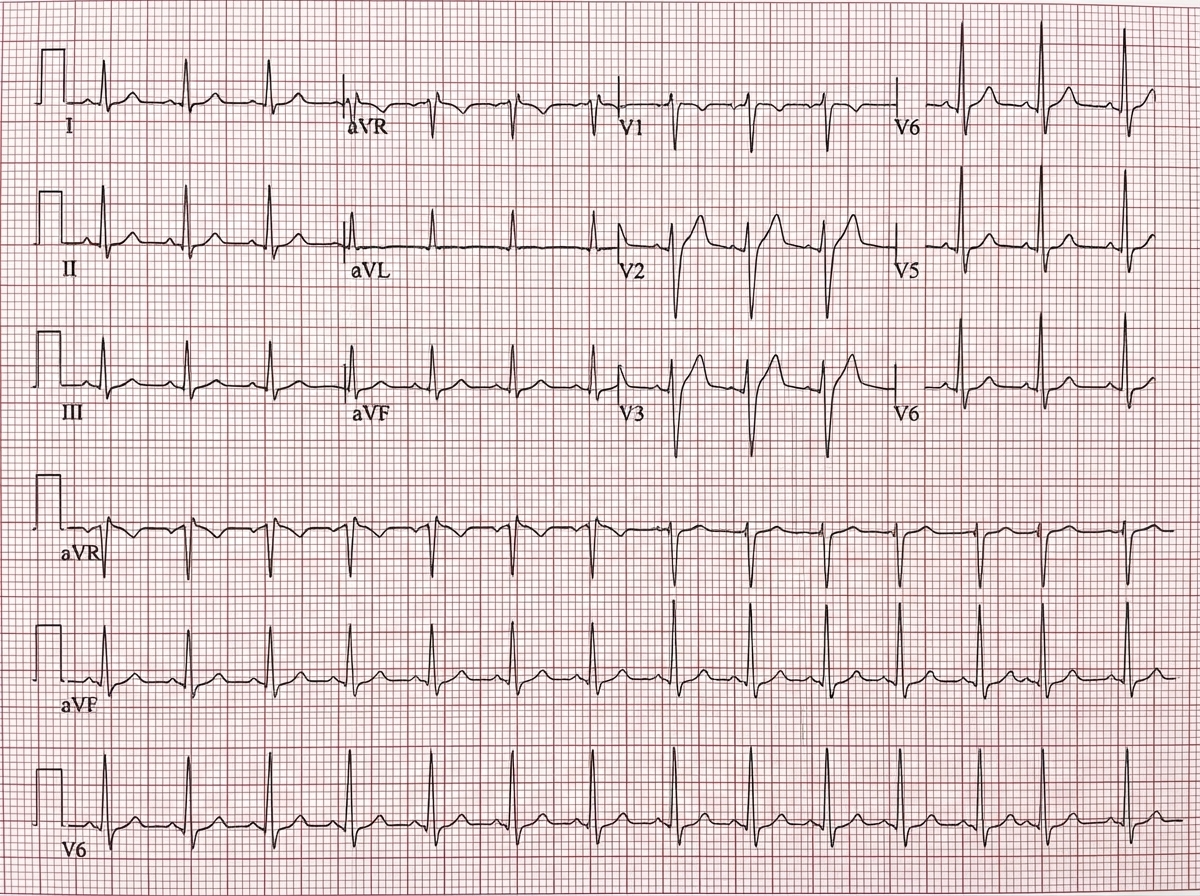
Idiopathic degeneration of the proximal bundle branch fibres is known as:
Roth's spots are found in which of the following conditions?
Which of the following drugs is NOT used in the management of unstable angina?
Which of the following is a treatable cause of restrictive cardiomyopathy (RCM)?
Wide pulse pressure may be seen in all the following conditions except:
A 75-year-old man presents with a sudden syncopal episode while playing with his grandchildren. He is currently alert and describes occasional substernal heaviness and shortness of breath. His lungs have bibasilar rales, and his BP is 120/80 mmHg. What is the classical auscultatory finding expected in this patient?
Which of the following conditions is associated with AV block?
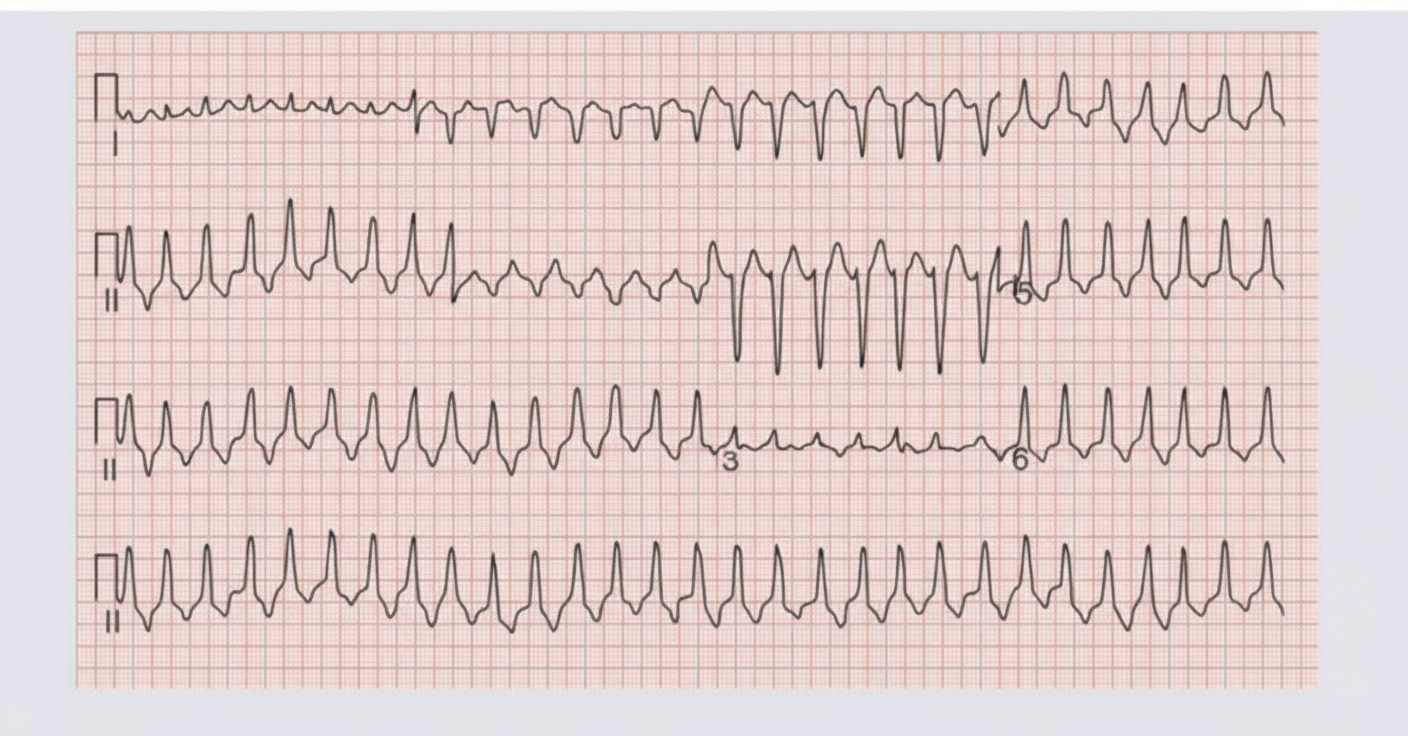
A 55-year-old man presents with chest discomfort, fatigue, and palpitations. His blood pressure is 85/50 mm Hg and heart rate is 140 beats per minute. Which of the following is the best treatment for this patient?
Which type of cardiomyopathy is typically seen in individuals with chronic alcoholism?
Sudden cardiac death may occur in all of the following conditions except?
Explanation: The question describes a form of primary conduction system disease. The correct answer is **Lev’s Disease**. **1. Why Lev’s Disease is correct:** Lev’s disease refers to the **calcification and sclerosis** of the cardiac skeleton (mitral annulus, aortic valve, and central fibrous body) that secondarily involves the **proximal bundle branches**. It is essentially an "extrinsic" degeneration caused by the aging of adjacent structures. It is a common cause of complete heart block in the elderly. **2. Why the other options are incorrect:** * **Lenegre’s Disease:** While also an idiopathic degeneration of the conduction system, it is an **intrinsic** process involving the **distal** portions of the bundle branches (Purkinje system). It typically affects younger individuals and is often associated with SCN5A gene mutations. * **Ashman Phenomenon:** This is a physiological aberrant ventricular conduction (usually RBBB pattern) that occurs when a short R-R interval follows a long R-R interval, commonly seen in Atrial Fibrillation. * **Brugada Syndrome:** A genetic channelopathy (sodium channel) characterized by a pseudo-RBBB pattern and ST-elevation in V1-V3, predisposing patients to ventricular arrhythmias and sudden cardiac death. **High-Yield Clinical Pearls for NEET-PG:** * **Lev’s vs. Lenegre’s:** Remember **Lev = "Left"** (proximal/central fibrous body) and **Lenegre = "Long"** (distal/peripheral system). * Both conditions are leading causes of **Chronic Isolated Heart Block**. * The most common site of a block in the conduction system is the **AV Node** [1], but Lev’s disease specifically targets the bundle branches via mechanical stress from calcified valves [2].
Explanation: Roth’s spots are a classic peripheral manifestation of Infective Endocarditis (IE) [1]. They are characterized by retinal hemorrhages with central pale (white) spots. 1. Mechanism: These spots are caused by immune complex-mediated vasculitis (Type III hypersensitivity). The central pale area represents fibrin-platelet thrombi or inflammatory debris at the site of capillary rupture. While traditionally associated with IE, they are not pathognomonic and can be seen in other conditions like leukemia, diabetes, and severe anemia. 2. Analysis of Options: * Option A (Acute Rheumatic Fever): Characterized by Jones criteria (e.g., Erythema marginatum, subcutaneous nodules), but Roth’s spots are not a feature. * Option B (Congestive Cardiac Failure): Presents with signs of fluid overload (JVP elevation, pedal edema, S3 gallop) rather than embolic or immunological phenomena. * Option C (Infective Endocarditis): Correct. Roth’s spots are part of the "immunological phenomena" in the Modified Duke Criteria [1]. * Option D (Restrictive Cardiomyopathy): Presents with diastolic dysfunction and signs of right-sided heart failure; it does not involve the vasculitic processes seen in IE. High-Yield Clinical Pearls for NEET-PG: * Other Peripheral Signs of IE: * Osler Nodes: Painful, pea-sized nodules on pads of fingers/toes (Immunological). * Janeway Lesions: Painless, erythematous macules on palms/soles (Embolic). * Splinter Hemorrhages: Linear subungual dark-red streaks. * Mnemonic: "Roth's spots are Retinal, Osler's are Ouch (painful), Janeway are Just there (painless)."
Explanation: **Explanation:** The management of **Unstable Angina (UA)** focuses on stabilizing the atherosclerotic plaque, preventing further thrombus formation, and reducing myocardial oxygen demand. **Why Lidocaine is the Correct Answer:** Lidocaine is a Class IB anti-arrhythmic agent [2]. Historically, it was used prophylactically to prevent ventricular fibrillation in acute myocardial infarction. However, current guidelines **do not recommend** its use in UA or NSTEMI unless the patient develops specific ventricular arrhythmias (like VT or VF). It has no role in the primary management of ischemia or the underlying thrombotic process and may even increase the risk of asystole in some patients. **Analysis of Incorrect Options:** * **Aspirin:** This is the cornerstone of therapy. It inhibits cyclooxygenase-1 (COX-1), preventing the formation of Thromboxane A2, thereby inhibiting platelet aggregation [1]. It should be administered immediately to all patients with suspected UA. * **Intravenous Heparin:** Anticoagulation (using UFH or LMWH) is essential in UA to prevent the progression of a partial thrombus to a complete occlusion of the coronary artery. * **Intravenous Nitroglycerin:** Nitrates are used to relieve chest pain by causing venodilation (reducing preload) and coronary vasodilation, which improves myocardial oxygen supply and reduces demand [1]. **High-Yield Clinical Pearls for NEET-PG:** * **MONA-B** is the classic mnemonic for ACS: **M**orphine, **O**xygen, **N**itrates, **A**spirin, and **B**eta-blockers. * **Lidocaine Toxicity:** Look for CNS symptoms (seizures, perioral numbness, or
Explanation: Restrictive cardiomyopathy (RCM) is characterized by rigid ventricular walls that impair diastolic filling. While many causes are idiopathic or irreversible, identifying treatable etiologies is crucial for NEET-PG. **Why Option A is Correct:** **Fabry’s Disease** is an X-linked lysosomal storage disorder caused by a deficiency of the enzyme **alpha-galactosidase A**, leading to the accumulation of globotriaosylceramide (Gb3). It is considered a "treatable" cause because **Enzyme Replacement Therapy (ERT)** with recombinant human alpha-galactosidase A can clear lipid deposits, improve cardiac function, and halt disease progression. Early diagnosis is vital to prevent irreversible fibrosis. **Why Other Options are Incorrect:** * **B. Amyloidosis:** While some newer therapies (like Tafamidis or Daratumumab) exist to slow progression, systemic amyloidosis (especially AL type) remains notoriously difficult to treat and often has a poor prognosis once significant cardiac involvement occurs. In the context of standard MCQ hierarchy, Fabry’s is the classic example of a "reversible/treatable" storage disease. * **C. Endomyocardial Fibroelastosis:** This is a condition primarily seen in infants involving diffuse thickening of the endocardium. There is no specific curative treatment other than supportive care for heart failure or transplant. * **D. Hypereosinophilic Syndrome (Löffler Endocarditis):** While steroids can reduce eosinophilia, the resulting endomyocardial fibrosis is generally permanent and requires surgical intervention (endomyocardial stripping) rather than medical reversal. **High-Yield Clinical Pearls for NEET-PG:** * **Fabry’s Disease Triad:** Angiokeratomas, hypohidrosis, and acroparesthesia (burning pain in hands/feet). * **Echo Finding:** Fabry’s often mimics Hypertrophic Cardiomyopathy (HCM) due to marked ventricular thickening. * **Kussmaul’s Sign:** Often positive in RCM (increase in JVP on inspiration). * **Differentiating RCM from Constrictive Pericarditis:** RCM typically shows a higher BNP and lacks the "respiratory variation" in mitral inflow velocities seen in pericarditis.
Explanation: Pulse pressure is the difference between systolic and diastolic blood pressure. A **wide pulse pressure** (typically >40-60 mmHg) occurs due to either an increased stroke volume or decreased peripheral vascular resistance/aortic compliance [1]. **Why Congestive Heart Failure (CHF) is the correct answer:** In CHF, the heart's pumping ability is compromised, leading to a **decreased stroke volume** [2]. To compensate for low cardiac output, the sympathetic nervous system increases systemic vascular resistance (vasoconstriction), which raises diastolic pressure. The combination of low systolic output and high diastolic resistance results in a **narrow pulse pressure**, not a wide one. **Analysis of Incorrect Options:** * **Aortic Regurgitation:** This is the classic cause of wide pulse pressure. Blood leaks back into the ventricle during diastole (lowering diastolic pressure) and is ejected as a massive stroke volume in the next systole (raising systolic pressure) [1]. * **Patent Ductus Arteriosus (PDA):** Similar to aortic regurgitation, blood shunts from the aorta to the pulmonary artery during diastole (lowering diastolic pressure), while the compensatory increase in stroke volume raises systolic pressure. * **Complete Heart Block:** Due to the very slow heart rate, there is prolonged ventricular filling time. This leads to a massive increase in stroke volume (Starling’s Law), significantly raising systolic blood pressure and widening the pulse pressure. **High-Yield Clinical Pearls for NEET-PG:** * **Water-hammer pulse (Corrigan’s pulse)** is the clinical manifestation of wide pulse pressure in Aortic Regurgitation [1]. * **Other causes of wide pulse pressure:** Thyrotoxicosis, Fever, Anemia, Beriberi, and Atherosclerosis (due to stiffened aorta). * **Pulsus Alternans** is a hallmark physical finding in severe Congestive Heart Failure.
Explanation: ### Explanation The clinical presentation of **syncope, angina (substernal heaviness), and dyspnea** in an elderly patient is the classic triad of **Symptomatic Aortic Stenosis (AS)** [1]. The presence of bibasilar rales suggests associated left heart failure. #### 1. Why Option A is Correct In Aortic Stenosis, the calcified and stiffened aortic valve leaflets restrict blood flow, creating an **Ejection Systolic Murmur (ESM)** that is crescendo-decrescendo in nature [1]. As the stenosis becomes severe, the valve leaflets become immobile, leading to a **Soft or Absent S2** (specifically the A2 component) [1]. Additionally, the murmur peaks later in systole as the severity increases [1]. Systolic clicks may also be heard unless the valve becomes severely calcified [3]. #### 2. Why Other Options are Incorrect * **Option B:** A wide split S2 is characteristic of conditions that delay right ventricular emptying (e.g., RBBB or Pulmonary Stenosis) or ASD (fixed split). In AS, S2 is usually single or shows **reversed (paradoxical) splitting**. * **Option C:** Holosystolic (pansystolic) murmurs are typical of **Mitral Regurgitation (MR)**, Tricuspid Regurgitation, or VSD [2]. While MR can cause heart failure, it does not typically present with the classic "SAD" triad of AS. * **Option D:** A loud S2 (specifically P2) is a hallmark of **Pulmonary Hypertension**. Pansystolic murmurs do not occur in isolated AS. #### 3. Clinical Pearls for NEET-PG * **The Triad of AS (SAD):** **S**yncope (3-year survival), **A**ngina (5-year survival), **D**yspnea/HF (2-year survival). * **Pulsus Bisferiens:** Seen in AR + AS or HOCM. * **Pulsus Parvus et Tardus:** Small volume, slow-rising pulse characteristic of severe AS [1]. * **Gallavardin Phenomenon:** The dissociation between the noisy systolic murmur at the base and musical high-frequency components at the apex (can be mistaken for MR) [1]. * **Carotid Radiation:** AS murmurs characteristically radiate to the carotids [1].
Explanation: **Explanation:** **Correct Answer: A. Hypothyroidism** Hypothyroidism is a well-recognized cause of reversible Atrioventricular (AV) block. Thyroid hormones exert a direct effect on the cardiac conduction system by regulating the expression of ion channels (like $Na^+/K^+$ ATPase) and calcium-handling proteins. In a hypothyroid state, there is a decrease in sympathetic activity and a prolongation of the action potential duration, leading to **sinus bradycardia** and delayed conduction through the AV node. This can manifest as a First-degree AV block or, in severe cases (like Myxedema coma), higher-grade blocks. **Incorrect Options:** * **B. Hyperthyroidism:** Excess thyroid hormone increases the sensitivity of $̢$-adrenergic receptors. This typically leads to **tachyarrhythmias**, most notably sinus tachycardia and **Atrial Fibrillation** [2]. * **C. Cushing Disease:** Excess cortisol leads to hypertension and metabolic alkalosis. While it causes structural changes like Left Ventricular Hypertrophy (LVH), it is not a classic cause of AV block. * **D. Pheochromocytoma:** Catecholamine excess leads to paroxysmal hypertension and **tachyarrhythmias** (sinus tachycardia, PVCs, or VT). It does not cause conduction delays. **High-Yield Clinical Pearls for NEET-PG:** * **ECG in Hypothyroidism:** Look for the "Hypothyroid Triad": Sinus bradycardia, Low voltage complexes, and T-wave inversions [3]. * **Reversibility:** AV blocks caused by hypothyroidism are often reversible with Levothyroxine replacement, potentially avoiding the need for a permanent pacemaker [1]. * **Other Metabolic Causes of AV Block:** Hyperkalemia, Hypermagnesemia, and Digoxin toxicity [3].
Explanation: ### Explanation **Correct Answer: D. Cardioversion** **1. Why Cardioversion is the Correct Choice:** The patient is presenting with a **tachyarrhythmia** (HR 140 bpm) associated with **hemodynamic instability**, evidenced by hypotension (BP 85/50 mm Hg) and symptoms of poor organ perfusion (fatigue, chest discomfort) [1]. According to ACLS guidelines, the management of any tachyarrhythmia depends primarily on the patient's stability [2]. If a patient is unstable (hypotension, altered mental status, signs of shock, ischemic chest pain, or acute heart failure), the immediate treatment of choice is **synchronized electrical cardioversion**, regardless of the specific rhythm. **2. Why Other Options are Incorrect:** * **A. Digoxin:** This is a rate-control agent used primarily in stable atrial fibrillation or heart failure. It has a slow onset of action and is inappropriate for emergency stabilization. * **B. Calcium Channel Blockers (e.g., Diltiazem):** These are used for rate control in stable supraventricular tachycardias. In an unstable patient with hypotension, CCBs are contraindicated as they have negative inotropic and vasodilator effects, which would further worsen the blood pressure [3]. * **C. Coumadin (Warfarin):** This is an anticoagulant used for long-term stroke prevention in chronic arrhythmias like atrial fibrillation. It does not address the acute life-threatening hemodynamic instability. **3. NEET-PG High-Yield Pearls:** * **The "Unstable" Rule:** In any tachycardia algorithm, the first question is: "Is the patient stable?" If NO $\rightarrow$ Synchronized Cardioversion. * **Synchronization:** Always ensure the "SYNC" mode is ON to avoid delivering a shock during the vulnerable period (T-wave), which can trigger Ventricular Fibrillation (R-on-T phenomenon). * **Exception:** If the rhythm is Pulseless VT or Ventricular Fibrillation, use **Defibrillation** (unsynchronized shock) [4]. * **Vagal Maneuvers/Adenosine:** These are only considered if the patient is **hemodynamically stable** and the rhythm is a regular, narrow-complex tachycardia.
Explanation: Alcoholic Cardiomyopathy (ACM) is a specific form of **Dilated Cardiomyopathy (DCM)**. It occurs due to the direct toxic effects of ethanol and its metabolite, acetaldehyde, on the myocardium [1]. **Why Dilated Cardiomyopathy is correct:** Chronic alcohol consumption leads to myofibrillary degeneration, lipid deposition, and mitochondrial dysfunction. This results in **ventricular chamber enlargement (dilation)** and impaired systolic function (reduced ejection fraction) [1]. Patients typically present with signs of congestive heart failure, such as dyspnea, orthopnea, and cardiomegaly on X-ray [4]. **Why other options are incorrect:** * **Hypertrophic Cardiomyopathy (Obstructive/Non-obstructive):** These are primarily genetic disorders caused by mutations in sarcomeric proteins (e.g., MYH7, MYBPC3) [3]. They are characterized by asymmetrical septal hypertrophy, not the global dilation seen in alcoholism. * **Restrictive Cardiomyopathy:** This is usually caused by infiltrative processes like amyloidosis, sarcoidosis, or hemochromatosis. It results in stiff ventricles with impaired diastolic filling, which is a different pathophysiological mechanism than alcohol toxicity. **High-Yield Clinical Pearls for NEET-PG:** * **Reversibility:** Unlike many other forms of DCM, alcoholic cardiomyopathy is potentially **reversible** if the patient practices total abstinence from alcohol in the early stages. * **Thiamine Deficiency:** Chronic alcoholics may have concurrent Beriberi (Wet Beriberi), which also causes high-output heart failure, but ACM is a distinct entity caused by direct toxicity [2]. * **Arrhythmias:** Alcohol is also associated with "Holiday Heart Syndrome," most commonly manifesting as **Atrial Fibrillation**. * **Diagnosis:** Echocardiography shows four-chamber dilation and a low ejection fraction.
Explanation: Sudden Cardiac Death (SCD) is defined as a natural, unexpected death due to cardiac causes, usually occurring within one hour of symptom onset. The primary mechanism is typically a lethal arrhythmia (Ventricular Fibrillation or Tachycardia) [1]. **Why Ventricular Septal Defect (VSD) is the correct answer:** An isolated, uncomplicated VSD is a congenital left-to-right shunt. While it can lead to heart failure or pulmonary hypertension over time, it is **not** typically associated with SCD in its stable form. SCD in VSD patients generally only occurs if the condition progresses to Eisenmenger’s syndrome or if there is significant post-operative scarring. **Analysis of Incorrect Options:** * **Hypertrophic Cardiomyopathy (HCM):** This is the **most common cause** of SCD in young athletes. Myocardial fiber disarray and fibrosis create a substrate for ventricular arrhythmias [2]. * **Dilated Cardiomyopathy (DCM):** SCD accounts for up to 30% of deaths in DCM patients, primarily due to ventricular arrhythmias arising from stretched myocytes and replacement fibrosis. * **Eisenmenger’s Syndrome:** This represents the end-stage of a left-to-right shunt (like VSD) where pulmonary hypertension leads to a shunt reversal. These patients are at high risk for SCD due to acute right heart failure, hypoxia-induced arrhythmias, or massive hemoptysis. **Clinical Pearls for NEET-PG:** * **Most common cause of SCD overall:** Coronary Artery Disease (Ischemic Heart Disease). * **Most common cause of SCD in young adults (<35 years):** Hypertrophic Cardiomyopathy [2]. * **Common ECG triggers for SCD:** Long QT Syndrome, Brugada Syndrome, and Wolff-Parkinson-White (WPW) syndrome [1]. * **Prevention:** An Implantable Cardioverter Defibrillator (ICD) is the treatment of choice for patients at high risk of SCD [1].
Coronary Artery Disease and Angina
Practice Questions
Acute Coronary Syndromes
Practice Questions
Heart Failure
Practice Questions
Cardiac Arrhythmias
Practice Questions
Valvular Heart Diseases
Practice Questions
Cardiomyopathies
Practice Questions
Pericardial Diseases
Practice Questions
Congenital Heart Disease in Adults
Practice Questions
Hypertension and Hypertensive Emergencies
Practice Questions
Pulmonary Hypertension
Practice Questions
Non-invasive Cardiac Diagnostics
Practice Questions
Preventive Cardiology
Practice Questions
Get full access to all questions, explanations, and performance tracking.
Start For Free