Cardiomyopathy may be seen in all of the following conditions except?
What is the drug of choice in Chagas disease?
Which of the following is not included in acute coronary syndrome?
In Valvular Aortic Stenosis, when is the prognosis poorest?
A patient presents with an ECG showing ST elevation and low blood pressure. What is the best immediate management?
Protein losing enteropathy is seen in which of the following conditions?
Which of the following ECG changes is NOT typically seen in hyperkalemia?
Rapid X descent is unlikely in which of the following conditions?
Stokes-Adams syndrome is associated with which of the following conditions?
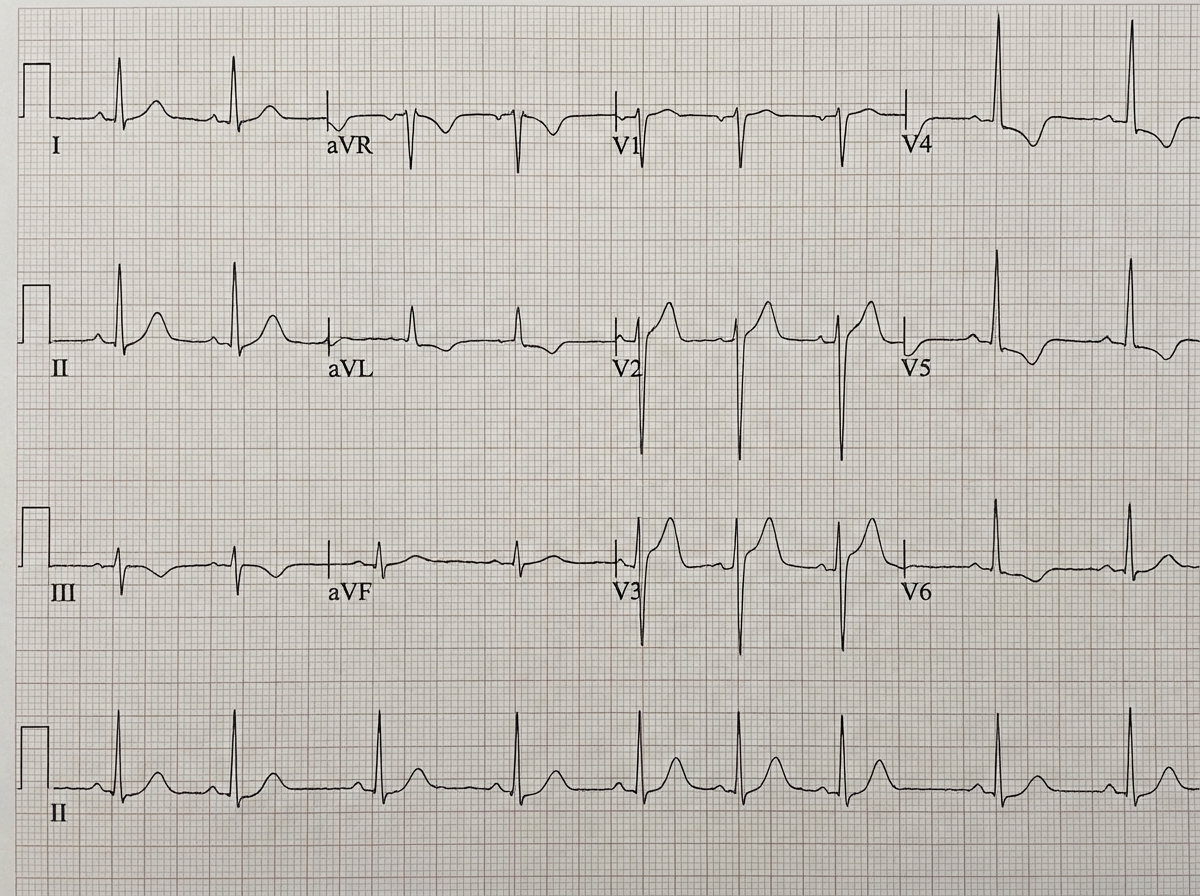
A 65-year old man presents with crushing chest pain for 2 hours. On examination, BP = 80/60 mm Hg and JVP are elevated 4 cm above the sternal angle. All are true about the condition shown except?

Explanation: **Explanation:** The correct answer is **Alkaptonuria**. While Alkaptonuria is a metabolic disorder (deficiency of homogentisate 1,2-dioxygenase), its primary cardiovascular manifestation is **valvular heart disease**—specifically calcific aortic stenosis—rather than cardiomyopathy. The deposition of homogentisic acid (ochronosis) leads to inflammation and calcification of the heart valves and coronary arteries, but it does not typically involve the myocardium to cause cardiomyopathy. **Analysis of other options:** * **Duchenne Muscular Dystrophy (DMD):** This is a classic cause of **Dilated Cardiomyopathy (DCM)** [1]. The absence of dystrophin leads to progressive fibrosis of the myocardium, often involving the posterolateral wall of the left ventricle. * **Friedreich's Ataxia:** This neurodegenerative disorder is highly associated with **Hypertrophic Cardiomyopathy (HCM)** [1]. Up to 90% of patients develop cardiac involvement, which is the most common cause of death in these individuals. * **Type II Glycogen Storage Disease (Pompe Disease):** This lysosomal storage disorder (acid alpha-glucosidase deficiency) causes massive accumulation of glycogen in the heart, leading to severe **Hypertrophic Cardiomyopathy** in the infantile-onset form [1]. **NEET-PG High-Yield Pearls:** * **Pompe Disease:** Look for "massive cardiomegaly" and "short PR interval" on ECG in an infant. * **Friedreich's Ataxia:** Associated with trinucleotide repeat (GAA) on Chromosome 9; cardiac involvement is usually concentric hypertrophy [1]. * **Alkaptonuria:** Key features include dark urine on standing, ochronotic pigmentation of the sclera/ear cartilage, and disabling arthritis of large joints. Remember: **Valves, not Myocardium.**
Explanation: **Explanation:** **Chagas Disease (American Trypanosomiasis)** is caused by the protozoan parasite *Trypanosoma cruzi*, transmitted primarily by the Reduviid (Triatomine) bug. **Why Benznidazole is the Correct Answer:** Benznidazole is considered the **first-line drug of choice** for Chagas disease in both acute and chronic phases (especially in children and adults up to age 50) [2]. It works by producing free radicals and electrophilic metabolites that damage the parasite's DNA and proteins [2]. While both Benznidazole and Nifurtimox are effective, Benznidazole is preferred due to its superior efficacy profile and slightly better tolerability. **Analysis of Incorrect Options:** * **A. Suramin:** This is the drug of choice for the early (hemolymphatic) stage of **African Trypanosomiasis** (*T. brucei rhodesiense*) [1]. It does not cross the blood-brain barrier. * **C. Pentamidine:** Used as an alternative for the early stage of West African Trypanosomiasis (*T. brucei gambiense*) and for *Pneumocystis jirovecii* pneumonia [1]. * **D. Nifurtimox:** This is a **second-line** agent for Chagas disease. It is used primarily when Benznidazole is unavailable or not tolerated. It acts by forming reactive oxygen species. **High-Yield Clinical Pearls for NEET-PG:** * **Classic Triad of Chagas:** Cardiomyopathy (Dilated), Megaesophagus, and Megacolon. * **Romaña’s Sign:** Unilateral painless periorbital edema (classic sign of acute infection). * **ECG Finding:** Right Bundle Branch Block (RBBB) is a common cardiac manifestation. * **Side Effects:** Benznidazole can cause peripheral neuropathy and dermatitis; Nifurtimox often causes significant GI upset and CNS toxicity (insomnia, seizures).
Explanation: Acute Coronary Syndrome (ACS) is a clinical spectrum of conditions characterized by a sudden reduction in blood flow to the myocardium, typically due to the **acute rupture or erosion of an atherosclerotic plaque** followed by thrombus formation [1]. **Why Stable Angina is the correct answer:** Stable angina is **not** part of ACS. It is a manifestation of Chronic Coronary Syndrome [2]. The underlying pathology is a fixed, stable atherosclerotic plaque that causes predictable chest pain during exertion or stress, which is relieved by rest or nitroglycerin [1]. There is no acute thrombus formation or sudden occlusion involved. **Analysis of other options (Components of ACS):** * **ST-Elevation Myocardial Infarction (STEMI):** Characterized by complete coronary artery occlusion, resulting in transmural ischemia, ST-segment elevation on ECG, and elevated cardiac biomarkers (Troponin) [2], [3]. * **Non-ST-Elevation Myocardial Infarction (NSTEMI):** Involves partial or intermittent occlusion leading to subendocardial ischemia. It presents with ischemic ECG changes (ST-depression/T-wave inversion) and **elevated** cardiac biomarkers [2], [4]. * **Unstable Angina (UA):** Considered part of ACS because it involves an acute plaque event. However, unlike NSTEMI, there is no myocardial necrosis, meaning **cardiac biomarkers remain normal.** [2] **High-Yield Clinical Pearls for NEET-PG:** * **The "Gold Standard" differentiator:** The presence of elevated cardiac Troponins distinguishes NSTEMI from Unstable Angina [2]. * **Morphology:** ACS is usually associated with "red thrombus" (fibrin-rich) in STEMI and "white thrombus" (platelet-rich) in UA/NSTEMI. * **Prinzmetal Angina:** This is a form of unstable angina caused by coronary vasospasm rather than plaque rupture, often occurring at rest and showing transient ST-elevation.
Explanation: In Valvular Aortic Stenosis (AS), the onset of symptoms marks a critical turning point in the natural history of the disease. The prognosis is poorest when **Dyspnea (Left Ventricular Failure)** occurs. ### **Pathophysiology and Prognosis** Aortic stenosis leads to chronic pressure overload, causing Left Ventricular Hypertrophy (LVH). Eventually, the ventricle can no longer compensate, leading to systolic and diastolic dysfunction [1]. The classic triad of symptoms and their associated life expectancy (if the valve is not replaced) are: 1. **Angina (A):** Average survival is **5 years**. It occurs due to increased myocardial oxygen demand and decreased supply. 2. **Syncope (S):** Average survival is **3 years**. It typically occurs during exertion due to the inability to increase cardiac output and a subsequent drop in cerebral perfusion. 3. **Dyspnea/Heart Failure (H):** Average survival is **2 years**. This represents the end-stage of the disease where the LV fails. ### **Analysis of Options** * **Option C (Correct):** Dyspnea indicates congestive heart failure. This carries the highest mortality rate among the classic triad, with a 50% mortality rate within 2 years [1]. * **Option A & B (Incorrect):** While both Angina and Syncope signify severe disease and are indications for Aortic Valve Replacement (AVR), the statistical survival time is longer than that of Heart Failure. * **Option D (Incorrect):** Palpitations are non-specific and do not define the classic prognostic triad of AS. ### **NEET-PG High-Yield Pearls** * **Mnemonic:** Remember **"A-S-H"** (Angina, Syncope, Heart Failure) in order of decreasing survival (5, 3, 2 years). * **Physical Exam:** Look for *Pulsus Parvus et Tardus* (slow-rising, low-volume pulse) and a mid-systolic ejection murmur that peaks late in systole [1]. * **Indication for Surgery:** The appearance of any of these symptoms in a patient with severe AS is a Class I indication for Aortic Valve Replacement (AVR) [1].
Explanation: **Explanation:** The clinical presentation of ST-elevation (STE) on an ECG combined with hypotension indicates an **Acute ST-Elevation Myocardial Infarction (STEMI)** potentially complicated by cardiogenic shock [4]. **1. Why Reperfusion Therapy is Correct:** The definitive management for any STEMI is the immediate restoration of coronary blood flow. Reperfusion therapy—ideally via **Primary Percutaneous Coronary Intervention (PCI)**—is the gold standard [3]. In the setting of hypotension (cardiogenic shock), opening the "culprit" artery is the only intervention proven to improve survival by salvaging myocardium and restoring cardiac output. **2. Analysis of Incorrect Options:** * **A. Intra-aortic balloon pump (IABP):** While IABP provides mechanical circulatory support and reduces afterload, it is a supportive measure, not the primary treatment. Current guidelines (SHOCK trial) suggest it does not provide a mortality benefit as a routine first-line treatment. * **B. Vasopressors:** These may be used to maintain mean arterial pressure (MAP) temporarily, but they increase myocardial oxygen demand and do not treat the underlying cause (the blocked artery). * **C. Thrombolytics:** While a form of reperfusion, they are generally contraindicated or less preferred in cardiogenic shock compared to PCI [3], as shock states often result in poor drug delivery to the clot. **3. NEET-PG High-Yield Pearls:** * **Door-to-Balloon Time:** Should be <90 minutes (at a PCI-capable center) or <120 minutes (if transfer is required). * **Door-to-Needle Time:** Should be <30 minutes if fibrinolysis is the chosen strategy. * **Cardiogenic Shock:** Defined as SBP <90 mmHg with signs of end-organ hypoperfusion [4]. Primary PCI is the treatment of choice regardless of the time delay [3]. * **Right Ventricular MI:** If hypotension occurs with ST elevation in leads II, III, and aVF, suspect RV infarction [2]; the immediate management involves **aggressive IV fluids**, and nitrates should be avoided [1].
Explanation: **Explanation:** **Protein-Losing Enteropathy (PLE)** in the context of cardiac disease is primarily driven by chronically elevated central venous pressure (CVP). **Why Constrictive Pericarditis is Correct:** In constrictive pericarditis, the rigid, non-compliant pericardium restricts diastolic filling, leading to a significant and sustained increase in right-sided heart pressures [1]. This back-pressure is transmitted to the systemic venous system and the thoracic duct. The resulting **intestinal lymphangiectasia** (dilation of intestinal lymphatics) causes the leakage of protein-rich lymph into the gastrointestinal lumen [1]. This leads to hypoalbuminemia, edema, and lymphocytopenia. **Why the Other Options are Incorrect:** * **Tetralogy of Fallot (TOF):** This is a cyanotic heart disease characterized by a ventricular septal defect and right ventricular outflow obstruction. While it involves right-sided pressure changes, it does not typically cause the chronic, severe systemic venous congestion required to induce PLE. * **HOCM:** This is primarily a disease of left ventricular hypertrophy and diastolic dysfunction. While it can lead to heart failure, it is not a classic or recognized cause of protein-losing enteropathy. **High-Yield Clinical Pearls for NEET-PG:** * **Fontan Procedure:** Post-operative Fontan patients (for single ventricle physiology) are the most common cardiac group to develop PLE due to high systemic venous pressures. * **Diagnosis:** The gold standard for diagnosing PLE is the **Alpha-1 antitrypsin clearance test** in stool. * **Clinical Sign:** Look for the **Kussmaul sign** (paradoxical rise in JVP on inspiration) and **Pericardial Knock** in questions describing constrictive pericarditis [1]. * **Other Causes of PLE:** Menetrier’s disease, Celiac disease, and Inflammatory Bowel Disease (IBD).
Explanation: ***Inverted T waves*** - **Hyperkalemia** typically causes **tall, peaked T waves** (narrow-based and symmetric), not inverted T waves. - **Inverted T waves** are more commonly associated with **hypokalemia**, **ischemia**, or **digitalis toxicity**. *Prolonged PR interval* - This is a **typical finding** in hyperkalemia as potassium affects **cardiac conduction**. - Occurs as the second stage of hyperkalemic ECG changes after **peaked T waves** develop. *Wider QRS complex* - **QRS widening** is a **characteristic finding** in severe hyperkalemia (>7.0 mEq/L). - Results from **impaired sodium channel function** and indicates potential for **cardiac arrest**. *ST segment depression/elevation* - **ST segment changes** are commonly seen in moderate to severe hyperkalemia. - Can progress to a **sine wave pattern** in extreme hyperkalemia, which is life-threatening.
Explanation: To understand the Jugular Venous Pulse (JVP) waveforms, remember that the **'x' descent** represents atrial relaxation and the downward displacement of the tricuspid valve during ventricular systole. ### **Why Right Ventricular (RV) Infarction is the Correct Answer** In **RV Infarction**, the right ventricle becomes akinetic and fails to contract effectively. This leads to a loss of the downward pulling of the tricuspid annulus during systole. Furthermore, the poorly compliant, infarcted ventricle leads to back-pressure, causing the 'y' descent to be more prominent while the **'x' descent becomes shallow or absent**. ### **Analysis of Incorrect Options** * **Cardiac Tamponade:** This is the classic condition characterized by a **dominant/rapid 'x' descent** and an **absent 'y' descent**. [1] The high intrapericardial pressure prevents diastolic filling (abolishing 'y'), but systolic ejection still allows the heart volume to decrease slightly, facilitating the 'x' descent. * **Constrictive Pericarditis:** Characterized by both **rapid 'x' and 'y' descents** (Friedreich’s sign). The rapid 'x' occurs due to preserved systolic function within a rigid shell. * **Restrictive Cardiomyopathy:** Similar to constriction, it often presents with a prominent 'x' descent due to the stiff ventricular walls, though the 'y' descent is usually more exaggerated. ### **High-Yield Clinical Pearls for NEET-PG** * **Kussmaul’s Sign:** Paradoxical rise in JVP on inspiration; seen in Constrictive Pericarditis and RV Infarction, but **not** in Cardiac Tamponade. * **Cannon 'a' waves:** Seen in complete heart block or ventricular tachycardia (atria contracting against a closed tricuspid valve). * **Giant 'v' waves:** Pathognomonic for Tricuspid Regurgitation (the 'x' descent is often obliterated here as well). * **Mnemonic for Tamponade:** "Only 'x' marks the spot" (Only 'x' descent is present; 'y' is absent).
Explanation: **Explanation:** **Stokes-Adams Syndrome** (or Adams-Stokes attacks) refers to sudden, transient episodes of syncope caused by a drastic decrease in cardiac output due to a paroxysmal change in heart rate or rhythm. **Why High-degree AV block is correct:** The most common underlying cause of Stokes-Adams syndrome is a sudden transition into **Complete (3rd-degree) Heart Block** or high-grade AV block [1]. When the conduction between the atria and ventricles fails, there is a period of ventricular standstill (asystole) before a ventricular escape rhythm takes over [2]. During these few seconds of asystole, cerebral perfusion drops sharply, leading to sudden loss of consciousness [3]. **Analysis of Incorrect Options:** * **Sinoatrial arrest:** While SA arrest can cause syncope (often part of Sick Sinus Syndrome), the classic description of Stokes-Adams is historically and clinically tied to the failure of the distal conduction system (AV block) [3]. * **Tachyrhythmias:** Although rapid rhythms can cause syncope, Stokes-Adams specifically refers to the "brady-asystolic" mechanism. * **Polymorphic Ventricular Tachycardia (Torsades de Pointes):** This is a specific type of tachyarrhythmia associated with Long QT Syndrome, not the classic Stokes-Adams mechanism [4]. **NEET-PG High-Yield Pearls:** * **Clinical Presentation:** Sudden collapse without warning, pallor followed by flushing (hyperemia) upon recovery, and rapid return to consciousness [3]. * **ECG Findings:** Between attacks, the ECG often shows evidence of conduction system disease, such as **Bifascicular block** or **Trifascicular block** [1]. * **Management:** The definitive treatment for recurrent Stokes-Adams attacks due to AV block is the implantation of a **Permanent Pacemaker** [1]. * **Distinction:** Unlike vasovagal syncope, there is usually no prodrome (nausea/sweating) in Stokes-Adams syndrome.
Explanation: ***ST segment depression in leads II, III, aVF*** - In **right ventricular infarction** with inferior STEMI, leads II, III, and aVF show **ST elevation**, not depression. - **ST depression** in these leads would be seen in **posterior wall MI** or **reciprocal changes** from anterior MI, not RV infarction. *ST elevation in V4R* - **V4R (right-sided V4)** shows characteristic **ST elevation** in right ventricular infarction. - This is a **diagnostic hallmark** of RV involvement and helps differentiate from isolated inferior MI. *Right ventricular infarction* - The clinical presentation of **hypotension (80/60 mmHg)** and **elevated JVP** is classic for RV infarction. - **Right heart failure** occurs due to impaired RV filling and reduced cardiac output. *Kussmaul sign +* - **Kussmaul sign** (JVP rise with inspiration) is positive in RV infarction due to **impaired ventricular compliance**. - This paradoxical JVP response occurs because the rigid RV cannot accommodate increased venous return during inspiration.
Coronary Artery Disease and Angina
Practice Questions
Acute Coronary Syndromes
Practice Questions
Heart Failure
Practice Questions
Cardiac Arrhythmias
Practice Questions
Valvular Heart Diseases
Practice Questions
Cardiomyopathies
Practice Questions
Pericardial Diseases
Practice Questions
Congenital Heart Disease in Adults
Practice Questions
Hypertension and Hypertensive Emergencies
Practice Questions
Pulmonary Hypertension
Practice Questions
Non-invasive Cardiac Diagnostics
Practice Questions
Preventive Cardiology
Practice Questions
Get full access to all questions, explanations, and performance tracking.
Start For Free