Which of the following increases the susceptibility to coronary artery disease?
Which one of the following statements is true regarding Stokes-Adams attack?
Prominent x descent in JVP is seen in all EXCEPT?
A 50-year-old man presents to the emergency department with chest pain and shortness of breath. He smokes 2 packs of cigarettes daily. His BP is 150/90 mmHg and HR is 110 bpm. An ECG is performed. What is your diagnosis?

Which of the following statements is NOT true regarding myocardial ischemia?
Postural hypotension can be a consequence of which of the following?
Kussmaul's sign is seen in all of the following except?
Where is pulsatile liver and ascites found?
Aortic dissection is associated with which of the following?
Kussmaul’s sign is classically seen in:
Explanation: ### Explanation **Correct Option: A. Nephrotic Syndrome** Nephrotic syndrome is a potent risk factor for premature coronary artery disease (CAD). The underlying mechanism is multifactorial: 1. **Hyperlipidemia:** To compensate for low oncotic pressure (hypoalbuminemia), the liver increases the synthesis of lipoproteins (VLDL, LDL). Additionally, there is decreased clearance of lipids due to reduced lipoprotein lipase activity. 2. **Hypercoagulability:** Loss of Antithrombin III, Protein C, and Protein S in the urine, combined with increased platelet aggregation and elevated fibrinogen levels, creates a prothrombotic state. 3. **Endothelial Dysfunction:** Chronic inflammation and altered lipid metabolism accelerate atherosclerosis [1]. Persistent proteinuria and albuminuria are clinically important markers identifying early glomerular disease and have Been associated with an increased risk of atherosclerosis and cardiovascular events [1]. **Analysis of Incorrect Options:** * **B. Von Willebrand Disease:** This is a bleeding disorder characterized by a deficiency or dysfunction of vWF. Because vWF is essential for platelet adhesion and stabilizing Factor VIII, its deficiency actually provides a theoretical (though not clinically used) "protective" effect against arterial thrombosis. * **C. Type V Hyperlipoproteinemia:** This involves elevated Chylomicrons and VLDL. While it significantly increases the risk of **acute pancreatitis**, its association with CAD is much weaker compared to Types IIa, IIb, and III. * **D. Systemic Lupus Erythematosus (SLE):** While SLE *does* increase CAD risk due to chronic inflammation and corticosteroid use, **Nephrotic Syndrome** (often a consequence of Lupus Nephritis) is considered a more direct metabolic driver of accelerated atherosclerosis in the context of standard medical examinations. *Note: In some clinical contexts, SLE is a major risk, but Nephrotic Syndrome is the classic "high-yield" metabolic answer for this specific question profile.* **High-Yield Clinical Pearls for NEET-PG:** * **Most common cause of death in Nephrotic Syndrome:** Cardiovascular disease (in adults) and Infections (in children). * **Lipid profile in Nephrotic Syndrome:** Characterized by elevated Total Cholesterol and LDL; triglycerides rise as the severity increases. * **Hypercoagulability:** Renal Vein Thrombosis is most commonly associated with **Membranous Nephropathy**.
Explanation: **Explanation:** **Stokes-Adams Attack** (or Adams-Stokes syndrome) refers to a sudden, transient loss of consciousness caused by a drastic decrease in cardiac output due to a sudden change in heart rate or rhythm. **1. Why Option C is Correct:** The most common underlying mechanism is a **paroxysmal high-grade atrioventricular (AV) block** (such as Mobitz Type II or complete heart block) [1]. When the block occurs, there is a delay before a ventricular escape rhythm takes over. During this "asystolic" interval, cerebral perfusion drops sharply, leading to syncope. **2. Analysis of Incorrect Options:** * **Option A:** Unlike epilepsy, Stokes-Adams attacks occur **without an aura** [3]. The onset is sudden and "out of the blue." * **Option B:** While the patient may appear pale or have twitching (due to cerebral hypoxia), **focal neurological signs** (like hemiparesis) are **absent**. Their presence would suggest a TIA or Stroke rather than a cardiac syncopal event. * **Option D:** While ventricular tachyarrhythmias (like Torsades de Pointes) can cause syncope, the classic definition of Stokes-Adams is primarily associated with **bradyarrhythmias** and conduction blocks. **3. Clinical Pearls for NEET-PG:** * **Clinical Presentation:** Sudden collapse, extreme pallor during the attack, followed by a **"flush"** (reactive hyperemia) once the rhythm is restored [3]. * **ECG Findings:** Between attacks, the ECG often shows evidence of conduction system disease (e.g., Bifascicular block or prolonged PR interval). * **Management:** The definitive treatment for recurrent Stokes-Adams attacks due to AV block is the insertion of a **Permanent Pacemaker** [2]. * **Key Distinction:** Unlike vasovagal syncope, these attacks occur regardless of posture (can occur while lying down).
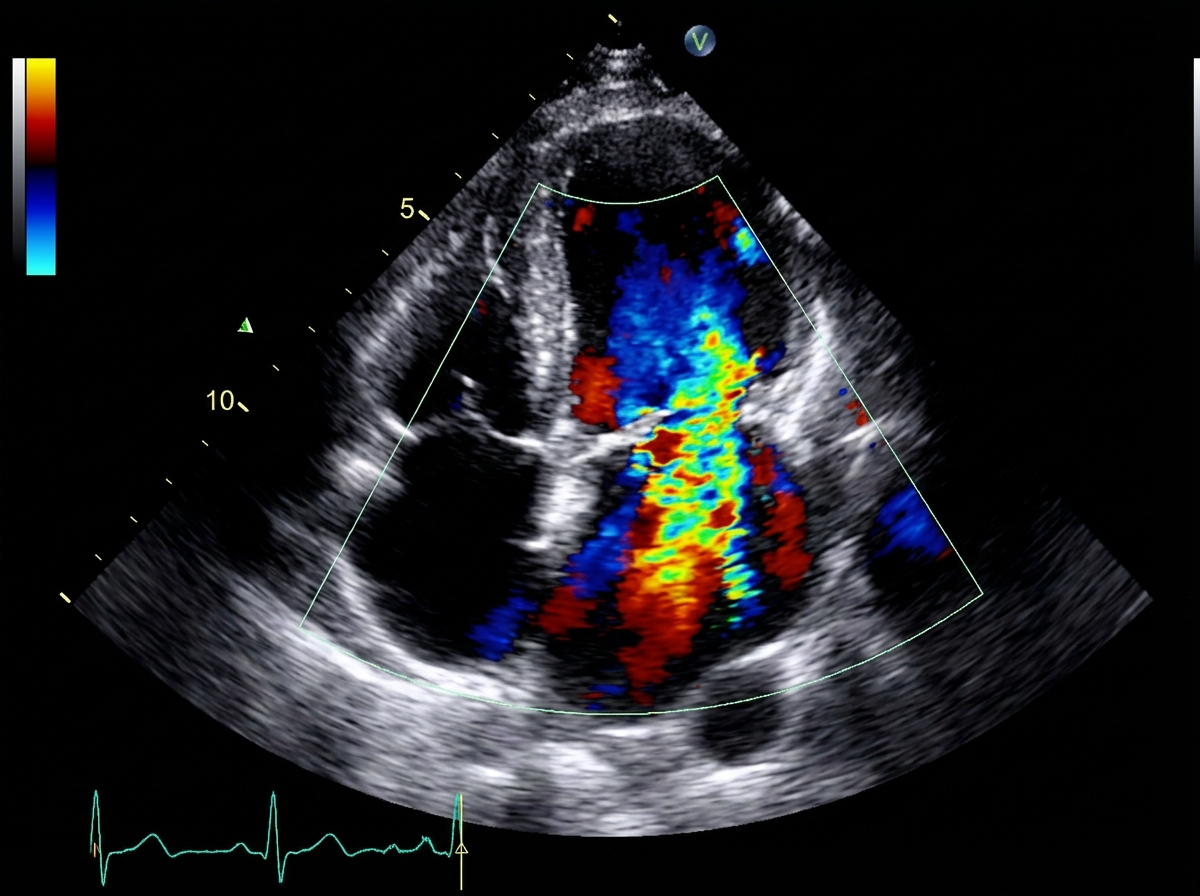
Explanation: **Explanation:** The **x descent** in the Jugular Venous Pulse (JVP) represents atrial relaxation and the downward displacement of the tricuspid valve during ventricular systole. **Why Tricuspid Regurgitation (TR) is the correct answer:** In TR, blood leaks backward from the right ventricle into the right atrium during systole. This retrograde flow counteracts the normal drop in pressure, leading to the **obliteration or reversal of the x descent**. Instead, it is replaced by a prominent **'v' wave** (systolic filling) or a fused 'cv' wave. **Analysis of other options:** * **Cardiac Tamponade:** Characterized by a **prominent x descent** and an absent or diminished y descent. The high intrapericardial pressure prevents diastolic filling, making the x descent the dominant downward deflection. * **Constrictive Pericarditis:** Features **both prominent x and y descents**. The rapid ventricular filling in early diastole leads to a sharp y descent (Friedreich’s sign), but the x descent remains preserved and often exaggerated. * **Atrial Septal Defect (ASD):** Typically presents with a prominent x descent due to increased right-sided stroke volume and enhanced atrial emptying [1]. These shunts can be identified by the increased flow across the tricuspid valve visible on echocardiography [2]. **NEET-PG High-Yield Pearls:** 1. **Prominent 'a' wave:** Tricuspid stenosis, Pulmonary stenosis, Right ventricular hypertrophy (Non-compliant RV). 2. **Cannon 'a' waves:** Complete heart block (AV dissociation), Ventricular tachycardia. 3. **Absent 'a' wave:** Atrial fibrillation. 4. **Prominent 'y' descent:** Constrictive pericarditis, Tricuspid regurgitation. 5. **Absent/Slow 'y' descent:** Cardiac tamponade, Tricuspid stenosis.
Explanation: ***Right ventricular hypertrophy*** - Heavy smoking history with chest pain and dyspnea suggests **chronic obstructive pulmonary disease (COPD)** leading to **cor pulmonale** and subsequent RVH. - ECG findings would show **right axis deviation**, **dominant R wave in V1**, and **deep S waves in V5-V6**, consistent with RVH pattern. *Left ventricular hypertrophy* - While hypertension (150/90 mmHg) can cause LVH, the ECG would show **left axis deviation** and **tall R waves in V5-V6**. - LVH typically presents with **increased voltage in lateral leads** (V5, V6, I, aVL), not the pattern seen in chronic smokers with pulmonary disease. *Torsades de pointes* - This **polymorphic ventricular tachycardia** requires **prolonged QTc interval** as a prerequisite, which is not mentioned. - Presents with **twisting QRS complexes** around the baseline and is associated with **electrolyte imbalances** or **QT-prolonging medications**. *Inferior wall MI* - Would show **ST elevation in leads II, III, and aVF** with possible **reciprocal depression** in lateral leads. - Typically presents with **acute onset chest pain** and **elevated cardiac enzymes**, not chronic symptoms in a smoker.
Explanation: ### Explanation The statement in **Option B** is incorrect because **akinesia (lack of wall motion) does not always imply irreversible cell death.** In the setting of chronic ischemia, the myocardium may undergo "hibernation"—a state of persistent contractile dysfunction to preserve cell viability. If this tissue is proven to be viability through imaging, revascularization can restore function and significantly improve patient prognosis. **Analysis of Options:** * **Option A (True):** Gadolinium (Gd) is an extracellular contrast agent. In healthy tissue, it is washed out; however, in **scar tissue** (infarction), it accumulates due to increased extracellular space, leading to **Late Gadolinium Enhancement (LGE)**. * **Option C (True):** Low-dose dobutamine (5–10 µg/kg/min) stimulates β1 receptors. **Hibernating myocardium** retains a "contractile reserve" and will show improved wall motion under this stimulation, confirming viability. * **Option D (True):** Thallium-201 is a potassium analog that requires intact cell membranes and perfusion for uptake [1]. **Rest-redistribution or reinjection protocols** are gold standards for identifying viable (hibernating) tissue that appears "cold" on initial stress imaging [1]. **Clinical Pearls for NEET-PG:** * **Stunned Myocardium:** Temporary dysfunction following acute ischemia/reperfusion; function recovers spontaneously without further intervention. * **Hibernating Myocardium:** Chronic dysfunction due to reduced blood flow; function recovers **only after revascularization**. * **PET Scan (FDG):** The most sensitive "Gold Standard" for myocardial viability (shows "mismatch" of preserved glucose uptake despite low perfusion). * **MRI:** Transmurality of LGE >50% indicates a low likelihood of functional recovery after revascularization.
Explanation: **Explanation:** Postural (orthostatic) hypotension is defined as a sustained reduction in systolic blood pressure of at least **20 mmHg** or diastolic blood pressure of at least **10 mmHg** within 3 minutes of standing. **Why Option A is Correct:** The physiological response to standing involves venous pooling in the lower extremities, which triggers a baroreceptor reflex to increase sympathetic outflow (vasoconstriction and increased heart rate). In **Autonomic Dysfunction** (seen in Diabetes Mellitus, Parkinson’s disease, or Multiple System Atrophy), this reflex arc is damaged [1]. The body fails to compensate for the gravity-induced drop in venous return, leading to a significant fall in blood pressure [1]. **Why Options B and C are Incorrect:** While **Retroperitoneal bleeding** and **Entry site bleeds** (common post-cardiac catheterization) cause hypovolemia, they typically lead to **acute hemorrhagic shock** or compensatory tachycardia rather than "postural hypotension" as a primary diagnostic feature. While severe volume depletion *can* cause orthostatic changes, in the context of standard medical examinations, postural hypotension is classically associated with the failure of the autonomic nervous system to regulate vascular tone. **High-Yield Clinical Pearls for NEET-PG:** * **The "3-Minute Rule":** Always measure BP after the patient has been standing for 3 minutes. * **Common Causes:** Drugs (Alpha-blockers, Diuretics), Neurodegenerative diseases (Shy-Drager Syndrome), and Peripheral Neuropathies (Diabetes, Amyloidosis). * **Management:** Initial steps include lifestyle modifications (increased salt/water intake, compression stockings). Pharmacological options include **Fludrocortisone** (first-line) or **Midodrine**. * **Bedside Test:** A heart rate increase of >30 bpm upon standing suggests hypovolemia; a lack of heart rate compensation suggests autonomic failure [1].
Explanation: **Explanation:** **Kussmaul’s sign** is a paradoxical rise (or failure to fall) in Jugular Venous Pressure (JVP) during inspiration. Normally, inspiration creates negative intrathoracic pressure, increasing venous return to the right heart and causing JVP to drop. **Why Cardiac Tamponade is the correct answer:** In **Cardiac Tamponade**, Kussmaul’s sign is characteristically **absent** [1]. Although the heart is compressed by fluid, the intrapericardial pressure is transmitted equally to all chambers. During inspiration, the negative intrathoracic pressure is still transmitted to the pericardial space, allowing the heart to accommodate the increased venous return (often at the expense of the left ventricle—the mechanism behind *Pulsus Paradoxus*). Therefore, the JVP still falls normally. **Analysis of Incorrect Options:** * **Constrictive Pericarditis:** This is the classic cause [2]. A rigid, calcified pericardium prevents the right ventricle from expanding to accommodate inspiratory venous return, forcing the pressure back into the jugular veins. * **Right Ventricular (RV) Infarct:** A non-compliant, "stunned" RV cannot handle the increased preload during inspiration, leading to a backup of pressure [3]. * **Restrictive Cardiomyopathy:** Similar to constriction, the stiff myocardium limits diastolic filling, resulting in a positive Kussmaul’s sign. **High-Yield Clinical Pearls for NEET-PG:** * **The "Big Three" for Kussmaul’s Sign:** Constrictive Pericarditis, RV Infarct, and Tricuspid Stenosis/Regurgitation. * **Differentiating Factor:** Cardiac Tamponade presents with **Pulsus Paradoxus** but **NOT** Kussmaul’s sign. Constrictive Pericarditis presents with **Kussmaul’s sign** but rarely Pulsus Paradoxus. * **JVP Waveform:** In Tamponade, there is a prominent *x* descent and absent/blunted *y* descent. In Constriction, there is a sharp *y* descent (Friedreich’s sign).
Explanation: **Explanation:** **1. Why Tricuspid Regurgitation (TR) is Correct:** In Tricuspid Regurgitation, the tricuspid valve fails to close completely during ventricular systole. This allows a high-pressure backflow of blood from the right ventricle into the right atrium. This pressure wave is transmitted retrograde into the superior and inferior vena cava. Because there are no valves between the right atrium and the hepatic veins, the systolic surge reaches the liver, causing **systolic hepatic pulsations** (pulsatile liver) [1]. Chronic venous congestion leads to portal hypertension and cardiac cirrhosis, resulting in **ascites** and peripheral edema. **2. Why the Other Options are Incorrect:** * **Critical Pulmonary Stenosis:** This causes a prominent 'a' wave in the jugular venous pulse (JVP) due to forceful atrial contraction against a stiff right ventricle, but it does not typically cause systolic hepatic pulsations unless secondary TR develops. * **Mitral Regurgitation (MR):** MR involves backflow from the left ventricle to the left atrium [2]. While it leads to pulmonary congestion, it does not cause systemic venous pulsations unless it progresses to right-sided heart failure. * **Mitral Stenosis (MS):** MS leads to left atrial enlargement and pulmonary hypertension. While it can eventually cause right heart failure (and thus ascites), it does not produce a pulsatile liver unless TR is also present. **3. High-Yield Clinical Pearls for NEET-PG:** * **JVP Finding:** TR is characterized by a **prominent 'v' wave** and a **y-descent** in the JVP [1]. * **Murmur:** A pansystolic murmur at the left lower sternal border that increases with inspiration (**Carvallo’s sign**) [1]. * **Differential for Pulsatile Liver:** Tricuspid Regurgitation (systolic) and Constrictive Pericarditis (diastolic pulsations, though rarer). * **Physical Exam:** Always palpate the liver with the palm of the hand to feel the rhythmic expansion (Dressler’s sign).
Explanation: **Explanation:** **Aortic Dissection** occurs when a tear in the inner layer of the aorta (tunica intima) allows blood to surge into the media, creating a false lumen [1]. **Why Systemic Hypertension is the Correct Answer:** Systemic hypertension is the **most common predisposing factor** for aortic dissection, present in 70–80% of cases [1]. Chronic high blood pressure leads to mechanical stress and degenerative changes in the aortic wall (cystic medial necrosis), weakening the vessel and making it susceptible to intimal tearing [3]. **Analysis of Incorrect Options:** * **B. Coarctation of Aorta:** While associated with dissection, it is a much less common cause than hypertension [1]. It typically predisposes to dissection in younger patients or those with an associated bicuspid aortic valve. * **C. First Trimester of Pregnancy:** Pregnancy is a risk factor, but it is specifically associated with the **third trimester** and the peripartum period due to hypervolemia and hormonal changes (estrogen/progesterone) that alter the aortic wall collagen [1]. * **D. Takayasu’s Arteritis:** This is a large-vessel vasculitis that primarily causes **stenosis, occlusion, or aneurysm** formation. While it weakens the wall, it is not a classic or common cause of acute aortic dissection compared to hypertension. **High-Yield Clinical Pearls for NEET-PG:** * **Most common risk factor:** Hypertension (older patients); Marfan Syndrome (younger patients) [1]. * **Clinical Presentation:** Sudden onset, "tearing" or "ripping" chest pain radiating to the back [1]. * **Physical Exam:** Pulse deficit (asymmetric pulses) and a new murmur of aortic regurgitation [2]. * **Gold Standard Investigation:** CT Angiography (stable patients) or Transesophageal Echo (unstable patients) [2]. * **Classification:** Stanford Type A (involves ascending aorta; surgical emergency) vs. Type B (descending aorta; medical management) [1].
Explanation: ### Explanation **Kussmaul’s sign** is a paradoxical rise (or lack of fall) in the Jugular Venous Pressure (JVP) during inspiration. **1. Why Constrictive Pericarditis is Correct:** Normally, during inspiration, the decrease in intrathoracic pressure increases venous return to the right heart, causing the JVP to fall. In **Constrictive Pericarditis**, the heart is encased in a rigid, non-compliant pericardium. This "shell" prevents the right ventricle from expanding to accommodate the increased inspiratory venous return [1]. Consequently, the excess blood backs up into the jugular veins, causing the JVP to rise during inspiration [2]. **2. Why the Other Options are Incorrect:** * **Infective Endocarditis:** This is a microbial infection of the heart valves. While it can cause heart failure or valvular regurgitation, it does not typically involve the pericardial restriction required to produce Kussmaul’s sign. * **Malignant Hypertension:** This involves severe elevation of blood pressure with end-organ damage (e.g., papilledema). It affects the systemic arterial system, not the inspiratory dynamics of the venous system. * **Patent Ductus Arteriosus (PDA):** This is an acyanotic congenital heart defect characterized by a continuous "machinery" murmur. It leads to left-to-right shunting [2] but does not cause pericardial restriction. **3. High-Yield Clinical Pearls for NEET-PG:** * **Differential Diagnosis:** Besides Constrictive Pericarditis, Kussmaul’s sign is seen in **Right Ventricular Infarction** [3] (most common cause), Restrictive Cardiomyopathy, and Tricuspid Stenosis. * **The
Coronary Artery Disease and Angina
Practice Questions
Acute Coronary Syndromes
Practice Questions
Heart Failure
Practice Questions
Cardiac Arrhythmias
Practice Questions
Valvular Heart Diseases
Practice Questions
Cardiomyopathies
Practice Questions
Pericardial Diseases
Practice Questions
Congenital Heart Disease in Adults
Practice Questions
Hypertension and Hypertensive Emergencies
Practice Questions
Pulmonary Hypertension
Practice Questions
Non-invasive Cardiac Diagnostics
Practice Questions
Preventive Cardiology
Practice Questions
Get full access to all questions, explanations, and performance tracking.
Start For Free