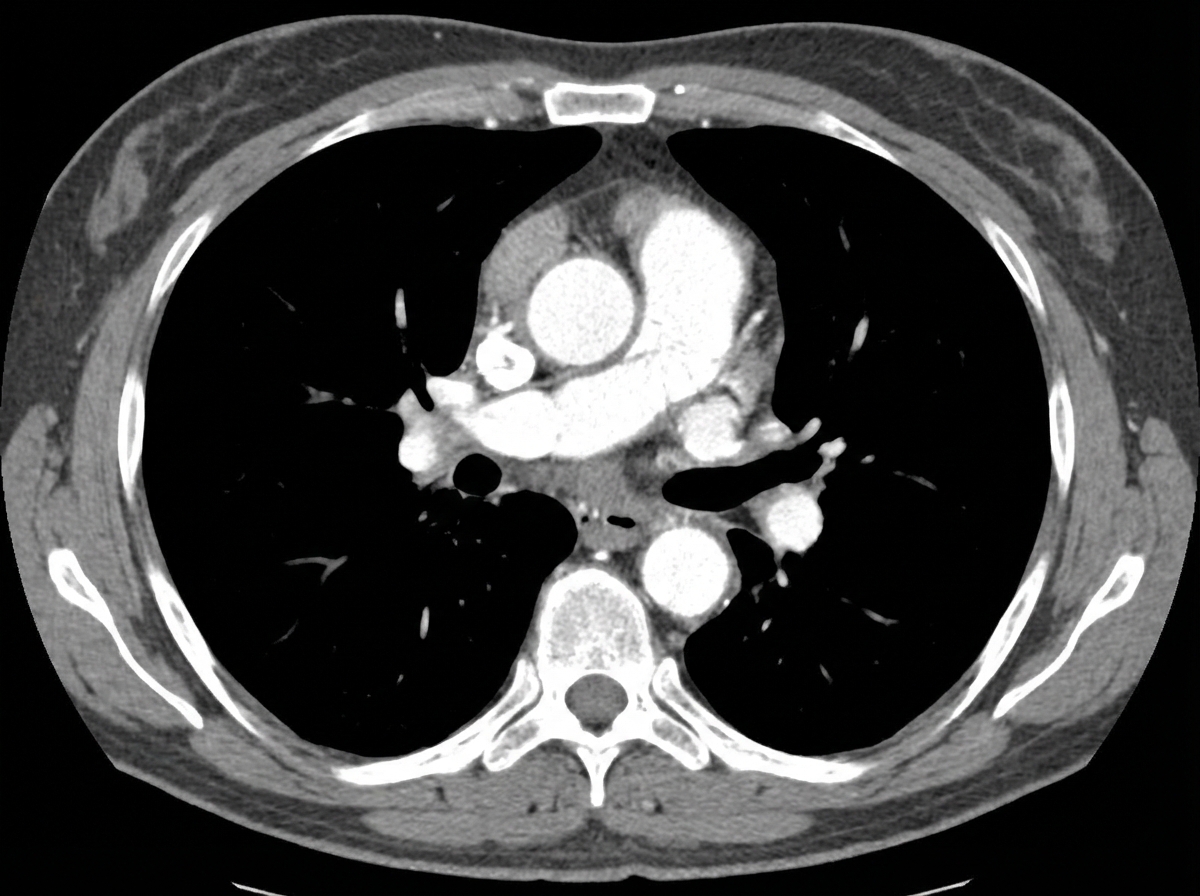
Which of the following is the best method for diagnosing angina pectoris?
Water hammer pulse is seen in which of the following conditions?
A 72-year-old woman is found to have an irregular pulse rate at a routine clinic visit. She is experiencing no new symptoms at rest or on exertion. Her past medical history includes hypertension, osteoarthritis, and dyslipidemia. On physical examination, the blood pressure is 135/85 mm Hg, heart rate is approximately 72/min and irregular. The heart sounds reveal an irregular S1 and normal S2 with no audible murmurs. The jugular venous pressure is normal and the lungs are clear. On the ECG, there are no P waves and an irregular RR interval at a rate of 70/min. On her previous ECG from 4 years ago she was in sinus rhythm. Which of the following is the most appropriate next step in management?
Water hammer pulse is seen in which of the following conditions?
Muller's sign is seen in which condition?
What is the most important factor in the etiology of coronary artery disease?
All of the following are seen in cardiac tamponade except?
A patient with myopia of 4 years duration presents with dizziness and HR 52/min. What is the probable cause?
In Eosinophilic gastroenteritis, what is characteristically seen in the mucosa and submucosa of the stomach?
A 57-year-old man with stage II congestive heart failure presents for a follow-up visit. On examination, the man has crackles at both lung bases and mild pitting edema affecting both legs. Laboratory results show a potassium level of 3.0 mEq/L. Which of the following is the most appropriate diuretic to prescribe for this patient?
Explanation: **Explanation:** The diagnosis of **angina pectoris** is primarily a **clinical diagnosis**. Angina is defined as chest pain or discomfort resulting from myocardial ischemia, and its classic presentation is identified through a detailed patient history [1]. **1. Why History is the Correct Answer:** The "Gold Standard" for diagnosing stable angina is the clinical history [1]. A physician looks for the classic triad: (a) Substernal chest discomfort with a characteristic quality and duration, (b) Provocation by exertion or emotional stress, and (c) Relief by rest or nitroglycerin [1]. If all three are present, the probability of coronary artery disease (CAD) is over 90%. **2. Why other options are incorrect:** * **ECG:** A resting ECG is normal in approximately 50% of patients with chronic stable angina. While it may show ST-segment changes during an active episode, it lacks the sensitivity to be the "best" primary diagnostic tool [1]. * **Cardiac Enzymes:** These (e.g., Troponin, CK-MB) are markers of myocardial **necrosis**. They are elevated in Myocardial Infarction (ACS) but remain **normal** in stable or unstable angina, as there is no permanent cell death [1]. * **Echocardiogram:** This is used to assess ventricular function and wall motion abnormalities [1]. While useful for ruling out other causes of chest pain (like aortic stenosis or cardiomyopathy), it is not the primary tool for diagnosing angina. **Clinical Pearls for NEET-PG:** * **Levine’s Sign:** A patient pressing a clenched fist against the chest to describe anginal pain is a high-yield clinical sign [1]. * **Gold Standard for Anatomy:** While history diagnoses the *symptom* (angina), **Coronary Angiography** is the gold standard for visualizing the *extent of CAD*. * **Initial Investigation of Choice:** For stable patients with an intermediate probability of CAD, a **Stress Test (TMT)** is often the next step after history and physical examination [1].
Explanation: **Explanation:** The **Water Hammer Pulse** (also known as Corrigan’s pulse or collapsing pulse) is a clinical sign characterized by a rapid, forceful upstroke followed by a sudden, quick collapse. This occurs due to a **large stroke volume** being ejected into a low-resistance arterial system, combined with a **wide pulse pressure** (the difference between systolic and diastolic blood pressure) [1]. **Why "All the above" is correct:** The underlying mechanism for a water hammer pulse is a **hyperdynamic circulation**. * **Aortic Regurgitation (Option A):** This is the classic cause [1]. During systole, a large volume of blood is ejected into the aorta. During diastole, blood flows backward into the left ventricle, causing the diastolic pressure to drop significantly, leading to the characteristic collapse [2]. * **Anemia (Option B):** Chronic severe anemia leads to peripheral vasodilation (to improve tissue perfusion) and increased cardiac output, resulting in a hyperdynamic state. * **Pregnancy (Option C):** Pregnancy is a physiological hyperdynamic state characterized by increased blood volume, increased stroke volume, and decreased peripheral vascular resistance. **Clinical Pearls for NEET-PG:** * **How to elicit:** It is best felt at the radial artery with the patient's arm raised above the level of the heart (gravity accentuates the diastolic collapse). * **Other Hyperdynamic States:** Patent Ductus Arteriosus (PDA), Thyrotoxicosis, Beriberi, and Arteriovenous (AV) fistulas. * **Differential Diagnosis:** Do not confuse this with **Pulsus Bisferiens**, which is seen in AR combined with AS or in HOCM. * **Key Sign:** In Aortic Regurgitation, this pulse is often associated with **Hill’s Sign** (popliteal systolic pressure exceeding brachial pressure by >20 mmHg), which is a high-yield indicator of severity.
Explanation: **Explanation:** The clinical presentation of an irregular pulse, absent P waves, and irregular RR intervals on ECG confirms a diagnosis of **Atrial Fibrillation (AF)** [2]. In this 72-year-old patient, the primary goal of management is stroke prevention [1]. **1. Why Anticoagulation is Correct:** The decision to anticoagulate is based on the **CHA₂DS₂-VASc score**, which assesses stroke risk [3]. This patient scores **3 points** (Age 65–74 = 1; Female = 1; Hypertension = 1). For women with a score ≥2, oral anticoagulation (DOACs like Apixaban or Warfarin) is strongly recommended to prevent thromboembolic events [3]. Since her heart rate is already controlled (70–72 bpm) and she is asymptomatic, stroke prophylaxis is the immediate priority. **2. Why Other Options are Incorrect:** * **A & B (Cardioversion/Antiarrhythmics):** These are "Rhythm Control" strategies. They are generally reserved for patients who are hemodynamically unstable or symptomatic despite rate control [1]. Furthermore, cardioversion without prior anticoagulation (for at least 3 weeks) in AF of unknown duration poses a high risk of embolic stroke. * **C (Beta-blocker):** This is a "Rate Control" strategy. While beta-blockers are first-line for rate control, this patient’s resting heart rate is already 72 bpm (target is typically <110 bpm). Additional rate control is not currently indicated [3]. **Clinical Pearls for NEET-PG:** * **CHA₂DS₂-VASc Score:** **C**HF, **H**TN, **A**ge ≥75 (2 pts), **D**M, **S**troke/TIA (2 pts), **V**ascular disease, **A**ge 65-74 (1 pt), **S**ex **c**ategory (Female) [3]. * **Rate vs. Rhythm:** The AFFIRM trial showed no significant difference in mortality between rate and rhythm control; hence, rate control is often preferred in elderly, asymptomatic patients. * **Valvular AF:** If AF is due to moderate-to-severe Mitral Stenosis or a mechanical heart valve, **Warfarin** is mandatory; DOACs are contraindicated.
Explanation: **Explanation:** **Water hammer pulse** (also known as Corrigan’s pulse or collapsing pulse) is a clinical sign characterized by a rapid, forceful upstroke followed by a sudden, quick collapse [1]. **Why Aortic Incompetence (Regurgitation) is correct:** In Aortic Incompetence (AI), the pulse pressure is widened due to two mechanisms [1], [3]: 1. **Increased Stroke Volume:** To compensate for the blood leaking back into the left ventricle, the heart pumps out a larger volume during systole, causing a sharp, high-amplitude rise in pressure [1]. 2. **Diastolic Run-off:** During diastole, blood flows backward into the left ventricle and forward into the peripheral circulation, leading to a rapid fall in diastolic pressure. This sudden "emptying" creates the characteristic collapsing sensation. **Why other options are incorrect:** * **Mitral Stenosis:** Typically presents with a **low-volume pulse** (pulsus parvus) because the narrowed mitral valve limits left ventricular filling and subsequent cardiac output. * **Aortic Stenosis:** Characterized by **Pulsus Parvus et Tardus** (small volume and delayed peak) due to the obstructed outflow [2]. * **Myocardial Infarction:** Usually results in a weak, low-volume pulse due to impaired myocardial contractility and reduced stroke volume [4]. **High-Yield Clinical Pearls for NEET-PG:** * **Best way to elicit:** Palpate the radial pulse with the palm of your hand while elevating the patient's arm above the level of the heart. * **Differential Diagnosis:** Other high-output states like Patent Ductus Arteriosus (PDA), Arteriovenous fistulas, severe anemia, and thyrotoxicosis. * **Associated Signs in AI:** * **Quincke’s sign:** Capillary pulsations in the nail bed. * **De Musset’s sign:** Head nodding in sync with the heartbeat [1]. * **Traube’s sign:** "Pistol shot" sounds heard over the femoral artery.
Explanation: Muller’s sign is a clinical finding characterized by systolic pulsations of the uvula. It is one of the many peripheral signs of Aortic Regurgitation (AR) [1]. ### 1. Why Aortic Regurgitation is Correct In chronic severe Aortic Regurgitation, there is a large stroke volume being ejected into the aorta and a rapid fall in arterial pressure during diastole (due to backflow into the left ventricle) [1]. This results in a wide pulse pressure and hyperdynamic circulation. The forceful systolic ejection of the large stroke volume may be sufficient to make the head nod with each heartbeat (de Musset's sign) [2]. The forceful systolic expansion of the small arteries and arterioles causes visible pulsations in various capillary beds, including the uvula (Muller’s sign). ### 2. Why Other Options are Incorrect * **Mitral Stenosis (MS):** Characterized by a low-output state and a narrow pulse pressure. Peripheral signs are absent; instead, one might see a "malar flush." * **Aortic Stenosis (AS):** Presents with a "pulsus parvus et tardus" (small and late pulse). The stroke volume is restricted, leading to a narrow pulse pressure, the opposite of the hyperdynamic state seen in AR [3]. * **Mitral Regurgitation (MR):** While MR can lead to a hyperdynamic apex, it does not typically produce the wide systemic pulse pressure required to manifest peripheral signs like Muller’s sign [4]. ### 3. High-Yield Clinical Pearls for NEET-PG Aortic Regurgitation is famous for its numerous eponymous peripheral signs. Memorize these for the exam: * **Corrigan’s Pulse:** "Water-hammer" or trip-hammer pulse with rapid upstroke and collapse [2]. * **de Musset’s Sign:** Head nodding in sync with the heartbeat [2]. * **Quincke’s Sign:** Capillary pulsations visible in the nail bed. * **Traube’s Sign:** "Pistol shot" sounds heard over the femoral artery. * **Duroziez’s Sign:** Systolic and diastolic murmurs heard over the femoral artery when compressed. * **Hill’s Sign:** Popliteal systolic BP exceeding brachial systolic BP by >20 mmHg (the most sensitive sign for AR).
Explanation: **Explanation:** **Coronary Artery Disease (CAD)** is primarily a result of atherosclerosis, a chronic inflammatory process in the arterial wall. The most critical factor in the initiation and progression of this process is **Low-Density Lipoprotein (LDL)** [1]. 1. **Why LDL is the Correct Answer:** LDL is the primary carrier of cholesterol in the blood. According to the "Response to Injury" and "Lipid Hypothesis," elevated LDL levels lead to its infiltration into the subendothelial space of the coronary arteries [1]. Once there, LDL undergoes **oxidation**, which triggers an inflammatory cascade, leading to foam cell formation, fatty streaks, and eventually, the formation of an atherosclerotic plaque. Clinical trials have consistently shown that lowering LDL levels directly reduces the risk of major adverse cardiovascular events (MACE) [1]. 2. **Why Other Options are Incorrect:** * **VLDL (Very Low-Density Lipoprotein):** While VLDL carries triglycerides and is a precursor to LDL, it is not as strongly or directly linked to the initiation of atherosclerosis as LDL. * **HDL (High-Density Lipoprotein):** HDL is considered "good cholesterol" because it facilitates **reverse cholesterol transport** (carrying cholesterol away from the tissues to the liver) [1]. High levels are actually cardioprotective, not etiological for CAD. **High-Yield Clinical Pearls for NEET-PG:** * **Friedewald Formula:** LDL = Total Cholesterol – HDL – (Triglycerides/5). (Note: This is invalid if TG >400 mg/dL). * **Target LDL:** For patients with established CAD (Very High Risk), the current goal is often **<55 mg/dL**. * **Small Dense LDL (Pattern B):** This specific subtype of LDL is even more atherogenic than large, buoyant LDL because it easily penetrates the arterial wall and is more prone to oxidation [1]. * **Lp(a):** An independent genetic risk factor for CAD that resembles LDL but contains apolipoprotein(a) [2].
Explanation: Explanation: Cardiac tamponade is a life-threatening condition caused by the accumulation of fluid in the pericardial space, leading to increased intrapericardial pressure [1]. This pressure compresses the heart chambers, severely restricting diastolic filling and reducing stroke volume [1]. Why "Warm Periphery" is the correct answer: In cardiac tamponade, the significant drop in cardiac output triggers a sympathetic nervous system response. This results in systemic vasoconstriction to maintain blood pressure to vital organs. Consequently, patients present with cold, clammy extremities and signs of peripheral cyanosis. A "warm periphery" is characteristic of distributive shocks (like septic or anaphylactic shock) where vasodilation occurs, not obstructive shock like tamponade. Analysis of other options: * Pulsus Paradoxus: This is a classic hallmark of tamponade. It is defined as an exaggerated drop in systolic blood pressure (>10 mmHg) during inspiration due to interventricular septal shifting. * Feeble Heart Sounds: Part of the classic Beck’s Triad, heart sounds become muffled or "distant" because the fluid layer acts as an acoustic insulator between the heart and the stethoscope. * Less Urine Output: Reduced cardiac output leads to decreased renal perfusion, triggering the renin-angiotensin-aldosterone system (RAAS) and resulting in oliguria. NEET-PG High-Yield Pearls: * Beck’s Triad: Hypotension, Jugular Venous Distension (JVD), and Muffled Heart Sounds. * ECG Findings: Low voltage QRS complexes and Electrical Alternans (pathognomonic) [1]. * JVP Finding: Prominent 'x' descent with an absent 'y' descent (due to restricted diastolic filling). * Management: Immediate needle pericardiocentesis [1].
Explanation: The key to this question lies in recognizing the clinical association between **myopia** and **Hypoglycemia**. In medical literature and clinical practice, chronic hypoglycemia (often due to hyperinsulinemia or dietary factors) can lead to changes in the hydration of the lens, causing a refractive shift toward myopia. When a patient with pre-existing myopia presents with **bradycardia (HR 52/min)** and **dizziness**, hypoglycemia is a highly probable cause [1]. Glucose is the primary fuel for the sinoatrial (SA) node; severe or recurrent hypoglycemia can lead to autonomic imbalances or direct metabolic effects on the conduction system, resulting in sinus bradycardia. **Analysis of Options:** * **A. Hypoglycemia (Correct):** Explains both the refractive error (lens changes) and the acute presentation of dizziness and bradycardia. * **B. Inferior Wall MI:** While IWMI commonly causes bradycardia due to RCA involvement (supplying the SA node) or the Bezold-Jarisch reflex, it does not explain the 4-year history of myopia. * **C. Sick Sinus Syndrome:** This causes bradycardia and dizziness (Stokes-Adams attacks) in elderly patients due to SA node fibrosis, but has no association with myopia. * **D. Autonomic Dysfunction:** While it can cause heart rate variability and dizziness (orthostatic hypotension), it is a broad diagnosis and less specifically linked to the refractive history provided [2]. **High-Yield Pearls for NEET-PG:** * **Ocular changes in Diabetes:** Hyperglycemia typically causes **blurred vision** or **myopic shifts** due to sorbitol accumulation in the lens (osmotic swelling). Conversely, rapid correction of blood sugar can cause hyperopia. * **Bradycardia triggers:** Always rule out metabolic causes (Hypothyroidism, Hypoglycemia, Electrolyte imbalances like Hyperkalemia) before diagnosing primary cardiac conduction disease. * **Neuroglycopenic symptoms:** Dizziness, confusion, and syncope occur when CNS glucose levels drop, often accompanied by compensatory or paradoxical heart rate changes [1].
Explanation: **Explanation:** **Eosinophilic Gastroenteritis (EGE)** is a rare, chronic inflammatory condition characterized by the infiltration of eosinophils into the wall of the stomach and intestines. The diagnosis is confirmed by the presence of **eosinophilic infiltrates** (Option B) on histopathology, typically defined as >20–30 eosinophils per high-power field, in the absence of other causes like parasitic infections or malignancy. Depending on the layer involved (mucosa, muscularis, or serosa), patients present with malabsorption, bowel obstruction, or eosinophilic ascites. **Analysis of Incorrect Options:** * **Takayasu infiltrates (A):** This is a distractor. Takayasu arteritis is a large-vessel vasculitis affecting the aorta and its branches; it does not involve gastric mucosal infiltrates. * **Granulomatous infiltrates (C):** These are characteristic of Crohn’s disease, Sarcoidosis, or Gastric Tuberculosis. While EGE involves inflammation, it does not typically form organized granulomas. * **Amyloid deposition (D):** This refers to the extracellular deposition of misfolded proteins. While systemic amyloidosis can involve the GI tract, it is identified by "Apple-green birefringence" under polarized light with Congo Red stain, not eosinophilic infiltration. **High-Yield Clinical Pearls for NEET-PG:** * **Klein’s Classification:** EGE is classified based on the layer of involvement: **Mucosal** (most common, presents with protein-losing enteropathy), **Muscularis** (presents with obstruction), and **Serosal** (presents with eosinophilic ascites). * **Peripheral Blood:** Peripheral eosinophilia is present in approximately 80% of cases. * **Treatment:** Systemic corticosteroids (e.g., Prednisolone) are the mainstay of management. * **Association:** Often associated with a history of allergies, asthma, or atopy.
Explanation: The patient presents with signs of volume overload (crackles, pitting edema) [1] and concomitant **hypokalemia** (Potassium 3.0 mEq/L) [2]. In the management of congestive heart failure (CHF), the choice of diuretic must account for the patient’s electrolyte status [3]. **Why Triamterene is Correct:** Triamterene is a **potassium-sparing diuretic** that acts by inhibiting epithelial sodium channels (ENaC) in the distal convoluted tubule and collecting duct [3]. Unlike loop or thiazide diuretics, it does not increase potassium excretion [3]. Given this patient’s hypokalemia, Triamterene is the most appropriate choice to address fluid retention while preventing further potassium loss, thereby reducing the risk of arrhythmias. **Why Other Options are Incorrect:** * **A. Bumetanide & B. Ethacrynic Acid:** These are potent **loop diuretics**. While effective for pulmonary edema and peripheral swelling, they inhibit the Na-K-2Cl symporter in the Thick Ascending Limb, leading to significant potassium wasting. Administering these would worsen the patient's existing hypokalemia. * **C. Indapamide:** This is a **thiazide-like diuretic**. Like loop diuretics, thiazides cause potassium depletion by increasing sodium delivery to the distal tubule [3], where sodium is reabsorbed in exchange for potassium. **NEET-PG High-Yield Pearls:** * **Potassium-Sparing Diuretics:** Divided into ENaC inhibitors (Triamterene, Amiloride) and Aldosterone antagonists (Spironolactone, Eplerenone). * **Spironolactone** is the only diuretic proven to reduce mortality in NYHA Class II-IV heart failure (RALES trial). * **Ethacrynic acid** is the loop diuretic of choice for patients with a **sulfa allergy**, as it is a phenoxyacetic acid derivative, not a sulfonamide. * **Always monitor for **hyperkalemia** when combining ACE inhibitors/ARBs with potassium-sparing diuretics.
Coronary Artery Disease and Angina
Practice Questions
Acute Coronary Syndromes
Practice Questions
Heart Failure
Practice Questions
Cardiac Arrhythmias
Practice Questions
Valvular Heart Diseases
Practice Questions
Cardiomyopathies
Practice Questions
Pericardial Diseases
Practice Questions
Congenital Heart Disease in Adults
Practice Questions
Hypertension and Hypertensive Emergencies
Practice Questions
Pulmonary Hypertension
Practice Questions
Non-invasive Cardiac Diagnostics
Practice Questions
Preventive Cardiology
Practice Questions
Get full access to all questions, explanations, and performance tracking.
Start For Free