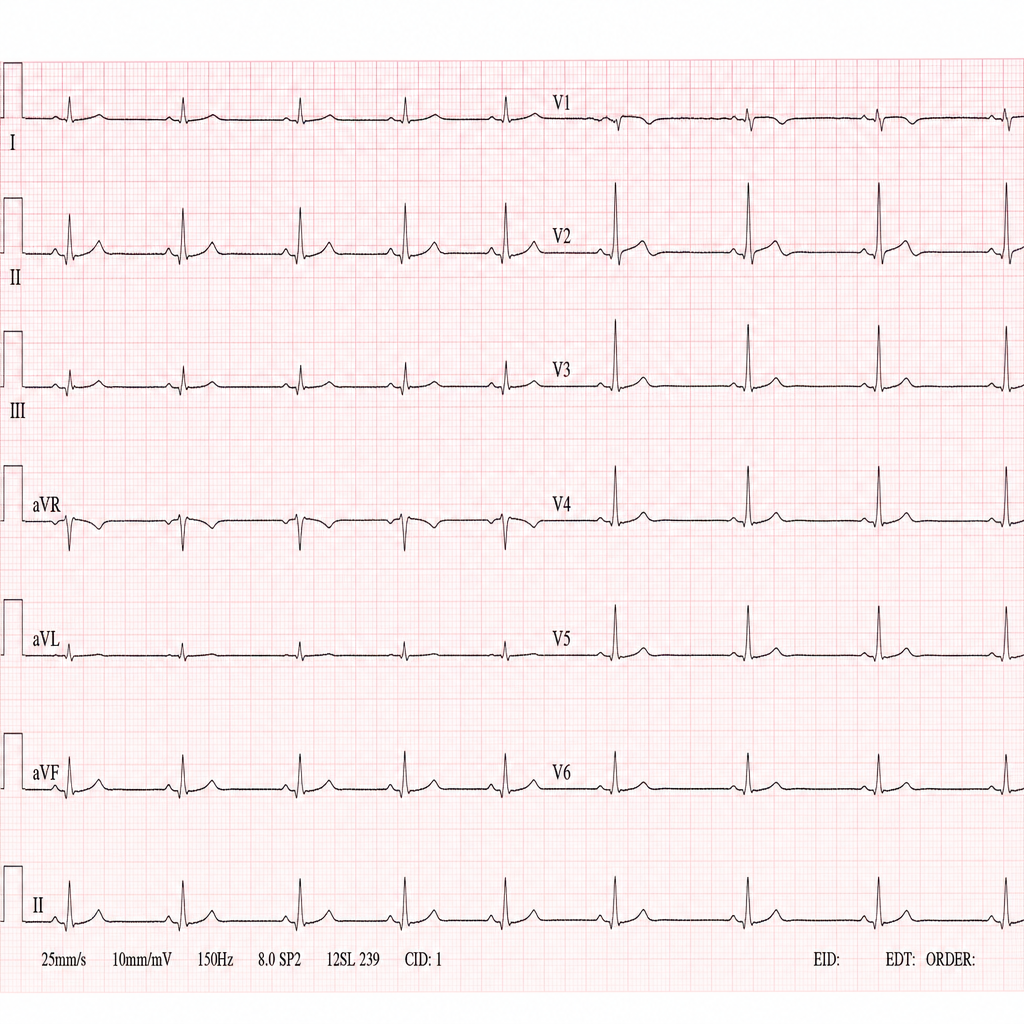
In atrial septal defect, what is the typical state of the aorta?
A previously healthy 58-year-old man is admitted to the hospital because of an acute inferior myocardial infarction. Within several hours, he becomes oliguric and hypotensive (blood pressure is 90/60 mmHg). Insertion of a pulmonary artery (Swan-Ganz) catheter reveals the following pressures: pulmonary capillary wedge pressure - 4 mmHg; pulmonary artery pressure - 22/4 mmHg; and mean right atrial pressure - 11 mmHg. How would this patient be best treated?
Contractile dysfunction is a hallmark feature of which type of cardiomyopathy?
Which of the following are predisposing factors for Coronary Artery Disease?
A 20-year-old patient presents with syncope. His ECG shows specific findings, and his elder brother died suddenly. A subsequent cardiac MRI revealed fibro-fatty changes in the RV myocardium. What is the most likely diagnosis for this patient?
All the following are features of constrictive pericarditis except?
What condition is characterized by a wide and fixed splitting of the second heart sound?
Which of the following is NOT true about Dressler's syndrome?
Myocardial abscess is most common in acute endocarditis caused by which organism?
Which of the following is least likely to cause constrictive pericarditis?
Explanation: ### Explanation In **Atrial Septal Defect (ASD)**, the primary hemodynamic abnormality is a left-to-right shunt at the atrial level [1]. This leads to volume overload of the right atrium, right ventricle, and pulmonary circulation. **Why the Aorta is Normal:** In a simple ASD (secundum, primum, or sinus venosus), the left-to-right shunt occurs because the right ventricle is more compliant than the left. While the pulmonary blood flow ($Qp$) is significantly increased, the systemic blood flow ($Qs$)—and consequently the **aorta**—typically remains **normal**. Unlike in Ventricular Septal Defect (VSD) or Patent Ductus Arteriosus (PDA) where the left heart handles the shunted volume, in ASD, the excess volume "short-circuits" back to the right side before reaching the left ventricle. Therefore, the left ventricular output and the aorta are not subjected to volume overload. **Analysis of Incorrect Options:** * **Small:** While some older texts suggested a "hypoplastic" aorta due to reduced systemic flow in massive shunts, clinically and radiologically, the aorta is considered **normal** in size. A "small" or "narrow" aortic knuckle on X-ray is often a relative appearance due to the massive enlargement of the pulmonary artery. * **Enlarged/Aneurysmal:** These are incorrect because there is no hemodynamic mechanism in ASD that increases pressure or volume within the aorta. An enlarged aorta is more characteristic of conditions like Aortic Regurgitation, Aortic Stenosis (post-stenotic dilatation), or Marfan Syndrome. **High-Yield NEET-PG Pearls:** * **Chest X-ray in ASD:** Shows an enlarged right atrium/ventricle, a prominent pulmonary artery segment, increased pulmonary plethora, and a **normal/small-appearing aortic knuckle** [2]. * **Auscultation:** Characterized by a **fixed, wide splitting of S2** and a mid-systolic flow murmur at the pulmonary area. * **Lutembacher Syndrome:** ASD associated with acquired Mitral Stenosis. * **ECG:** Secundum ASD typically shows Right Axis Deviation (RAD) and RBBB, while Primum ASD shows **Left Axis Deviation (LAD)**.
Explanation: ### Explanation This patient is presenting with **Right Ventricular Infarction (RVI)**, a common complication occurring in up to 40% of patients with acute inferior wall MI (supplied by the Right Coronary Artery) [1]. **1. Why Fluids are Correct:** The hemodynamic profile provided is classic for RVI: * **Low PCWP (4 mmHg):** Indicates low left-sided filling pressures (normal: 6–12 mmHg) [2]. * **Elevated Right Atrial Pressure (11 mmHg):** Indicates right heart failure [1]. * **Hypotension and Oliguria:** Signifies low cardiac output. In RVI, the right ventricle fails to pump blood into the pulmonary circulation, leading to decreased preload for the left ventricle. The RV becomes "preload dependent." **Intravenous fluid resuscitation** (normal saline boluses) is the first-line treatment to increase right-sided filling pressures, which helps push blood through the lungs into the left atrium to maintain cardiac output [3]. **2. Why Other Options are Incorrect:** * **Digoxin:** Has no role in the acute management of MI-related cardiogenic shock; its inotropic effect is too weak and slow. * **Dopamine:** While an inotrope, it should only be used if hypotension persists *after* adequate fluid loading [3]. Starting vasopressors in a volume-depleted state can worsen ischemia. * **IABP:** Used for refractory cardiogenic shock or mechanical complications (e.g., papillary muscle rupture). It is not the initial step for RVI. **3. Clinical Pearls for NEET-PG:** * **Triad of RVI:** Hypotension, clear lung fields (normal PCWP), and Elevated JVP (Kussmaul’s sign). * **ECG Diagnosis:** ST-elevation in lead **V4R** (most sensitive). * **Management Contraindication:** Avoid **Nitrates, Diuretics, and Morphine** in inferior MI with suspected RVI, as they decrease preload and can precipitate profound hypotension. * **Hemodynamic Hallmark:** High RA pressure with low-to-normal PCWP (RA:PCWP ratio > 0.8).
Explanation: **Explanation:** The hallmark of **Dilated Cardiomyopathy (DCM)** is **systolic dysfunction**, characterized by impaired myocardial contractility. In DCM, the heart muscle becomes thin and stretched (dilated), leading to an increased end-diastolic volume but a significantly reduced **Ejection Fraction (EF <40%)**. This "pump failure" occurs because the thinned ventricles cannot generate sufficient force to eject blood effectively. **Why the other options are incorrect:** * **Hypertrophic Cardiomyopathy (HCM):** This is primarily a **diastolic dysfunction** disorder. The ventricle is hypercontractile (high EF), but the thickened (hypertrophied) walls are stiff and cannot relax properly to fill with blood. * **Restrictive Cardiomyopathy (RCM):** This is also a **diastolic dysfunction** disorder. The ventricular walls are rigid (but not necessarily thickened), which impedes ventricular filling. Contractility (systolic function) usually remains normal until the very late stages. * **Infiltrative Cardiomyopathy:** This is a sub-type of Restrictive Cardiomyopathy (e.g., Amyloidosis, Sarcoidosis). It results in stiff heart walls due to the deposition of abnormal substances, primarily affecting filling rather than contraction. **High-Yield Clinical Pearls for NEET-PG:** * **DCM:** Most common type of cardiomyopathy. Causes include Alcohol, Coxsackie B virus (Myocarditis), Pregnancy (Peripartum), and drugs like Doxorubicin. * **HCM:** Most common cause of sudden cardiac death in young athletes; characterized by asymmetric septal hypertrophy and mutations in Sarcomere proteins (Beta-myosin heavy chain). * **RCM:** Often associated with **Kussmaul’s sign** (rise in JVP on inspiration). Amyloidosis is the most common infiltrative cause.
Explanation: **Explanation:** Coronary Artery Disease (CAD) is driven by a combination of traditional risk factors (like hypertension and diabetes) and **novel/emerging risk factors** that promote atherosclerosis, inflammation, and thrombosis. [1] **Why Option D is Correct:** The correct answer identifies three potent pro-thrombotic and pro-atherogenic markers: 1. **Homocysteinemia:** Elevated homocysteine levels cause endothelial dysfunction and oxidative stress, accelerating atherosclerosis. 2. **Increased Fibrinogen:** Fibrinogen is a key coagulation factor; high levels increase blood viscosity and promote platelet aggregation, raising the risk of coronary thrombosis. 3. **Increased Plasminogen Activator Inhibitor-1 (PAI-1):** PAI-1 inhibits fibrinolysis (the breakdown of clots). Elevated levels create a "pro-thrombotic state," preventing the body from clearing micro-thrombi in coronary arteries. **Analysis of Incorrect Options:** * **Options A & B:** Mention **"decreased Lipoprotein B."** This is incorrect because **Apolipoprotein B (ApoB)** is the primary structural protein of LDL (bad cholesterol). *Increased* ApoB is a strong predictor of CAD, not decreased. [1] * **Option C:** Mentions **"increased HDL."** High-Density Lipoprotein (HDL) is "good cholesterol" and is **cardioprotective**. High levels are associated with a *decreased* risk of CAD. [2] **NEET-PG High-Yield Pearls:** * **Lipoprotein (a):** An independent genetic risk factor for CAD; it competes with plasminogen and inhibits thrombolysis. * **High-sensitivity C-Reactive Protein (hs-CRP):** A marker of low-grade vascular inflammation used to risk-stratify patients for CAD. * **Hyperhomocysteinemia** is often associated with deficiencies in **Vitamin B12, B6, and Folic acid**, as these are cofactors in homocysteine metabolism.
Explanation: ### Explanation **Correct Answer: B. Arrhythmogenic RV dysplasia (ARVD/C)** **Why it is correct:** Arrhythmogenic Right Ventricular Dysplasia/Cardiomyopathy (ARVD/C) is a genetic disorder characterized by the replacement of the right ventricular (RV) myocardium with **fibro-fatty tissue**. This structural change creates a substrate for re-entrant ventricular arrhythmias [3], leading to **syncope** or **sudden cardiac death (SCD)**, especially in young patients and athletes. The mention of a sibling’s sudden death highlights the autosomal dominant inheritance pattern (most commonly involving desmosomal proteins like Plakoglobin or Desmoplakin). The MRI finding of fibro-fatty infiltration is the gold-standard diagnostic feature. **Why incorrect options are wrong:** * **A. Hypertrophic Obstructive Cardiomyopathy (HOCM):** While it causes SCD in the young, the pathology involves asymmetric septal hypertrophy and myofiber disarray [1], not fibro-fatty replacement of the RV. * **C. Brugada Syndrome:** This is a channelopathy (SCN5A mutation) causing "pseudo-RBBB" and ST-elevation in V1-V3. It is a purely electrical disorder; the cardiac MRI would typically be structurally normal. * **D. Tako-Tsubo Cardiomyopathy:** Also known as "Broken Heart Syndrome," this presents as transient apical ballooning of the Left Ventricle, usually triggered by intense emotional stress in post-menopausal women. **High-Yield Clinical Pearls for NEET-PG:** * **ECG Hallmark:** Look for the **Epsilon wave** (a small notch at the end of the QRS complex) in leads V1-V3 and T-wave inversions in right precordial leads. * **Naxos Disease:** An autosomal recessive variant of ARVD associated with woolly hair and palmoplantar keratoderma (mutation in Plakoglobin). * **Carvajal Syndrome:** Similar to Naxos but involves the Left Ventricle (mutation in Desmoplakin). * **Management:** The definitive treatment to prevent SCD in high-risk patients is an **ICD (Implantable Cardioverter Defibrillator)** [2].
Explanation: **Explanation:** **Constrictive Pericarditis (CP)** is characterized by a rigid, non-compliant pericardium that limits diastolic filling of the heart [1]. The primary pathophysiology involves **dissociation of intrathoracic and intracardiac pressures** and **interventricular dependence**. **Why Acute Pulmonary Edema is the Correct Answer:** In CP, the rigid pericardium acts as a "shell" that limits the total cardiac volume. While filling is restricted, the **left atrial pressure rarely rises high enough** to cause acute pulmonary edema [2]. Furthermore, the right heart is equally affected, limiting the amount of blood pumped into the lungs. Acute pulmonary edema is a hallmark of left-sided heart failure or mitral valve disease, not typical CP. **Analysis of Incorrect Options:** * **Ascites:** CP presents with features of right-sided heart failure. Due to chronic systemic venous congestion, **ascites** is often disproportionately more severe than peripheral edema (pseudocirrhosis). * **Retractile Apex (Broadbent’s Sign):** The apex beat may be poorly felt or show systolic retraction because the heart is anchored to the rigid pericardium and diaphragm. * **Pericardial Knock:** This is a high-pitched early diastolic sound heard shortly after $S_2$. It occurs due to the sudden cessation of rapid ventricular filling by the rigid pericardium. **High-Yield Clinical Pearls for NEET-PG:** * **Kussmaul’s Sign:** Paradoxical rise in JVP during inspiration (Common in CP, absent in Cardiac Tamponade). * **Square Root Sign:** Seen on cardiac catheterization (dip-and-plateau pattern of ventricular pressure). * **Chest X-ray:** Pericardial calcification is a classic diagnostic clue [1]. * **Treatment:** Surgical pericardiectomy is the definitive management.
Explanation: **Explanation:** The second heart sound (S2) consists of two components: **A2** (Aortic valve closure) and **P2** (Pulmonary valve closure). In a healthy individual, S2 splits during inspiration because decreased intrathoracic pressure increases venous return to the right heart, delaying P2. **Why ASD is the correct answer:** In an **Atrial Septal Defect (ASD)**, there is a continuous left-to-right shunt. This leads to a persistent volume overload of the right ventricle, delaying the closure of the pulmonary valve (wide splitting) [1]. The split is **fixed** because the respiratory variations in systemic venous return are compensated by reciprocal changes in the shunt volume across the ASD [1], [4]. Consequently, the volume of blood entering the right ventricle remains constant throughout the respiratory cycle, keeping the A2-P2 interval unchanged. **Analysis of Incorrect Options:** * **Ventricular Septal Defect (VSD):** Typically presents with a **wide but mobile** (not fixed) split S2 [2]. The delay in P2 is due to right ventricular volume overload, but it still varies with respiration. * **Aortic Stenosis:** Causes a **reversed (paradoxical) split**. A2 is delayed due to prolonged left ventricular ejection, occurring after P2. The split narrows during inspiration. * **Patent Ductus Arteriosus (PDA):** Usually presents with a continuous "machinery" murmur [3]. While it can cause a paradoxical split if the shunt is large (due to LV overload), it does not cause a fixed split. **High-Yield Clinical Pearls for NEET-PG:** * **ASD Murmur:** The murmur in ASD is a **midsystolic flow murmur** over the pulmonary area (due to increased flow across the pulmonary valve), NOT due to the flow across the defect itself [1], [4]. * **ECG Finding:** Look for **RSR' pattern** in V1 (incomplete RBBB) and right axis deviation (in Secundum ASD). * **Most Common Type:** Ostium Secundum is the most common type of ASD [1].
Explanation: Dressler’s syndrome, also known as **Post-Myocardial Infarction Syndrome**, is an immune-mediated form of pericarditis. **Why Option A is the correct answer (False statement):** Dressler’s syndrome is a **late complication** of myocardial infarction (MI). It typically occurs **2 to 6 weeks** after the initial cardiac event. It is caused by an autoimmune reaction to neoantigens released from necrotic myocardial cells. In contrast, pericarditis occurring within the first 24–72 hours post-MI is known as "Early Post-Infarction Pericarditis," which is due to direct inflammatory extension from the infarcted tissue, not an autoimmune process. **Analysis of other options:** * **Option B (Recurrence):** Like many autoimmune conditions, Dressler’s syndrome can be chronic or relapsing; recurrence is a recognized clinical feature. * **Option C (Chest pain):** Pleuritic chest pain (characteristically relieved by sitting forward) is the most common presenting symptom, often accompanied by fever and a pericardial friction rub. * **Option D (Salicylates):** High-dose Aspirin (salicylates) or NSAIDs are the first-line treatment [1]. Colchicine is often added to reduce the risk of recurrence [1]. **NEET-PG High-Yield Pearls:** * **Triad:** Fever, pleuritic chest pain, and pericardial effusion. * **Pathophysiology:** Type IV hypersensitivity (delayed) or immune-complex deposition. * **ECG Findings:** Diffuse ST-segment elevation with PR-segment depression (standard pericarditis pattern) [1]. * **Avoidance:** Steroids should generally be avoided in the early post-MI period as they may interfere with myocardial healing and increase the risk of ventricular rupture.
Explanation: **Explanation:** The correct answer is **Staphylococcus aureus (Option D)**. **Why Staphylococcus aureus is correct:** Myocardial abscess formation is a complication of **Acute Infective Endocarditis (IE)**. *Staphylococcus aureus* is a highly virulent, pyogenic organism capable of causing rapid valvular destruction and invading adjacent cardiac structures. Because it produces various toxins and enzymes (like coagulase and hyaluronidase), it easily penetrates the endocardium into the myocardium, leading to perivalvular abscesses, conduction disturbances, and even cardiac perforation. It is the most common cause of IE in intravenous drug users (IVDU) and those with prosthetic valves. **Why the other options are incorrect:** * **Streptococcus viridans (A):** This is the most common cause of **Subacute IE**. It has low virulence and typically affects previously damaged valves. It causes slow, vegetating growth rather than aggressive tissue invasion or abscess formation. * **Enterococci (B):** While Enterococci can cause aggressive IE (often post-GU/GI procedures), they are less commonly associated with myocardial abscesses compared to the highly destructive *S. aureus*. * **Streptococcus pneumoniae (C):** Though it can cause a fulminant "Austrian Syndrome" (triad of pneumonia, meningitis, and endocarditis), it is a much rarer cause of IE and myocardial abscesses than *S. aureus*. **High-Yield Clinical Pearls for NEET-PG:** * **Most common site for abscess:** The **Aortic valve** ring (periaortic area) is more prone to abscess formation than the mitral valve. * **Clinical Clue:** If a patient with IE develops a **new-onset conduction block** (prolonged PR interval or Bundle Branch Block) on ECG, suspect a **perivalvular/myocardial abscess** (extension into the septum). * **Gold Standard Investigation:** Transesophageal Echocardiography (TEE) is superior to TTE for detecting myocardial abscesses.
Explanation: **Explanation:** **Constrictive Pericarditis (CP)** is the result of chronic inflammation leading to a thickened, fibrotic, and often calcified pericardium that restricts diastolic filling. [1] **Why Acute Rheumatic Fever (ARF) is the correct answer:** While ARF classically causes **pancarditis** (endocarditis, myocarditis, and pericarditis), the pericarditis associated with it is typically fibrinous or serofibrinous. Crucially, it **rarely, if ever, progresses to chronic constriction**. It usually resolves without significant residual fibrosis of the pericardial layers. **Analysis of Incorrect Options:** * **Tuberculous Pericardial Effusion:** In developing countries like India, Tuberculosis remains the **most common cause** of constrictive pericarditis. [1] The chronic granulomatous inflammation frequently leads to massive thickening and calcification. * **Staphylococcal Effusion:** Purulent (bacterial) pericarditis, often caused by *S. aureus*, carries a high risk of progressing to constriction due to the intense inflammatory response and organization of pus. [2] * **Post-Cardiac Surgery:** This is an increasingly common cause in developed nations. Post-operative bleeding and inflammation (Post-pericardiotomy syndrome) can lead to adhesions and subsequent constriction. **NEET-PG High-Yield Pearls:** 1. **Most common cause (Global/Developed):** Idiopathic or Viral. 2. **Most common cause (India):** Tuberculosis. [1] 3. **Kussmaul’s Sign:** Paradoxical rise in JVP during inspiration (Classic finding in CP). 4. **Pericardial Knock:** A high-pitched sound heard in early diastole due to the sudden cessation of ventricular filling. 5. **Imaging:** Chest X-ray may show a "rim of calcification" around the heart; CT/MRI are gold standards for measuring pericardial thickness (>3mm).
Coronary Artery Disease and Angina
Practice Questions
Acute Coronary Syndromes
Practice Questions
Heart Failure
Practice Questions
Cardiac Arrhythmias
Practice Questions
Valvular Heart Diseases
Practice Questions
Cardiomyopathies
Practice Questions
Pericardial Diseases
Practice Questions
Congenital Heart Disease in Adults
Practice Questions
Hypertension and Hypertensive Emergencies
Practice Questions
Pulmonary Hypertension
Practice Questions
Non-invasive Cardiac Diagnostics
Practice Questions
Preventive Cardiology
Practice Questions
Get full access to all questions, explanations, and performance tracking.
Start For Free