Antibiotic prophylaxis is indicated in all the following for prevention of endocarditis EXCEPT?
Persistence of ST-segment elevation in ECG in a case of Myocardial infarction is suggestive of which of the following?
Left atrial enlargement is seen in which of the following conditions?
Levine sign is seen in which of the following conditions?
Which of the following ECG changes in an asymptomatic athlete's heart should be considered pathological?
Pulsus alternans is:
Pulsus bigeminy is seen in patients treated with which of the following medications?
In a patient with myocardial infarction, which valvular lesion is commonly seen?
Which of the following is true in mitral regurgitation (MR)?
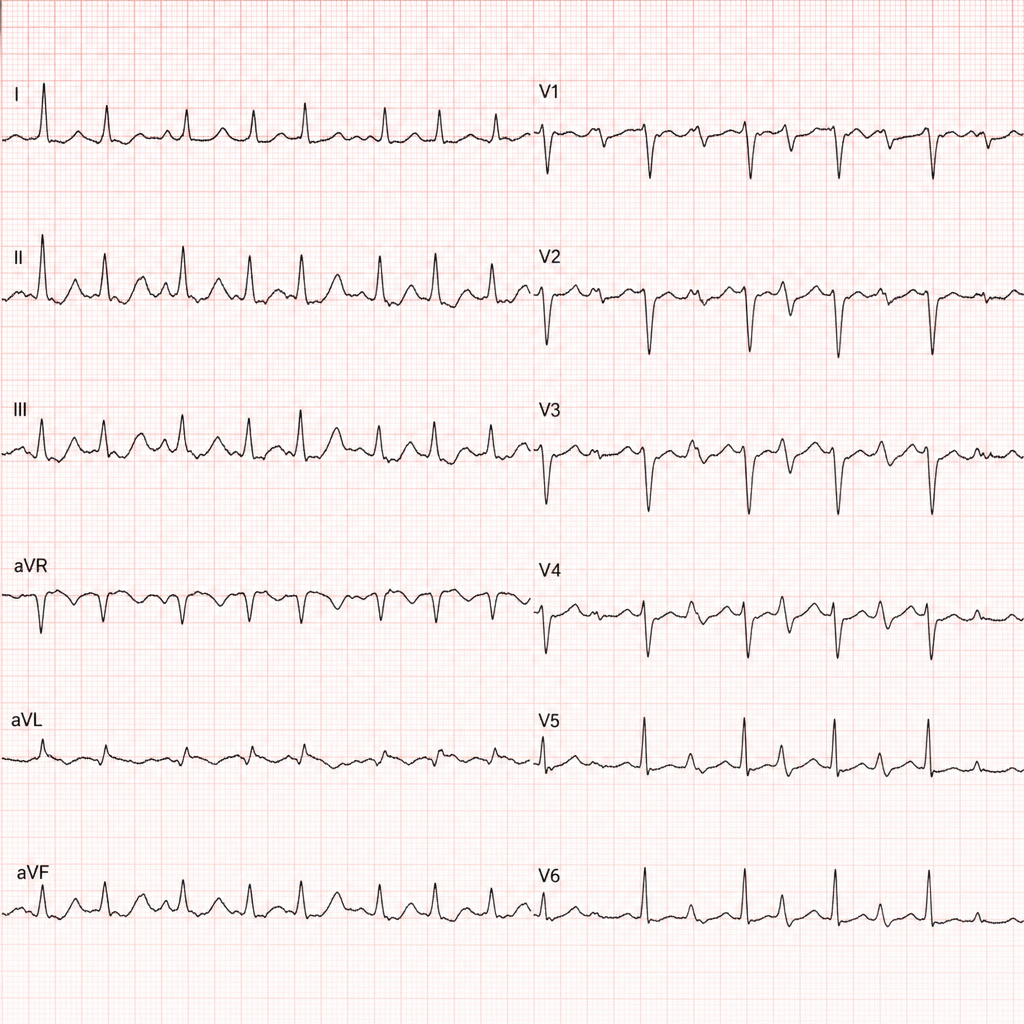
Carotid sinus massage will terminate which of the following arrhythmias?
Explanation: **Explanation:** The prevention of Infective Endocarditis (IE) focuses on providing antibiotic prophylaxis only for procedures that involve significant manipulation of mucosal surfaces or infected tissues in high-risk patients. **Why Cardiac Catheterization is the correct answer:** According to the latest AHA/ACC and ESC guidelines, **cardiac catheterization** (including coronary angiography) is considered a clean vascular procedure. It does not involve the manipulation of mucosal surfaces where commensal bacteria reside. The risk of bacteremia is extremely low; therefore, routine antibiotic prophylaxis is **not recommended**, regardless of the patient's underlying cardiac condition [1]. **Analysis of Incorrect Options:** * **Prostatectomy & Cystoscopy:** These are genitourinary (GU) procedures. Prophylaxis is indicated if the patient has an active urinary tract infection (UTI) or if the procedure involves infected tissue, as these can seed the bloodstream with organisms like *Enterococci*. * **Dental Procedures:** Prophylaxis is indicated for high-risk patients undergoing procedures involving manipulation of gingival tissue, the periapical region of teeth, or perforation of the oral mucosa (e.g., extractions, scaling) due to the risk of *Viridans group streptococci* bacteremia. **High-Yield Clinical Pearls for NEET-PG:** * **High-risk conditions requiring prophylaxis:** Prosthetic heart valves, prior history of IE, Cyanotic Congenital Heart Disease (unrepaired), and Cardiac transplant recipients with valve regurgitation. * **Procedures NOT requiring prophylaxis:** Routine anesthetic injections, X-rays, shedding of primary teeth, and GI endoscopy (unless infection is present). * **Drug of choice:** **Amoxicillin** (2g orally 30–60 mins before the procedure). If allergic to Penicillin, use **Clindamycin** (600mg) or Azithromycin/Clarithromycin (500mg).
Explanation: **Explanation:** In the natural evolution of an acute ST-elevation myocardial infarction (STEMI), the ST segment typically returns to the baseline within hours to days following reperfusion or the completion of the infarct [1]. The **persistence of ST-segment elevation beyond 2 weeks** after an acute MI is a classic electrocardiographic hallmark of a **Left Ventricular (LV) Aneurysm** [2]. **Why Left Ventricular Aneurysm is correct:** An LV aneurysm occurs when a weakened area of the ventricular wall becomes thin and scarred, resulting in a paradoxical outward bulging (dyskinesia) during systole [2]. The persistent ST elevation is thought to result from the continuous mechanical stress and "stretching" of the viable myocardium at the border zone of the fibrotic aneurysm, creating a "current of injury" that never fully resolves. **Analysis of Incorrect Options:** * **A. Death of the patient:** While ECG activity ceases at death (asystole), persistent ST elevation is a clinical sign in a living patient. * **C. Normal finding:** ST elevation is always pathological in the context of post-MI follow-up and indicates either ongoing ischemia, pericarditis, or structural complications. * **D. Ventricular fibrillation:** This is a lethal arrhythmia characterized by chaotic, irregular electrical activity without identifiable P waves, QRS complexes, or ST segments. **High-Yield Clinical Pearls for NEET-PG:** * **Most common site:** The apex and anterior wall (following LAD occlusion). * **ECG finding:** Persistent ST elevation + well-developed Q waves in the same leads [2]. * **Complications:** Heart failure, mural thrombus (leading to systemic embolism), and ventricular arrhythmias [2]. * **Imaging Gold Standard:** Echocardiography (shows localized dyskinesia/aneurysmal bulge) [2]. * **Note:** Unlike acute MI, these patients are usually asymptomatic or present with chronic heart failure rather than acute chest pain [2].
Explanation: **Explanation:** **1. Why Mitral Stenosis (MS) is Correct:** In Mitral Stenosis, there is a narrowing of the mitral valve orifice, which creates a pressure gradient between the left atrium (LA) and the left ventricle (LV) during diastole. To overcome this resistance and maintain ventricular filling, the **Left Atrial pressure increases**. Over time, this chronic pressure overload leads to compensatory **Left Atrial hypertrophy and dilatation**. LA enlargement is a hallmark of MS and is often visible on an ECG as *P-mitrale* (broad, notched P-waves) and on a Chest X-ray as a "double atrial shadow" or straightening of the left cardiac border. **2. Why the Other Options are Incorrect:** * **Tricuspid Regurgitation (TR):** This involves the valve between the right atrium and right ventricle. TR leads to volume overload and enlargement of the **Right Atrium** and Right Ventricle, not the left side. * **Aortic Regurgitation (AR):** In AR, blood flows back from the aorta into the **Left Ventricle** during diastole. This primarily causes massive **Left Ventricular dilatation** (eccentric hypertrophy). While severe chronic AR can eventually lead to secondary LA enlargement due to elevated LV end-diastolic pressure, it is not the primary or classic association compared to MS. **Clinical Pearls for NEET-PG:** * **Most common cause of LA enlargement:** Mitral Stenosis (often due to Rheumatic Heart Disease). * **Complication:** Significant LA enlargement is a major risk factor for the development of **Atrial Fibrillation** and subsequent systemic thromboembolism. * **X-ray Sign:** Look for "Ortner’s Syndrome"—hoarseness of voice caused by a giant left atrium compressing the left recurrent laryngeal nerve. * **Echocardiography:** The gold standard for diagnosing and quantifying the severity of LA enlargement.
Explanation: **Levine Sign** is a classic clinical sign in cardiology where a patient describes chest pain by holding a **clenched fist over the sternum** [1]. It is a highly specific, though not sensitive, indicator of visceral cardiac pain. ### Why Option A is Correct The Levine sign is characteristic of **Stable Angina Pectoris** and other forms of Ischemic Heart Disease (IHD) [1]. It signifies that the pain is diffuse, retrosternal, and difficult to localize to a single point. The clenched fist represents the "squeezing" or "constricting" nature of myocardial ischemia, as the visceral afferent fibers from the heart do not provide precise localization to the cerebral cortex. ### Why Other Options are Incorrect * **B. Acute Bronchial Asthma:** Patients typically present with respiratory distress, wheezing, and use of accessory muscles. Chest tightness may occur, but it is not classically associated with the clenched-fist gesture. * **C. Hemolytic Anemia:** This presents with features of pallor, jaundice, and splenomegaly. While severe anemia can trigger angina (due to decreased oxygen-carrying capacity) [1], the disease itself does not manifest with the Levine sign. * **D. Gastroesophageal Reflux Disease (GERD):** While GERD can mimic cardiac chest pain, it is usually described as a "burning" sensation (heartburn) rather than the constricting, fist-localized pressure of angina. ### NEET-PG High-Yield Pearls * **Specificity:** The Levine sign has a high positive predictive value for myocardial infarction or ischemia. * **Differential Diagnosis:** If a patient points to the chest with a **single finger** (localized pain), it is more likely to be musculoskeletal (e.g., Costochondritis) rather than cardiac. * **Associated Symptoms:** In stable angina, the pain is typically provoked by exertion and relieved by rest or sublingual Nitroglycerin [1]. * **Named after:** Samuel A. Levine, an American cardiologist who first described the gesture.
Explanation: The "Athlete’s Heart" refers to physiological structural and electrical remodeling resulting from regular, intense physical training. Distinguishing these benign adaptations from potentially fatal pathologies (like Hypertrophic Cardiomyopathy or Channelopathies) is a high-yield competency for NEET-PG. **Why Prolonged QTc is Pathological:** A **prolonged QTc interval (>470 ms in males, >480 ms in females)** is never considered a normal physiological adaptation to exercise [1]. It suggests an underlying **Long QT Syndrome (LQTS)**, which predisposes the athlete to Torsades de Pointes and sudden cardiac death [2]. While athletes often have bradycardia (which naturally lengthens the absolute QT), the *corrected* QT (QTc) should remain within normal limits [1]. **Analysis of Incorrect Options:** * **A. Increased QRS Amplitude:** This is a common, benign finding in athletes representing physiological Left Ventricular Hypertrophy (LVH) due to volume or pressure loads during training. * **B. Mobitz Type 1 (Wenckebach) Block:** High vagal tone in athletes frequently causes resting bradycardia, First-degree AV block, or Mobitz Type 1. These are benign and typically disappear with exercise or sympathetic stimulation. * **D. T-wave Inversion (TWI):** While TWI in lateral leads (V5-V6) is concerning, TWI in leads **V1–V3** is considered a common physiological variant in **Black athletes** (the "African/Afro-Caribbean pattern"). Since the option does not specify the leads, and QTc prolongation is universally pathological, QTc is the definitive answer. **Clinical Pearls for NEET-PG:** * **Normal Athlete ECG:** Sinus bradycardia, Early repolarization (ST-elevation with J-point notch), and incomplete RBBB. * **Pathological Findings:** Q-waves (>3mm depth), T-wave inversion in lateral leads, and QTc prolongation. * **International Criteria:** Always use the "Seattle Criteria" or "International Recommendations" to differentiate athlete ECGs.
Explanation: ### Explanation **Pulsus alternans** is a physical finding characterized by a regular heart rhythm but with an alternating strength of the arterial pulse (one strong beat followed by one weak beat). **1. Why the correct answer is right:** Pulsus alternans is a hallmark sign of **severe left ventricular (LV) systolic dysfunction** or **cardiac decompensation**. The underlying mechanism is related to the **Frank-Starling law**. In a failing heart, a weak contraction leads to a higher end-systolic volume. This increases the stretch (preload) for the next beat, resulting in a stronger contraction. However, the failing myocardium cannot sustain this, and the subsequent beat is weak again. It is most commonly seen in advanced dilated cardiomyopathy or severe aortic stenosis. **2. Why the incorrect options are wrong:** * **A. An innocuous feature:** Pulsus alternans is never normal; it is a grave prognostic sign indicating that the heart is struggling to maintain output. * **C. Sign of Digoxin toxicity:** While Digoxin toxicity can cause various arrhythmias (like bigeminy, which can mimic alternans), pulsus alternans itself is a sign of the underlying heart failure for which Digoxin is often prescribed, rather than a side effect of the drug. * **D. Sign of mitral incompetence:** Mitral regurgitation (MR) typically results in a "brisk" pulse or *pulsus differens* if severe, but it does not characteristically produce an alternating pulse unless it has progressed to end-stage heart failure. **3. Clinical Pearls for NEET-PG:** * **Detection:** It is best detected by palpating the **femoral or radial artery** or by using a sphygmomanometer (the Korotkoff sounds will alternate in intensity). * **Differentiate from Pulsus Bigeminus:** In bigeminy, the rhythm is **irregular** (premature beats), whereas in pulsus alternans, the rhythm is **perfectly regular**. * **Electrical Alternans:** Do not confuse this with electrical alternans on ECG, which is a pathognomonic sign of **Cardiac Tamponade** (due to the "swinging heart" in the pericardial fluid).
Explanation: **Explanation:** **Pulsus Bigeminy** is a rhythm characterized by pairs of heartbeats, where a normal sinus beat is followed by a premature ventricular contraction (PVC). This results in a pulse pattern of a strong beat followed by a weaker, premature beat, with a compensatory pause before the next cycle. **Why Digitalis is the correct answer:** Digitalis (Digoxin) toxicity is the most classic cause of pulsus bigeminy. Digoxin inhibits the Na+/K+ ATPase pump, leading to increased intracellular calcium. This high calcium concentration can cause **delayed after-depolarizations (DADs)**, which trigger premature ventricular contractions [1]. When these PVCs occur consistently after every sinus beat, it manifests as bigeminy [1]. In the context of NEET-PG, bigeminy is considered a hallmark ECG finding of Digoxin toxicity [2]. **Why other options are incorrect:** * **Beta-Blockers:** These drugs decrease sympathetic activity and are actually used to *suppress* arrhythmias and PVCs. They typically cause bradycardia, not bigeminal rhythms. * **ACE Inhibitors:** These primarily affect the renin-angiotensin system to lower blood pressure and are not associated with triggering ventricular ectopy. * **Calcium Channel Blockers (CCBs):** Non-dihydropyridines (like Verapamil) slow the heart rate and AV conduction but do not typically cause bigeminy. **High-Yield Clinical Pearls for NEET-PG:** * **Most common ECG finding in Digoxin toxicity:** PVCs (often presenting as bigeminy) [1]. * **Most characteristic/specific ECG finding:** Atrial Tachycardia with AV block. * **The "Reverse Tick" sign:** ST-segment depression (sagging) seen in patients on therapeutic doses of Digoxin (not necessarily toxicity). * **Electrolyte Precursor:** Hypokalemia increases the risk of Digoxin toxicity because K+ and Digoxin compete for the same binding site on the Na+/K+ ATPase pump.
Explanation: **Explanation:** **Mitral Regurgitation (MR)** is a common and significant complication following myocardial infarction (MI). The underlying mechanism is usually **papillary muscle dysfunction** or, more severely, **papillary muscle rupture**. The mitral valve apparatus relies on the integrity of the chordae tendineae and papillary muscles; when an MI (particularly an inferior wall MI) affects the blood supply to these muscles (most commonly the posteromedial papillary muscle), the valve leaflets fail to coapt properly, leading to acute or chronic MR [1]. **Analysis of Incorrect Options:** * **Aortic Stenosis (A):** This is typically a chronic, degenerative, or congenital process (e.g., senile calcification or bicuspid valve) and is not acutely caused by myocardial ischemia. * **Aortic Regurgitation (C):** This usually results from aortic root dilation (e.g., dissection, Marfan syndrome) or valve leaflet damage (e.g., endocarditis), not from ventricular wall motion abnormalities seen in MI [2]. * **Septal Defect (D):** While a **Ventricular Septal Rupture (VSR)** is a known mechanical complication of MI, it is a "septal defect" rather than a "valvular lesion." MR remains the more frequent valvular finding [1]. **High-Yield Clinical Pearls for NEET-PG:** * **Posteromedial Papillary Muscle:** Most commonly involved in MI because it has a **single blood supply** (usually the Right Coronary Artery), making it more vulnerable than the anterolateral muscle, which has dual supply (LAD and LCx). * **Timing:** Acute MR typically occurs **2 to 7 days** post-MI. * **Clinical Sign:** A new-onset **pansystolic murmur** at the apex radiating to the axilla [1]. * **Diagnosis:** Echocardiography is the gold standard for confirming the severity and mechanism of MR post-MI [1], [3].
Explanation: In Mitral Regurgitation (MR), there is a backflow of blood from the high-pressure Left Ventricle (LV) to the low-pressure Left Atrium (LA) throughout the entire systolic phase [1]. Because the pressure gradient between the LV and LA remains significant from the beginning of isovolumetric contraction (closure of mitral valve) until the end of isovolumetric relaxation (opening of mitral valve), the murmur is **pansystolic (holosystolic)**. It is best heard at the **apex** and typically radiates to the **axilla** [1]. **2. Why Other Options are Incorrect:** * **B. Loud S1:** In chronic MR, the S1 is usually **soft or muffled** because the mitral valve leaflets fail to coapt properly. A loud S1 is a hallmark of Mitral Stenosis. * **C. Functional/Secondary MR:** Functional MR occurs due to LV dilatation (e.g., dilated cardiomyopathy) which displaces papillary muscles and stretches the mitral annulus [1]. Papillary muscle rupture post-MI causes **Acute Organic MR**, not functional MR. * **D. ECG Findings:** MR leads to Left Atrial Enlargement (LAE), which manifests as **'P' mitrale** (broad, notched P waves in Lead II). 'P' pulmonale (tall, peaked P waves) is a sign of Right Atrial Enlargement. **Clinical Pearls for NEET-PG:** * **Murmur Dynamics:** The MR murmur does *not* increase with inspiration (unlike tricuspid regurgitation) but increases with **handgrip** (increased afterload). * **S3 Gallop:** The presence of an S3 in MR indicates severe volume overload and LV dysfunction [1]. * **Acute vs. Chronic:** Acute MR (e.g., chordae tendineae rupture) presents with a decrescendo systolic murmur and pulmonary edema, whereas chronic MR allows for compensatory chamber dilatation [1].
Explanation: The correct answer is **Supraventricular Tachycardia (SVT)**, specifically Paroxysmal SVT (AVNRT or AVRT). [1] **Mechanism:** Carotid sinus massage (CSM) is a vagal maneuver that stimulates baroreceptors in the carotid sinus. This increases vagal (parasympathetic) tone to the heart, which slows conduction and increases the refractory period of the **Atrioventricular (AV) node**. [1] Since the most common forms of SVT (like AVNRT) involve a re-entry circuit that includes the AV node as a critical limb, the sudden delay in conduction can "break" the circuit and abruptly terminate the arrhythmia, restoring normal sinus rhythm. [1] **Analysis of Incorrect Options:** * **Atrial Flutter (A) and Atrial Fibrillation (B):** CSM increases the AV block, which may transiently slow the ventricular rate (making the underlying flutter waves or fibrillatory activity more visible on an ECG), but it **cannot terminate** these arrhythmias because the pathology originates in the atria, not the AV node. [1] * **Supraventricular Arrhythmia (C):** This is a broad category that includes AFib and Flutter. While SVT is a type of supraventricular arrhythmia, the term is too non-specific compared to SVT, which is the classic indication for termination via vagal maneuvers. **High-Yield Clinical Pearls for NEET-PG:** * **First-line management:** Vagal maneuvers (CSM or Valsalva) are the initial treatment for stable SVT. * **Drug of choice:** If vagal maneuvers fail, **Adenosine** (6mg IV rapid bolus) is the pharmacological treatment of choice. [1] * **Contraindication:** Never perform CSM if a carotid bruit is present or if there is a history of TIA/Stroke in the past 3 months to avoid dislodging an atheromatous plaque. * **Diagnostic use:** CSM can help differentiate SVT from Atrial Flutter by transiently slowing the rate to reveal "saw-tooth" waves. [2]
Coronary Artery Disease and Angina
Practice Questions
Acute Coronary Syndromes
Practice Questions
Heart Failure
Practice Questions
Cardiac Arrhythmias
Practice Questions
Valvular Heart Diseases
Practice Questions
Cardiomyopathies
Practice Questions
Pericardial Diseases
Practice Questions
Congenital Heart Disease in Adults
Practice Questions
Hypertension and Hypertensive Emergencies
Practice Questions
Pulmonary Hypertension
Practice Questions
Non-invasive Cardiac Diagnostics
Practice Questions
Preventive Cardiology
Practice Questions
Get full access to all questions, explanations, and performance tracking.
Start For Free