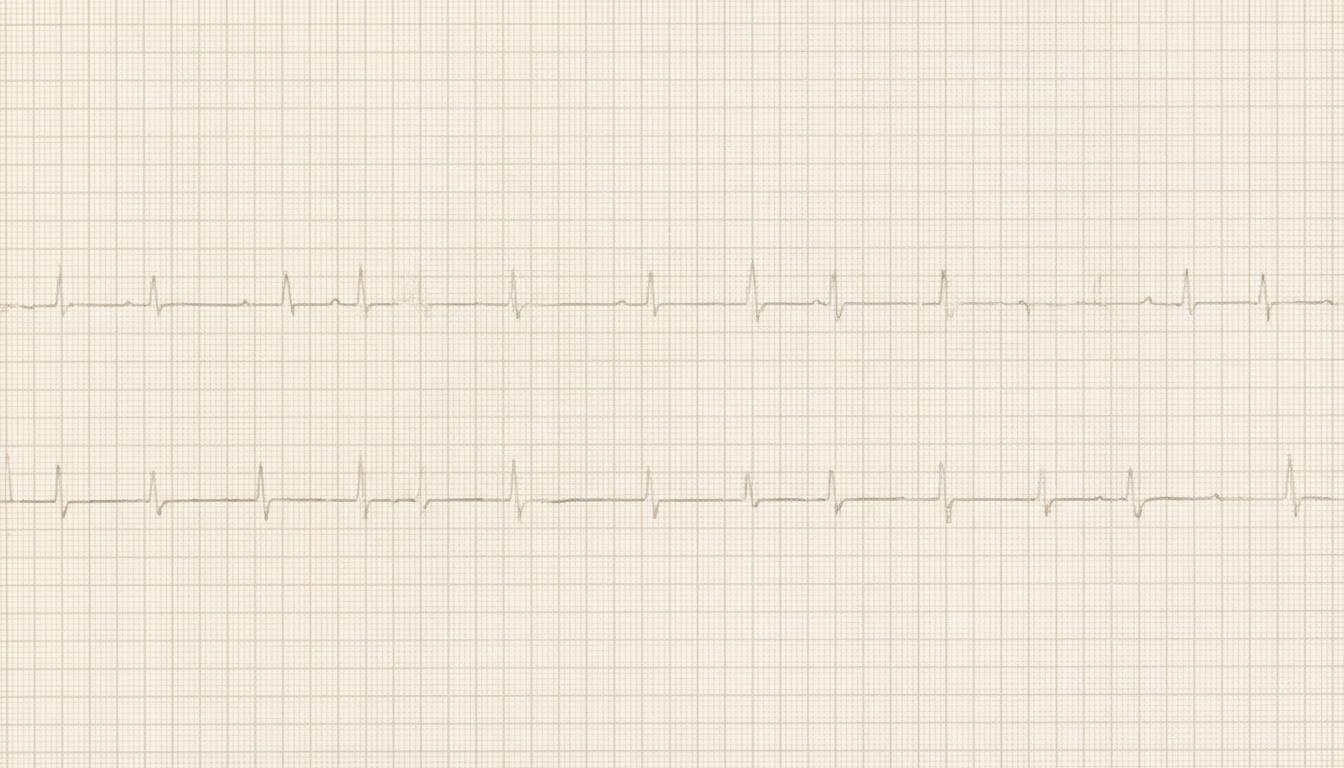
An arteriovenous fistula can lead to which of the following complications, except?
Dilated cardiomyopathy does not develop in which of the following conditions?
What is the treatment of choice in a patient of acute pulmonary embolism with right ventricular hypokinesis and compromised cardiac output but normal blood pressure?
What is the ECG diagnosis of a fresh myocardial infarction?
A 50-year-old male has had precordial pain for four hours. On examination, his BP is 110/80 mm Hg, pulse is 120 beats/min, and respiratory rate is 26/min. His ECG shows marked ST segment elevation in leads V3-V6 and left ventricular ectopics. What are the initial therapeutic modalities in this case?
Which of the following is used to prevent recurrence of a rhythm disorder?
An early systolic murmur may be caused by all of the following except?
In Wolff-Parkinson-White syndrome, all of the following are true except?
Canon A wave is seen in which condition?
What is the most common complication of sub-valvular aortic stenosis?
Explanation: An arteriovenous (AV) fistula is an abnormal communication between an artery and a vein, bypassing the high-resistance capillary bed. This leads to significant hemodynamic changes characterized by **high-output heart failure**. **Why "Cardiac Arrhythmias" is the correct answer:** While chronic volume overload from an AV fistula can eventually lead to chamber enlargement (atrial or ventricular dilation), which *may* predispose a patient to arrhythmias, **cardiac arrhythmias are not a direct or characteristic hemodynamic complication** of an AV fistula itself. The primary pathology is mechanical and volume-related rather than electrical. **Analysis of incorrect options:** * **Increased Preload:** The shunting of blood from the high-pressure arterial system directly into the low-pressure venous system increases venous return to the right heart, directly increasing preload. * **Increased Cardiac Output:** To compensate for the decreased systemic vascular resistance (SVR) caused by the shunt, the stroke volume and heart rate increase, leading to a high-output state [1]. * **Sinus Tachycardia:** This occurs as a compensatory mechanism to maintain blood pressure in the face of reduced SVR and is a hallmark of the hyperdynamic circulation associated with AV fistulas. **Clinical Pearls for NEET-PG:** 1. **Nicoladoni-Branham Sign:** Compression of the AV fistula leads to a sudden decrease in heart rate (bradycardia) and an increase in blood pressure; this is a diagnostic clinical sign. 2. **Wide Pulse Pressure:** Due to decreased diastolic pressure (shunting) and increased systolic pressure (increased stroke volume). 3. **Heart Failure:** AV fistulas are a classic cause of **High-Output Heart Failure** (others include Beriberi, Hyperthyroidism, and Paget’s disease).
Explanation: ### Explanation **Correct Answer: B. Alkaptonuria** **Why Alkaptonuria is the correct answer:** Alkaptonuria is an autosomal recessive metabolic disorder caused by a deficiency of the enzyme **homogentisate 1,2-dioxygenase**. This leads to the accumulation of homogentisic acid, which deposits in connective tissues (ochronosis). In the heart, this deposition typically causes **valvular heart disease**—most commonly **Aortic Stenosis** due to calcification of the valve leaflets—and coronary artery disease. It does **not** typically cause Dilated Cardiomyopathy (DCM). **Analysis of Incorrect Options:** * **A. Duchenne Muscular Dystrophy (DMD):** Absence of dystrophin in cardiac myocytes leads to progressive fibrosis. DCM is a hallmark feature of DMD, often appearing in the second decade of life [2]. * **C. Sarcoidosis:** This is an infiltrative/granulomatous disease. While it often presents as restrictive cardiomyopathy or conduction blocks, it frequently progresses to **DCM** due to extensive myocardial scarring and remodeling. * **D. Keshan Syndrome:** This is a specific form of **DCM** caused by **Selenium deficiency**. It was traditionally endemic in areas of China with selenium-poor soil. **High-Yield Clinical Pearls for NEET-PG:** * **Alkaptonuria Triad:** Black urine (on standing), Ochronosis (bluish-black pigmentation of sclera/ear cartilage), and large joint arthritis. * **Most common cause of DCM:** Idiopathic (Genetic/Familial in ~30% of cases) [1]. * **Reversible causes of DCM:** Alcohol, Tachycardia-induced, Peripartum cardiomyopathy, and Selenium/Thiamine deficiency [1]. * **DMD vs. BMD:** Cardiac involvement is more common and occurs earlier in Duchenne than in Becker muscular dystrophy [3].
Explanation: This question addresses the management of **Submassive (Intermediate-risk) Pulmonary Embolism (PE)**. ### **Explanation** The patient presents with **Right Ventricular (RV) hypokinesis** and **compromised cardiac output** (signs of RV strain) but remains **normotensive**. This clinical picture defines **Submassive PE**. While anticoagulation is the standard for stable PE, the presence of RV dysfunction and clinical signs of low output (even without frank hypotension) indicates a high risk of clinical deterioration and obstructive shock. In such cases, **Thrombolytic therapy** is indicated to rapidly dissolve the clot, reduce RV afterload, and improve cardiac output [1]. ### **Why the other options are incorrect:** * **Low Molecular Weight Heparin (LMWH):** This is the treatment of choice for *stable* (Low-risk) PE. It prevents further clot formation but does not actively dissolve the existing life-threatening thrombus. * **Warfarin:** This is an oral anticoagulant used for long-term maintenance therapy [1]. It has a slow onset of action (days) and is never used for the acute management of PE. * **IVC Filters:** These are indicated only when anticoagulation is strictly contraindicated or has failed despite therapeutic levels. They do not treat the current pulmonary obstruction. ### **Clinical Pearls for NEET-PG:** 1. **Massive PE:** Hypotension (SBP <90 mmHg) or shock. **Tx: Immediate Thrombolysis.** 2. **Submassive PE:** Normal BP + RV strain (Echo/CT) or elevated Biomarkers (Troponin/BNP). **Tx: Thrombolysis** (especially if clinical output is compromised) [1]. 3. **Drug of Choice:** Recombinant tissue plasminogen activator (**rtPA/Alteplase**) is preferred over Streptokinase due to its shorter infusion time [2]. 4. **Gold Standard Diagnosis:** CT Pulmonary Angiography (CTPA) [3]. 5. **Most Common ECG Finding:** Sinus tachycardia (S1Q3T3 is specific but less common).
Explanation: The hallmark of a fresh (acute) myocardial infarction is **ST-segment elevation** [1]. This occurs due to a "current of injury" resulting from transmural myocardial ischemia [3]. When a coronary artery is acutely occluded, the affected myocardium becomes depolarized, creating a voltage gradient between the injured and healthy tissue. On an ECG, this manifests as an elevation of the ST segment (J-point) in the leads overlying the area of infarction [3]. **Analysis of Options:** * **ST-segment elevation (Correct):** Indicates acute, transmural injury [2]. To be clinically significant for STEMI, elevation must be ≥1 mm in two contiguous leads (except V2-V3, which have age/gender-specific criteria). * **ST-segment depression:** Typically represents subendocardial ischemia, NSTEMI, or reciprocal changes [1]. It does not define a classic "fresh" transmural MI. * **QT interval prolongation:** Associated with electrolyte imbalances (hypocalcemia, hypomagnesemia) or drugs. It increases the risk of Torsades de Pointes but is not diagnostic of acute MI. * **P mitrale:** A broad, notched P-wave indicating left atrial enlargement, commonly seen in mitral stenosis, not acute infarction. **High-Yield Clinical Pearls for NEET-PG:** 1. **Evolution of ECG in STEMI:** Hyperacute T-waves (earliest sign) → ST-elevation → Q-waves (indicates necrosis) → T-wave inversion [1]. 2. **Pathological Q-waves:** Usually appear within 6–24 hours and signify a completed or old transmural infarct [1]. 3. **Reciprocal Changes:** ST-depression in leads opposite to the site of infarction (e.g., ST-depression in II, III, aVF during a high lateral wall MI) is highly suggestive of acute STEMI [1].
Explanation: ### Explanation **1. Analysis of the Correct Answer (Option B)** The patient presents with classic features of an **Acute ST-Elevation Myocardial Infarction (STEMI)** involving the anterolateral wall (ST elevation in V3-V6). The two primary goals in the initial management of STEMI are **pain relief** and **reperfusion**. * **Morphine:** It is the analgesic of choice for STEMI [1]. It reduces pain, decreases sympathetic activity (lowering heart rate and BP), and acts as a venodilator, which reduces cardiac preload and oxygen demand. * **Streptokinase:** As a fibrinolytic agent, it is indicated for reperfusion in STEMI if the patient presents within 12 hours of symptom onset and Primary PCI is not immediately available [2]. **2. Why Other Options are Incorrect** * **Option A & D (Lignocaine):** Historically, Lignocaine was used for prophylactic suppression of Ventricular Premature Beats (VPBs/ectopics) in MI. However, current guidelines **strongly discourage** prophylactic anti-arrhythmics as they do not improve survival and may increase the risk of bradycardia or asystole. Ectopics usually resolve once ischemia is treated. * **Option C (Dobutamine):** Dobutamine is an inotropic agent used in cardiogenic shock. This patient’s BP (110/80 mmHg) is stable; adding an inotrope would unnecessarily increase myocardial oxygen consumption and worsen ischemia/arrhythmias. **3. NEET-PG High-Yield Pearls** * **Time is Muscle:** The "Golden Hour" for thrombolysis is the first 60 minutes. * **Drug of Choice for Pain:** Morphine (avoid NSAIDs except Aspirin, as they increase the risk of myocardial rupture) [1]. * **Arrhythmia Management:** In the setting of acute MI, the most common cause of death in the pre-hospital phase is **Ventricular Fibrillation**. However, routine use of Lignocaine is contraindicated. * **Reperfusion Criteria:** ST elevation >1mm in two contiguous limb leads or >2mm in precordial leads.
Explanation: ### Explanation The core of this question lies in distinguishing between **acute termination** of an arrhythmia and the **long-term prevention of recurrence**. **1. Why Catheter Ablation is Correct:** Catheter ablation is a **definitive/curative** procedure [1]. It involves using radiofrequency energy or cryotherapy to destroy the specific myocardial tissue responsible for initiating or sustaining a tachyarrhythmia (e.g., an accessory pathway in WPW syndrome or a re-entrant circuit in AVNRT). By eliminating the anatomical or functional substrate of the rhythm disorder, it prevents the arrhythmia from recurring in the future, providing a cure in over 90% of cases for certain SVTs [1]. **2. Why the Other Options are Incorrect:** * **Adenosine (Option B):** This is a short-acting pharmacological agent used for the **acute termination** of stable Paroxysmal Supraventricular Tachycardia (PSVT) [1]. It has an extremely short half-life (<10 seconds) and does nothing to prevent future episodes. * **Synchronized Defibrillation/Cardioversion (Option C):** This is used for the **acute management** of unstable tachyarrhythmias with a pulse (e.g., Atrial Fibrillation or VT with a pulse). It resets the heart's electrical activity but does not modify the underlying trigger. * **Non-synchronized DC Shock (Option D):** Also known as defibrillation, this is the **emergency treatment** for pulseless VT or Ventricular Fibrillation. Like cardioversion, it terminates the current event but does not prevent recurrence. **Clinical Pearls for NEET-PG:** * **First-line curative therapy:** Catheter ablation is now considered first-line for symptomatic WPW syndrome and AVNRT [1]. * **Adenosine Contraindication:** Avoid in patients with asthma (can cause bronchospasm) and use with caution in WPW with Atrial Fibrillation [1]. * **Synchronized vs. Unsynchronized:** Always use **synchronization** (R-wave sensing) for patients with a pulse to avoid the "R-on-T phenomenon," which can induce Ventricular Fibrillation. [1] Brian Walker. Davidson's Principles and Practice of Medicine. 22E ed. Urine microscopy, pp. 585-599.
Explanation: The correct answer is **Aortic Stenosis (AS)** because it typically produces a **midsystolic (ejection systolic) murmur**, not an early systolic murmur [1]. **1. Why Aortic Stenosis is the Correct Answer:** In AS, there is a delay between the first heart sound (S1) and the onset of the murmur because ventricular pressure must rise sufficiently to open the calcified aortic valve (isovolumetric contraction) [1]. The murmur peaks in mid-systole and ends before the second heart sound (S2), giving it a characteristic "crescendo-decrescendo" shape [1]. **2. Analysis of Incorrect Options (Causes of Early Systolic Murmurs):** * **Small Ventricular Septal Defect (VSD):** Specifically the "Maladie de Roger" type. As the muscular septum contracts during mid-to-late systole, it closes the small defect, causing the murmur to stop abruptly before S2. * **Papillary Muscle Dysfunction:** Often seen post-myocardial infarction, this leads to acute mitral regurgitation. The regurgitation occurs early in systole when the ischemic papillary muscle fails to anchor the leaflets, but may diminish as the ventricle gets smaller toward the end of systole. * **Tricuspid Regurgitation (TR):** In cases of TR with normal pulmonary artery pressure (e.g., endocarditis), the pressure gradient between the right ventricle and right atrium equilibrates quickly, causing the murmur to be confined to early systole. **NEET-PG High-Yield Pearls:** * **Pansystolic (Holosystolic) Murmurs:** Classic for large VSD, chronic Mitral Regurgitation (MR), and chronic TR. * **Early Systolic Murmurs:** Rare; usually indicate a pressure gradient that disappears or a hole that closes during late systole. * **AS Severity:** The later the peak of the midsystolic murmur, the more severe the stenosis. * **Dynamic Auscultation:** The murmur of AS decreases with Valsalva, whereas Hypertrophic Obstructive Cardiomyopathy (HOCM) increases.
Explanation: In Wolff-Parkinson-White (WPW) syndrome, an accessory pathway (Bundle of Kent) bypasses the AV node, leading to ventricular pre-excitation [1]. ### **Explanation of Options** * **Option C (Correct Answer):** This statement is **false**. WPW is classified based on the QRS morphology in lead V1: * **Type A:** The accessory pathway is on the **left side**. It produces a **positive** delta wave (R-wave) in V1, resembling a **Right Bundle Branch Block (RBBB)** pattern. * **Type B:** The accessory pathway is on the **right side**. It produces a **negative** delta wave (S-wave) in V1, resembling a **Left Bundle Branch Block (LBBB)** pattern. * **Option A:** Digoxin (along with Verapamil and Diltiazem) is **contraindicated** in WPW with atrial fibrillation. These drugs block the AV node, which may paradoxically enhance conduction through the accessory pathway, potentially leading to ventricular fibrillation [2]. * **Option B:** The **PR interval is short (<0.12s)** because the impulse bypasses the physiological delay of the AV node via the accessory pathway [1]. * **Option D:** The **QRS complex is broad (>0.12s)** due to the "Delta wave," which represents early, slow ventricular depolarization starting from the insertion point of the accessory pathway [1]. ### **High-Yield Clinical Pearls for NEET-PG** * **Classic Triad:** Short PR interval, Delta wave (slurred upstroke of QRS), and Wide QRS [1]. * **Treatment of Choice (Definitive):** Radiofrequency Ablation of the accessory pathway. * **Acute Management (Stable):** Procainamide or Ibutilide are preferred as they increase the refractory period of the accessory pathway [2]. * **Pseudo-infarction pattern:** Delta waves can sometimes mimic Q-waves, leading to a false diagnosis of myocardial infarction on ECG.
Explanation: The **‘a’ wave** in the Jugular Venous Pulse (JVP) represents right atrial contraction. Under normal circumstances, the atrium contracts when the tricuspid valve is open. **Cannon ‘a’ waves** occur when the right atrium contracts against a **closed tricuspid valve**. **1. Why Complete Heart Block (CHB) is correct:** In CHB (3rd-degree AV block), there is total AV dissociation. The atria and ventricles beat independently. Occasionally, the right atrium contracts while the right ventricle is in systole (tricuspid valve closed). This causes blood to reflux into the jugular vein, creating a giant, intermittent "cannon" wave. **2. Why other options are incorrect:** * **Atrial Fibrillation:** The atria do not contract effectively; they only quiver. Therefore, the 'a' wave is **absent** in JVP. * **Ventricular Fibrillation:** This is a terminal rhythm with no organized mechanical contraction of the heart; JVP waves are not discernible. * **Mobitz Type 1 (Wenckebach):** While there is a progressive delay in AV conduction, the atrium usually contracts before the ventricle (valve open). It does not typically produce cannon waves unless there is a very long PR interval or associated dissociation. **High-Yield Clinical Pearls for NEET-PG:** * **Intermittent Cannon 'a' waves:** Seen in Complete Heart Block and Ventricular Tachycardia (with AV dissociation). * **Regular Cannon 'a' waves:** Seen in Junctional Rhythm or SVT (where atria and ventricles contract simultaneously every beat). * **Giant/Large 'a' waves:** Seen in conditions where the right atrium works harder to pump against resistance (e.g., Tricuspid Stenosis, Pulmonary Hypertension, or Right Ventricular Hypertrophy). * **Absent 'a' waves:** Pathognomonic for Atrial Fibrillation.
Explanation: **Explanation:** **Sub-valvular aortic stenosis (Sub-AS)**, most commonly occurring as a discrete sub-aortic membrane, creates a high-velocity, turbulent jet of blood just below the aortic valve. **Why Aortic Regurgitation (AR) is the correct answer:** The primary mechanism for AR in sub-valvular stenosis is twofold: 1. **Mechanical Trauma:** The turbulent jet produced by the sub-aortic obstruction constantly strikes the delicate aortic valve leaflets. This leads to progressive thickening, fibrosis, and scarring of the cusps. 2. **Venturi Effect:** The high-velocity flow creates a suction effect that can cause malcoaptation of the leaflets. Over time, these structural changes prevent the valve from closing properly, making **Aortic Regurgitation** the most frequent complication, seen in over 50% of patients [1]. **Why other options are incorrect:** * **B, C, and D (MR, TR, PR):** While chronic left ventricular pressure overload from sub-AS can eventually lead to left ventricular dilatation and secondary (functional) mitral regurgitation, it is not the *most common* or direct complication. Tricuspid and pulmonary valves are located in the right heart and are hemodynamically distant from the sub-aortic turbulence. **High-Yield Clinical Pearls for NEET-PG:** * **Associated Lesions:** Sub-AS is frequently associated with VSD, PDA, or Coarctation of the aorta. * **Infective Endocarditis:** Patients with sub-AS are at a significantly higher risk for infective endocarditis compared to those with valvular AS due to the high-velocity jet damaging the endothelium. * **Surgical Timing:** Surgery is often indicated not just to relieve the gradient, but specifically to prevent the progression of irreversible aortic regurgitation. * **Echocardiography:** The "gold standard" for diagnosis, often showing a "thin membrane" or "tunnel-like" narrowing in the LV outflow tract.
Coronary Artery Disease and Angina
Practice Questions
Acute Coronary Syndromes
Practice Questions
Heart Failure
Practice Questions
Cardiac Arrhythmias
Practice Questions
Valvular Heart Diseases
Practice Questions
Cardiomyopathies
Practice Questions
Pericardial Diseases
Practice Questions
Congenital Heart Disease in Adults
Practice Questions
Hypertension and Hypertensive Emergencies
Practice Questions
Pulmonary Hypertension
Practice Questions
Non-invasive Cardiac Diagnostics
Practice Questions
Preventive Cardiology
Practice Questions
Get full access to all questions, explanations, and performance tracking.
Start For Free