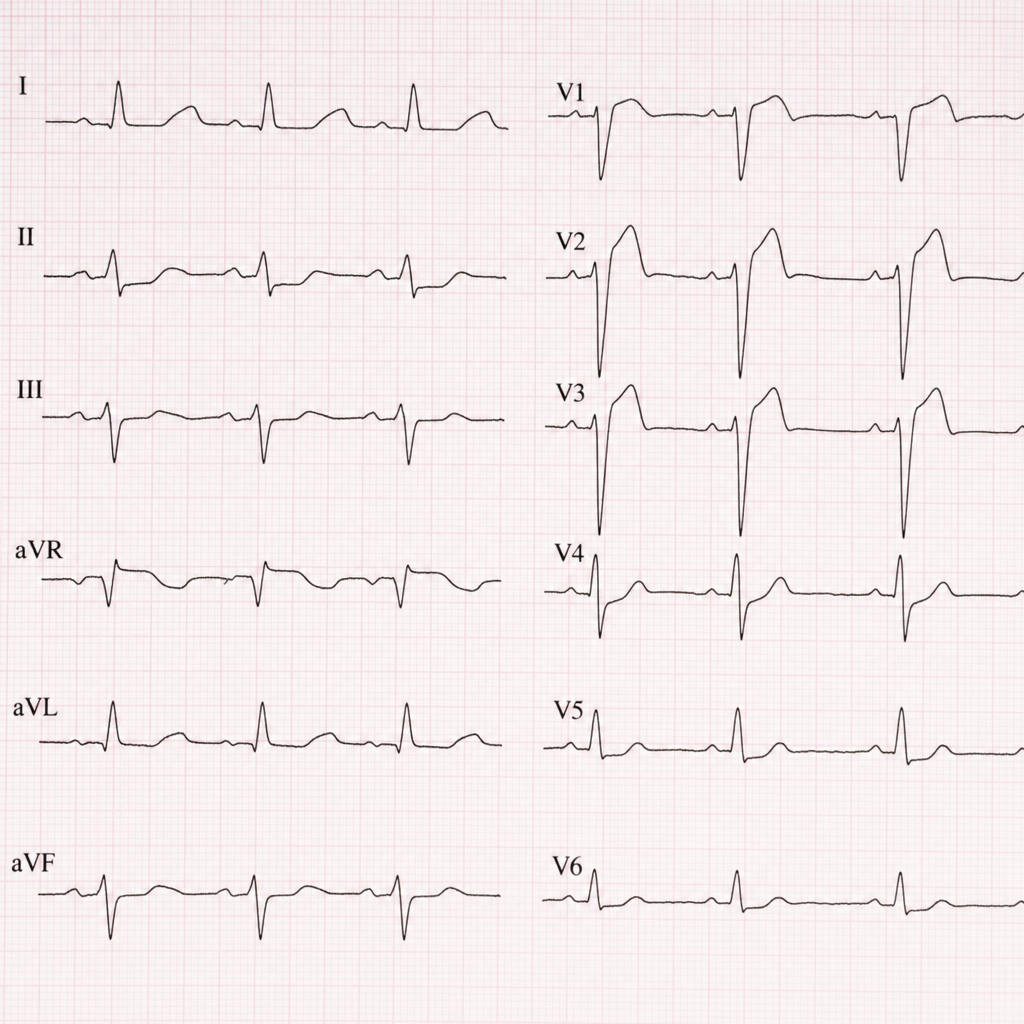
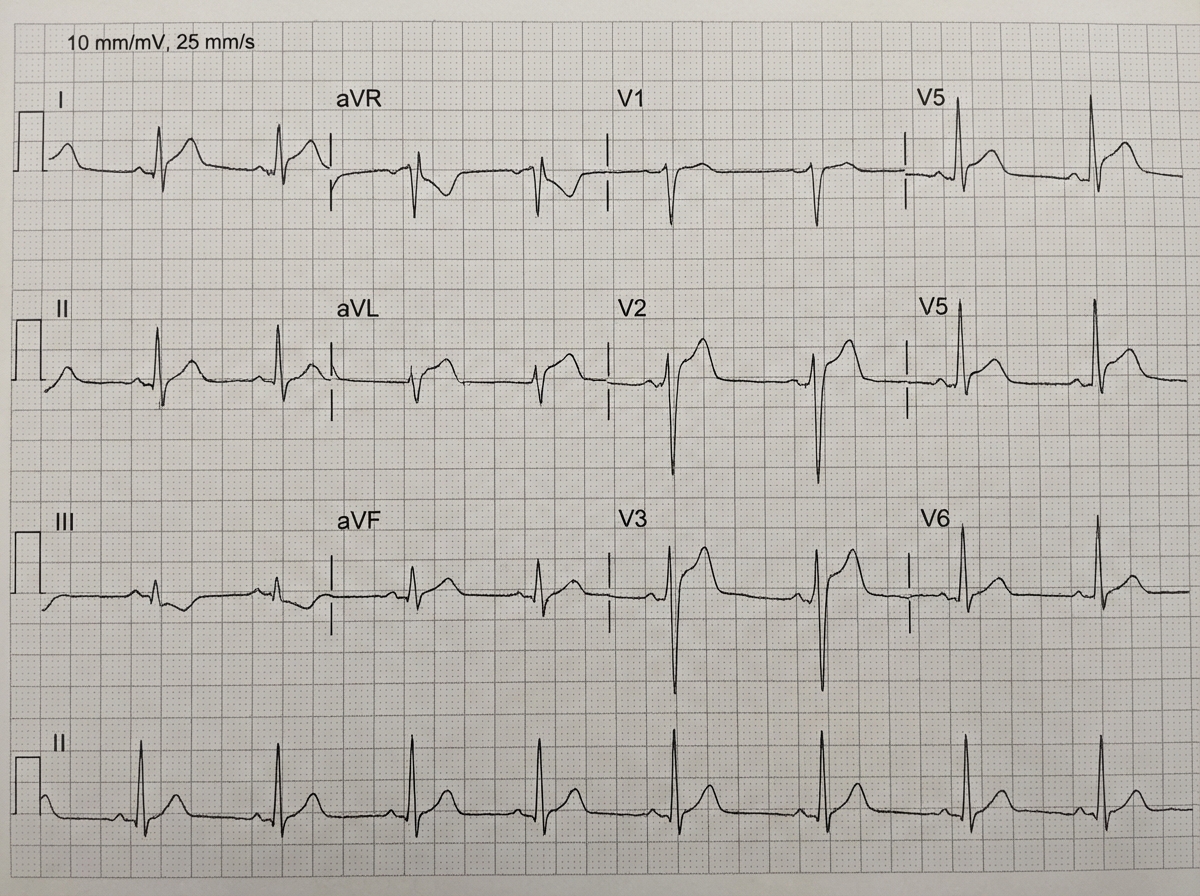
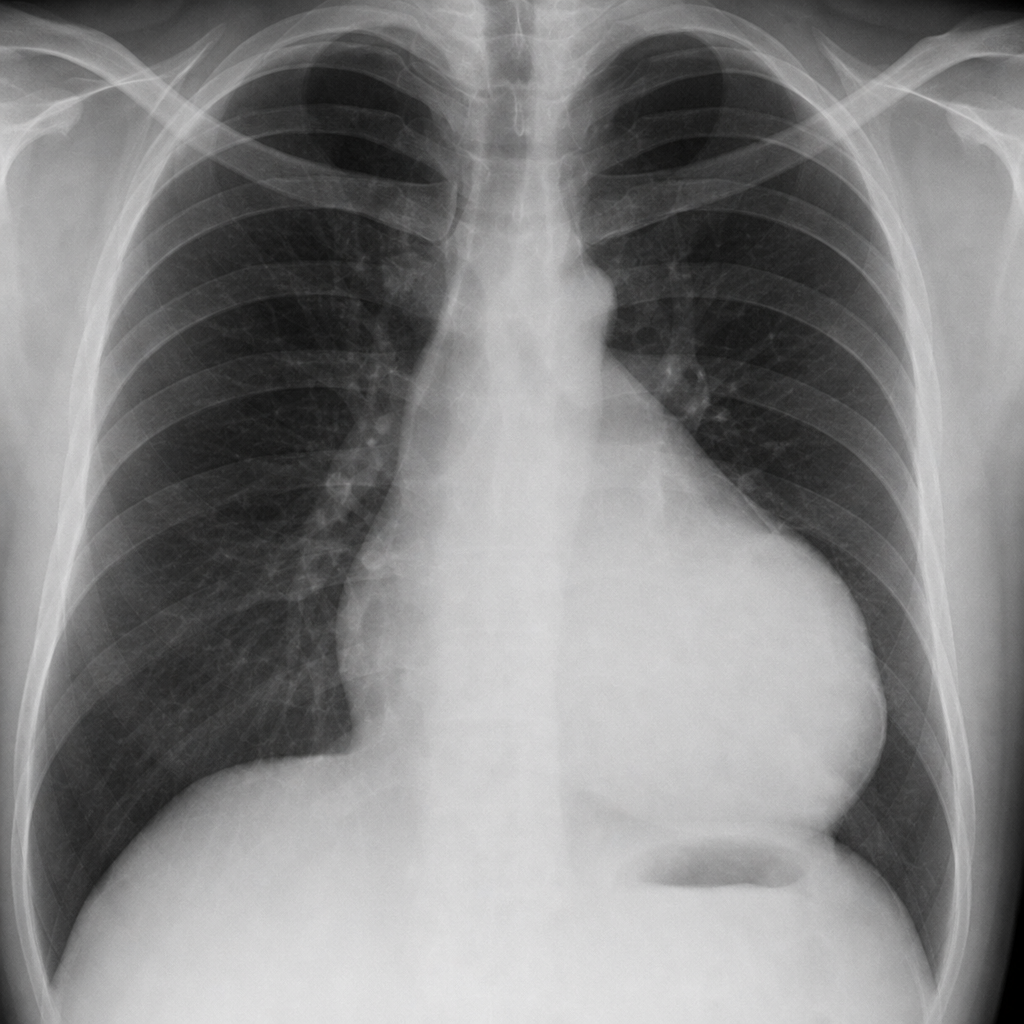
Which of the following conditions can lead to acute aortic regurgitation?
Pseudo-P pulmonale is seen in?
Which of the following ECG findings is indicative of hypercalcemia?
Which drug should be avoided in hypertrophic obstructive cardiomyopathy?
The systolic ejection murmur in hypertrophic obstructive cardiomyopathy is diminished when a patient:
What is the test of choice to detect a perivalvular abscess of the aortic valve?
The severity of Mitral stenosis is clinically best decided by?
Which of the following treatments is appropriate for tall peaked T waves on an ECG?
Which of the following is NOT a feature of hypertrophic cardiomyopathy?
Troponin-T is preferable to CPK-MB in the diagnosis of acute myocardial infarction (MI) in all of the following situations, EXCEPT:
Explanation: Aortic Regurgitation (AR) is characterized by the backflow of blood from the aorta into the left ventricle during diastole. It can be classified into **Acute** and **Chronic** based on the speed of onset and the heart's compensatory mechanisms. 1. **Infective Endocarditis (Option A):** This is the most common cause of **Acute AR**. Vegetations can cause rapid destruction or perforation of the valve leaflets, leading to sudden valvular incompetence [1]. Since the left ventricle does not have time to dilate, this results in a rapid rise in LV end-diastolic pressure and pulmonary edema [1]. 2. **Ankylosing Spondylitis (Option B):** While typically associated with chronic progression, the inflammatory process (aortitis) can involve the aortic root and valve, leading to dilation and regurgitation. In some clinical scenarios or acute flares, it contributes to the spectrum of AR. 3. **Marfan’s Syndrome (Option C):** This connective tissue disorder leads to cystic medial necrosis of the aorta [2]. It can cause AR via chronic root dilation or, more critically, via **Aortic Dissection**, which is a surgical emergency causing sudden, life-threatening Acute AR [2]. **Clinical Pearls for NEET-PG:** * **Acute vs. Chronic:** In Acute AR, the pulse pressure may be normal and the classic peripheral signs (e.g., Water-hammer pulse) are often **absent** because the stroke volume hasn't increased significantly yet [1]. * **Auscultation:** Acute AR presents with a **short, soft** early diastolic murmur. The S1 is often soft or absent due to early closure of the mitral valve [1]. * **Management:** Acute AR is often a surgical emergency. Vasodilators (Nitroprusside) and inotropes (Dobutamine) are used to stabilize the patient; **Beta-blockers and Intra-aortic balloon pumps (IABP) are generally contraindicated** as they can worsen the regurgitation.
Explanation: Explanation: **Pseudo-P pulmonale** refers to an increase in the amplitude of the P-wave (>2.5 mm in lead II) that mimics the "P-pulmonale" typically seen in right atrial enlargement. However, in this condition, the right atrium is structurally normal. 1. **Why Hypokalemia is correct:** In **Hypokalemia**, the resting membrane potential of the atrial myocytes is altered, leading to an increase in the amplitude of the P-wave. This is often accompanied by other classic ECG findings such as T-wave flattening, ST-segment depression, and the appearance of prominent **U-waves**. The combination of a tall P-wave and a prominent U-wave is a hallmark of severe potassium depletion. 2. **Why other options are incorrect:** * **Hyperkalemia:** Characterized by "Tall tented T-waves," widening of the QRS complex, and a **decrease** in P-wave amplitude (eventually leading to the disappearance of P-waves in "sine wave" patterns) [1]. * **Hypomagnesemia:** Often co-exists with hypokalemia and can cause prolonged QT intervals or Torsades de Pointes, but it is not the primary cause of Pseudo-P pulmonale. * **Hypercalcemia:** Primarily associated with a **shortened QT interval** due to a shortened ST segment. **High-Yield Clinical Pearls for NEET-PG:** * **True P-pulmonale:** Seen in Right Atrial Enlargement (e.g., COPD, Pulmonary Hypertension). * **P-mitrale:** Notched P-wave in lead II (duration >0.12s) seen in Left Atrial Enlargement (e.g., Mitral Stenosis). * **ECG in Hypokalemia:** Remember the mnemonic **"6 U's"**: **U**-waves, **U**nstable ST segment, **U**nder-amplitude T-wave, **U**pward P-wave (Pseudo-P pulmonale), **U**nusual PR prolongation, and **U**ntoward arrhythmias.
Explanation: ### Explanation **Correct Option: A. Short QT interval** The hallmark ECG finding in hypercalcemia is a **shortened QT interval**. This occurs because high extracellular calcium levels increase the influx of calcium during the plateau phase (Phase 2) of the cardiac action potential. This accelerates repolarization, thereby shortening the duration of the action potential and the ST segment. In severe cases, the ST segment may be virtually absent, with the T wave beginning almost immediately after the QRS complex. **Analysis of Incorrect Options:** * **B. Bundle branch blocks:** These are typically associated with structural heart disease, ischemia, or degenerative conduction system disease (e.g., Lev’s or Lenegre’s disease), rather than primary electrolyte disturbances. * **C. Prolonged PR interval:** This is a classic finding in **hypokalemia** [1] or **hypermagnesemia**, and sometimes in hyperkalemia. Hypercalcemia generally does not significantly affect the PR interval unless levels are extremely high, which may paradoxically cause AV blocks. * **D. Paroxysmal atrial tachycardia:** While electrolyte imbalances can predispose to arrhythmias, PAT is more classically associated with **Digoxin toxicity** (especially when combined with AV block). **High-Yield Clinical Pearls for NEET-PG:** * **Hypocalcemia:** Causes **Prolonged QT interval** (the opposite of hypercalcemia) [2] by lengthening the ST segment. * **Osborn Waves (J waves):** Though classic for hypothermia, they can occasionally be seen in severe hypercalcemia. * **Digoxin Interaction:** Hypercalcemia [3] potentiates the effects of Digoxin, increasing the risk of digitalis toxicity. * **Mnemonic:** "Short Cow (Ca), Long Tail (QT)" — High Calcium = Short QT.
Explanation: Explanation: In Hypertrophic Obstructive Cardiomyopathy (HOCM), the primary pathophysiology involves a dynamic left ventricular outflow tract (LVOT) obstruction. This obstruction is worsened by factors that increase myocardial contractility or decrease ventricular volume [1]. Why Digoxin is avoided: Digoxin is a positive inotrope. By increasing the force of myocardial contraction [2], it narrows the outflow tract during systole and exacerbates the Systolic Anterior Motion (SAM) of the mitral valve. This leads to an increase in the pressure gradient across the LVOT, worsening the obstruction and clinical symptoms. Therefore, Digoxin (and other inotropes like Dobutamine) is strictly contraindicated. Analysis of other options: * Beta-blockers (Option C): These are the first-line treatment for HOCM [3]. They are negative inotropes and negative chronotropes; they reduce the heart rate (increasing diastolic filling time) and decrease contractility, thereby reducing the LVOT gradient. * Verapamil (Option B): A non-dihydropyridine calcium channel blocker used as a second-line agent. It improves diastolic filling and reduces the pressure gradient. * Amiodarone (Option A): Often used in HOCM patients to manage or prevent atrial fibrillation and ventricular arrhythmias, which are common complications [1]. NEET-PG High-Yield Pearls: 1. Avoid "Triple D": Digoxin, Diuretics (in high doses), and Dilators (Nitrates/ACE inhibitors) should be avoided as they worsen the obstruction. 2. Squatting/Handgrip: These maneuvers increase afterload/preload, which decreases the HOCM murmur intensity. 3. Valsalva/Standing: These maneuvers decrease venous return (preload), which increases the HOCM murmur intensity. 4. Drug of Choice: Propranolol (Beta-blocker) [3].
Explanation: **Explanation:** The murmur in **Hypertrophic Obstructive Cardiomyopathy (HOCM)** is a systolic ejection murmur caused by dynamic left ventricular outflow tract (LVOT) obstruction. The intensity of this murmur depends on the **Left Ventricular (LV) volume**: * **Decreased LV volume** (less preload/afterload) → Increases obstruction → **Louder murmur.** * **Increased LV volume** (more preload/afterload) → Decreases obstruction → **Softer murmur.** **Why "Lies down" is correct:** When a patient lies down (supine position) or performs passive leg raising, there is an **increase in venous return (preload)** to the heart. This increased volume fills the LV, pushing the hypertrophied septum away from the mitral valve, thereby widening the LVOT and **diminishing** the murmur. **Analysis of Incorrect Options:** * **Valsalva Maneuver (Option A):** During the strain phase, venous return decreases. This reduces LV volume, worsening the obstruction and **increasing** the murmur intensity. * **Amyl Nitrite (Option C):** This is a potent vasodilator that decreases afterload and venous return. The resulting smaller LV cavity **increases** the murmur. * **Standing up (Option D):** Sudden standing causes venous pooling in the lower limbs, decreasing preload. This reduces LV volume and **increases** the murmur. **High-Yield Clinical Pearls for NEET-PG:** 1. **The "Rule of Two":** HOCM and Mitral Valve Prolapse (MVP) are the only two murmurs that get **louder** with Valsalva and Standing (maneuvers that decrease preload) [1]. 2. **Handgrip Exercise:** Increases afterload, which pushes the septum away from the LVOT, **decreasing** the HOCM murmur (unlike Aortic Stenosis, where it stays the same or decreases). 3. **Squatting:** Increases both preload and afterload, **decreasing** the HOCM murmur.
Explanation: The detection of a perivalvular abscess is a critical step in managing infective endocarditis (IE), as it often necessitates surgical intervention [1]. **1. Why Transesophageal Echocardiography (TEE) is the Correct Choice:** While Transthoracic Echocardiography (TTE) is the initial screening tool for IE, it has low sensitivity (approx. 30-50%) for detecting perivalvular complications [1]. **TEE is the gold standard (Sensitivity >90%)** because the esophagus lies directly behind the left atrium and the aortic root. This proximity, combined with high-frequency transducers, allows for superior visualization of the posterior cardiac structures, aortic root anatomy, and subtle echoes indicative of abscess formation or fistulization [1]. Doppler imaging further helps identify turbulent flow or shunts within the abscess cavity [1]. **2. Why Other Options are Incorrect:** * **MRI of the heart:** While MRI provides excellent anatomical detail, it is time-consuming, expensive, and difficult to perform in acutely ill patients with potential metallic implants or unstable hemodynamics [2]. * **Ventriculography:** This is an invasive procedure involving dye injection into the ventricle. It is useful for assessing valvular regurgitation or ventricular function but lacks the resolution to identify soft tissue infections like an abscess. * **CT Chest:** Standard CT lacks the temporal resolution to visualize moving heart valves accurately. While Cardiac CT can be an adjunct, TEE remains the primary diagnostic modality due to its real-time bedside availability. **Clinical Pearls for NEET-PG:** * **Duke’s Criteria:** Echocardiographic evidence of an abscess is a **Major Criterion** for the diagnosis of IE [1]. * **Red Flag:** New-onset **PR interval prolongation** (First-degree AV block) on ECG in a patient with aortic valve endocarditis is highly suggestive of a perivalvular abscess extending into the conduction system. * **Indication for Surgery:** Perivalvular abscess is a definitive indication for early surgical replacement of the valve.
Explanation: In Mitral Stenosis (MS), the severity of the valve orifice narrowing is determined by the pressure gradient between the left atrium (LA) and the left ventricle (LV). ### **Why the Correct Answer is Right** **A. Length of the diastolic murmur:** The mid-diastolic murmur (MDM) of MS occurs as long as the LA pressure remains higher than the LV pressure. In severe MS, the LA pressure is significantly elevated, taking much longer to equalize with the LV pressure. Consequently, the flow across the stenotic valve persists throughout diastole. Therefore, the **longer the duration** of the murmur (the closer it gets to S1), the more severe the stenosis. ### **Why Other Options are Incorrect** * **B. Intensity of the diastolic murmur:** The loudness of the MDM depends on the flow velocity and the mobility of the leaflets, not the degree of narrowing [2]. A very severe MS with a low cardiac output (low flow) may actually have a very soft or "silent" murmur. * **C. Loudness of the first heart sound (S1):** A loud S1 indicates that the mitral leaflets are still mobile [2]. In calcific, end-stage MS, S1 actually becomes soft or muffled. * **D. Split of the second heart sound:** While pulmonary hypertension (a complication of MS) can affect the S2 split, it is not a direct measure of the mitral valve area itself. ### **High-Yield Clinical Pearls for NEET-PG** * **The A2-OS Interval:** The most reliable clinical indicator of MS severity is the **A2-Opening Snap (OS) interval** [1]. A **shorter** interval indicates **more severe** MS (because higher LA pressure forces the valve open earlier) [1]. * **The Murmur:** It is a low-pitched, mid-diastolic rumbling murmur, best heard at the apex with the bell in the left lateral decubitus position [3]. * **Presystolic Accentuation:** This occurs due to atrial contraction; it disappears if the patient develops **Atrial Fibrillation**. * **Graham Steell Murmur:** An early diastolic decrescendo murmur of pulmonary regurgitation, seen in severe MS with secondary pulmonary hypertension.
Explanation: **Explanation:** **Tall peaked T waves** on an ECG are the earliest and most characteristic sign of **Hyperkalemia** [2]. The management of hyperkalemia focuses on three goals: stabilizing the myocardium, shifting potassium into cells, and removing potassium from the body [1]. **Why Inhaled Salbutamol is Correct:** Salbutamol is a **Beta-2 agonist**. It stimulates the Na+/K+-ATPase pump in skeletal muscle, which promotes the **intracellular shift of potassium**, thereby rapidly lowering serum potassium levels. It is an effective adjunctive treatment alongside insulin-dextrose therapy. **Analysis of Incorrect Options:** * **A. Atropine IV:** Used for symptomatic bradycardia or AV blocks. While hyperkalemia can cause bradycardia, Atropine does not treat the underlying electrolyte imbalance. * **B. Nitroprusside IV:** A potent vasodilator used in hypertensive emergencies. It has no role in managing potassium levels or ECG changes related to hyperkalemia. * **D. Inhaled Betamethasone:** A corticosteroid used for fetal lung maturity or airway inflammation. It does not affect acute potassium shifts. **High-Yield Clinical Pearls for NEET-PG:** 1. **First Step in Management:** If the ECG shows changes (peaked T, wide QRS, or sine wave), the immediate first step is **IV Calcium Gluconate** (to stabilize the cardiac membrane), though it does not lower potassium levels [1]. 2. **The "Shift" Agents:** Insulin with Dextrose (most reliable) and Beta-2 agonists (Salbutamol) are used to shift K+ intracellularly. 3. **Definitive Removal:** To actually remove potassium from the body, use Loop diuretics, Cation exchange resins (Patiromer/Lokelma), or **Hemodialysis** (most effective). 4. **ECG Progression:** Peaked T waves → P wave flattening/PR prolongation → QRS widening → Sine wave pattern → Asystole [2].
Explanation: ### Explanation **Hypertrophic Cardiomyopathy (HCM)** is a genetic disorder characterized by primary myocardial hypertrophy in the absence of other systemic causes (like hypertension or aortic stenosis) [1]. **Why "Dilated Ventricle" is the Correct Answer:** In HCM, the hallmark is a **non-dilated, thickened left ventricle**. The ventricular cavity is typically small or normal in size due to the massive hypertrophy of the walls [1]. A dilated ventricle is characteristic of **Dilated Cardiomyopathy (DCM)**, which is the functional opposite of HCM, involving wall thinning and cavity expansion. **Analysis of Incorrect Options:** * **Increased muscle mass:** This is the defining feature of HCM. It usually involves asymmetric septal hypertrophy (ASH), where the interventricular septum is significantly thicker than the posterior wall [1]. * **Left ventricular outflow obstruction (LVOT):** In about 70% of patients (HOCM), the thickened septum and the **Systolic Anterior Motion (SAM)** of the mitral valve create a dynamic obstruction during systole [1]. * **Diastolic dysfunction:** Because the ventricle is stiff and non-compliant due to hypertrophy and fibrosis, it cannot relax properly. This leads to impaired filling and elevated end-diastolic pressures. **High-Yield Clinical Pearls for NEET-PG:** * **Genetics:** Most commonly due to mutations in genes encoding sarcomeric proteins, specifically **Beta-myosin heavy chain** and **Myosin-binding protein C** [1]. * **Auscultation:** Features a harsh systolic ejection murmur that **increases** with Valsalva or standing (decreased preload) and **decreases** with squatting or handgrip (increased afterload/preload) [1]. * **Histology:** Characterized by **myocyte disarray** [1]. * **Sudden Cardiac Death (SCD):** HCM is the most common cause of SCD in young athletes [1].
Explanation: ### Explanation The diagnosis of Acute Myocardial Infarction (MI) relies heavily on the kinetics of cardiac biomarkers. The core concept here is the **duration of elevation** for each marker. **1. Why "Reinfarction after 4 days" is the correct answer:** Troponin-T (TnT) begins to rise 3–6 hours after an MI but remains elevated for **10–14 days**. If a patient suffers a second MI (reinfarction) 4 days after the first, TnT levels will still be high from the initial event, making it impossible to distinguish a new rise. In contrast, **CK-MB** returns to baseline within **48–72 hours**. Therefore, if CK-MB rises again after 4 days, it specifically indicates a new ischemic event (reinfarction) [2]. **2. Why the other options are incorrect:** * **Bedside diagnosis:** Rapid Troponin kits (Point-of-Care Testing) are highly sensitive and specific for bedside use compared to CK-MB, which may be elevated due to skeletal muscle trauma. * **Postoperatively (after CABG):** Surgical trauma to chest muscles causes a significant rise in CK-MB. Troponins (especially Cardiac Troponin I or T) are more cardio-specific and are preferred to identify perioperative MI [1]. * **Small infarcts:** Troponins are significantly more sensitive than CK-MB. they can detect "micro-infarctions" that do not result in a measurable rise in CK-MB levels [2]. **Clinical Pearls for NEET-PG:** * **Earliest Marker:** Myoglobin (rises in 1–2 hours), but it is non-specific. * **Most Specific Marker:** Troponin I (more so than TnT in patients with renal failure). * **Marker for Reinfarction:** CK-MB is the gold standard. * **Marker for Late Diagnosis:** Troponin T/I (remains elevated for up to 2 weeks). * **LDH Flip:** In MI, LDH1 becomes higher than LDH2 (normally LDH2 > LDH1) [3]. This is an older, late-stage marker.
Coronary Artery Disease and Angina
Practice Questions
Acute Coronary Syndromes
Practice Questions
Heart Failure
Practice Questions
Cardiac Arrhythmias
Practice Questions
Valvular Heart Diseases
Practice Questions
Cardiomyopathies
Practice Questions
Pericardial Diseases
Practice Questions
Congenital Heart Disease in Adults
Practice Questions
Hypertension and Hypertensive Emergencies
Practice Questions
Pulmonary Hypertension
Practice Questions
Non-invasive Cardiac Diagnostics
Practice Questions
Preventive Cardiology
Practice Questions
Get full access to all questions, explanations, and performance tracking.
Start For Free